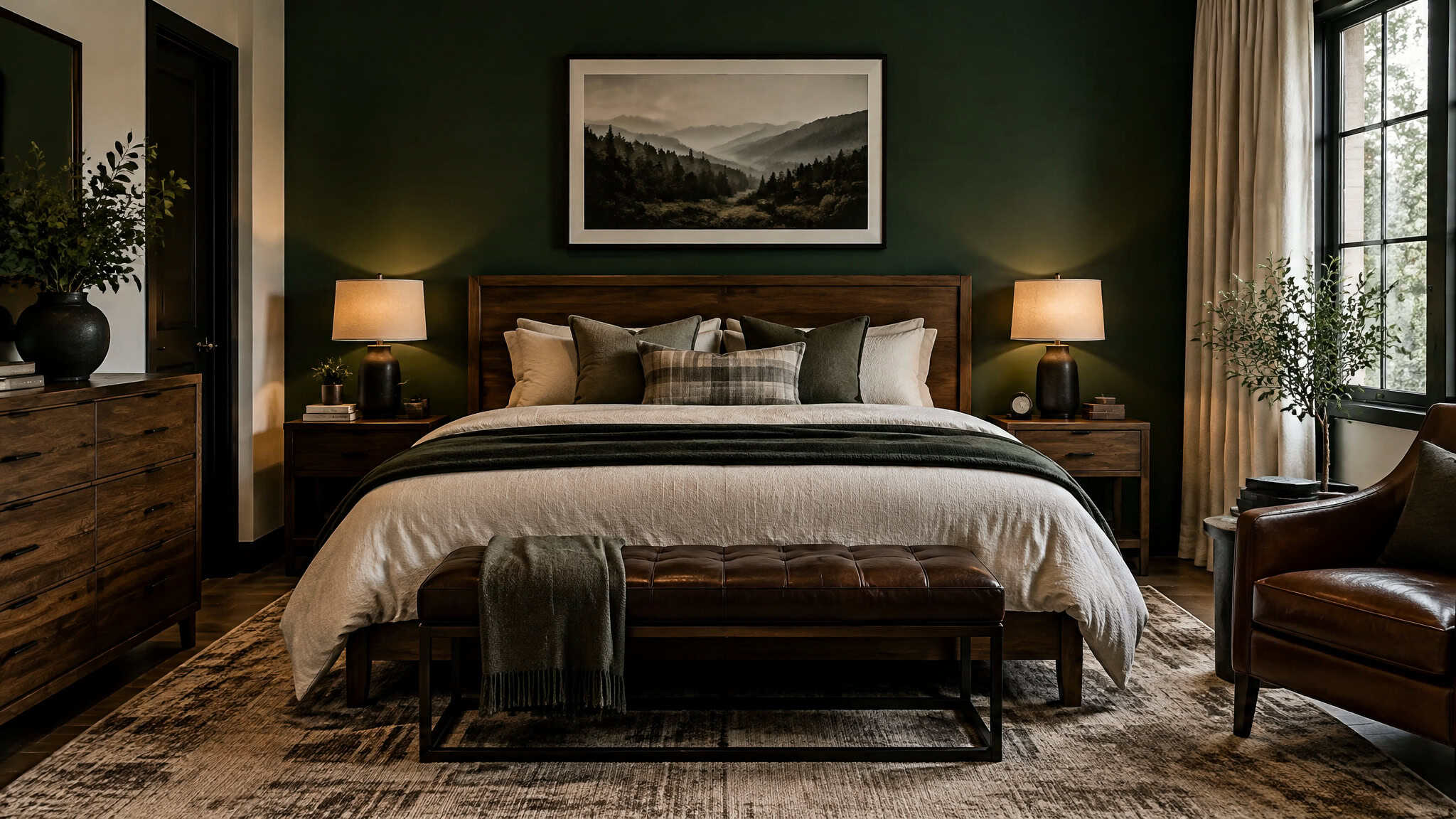
The mattress is on the floor. The walls are white because the landlord painted them white, the single light bulb is in the middle of the ceiling because that’s where the landlord put it, and the nightstand is a cardboard box that used to hold a monitor. Every guy has lived in this room. Most guys live in it for a year longer than they should, because decorating sounds expensive and they’re not sure where to start.
Here’s the framing we keep coming back to: intentional, not expensive. Bachelor bedroom ideas on a budget aren’t about spending less on the same stuff other people buy. They’re about picking the moves with the most impact per dollar: one bold wall color balanced by neutrals, thrifted furniture with good bones, a plug-in sconce instead of an electrician, layered textiles, a plant or two, a gallery wall of old art in matching frames. None of that requires a designer or a trust fund.
The proof it works end to end is a documented makeover from the YouTube channel Workin’ with Wolkon: a full bedroom, ceiling to furniture, for $250 total. Not a partial refresh. Popcorn ceiling scraped, accent wall built, bedside tables made from scratch, shelves hung, decor styled. That’s the ceiling on what’s possible, and most of the moves below cost a fraction of it.
The way to read this is by cost tier. Some moves are free: rearranging furniture, swapping throws between rooms. Some are one purchase: a can of paint, a rug, new bedding. Some need basic tools and a weekend: a headboard, an accent wall, floating shelves. Start wherever your wallet and your tool drawer say.
Key Takeaways
A full DIY bedroom makeover, including popcorn ceiling removal, an MDF accent wall, and built bedside tables, was done for $250 total, with light fixtures at $30 for two.
The color formula: one bold dominant wall color (greens, browns, deep blues) balanced by white, gray, or beige neutrals in bedding, furniture, and curtains.
The renter-safe kit is peel-and-stick wallpaper, tension rods, adhesive hooks, and plug-in sconces, all of it deposit-friendly.
Table of Contents
| Pick | Why it stands out |
|---|---|
| Set The Mood With Your Color Scheme | Set The Mood With Your Color Scheme: Bold dominant wall color (greens, browns, deep blues, yellows) balanced with neutrals (white, gray, beige) in bedding, furniture, window |
| Think Vertically | Wall-mounted or plug-in swing arm sconces free nightstand space and avoid electrician costs |
| Legs, Legs, Legs (On Furniture) | Legs, Legs, Legs (On Furniture): Airy, clean-lined furniture with attractive legs keeps a small room feeling light and spacious; Examples: vintage table turned nightstand, |
| Switch out your bedding | Switch out your bedding: New bedding needs no tools; pick new colors/patterns or play with textures for a luxury feel; Overstuff cushions for a high-end hotel vibe by ordering an |
| Gallery Wall | Gallery Wall: One of the most affordable ways to dress up a small room using framed photos, prints, thrifted artwork, or interesting objects; Author found 60’s-70’s black and |
| Hang budget-friendly artwork | Affordable artwork on Etsy and FY; swap prints every few months for a quick update |
| DIY a headboard | A DIY arched headboard can be made from pool noodles, velvet fabric, and plywood (Bridgette Whitney); alternatives include paint, a wallpaper section, or a rug hung above the bed. |
| Upcycle your furniture | Upcycling owned or second-hand furniture saves money |
Model details derive from the cited sources; check the brand pages for current pricing.
Observed prices
Observed prices run $600, $1,054 across 2 sources (checked Tuesday, September 29, 2026). Sources: nytimes.com, livingcozy.com.
Plan the budget before buying anything
A hard spending limit plus a 10-15% contingency buffer is the structure that keeps a makeover on track. Not a vague “I’ll keep it cheap,” an actual number, with a slice held back. Something always costs more than the list price, and the buffer covers the gap.
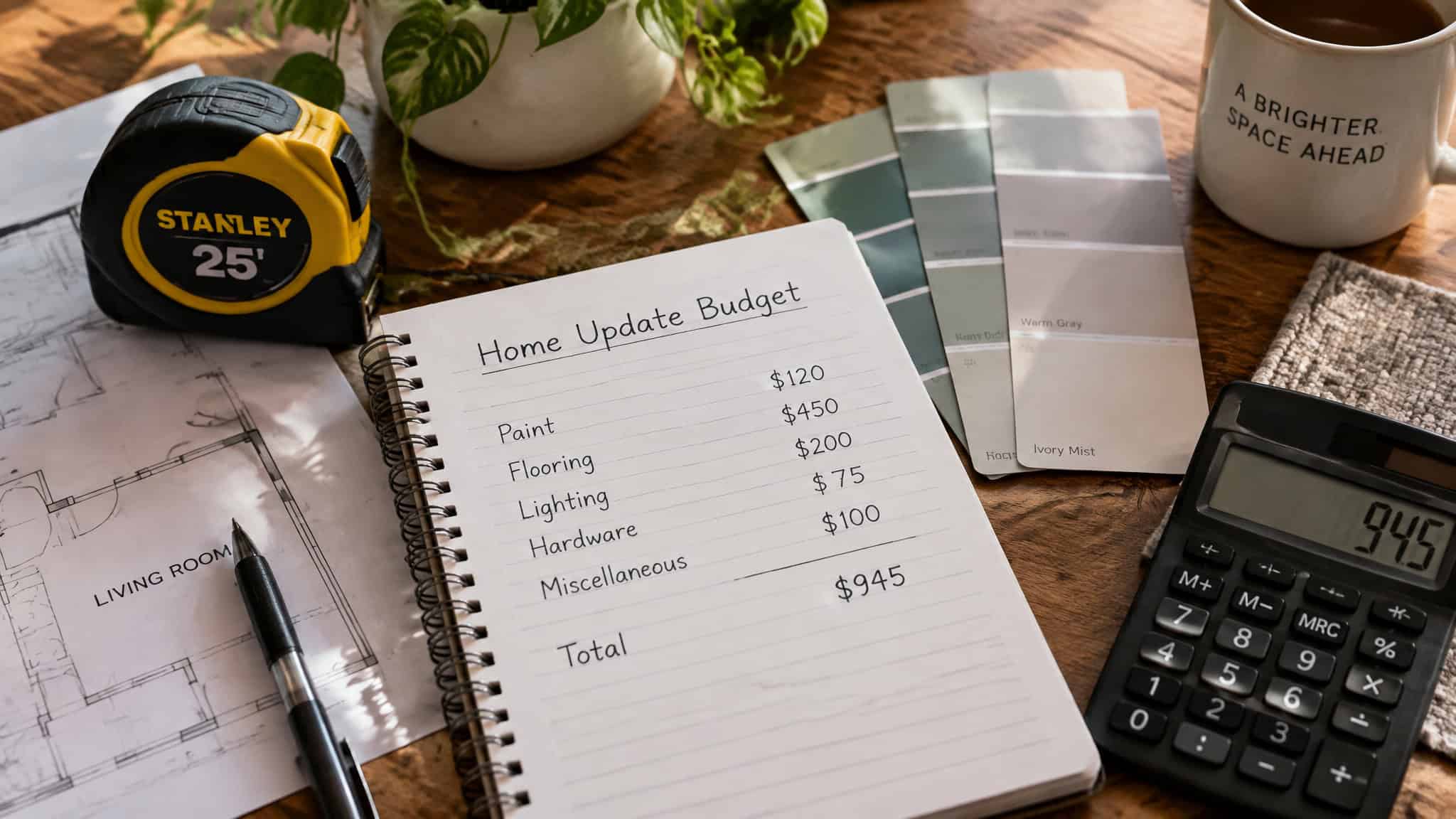
Then spend that number on high-impact, cheap stuff first: paint or wallpaper, lighting, bedding and textiles, furniture layout, in that order.Price the materials before you commit, because peel-and-stick wallpaper, curtain rods, and lighting all vary more than you’d expect. Ten minutes of checking beats a surprise total.
Doing the labor yourself is where the real savings live. Your time is the discount.The failure pattern is always the same: no buffer, first surprise cost, plan abandoned by week two.
Give the room a theme with a few anchor pieces
A few well-chosen cheap pieces can carry a whole theme, so you’re committing to an idea rather than a spending binge.
One documented example: a coastal sailing look blended with a country touch, tied together by warm colors, nautical accents, and sailing photographs. The beach version spelled out: soft blue walls, white bedding, seashell accents, rattan baskets, wicker lampshades. That’s a shopping list, not a design degree.
The same mechanism works for a masculine room. Vintage industrial: two influences, a moody palette, three anchor pieces, maybe an old factory cart table, a metal sign, a cage-style lamp. Cabin/outdoors or motorsport run the same way. Two influences, three anchors.
Done. Don’t fill the room; let the anchors do the work.
Set the mood with a bold color scheme
The best bachelor bedroom colors come down to one formula: a bold dominant wall color, usually greens, browns, or deep blues, balanced by white, gray, or beige neutrals in the bedding, furniture, and curtains. That’s the whole rule.It’s cheap impact.
The proof is a real repaint: light blue walls and a gingham wallpaper accent wall became tan. Toasted Marshmallow by Martha Stewart, colour matched, with a single tin of paint.The goal was a more grown-up, restful space, the kind of room that makes naps easy.
Then there’s the contrast move, and it’s the one that makes a room memorable. Paint the trim, a door, or a piece of furniture a color that fights the walls a little.Small surface, big statement, low cost. The documented version: a bedroom door and all the entry doors in deep grey-green, Weathervane by PARA Paints. A dark green door in a tan room is the kind of detail people remember without knowing why. Contrast doesn’t have to be loud, either, a slate grey accent wall against light grey walls works the same way, quieter.
If you’re renting and stuck with neutrals, Behr’s Blank Canvas is the suggested pick for working within them. And I won’t claim any of these are 2026 trends, because they don’t need to be.Bold plus neutral has worked for decades.
Freshen up with paint
Paint is possibly the cheapest refresh a bedroom can get. Even plain white or off-white makes a room feel brighter and bigger, which sounds boring and works anyway. Many landlords are open to it, so ask before assuming no. Buy tester pots first; they’re cheap, and leftovers feed future projects.A small spend now prevents repainting the whole room because the beige you picked reads gray at night.
Paint an accent wall
One wall redefines the mood without repainting everything, and it’s a weekend-scale project. Complement the existing color, light grey walls with a slate grey accent, or go bold contrast for a darker, more modern look. Patch the drywall holes first. The tool list is short: roller, tray, painter’s tape, drop cloth, angled brush.Renters, removable paint options exist that won’t eat the deposit.
Incorporate flea market and thrift store finds
Thrifted pieces give a budget room its character, and they usually cost less than new. I’ll be straight with you: the sources assert the savings without putting numbers on the thrift-versus-new tradeoff, so treat “cheaper” as directional, not a percentage. The character part, though, is not in dispute.
Write down what you need before you go, then shop with an open mind anyway, because the best finds are never on the list. Grab pieces with solid structure even when the finish looks rough; worn doesn’t mean done, and paint plus polish brings most of them back.
What good finds look like: vintage mirrors, picture frames, baskets, a weathered oar. A few bucks each, and they carry charm new stuff can’t fake.One-of-a-kind and cheap. Both wins.
Think vertically to free floor space
Work the walls, not the floor. Walls are your storage and your style.
A wall-mounted or plug-in swing arm sconce gets reading light up off the nightstand surface and means no call to the electrician. Wall shelves and floating nightstands free floor area, which is what makes a small room breathe. Baskets keep small clutter contained and travel with you at the next move.Peg rails and wall hooks give a bare wall something to do and keep clothes off the floor at the same time.
The tradeoff is honest: you’re putting holes in walls to gain floor space. If you have more floor than wall, flip the math.
Choose furniture with visible legs
At minimum you’re working with a bed, somewhere to put a lamp, and a desk or dresser for clothes. That’s the list. What matters more than quantity is visual weight: lighter, clean-lined furniture on exposed legs makes a small room feel more open, since light passes beneath and around it. Sounds trivial, works anyway.
Concrete examples: a vintage table turned nightstand, a shaker-style desk. Both cheap secondhand, both light on their feet.The counterpoint: dark, heavy furniture crowds a small room. Skip it, even when the price is right.
Rearrange the furniture (it’s free)
The zero-cost move everyone forgets. Shift the bed to a different wall, move the nightstands out of corners, center the dresser under a window, swap the bedside tables, relocate the chair.This is also the answer if you have no tools and no budget: rearranging costs nothing but a sore back.
Swap the lighting: sconces, lamps, and layered warm light
Yes, a plug-in swing arm sconce is worth it over a table lamp in a small bedroom. A sconce frees up the nightstand, needs no electrician, and puts reading light over both the nightstand and the bed.
From there, layer the light. The documented setup used a schoolhouse light for the room, an inexpensive black & brass table lamp at the desk, and a swing arm with a wicker shade bedside. Several warm sources let the room shift moods: bright and functional for mornings, dim and warm for winding down at night. The fixtures themselves can echo the theme too, so a rustic chandelier suits farmhouse and sleek sconces suit a loft look.
String lights are cheap online and work around a headboard, a window frame, or under a shelf. Yes, they read slightly dorm-room. They also cost almost nothing.
Documented price for the makeover’s light fixtures: $30 for two.Prices may vary, but that’s the order of magnitude that makes the whole budget believable.
Switch out your bedding (no tools required)
Making a cheap bedroom look expensive starts with the bed. Overstuffed cushions, layered textiles, and staged lighting do the work a designer would charge for. New bedding needs zero tools: new colors, patterns, or textures, and a quilt cover or bedspread that contrasts with what you already have changes the room instantly.Wait for seasonal sales instead of paying full price.
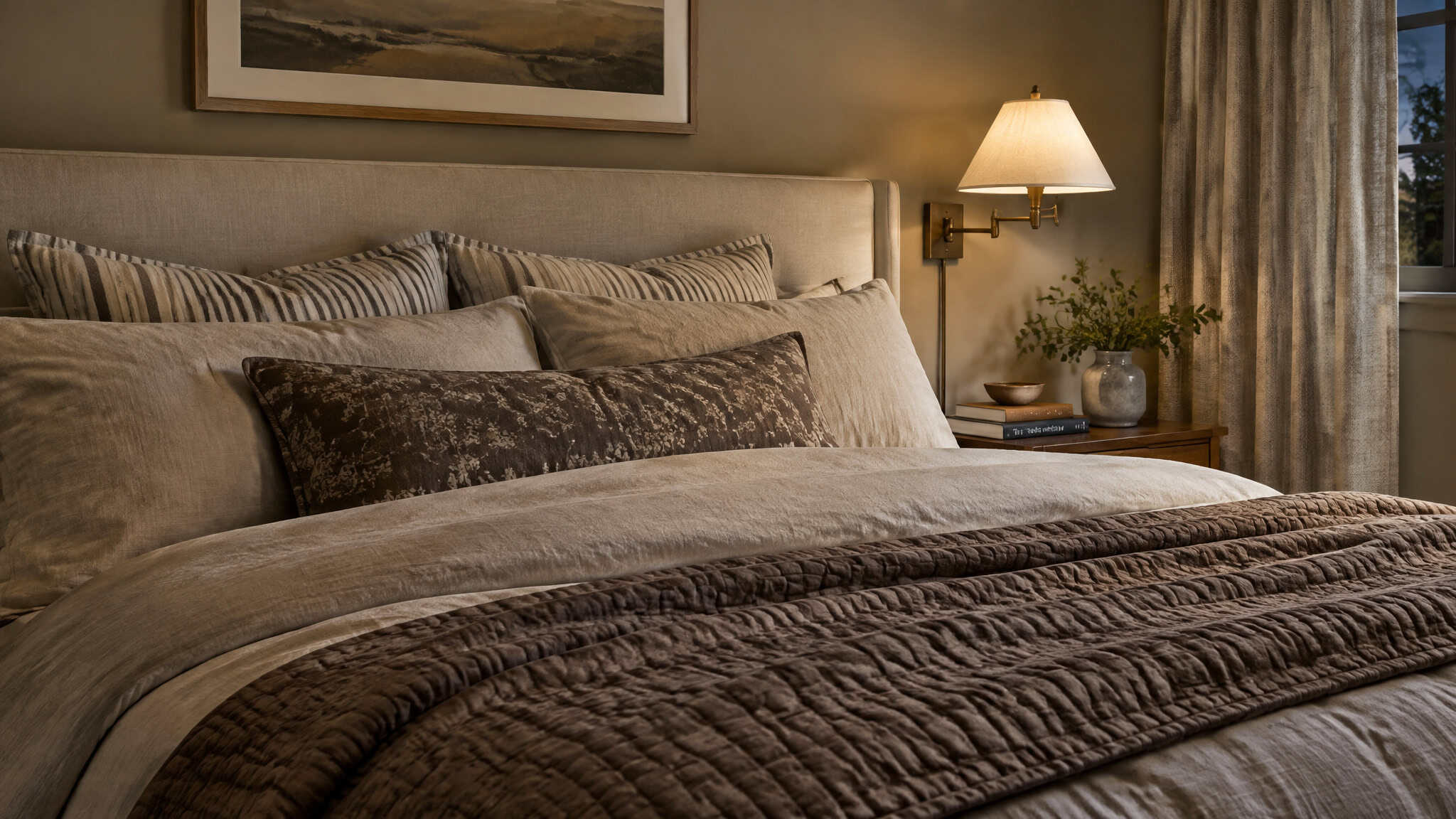
The hotel trick: order a pillow insert one size too large, or two inserts in one cover. Cheap fake-luxury, and it works.
Throw down a large rug
A big rug covers stained carpet or tired floorboards, so go as big as the room allows.Small rugs look like an afterthought. Sizing rule: most of the furniture sitting on the rug looks best and makes the room appear larger. Layer smaller rugs either side of the bed for texture instead. Wayfair and H&M Home are the bargain sources, and the underrated channel is carpet remnant stores, which will often sew scrap edges into a finished small rug for a fee.
Layer the throws
Pile on every pillow and blanket you’ve got. More is more here, for once. Swap throws between the living room and bedroom to refresh both rooms for free. Stay in one color scheme, or rotate seasonal covers.
Build a gallery wall from thrifted art
The cheapest wall decor that doesn’t look cheap is a gallery wall of thrifted art framed consistently.The documented find: 1960s-70s black-and-white sailing photographs from an antique shop, ragged edges, handwritten details, hung in matching modern frames over the dresser as a focal point.
The mechanism matters. Mismatched vintage art reads designer only when the frames match. Newer prints wouldn’t have the same pull, because old stuff comes with a story.Old art, matching frames. That’s the formula.
Hang budget-friendly artwork
Walls don’t need expensive art, they need something on them. Etsy and FY both have affordable prints. Swapping them every few months keeps things fresh for next to nothing. To spend even less: put postcards, wallpaper samples, or your own collages in frames.
Going frameless saves even more. Postcards in frames is a real look, not a compromise.
DIY a headboard
A headboard instantly pulls the bed together, and building your own will undercut anything you’d buy.The best hook: Bridgette Whitney’s arched headboard made from pool noodles, velvet fabric, and plywood. Absurd materials, good result. That’s the appeal.
Other routes in one line: plywood, pallets, or reclaimed wood, or foam wrapped in fabric and stapled to a board. No-build shortcuts for the tool-averse: paint a headboard shape on the wall, wallpaper a section, hang a rug above the bed, or tack bold fabric behind the bed.Done in an afternoon.
Upcycle your furniture
The furniture you already own is the cheapest furniture you’ll ever restyle. Beginner route: a fresh coat of paint, then thrifted knobs or handles to finish it off. Two steps, done, repainting plus new hardware is the whole mechanism, and it works on second-hand pieces as well as stuff you own.Want to see it in motion? There’s a rattan sideboard tutorial on Real Homes’ Instagram that runs through exactly this repaint-and-swap-handles approach.
Personalize with simple DIY projects
Paint old furniture in complementary colors or make wall art from cheap canvases and acrylics. One source author sewed block print pillows from fabric she designed herself, a daisy print with a gingham border, using fabric and inserts she already owned. The mechanism is the point: designing your own textile costs nearly nothing in materials.
Use fabric for wall art or curtains
Your closet and linen cupboard are art supplies. Old scarves, patterned sheets, and linen remnants can be framed, hung from a rod, or stretched over wooden frames as large-scale art for pocket change. The same bold fabric tacked behind the bed doubles as a headboard, one material, two jobs. Tools: staple gun, scissors, curtain rod, hammer, nails or tacks.Most guys own most of this already.
Create a mirror feature
The oldest small-room trick, and it works: mirrors bounce light around and make a small room look bigger. Two directions. A gallery of thrifted mirrors in mixed shapes, cheaper and more interesting, or one large mirror opposite the window.You’ll need a level, a measuring tape, wall anchors, screws, and a screwdriver or drill. Measure twice, because mirrors are heavy.
Inside the $250 DIY bedroom makeover
The highest-impact DIY bedroom projects are the ceiling, the accent wall, and built furniture, and a documented makeover did all three for $250 total. This was Workin’ with Wolkon’s YouTube project, not mine, and the itemization is why it’s worth studying. What $250 covered: popcorn ceiling removal, an MDF accent wall, DIY bedside tables, floating shelves, and decor sourced from household items because the stores were closed. Painter’s tape did its share of the work too, aligning pieces before they went up on the wall.
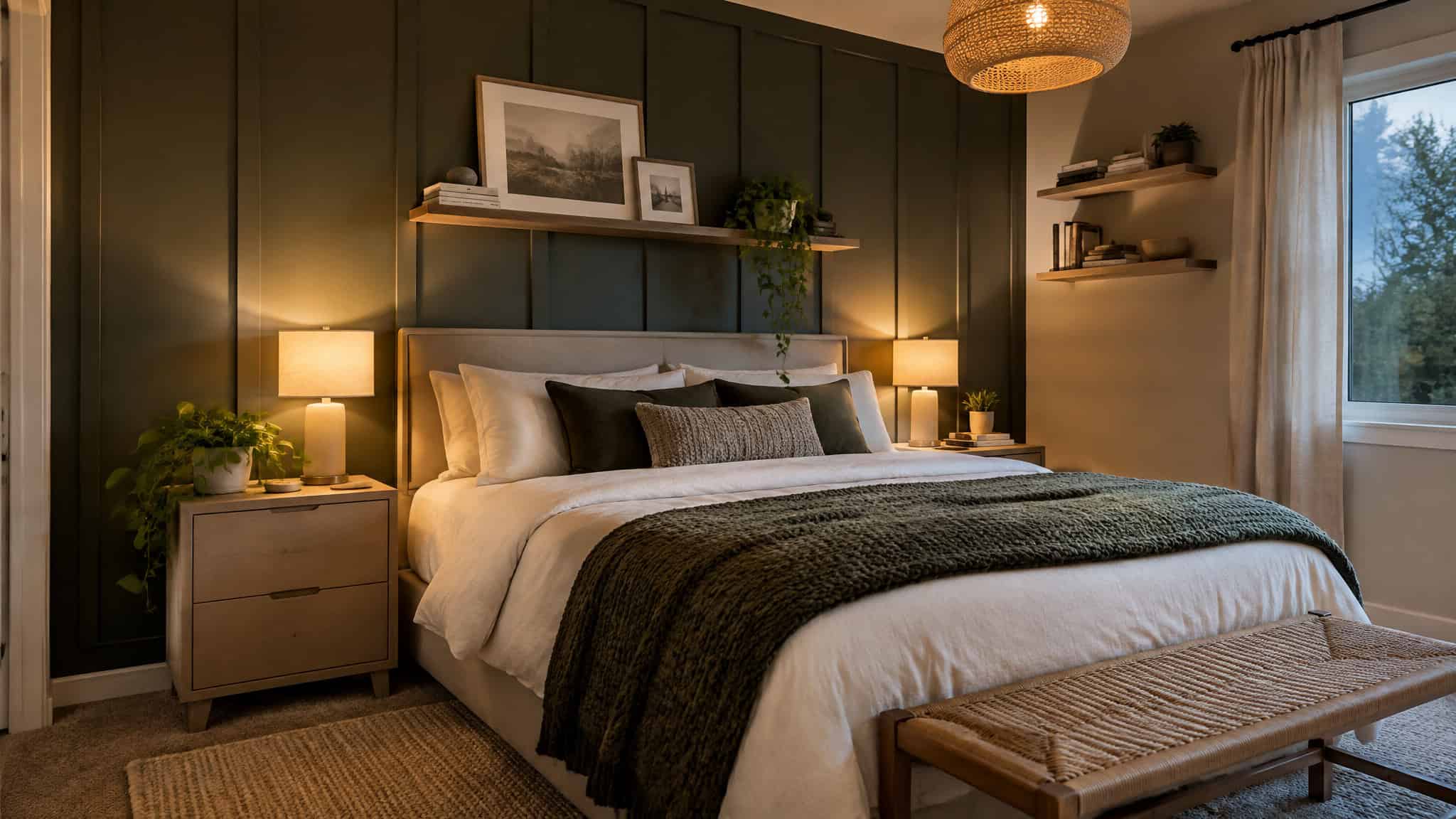
Light fixtures ran $30 for two. He kept the budget low because the room gets used infrequently, which is the same logic as a low-stakes bachelor room.
Studs spaced two feet apart forced improvised backing, the stain came out too light and he left it, and the second coat of paint got skipped. Honest caveat: DIY pays off only with time, tools, and talent.
Scraping a popcorn ceiling
Spray the ceiling with hot water, wait 5 minutes, scrape with a drywall knife. It scrapes off without much fight; letting the water sit is what makes it work.One catch: the ceiling underneath needed a skin coat of mud to finish, which is the cost nobody mentions.
Building the MDF accent wall
The big visual win. 2.5-inch MDF door trim attached with construction adhesive and brad nails, wires routed inside the wall, and only one light switch fit because of stud placement. Finishing was wood filler for the nail holes and seams, caulk for the edge gaps. Boring steps, flush result.
Floating shelves and the stud-spacing surprise
One 2×10 by 12 cut into three-foot lengths, three pocket holes per shelf.Then reality: studs two feet apart meant one screw per location, so extra MDF pieces went behind the drywall as support. He admits it’s less sturdy than 2×4 backing. Keep that admission in mind if you copy the build.
Beginner-friendly fiberboard bedside tables
One fiberboard sheet cut into four 4×14-inch and four 10×14-inch pieces, mitered sides glued.No-miter fallback: have the store cut the pieces, glue them, fill and sand. Lower the barrier on purpose. He also made a hardboard wall piece with two-by-ones glued around the edges, aligned with painter’s tape, hung beside a mirror for symmetry.
Style it like a designer, for free
For a minimal, put-together look, the most valuable budget skill isn’t shopping.It’s staging, and it costs nothing. Group items in threes with height variation. Clear the nightstand clutter first, then curate: a lamp, a pile of books, a trinket dish, a mirror. Keep only a few pieces, some decorative, some useful.
Shop your own home. The makeover video sourced all its decor from household items when the stores were closed, and the curtains went higher, following current practice. Decluttering and clean lines get you most of the minimal look. For a simple masculine take, that means a bold wall color balanced with neutrals like white, gray, or beige in the bedding and furniture, plus airy, clean-lined pieces with legs that keep the room feeling light. Flagging this honestly: that last bit is extrapolated from the sources’ principles, not a documented masculine-minimal case study.The staging rules, though, are stealable in five minutes.
Bring in the plants
For finishing off a vignette, nothing beats a plant on price, whether that’s bedside, on a shelf, or topping a stack of books. Easygoing picks are spider plants, peace lilies, fiddle leaf fig, and string of pearls; go faux if the room gets no light. Houseplants offer real physical and mental perks, including air purification and better sleep, and low-maintenance varieties exist for guys who forget to water things.Pick pots that fit the room, and an old thrifted or repurposed container can do planter duty for nothing.
Small rooms and rentals: what’s deposit-safe
The renter-safe kit is peel-and-stick wallpaper, tension rods, adhesive hooks, and plug-in sconces. All of it protects the deposit. Paint is often landlord-approved, but ask first. Peel-and-stick goes on an accent wall, behind shelves, even the ceiling; clean the surface, let it dry, line up the pattern, or the seams show.Tools are a utility knife, ruler, and level.
Small-room layout rules, condensed: put the bed on the longest wall, hang mirrors across from windows to bounce light and make the room feel bigger, stick with light-colored bedding and curtains, and build upward with shelves, hooks, and tall dressers. Layer textures, rugs, throws, cushions, lighting, instead of adding furniture.
Here’s the contrarian reframe worth sitting with: a small bedroom’s constraints are exactly what gives you license to experiment.Limited floor, busy walls, no architectural detail, sure. But the room you’d never dare experiment in is exactly where bold color and weird old furniture should go first, because the stakes are low. Start there.
Frequently Asked Questions
What are the 2026 bedroom trends?
The honest answer is you don’t need trends. The bold-plus-neutral formula — one dominant wall color in greens, browns, or deep blues balanced by white, gray, or beige — has worked for decades and still reads current. A dark green or grey-green door in a tan room is the kind of contrast detail that makes a room memorable without chasing anything seasonal.
What are the 7 golden rules for bedroom design?
Condensed from what actually moves the needle: set a hard budget with a 10-15% buffer, spend on paint, lighting, and bedding first, pick one bold color balanced by neutrals, choose light furniture with visible legs, work the walls for storage, layer warm light sources, and stage with what you own — items grouped in threes with height variation. Rearranging furniture is the free bonus rule everyone forgets.
What furniture does a bachelor bedroom actually need?
At minimum: a bed, somewhere to put a lamp, and a desk or dresser for clothes. That’s the list. What matters more than quantity is visual weight — clean-lined pieces on exposed legs make a small room feel more open, while dark, heavy furniture crowds it even when the price is right.
Is it cheaper to thrift furniture or buy new for a first apartment bedroom?
Thrifted pieces usually cost less than new, though treat ‘cheaper’ as directional rather than a guaranteed percentage. The undisputed win is character: vintage mirrors, frames, and baskets carry charm new stuff can’t fake, often for a few bucks each. Shop with a list but stay open — the best finds are never on it — and grab solid-structure pieces even if the finish is rough.