Your AC clicks on. It runs for five minutes, maybe less. Then it clicks off. A few minutes later, it’s back on.
The house never quite gets cool, the air feels sticky, and your energy bill creeps up. That’s not normal operation. That’s short cycling, and it’s your system telling you something’s wrong.
Short cycling is exactly what it sounds like: your AC turns on and off too fast, never completing a full cooling cycle. It’s a malfunction, not a quirk. The system is supposed to run long enough to pull the heat and humidity out of the air. When it doesn’t, you get a house that feels cool but clammy, uneven temperatures, and a compressor that takes a beating every time it restarts.
The good news is that a lot of the causes are simple to fix yourself. The bad news is that ignoring it can turn a minor annoyance into a major repair bill. Here’s what you need to know.
Key Takeaways
A normal AC cycle runs 10-20 minutes; if your system is cycling on and off several times within 10 minutes, that’s short cycling.
A dirty air filter is the leading cause and the cheapest fix, but low refrigerant, thermostat problems, and an oversized system are also common culprits.
Short cycling increases energy bills, leaves your home humid, and strains the compressor, which can shorten your system’s 15-20 year lifespan.
Table of Contents
What AC Short Cycling Is
Before you panic, you need to know what normal looks like. A regular cooling cycle should run 10-20 minutes, depending on your system, the outdoor temperature, and where you set the thermostat. On a scorching day, it might run for hours with only short breaks in between. That’s fine.
There’s also a mild weather exception. If it’s a comfortable day outside, a properly sized system might run for only 3-5 minutes, then stay off for hours. That’s normal. Don’t mistake that for a problem.
Here’s the benchmark that matters: most systems enforce a minimum 3-minute run time and a 5-minute off time. That means the shortest possible cycle is about 7 minutes. If your AC is cycling on and off several times within 10 minutes, you’re short cycling. Time it. If it’s cycling faster than 7 minutes, keep reading.
Why Short Cycling Damages Your System and Wastes Money
Yes, this is a problem. It’s not just annoying, and it’s not something to live with. Short cycling is a red flag that signals underlying problems, as HVAC pro David Clendennen of Clendennen Service in Marble Falls, Texas, puts it. The short cycling itself isn’t the disease. It’s a symptom.
Here’s what it costs you:
- Higher energy bills. Starting the AC motor draws significantly more energy than keeping it running. Frequent starts mean frequent spikes in power draw.
- A humid, uncomfortable home. The system never runs long enough to remove moisture from the air. You get a house that feels cool but sticky and clammy.
- Uneven cooling. Cold spots near the vents, hot spots everywhere else. The system can’t distribute air properly when it’s constantly stopping and starting.
- Wear and tear. The constant on/off motion strains the compressor and fan motors. This can lead to premature breakdowns, and in the worst case, a total system replacement.
A healthy system typically lasts 15-20 years. Short cycling can meaningfully shorten that. The point isn’t to scare you into paralysis. It’s to motivate you to act before a small problem becomes an expensive one.
Bottom line: A 10-minute investment in diagnosis now can save you a five-figure replacement bill later. Short cycling never resolves itself.
Seven Causes of AC Short Cycling
Most of these causes are simple to rule out. A few require a professional. Here’s the diagnostic checklist, starting with the most common culprit.
Dirty Air Filter
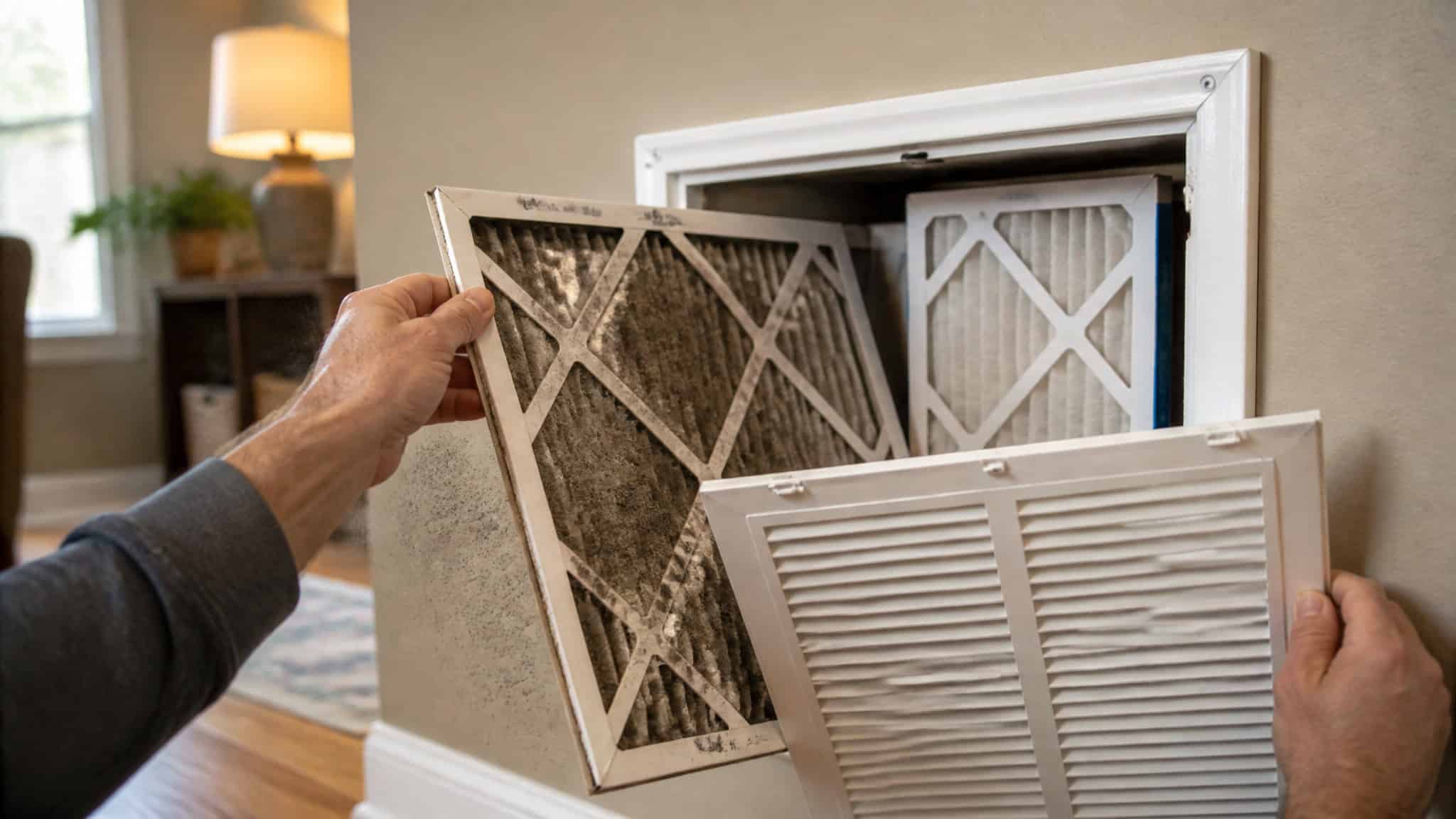
This is the #1 suspect. A clogged filter restricts airflow, which causes the system to overheat and shut down as a safety precaution. It’s the leading cause of short cycling.
The fix is cheap and takes five minutes. Replace the filter, airflow is restored, and the problem often disappears. Check the filter first. If it’s dirty, swap it out. Imagine the relief when that’s all it was.
Low Refrigerant
Low refrigerant, usually from a leak, prevents the system from absorbing enough heat. That causes erratic pressure, and the system shuts off early to protect itself. You might also see ice buildup on the evaporator coil.
This is not a DIY fix. Refrigerant leaks require professional equipment and certification. If the filter’s clean and the system still short cycles, this is a likely culprit. Call a pro.
Thermostat Problems
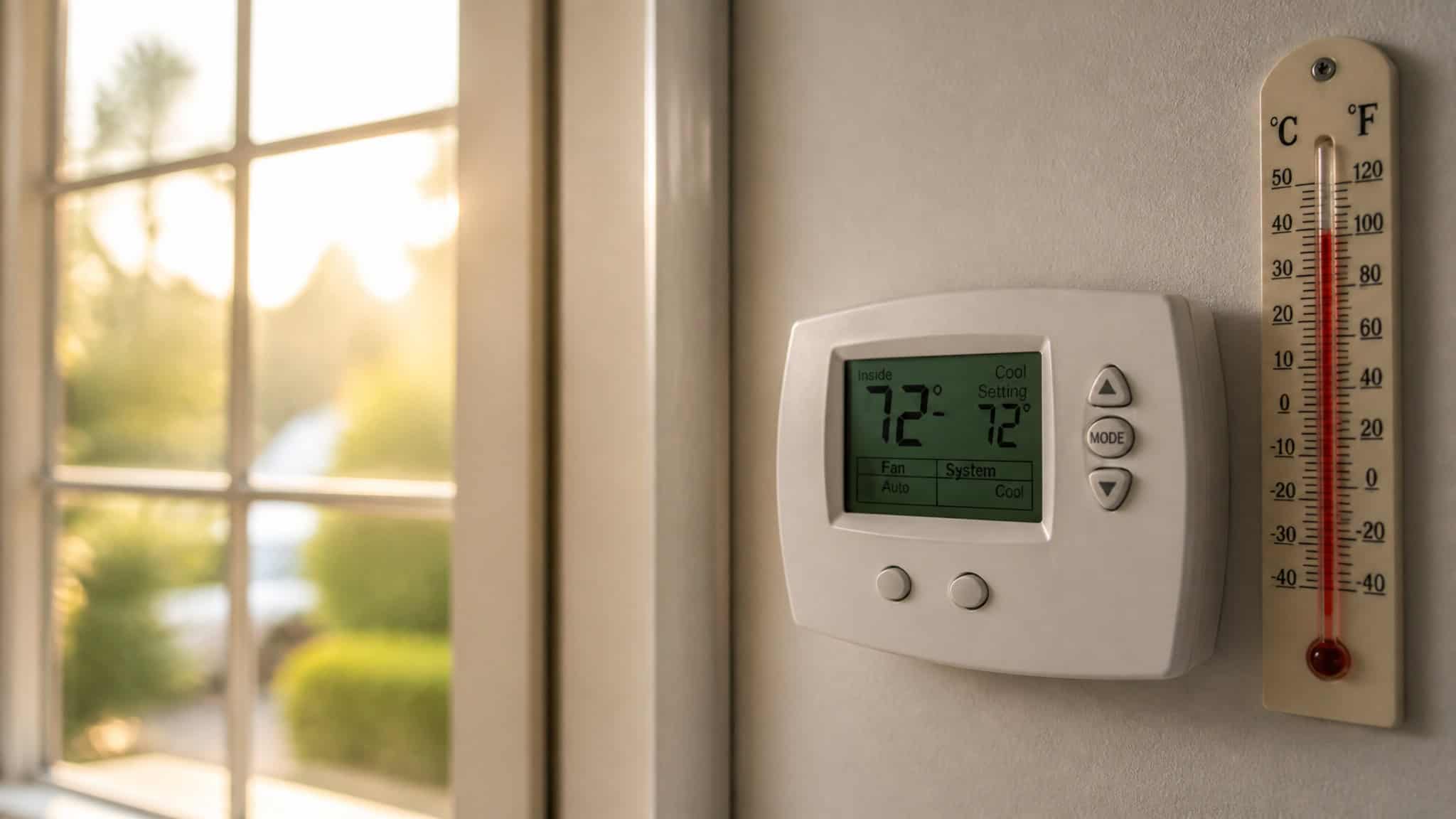
A thermostat that misreads the temperature or has wiring issues can send sporadic signals to the AC. Placement matters a lot. A thermostat near a sunny window, an oven, or any heat-generating appliance will misread the room temperature and cause erratic cycling.
A thermostat on a wall in direct afternoon sun might read 80 when the room is actually 74. The AC runs, the room cools, but the thermostat still thinks it’s hot, so it keeps cycling.
This is a satisfying DIY fix. You might just need to move the thermostat or change its batteries. Check placement and batteries before calling anyone.
Oversized AC System
Bigger isn’t better. An oversized system cools the air too quickly, before it removes humidity, and shuts off early. This causes short cycles, inconsistent temperatures, excess humidity, and unnecessary wear.
It’s like a sports car in stop-and-go traffic. A lot of power, but it can’t use it well. The only permanent whole-house fix is replacing it with a correctly sized system. HVAC techs use a Manual J load calculation to determine the right size. No DIY fix will solve this one.
Undersized AC System
This is the flip side, and it’s worth getting the distinction right. An undersized system struggles to cool the home, which causes long cycling, not short cycling. It runs too long, not too briefly.
It still leads to early wear and high energy bills. The only permanent fix is replacement with a correctly sized unit. But if your AC is short cycling, undersizing probably isn’t the cause. That’s the short-cycling trap: an oversized AC with too high a BTU rating will shut off early without proper dehumidification, leaving you with that cold draft. Rule it out, but keep it in mind if your system runs constantly without reaching temperature.
Electrical Issues
Faulty wiring, damaged control boards, or worn capacitors can cause intermittent operation. The system cuts in and out. Damaged capacitors or relays can interrupt power to the compressor.
This is a short, sober subsection. Electrical issues aren’t DIY. If the AC is short cycling every few seconds, not minutes, or if you notice burning smells or tripping breakers, call a pro immediately. And if your AC high energy bills have spiked, that’s another warning sign your system is working harder than it should, don’t go poking around your AC’s wiring.
Frozen Evaporator Coils
Frozen evaporator coils can cause short cycling. This can happen when you run the AC while it’s cool outside, or due to mechanical problems like restricted airflow or low refrigerant.
Here’s the practical diagnostic: ice on the evaporator coil is visible through the access panel. You can shut the system down, let it thaw, and try again. But if it refreezes, you have an underlying problem that needs professional help.
DIY Fixes to Try Before Calling a Professional
Start with the cheapest, easiest fix and work your way down. Most short cycling is caused by something simple. Don’t call a pro until you’ve ruled out the easy stuff.
Replace the Air Filter
Turn off the system. Remove the old filter and check it. If it looks dirty, or light doesn’t pass through it, replace it with the manufacturer-specified filter. Filters should be replaced every 1-3 months.
This is a two-minute task. The visual test gives you a concrete way to decide. Often, this solves the problem entirely. Start here.
Defrost Frozen Evaporator Coils
Shut down the system completely and let the coils thaw. Expect 8-24 hours. If the coils freeze again after restart, you have a deeper issue and should call a pro.
This is a patience fix. You’re waiting out the ice, then testing whether it recurs. Legitimate DIY step, but recurring freeze-ups mean professional help.
Inspect the Thermostat
Check that the batteries are fresh. Verify the thermostat isn’t near a heat source or in direct sunlight. Check that the settings haven’t been changed accidentally. Recalibrate or replace if needed.
That covers the three most common thermostat-related causes. A quick check that can save a service call, but don’t overlook the less obvious AC warning signs that often appear before a complete breakdown.
Clear Vents and Registers
Blocked supply or return vents restrict airflow, which can contribute to coil freezing and short cycling. Walk through the house and move anything blocking vents: furniture, curtains, rugs.
Simple, visual, and worth doing regardless. A blocked vent is something you can see and fix immediately. Restricted airflow causes multiple problems.
When to Call a Professional
If you’ve done all the DIY fixes and the system still short cycles, it’s time to call a pro. Don’t keep guessing. The remaining causes are likely refrigerant leaks, electrical issues, or system sizing problems. All of those are professional-only.
A good technician will check refrigerant levels, electrical connections, evaporator coils, and other potential issues. For sizing, they’ll use a Manual J load calculation to determine how much heating and cooling your home actually needs. If the system is improperly sized, the only permanent whole-house fix is replacement with a correctly sized unit.
You’ve ruled out the easy stuff. Here’s what remains, and why it needs a pro.
How Much Does Fixing a Short Cycling AC Cost?
The honest answer is that it varies entirely by cause. But the framework is clear.
- Filter replacement: A few dollars and five minutes. The cheapest option.
- Thermostat issues: Low cost if you can recalibrate yourself. Moderate if replacement is needed.
- Refrigerant recharge or leak repair: Moderate cost, and it requires a licensed technician. Ignoring it can lead to higher energy bills and potential system damage.
- Electrical repairs: Capacitors and relays are moderate, but safety-critical.
- System replacement: Expensive, but it’s the only permanent fix for sizing problems.
The real cost is the one you don’t see coming. Doing the cheap DIY fixes first costs you almost nothing. Ignoring the problem until the compressor fails costs you thousands. Fixing it early is dramatically cheaper than waiting for failure.
Prevention: Keep Your AC From Short Cycling
Short cycling is largely preventable with consistent habits. These take minutes but save hundreds.
Regular Filter Replacement
Replace filters every 1-3 months. This protects airflow and internal components. It’s the single most effective maintenance habit. Most short cycling starts with a neglected filter.
Thermostat Calibration and Placement
Keep the thermostat away from sunny windows or ovens. An improperly calibrated thermostat can misread room temperature and cause erratic cycling. Position it correctly, calibrate it once, and it stops being a problem.
Smart Thermostat Technology
Smart thermostats give you precise control and diagnostics that can help prevent cycling issues. They can alert you to unusual patterns before they cause damage. Think of them as early-warning systems, not just convenience gadgets. They catch the problem when it’s still cheap to fix.
Short Cycling at Night and Every Few Seconds: Special Cases
Two scenarios come up a lot, and they point to different problems.
Night cycling. If your AC short cycles at night but not during the day, check what changes in your home in the evening. It’s often thermostat placement. A thermostat near a heat source that’s active in the evening, like a kitchen or an appliance, or a spot that retains daytime heat, will misread the temperature.
It could also be temperature differentials or system sizing. Apply the earlier checklist, but flag the evening heat patterns.
Every few seconds. This is almost always electrical. Faulty wiring, capacitor issues, or control board problems. This needs professional help immediately. If your AC is cycling every few seconds, not minutes, call a pro. This is not a DIY situation.
Getting Professional Help
You’ve done the easy fixes, so now you need a qualified technician. Here are the concrete paths.
Manufacturer dealer networks can connect you with qualified service. American Standard dealers and Carrier dealers offer service and product recommendations. Carrier’s Customer Care team is available Monday through Friday, 7am to 5pm CST.
If you’re in Pennsylvania, HL Bowman is a local HVAC service provider you can call at 717-561-1206. That’s a specific example of a local provider, but the dealer networks are your best bet for finding someone qualified wherever you are.
You’ve got clear paths forward. Contact a dealer network or a local provider. The problem isn’t going to fix itself.
People Also Ask
How much does it cost to fix a short cycling AC?
It depends entirely on the cause. A dirty air filter costs a few dollars and five minutes to fix yourself. Thermostat issues are low to moderate cost, refrigerant leaks and electrical repairs run moderate, and a full system replacement for sizing problems is the expensive end. The cheapest fix is always the filter, so start there before calling a pro.
What would cause an AC unit to short cycle?
The most common cause is a dirty air filter that restricts airflow and triggers an overheating shutdown. Other culprits include low refrigerant from a leak, thermostat placement or wiring problems, an oversized system, electrical issues, and frozen evaporator coils. Most of these are diagnosable by working through a simple checklist.
Why is my air conditioner short cycling in seconds?
Cycling every few seconds, as opposed to every few minutes, is almost always an electrical issue. Faulty wiring, damaged capacitors, or control board problems can interrupt power to the compressor and cause rapid on-off behavior. This is not a DIY situation — call a professional immediately, especially if you notice burning smells or tripping breakers.
Why does my air compressor keep short cycling?
Your compressor short cycles because something is triggering its built-in safety shutdown before a full cooling cycle completes. The usual suspects are restricted airflow from a dirty filter, low refrigerant causing erratic pressure, or electrical faults. The compressor restarts repeatedly because the system keeps trying to run but can’t sustain normal operation.
Is an oversized AC system bad for short cycling?
Yes, bigger isn’t better. An oversized system cools the air too quickly, before it removes humidity, then shuts off early — causing short cycles, inconsistent temperatures, and excess moisture. The only permanent fix is replacing it with a correctly sized unit determined by a Manual J load calculation.
What’s the difference between short cycling and long cycling in an AC?
Short cycling means the system runs too briefly — turning on and off in under 7-10 minutes — often caused by oversized equipment, dirty filters, or electrical faults. Long cycling means it runs too long without reaching temperature, typically from an undersized system. Both waste energy and wear out the compressor, but they point to different root causes.