You open the electric bill and stare at it for a second. Maybe you blink. Maybe you check the date to make sure it’s your house and not a small country’s GDP. The number is higher than any month last year, and your first thought is the obvious one: the AC is expensive.
It’s not you.
Air conditioning accounted for 19% of home energy use in US homes in 2020, and by 2022 nearly 90% of American households were running some form of it. The EPA estimates a typical central unit eats 2,500 kilowatt-hours a year, which at the average May 2024 rate of $0.175 per kWh works out to $437.50 added to your annual utility bills. That’s the baseline. That’s what you’re already paying before any of the problems I’m about to describe.But here’s what I’ve learned from tracking my own usage and digging into the data: the spike is rarely “the heat.” It’s a combination of forces converging at once, and only some of them are in your control. The good news is that the most expensive fixes aren’t always the right first move. In fact, some of the biggest savings are free and take ten minutes.
Key Takeaways
Your AC can only cool your home 15-20°F below the outdoor temperature, so a 78°F setting is out of reach during a 100°F heat wave and your system runs nonstop.
Utility rate increases can spike your bill even when your usage stays flat: Duke Energy is seeking a 9.3% residential increase, and one study found customers would pay nearly 45% more in 2025 than in 2020 with unchanged energy use.
The highest-ROI fixes are cheap: changing a dirty filter can cut cooling energy use by 5-15%, and sealing duct leaks can reduce energy loss by up to 30%.
Table of Contents
Why AC High Energy Bills Are Spiking: The Usual Suspects
Your bill spikes because four things are happening at once, and you probably notice one of them. The first is climate: summers are getting hotter, and the EPA confirms it’s not your imagination. The American Geophysical Union projects cooling demand will rise 8-13% over the next decade. That’s your future bill if you don’t do something now.
The second force is your house itself. The third is the AC equipment. The fourth is the rate your utility charges, which can rise even when your usage stays flat. Most people blame the machine when the real culprit is a combination of all four.
The Climate Squeeze: Heat, Humidity, and the 15-20°F Limit
Here’s the mechanism most people miss. Warmer air holds more moisture, and humidity makes your body feel hotter than the thermometer suggests. So you crank the AC even when the temperature hasn’t moved much, because the feeling of heat is what drives you. A muggy house gets cooled more than necessary to hit a comfort level that a drier home would reach at a higher setting.
Then there’s the hard physical limit. An AC can cool a home 15-20°F below the outdoor temperature. A 78°F setting is out of reach during a 100°F heat wave. The system runs nonstop without ever satisfying the thermostat, and that’s when bills explode.
You’re not doing anything wrong. The machine is doing everything it can. It just can’t overcome physics.
The Hidden Rate Spike: When the Bill Rises But Usage Doesn’t
This is the part your energy company doesn’t advertise.Your bill can spike even if your usage stays flat, because utility rates are climbing independent of what you do.
Duke Energy Progress is seeking a 9.3% residential rate increase, down from an initial request of 15.1% but still a hike. If approved, the average residential customer pays $9.62 more per month starting in January, plus another $5.89 monthly starting in 2028. The Energy and Policy Institute found that customers would pay 45% more in 2025 than in 2020, even if their energy use stayed the same.That’s not your thermostat’s fault.
Duke attributes higher summer bills to increased AC use from heat. That’s their story, and it’s not the whole story. Sara Heilman, clean energy strategist at NC WARN, put it more directly, pointing to a direct correlation between profit for Duke Energy executives and investors and rising costs for North Carolinians. In California, the three largest utilities (PG&E, SCE, and SDG&E) have higher per-kWh costs, and the projected average monthly bill there is $186 versus a $144 national average.
The point isn’t to rage at the utility. The point is that you need to cut usage to offset rate hikes you can’t control.
The Leaky Bucket: How Your Home Wastes Conditioned Air
Most people blame the AC unit, but the house itself is often the real culprit. Trying to cool a home that leaks air is like trying to cool a sieve.The numbers are brutal: poorly sealed ducts can lose 20-30% of cooled air before it ever reaches your living spaces.
The usual suspects are attics, crawl spaces, and exterior walls with settled or missing insulation. Single-pane windows are holes in your wall. Weatherstripping, caulking, and sealing gaps around pipes and vents are low-cost fixes that work.Sealing duct leaks can reduce energy loss by up to 30%, and you can do it yourself with mastic sealant or metal-backed HVAC tape.
Not duct tape. Duct tape won’t do the job.
The warning signs that your AC is working harder than it should are: dirty filters, airflow obstructions, refrigerant issues, duct leaks, improper sizing, and age. One of the most telling warning signs is [AC short cycling]( #planned-ac-short-cycling ), when the system turns on and off rapidly, which is a serious red flag that needs quick attention. A brand-new AC can still spike your bill if it’s the wrong size, the refrigerant charge is off, or the ducts leak. The equipment itself is often the last thing to blame.
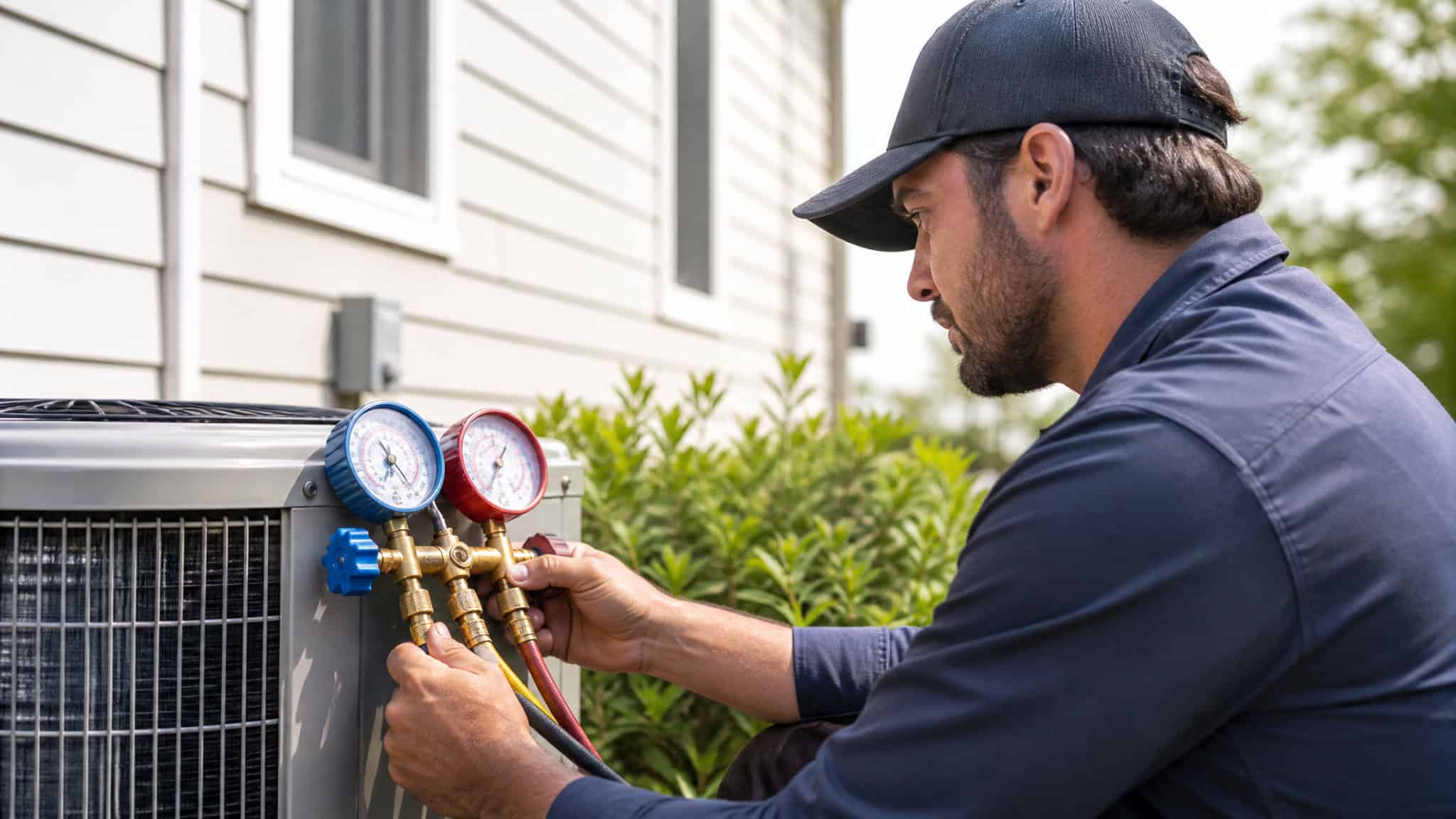
One diagnostic most people never think to do: compare your bills before and after a new AC installation. If the bill stays high after a new unit goes in, you’ve got a hidden problem like duct leaks or insulation gaps. That simple check reveals more than any spec sheet.
The Goldilocks Problem: Why AC Size Matters
An undersized unit can’t keep up, so it runs constantly and consumes more electricity.An oversized unit short-cycles, squandering power and prematurely wearing out components. Both waste energy, in different ways.
The rule of thumb: central AC draws 1,000 watts per ton. A 2,000-square-foot home typically needs 3.5 tons of cooling, which draws 3,500 watts per hour.Proper sizing accounts for square footage, windows, insulation, and sun exposure, not the floor plan. Short-cycling is common with oversized units and should be repaired immediately.
This is why professional load calculation matters. Don’t try to size this yourself.
Refrigerant and Airflow: Silent Efficiency Killers
Undercharged or overcharged refrigerant makes cooling less effective and forces the system to work harder. Refrigerant must be serviced by a licensed technician only, so this isn’t a DIY project. But the airflow issues are.
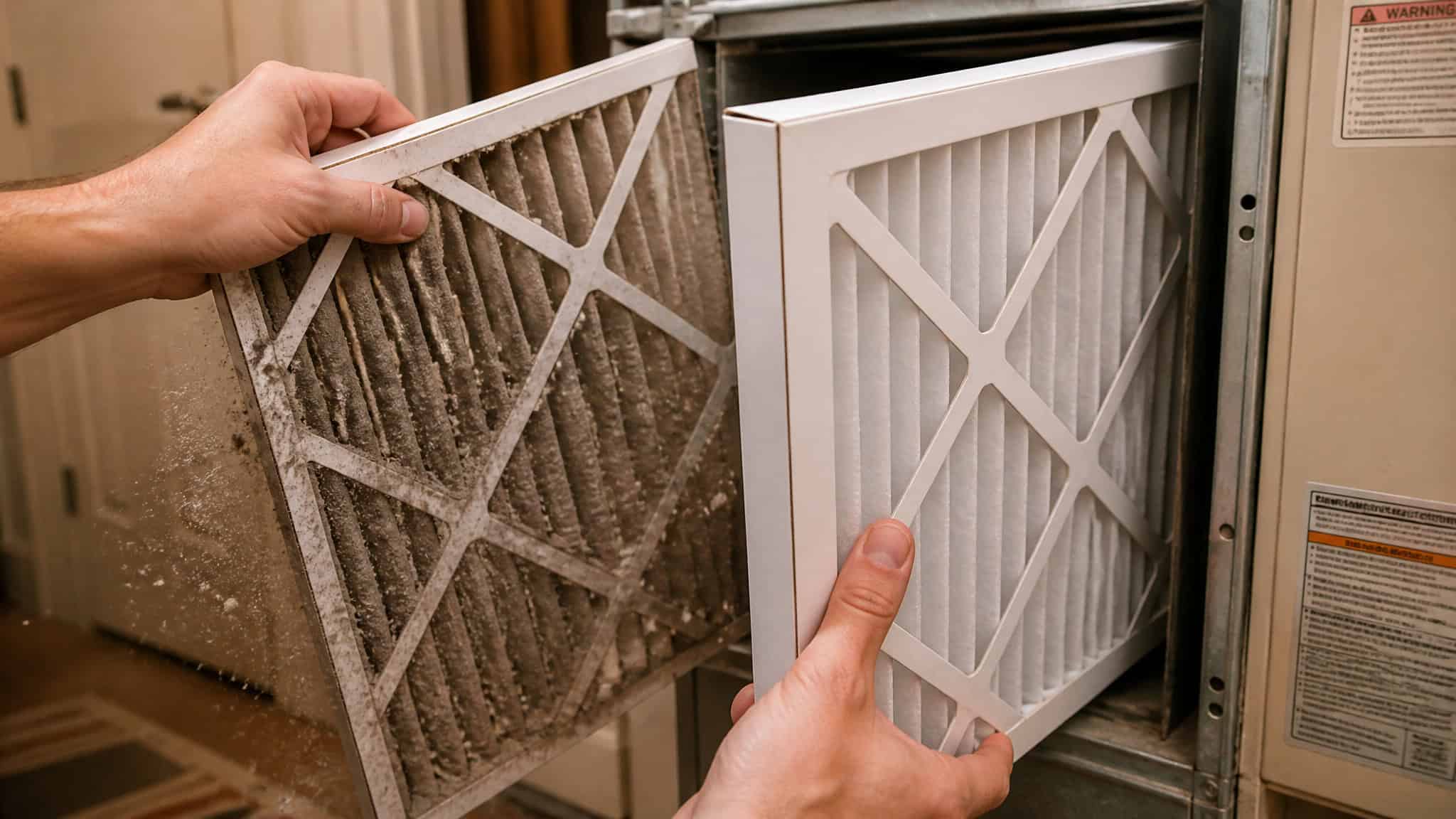
Furniture, dust, and closed vents make the AC labor.A clogged filter restricts airflow and increases energy consumption. Replacing a dirty filter can cut energy use by 5-15%, which makes it the highest-ROI maintenance move most homeowners skip. Filters should be changed every 30-60 days, or every 1-2 months depending on usage.
Go look at your filter right now.If you can’t remember when you changed it, it’s time.
Installation Quality: When the Fix Creates the Problem
Bad installation can cancel out any efficiency gain from a new unit. Leaks or incorrect connections force the AC to labor and consume more power. This is a silent money drain.
Here’s the insider move: always request a post-service report verifying that the refrigerant matches manufacturer specifications. An installation integrity inspection should look for exposed and concealed duct leaks. Most homeowners never think to ask for this, and it separates quality installs from sloppy ones.
Here’s the contrarian truth: a higher SEER rating saves you less than you’d think if your home leaks air, and much less at the premium end of the scale.
SEER ratings come from lab tests in static, perfect conditions. Your home has drafts, weak insulation, and varying sun exposure. Take the rating with a grain of salt.A SEER 21 unit can’t compensate for ducts that leak 20-30% of cooled air. The common failure pattern is a homeowner who upgrades to a high-SEER unit but still sees high bills because the ductwork leaks and insulation is poor.
The system works harder than necessary, and the savings from the new unit are offset by the home’s inefficiency.
The SEER Savings Table: Where the Value Is
| Category | SEER | Savings vs. SEER 10-12 |
|---|---|---|
| Basic (older unit) | 10-12 | Baseline |
| Modern minimum | 13-14 | 15-20% |
| Standard | 15-16 | 20-25% |
| High efficiency | 17-18 | 25-30% |
| Premium | 19-21+ | 30%+ (but price jumps dramatically) |
The biggest per-dollar efficiency gain is moving from an old SEER 10-12 to a SEER 14-16. Moving from SEER 14 to 16 can reduce cooling expenses. The step from 16 to 20+ costs far more and saves far less.For most homes in warm or hot areas, SEER 16-18 offers the best balance. That’s the practical range.
When a Premium AC Can’t Save You: The Envelope Factor
The house is often the problem, not the unit. A leaky envelope can wipe out the efficiency gains of a premium AC. Poor insulation and air leaks make any AC work harder than its rating suggests.Bad insulation lets cool air out, causing the AC to run more and use more electricity.
Operational habits matter as much as the label. Leaving doors open and aggressive setpoints make any system work harder. The system works harder than necessary, and the savings from the new unit are offset by the home’s inefficiency.SEER matters, but it’s one factor among many.
Quick Wins: Thermostat Math and Daily Habits
Smart thermostats that learn household patterns save 8% on cooling costs on average. That’s a solid return, but it’s not the whole story. The cheapest fixes are behavioral, and they’re free.
Here’s the surprising beat most people get wrong: setting the thermostat lower doesn’t cool your home faster. Central AC cools at a fixed rate. Lowering it won’t cool faster; it’ll run longer. Aggressive setpoint adjustments waste energy and give you nothing in return.
The Thermostat Settings That Actually Save Money
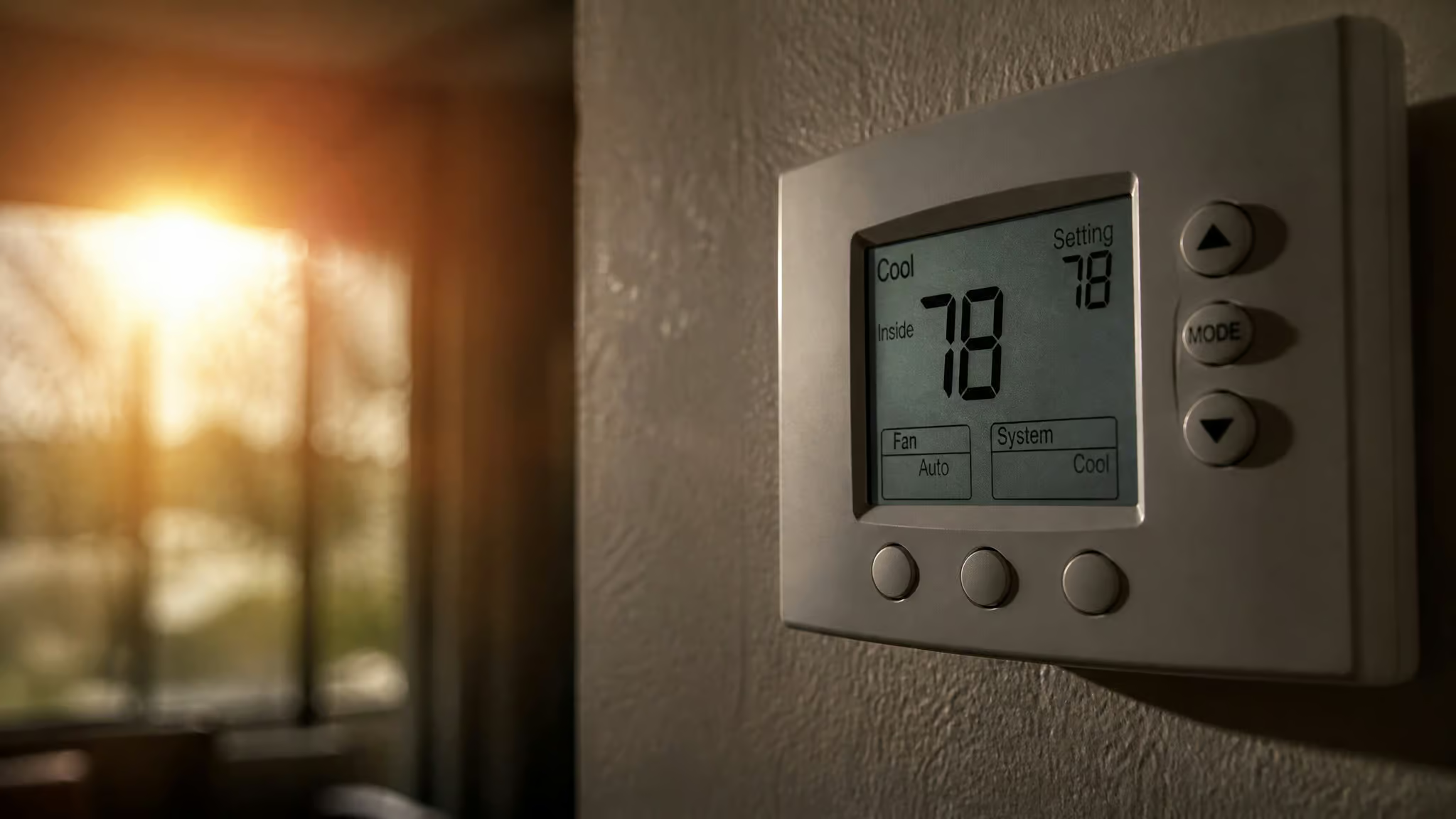
The DOE recommends 78°F when you’re home. Every degree you raise the thermostat saves 3% on cooling costs. Raising it 7-10°F for 8 hours a day can trim annual costs by up to 10%. The DOE also recommends 82-85°F at night or when you’re away.
Programmable thermostats adjust automatically based on your schedule. Smart thermostats that learn your patterns average 8% savings on cooling. Smart controls let you adjust from your phone, which means you can turn it off when you forget. But here’s the honest comparison: a basic programmable model captures most of the same savings for far less money.The 8% figure is real, but you don’t need to spend $250 to get it.
Auto Fan Mode and the Dehumidify/Dry Setting
Auto fan mode runs the blower only during active cooling. The “on” setting runs it constantly, wasting electricity because the fan motor is a major draw. That’s a simple switch with real savings.
Here’s the bonus most people don’t know: auto mode also lets condensation drain from the cooling coil between cycles, preventing re-evaporation into your home. That’s better humidity control as a side effect. Dehumidify or dry mode reduces the cooling load in muggy conditions and improves perceived comfort. A muggy house may be cooled more than necessary to feel comfortable, and dry mode fixes that without lowering the temperature.
Smart Thermostats: Worth the Upgrade?
The 8% average savings is the ROI anchor. If your summer cooling bill runs $200 a month, 8% is $16 a month, or $64 over a four-month cooling season. That’s a multi-year payback on a premium smart thermostat.
The programmable alternative is cheaper and captures most of the same savings. Smart control from your phone is convenient, and it means you can turn the AC off when you forget. But if you’re on a budget, start with a programmable model and set the schedule. You’ll get most of the benefit for a fraction of the cost.
Maintenance and Airflow: The 5-15% Quick Win
You can cut 5-15% of your cooling energy with a $10 filter and clearing blocked vents.That’s real money, not busywork. Here’s the sequence.
The Filter and Vent Check You Can Do Today
This is a 15-minute check anyone can do. Replace the filter every 30-60 days.Clear furniture, rugs, and curtains from vents and registers. Keep the returns uncluttered. Use energy saver or eco modes, which cycle the compressor and fan to reduce power once the desired temperature is reached.
One caution: don’t close too many vents at once.That can unbalance the system and cause problems. Close doors and vents in unused spaces to prevent wasted energy, but don’t go overboard.
When to Call a Pro: Annual Servicing and Inspections
Annual or biannual HVAC servicing prevents small issues from becoming larger problems. A pro can spot worn-out parts, refrigerant leaks, or clogged coils before they escalate. Systems that are 15 years or older are more likely to show their age.
A full inspection should check duct seals, airflow rates, thermostat settings, and energy use across cycles.If airflow feels weak in certain rooms or cooling is uneven, a professional duct inspection may be necessary. HVAC experts use diagnostic tools like duct blasters, smoke pencils, and pressure tests to find concealed leaks. Always request a post-service report to verify refrigerant matches manufacturer specifications. Know what you’re paying for.
Diagnosing Your System: Audits, Monitors, and Bill Comparisons
You don’t have to guess. There are three diagnostic paths: a professional audit, a home energy monitor, or comparing bills before and after an AC install. Each turns vague anxiety into a targeted fix list.
The Audit Path: What a Pro Checks
A professional home energy audit identifies hidden inefficiencies across the whole house, not the AC. The Inflation Reduction Act provides a tax credit of up to $150 for the audit, which can bring the cost to zero or close to it. That makes professional diagnostics an easy first step.
HVAC experts inspect filters, coils, and refrigerant levels, and use diagnostic tools for duct leaks. A full inspection covers duct seals, airflow rates, thermostat settings, and energy use across cycles. The audit identifies the problem. The fixes are separate.
The Monitor Path and the Bill-Comparison Test
Home energy monitors like Sense, Wiser Energy, and Curb provide real-time, appliance-level usage data. Sense uses AI to distinguish an AC unit from a curling iron, which is useful. These are diagnostic tools, not savings devices. They show you what’s using power so you can act on it.
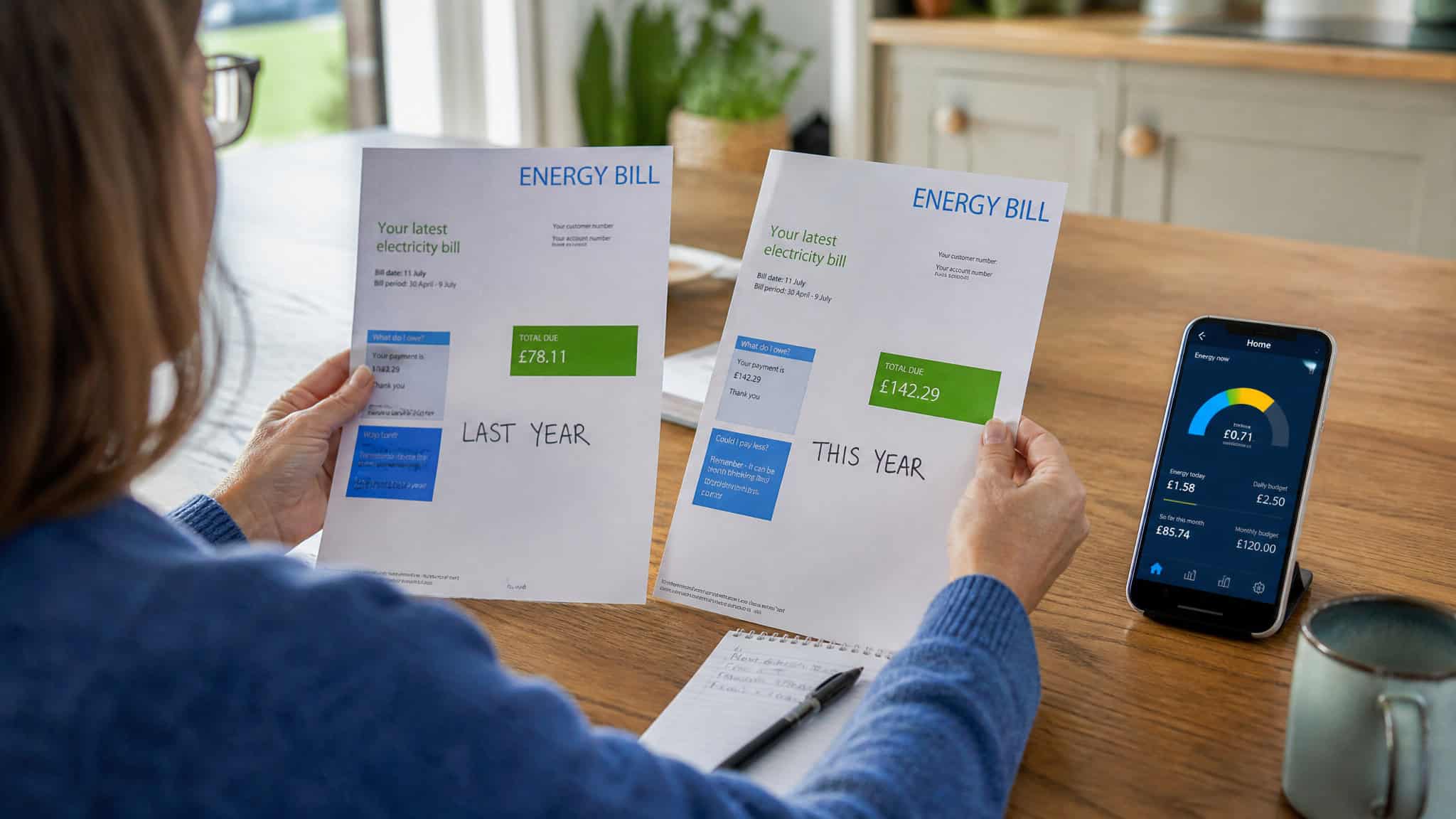
The zero-cost diagnostic: compare this month’s bill to the same month last year. If usage was flat but the bill rose, the cause is rates, not your AC. Tracking daily runtime exposes waste, like running the AC on cool mornings when you could open the windows.
Fixes That Pay for Themselves: Sealing, Shading, and Upgrades
The best upgrade isn’t always a new AC. Sealing ducts and improving insulation often beat a high-SEER unit. And solar is now 90% cheaper than a decade ago, even though less than 20% of people realize it.
The hierarchy: envelope first, equipment second, generation third. That’s where your money does the most good.
Seal the Ducts, Not Just the Unit
Poorly sealed ducts lose 20-30% of cooled air. Sealing them with mastic sealant or metal-backed HVAC tape can reduce energy loss by up to 30%.That’s a home-improvement project with real, immediate savings.
Insulate ducts running through unconditioned areas like the attic or crawl space. For accessible ducts, this is DIY. For hidden leaks, call a pro. Duct blasters, smoke pencils, and pressure tests identify leaks you can’t see.Duct tape won’t do the job. Use the right materials.
Windows, Shade, and the Home Envelope
Blocking direct sunlight on south- and west-facing windows prevents indoor heat buildup and reduces cooling demand. Strategies include planting trees, installing awnings, using thermal curtains, blackout blinds, or reflective window coverings.
Energy-efficient treatments like window films and cellular shades beat basic coverings. Double-pane or Low-E coated windows create a real heat barrier. The tiered approach: free (close the blinds), cheap (thermal curtains), investment (Low-E windows). Ceiling fans improve air circulation and allow you to raise the thermostat by up to 4°F without losing comfort.Fans use less electricity than air conditioners.
Heat Pumps, Solar, and Modern AC Technology
Eric Goranson, an Around the House expert, explains why age matters beyond SEER: older single-stage systems run at full capacity whenever they’re on. Newer variable-speed compressors adjust output smoothly and efficiently. That’s why age matters as much as the efficiency rating.
Heat pumps transfer heat instead of generating it, using much less energy. Central HVAC systems with heat pumps use the same energy as conventional AC, so don’t assume heat pumps are worse. Mini-split or ductless systems avoid duct losses entirely. Inverter-based air conditioners adjust output and reduce energy spikes.
Solar costs 90% less than a decade ago. The Inflation Reduction Act provides tax incentives for efficient upgrades. Smart power strips, ENERGY STAR appliances, induction stoves, and heat pump dryers and water heaters all reduce consumption. Upgrade when you can.
If you’re in Florida or California, your bill is high for specific reasons: climate, utility rates, and local rate increases. California’s three largest utilities have higher per-kWh costs, and the projected average monthly bill there is $186 versus a $144 national average. That’s the system you’re operating in.
Here’s the feedback loop: higher energy demand leads to more fossil fuel burning, which leads to more carbon pollution, which leads to hotter temperatures, which leads to higher future bills.
Individual fixes help, but policy is the only way to break the cycle.Time-of-use electricity rates shift usage to cheaper off-peak hours. Running heavy appliances at night can cut costs without changing total consumption. Energy efficiency incentives and rebates offset upgrade costs.
Supporting clean energy policies can stabilize long-term costs.Global climate efforts might bump up costs short-term, but rebates and dividends can offset that. Talk to your friends and family about climate change. That’s how you fix the system, not your bill.
Your Action Plan: Where to Start Tomorrow
Here’s the order of operations, ranked by return on investment:
Free fixes first. Thermostat setback, auto fan mode, natural cooling on cool mornings, closing doors and vents in unused rooms. These cost nothing and work immediately.
Cheap fixes second. Filters, weatherstripping, caulking, window treatments. Replacing a $10 filter and clearing blocked vents can restore 5-15% efficiency.
Capital upgrades last. Heat pump, solar, new AC. Only after the envelope is sealed. A new high-SEER unit on a leaky house is money wasted.
Then the measurement step: circle this month’s bill and compare it to the same month last year. That’s your personal feedback loop.If usage was flat but the bill rose, the cause is rates, not your AC.
The Bottom Line
The bill spike is a diagnostic signal, not bad news. The causes are knowable: climate, envelope, equipment, or rates. You can find which one is yours. The fixes are staged: free behavioral changes first, cheap maintenance second, smart upgrades third.
Individual fixes help. Systemic change requires policy and clean energy support. But the single most useful habit is the year-over-year bill comparison. It tells you whether your efforts are working or whether the system is working against you.
This is a problem you can do something about. Start with the filter, then the thermostat, then the ducts. The bill will tell you if you’re on the right track.
People Also Ask
Why is my air conditioner making my electric bill so high?
Your AC bill spikes for several reasons at once: hotter summers, high humidity, your home’s energy loss, equipment problems, and utility rate hikes. A major hidden factor is that an AC can only cool your home 15-20°F below outdoor temperature, so during a heat wave it runs nonstop without satisfying the thermostat. Utility rates also climb independently of your usage, so you may pay more even if you use the same electricity as last year.
What should I keep my AC on to lower my bill?
Set your thermostat to 78°F when you’re home, and raise it 7-10°F for 8 hours a day (to 82-85°F) when you’re away or sleeping—this can reduce annual cooling costs by up to 10%. Every degree you raise the thermostat saves about 3% on cooling expenses. Also switch the fan to “auto” mode and close blinds on south- and west-facing windows to reduce heat gain and dependency on the AC.
Is it cheaper to keep AC on or turn it on and off?
Turning it off when you’re away is cheaper, provided the off period lasts long enough (like during work hours). The idea that the AC has to “work harder” to cool a warm home is a myth—central AC cools at a fixed rate, so a lower thermostat setting won’t speed up cooling, just use more energy. For short absences (under an hour), leaving it at the same temperature might be simpler, but for longer absences, the setback is more cost-effective.
Can a smart thermostat really save you money on AC costs?
On average, smart thermostats that learn your household’s patterns save about 8% on cooling costs per year—good enough to recover $16 a month on a $200 cooling bill. But a basic programmable thermostat can capture most of that savings for a fraction of the $250 price tag of a smart model. If you’re on a budget, choose a programmable thermostat and set a schedule; the convenience of phone control may be worth extra cash, but it’s not essential for the big savings.