
In 2008, The Telegraph reported that a 15-year-old went into convulsions following a 24-hour World of Warcraft session. No sleep, no food, just hours of concentration, right after a new version of the game dropped. It’s the extreme end, sure. But it raises the question a lot of people type into a search bar: why does gaming grab men so hard in the first place?
The popular answers don’t answer it. “It’s dopamine” is vague enough to explain everything and nothing. “It’s an addiction economy” is panic dressed up as analysis. The honest version sits somewhere in between, and it starts with a brain-imaging study from Stanford. There’s a real mechanism there, and it’s worth understanding before anyone reaches for the word “addiction.”
One thing up front, because it keeps the whole conversation straight: women play at nearly equal rates. About 48% of women play games, versus 58% of men. This isn’t a guys-only club. It’s about how the pull works, not who feels it — a distinction our online slot authors often draw on when explaining how reward pathways work.
Key Takeaways
A Stanford School of Medicine study found that while gaming, men showed more activity than women in the brain’s reward-and-addiction center, and in men that activity increased in proportion to territory gained in the game.
The average gamer is male and 30 or younger, playing about 7-8 hours a week, roughly an hour a day. 48% of women play, but only 6% call themselves “gamers,” so the real gender gap is identity, not participation.
Playing a lot is not the same as being addicted: the clinical signals are what play displaces (family, work, school) and physical symptoms like migraines, weight gain, and wrecked sleep, not hours logged.
Table of Contents
The male reward circuit: what Stanford’s brain study actually found
While gaming, men show more activity than women in the mesocorticolimbic center, which is the brain’s reward-and-addiction region. That’s the one-sentence answer, and it comes from a study out of Stanford University School of Medicine led by Dr. Allan Reiss, published in the Journal of Psychiatric Research.

The setup was almost comically simple. Eleven men and 11 women clicked on 10 moving balls before the balls hit a wall. Nobody was told there was a point to the clicking. Everyone figured out the objective quickly, and both groups had similar motor skills. But the men worked out something extra: balls nearest the wall were worth the most territory, and they grabbed significantly more of it.
Inside the scanner, the nucleus accumbens, amygdala, and orbitofrontal cortex, the reward and emotion centers, lit up harder in men, and the activity scaled with territory gained. In women, no such correlation. Reiss’s own framing was careful: in his words, these differences could account for why males gravitate more toward video games and why they face a higher risk of getting hooked. Keep his hedge. It’s honest.
The limits matter too. It’s 11 versus 11, the design is correlational, and the task is one specific game. The common misread is treating “male brains lit up more” as destiny. What the study actually showed is that activation tracked with progress toward the goal.
The mechanism is winning ground. Not gender.
What the medium offers: control, progress, and guaranteed reward
Video games are different from film or TV because they reward effort and skill directly, with clear goals, instant feedback, and a competence signal that everyday work often fails to supply.

Start with control. Unlike a movie, a game lets you directly affect what happens on screen. Two flavors of that control show up constantly. There’s pacing autonomy: wandering Hogwarts Legacy‘s Hogwarts Castle at whatever speed you want, because nobody’s fast-forwarding for you.
And there’s methodical exploration: clearing Deus Ex hub areas for side quests, hidden areas, and optional conversations with NPCs, combing every corner because the corner might hold something.
Then there’s choice with stakes. Telltale’s The Walking Dead opens with Lee in a police car being transported out of Atlanta, and the dialogue options, polite, hostile, or silent, shape a story where characters live or die based on what you pick. Worth being honest here: a lot of “branching” games are smoke and mirrors, and early game stories were mostly an afterthought. Modern RPGs have gotten better at it.
The territorial, progression-driven mechanic that lit up male reward circuits in the Stanford task is the same mechanic that defines progression-driven games. Neuroscience and game design point at the same variable. Men’s brains want to solve problems, as a Man Effect column put it, and not every job pays out that reward. Games supply it on demand:
- Guaranteed progress: territory gained, levels cleared, problems solved, with feedback in seconds instead of quarters.
- Real control: pacing, route, and method are yours in a way most work isn’t.
- Competence on demand: a rough day at the office doesn’t hand you a win. A game does, if you earn it.
That last one isn’t sad, it’s just understandable. When your job gives you no solve-it-and-get-rewarded loop, the medium that does starts looking pretty good.
The social layer: gaming as friendship infrastructure
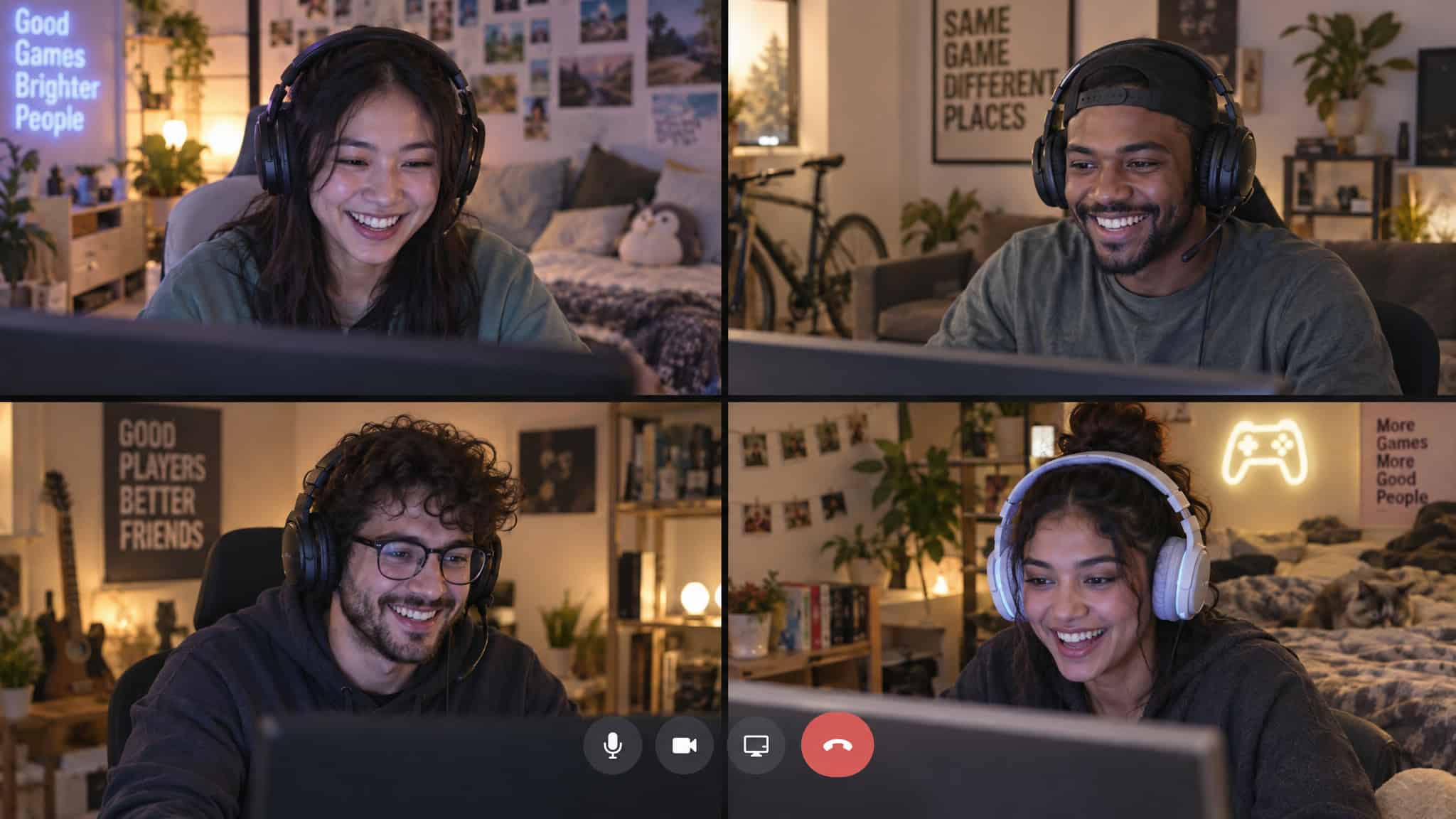
Voice chat does more work in male friendship than people give it credit for. It’s often hostile and foul-mouthed, sure, but it also produces real long-distance friendships, the kind that hold for years. Call of Duty: Black Ops on the Wii, the first series entry with Wii voice chat, carried one online group that made the point: an introverted middle schooler, a New York father of two, a New Orleans military veteran, and a North Carolina couple, playing an hour or two a night. It’s a common pattern in online gaming, not a one-off.
Even the critics concede it. The Institute for Family Studies study admits games are a source of camaraderie and collaboration that’s often in short supply for young men. Part of the draw is that why men like video games comes down to basic reward wiring: the Stanford brain-imaging study found the reward circuit lit up harder in men while gaming. And there’s a counterfactual worth stating as a logical point, not a proved cause: without games, the alternative might be boredom, TV, binge drinking, or fights.
Physical confrontations, mostly among men, have fallen as other uses of time emerged. That’s not proof gaming caused the drop. It’s a reason not to assume the alternative was something better.
The numbers: who plays, who calls themselves a gamer, and the real gender gap
As industry experts describe the average gamer, he’s male, 30 or younger, and plays about 7-8 hours a week. That’s roughly an hour a day. Read your own habits against that number before assuming anything is out of control.
Participation vs identity
The interesting gap isn’t in who plays. It’s in who claims the label. 58% of players are men, but just 15% of male players actually claim the “gamer” label. Meanwhile 48% of women play, and only 6% take the badge. Women play at rates that usually astonish both sexes.
And are guys actually better at video games? That’s a different question entirely, the Institute for Family Studies found 95% of young men game at least sometimes, though that’s a different population and measure from the average-gamer profile, so don’t merge them.
Two different addiction measures, never conflated
Harris Interactive asked people whether they feel addicted: 31% of males said yes, versus 13% of females. That’s a feeling, self-reported, not a diagnosis. The AMA Council on Science and Public Health works differently: at least 90% of American youth play, and up to 9%, more than 3 million people, may be addicted, a clinical estimate. Two different constructs, and mixing them is how bad takes get born. The AMA also warns that the younger kids start, the more dependence-like symptoms show up, things like academic underachievement, aggression, and weight gain.
Red flag: “I feel addicted” and “a clinician would diagnose addiction” are two different numbers. Don’t let anyone merge them to make a point.
Where enthusiasm ends and addiction begins
No, playing video games a lot is not the same as being addicted to them, and the decisive condition is displacement: addiction shows up in what play costs you, not in how often you play. Most gamers, like most evening wine drinkers, aren’t addicts, and for many men, playing video games is actually a healthy outlet rather than a rut.
The wrong signal
Frequency is a bad proxy. The IFS study tracks how often people play, many times a day, daily, and so on, rather than hours. Consider the counterexample the Reason author offered about himself: he plays Dominion many times a day in 5-20 minute sessions, which would land him in the top “addiction” category despite zero negative impact. Similarly, quick Smash Bros. rounds on a work break are not a 10-hour binge, whatever a spreadsheet says.
Partners and parents routinely read session frequency as the signal. Hours spent would be the better measure.
The right signals
The clinical tells are displacement and physical response: euphoria from playing, excessive play and thinking about play, neglecting family, friends, school, or work, plus migraines, weight gain, and messed-up sleep. It’s the same pull behind why guys like sports, competition and passion can tip into obsession. If you’re wondering whether it’s a red flag in a relationship, that’s the actual test: what has play pushed out, and is the person still showing up for the people who matter. These signs apply to men and women both.
Quick test: Ask what play has pushed out — family, work, school, sleep. If nothing’s been displaced and sleep is fine, you’re looking at a hobby, not an addiction.
Why addiction happens
Playing isn’t being addicted. Not everyone who tries heroin gets hooked, whatever the D.A.R.E. era implied, and the Rat Park experiments showed environment matters enormously in whether a substance takes hold. Addiction is a symptom of an underlying problem, not the inevitable result of an activity. The risk profile is specific: young people who are isolated, anxious, depressed, or down on themselves are most at risk.
Most readers know a guy like that, or were him. Men actually addicted are usually escaping something, coping with depression, or avoiding a reality they don’t have the skills or support to face. The game fills a hole. The hole is the problem.
The extreme tail: when gaming stops being a hobby
The male-skewed extreme tail is probably not coincidence, per the Stanford research, since the same reward circuitry that makes gaming compelling makes overuse possible. The documented cases, dated and flat:
- 2008: The Telegraph reported a 15-year-old suffering convulsions following a 24-hour World of Warcraft session. The attributed causes were no sleep, no food, and hours of concentration, right after a new MMORPG version released.
- Ontario: a 15-year-old boy disappeared and died after a dispute with his parents over a video game. The case revived concerns about internet gaming.
- Philadelphia: Tyrone Spellman, described in reports as an obsessive gamer, killed his 17-month-old daughter when she damaged his Xbox.
- 2017: Brian Vigneault died attempting a 24-hour Twitch streaming marathon.
- 2018: a year after Vigneault’s death, two young men lured an ex-roommate home and fatally stabbed him over a stolen console.
These cases share two things: mostly male subjects and signs of addiction. The tail is real, and it’s exactly why the enthusiasm-versus-addiction line matters. But the tail is not the median gamer, any more than a bar fight is the median drinker. The average guy plays an hour a day and shows up to work the next morning.
The cultural debate: vice, crisis, or hobby?
The loudest current argument comes from the Institute for Family Studies’ “addiction economy” report, which groups video games with porn and gambling as vices. Brad Wilcox posted on X on August 25, 2026 that we have a generation of young men trapped in the addiction economy and the numbers are staggering: 11.9% of young men 18-29 use porn, gamble, AND game daily; almost 1 in 4 (23.3%) gamble daily; over 25% use porn daily. Grant Bailey’s companion figure: just 2% steer clear of all three entirely, while 95% game, 70% watch porn, and 57% gamble at least sometimes. Wilcox and James Lynch, writing in Compact, argue the American founders weren’t libertarian about vice and that liberty and license aren’t the same thing. Philip Zimbardo, who ran the 1971 Stanford Prison Experiment, makes the related case in Man (Dis)connected that technology strips young men’s drive, leaving them isolated in games.
The rebuttal
Robby Soave at Reason argues that lumping games in with porn and gambling is a huge mistake, because they’re distinct: a game is interactive, effortful, and skill-based in a way passive vices aren’t. The frequency-based measure conflates hobby with pathology, which is the same flaw from the addiction section. Even the study’s own authors concede games supply camaraderie, while calling frequent gaming draining and tied to demoralization. And the counterfactual objection stands: nobody checked whether the alternative to gaming was something better.
Even physicians and professors disagree hotly on this, and the stakes are real: marriages have failed over gaming addiction, while some kids game well and flunk school. Policy precision is the reasonable ask. Meta curbed young users’ usage after its $17.1 billion settlement with state AGs despite scant evidence of widespread harm, which is what happens when big money moves on vague claims. Regulators should specify harms and fixes narrowly, whatever they decide about games.
Crisis or coping? What the aspiration data says
The macro backdrop is heavy, and it’s fair to present it as such. Unmarried men aged 20-39 grew from 20.7 million in 2000 to 30.4 million today, and over 7 million men aged 25-55 are unemployed and out of the labor force, per the Institute for Family Studies. Zachary Mettler at The Daily Citizen frames daily porn, gambling, and gaming as making young men “unmarriageable.” That’s his framing, and it’s worth engaging rather than adopting.
Here’s the counter-data almost no gaming article mentions: 42% of young men say religion is “very important” to them, the highest figure in 25 years, versus 29% of young women (Gallup). For the first time in American history, more men attend church than women. 68% of unmarried young men want to marry someday, 62% of childless young men want to be fathers, and among 12th-graders, 74% of boys want marriage and kids, compared with 61% of girls. The “checked-out young man” narrative has a data problem.
Joseph E. Davis, the IFS study’s lead researcher, put his finger on it: what stood out in the interviews wasn’t indifference but trying circumstances. Young men aren’t where they want to be, often feel trapped, and aren’t sure what to do. Stuck, not lazy. There’s also an ideological gap to note neutrally: more young men are conservative (29% vs 22%) and more young women liberal (37% vs 28%), with 2024 voting data showing marriage and kids ranked far higher as priorities among young Trump-voting men than young Trump-voting women. And per Maria Baer and Brad Wilcox at IFS, social media strains marriage prospects for both sexes.
The synthesis, offered as one reading among several: if desire is intact and circumstances are stalled, gaming looks more like a coping response than the cause. Blaming games mistakes the symptom for the disease.
Benefits, moderation, and help
Moderate play is good for you: a Journal of CyberTherapy & Rehabilitation study found it reduces stress and helps depression, especially after a rough workday, and teen gamers handle frustration better than non-gaming peers, while games build teamwork and problem-solving in actual play. The industry has noticed too; Blizzard Entertainment updated World of Warcraft to dial back the hooks, and Guitar Hero and Wii Fit built in active and social components. Even escape reframes cleanly: nightly pre-sleep play can be accepting an invitation into another world rather than fleeing your own.
For parents, the practical version: set daily limits for kids, since even broken rules set expectations. Diversify outlets, so gaming sits on a list next to sports, clubs, walking the dog, and reading rather than replacing all of it. For genuine addiction, wilderness therapy programs and therapeutic boarding schools exist. First figure out whether gaming is the problem or the symptom. Focus on the Family counselor Rob Jackson warns that porn, games, and gambling drain time, energy, and money, and encourages parents to love their sons without enabling them; his help line is 1-800-A-FAMILY (232-6459).
The hours tell you whether it’s a hobby or a flight.
The mechanism is real: male reward circuits respond strongly to progress through territory and optimization, and the medium supplies control, guaranteed competence, and cross-demographic friendship. The difference from women is mechanism and identity, not participation. Enthusiasm is measured in what play doesn’t displace; addiction is a symptom pointing at something underneath.
Watch what the hours displace.
Frequently Asked Questions
Why are males more attracted to video games?
A Stanford School of Medicine study found that while gaming, men showed more activity than women in the mesocorticolimbic center, the brain’s reward-and-addiction region, and that activity scaled with territory gained in the game. Women showed no such correlation. The mechanism is winning ground and measurable progress, not gender alone — and women still play at nearly equal rates (48% vs 58%).
What did the Stanford study find about men’s brains and video games?
Dr. Allan Reiss’s team at Stanford had 11 men and 11 women click on moving balls before they hit a wall, with no stated objective. Both groups performed similarly, but men worked out that balls nearest the wall were worth the most territory and grabbed significantly more of it. Their nucleus accumbens, amygdala, and orbitofrontal cortex lit up harder, with activation proportional to territory gained. The study was small (11 vs 11) and correlational, so it shows a mechanism, not destiny.
What percentage of gamers are male and how much do they play per week?
The average gamer is male, 30 or younger, and plays about 7-8 hours a week — roughly an hour a day. 58% of players are men, but only 15% of male players actually claim the ‘gamer’ label, and just 6% of women players do, even though 48% of women play. The real gender gap is identity, not participation.
How do I know if my boyfriend or husband is addicted to video games or just enjoys them?
Look at displacement and physical response, not hours logged. Addiction signals include neglecting family, friends, or work, euphoria tied to play, excessive thinking about gaming, migraines, weight gain, and disrupted sleep. If he’s still showing up for the people who matter and nothing meaningful has been pushed out, you’re looking at a hobby.
Why are men addicted to video games more than women?
Self-reported, 31% of males say they feel addicted versus 13% of females, and the extreme tail of documented gaming-harm cases is mostly male. The Stanford research suggests the same reward circuitry that makes gaming compelling to men also makes overuse possible. But addiction is a symptom of an underlying problem — the men most at risk are young, isolated, anxious, or depressed, and the game fills a hole that already exists.
What personality type likes video games?
There’s no single type — 48% of women and 58% of men play, so participation cuts across personalities. What the research points to instead is circumstance: people drawn hardest into gaming tend to be those whose jobs or lives lack a solve-problem-get-rewarded loop, and those who are isolated or coping with something. The pull is about reward wiring and situation, not a fixed personality profile.

