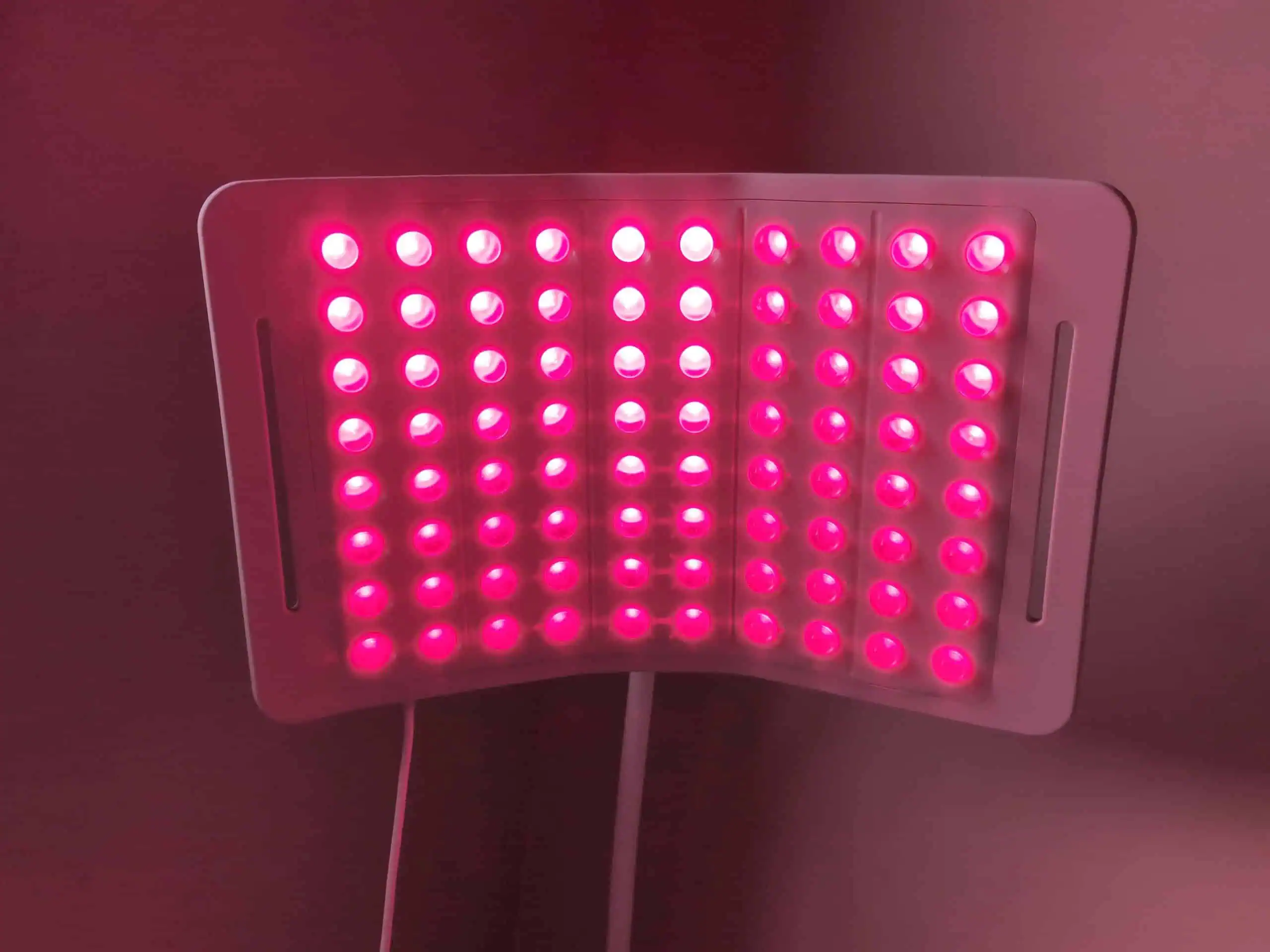
The LifeZoom Veyra Curved Silicone Red Light Therapy Panel is an exception in this category, and that’s the short version of this review: for $249, it’s the first red light panel I’d bet on still being in regular use three months from now, and it fits the guy who wants light therapy while doing something else, not lying frozen in front of a box.
Some context on where I’m coming from. I own more red light panels than any reasonable person should. Most of them follow the same script: a rigid slab of LEDs and a routine that demands you lie there at the correct distance doing nothing. Every one of those routines has died.
The novelty wears off, the panel migrates to a corner, and six months later it’s holding up a coat rack. So when the Veyra launched in July 2025 via, full disclosure, a paid press release I read with my skepticism cranked up, I was ready to file it under the same pile.
What changed my mind is the form factor. It’s a curved panel made of food-grade silicone that bends. Inside are 80 dual-chip LEDs firing 660nm red light and 850nm near-infrared, with three power settings on the included controller (20W, 30W, 40W) and a timer that runs 10 to 90 minutes. It comes with a flexible gooseneck stand, straps so you can wear it like a belt, and enough give to prop it as a dome over a wrist. The maker claims 66mW/cm² of irradiance, which is decent output for a panel this light, though keep in mind that number is measured at a tested application distance, not at your skin.
For me, the specific win is this: I read books upright, and the gooseneck stand lets me angle the panel over my head while I do it. No awkward lying, no low-power hair-growth hat. That’s the thing the rigid panels could never do, and it’s why I think this one survives the three-month test. Whether it’s worth it depends less on specs than on whether you’ll actually use it, which is the whole review in one sentence.
Key Takeaways
The LifeZoom Veyra starts at $249 in the U.S. and Europe, sold on LifeZoom’s site and Amazon, with 80 LEDs (96 on the Veyra S), 660nm + 850nm dual-chip LEDs, three power settings, and a 10-90 minute timer.
The Veyra is the desk/reading pick with a flexible gooseneck stand and separate red/NIR modes; the Veyra S is the recliner-and-bed pick with a floor base, 96 LEDs, and no separate modes.
No available source confirms FDA clearance for the Veyra, so treat its regulatory status as unverified; it can potentially be paid with HSA/FSA funds through Truemed if you qualify, and the warranty is one year, or two if you register within 14 days.
Table of Contents
Why flexible beats rigid: the adoption problem nobody covers
Yes, it covers your whole body, and yes, you can wear it as a belt. The panel suits neck, shoulders, back, limbs, joints, and anywhere you want soothing or recovery support. With the included straps it bends around your abdomen like a traditional belt device, so you’re not losing that option by buying this.
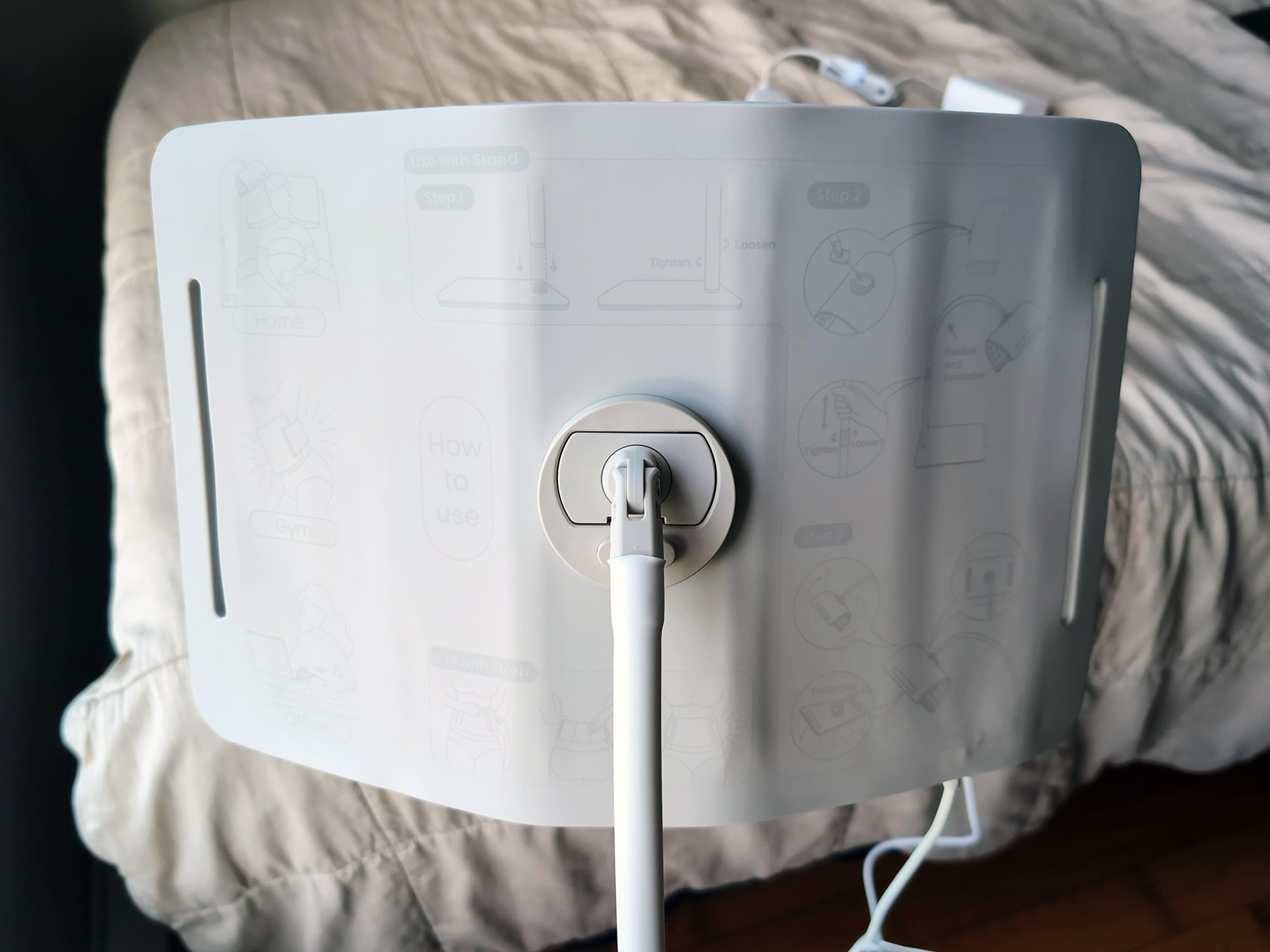
Here’s the pattern every multi-panel owner I know has lived: rigid panels demand lying face-up at a fixed distance, which competes directly with reading and screens. Once the novelty dies, so does the routine. Flexibility is the fix. You can use it as a stand-assisted panel, wrap it as a belt, or prop it as a dome over a small area like a wrist. The food-grade silicone is designed for skin contact, which rigid panels don’t offer.
| Veyra | Rigid panel lights | Belt-style products | |
|---|---|---|---|
| Coverage area | Yes (whole body, curved) | Yes (good coverage) | Partial (limited to wrap zone) |
| Contours to body | Yes (bends into arcs) | No | Yes |
| Use while upright/reading | Yes (stand) | Partial (sit at fixed distance) | No |
| Belt-style wear | Yes (straps included) | No | Yes |
| Stand or dome use | Yes (both, included kits) | Partial (stand only, panel rigid) | No |
Hands-on: reading under the Veyra
Yes, it works for light on your head and scalp while reading, and that’s the one thing I can vouch for firsthand. The gooseneck bends overhead at an angle, I sit upright with a book, and the panel does its thing. I’m not a doctor and I’m not claiming treatment results, but as a lighting rig, it works.
Worth knowing: LifeZoom designs the Veyra C for exactly this. The maker positions it clamped to a desk edge, angled down at your head, as a way to ease nerve tension during long work hours. That’s their intended use, not a medical claim. It’s also positioned in an inverted arc over the wrist for what they call “mouse hand” scenarios, which desk workers will recognize as tenosynovitis territory.
The awkward alternatives I’ve retired tell the story better: rigid panels you have to lie beside, and hair-growth hats that never put out much power. Neither survived.
How it works: 660nm red vs 850nm near-infrared
The difference is penetration depth, not a color-coding gimmick. Both are low-level light therapy; they just go to different places in you.
The 660nm red light is the shallow one. It gets absorbed by cytochrome c oxidase in your mitochondria, your cells’ energy factories pick it up, and the electron transport chain runs more efficiently. That produces more ATP, which is what cells use for repair. It’s the reason anyone thinks this stuff works at all, and it’s why the skin claims, texture, fine lines, that kind of thing, are all framed as “improves the look of.”
The 850nm near-infrared is invisible and goes deeper. It scatters less in tissue, which is exactly why it reaches muscles, joints, and the stuff underneath. This is the leg-day-recovery wavelength.
The practical payoff is that the base Veyra runs red and NIR separately as well as together. Skin session, deep-tissue session, or both, your call. LifeZoom’s marketing stacks four pillars, better sleep, skin health, pain relief, muscle recovery, and there’s actual research behind parts of this field, sore muscles and restless nights can drain your energy, which is why devices like the BestQool Pro300 get so much attention, drawing on Cleveland Clinic and WebMD overviews, a 2016 review from de Freitas and Hamblin on the mitochondrial mechanism, and a 2012 Lasers in Medical Science study on red light and muscle fatigue. None of it crowns a winning wavelength.
Specs under scrutiny: what the numbers actually tell you
The numbers describe a decent-output, lightweight panel, with one big caveat attached. LifeZoom claims 66mW/cm² of irradiance, measured at the tested application distance. That distance matters, because irradiance quoted without one is just marketing. Strong output in a light, flexible package is the whole trade this product makes.
Each LED has a 30-degree high-transmittance lens, meaning the light is concentrated, not sprayed everywhere. That’s the difference between this and the soft glow of cheap home gadgets. The maker says the convex design also helps heat dissipate, which connects to the fanless setup later.
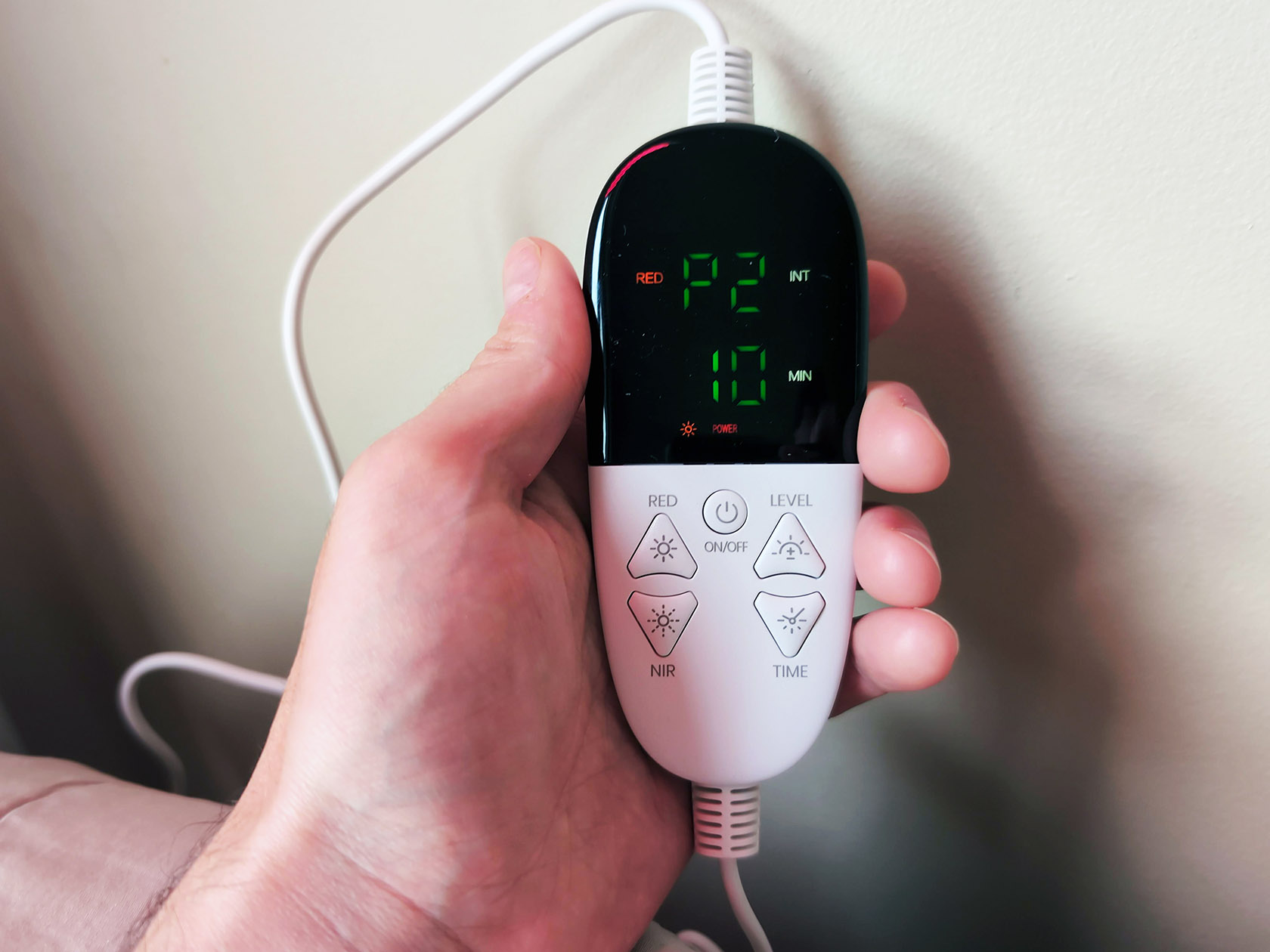
Three power settings, 20W, 30W, and 40W, adjusted on the included controller (no app, thankfully). Lower for your face, higher for bigger sore areas. The timer runs 10 to 90 minutes, and the controller remembers your last power and time settings, so one touch starts your usual session.
One honest line before you trust any of this: no independent testing confirms these numbers. This review reads the maker’s own materials against each other, which is why the next bit matters.
Red flag: Every irradiance and power figure here comes from the maker’s own materials. No independent lab testing exists yet, so treat the specs as claims, not measurements.
The 96 vs 80 LED thing
The launch press release puts the series at 96 dual-chip LEDs. The product page FAQ says 80 for the Veyra and 96 for the Veyra S. The FAQ wins, since it’s the per-model breakdown. Heads-up for buyers, not an accusation: read the FAQ, not the headline.
Veyra vs Veyra S: choose by posture, not spec
The base Veyra is the desk, reading, and head-use pick. The Veyra S is the recliner-and-bed pick. That’s the decision, and posture is the deciding factor, not LED count.
The Veyra comes with a flexible gooseneck stand, included rather than an upsell, and that stand is its party trick. Bend it wherever you need the light. One person can assemble it in a few minutes, angle adjustments are tool-free press-and-release buttons, and it’s easy to reposition for sitting, reading, or working. It also runs red and NIR separately, which the Veyra S doesn’t. That’s an honest trade-off in the other direction: some buyers will care a lot, most won’t.
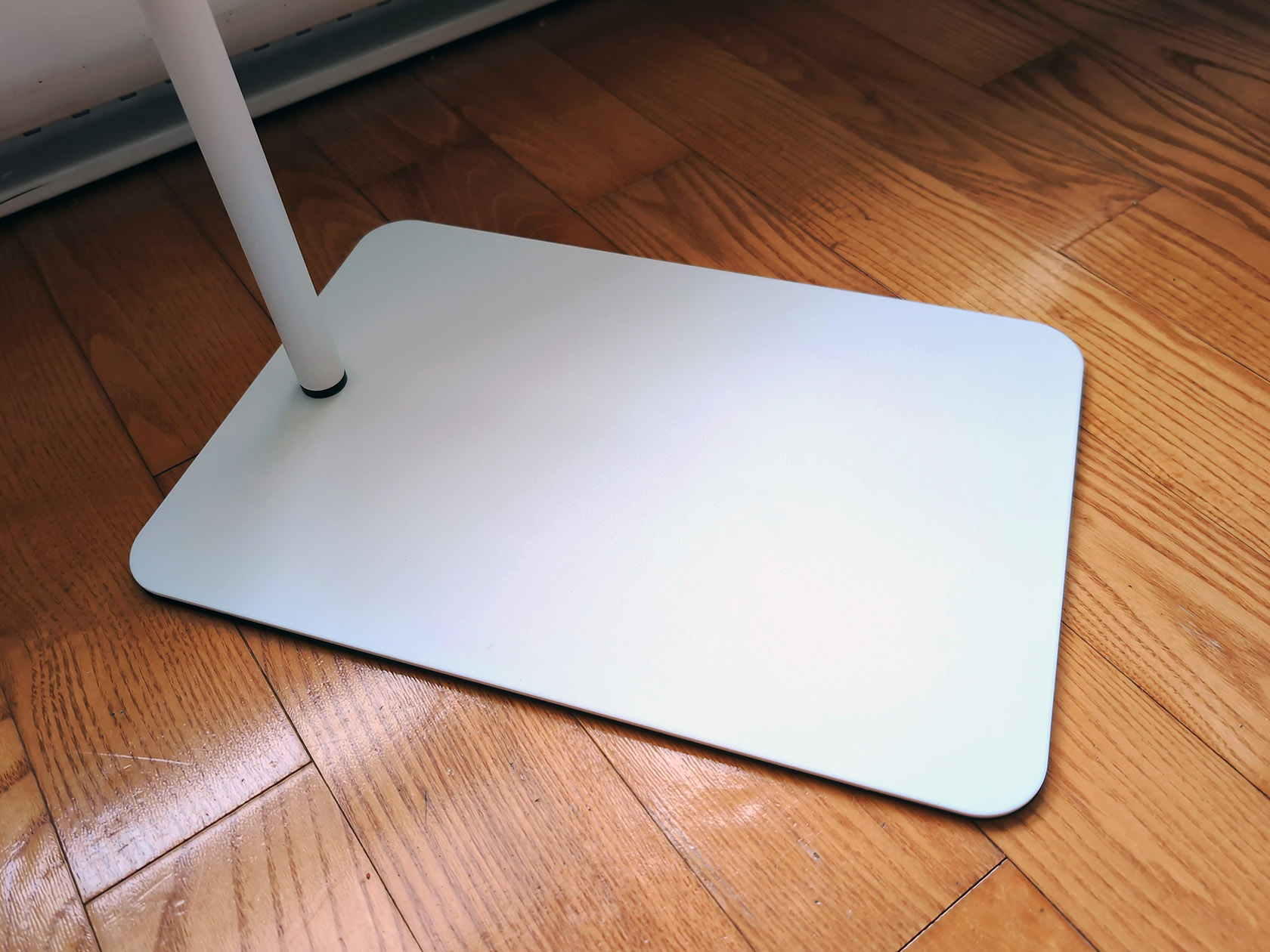
The Veyra S is a different animal. It’s a floor base with an adjustable arm that points light down from above, designed like furniture for recliner or bed use. It’s the model for someone with limited mobility, and it’s a real buying reason for caregiver households where getting a panel into position is half the battle. The base lies flat with no wheels or hard bits sticking out, and I appreciate that toe-friendly detail more than I probably should.
| Veyra | Veyra S | |
|---|---|---|
| Stand setup | Yes (flexible gooseneck, included) | Yes (floor base with adjustable arm) |
| Separate red/NIR modes | Yes | No |
| LED count | 80 | 96 |
| Top-down light from above | Partial (bendable but overhead by arm) | Yes (designed for it) |
| Recliner/bed use | Partial (possible, awkward) | Yes (built for it) |
| Flat base with no protruding parts | Partial (gooseneck arm extends) | Yes (base lies flat) |
For my use case, reading a book upright with the panel overhead, the Veyra is the pick. The gooseneck angles light where rigid furniture can’t, and the separate modes let me run red only when I want to. If you spend your evenings in a recliner or you’re buying for someone who can’t easily position a panel, the S earns its extra 16 LEDs.
Setup and daily use: testing the convenience promises
On paper, the friction is near zero, and most of the claims are plausible except for the ones that sound like someone in a marketing meeting started guessing. LifeZoom claims 2 minutes to set up and 1 minute to learn the controls, which I’d buy. Then it gets specific: 11 seconds to find your position, 5 seconds for pillow adjustment, 2 seconds to start. Twenty-two seconds total, measured to the second.
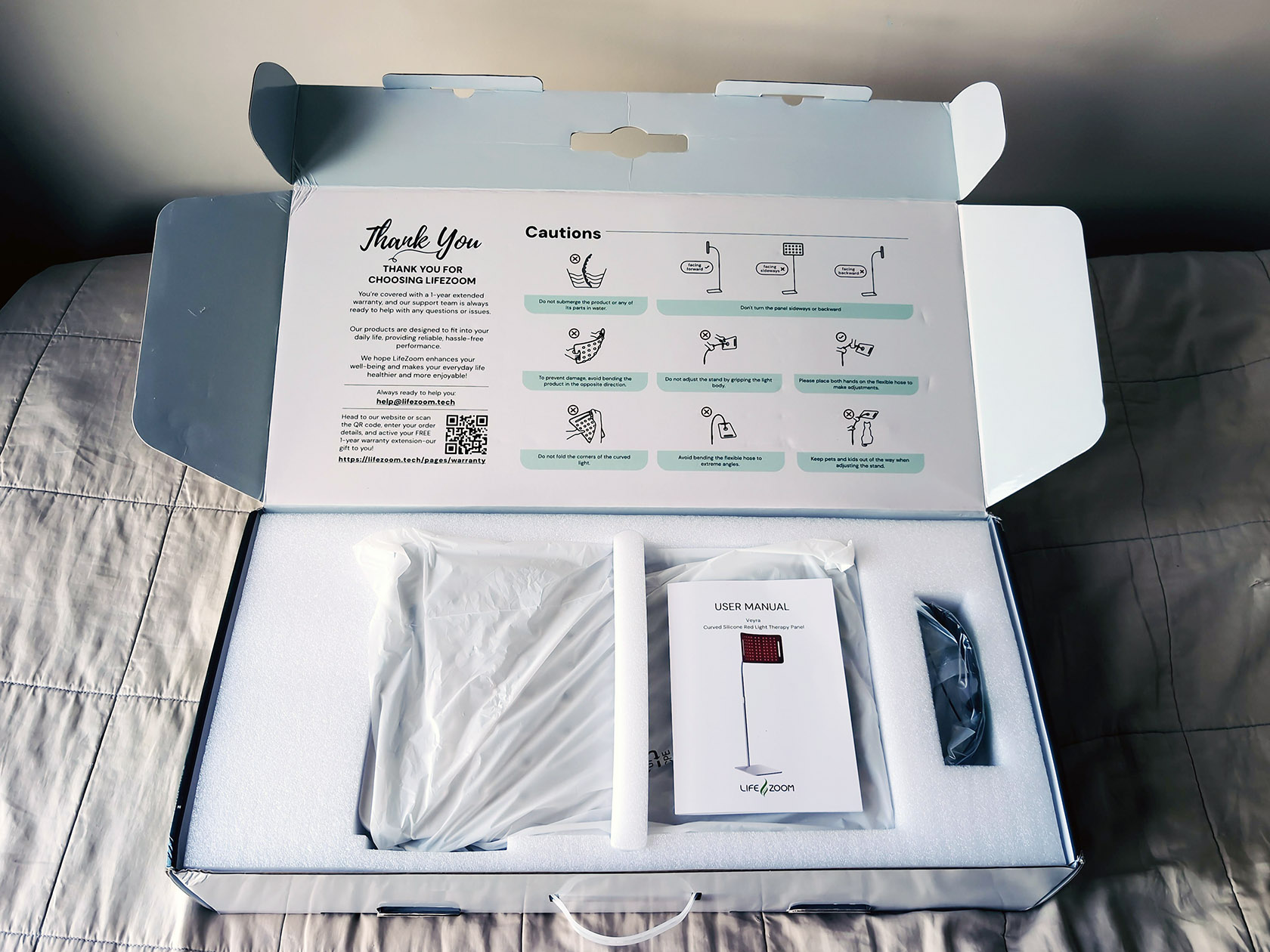
Somebody owns a stopwatch, or somebody wrote numbers. I’ll let you pick.
The things worth verifying in week one: does the gooseneck hold position at the angles you need without re-tightening, does mode switching work smoothly, and does the timer behave. One customer testimonial on the product page notes the stand base is heavy and stable, which is the detail that matters when you bend an arm overhead, though that’s one voice, not proof.
Living with it is easy on paper. Setup is the part spec sheets usually hide, and here it’s genuinely painless: the gooseneck stand is included, one person can assemble it in a few minutes, and the joints adjust tool-free with press-and-release buttons, the maker claims 2 minutes to set up and a minute to learn the rules. It also remembers your last power and time settings, so starting a session is a single touch. Cleaning is power off, wipe it down with an alcohol pad or a damp cloth and let it air dry, because the silicone surface is water- and stain-resistant. The IP61 rating means it handles splashes, not showers or dunking. It’s fanless and silent, which matters more than it sounds, because a humming device next to your head while reading or falling asleep is a dealbreaker. And the maker claims the non-toxic food-grade silicone is safe around babies and pets.
Dosage: tiers, timers, and the longer-is-better trap
It’s tiered, and longer is not better. For general daily use, 10 to 20 minutes is the range most people land on. If you want structured regimens: 30 minutes a day, 4 days a week for maintenance, or 40 minutes a day, 6 days a week for treatment. Adjust based on your own tolerance, start low, your call.
Here’s the trap. Red light triggers a brief burst of free radicals, helpful only up to a point, so going past recommended durations doesn’t add benefits and can backfire. Nobody’s 100% sure of the perfect dose, which is exactly why you shouldn’t freestyle it.
On pulsed versus continuous light: Bev May Sanderson, founder of Misama with a microbiology background, believes pulsed light’s free-radical burst helps prevent buildup. Pulsed low-level therapy may mitigate free-radical excess, according to a review in Lasers in Surgery and Medicine, though more research is needed and continuous light may win in some scenarios. Open question, honestly.
Worth noticing: the timer maxes at 90 minutes, which is well past every recommended tier. Make of that what you will.
Safety: what the real risk is (and isn’t)
The main downside of red light therapy is not the light itself. It’s heat buildup from overuse or holding a device too close, and with a silicone panel that sits right against your skin, that’s the risk to watch. As this treatment gains popularity, it’s worth understanding red light therapy pros and cons, keep a small gap between panel and skin and you’ve handled most of the heat risk.
The reassuring part, from expert commentary: red light is low-level, UV-free, and poses little pigmentation risk even for darker skin tones. Hyperpigmentation comes from heat, injury, friction, or UV, not the wavelength, and some evidence suggests red light may actually reduce it. People with darker skin should still mind session length and distance, since prolonged heat buildup is the pathway that can worsen or trigger it. Some consumers have reported pigmentation changes after use, and the science on optimal dosing is still uncertain, so treat those reports as real but anecdotal. Generally, this is safe for most healthy adults.
If any of these apply, check with a doctor first
Pregnant, recently had surgery, dealing with a serious medical condition, or sensitive to light, including your eyes? Talk to a professional before starting. And kids need supervision, full stop.
Does more power mean better results?
Not as far as anyone can tell. The Honest Channel ran an 8-week trial of a $2,000 Lumara panel with 1,800 bulbs and saw no additional visible results over a modest Misama panel, 660nm plus 850nm, used roughly 6 minutes every other day across more than a year, which produced subtle fine-line and skin-balance improvements. The clinical evidence backs red and near-infrared light generally, a 2007 Korean study of 76 patients found significant wrinkle reduction and collagen gains, and a 2023 study of the Dior LED mask showed improvements in crow’s feet, firmness, and sagging, but neither crowns a winning spec. No head-to-head Veyra testing exists, so judge it on whether its form factor keeps you using it. And for isolated areas like the face or scalp, masks and caps can work as well as a panel, usually for less money.
Cost, HSA/FSA, and the fine print
Potentially yes: you can pay for the Veyra with HSA or FSA funds through Truemed, if you qualify. At checkout, look for the Truemed logo, and if a Shop Pay pop-up appears, back out of it. You’ll answer a private health survey, which a licensed provider then reviews. Then the fork: pay with your HSA/FSA card directly, or use a credit card and follow the LMN guide for reimbursement, where LMN stands for a letter of medical necessity that the provider’s review produces, which means extra paperwork. Eligibility depends on that provider’s review, so it’s not guaranteed, and “qualified customers” is doing real work in that sentence.
The price beat: $249 starting, available in the U.S. and Europe through LifeZoom’s site and Amazon, whichever checkout and return flow you trust more. The Veyra launched July 17, 2025.
Now the deadline that matters. The standard warranty is one year. Register within 14 days of buying it and the coverage doubles to two years. That’s the difference between a dead panel in month 14 being your problem or theirs, and it’s the detail everyone forgets. Registration goes through the warranty page; support runs through their official mailbox.
Buyer rule: If you buy, register the warranty within 14 days. That single step turns a one-year warranty into two.
If you’re browsing the ecosystem, LifeZoom sells other HSA/FSA-eligible items like the Grounda Grounding Mat from $49, plus the Oclux eye mask and Wandia handheld wand at merchant pricing.
Trust check: what the sources don’t confirm
No. No available source confirms FDA clearance for the Veyra, so treat its regulatory status as unverified.
Here’s the checklist I’d apply to any red light panel. Prioritize regulator clearance, FDA in the U.S., or MDSAP, which audits compliance across the U.S., Australia, and Canada, and prioritize independent reviews over marketing. Full disclosure on this one: the launch announcement reached me as a paid press release distributed through PR Newswire, so the specs come from the maker’s own material. The 96-versus-80 LED inconsistency between their own press release and FAQ is the transparency test in miniature. One last filter: cheap no-name devices using non-LED red bulbs do nothing, so clearance and a real light source are your line between a gadget and a tool.
Buy it if the panel will live next to your desk, chair, or bed and get used while you’re doing something else. Reading under it is the proof of concept, and I’ve retired enough dead rigid panels to know how rare that is. Skip it if a mask or cap already handles your single target area, or if you want clinic-grade intensity from a $249 device. Honestly, a cheaper or simpler device makes more sense when one spot is the whole job, no spec or bulb count has been proven better, so consistency matters more than the panel you pick. Just don’t go bargain-bin: some cheap no-name devices use plain red bulbs instead of LEDs, and those do nothing. Model recap: Veyra for desk and reading with separate red/NIR modes, Veyra S for recliner and bed.
Frequently Asked Questions
Is a red light therapy panel worth it?
Usually only if you’ll actually keep using it, and that’s the honest dividing line. Rigid panels demand lying still at a fixed distance, which is why so many end up in a corner within months. A flexible panel like the Veyra, at $249, earns its keep by working while you read, sit, or wrap it around a sore area — usage beats specs.
What is the downside of red light therapy?
The main risk isn’t the light itself — it’s heat buildup from overuse or holding a device too close to your skin. Keep a small gap between panel and skin and you’ve handled most of it. Red light is low-level, UV-free, and poses very little pigmentation risk even for darker skin tones, though prolonged heat is the pathway that can trigger hyperpigmentation.
How does the LifeZoom Veyra compare to rigid red light panels like the Lumara or Dermalux Flex MD?
The Veyra trades raw panel size for flexibility: it bends, straps on like a belt, props as a dome, and angles overhead on a gooseneck while you read upright — things a rigid slab can’t do. On power, more isn’t clearly better: an independent 8-week trial of a $2,000 Lumara panel with 1,800 bulbs saw no additional visible results over a modest panel used a few minutes every other day. Don’t expect clinic-grade intensity from a $249 device.
Is the Veyra panel good for red light therapy on the head and scalp while reading?
Yes, and it’s the one use case the reviewer can vouch for firsthand. The gooseneck bends overhead at an angle so you can sit upright with a book — no lying down, no low-power hair-growth hat. LifeZoom designs the Veyra C for exactly this, clamped to a desk edge and angled down at your head during long work hours.
What’s the difference between 660nm red light and 850nm near-infrared?
Penetration depth, not a color gimmick. The 660nm red light is the shallow one — absorbed by cytochrome c oxidase in your mitochondria, boosting ATP production, which is why skin claims like texture and fine lines are framed as ‘improves the look of.’ The 850nm near-infrared is invisible and scatters less in tissue, so it reaches muscles and joints underneath — the leg-day-recovery wavelength. The base Veyra runs each separately as well as together.