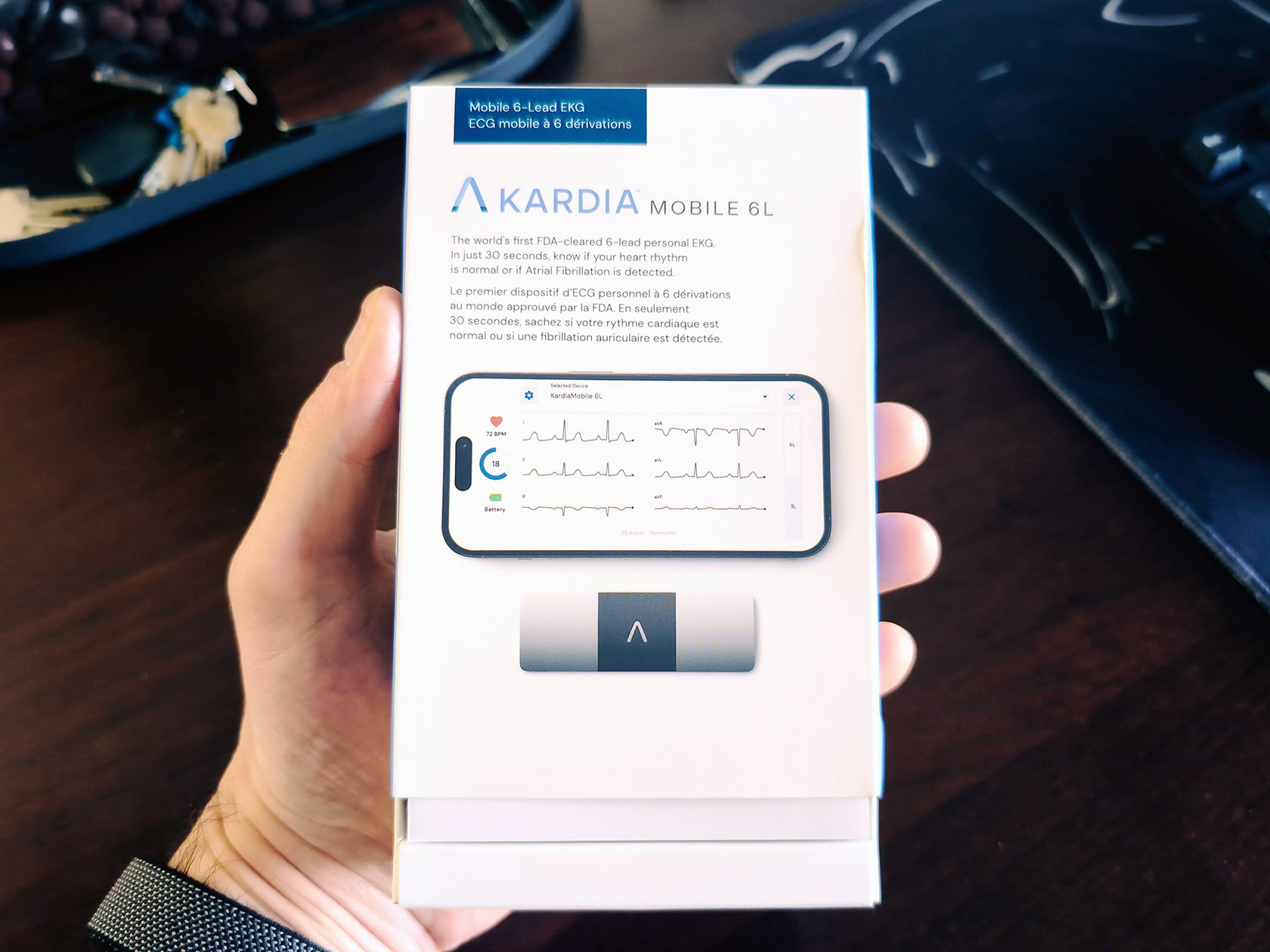
If you’ve got a heart history, you’ve probably eyed the KardiaMobile 6L: a pocket EKG the size of a credit card that claims accuracy validated against hospital ECGs. Meanwhile there’s an Apple Watch on your wrist that’s already been nagging you about high heart rates. Do you spend ~$130 on a device that only works when you pull out your phone, or does the watch cover you? The subscription question hangs over it too: is KardiaCare a genuine service or a monthly toll?
Here’s the short version: two peer-reviewed studies give real numbers, not marketing. The grip is a little weird (two thumbs on the front pads, a third sensor on your knee or ankle), and the answer isn’t as clean as AliveCor’s ads suggest. But it’s defendable, and it depends on your rhythm history and whether you’ll pay for a human to read your tracings.
Key Takeaways
In the Toronto Heart Centre head-to-head, the single-lead KardiaMobile caught AFib 100% of the time versus 90.5% for the Apple Watch Series 4, and the watch logged 19 inconclusive readings to Kardia’s zero.
The Dutch study found the 6-lead advantage only shows up when a cardiologist reads the tracing: 97.9% correct classifications and atrial flutter diagnosed 63% of the time versus 28 to 33% for single-lead watches. The app’s algorithm performed the same as everyone else’s.
KardiaCare runs $9.99/month or $99/year, which is exactly what a single standalone clinical EKG review costs, so heavy reviewers come out ahead and everyone else can skip it.
Table of Contents
What the KardiaMobile 6L actually is
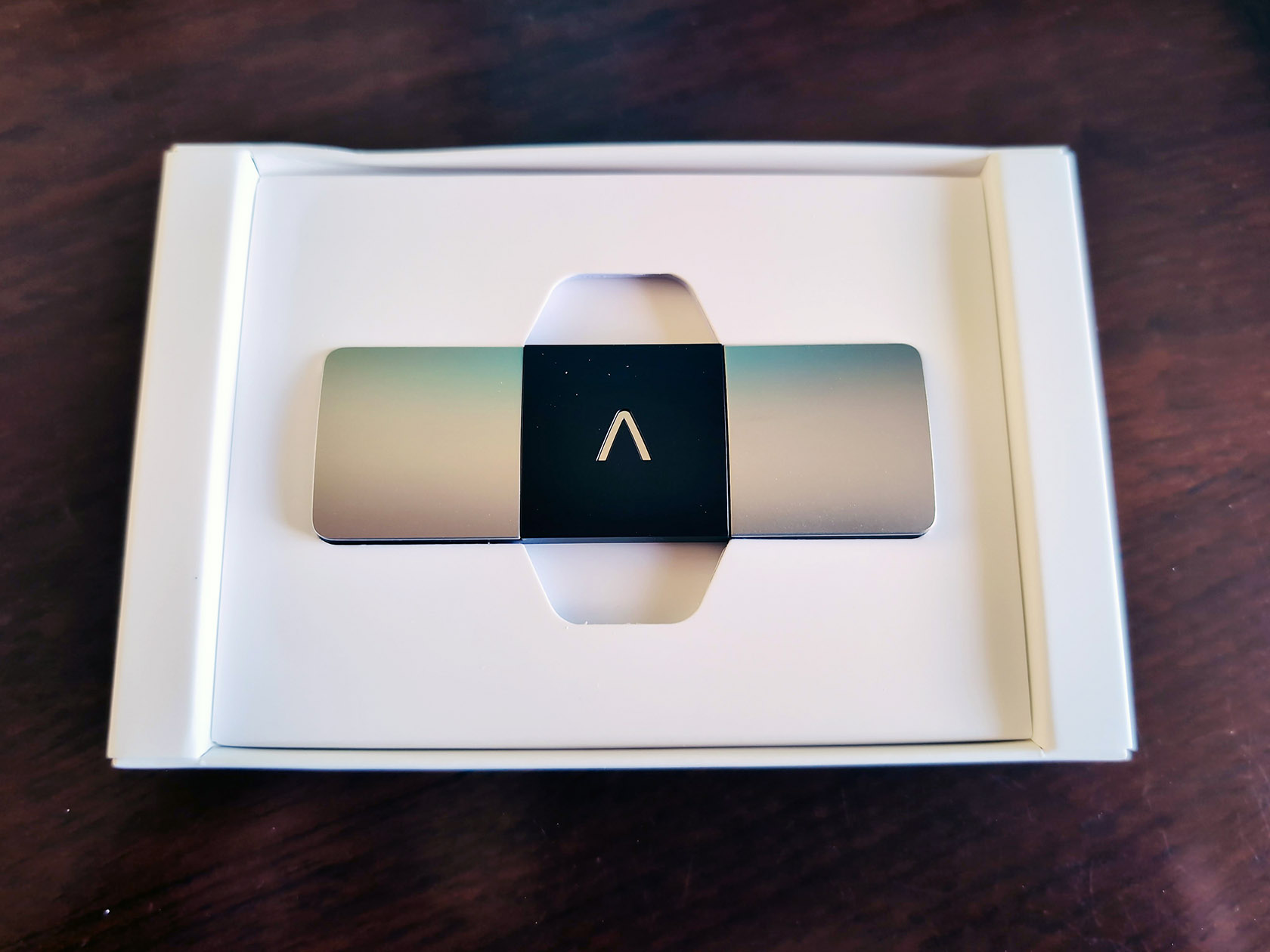
Yes, a 6-lead home EKG can capture six of the 12 angles a hospital 12-lead reads, but only when the two readings line up: one cardiac nurse with congenital heart disease compared her home 6-lead tracing side by side with a hospital 12-lead and found them similar, and the Dutch study validated the device against hospital ECGs. A quick primer: an EKG reads your heart’s electrical activity through sensors on your skin, no needles involved. A hospital 12-lead machine reads the heart from 12 angles; the full setup runs upwards of $2,500. The 6L gets you six of those 12 angles in 30 seconds.
The grip is the whole trick. Two thumbs on the front pads plus a third sensor pressed to your left knee or ankle gives the device six views of your heart. Can’t do the knee thing, like driving or sitting at a desk? Thumbs only gets you a single lead. It’s smaller than a credit card, no wires or sticky pads like a Holter monitor, and the Kardia app spits out a PDF you can email your cardiologist.
The app names six rhythm findings: AFib, bradycardia, tachycardia, and sinus rhythm with PVCs, with SVE, and with wide QRS. AliveCor claims it detects more arrhythmias than any smartwatch. That’s a vendor claim, so file it accordingly.
One thing it won’t do: tell you if you’re having a heart attack. If chest feels like a truck sat on it, skip the device and call for help.
How accurate is the KardiaMobile 6L?
Two independent peer-reviewed studies put the KardiaMobile 6L’s accuracy at 97.9% correct classifications, but only when a cardiologist reads the tracing. The app alone doesn’t beat a smartwatch.
The first study came out of the Toronto Heart Centre in 2019. Two hundred patients, 81% in normal rhythm and 19% in AFib, 41% women (82 of them), with a mean age of 65.6 ± 14.6 years, the youngest 26, the oldest 94. On normal rhythm, the Apple Watch scored 100% and the Kardia 99%. A tie.
On AFib, it flipped: Kardia caught it 100% of the time, the watch 90.5%. And the watch logged 19 inconclusive readings while the Kardia logged zero, which is as telling as the percentage. Both devices tracked the cardiologist’s read almost identically. Heart rate was counted correct if within 5 bpm of the hospital ECG, and the Kardia was slightly ahead in AFib at 91% versus the watch’s optical sensor at 83%.
The second study is the one that actually tested the 6-lead device. Dutch researchers, 220 patients averaging age 70 (35% women), ran from February 2020 to March 2021 with 415 hospital ECGs as the reference standard. When cardiologists read the Kardia 6-lead tracings: 99% sensitivity, 97% specificity, 97.9% correct classifications. Single-lead smartwatches managed 94 to 96% when read by humans.
Where does the algorithm come from? It was trained on ECGs from more than 200,000 Mayo Clinic patients. Worth knowing: normal rhythm is the easy case for these devices, since regular beats are hard to miss. AFib’s irregular beats are the real test, and that’s where the gaps show up.
The Toronto study deserves trust for a simple reason: the researchers self-funded it, bought the devices at retail, and had no ties to Apple or AliveCor. That said, be honest about the limits. Both studies recorded readings at rest, one after another, because movement caused errors. Both were single-center, with older cohorts. These numbers describe calm, seated use, not readings mid-workout.
The 6-lead advantage is a human-reader advantage
The app’s algorithm isn’t smarter than a smartwatch’s. Automated readings landed between 91 and 99% across every device in the Dutch study, with no meaningful difference.
The 6-lead edge appeared only when a cardiologist read the tracing. The clearest payoff: correct atrial flutter diagnosis hit 63% with the Kardia 6-lead, versus 28% for the Withings and 33% for the Apple single-lead tracings. Six angles let a human localize where a rhythm starts; one lead can’t.
The counterweight: Kardia had the highest uninterpretable-tracing rate of the bunch, 24% versus 20% for both watches. Roughly one in four recordings was a dud.
The buying math follows directly. If you won’t pay for human reviews, you’re mostly buying a fancier single-lead device.
Bottom line: The extra leads pay off only when a cardiologist reviews your tracings — otherwise the upgrade is largely wasted money.
KardiaMobile 6L vs Apple Watch
The decisive choice: Kardia for detection accuracy on demand, the Apple Watch for continuous all-day coverage. Neither wins outright.
The Toronto head-to-head makes the accuracy case. Normal rhythm was basically even. AFib was not: Kardia 100%, watch 90.5%, plus those 19 inconclusive watch readings. Heart-rate accuracy was close, with Kardia slightly ahead in AFib (91% vs 83% for the watch’s optical reading). Both devices matched the cardiologist’s read.
Why did the watch fall short? Mostly physical, not software. Hand tremors in older patients garbled readings. The smallest band was still too big for some older women’s wrists.
Accuracy dipped slightly for women overall while the Kardia showed no gender gap. And in two patients, the watch flagged “AFib” that turned out to be milder extra beats called PACs. One prior report called the watch an “iffy” AFib detector under age 55, right about 79.4% of the time.
Fair credit where it’s due: the watch’s optical sensor watches your heart rate in the background all day and night. Nothing Kardia makes does that. The watch’s on-demand ECG (crown plus back electrodes) is more accurate than its optical reading but picks up more noise, and the optical reading degrades with movement, cold weather, and darker skin tones.
Then money. Kardia is $99 CAD and needs your phone within reach. The watch is $519 CAD, up to $649 for higher tiers, and works off your wrist alone. Context for why this comparison is the default one: more than 40 million smartwatches shipped in 2021, and Apple held close to a third of the market, per Counterpoint Research.
Worth saying plainly: the sinus-rhythm difference was a tie, and the AFib gap is a fact, not a gloat.
Single-lead vs 6-lead: what the extra leads buy
Yes, the KardiaMobile 6L is worth the upgrade over the $99 single-lead model when your rhythm history includes atrial flutter or you need tracings a cardiologist can dig into. The 63% flutter diagnosis rate (versus 28 to 33% single-lead) only exists because six leads let a human reader localize a rhythm’s origin; that was covered above and it’s the core of the case. The 6L Max’s detection list also exceeds any smartwatch, per AliveCor, another vendor claim to weigh yourself.
And the one-lead fallback covers the awkward moments: when the knee-sensor grip isn’t practical, thumbs-only still gets you a recording. If flutter differentiation and extra determinations don’t matter for you, the single-lead does the core job for $99.
KardiaCare: do you need the subscription?
Yes, you can use the KardiaMobile 6L without a subscription. The free tier records EKGs and detects the core rhythms. What KardiaCare adds is advanced determinations, clinician reviews within 24 hours, automatic EKG sharing, and medication tracking. The reviewer’s take: KardiaCare is worth it for at least a year after a cardiac event, but not worthwhile once you’ve finished cardiac rehab.
The pricing: $9.99/month or $99/year. KardiaCare Plus runs $299/year and bundles the 6L device, an Omron blood pressure cuff, and 12 cardiologist reviews. Here’s the math that makes the decision easy: a standalone clinical EKG review costs $99 a pop, the same as a full year of membership. If you’d use two or more reviews a year, subscribe.
A telehealth cardiologist appointment costs $79 extra on top of the subscription. Over 300,000 members gives the service some scale credibility.
Buyer rule: If you’d use two or more clinician reviews a year, the $99 membership pays for itself; otherwise the free tier is enough.
One buyer pattern worth naming: the auto-renewal catches people. Decide your renewal date on purpose, not by default.
The CrackBerry reviewer’s retrospective take is the most useful data point: KardiaCare was worth it for roughly the first year after his cardiac event, but stopped earning its keep after cardiac rehab, partly because the reviewing clinicians don’t see your full medical record.
Everyday use: setup, recording quality, and failure modes
Thumbs on the front pads, third sensor on your left knee or ankle, stay perfectly still for 30 seconds. Move and you’ll get an error message and a re-take. Users report the knee/ankle sensor going flaky with dry skin (the tell: thumbs-only works but six-lead doesn’t); lotion fixes it. The app reads the result instantly, exports PDFs, and lets you tag readings like “exercising” or “feeling dizzy” for your doctor. Battery replacement and app-connectivity troubleshooting are real post-purchase concerns the available sources don’t fully document, so check AliveCor’s official support rather than guessing.
Real patient perspectives: nighttime capture and post-event anxiety
For managing post-event worry, the KardiaMobile 6L’s real product is being able to check, and it fits hardest in the first year after a cardiac event.
Nirave, who reviewed the device for CrackBerry, had a heart attack at 33 in 2020: a blocked LAD artery, treated with a stent. He ended up in the ER three times in the first month over anxiety-driven symptoms. His cardiologist told him to take daily EKGs, and he’s been a KardiaCare subscriber for two years. His routine: 6-lead readings lying in bed right after waking, to catch stuff that happens overnight. Once, he used a $99 clinical review instead of another ER trip. One use, device paid for.
Marissa runs the Life After the Fontan YouTube channel: 25, born with congenital heart disease, a cardiac nurse, and her review is unsponsored. Her home 6-lead tracing matched a hospital 12-lead side by side, and she carries the 6L alongside her implanted loop recorder. She describes it as the only FDA-cleared personal EKG for home use, which is her framing rather than something verified independently here.
The timing argument underneath both stories: a lot of cardiac events happen at night, at rest, when there’s no doctor in reach. An office EKG only captures the last few hours. A tracing taken during symptoms gives your cardiologist something a visit days later never can.
Limitations, false positives, and what the 6L cannot do
The clinical evidence supports home EKG monitoring for people with specific rhythm histories, with real caveats. The study authors validated readings at rest only, in single-center cohorts of older patients scheduled for AFib procedures, tested in clinics rather than at home in pajamas. The evidence landscape isn’t clean either: a 2021 study compared Kardia Mobile against hospital ECGs in 100 patients with mixed results, and consumer reports and clinical studies haven’t always agreed. Cardiologists’ own concerns are mostly practical, you have to be perfectly still or you get motion artifacts and error messages, and the device records nothing between readings, so there’s no continuous monitoring.
What the 6L doesn’t do: it won’t check for a heart attack, it’s not a replacement for a 12-lead diagnostic, and it records nothing between readings. No continuous monitoring.
And the warning that applies to every consumer ECG: remember the Apple Watch’s two “AFib” flags that were actually PACs. Any reading from one of these devices is a data point for your cardiologist, not a diagnosis.
Verdict: who should buy the KardiaMobile 6L, and who shouldn’t
Buy the KardiaMobile 6L if you’re monitoring event-driven AFib or atrial flutter and want tracings a cardiologist can read (97.9% correct classification). Skip it if continuous all-day surveillance is the goal; that’s a smartwatch’s job.
The lineup: single-lead KardiaMobile $99 CAD, 6L around $130, 6L Max $129 with a KardiaCare year (March 2022 Amazon.ca listing), and the Kardia Mobile Card at $80, credit-card-sized with Bluetooth and a similar feature set. Prices as reported in that listing; they may vary. As the reviewer put it, the 6L gets you most of a 12-lead’s value at a fraction of the $2,500 a full 12-lead setup runs.
Frequently Asked Questions
What are the common complaints about KardiaMobile?
The main gripes: the knee/ankle sensor goes flaky with dry skin (lotion fixes it), roughly one in four 6-lead recordings came back uninterpretable in the Dutch study — the highest dud rate of the devices tested — and movement triggers error messages and re-takes. Battery replacement and app-connectivity troubleshooting are also real post-purchase concerns, and KardiaCare auto-renewal catches people who don’t set their renewal date on purpose.
How accurate is Kardia Mobile 6L?
When cardiologists read the tracings in the Dutch study, the 6L hit 99% sensitivity, 97% specificity, and 97.9% correct classifications against 415 hospital ECGs as the reference standard. The app’s algorithm alone, though, performed the same as every other device’s — the 6-lead advantage is a human-reader advantage, not a software one.