
You type “4 passengers” into the search box, the airline spits back one clean per-person price, and you reach for the credit card because obviously booking everyone together is the sane move. That instinct costs real money, more often than you’d think. I’ve been digging through Reddit threads on this exact question, and the pattern that shows up again and again is the opposite of what feels right.
So here’s the direct answer, no hedging: No, booking multiple tickets together on one reservation is often more expensive than booking them one at a time. When you put the whole group in a single search, the airline has to seat every passenger in the same fare class. Fare classes aren’t cabins. They’re price tiers hiding inside economy, and the reservation prices at the highest tier it touches.
If your group needs one more seat than the cheap tier has left, the entire group gets bumped up. Group searches don’t blend prices or split the difference.
The Reddit crowd has a shorthand fix that costs nothing and takes two minutes: book one seat first, then check the second before you commit to anything. Search one passenger, then two, and watch where the per-person fare jumps. That jump is your split point. The Southwest example that gets passed around makes it concrete: on a Baltimore to Aruba flight, one seat was left at $245, but a four-passenger search quoted $275 each.
Book the first guy alone, the rest on a second reservation, and you’ve kept $30. Two confirmation numbers instead of one is the whole price of admission.
Now, splitting isn’t free. You can lose status perks your family was riding on, kids on their own reservation can trigger unaccompanied minor fees, and separate confirmations raise the odds your crew gets scattered during a delay. All three have workarounds, and I’ll get into them. But the first move is always the same: check the solo fare against the group price before you hit checkout.
Key Takeaways
One reservation forces every passenger into the same fare class, so if the cheapest bucket doesn’t cover the whole group, everyone pays the higher fare.
Search 1, then 2, then 3 passengers until the per-person price jumps, and split the group there. Southwest shows remaining seats at each price, so you can just look instead of testing.
On a Southwest Baltimore-Aruba flight, one seat at $245 versus $275 each for four passengers meant $30 saved by splitting into two reservations.
Table of Contents
Fare buckets: why one extra passenger raises the price for everyone
A single economy cabin can have a dozen fare buckets stacked on top of each other, and the cheapest ones sell out first. These buckets are price tiers within economy, they’ve got nothing to do with first class.
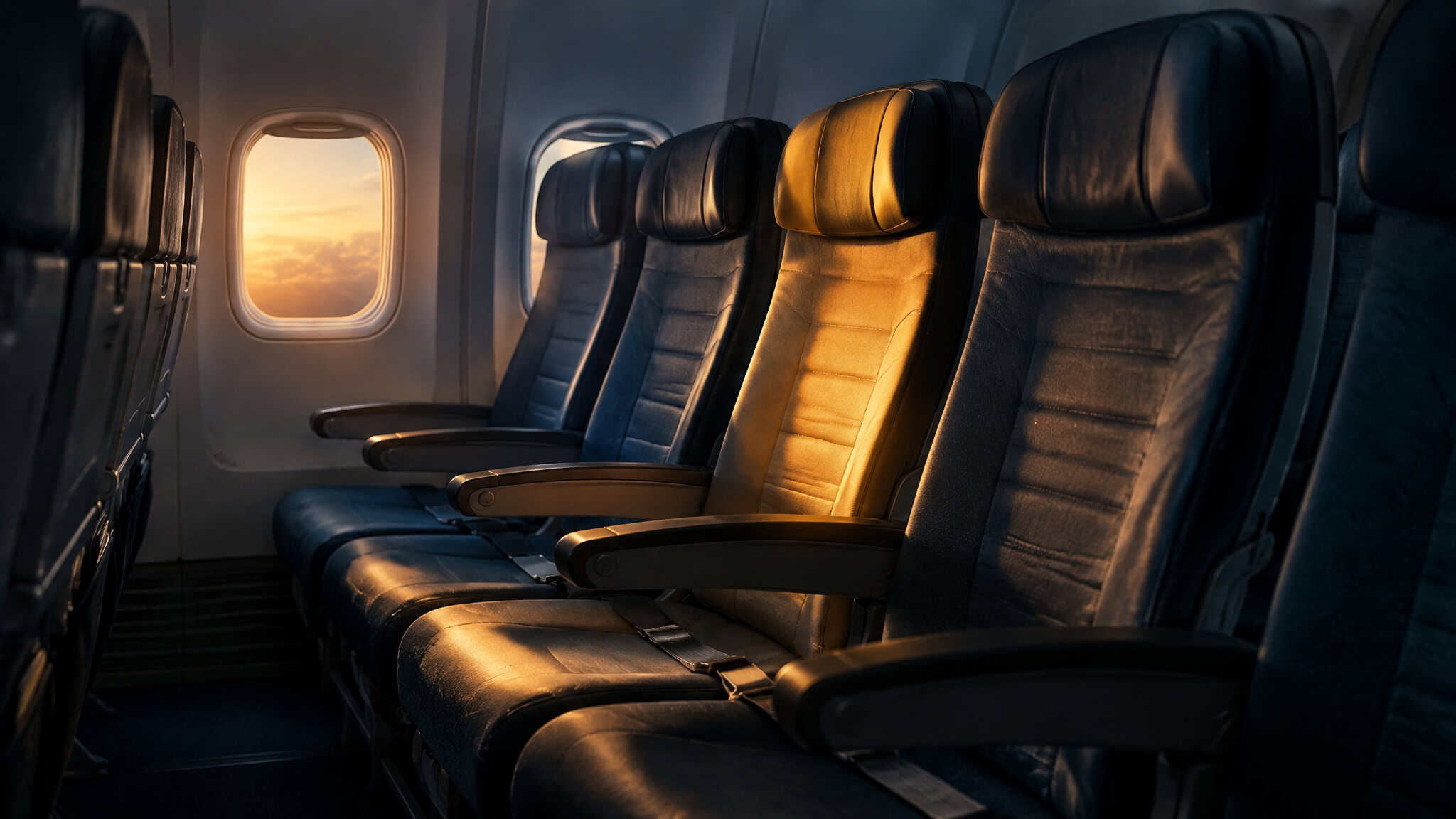
That sets up the gotcha. Say three cheap-tier seats are left and you’re booking for four guys. Bundling means all four get bumped into the next bucket up. Booked separately, three pay the low fare and only the fourth pays more. One reservation, everyone pays high.
The typical pattern: a family types in “4 passengers,” sees one uniform price, checks out, and never learns a solo search would’ve come back cheaper. The screen doesn’t tell you. That’s the whole problem.
The Southwest Baltimore-Aruba example: $30 a bulk search hides
On a Southwest flight from Baltimore to Aruba, exactly one seat was left at $245, but run the same search for four passengers and it quotes $275 each. That $30 gap is completely invisible in the bulk search. The screen just shows $275, take it or leave it.
Book passenger one at $245 and the other three at $275, and you save $30 across two confirmation numbers. It’s $30, not a fortune. But it’s $30 for two minutes of extra typing, and the savings would grow with more cheap-bucket seats available. Prices vary by route and date, so this is one documented example, not a universal figure.
How to test: book one seat first, then check the second
The method is embarrassingly simple: search for 1 passenger, then 2, then 3, all the way up to your group size, and watch the per-person fare. The moment it jumps, you’ve found the break point. Split the group into separate reservations right there, with as many people on the first reservation as the low fare covers. Two minutes, costs nothing, and it keeps you from accidentally raising the price for your own group.
Then book. First reservation gets the cheap seats, second reservation handles the rest. Slightly annoying to manage two confirmations. Genuinely cheaper when the numbers say so.
Some airlines show their work
Southwest is the exception worth knowing about: it shows how many seats remain at each price. If you’re booking Southwest, skip the probing entirely and just look at the seat counts. That transparency is exactly why the Baltimore-Aruba example is even knowable. Most airlines don’t show seat counts, which is the only reason the testing trick exists.
Enter kids as kids
One quick add-on: when you search, list children as children, not as adults. Some carriers price child fares lower, especially on international routes. It’s obvious in hindsight and easy to forget, and forgetting costs money.
The tradeoffs: what separate reservations cost you
Three things get worse when you split: lost perks, kid-booking rules, and seat separation. None of them are dealbreakers, but each one deserves a look before you chase the cheaper fare.
Red flag: If the group price per person is higher than the solo price, the airline just bumped your whole group into a pricier fare bucket — booking flights together doesn’t always save money. Split before checkout.
Status perks don’t always follow your family
Yes, status perks ride along with family on one reservation, free checked bags, early boarding, upgrades, but separate confirmation numbers can strip them away. Sometimes a phone call to link the reservations gets the perks back. Worth five minutes on hold, but no airline guarantees it. Try it, don’t count on it.
Kids complicate the split
Book a kid alone on a reservation and you’re usually looking at an unaccompanied minor fee, which can eat the entire saving, and it’s worth remembering that booking at the airport instead of online can also shave off fees, since airline websites sometimes flat-out won’t let you book a child under 5 unless an adult is on the same booking. Sometimes the site decides for you.
The sensible family split: one parent on their own reservation, kids with the other parent. Simple, everyone stays legal and together. And if you want to go further, some airlines will book the child by phone and waive the minor fee when the reservation is linked to an adult’s. One call. You can’t do it yourself online.
Seats are the real risk
Separate confirmations raise the odds your group gets scattered when a delay hits or the airline swaps planes. One reservation keeps everyone glued together on paper. Domestic airlines are required to try to keep kids under 13 next to a guardian, and “try” is doing a lot of work in that sentence. In practice that can mean a 6 a.m. negotiation with a gate agent.
Works, but you pay for it in patience. No free seat assignments? Sitting together becomes a coin flip, and that should factor into whether the split is worth it.
Southwest bends all of this: open boarding makes getting separated across reservations way less scary, since nobody’s stuck in row 32 while the kid’s in row 4. But each reservation checks in separately, exactly 24 hours out, so two confirmations means two check-ins. Set the alarm count accordingly. Early Bird Check-in or family boarding eligibility takes the pressure off the whole race.
What Reddit travelers say about booking group flights
The community takeaway is consistent: check one-seat pricing before you commit to a bulk search. Reddit’s flight-hacking scene is big enough that this isn’t one lucky thread, it’s a pattern, and newer travelers get steered toward it fast. The warnings about split reservations show up too, which is why the tradeoffs matter.
The best window into this culture is Jack Sheldon’s Reddit AMA. The guy visited 42 countries in 3 years on mistake fares and cheap long-haul round-trips, and he finds pricing mistakes through Google’s “back end matrix,” his phrase for the tool. The thread exploded from 3,000 to over 30,000 participants. He had to ask people to stop sending flight requests, then spent days answering them anyway. He runs an email newsletter for cheap flight alerts if you’d rather have deals pushed to you. His example deals tell you why people bother: Edinburgh to the Canary Islands for £31, which is a night-out budget for a plane ticket, and London to Tokyo for £272.
The author paid triple that for the same route that year. Punch in the gut.
The comment section did what Reddit does best and stacked up tips: use Momondo, Skyscanner, and Google Flights, all free. Be flexible, boring advice that’s boring because it works. Search a whole continent instead of a fixed destination and let the cheap flight pick the trip. Clear your cookies between searches, which guys swear by whether or not it’s folklore.
Book connection legs separately when it’s cheaper, knowing you’re on your own if a leg falls apart. Set Skyscanner email alerts. Book 6 to 12 weeks ahead, or 11 to 12 months out for peak travel.
Field note: Clearing cookies between searches is folklore by most accounts, but the one-seat probe costs nothing, so run it every time anyway.
Paying for the tickets: cards and points strategy
Whatever you decide about splitting reservations, put the flights on a strong airfare card. Flights are the easiest, cleanest travel expense to kill with points. The American Express Gold Card is the example here: 3X on flights booked directly or through Amex Travel, 4X at restaurants worldwide up to $50K a year and US supermarkets up to $25K, 5X on prepaid hotels through AmexTravel.com, 2X on prepaid cars and cruises, 1X on everything else. Credits include $120 Dining, $100 Resy, $84 Dunkin’, $120 Uber Cash, and $100 Hotel Collection, and they only count if you’d spend there anyway.
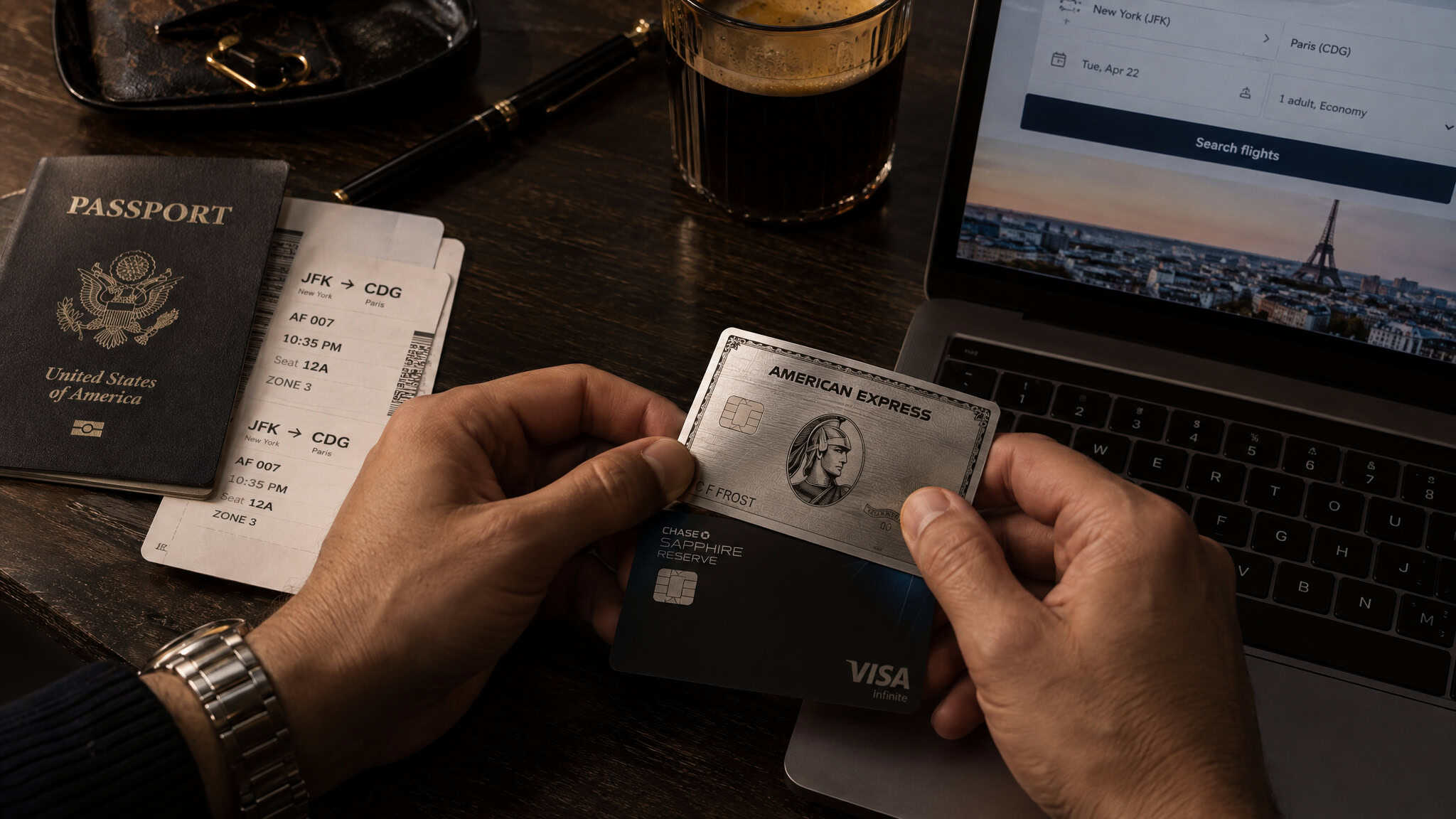
There’s Hertz Five Star status, zero foreign transaction charges, and a $325 annual fee, because you deserve to know that part. The welcome offer tops out at 100,000 Membership Rewards points once you spend $8,000 within 6 months; offers vary and approval’s required.
The two-player Reddit case study
One Reddit user planned a Disney trip with his wife and son and built the whole thing on stacked signups. His profile: around 800 credit score, a $13K Amazon Prime limit, a paid-off $6K Synchrony card, oldest account about 8 years, one new card in the last 24 months, and roughly $120K income. Monthly spend of about $400 dining, $750 groceries, $250 gas. Prime, Costco, Disney bundle guy, banks with Chase including the mortgage, and his wife already holds a Southwest card carrying a points balance.
The play: he applies for the Southwest card through his wife’s referral link, landing roughly 50K signup plus 20K referral, call it 70K points. Two to three months later, the Chase Sapphire Preferred, $5K minimum spend for about 75K Ultimate Rewards. If the wife then grabs the CSP through his referral, the household clears 170,000 Ultimate Rewards points. Two moves, staggered, done.
The math, out loud
Roundtrip Southwest flights to Disney run about 25K to 30K points per person, so roughly 75K to 90K for three. The signup and referral bonuses nearly cover it alone, before counting the wife’s existing points. The 170K Ultimate Rewards transfers to Southwest or Hyatt or just sits and waits, and a Hyatt Place near Disney runs about 9,500 points a night, which is roughly 18 nights covered. Flights and hotel, off the table, from signups.
Credit score reality check: a hard inquiry typically knocks 10 to 20 points off. At an 800 score that bounces back within a month or two, and long term the effects are often positive with more available credit and longer history. The dip is noise if your score’s already strong.
When booking together actually makes sense
Booking together wins when the whole group fits in the lowest fare bucket, or when the tradeoffs outweigh the savings. Status-heavy travelers who want the family riding their perks, parents of kids under 5 or 13, and anyone dreading doubled check-ins or seat-assignment fees have legitimate reasons to keep one confirmation number.
Either way, the universal first move is the same: start with a one-passenger search and compare it to the group per-person price. That comparison is the entire decision. If the group price is worse, split. Don’t overthink it, the numbers already told you. For families with young kids, the blueprint is simple: one parent solo, kids on the other parent’s reservation.
Bottom line
Compare the one-passenger fare to the group per-person price before you hit checkout, and book separate reservations when the group price comes back worse. Two minutes of checking beats overpaying every time. And whichever way you book, put it on a solid airfare card.
Frequently Asked Questions
Is it cheaper to book flights individually or together?
Often, individually. When you book a group on one reservation, the airline must seat everyone in the same fare class, and the reservation prices at the highest tier it touches. If one cheap-bucket seat is missing for your group size, every passenger gets bumped to the pricier bucket. Searching one passenger at a time and comparing against the group quote exposes the difference.
Is it cheaper to book two single flights or a return?
The same fare-bucket logic applies: a booking prices everyone in the highest fare tier it touches, so if the cheap tier only covers one of the two seats, booking a return for both passengers together means both pay the higher fare. Book one-way or one passenger first, then compare the per-person price before committing. The two-minute probe beats assuming the bundled return is cheaper.
What is the least expensive way to book a flight?
Start with a one-passenger search and compare it to the group per-person price — if the group price is higher, split the group into separate reservations at the point where the fare jumps. List children as children since some carriers price child fares lower, especially internationally, and book at the airport when airline websites block child bookings. Then put the tickets on a strong airfare rewards card, since flights are the easiest travel expense to kill with points.
Why does booking multiple passengers on one reservation cost more?
Because a single economy cabin holds a stack of fare buckets — price tiers, not cabins — and the reservation forces every passenger into the same bucket. Say three cheap-tier seats remain and you’re booking four people: the whole group gets bumped into the next bucket up instead of three paying low and one paying high. Group searches never blend prices or split the difference, and the screen won’t tell you a solo search would’ve come back cheaper.