
Whether you’re booking two flights on one reservation or splitting them into two tickets isn’t a morals question, and there’s no single answer hiding behind “it depends.” It comes down to four things: the price gap, how likely your plans are to change, how much connection risk you can stomach, and whether you need seats together. The stakes are real: split a domestic trip and you might pay exactly the same ($278 either way on American’s Newark-Miami route), but split the wrong international fare and you’ve just donated $1,327 to United. Here’s how to name your own trip’s verdict in under a minute.
Key Takeaways
Domestic cash fares are usually a wash either way: American’s Newark-Miami two one-ways ($154 + $124 = $278) cost exactly the same as the round-trip.
International cash fares punish splitting: United’s Washington-Dulles to Frankfurt costs $3,110 as two one-ways vs. $1,783 round-trip, a $1,327 penalty.
On two separate tickets, the second airline isn’t obligated to rebook you after a missed connection, and checked bags won’t be through-checked, so spacing legs by days is what makes splitting safe.
Table of Contents
Booking structures: one ticket, two tickets, and the open-jaw middle path
A round-trip is one ticket with one payment covering both directions; a one-way has no return leg, so the trip home is its own separate booking with its own rules. That’s the whole structural difference. What happens to one leg of a round-trip affects the other, because they’re tied together.
Then there’s the underrated middle path: the open-jaw itinerary. You fly into one city and fly home from another, all on a single ticket, and it usually prices close to a regular round-trip. The classic use case is a cruise: into Budapest, home from Munich, no backtracking, no second booking. If you’re paying with miles, price two one-way awards against one multicity award and take whichever’s cheaper.
Is it cheaper to book two flights together or separate?
Whether it’s cheaper depends on geography and how you’re paying. U.S. domestic cash fares usually cost the same either way, while international cash tickets can punish separate bookings by four figures. American’s Newark-Miami test proves the domestic point: two one-ways at $154 plus $124 came to $278, and the round-trip was also $278. Identical to the dollar.
There’s history behind that. One-way tickets used to be a ripoff, with a penalty baked into the price for years. Budget carriers broke that pricing, and now the old markup is mostly gone domestically and on some international routes too. The exception: on monopoly routes with one airline and no competition, one-ways can still carry a premium aimed at business travelers. Know your route.
Domestic cash: the tie
Newark to Miami, $278 no matter how you slice it. That’s domestic in a nutshell. If you’re flying in the U.S. with cash, booking together versus splitting barely moves the price, so pick based on flexibility, not fare.
International cash: the $1,327 mistake
United’s Washington-Dulles to Frankfurt route is the counterexample. Two one-ways priced at $3,110; the round-trip was $1,783. Nearly double. That $1,327 gap is the price of a whole other flight, gone, for the convenience of splitting. U.S.-Europe on cash, the round-trip almost always wins.
Fare buckets: why splitting sometimes wins
The mechanism behind split-ticket wins is fare buckets. When you book one carrier’s through-fare, every leg gets forced into whatever bucket that fare lands in. Book separately, and each leg can fall into a cheaper bucket on a different airline. This is also the same mechanic behind group pricing backfires: airlines price all seats in a multi-passenger search at the highest available fare class, which is why two tickets together sometimes cost more than two transactions. (That rabbit hole gets its own treatment in why two tickets can cost more than one.)
| Booking together (one through-fare) | Booking separately (two one-ways) | |
|---|---|---|
| Domestic cash price | $278 (Newark-Miami round-trip) | $278 ($154 + $124) |
| International cash price | $1,783 (Dulles-Frankfurt round-trip) | $3,110, nearly double |
| Can each leg land in a cheaper fare bucket? | No (one carrier’s through-fare) | Yes (each leg priced independently) |
| Can a forced extra connection appear? | Yes (through-fare routings) | No (you pick each leg) |
One caveat on all these numbers: they’re sampled prices on specific routes, and prices may vary. The pattern is what holds.
Paying with miles: when booking together flips
For award flights, the usual answer flips: two one-way awards are often the smarter structure, because most U.S. programs charge the same miles either way, and you can change each leg independently. When the price is equal, splitting wins on flexibility. Watch the taxes and fees though; the miles might match but the cash add-on might not.
Two program-specific traps:
United’s midtrip cancellation trap
Cancel a United round-trip award mid-trip and your miles don’t come back to your account. They convert to a future flight credit, which has strings. Your miles are stuck. That’s the hidden cost of putting both directions on one award ticket, and it’s the kind of thing you want to know before booking, not after.
Red flag: Canceling a United round-trip award mid-trip converts your miles to a credit, not back to your account. Split awards avoid the trap.
Delta prices round-trip awards lower, but watch the origin
Delta SkyMiles often prices round-trip awards below two one-ways, the opposite of most programs. New York to Paris: a round-trip award runs 50,000 miles plus $85 in taxes, while two one-ways run 74,000 miles plus about $220. Booking together saves 24,000 miles and roughly $135. The catch: Delta charges higher fees on awards originating in Europe, and some programs price awards by where the trip starts, not just where it goes. If your trip begins overseas, the math changes.
And don’t assume all change fees died. Some mileage programs still charge award change fees. If yours does, one ticket means one fee instead of two.
Flexibility and changes: the old rule quietly reversed
Yes, one reservation is easier to change in a single transaction, one cancellation covers the whole trip, one phone call instead of three. But the real flexibility edge has flipped to separate tickets in most cases, because most U.S. airlines eliminated change fees on both paid and award flights. The penalty for changing plans isn’t what it used to be.
On a price tie, two one-ways win. Each leg changes independently, and fewer flights per reservation means simpler changes when life happens. The counterweights: where fees still exist, one reservation can mean fewer fee events, and there’s a small administrative tax to splitting: two reservations, two confirmation numbers, two sets of updates to track.
The big exception is basic economy, which is the one fare class that still isn’t changeable and doesn’t allow advance seat selection. Which brings us to sitting down.
The real cost of separate tickets: missed connections and baggage
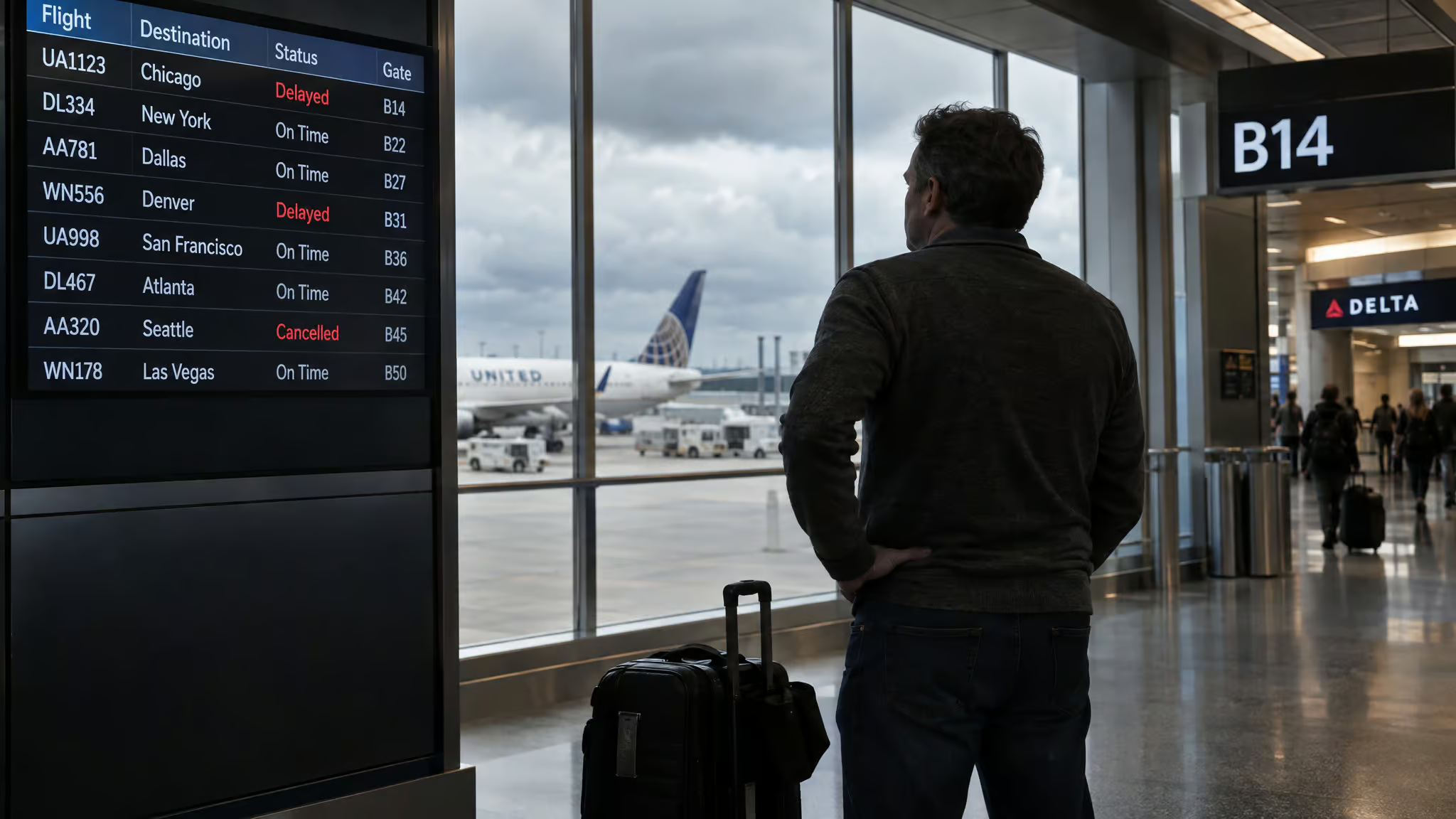
No. On two separate airline tickets, the second airline is not obligated to rebook you after a missed connection, even when the delay wasn’t your fault. Separate tickets are independent contracts: each airline answers only for its own leg, and the second airline doesn’t know or care that the first one was late. The connection risk is all yours.
Spacing, not ticket count, determines risk
The danger zone is same-day connections hours apart. Legs spaced days apart are near-zero risk; no delay ruins a connection that’s a week away. The paired examples: a Hawaii itinerary built from three one-ways (United Milwaukee to Kona, Hawaiian to Honolulu, American home) saved $600 against a single United ticket with an extra connection, and forum consensus endorsed it because the flights were a week apart. The counterexample: a Delta flight landing two hours before a separate Hawaiian ticket. Same strategy, way tighter margin, and enough to blow up a trip.
Route frequency mitigates risk. Hawaiian flies inter-island almost hourly, so easy to be flexible. The airline once rebooked a late grad student on the next flight at no charge. That’s agent goodwill, not policy, and you shouldn’t plan around it.
At the extreme end, a commenter on Rick Steves’ forum built an entire Canary Islands trip from five separate tickets. Proof it can be done, by people who check the buffers.
Baggage: the weak point
Through-checked bags are never guaranteed on separate tickets, even on the same airline. You may have to reclaim your bag, re-check it, and re-clear security, and most airlines want bags checked 45 to 60 minutes before departure. That clock matters when you’re self-connecting. The clean solution is carry-on only; if everything stays with you, the problem mostly evaporates. If you must check, keep your claim tickets and photograph the bag before handing it over.
How to split as safely as it can be done
Check FlightAware for the route’s delay history before betting a connection on it. Consider an overnight buffer instead of an afternoon one. Look at the airport map and estimate the actual transfer time; some connections are a hike, not a walk. Keep both airlines in the same alliance so they’re more likely to work together when things go sideways.
And ask the check-in agent to link your separate reservations in their system. Thirty seconds, same-airline courtesy, not a guarantee. Before locking anything in, treat your international flight booking the way you’d treat this route: search appropriately across multiple engines to compare prices before committing.
The cautionary tale: a travel writer’s holiday itinerary was three tickets on one airline, regional to LAX, LAX to Washington-Dulles, Dulles back home, three confirmation numbers. A mechanical delay plus checked bags created cascading problems because nothing was linked, so nothing flagged when things slipped. The travelers who get burned are the ones who split without spacing, without checking delay history, and without planning whether to book flights together, a question Reddit threads on group booking outcomes answer with real anecdotes, from common warnings to the “book one seat first, then check the second” trick people actually use.
Will booking everyone on one reservation help your family sit together?
Booking together is the most reliable way to sit together, because one reservation lets you select seats at purchase. But it doesn’t guarantee it, and the fare class you pick matters more than the reservation count.

Basic economy is the real obstacle
Basic economy typically excludes advance seat selection. That’s the fare where you end up in the middle seat in row 31, and for families, it’s the main obstacle to sitting together even on a single booking. Skip it if seating matters. Also, an aircraft swap can scramble assigned seats on one reservation, so watch the airline app and re-check the seat map before boarding.
If seating falls apart day-of, airport agents have more tools than phone reps: free rebooking or a full refund is usually on the table. Go to the counter, not the hold queue, and know the ask before you’re standing there stressed.
What the government says (and doesn’t)
The DOT keeps a family seating dashboard covering 10 major carriers. Five carriers. Alaska, American, Frontier, Hawaiian, and JetBlue, commit to seating families together at no charge, while Allegiant, Delta, Southwest, Spirit, and United make no such commitment. A 2024 proposed rule would bar fees for parents sitting with kids under 13, but it’s a proposal, not law.
Fine print that matters: Alaska’s guarantee requires kids and adults on the same reservation, which loops right back to booking together. One era-marker: Southwest moved to assigned seating on January 27, ending its 50-plus-year open-seating era, which changes the family math there.
Practical add-ons: fly direct when you can, buy early before seat maps fill, and use off-peak timing. Christmas Day itself is easier to seat together than the weekend before.
When booking separately wins: escaping forced routings and fare buckets
Booking separate tickets makes sense when one airline’s through-fare forces an extra connection or its highest fare bucket, when the legs can be spaced days apart, or when a deliberate structure unlocks a perk like Icelandair’s free week-long stopover in Iceland at no additional cost. The upside isn’t just one lucky fare: split ticketing can yield cheaper fares, better award redemptions, upgrades, access to regional airports, and stopovers. Paying more for a worse trip is the alternative some through-fares offer.
The pattern among people who do this well: they price each leg against the through-fare before splitting, and they space legs by days, not hours. The win comes from escaping one airline’s forced routing. The common shapes:
- A major airline between big hubs, plus a cheap separate regional connection for the last leg.
- Better award redemptions to certain regional airports, with the gap covered separately.
- A budget carrier finishing the job the big airline started, the classic split play.
Stopovers are the perk most people miss. Icelandair gives you up to a week in Iceland at no additional airfare on a transatlantic ticket, basically a free second trip tucked into the first. An afternoon in Amsterdam instead of a sprint through Schiphol is the smaller version of the same move. And the Canary Islands five-ticket trip sits at the far end of what’s possible when the buffers are real.
One honesty note: don’t treat the $600 savings as typical. It’s one documented example. But the structure behind it, price each leg, space them out, escape the through-fare, is repeatable.
Where you book matters: airline direct vs. metasearch vs. OTA
Booking directly with the airline usually matches or beats OTA prices, simplifies problem resolution, enables award bookings, and earns full loyalty credit. In a LAX-JFK head-to-head across the booking sites, Google Flights, Hopper, and Priceline tied for cheapest, while CheapOair came back most expensive. No single site is always cheapest, so check a couple.

There are two kinds of players: metasearch engines that compare and OTAs that actually sell you the ticket. Worth knowing the difference before you click.
The metasearch crew
Google Flights is the best default for most people. It’s built on ITA Matrix, tech originally made for travel agents, so you’re using the pros’ toolbox, with price graphs, tracking, and a price guarantee that refunds drops up to $500 per calendar year on select U.S.-departing flights, max three at a time. Kayak combines two one-ways into one itinerary view, which is still two tickets wearing a tidy interface, and added PriceCheck (screenshot an itinerary, it hunts that exact trip across hundreds of sites) and Ask Kayak in early 2024. Momondo’s Mix & Match fares, formerly Hacker Fares, package split ticketing: two one-ways on different airlines across two sites, sold as one itinerary.
Convenient, but the split-ticket risks still apply. Skyscanner links out rather than selling, has an Explore Everywhere feature for when you have dates but no destination, and it lacks a rewards program.
OTAs, briefly
Most OTAs land in the same price ballpark; the differences are fees and perks. CheapOair is the cautionary entry: agency fees up to $35 on most flights, fine print allowing up to $200 per ticket, and fees to change even within the first 24 hours. Hopper claims up to 40% savings, which is the company’s own claim, not independently verified, and in the LAX-JFK test it merely tied for cheapest. Check the final total before celebrating any deal.
The loyalty angle
OTA bookings may earn miles, but often not elite-qualifying credit or upgrades. Direct bookings usually earn full credit, and if you carry the Amex Platinum, booking direct earns 5x per dollar on flights. The rule I’d use: compare the agency price against the airline’s price and pick the cheaper, then read what you’re giving up. If you’re weighing a booking for your whole crew rather than just yourself, the fare-bucket math gets worse with more people, and there’s a deeper dive in whether booking flights together is actually cheaper.
The when-to-do-which framework: your trip type, your answer
For international trips, booking together on one reservation is usually the better move, because cash round-trips price far below two one-ways. The Frankfurt gap says it: $1,327 extra to split. Restate the four variables in one breath: the price delta, how likely you are to change, your connection risk tolerance, and whether you need seats together. Then match your trip:
| Trip type | Book together or separately | Why |
|---|---|---|
| Domestic, paying cash | Either; separate on a tie | Price is usually a wash; two one-ways are easier to change |
| International, paying cash | Together | Two one-ways can cost four figures more ($1,327 on Dulles-Frankfurt) |
| Award travel | Price both | Most programs price the same; Delta round-trips often cheaper; United traps credits |
| Family with kids | Together, non-basic economy | Seat selection at purchase; check your carrier’s guarantee |
| Tight same-day connections | Together | No rebooking obligation on a missed separate-ticket connection |
| Multi-day or stopover trips | Separate | Legs spaced by days; Icelandair’s free week |
| Uncertain return plans | Separate | Change or cancel one leg without touching the other |
And if you do go separate: check FlightAware delay history, build in an overnight buffer where you can, keep carriers in the same alliance, and ask the agent to link your reservations.
Book together when protection matters most: international cash fares, tight connections, kids, or a trip you might change all at once. Book separately when the math and the spacing both cooperate. The risk isn’t in splitting tickets; it’s in splitting them carelessly.
Frequently Asked Questions
When does booking separate tickets make sense even though it’s riskier?
When the legs can be spaced days apart, when one airline’s through-fare forces an extra connection or its highest fare bucket, or when splitting unlocks a perk like Icelandair’s free week-long stopover. The repeatable pattern: price each leg against the through-fare, space them out, and escape the forced routing. Just don’t treat the $600 Hawaii savings as typical — it’s one documented example, but the structure behind it is repeatable.

