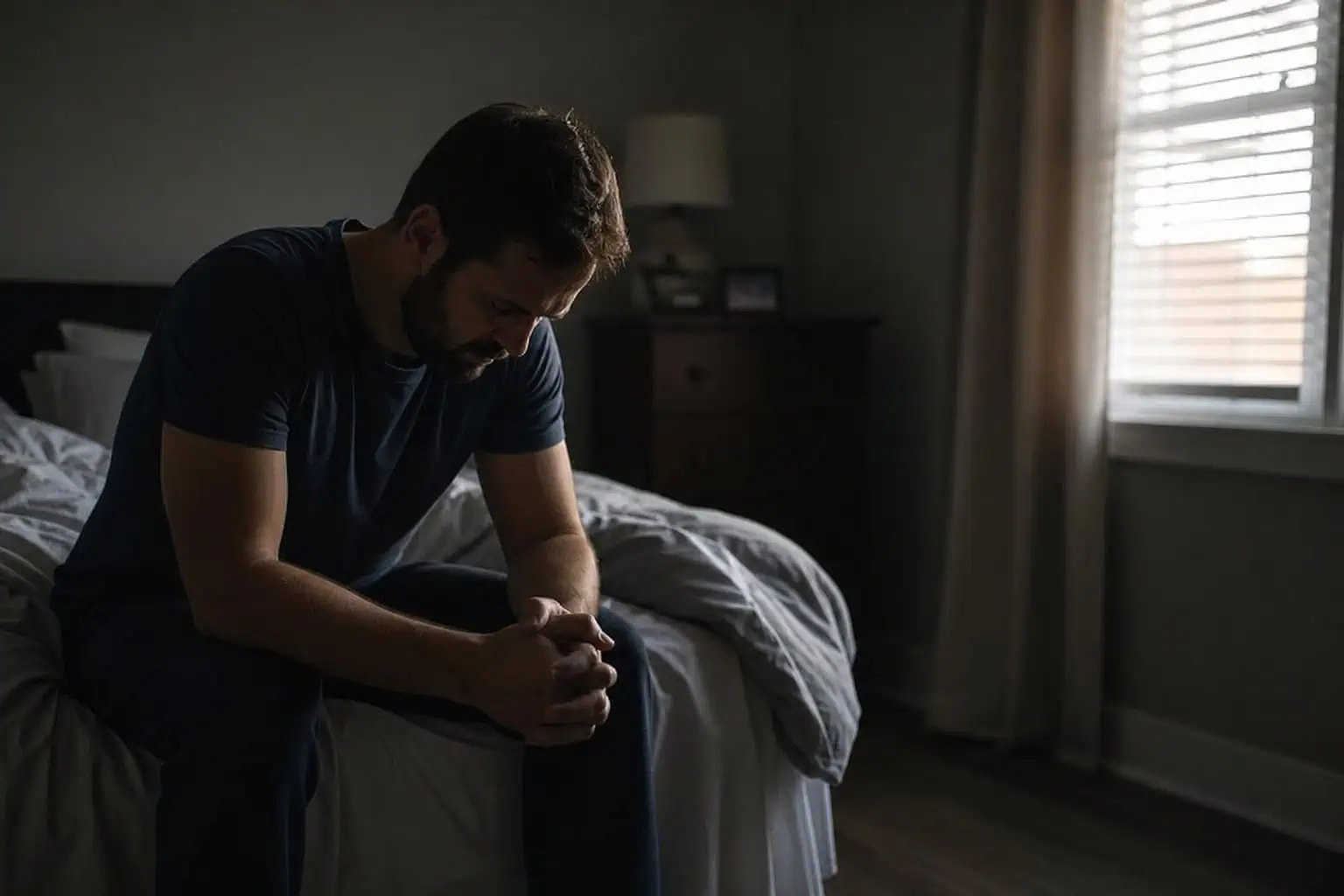
Discovering your wife had an affair isn’t just a bad day—it’s a category of pain that has its own gravity. Affair Recovery calls it “a pain like no other.” It hits you whether you’re ready or not. You’re not weak for feeling wrecked.
That initial wave? You don’t choose it. It came from something that happened to you.
This pain has two distinct stages, and knowing the difference is the first piece of useful clarity you can get.
Stage one is involuntary. It happens to you. The shock, the rage, the images you can’t stop seeing—that’s your nervous system reacting to a bomb going off in your marriage. You can’t opt out of that phase, and you shouldn’t try.
Stage two is where you get a choice. Once the initial shock settles, you face a decision about how you’ll respond. That’s where agency enters. That’s where the road splits.
The couples who make it through don’t pretend the old marriage can be patched up. They treat the betrayal as the death of their “1.0” relationship and start working toward a “2.0” version. That’s not a neat metaphor—it’s a shift in how you approach the work ahead.
But before any of that, you need to survive the first wave.
Key Takeaways
Infidelity pain has two distinct stages: an involuntary first wave you can’t control, and a second stage where you choose how to respond—only “work through” leads to healing.
Suppressing the pain doesn’t make it go away; it tends to resurface around the five-year mark.
Before re-engaging with your wife, assess whether she has a “soft heart”—full ownership, no blame-shifting, sorrow for your pain, total transparency, and no contact with the affair partner.
Table of Contents
Stage One: Surviving the First Wave
You don’t need a plan yet. You need to breathe and keep from doing something you’ll regret.
The gut-punch feeling doesn’t last forever. It fades—not quickly, not easily, but it does. The mistake most guys make is trying to push through it like it’s a workout. They suppress the images, drink through the evenings, bury themselves in work, and tell themselves they’re handling it.
Here’s the problem: suppressed pain doesn’t go away. It goes underground. From what Affair Recovery has seen, that buried pain tends to re-emerge around year five—and when it comes back, it’s worse. Harder to deal with than if you’d faced it head-on.
So what do you do tonight?
When the intrusive images hit—and they will—try this: look around the room and list five red things. Or five green things. It yanks your brain out of the mental movie playing in your head and puts you back in the present. It’s a grounding technique, not a therapy exercise.
Try it. It works.
This is also the moment to keep from making big decisions. Don’t announce you’re leaving. Don’t sign anything. Don’t confront her in a way that burns the house down.

Survive. That’s your only job right now.
Bottom line: Your only goal in the first days is to not make the damage worse. Do nothing that can’t be undone.
Stage Two: The Seven Options—And Why Most Backfire
Once the initial shock fades, you have a choice. Actually, you have seven options. Affair Recovery lays them out, and if you’re honest with yourself, you can see which ones you’re already leaning into.
Avoid the pain. Pretend it didn’t happen. Act normal. This is a trap because you can’t avoid what’s already happened. The memory doesn’t go away because you ignore it.
Numb the pain. Alcohol, work, food, scrolling, whatever. It works for a while, but numbing delays the crash and makes it worse when it finally hits.
Transmit the pain. Lash out, blame, make her feel as bad as you do. It’s satisfying for about five minutes, but it erodes any chance of repair and pushes her into a shame spiral where she can’t hear you.
Ignore the pain. Bury it. Act like everything’s fine. That’s a time bomb. You’ll be fine until you’re not, and when you’re not, it’ll be ugly.

Let the pain control you. Let it dictate every move you make. Become the angry husband, the suspicious husband, the guy who can’t talk about anything else. That’s a fast way to lose yourself.
Accept the pain. Recognize that it hurts and that it’s okay to hurt. This is where the real work starts, but acceptance alone isn’t enough.
Work through the pain. Accept it, grieve what you lost, and let it change you. That’s the only option that leads to healing. Not getting over it—going through it.
Everything else is a detour that loops back to the same pain.
Is She Safe? The Soft Heart Criterion
Before you decide whether to re-engage, you need to answer one question: is her heart soft or hard?

If her heart is soft, she’s taking full responsibility. She’s not minimizing, not blaming you, not excusing. Dr. Joe Martin, who’s been on both sides of this, puts it plainly: healing won’t begin until she stops minimizing, blaming, excusing, or justifying what she did. Full stop.
Signs of a soft heart:
- She owns it completely. No “it was just a kiss.” No “we were both unhappy.” She says, “I did this, and it was wrong.”
- She shows genuine sorrow for your pain, not just regret for getting caught or fear of losing the marriage.
- She offers total transparency—phone, email, social media, all of it. Anytime. No locked doors, no hidden accounts.
- She commits to no contact with the affair partner. Non-negotiable.
- She listens to your hurt with patience, on your timeline, not hers.
Signs of a hard heart:
- Minimization (“It wasn’t that serious”)
- Deflection (“You weren’t meeting my needs”)
- Impatience (“Why aren’t you over this yet?”)
- Refusing transparency or maintaining secrecy
If her heart is hard, re-engaging isn’t safe. You can’t do the work alone.
The Bilateral Checklist: What Each of You Must Do
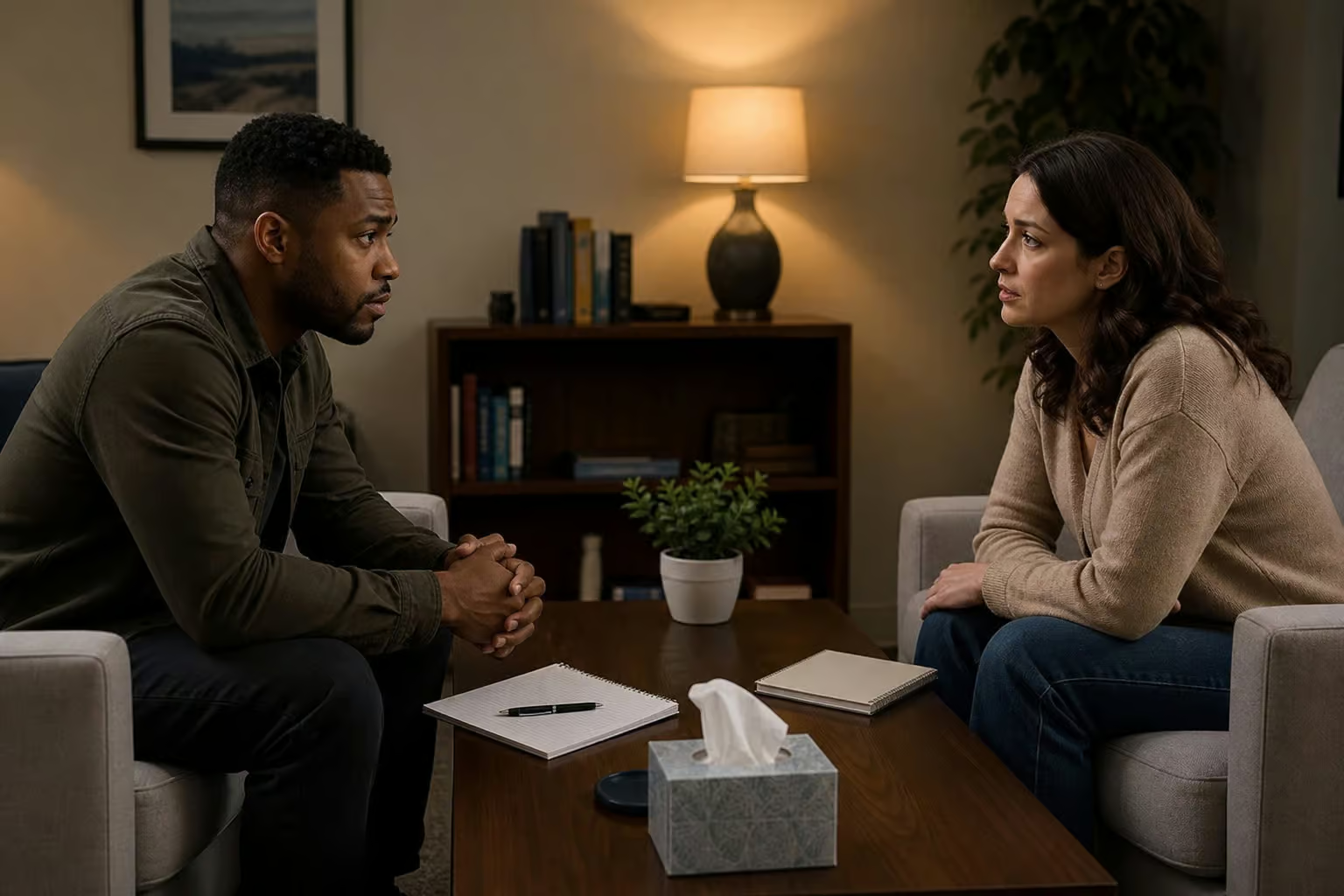
Healing is a two-person job. Counselor Leslie Vernick lays out a ten-step framework that covers both sides.
What she must do
- Stop minimizing. Confess fully, without filtering.
- Self-examine her own triggers—pride, entitlement, poor impulse control, family history, whatever led her down that path.
- Listen non-defensively. For as long as it takes. She doesn’t get to clock out.
- Produce “fruit of repentance”—changed actions, not just words. As Luke 3:8 puts it, “Produce fruit in keeping with repentance.”
What you must do
- Be honest about your sadness, hurt, and anger. Process it instead of sweeping it under the rug.
- Examine ways you may have contributed to neglect or emotional distancing in the 1.0 marriage. That’s not excusing her affair—it’s understanding the sinkhole.
- Acknowledge positive changes when she makes them. Encouragement matters.
- Tolerate the fits and starts. Healing is not linear. Two steps forward, one step back is normal.
What you both must do
The Gottman Institute breaks it into three phases: Atone, Attune, Attach. First, atone—hear the betrayed partner’s pain. Really hear it. No defending, no explaining.
Then attune—reconnect emotionally. Then attach—rebuild the bond, following a guide on how to get over wife’s infidelity.
Peggy Vaughan studied couples who stayed together after infidelity. The ones who made it talked openly and thoroughly about the affair, and research finds that 67% of couples recovering after infidelity say open and honest communication saved them. The ones who tried to move on without talking about it usually didn’t make it.
Leslie Vernick uses a sinkhole analogy: a corporate office plaza in Allentown, PA looked solid until the ground gave way overnight—50 feet wide, 18 feet deep. The building was ruined from deep within by an unobserved force. An affair is the same. It’s evidence of a deeper problem. You must find and own those root issues before you can rebuild.
The Decision: Stay, Separate, or Divorce
This decision should be based on her demonstrated actions.

Two real outcomes show the range:
Mark and Jill had a year-long affair, but she made a U-turn—full ownership, total change. Twelve years later, they’re marriage coaches with a 2.0 marriage. It’s possible.
Lynn Williamson’s story went the other way. Eight years of ongoing betrayal. Her husband threatened suicide whenever she asked him to stop. That’s manipulation. She eventually left.

Healing separation is a middle option: counselor-guided, intentional, structured. You live apart but still work on the marriage—daily calls, date nights—without sharing a bed. It can serve as a wake-up call for the unfaithful partner.
Divorce is on the table. Jesus identified adultery as one of the few grounds for divorce (Matthew 19:9). Leaving is not failure. Staying is not weakness. It depends on her behavior.
Resources: Books, Courses, and Programs
If you want structured help, here’s what’s actually worth your time.
- Harboring Hope – An online course from Affair Recovery, designed for betrayed spouses. People swear by it.
- Surviving Infidelity Bootcamp – Free. No cost, no risk. Start here.
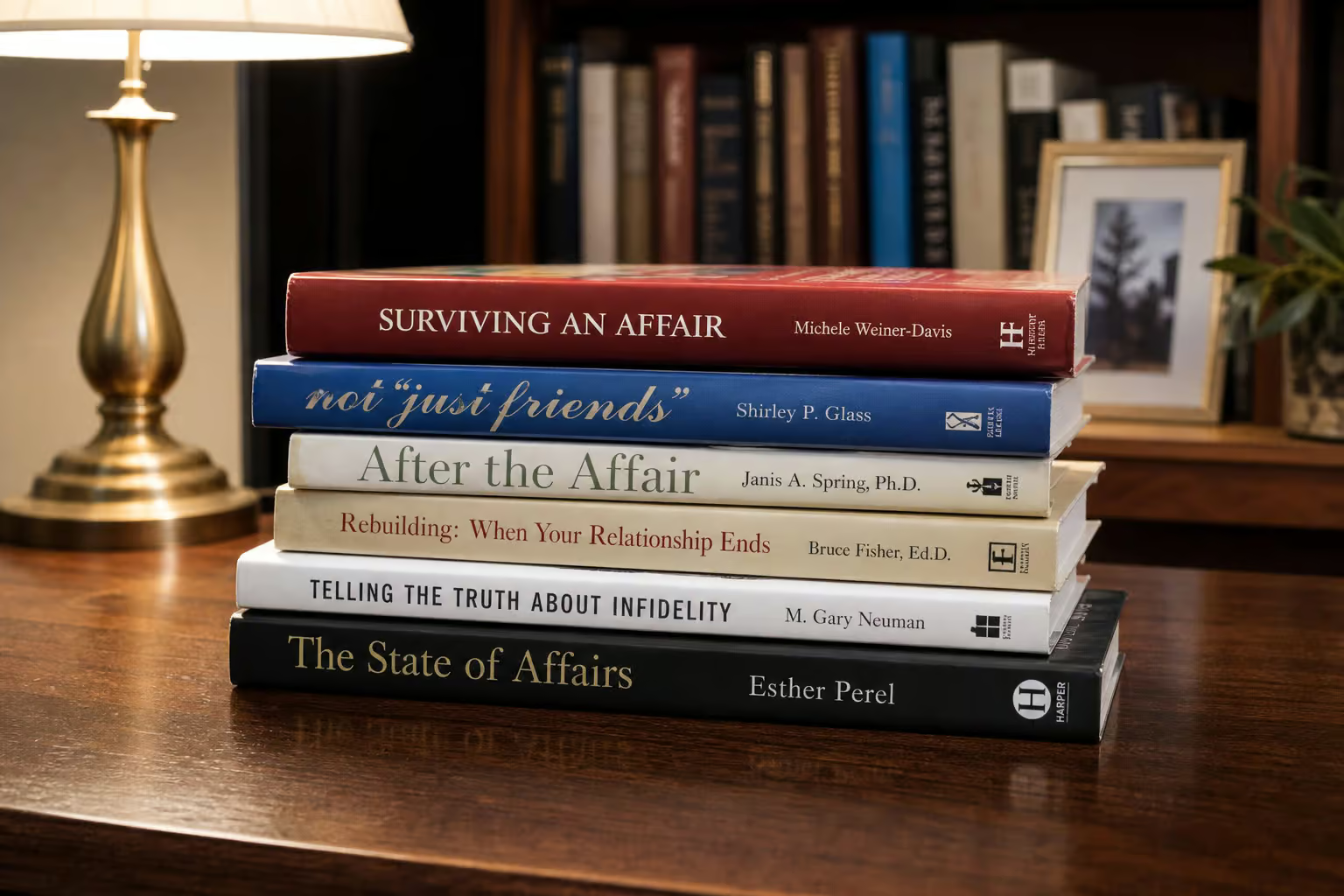
- Surviving An Affair by Dr. Harley – A solid book on the subject.
- Divorce Busters by Weiner Davis – Another one to keep on your shelf.
- Not Just Friends by Dr. Shirley Glass – For understanding how emotional affairs cross the line.
- EMS weekend – A counselor-guided weekend that can serve as a real catalyst. Structured, not a vacation.
- Affair Analyzer tool – Helps you understand what happened and see the patterns.
- Care Team at Affair Recovery – You can reach out to them directly for help.
- Real Men 300 / Breakthrough Call – A program for men specifically.
- Suicide & Crisis Lifeline: 988 – If things get really dark, call. Free, confidential, 24/7.
Practical Self-Care and Coping Techniques
Beyond the grounding technique (five red or five green things), here are a few more things that actually help.
Esther Perel’s investigative questions. If you’re wondering how to find out if wife has ever cheated, search for them. They’ll help you ask the right things during the discovery phase—questions that get at meaning rather than just graphic details.
Reflective listening. Say back what you heard before you respond. It dials down the defensiveness and keeps conversations from turning into firefights.
Weekly off-limit outings. Plan one night a week where talking about the affair is banned. Go do something you used to enjoy. It sounds forced, but it helps you remember you actually like each other.
Healing happens in layers. Physical intimacy might involve tears at first. That’s okay. It’s part of the process.
If only one of you believes the marriage can be saved, focus on your own growth while you wait. You can’t force someone else to heal. That time isn’t wasted—it’s building the person you’ll be whether the marriage survives or not.
Forgiveness: Your Choice, Your Timeline
Forgiveness isn’t for her. It’s for you. It’s about letting go of the weight you’re carrying.

If you choose not to forgive, that’s valid. But you need to memorialize your losses. Write them down, mark them somehow. Don’t pretend they didn’t happen.
If you choose to forgive, build a monument—something that reminds you those losses have been let go. A stone, a journal entry, a physical act that marks the release.
Either choice has consequences. Guilt is appropriate after an affair, but rumination keeps you stuck. At some point, you have to move forward.
The common mistakes that sabotage recovery: minimizing the affair, impatience, refusing counseling, failing transparency, expecting intimacy before trust is rebuilt, and financial infidelity. All of them are avoidable if you see them coming. financial infidelity is a breach of trust where one spouse intentionally hides or manipulates financial information from the other.
Hope and the 2.0 Life: Moving Forward
The old marriage is dead. You’re not fixing it. You’re building something new.
C.S. Lewis said it in The Four Loves: love anything and your heart will be wrung and possibly broken. If you want to make sure of keeping it intact you must give your heart to no one. It will become unbreakable, impenetrable, irredeemable.
Walking through the pain accepts it, grieves it, and lets it transform you. The only place you’re safe from love’s risks, as Lewis put it, is hell. That’s a hell of a trade-off.
Can your marriage survive infidelity? It can, if you both do the work. Mark and Jill are proof. But the only failure is refusing to walk through the pain.
If she does the work and you do the work, a 2.0 marriage is possible. If you don’t, a single life is also possible.
The choice is yours. It starts with stage two.
People Also Ask
How long do cheaters stay with the person they cheated with?
There’s no set timeline, but the key factor is whether the unfaithful partner has a ‘soft heart’—full ownership, no blame-shifting, and total transparency. If she cuts all contact with the affair partner and commits to rebuilding, the marriage can survive. If she minimizes or deflects, the relationship with the affair partner often continues or the marriage fails.
Why do I still love someone who cheated on me?
Love doesn’t switch off instantly after betrayal. The pain of infidelity is involuntary, and your feelings are a normal response to the history you shared. Working through the pain—rather than suppressing it—allows you to eventually decide whether to rebuild a new ‘2.0’ relationship or move on, but loving someone who hurt you doesn’t make you weak.
Can people change after cheating?
Yes, but change requires more than words—it demands ‘fruit of repentance,’ meaning consistent changed actions over time. The unfaithful partner must take full responsibility, offer complete transparency, and listen non-defensively. Real change is possible, as shown by couples who rebuilt a stronger marriage after infidelity, but it depends on her demonstrated behavior, not promises.
What is the ‘soft heart’ criterion for deciding whether to stay?
The soft heart criterion assesses whether your wife is genuinely remorseful and committed to change. Signs include full ownership of the affair without minimizing, genuine sorrow for your pain, total transparency with devices and accounts, no contact with the affair partner, and patience with your healing timeline. If her heart is hard—deflecting blame, refusing transparency—re-engaging isn’t safe.