
The moment you find out, your body does something your mind can’t keep up with. Racing heart. Gut clenched. Maybe you throw up.
One guy on a forum put it plainly: ‘I vomit every time I get flooded. I’ve lost 10 kg.’ Another ended up in a mental hospital because the gaslighting was so bad — his gut was screaming that something was wrong, and her denials made him question his own reality.
This isn’t “emotional pain” in some abstract sense. It’s a full-body hijack. Your nervous system just got the news that the person you trusted most is a threat. The amygdala — that almond-shaped alarm in your brain, fires fight, flight, or freeze before you can even form the thought “is this really happening?”
And here’s the part that drives guys crazy: you can’t think your way out of it. Not yet. The biology has to settle first.
What follows is a map of what happens next — the real sequence, not the “5 steps to forgive and forget” garbage. It covers why your body feels like it’s under attack, what mistakes make it worse, how to tell if your partner is actually capable of repair, and how to make a clear-headed decision about staying or leaving. I’ve spent enough time in these rooms to know the patterns. The frameworks from clinicians like Shirley Glass (who pioneered research on emotional affairs), Esther Perel (who reframes infidelity as an exploration of desire), and Michele Weiner-Davis (who advocates for the “2.0 marriage” after betrayal) inform much of what you’ll read here.
None of it is easy. But none of it is random either.
Key Takeaways
Your nervous system records every betrayal — emotional or physical, and triggers the same survival response. Feeling like you’re losing your mind isn’t weakness; it’s your biology trying to protect you.
The recovery sequence is safety first, then trust, then problem-solving. Most couples try to skip straight to the last step, which is why standard couples therapy can make things worse early on.
Only about 15% of marriages end in divorce directly because of infidelity, but that number doesn’t mean you should stay. The real question is whether your partner will do the relentless work of repair.
Table of Contents
Why the Pain Feels Unbearable
The first thing to understand is that what you’re feeling isn’t drama or a character flaw. It’s a biological response called emotional flooding. Your brain’s alarm system has been tripped, and it’s pumping stress hormones into your bloodstream as if a bear just walked into the room. The problem is, the bear is your wife.

In the world of attachment science, your nervous system is constantly scanning for two answers: “Are you there for me?” and “Am I enough for you?” The affair flips both of those to a hard no. Your body doesn’t care whether it was a physical affair, an emotional affair, or some gray zone in between. It registers the threat and fires the same alarm.
That’s why you can’t just “move on” or “think positive.” Your cortex — the thinking part of your brain, is offline when the amygdala is running the show. Intrusive thoughts flood in. You replay conversations that didn’t make sense at the time.
You ask the same questions fifty different ways, hoping for an answer that will make it stop. It won’t.
One guy on a forum put it plainly: I vomit every time I get flooded. I’ve lost 10 kg. That’s not being dramatic. That’s trauma expressing itself through the only channel it has — your body.
Understanding the Trauma: Why Your Body Feels Like It’s Under Attack
Post Traumatic Infidelity Syndrome is the term a lot of clinicians use, and it’s fitting. The symptoms look a lot like PTSD: flashbacks, hypervigilance, emotional numbness alternating with rage, difficulty sleeping or eating. Your nervous system isn’t dwelling on the past — it’s scanning the present for danger, trying to make sure you never get hurt like that again.

When you’re in a survival state, you’re not capable of rational decisions about the marriage. That’s not a character flaw. It’s your amygdala doing its job. Deciding whether to stay or leave while you’re flooded is like reading a contract while someone sets off firecrackers next to your head. Understanding your partner’s Love Language and Apology Language can become useful tools later, but only after your nervous system has settled — never during flooding.
What emotional flooding actually feels like
It’s not just feeling sad. It’s rage that comes out of nowhere. Verbal outbursts you regret an hour later. Swings from “I’m leaving” to “I want to fix this” and back again before lunch.
Physical symptoms like vomiting, weight loss, chest tightness. A guy on a forum described his pattern: when he’s flooded, he leaves the room, can’t talk, and can’t even look at her.
The key is to recognize flooding for what it is — a temporary biological state, and stop trying to solve the marriage during it. That’s where the time-out protocol comes in, and we’ll get to that later. Resources like the EMS Weekend (Emergency Marriage Weekend) offered by some infidelity recovery programs can be a lifeline during acute crisis, providing 48 hours of structured support to stabilize the nervous system before any decision-making.
Why your brain won’t stop replaying it
The body records every trauma. Your nervous system isn’t trying to torture you by replaying the affair in your mind — it’s trying to analyze the threat so you can avoid it in the future. The problem is, the threat is already in the past, but your brain doesn’t know that. It’s acting like the affair is happening right now.
This is why you can’t just “stop thinking about it.” The intrusive thoughts are the single biggest obstacle in recovery — and trying to suppress them only makes them louder. You have to learn to manage them, not fight them.
Common Mistakes That Derail Healing
In the forums and support groups, I’ve seen the same patterns over and over. Guys who are desperate to fix things make these mistakes because they think they’re helping. They aren’t.
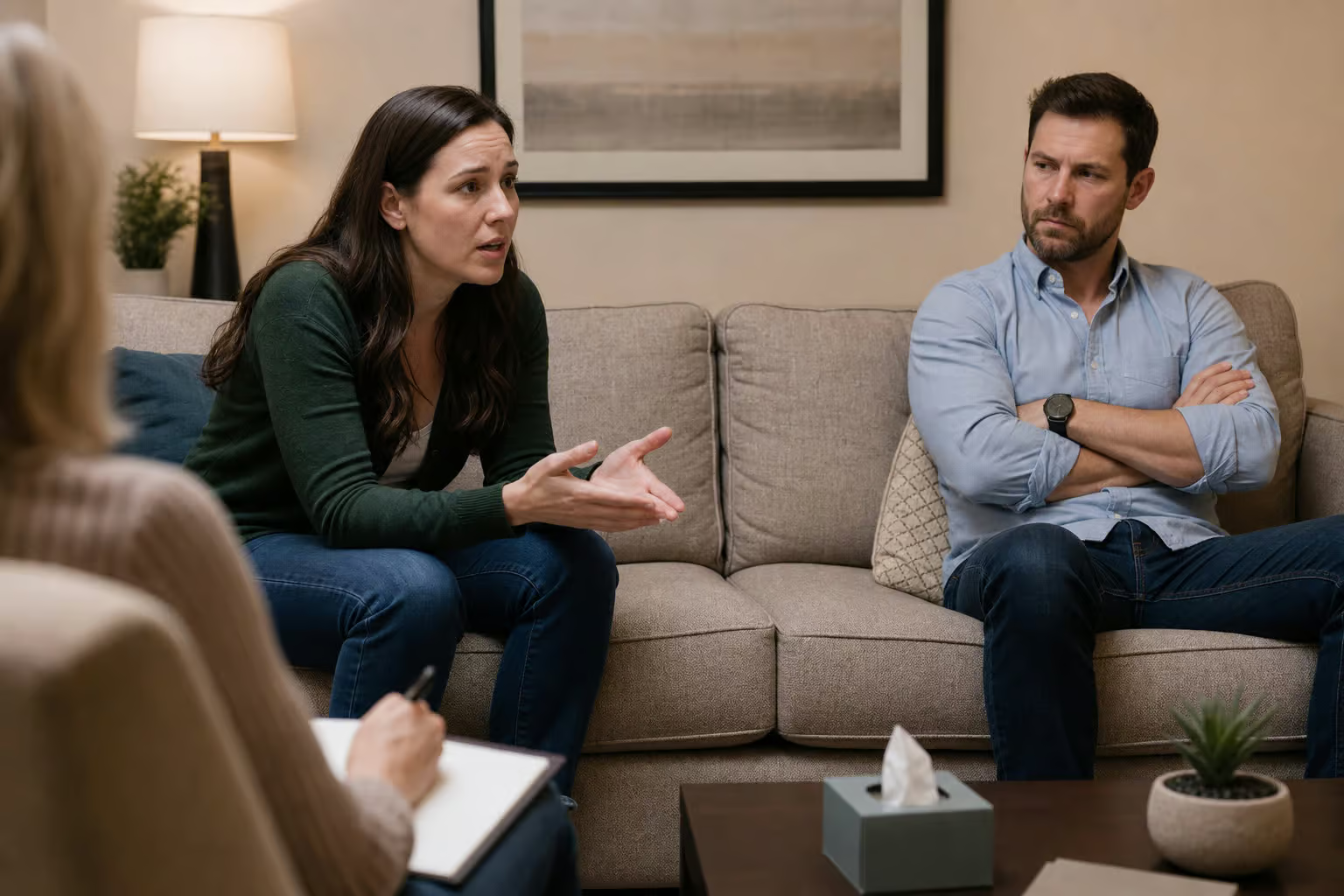
Trying to move on too fast
You want the pain to stop, so you tell yourself “I’ll forgive her and we’ll move forward.” But forcing forgiveness before the wound is acknowledged doesn’t heal it — it pushes the pain underground. It’ll show up later as distance, irritability, or a blowup over something small. One guy told me his wife kept asking said that how long are you going to punish them?, which is the worst thing she could say. It puts the pressure on you to pretend you’re fine when you’re not.
Standard couples therapy too early
This one hurts to watch. A well-meaning marriage counselor asks both of you to “own your part” in the problems. The betrayed spouse hears: “You’re partly responsible for the affair.” That’s not just wrong — it’s retraumatizing. The American Psychological Association’s research shows that premature reconciliation work makes outcomes worse.
Couples therapy has its place, but only after the betrayed spouse’s nervous system has regulated and the safety is established. Before that, it feels like gaslighting.
Silence equals healing (it doesn’t)
Some therapists actually tell betrayed spouses not to discuss the affair during flooding. One guy’s counselor told him that bringing it up “only destroys the relationship.” He was 20 months out and still struggling, and his therapist told him to bottle it up. That’s terrible advice.
Confusing silence with healing just drives the pain deeper. Real recovery requires walking toward the pain, not around it.
What Healing Responses Look Like From Your Partner
This is the section that will save you months of wasted hope. You need to know if your wife is genuinely capable of repair or just going through the motions. The difference is stark.

One-Way Repair: why the burden is on her
At the start, recovery is not a 50/50 project. It’s not fair, and it’s not balanced. The person who broke the trust has to carry the weight of rebuilding safety before any shared work can begin. A therapist once put it this way: You cannot ask the person you ran over to apologize for standing in the road.
Your wife needs to shift from “I feel bad about myself” to “my heart is breaking for you.” That’s the Cocktail of Shame concept — her shame should be 80% about the pain she caused you, not 100% about how awful she feels about herself. If she’s making it all about her guilt, she’s not ready to repair. This is what therapist Figs (a well-known voice in infidelity recovery) calls One-Way Repair, because the betrayed spouse cannot be asked to carry half the load until safety is restored.
Proof of Work vs. Fiat Love
Trust doesn’t come back because she says “I’m sorry” or “I love you.” Those words don’t land when your nervous system is in protection mode. Trust comes back through accumulated moments of consistent behavior — what’s called Proof of Work. She puts down her phone when you need to talk.
She offers transparency without being asked. She stays in the room when it’s uncomfortable.
Saying “I love you” without that behavioral backing is what some call Fiat Love — the words are empty if the actions don’t match. You need to see evidence over time that she’s choosing honesty over self-protection.

Red flags — when her responses are blocking healing
If your wife is doing any of these, it’s a sign she’s not ready for real repair:
- Self-depreciation — making it all about her shame and expecting you to comfort her.
- Defensiveness — even if she thinks she’s right, being defensive always sounds like “You’re wrong to feel that way.”
- Pretending everything is okay when you’re clearly upset. That’s not peacekeeping; it’s avoidance.
- Playing the victim — bringing the conversation back to how hard this is for her.
- Minimizing — “It only happened twice,” “Nothing physical happened,” “It didn’t mean anything.”
The research is clear: recovery moves faster when the unfaithful partner is genuinely accountable versus defensively compliant. Genuine accountability means ownership without excuses.
The Recovery Timeline: What to Expect and When
There’s a biological sequence to healing, and most couples try to skip the first step. It goes like this: Safety (nervous system regulation) → Connection (trust rebuilding) → Cognitive Access (your brain comes back online) → Problem Solving (actually fixing things). If you try to start with problem-solving (passwords, location sharing, rules) before you’ve regulated, it won’t stick.
Phase 1: Crisis stabilization (weeks 1-6)
The first six weeks are about stabilizing your nervous system, not solving the marriage. You need a full disclosure — who, how long, what was shared, the nature of the connection. Not every single text message, but the broad outlines. And you need a no-contact commitment from her.
Total cessation. No calls, no texts, no “closure meetings.” If the affair continues in any form, recovery cannot begin. For a husband navigating this crisis, what to do after being cheated on by wife covers the immediate action steps for emotional self-care, boundaries, and deciding whether to stay or leave.
Your job during this phase is to focus on regulation. Sleep, eat, exercise, talk to someone who gets it. Do not make permanent decisions about the marriage while you’re in crisis mode.
Phase 2: Understanding the breach (months 2-4)
Once you’re stable, you can start to understand what happened. The affair is a symptom of vulnerabilities — in the relationship, in your wife, in the circumstances. But here’s the crucial distinction: relationship problems existed and she made a choice to have an affair. Both things can be true.
If you’re navigating this painful reality, a comprehensive guide for men dealing with a cheating wife can help you sort through the suspicion, discovery, and aftermath. She needs to take full ownership of the choice. You don’t need to own anything about the affair itself.
Phase 3: Rebuilding (months 4-12)
Trust through proof of work. She offers radical transparency without being asked. She puts in the consistent, costly behavior over time. You start to see that her actions match her words. This is where Emotionally Focused Therapy (EFT) can help if you’re both ready — it’s designed for rebuilding attachment bonds.
Phase 4: Integration (year 1+)
The affair becomes part of your story, not the defining chapter. You’ll still get triggered — maybe for the rest of your life, you’ll see a Starbucks and remember. But the triggers don’t destabilize you anymore. You’ve replaced naive trust with earned trust. The relationship that emerges is different from the old one, and sometimes it’s deeper.
A few variables that affect the timeline: trickle-truth resets the clock completely. Genuine accountability speeds things up. Individual therapy for both of you helps. If you had a strong pre-affair foundation, recovery is faster. External stressors (kids, money, health) slow it down.
Emotional Affairs vs. Physical Affairs — Unique Challenges
If your wife says nothing physical happened, so it wasn’t really cheating, here’s the truth: your nervous system doesn’t care. The pain is real either way. Emotional affairs can actually be harder to recover from in some ways, because they involve her inner world — the secrets, the laughter, the emotional intimacy she gave to someone else.
Why emotional affairs can feel more invasive
They involve her thoughts, her feelings, her time. The ambiguity problem makes it easy for her to downplay it: “We were just friends.” But you know something was off. And if she gaslit you — told you your accurate read was just insecurity, that’s a deeper betrayal. Emotional affairs frequently involve coworkers or close friends, which means you might still see the person.
The comparison wound is also unique. With a physical affair, you might compare your body. With an emotional affair, you compare your whole personhood: “Am I not interesting enough? Not supportive enough?
Not fun enough?” That’s a different kind of hurt.
Gender differences (from survey data)
A survey from VictoriaMilan.com found some stark contrasts: 72% of men said sexual affairs were worse, while 69% of women said emotional affairs were worse. 80% of men would forgive an emotional affair, but only 30% would forgive a physical one. For women, it flipped: 76% would forgive a strictly sexual affair, but only 35% would forgive an emotional one.
The takeaway: the gender difference matters, but the therapeutic goal isn’t to argue about labels. It’s to attend to the undeniable reality of your pain.
Rebuilding Trust and Reclaiming Self-Worth
These are two separate tracks, and you can work on one even if the other is stalled. Your worth was never tied to her fidelity. That’s a hard truth to absorb when every fiber of your being feels worthless, but it’s true.

How trust actually comes back
Trust is rebuilt through small daily choices. She stays present in your pain without defending or rushing. She picks honesty over self-protection, even when it’s easier to lie. She doesn’t hide her phone. She doesn’t get defensive when you ask a question for the hundredth time.
The formula I’ve seen work is: repair = time × consistency of behavior. Every day. Not grand gestures, not one big apology.
Reclaiming your self-worth
If you grew up feeling invisible or insufficient, the affair confirms that fear. One guy said that they feel like she picked him because he’s more interesting, more successful, more everything. But her choice wasn’t about your worth. It was about her vulnerabilities, her unmet needs, her immaturity.
Individual therapy helps here. You need to separate the question “Is she capable of repair?” from “Am I still worthy of love?” They’re not the same question.

What forgiveness is and isn’t
Forgiveness is for the forgiver. It frees you from resentment, but it’s not a pass for your partner. Forgiveness does not require reconciliation. And you cannot forgive on a timeline or because someone tells you to. If she asks for forgiveness before you’re ready, that’s pressure, not progress.
Deciding Whether to Stay or Leave
This is the most personal decision you’ll make, and I’m not going to push you in either direction. What I can give you is a framework for evaluation based on observable behavior, not hope or fear.

How to evaluate her commitment
Genuine accountability looks like: ownership without excuses, staying present in your pain, consistent proof of work over months, not weeks. Defensive compliance looks like: minimizing, blaming, expecting understanding without effort, acting like the victim.
If she’s still acting like the victim — bringing the conversation back to how hard this is for her, recovery cannot happen.
When recovery cannot begin
- The affair continues, or she refuses complete no-contact.
- She minimizes, blames you, says “get over it.”
- She continues lying or seeking attention elsewhere.
- She shows narcissistic traits — unable to prioritize, honor, or love you genuinely.
- Sometimes the affair reveals the relationship was already over. The infidelity was just the final sign.
Leaving can be the right choice
One guy told me he felt relief after leaving — no more checking up, no more anxiety. That’s a real outcome. But resist permanent decisions in a temporary emotional state. Give yourself time to clear the flooding before you decide.
The statistic you’ll hear is that only about 15% of marriages end in divorce directly because of infidelity. That’s just context, not advice. It doesn’t mean you should stay. It means many couples do find a way through. But you don’t owe anyone a second chance if she won’t do the work.
Self-Care and Rebuilding Your Life
You need practical tools right now, not just “go to therapy.” Here’s what I’ve seen work.
Grounding techniques for emotional flooding
The time-out protocol: agree on a word you can both use when flooding escalates. Walk away. Calm your nervous system — deep breathing, cold water on your face, a walk around the block. Do not talk about the affair during flooding. That’s a survival state, not a conversation.
Write down your intrusive thoughts instead of trying to suppress them. Some guys set a “worry time” — 15 minutes a day to think about the affair, then close the notebook. It helps contain the rumination.
Building a support system
You need people who get it. Support groups — online or in person, are huge. Knowing you’re not alone is healing in itself. Individual therapy is essential; you cannot do this alone.
If you’re religious, a pastor or spiritual director can help. But don’t rely on just one source of support.
Rebuilding your life — not just your relationship
Plan weekly outings where infidelity is not discussed. Date nights where you talk about anything except the affair. Emotional intimacy outside the bedroom leads to healing inside it. Find joy and purpose separate from the marriage — hobbies, friends, goals that don’t depend on her.
When and How to Seek Professional Help
Emotional affair recovery is not a DIY project. But not all therapy is equal. Standard couples therapy can harm if applied too early. You need a therapist who understands betrayal trauma and attachment-based approaches.

What to look for in a therapist
Experience with infidelity recovery. Someone who knows the biological sequence: regulation before problem-solving. Doesn’t rush into “shared responsibility” work before safety is established. Trained in Emotionally Focused Therapy (EFT) for the rebuilding phase.
Red flags: a therapist who tells you to stop discussing the affair, who says both of you need to “own your part” before you’re ready, or who gives you a timeline for forgiveness.
Specific resources
- Affair Recovery offers a free Surviving Infidelity Bootcamp. It’s a good low-cost entry point.
- Empathi has a Wisdom Score assessment that takes about three minutes. Gives you a rough idea of where your relationship stands.
- Colorado Counseling Center — Stefanie Kuhn, LMFT, offers a free 15-minute consult.
- Mark and Jill — a couple who rebuilt after his year-long affair. Their story is raw and real.
- International Centre for Excellence in Emotionally Focused Therapy — find an EFT-trained therapist near you.
- Come Here to Me podcast — good for listening in the car, helps you feel less alone.
If there’s any hint of physical abuse, the National Domestic Abuse Hotline is 1-800-799-7233. Prioritize safety.
Managing the Long Tail — What Happens After Year One
The marriage that comes out the other side will not be the one you had before. That relationship is dead. What replaces it — if both of you do the work, can be deeper and more honest than you ever imagined.
Couples who complete all three phases often end up stronger than before. They’ve replaced naive trust with earned trust. They’ve learned to talk about hard things. They’ve faced the worst moment of their marriage and survived it.
But the long tail is real. One guy told me that five years later, he still gets triggered sometimes, but it doesn’t control him. He knows it’s just a trigger, and he can let it pass.
What About Emotional Affairs — The Unique Path
If you’re here because your wife had an emotional affair, the recovery path is the same as for physical affairs. Same biology, same sequence. The key difference is the minimization trap — if she’s saying “nothing physical happened,” that’s the single biggest obstacle. Emotional affairs often involve a “third party” who becomes a confidant, creating a parallel relationship that fuels limerance, an involuntary obsession characterized by intrusive thinking and hope of reciprocation.
According to survey data from VictoriaMilan.com, 69% of women said emotional affairs were worse than physical ones, and the ambiguity of emotional betrayals makes them easier to downplay and harder to investigate. Your nervous system doesn’t distinguish between types, but the recovery path demands that you name the full scope of what was lost — not just her time, but her inner world and attention, which were given to someone else. The goal isn’t to win an argument about labels; it’s to attend to your pain.
You Are Not Broken
The relationship before the affair is gone. That’s not a tragedy — it’s the starting point. What comes next, together or apart, will be built on earned trust rather than naive trust. And that’s a stronger foundation.
The pain you’re feeling is proof that your attachment system is working, not that you’re broken. Your biology is trying to protect you. It just doesn’t know that the threat is already in the past.
Real affair recovery requires walking toward the pain, not around it. You’ve already taken the hardest step by not looking away. Keep going.
People Also Ask
What is the 80 20 rule for infidelity?
In the context of affair recovery, the 80/20 rule refers to the Cocktail of Shame concept: the unfaithful partner’s shame should be 80% about the pain they caused you and only 20% about how awful they feel about themselves. If she’s making it all about her guilt, she’s not ready to do the real work of repair.
How to cope with a wife that cheated?
Start by stabilizing your nervous system, not solving the marriage. Focus on regulation: sleep, eat, exercise, and talk to someone who gets it. Use grounding techniques like the time-out protocol when emotional flooding hits, and avoid making permanent decisions while you’re in crisis mode.
Can a marriage survive a wife’s infidelity?
Yes, many marriages do survive — only about 15% end in divorce directly because of infidelity. But survival depends on whether your partner is genuinely accountable and willing to do the relentless work of repair, not on hope or pressure to forgive. The relationship that emerges will be different, but can be deeper if both people do the work.
How do I stop thinking about my wife’s infidelity?
You can’t just stop — intrusive thoughts are your brain trying to analyze the threat, and suppressing them makes them louder. Instead, write them down, set a specific ‘worry time’ each day to contain the rumination, and learn to manage the thoughts rather than fight them. The goal is to reduce their power over you over time.
What’s the difference between an emotional affair and a physical affair?
Your nervous system doesn’t distinguish between the two — both trigger the same survival response. Emotional affairs can actually feel more invasive because they involve her inner world, secrets, and emotional intimacy given to someone else, and they’re easier for her to downplay as ‘just friends.’ The recovery path is the same for both.
How long does it take to recover from a wife’s infidelity?
Recovery follows a biological sequence: crisis stabilization (weeks 1-6), understanding the breach (months 2-4), rebuilding trust (months 4-12), and integration (year 1+). Trickle-truth resets the clock completely, while genuine accountability speeds things up. Triggers may last for years, but they eventually lose their power to destabilize you.
What should a wife do after cheating to help her husband heal?
She needs to shift from ‘I feel bad about myself’ to ‘my heart is breaking for you’ — carrying the weight of rebuilding safety without expecting you to comfort her. That means offering radical transparency without being asked, staying present in your pain without getting defensive, and proving her commitment through consistent behavior over months, not just words.