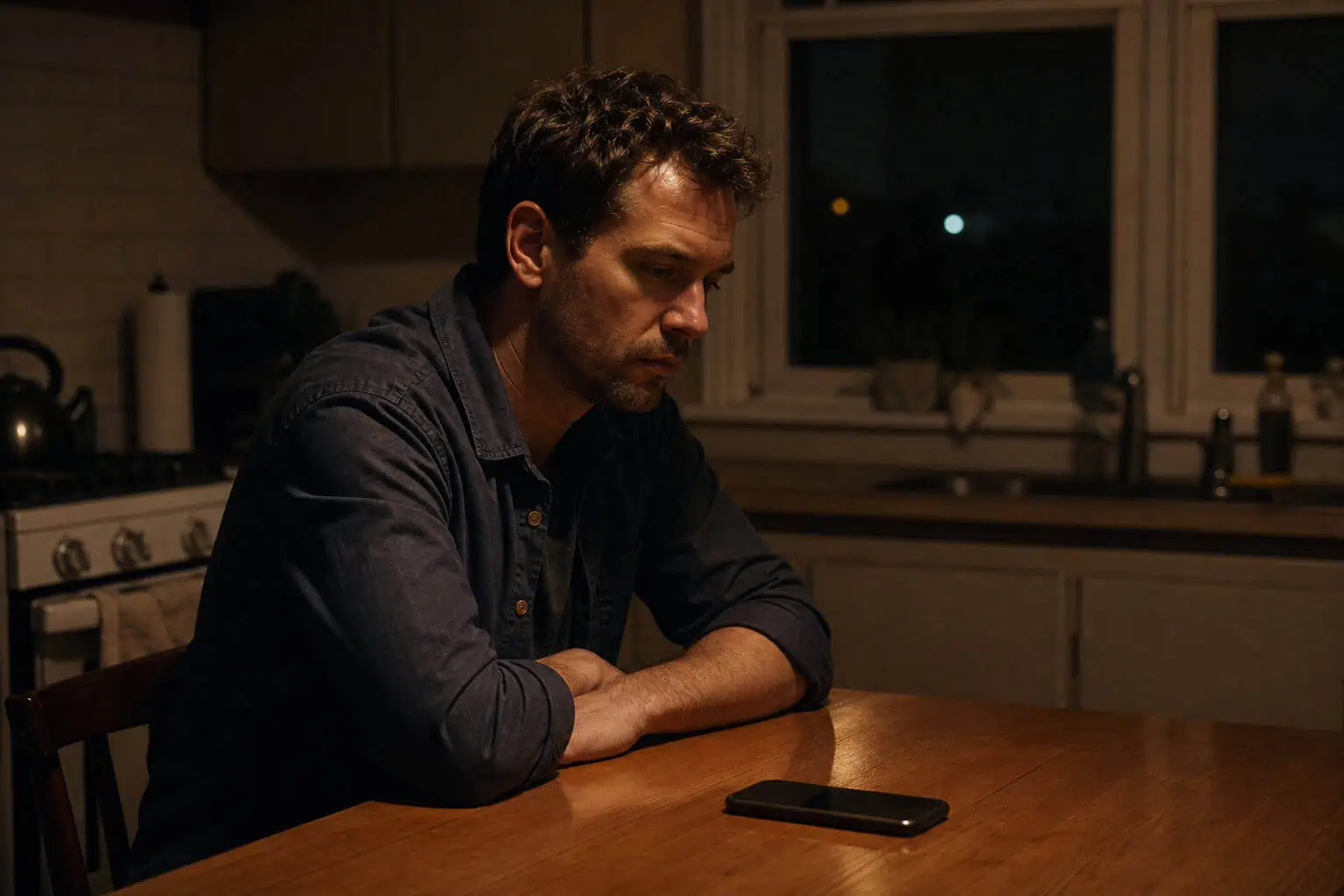
You notice the phone’s always face-down now. Late meetings you didn’t hear about before. A new password on the laptop. That nagging feeling isn’t nothing — your brain’s picking up on patterns you haven’t consciously registered yet.
But here’s the thing: that gut feeling might be right, or it might be wrong. When husbands suspect their wives of cheating, they are correct only about 50% of the time, which can cause deep emotional distress for any husband. Wives who suspect their husbands are correct about 85% of the time. That’s not a knock on your instincts — it’s a reason to slow down and verify before you act.
This isn’t about drama. It’s about getting an answer. Here’s a systematic way to find out, from watching for signs to hiring the people who do this for a living.
Key Takeaways
When husbands suspect their wives of cheating, they are right only about 50% of the time — your gut is a starting point, not proof
The only reliable method is professional surveillance; everything else (talking to friends, checking spending, asking indirect questions) is secondary
The two biggest mistakes that blow investigations: letting your spouse know she’s under surveillance, and telling friends or family about what you’re doing
Table of Contents
Step 1: Watch for the Signs — But Don’t Jump
No single sign means she’s cheating. A cluster of changes over time is what matters. Here’s what investigators have been tracking for years:
Change in communication. She’s more distant, more guarded, quicker to snap. Conversations feel surface-level. She stops sharing things she used to.
Altered routine. New late nights, unexplained errands, a schedule that seems inconsistent. The classic: “I have a work thing” that never comes with details.
Increased privacy. Phone always face-down. New passwords. Stepping out of the room to take calls. That phone-on-the-table thing is small, but it’s hard to unsee once you notice it.
Physical distance. Less intimacy, fewer hugs, a general pulling away. Sometimes it’s subtle — she turns away faster, doesn’t lean in like she used to.
Appearance changes. A sudden gym membership, new wardrobe, different grooming habits. On its own, it’s nothing. Paired with other stuff, it’s worth noting.
Back in 2012, PINow published an infographic from infidelity investigators listing six common signs. The specific list isn’t the point — the pattern is. One change might be nothing. Multiple things together, over time? That’s when you start paying attention, and what to do after being cheated on by wife becomes the immediate and long-term action steps for a husband who has confirmed infidelity.
Keep a log. Write down dates, times, locations, what happened, her emotional state. Don’t trust your memory. Within a week or two, trends become obvious.

The guy who notices one thing and immediately confronts loses his chance to observe further. She denies, gets defensive, and now she knows you’re watching. The log prevents that.
Field note: A written log over two weeks reveals patterns your gut alone can’t track — and keeps you from confronting before you have real evidence.
Step 2: Check What You Can — Legally
There are a couple of things you can check without crossing any lines.
Browser history. If you share a computer, look for sites or searches that don’t fit her usual pattern. Simple, takes seconds.
Vehicle navigation. The car’s GPS history is easy to miss. Check for routes to hotels, restaurants, or residential addresses she never mentioned. That’s a lead.
That’s where the DIY road ends.
Do not hack her accounts. Do not install spyware. Placing a GPS tracker on her car without consent is illegal. That’s illegal in most states, and evidence obtained that way won’t hold up in court — and could bring legal trouble.
Voice-activated recorders are subject to state consent laws. In California and other two-party consent states, recording without permission is illegal.

A private investigator has legal access to phone records, call logs, and digital forensics. That separates a hunch from a case.
Step 3: Hire a Private Investigator
The consensus from every source I’ve looked at: surveillance is the only effective method. Everything else is guesswork. A PI’s entire role is to confirm or deny your suspicions and hand you solid evidence, without putting you in a bad spot.
What a PI actually does
Passive surveillance. Just watching, legally, without being obvious. This is the bread and butter of infidelity investigations. Most cases are solved by observing day-to-day behavior quietly.
GPS tracking. A PI knows the GPS laws in your area. If it’s legal, they can build a timeline of where the car’s been. If it’s not, they won’t do it. That’s why you hire them instead of DIY.
Digital forensics. Digging through phones, computers, and social media for evidence — legally. Texts, emails, call logs, private messages. With proper authorization, they can analyze all of it.
Social media monitoring. People post things publicly that they’d never say directly. A PI can spot hidden accounts, new connections, suspicious activity.
Pretexting. An investigator might call a hotel and pose as her to confirm a reservation. It’s a legal technique when done correctly. It has limits.
Financial records analysis. Unexplained cash withdrawals, charges at unfamiliar places, hidden accounts. A PI can find things you would miss.
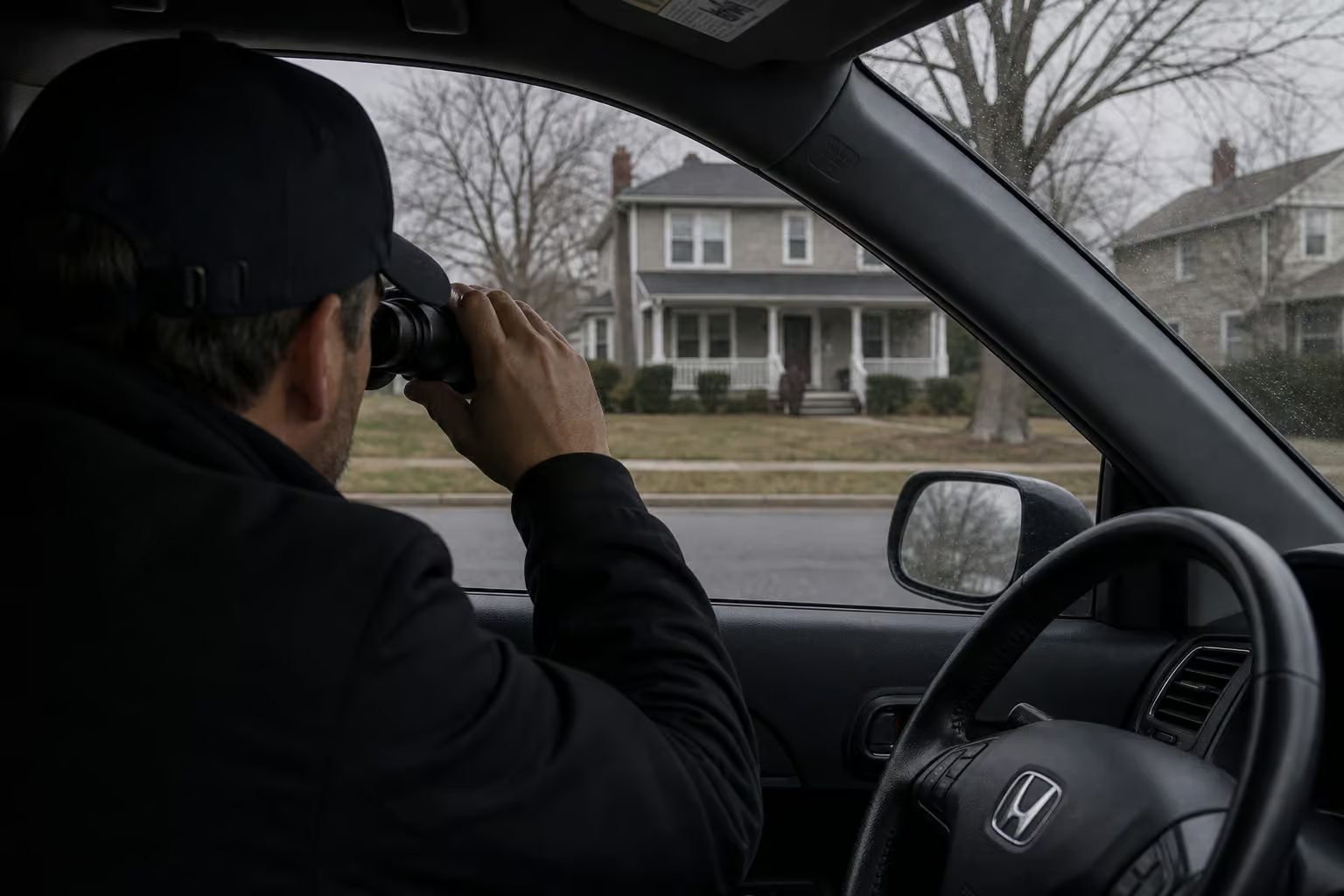
Witness interviews. Friends, coworkers, neighbors — a PI can interview them without tipping anyone off.
OSINT. Open-source intelligence. It means using publicly available information — social media, public records, online activity, to map out routines and habits before any physical surveillance starts.
Photographic and video evidence. This is the gold standard — hard to argue with, holds up in court.
Team surveillance. For complex cases, multiple investigators keep eyes on her across multiple locations.
Two mistakes that kill investigations
EPIS, a California-based PI firm with decades of experience, lists two critical mistakes:
- Letting her know she’s under surveillance. She’ll change her behavior, and you’ll never get the truth.
- Telling friends or family. Information leaks. Someone will mention it in passing, it gets back to her, and your advantage is gone.
Keep it between you, your PI, and your lawyer.
Timeline and evidence
Investigations can range from a few hours to several months. But typical cheating wife cases take a few days of targeted surveillance, during which the PI will look for behavioral and emotional signs such as changes in routine, defensiveness, and secrecy—otherwise known as red flags of a cheating wife. The PI will give you a realistic timeline after the initial consultation.
Evidence from a licensed PI is admissible in court. Chain of custody matters — courts trust professional collection over self-collected evidence. Everything the PI gathers, photos, video, reports, is yours when the case closes. Confidentiality is the point of hiring a professional.

How to find a licensed PI
Check your state’s licensing board. Ask about infidelity case experience. Look for local knowledge — a PI who knows the area can blend in and work effectively.
Some real agencies that specialize in this:
- EPIS (Los Angeles area, covers 44+ cities across California). Call (888) 997-4669 for a confidential consultation.
- PHENIX Investigations. Reach them at 800-980-9056.
- Tracked N Solved Investigation Agency. They have a dedicated team for infidelity cases.
These aren’t endorsements — they’re examples of what a reputable agency looks like. Do your own research.
Step 4: Talk to a Lawyer First
Most guys skip this. Don’t.
An attorney explains your legal rights regarding custody issues. They’ll tell you what evidence is actually usable and how to present it.
In California, the law does not consider infidelity relevant, but it does consider whether you lied about it and whether proof exists. That’s a key point.
A lawyer can also stop you from making a classic mistake: evidence obtained illegally is thrown out. Hacking, unauthorized GPS, illegal recordings — all of it useless in court, and criminal for you. A lawyer prevents that.
Step 5: Confrontation and Self-Care
Once you have gathered evidence and consulted a lawyer, the next step is deciding how and when to confront your wife. This section covers the timing, the approach, and the importance of protecting your own well-being throughout the process.

When to confront
Do not confront without proof. She’ll deny it, get defensive, and make it harder to find the truth. You lose the advantage.

The classic mistake: a guy finds one suspicious text, confronts immediately, she deletes everything and changes her routine. Now the investigation is harder.
Wait until you have evidence. A PI can help you plan the conversation.
How to confront with proof
When you have evidence:
- Consult your attorney first
- Record the conversation if it’s legal in your state
- Choose a private, calm setting
- Let her respond fully — give her a chance to explain
- Don’t reveal how you got the evidence
There’s a risk of a false restraining order if she files one. Having the conversation recorded protects you.
Take care of yourself
See a therapist. Therapists offer legal protections that friends and family do not. You can speak without worrying it’ll become family gossip.
Don’t burden friends or family. One, information leaks. Two, it puts people in a difficult position. A therapist is a safe place to work through it.
And don’t jump to conclusions. Making an accusation without proof can harm your relationship even if nothing occurred. Be sure.
Alternative methods (less reliable)
You can watch spending habits, talk to mutual friends, or ask indirect questions. These are hints, not proof. They might give you a direction, but they won’t give you answers you can act on.
Getting Help Near You
- The process: instincts
- watch for signs
- legal monitoring
- PI investigation
- attorney
- confrontation
- support.
If you decide to hire a PI, here’s how to find one:
- Check your state’s licensing board
- Read reviews from real clients
- Ask about infidelity case experience specifically
- Request a confidential consultation
- Make sure they know your local area
Take your time. Don’t rush into confrontation. Get evidence first, then decide what to do.
For guys in Southern California, EPIS has been handling infidelity cases in the LA area for decades. They cover over 44 cities and can be reached at (888) 997-4669. PHENIX Investigations (800-980-9056) and Tracked N Solved are other national options.
You’re not a detective. You’re a guy trying to figure out what’s happening. Hire the people who do this for a living, follow the legal boundaries, and take care of yourself through the process. That’s how you get an answer.
People Also ask
Is there a way to find out if my wife is cheating?
Yes, but the only reliable method is professional surveillance by a licensed private investigator. DIY approaches like checking browser history or vehicle navigation can give you leads, but they won’t hold up as proof. A PI can legally gather admissible evidence through passive surveillance, digital forensics, and other techniques.
What are the first signs of a cheating wife?
Common early signs include increased privacy (phone always face-down, new passwords), changes in communication (more distant or guarded), altered routines (unexplained late nights or errands), physical distance, and sudden appearance changes. No single sign means cheating, but a cluster of changes over time is worth paying attention to.
What should I do if I suspect my wife is cheating but have no proof?
Start by keeping a written log of dates, times, and any behavioral changes you notice over a week or two. Don’t confront her without evidence — she’ll deny it and change her behavior. Consult a lawyer first to understand your legal rights, then consider hiring a licensed private investigator who can gather admissible evidence legally.