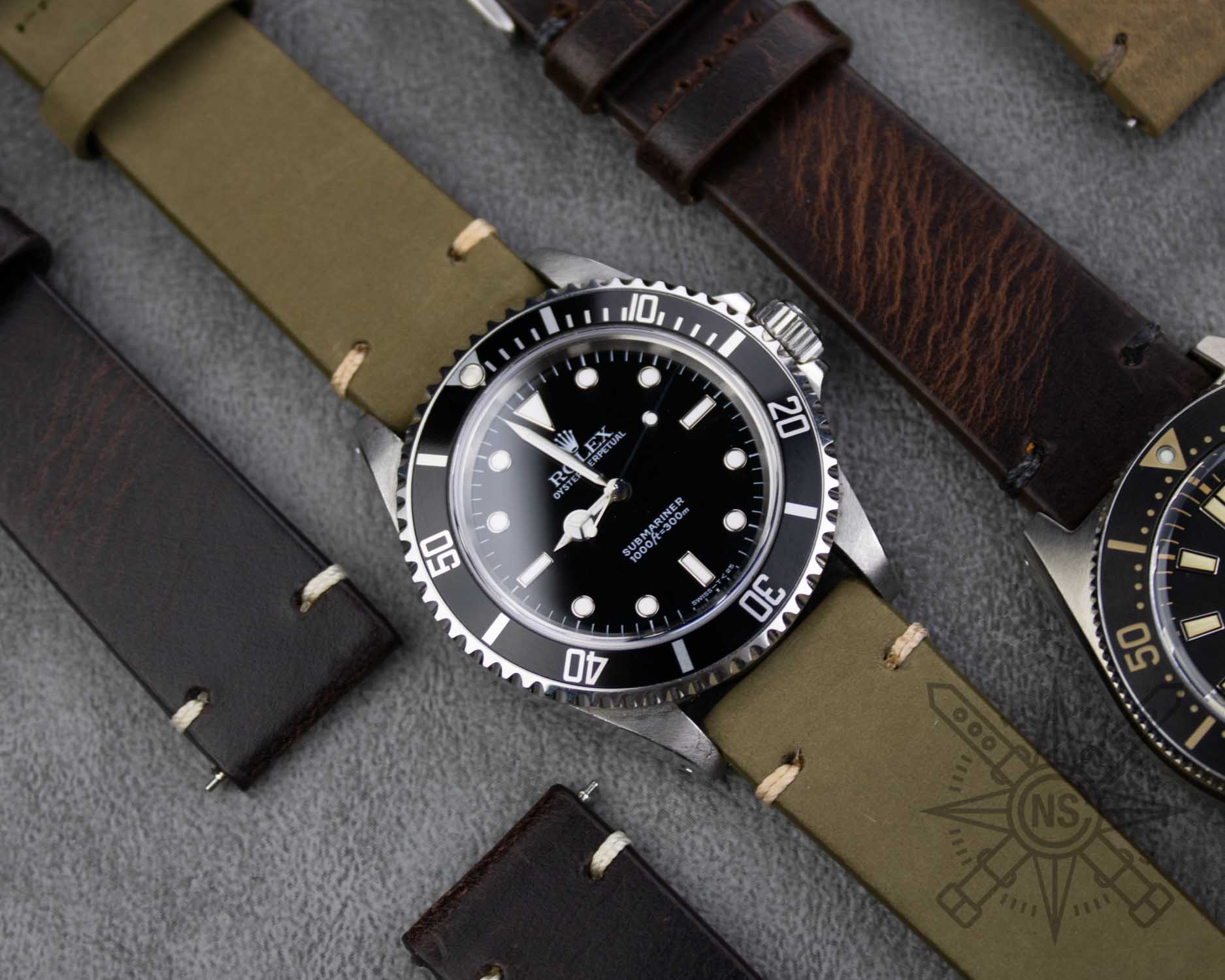
A watch strap does more for how a watch looks than most men realize. The same watch — same case, same dial, same hands — reads completely differently on leather than it does on rubber, on suede than it does on nylon. Changing a strap takes thirty seconds with a spring bar tool. The effect lasts until you change it back.
Most men buy a watch and wear whatever strap it came with for years. That’s the equivalent of buying a good suit and wearing the same tie every day. The watch is the suit. The strap is the tie.
Here’s what you need to know.
Table of Contents
Start with leather
Full-grain leather is the default for good reason. It works with almost everything — dress shirts, casual jackets, chinos, denim — and it improves with wear. A leather strap at six months looks better than it did on day one. The patina it develops reflects how you live in it.
The key distinction is grain. Full-grain leather uses the outermost layer of the hide — the strongest, most durable part, with the natural texture intact. Corrected or bonded leather is sanded down and coated to hide imperfections. It looks fine in a photograph and deteriorates within a year of regular wear.
When you’re buying leather watch straps, look for full-grain calfskin specifically. It’s the material used on watch straps by the major Swiss manufacturers for a reason — it wears well, ages well, and holds its shape across years of daily use.
Brown versus black — the decision most men get wrong
Black leather is the safe choice. It goes with everything and offends no one. It’s also the least interesting choice available, and on most watches it reduces the dial to something flat and forgettable.
Brown leather — from warm tan through dark chocolate — adds dimension. It works with blue dials, white dials, champagne dials, and green dials. It pairs with silver cases and gold cases. It looks deliberate rather than default.
The rule worth knowing: if your watch has a colored dial, brown leather almost always works better than black. Reserve black leather for formal occasions and genuinely dark dials.
Add texture with suede
Suede sits between casual and refined in a way that smooth leather doesn’t. The napped surface catches light differently throughout the day — it looks almost grey in some conditions, richly toned in others. On a dress watch worn with a jacket, a suede watch strap reads as considered without looking like you tried too hard.
Grey suede on a blue or black dial is the combination worth trying if you haven’t already. It’s the kind of pairing that gets noticed by people who know watches — and goes entirely undetected by everyone else, which is usually the point.
Suede is more water-sensitive than smooth leather — keep it away from rain and wash basins. For a watch you wear on weekends and in the office, it’s one of the most versatile strap options available.
Related: What is the 3 Watch Rule?
Know your size
The single most common mistake men make when buying watch straps is not knowing their lug width. The lug width is the distance between the lugs — the small protruding tabs at the top and bottom of the watch case where the strap attaches.
Check the underside of your current strap. The width in millimeters is usually stamped near the spring bar hole. Common sizes are 18mm, 20mm, and 22mm — but watches come in every size from 16mm to 24mm, and buying the wrong width means the strap won’t fit regardless of how good it looks.
If you have a larger watch — 42mm case diameter or above — you’re almost certainly wearing 22mm watch bands. Sport watches, dive watches, and field watches typically take 22mm. Dress watches in the 38-40mm range usually take 18mm or 20mm.
When in doubt, measure before you buy.
The practical approach
Three straps cover most situations a man encounters:
A dark brown full-grain leather strap handles dress occasions, office wear, and anything where you want the watch to look considered. A casual suede strap in grey or tan works for weekends, travel, and situations where smooth leather feels slightly too formal. A rubber or canvas strap takes care of anything active — sport, outdoor wear, summer.
That’s it. Three straps, one watch, every situation covered.
The investment is minimal compared to buying a second watch. And the effect — a watch that looks intentional rather than inherited — is immediate.