
You got hurt. Someone else had something to do with it. And now you’re lying in bed at 2 a.m. wondering if this is “a real case” or just bad luck you’re supposed to eat. That question is more common than you think.
The CDC counts close to 100 million ER visits for unintentional injuries every year. This isn’t a rare legal corner; it’s one of the busiest categories in American law. The rest of this piece is the map: every major case type a personal injury lawyer handles, with a plain example of each, what you’d have to prove, and what actually drives the money. Start reading, find the one that sounds like your situation.
Key Takeaways
A personal injury case is a lawsuit filed in civil court between an injured person and the party believed responsible, and proving negligence comes down to four things: duty, breach, causation, damages.
Severity drives claim value, not case type: the NSC’s 2024 data pegs the average cost of a possible injury at $138,000 versus $1.167 million for a disabling one.
The first consultation with a lawyer is free and most work on contingency, so checking whether your situation counts costs you nothing but a phone call.
Table of Contents
| Exact model | Decisive documented advantage |
|---|---|
| Medical malpractice | Covers misdiagnosis, failure to diagnose, surgical errors, and medication or prescription mistakes by healthcare professionals. |
| Product liability | The injured party need not be the purchaser, and liability can attach across the chain of manufacturers, distributors, and retailers. |
| Premises liability | Applies to public establishments and private homes, and protects people performing duties like mail delivery. |
| Dog bites and the Indiana one-bite rule | Victims performing a legal duty, such as mail carriers, can win even without any prior aggression by the animal. |
| Nursing home abuse | Claims address abuse and neglect that take various forms, including neglect of residents. |
| Wrongful death | In Indiana, the probate estate and certain family members may file the claim. |
Model details below derive from the cited sources; check the brand pages for current pricing.
What is a personal injury case, and what do you have to prove?
A personal injury case is a lawsuit in civil court where an injured person (the plaintiff) sues the party believed responsible (the defendant) for harm caused by carelessness, recklessness, or something done on purpose. The money, if you win, covers medical bills, lost wages, and pain and suffering, and how much depends mostly on how bad the injury is and how it changed your life. That’s the entire shape of it. Everything else is detail.
The detail that matters most is proving negligence. You have to show four things: duty of care, breach, causation, and damages. In normal words: they owed you care, they blew it, and it cost you money. The burden is on you, the injured guy, and your lawyer builds the case from medical records, accident reports, witness statements, and expert testimony. Which is why the paperwork you keep from day one matters more than most people realize.
One shortcut worth knowing: if someone broke a safety law designed to prevent exactly the harm you suffered, they’re basically already negligent. Run a red light, hit someone, done. Lawyers call it negligence per se; you don’t need the Latin.
Not all fault is the same, though. It runs on a spectrum by how bad the behavior was. Same stretch of road, three drivers: one runs a light because he’s sloppy, one drives drunk, one intentionally rams you in road rage. That’s carelessness, dangerous-on-purpose-ish, and deliberate, roughly in ascending order of how ugly the case gets.
You don’t need to memorize the labels. You need to know where your guy falls on that line.
The most common types of personal injury cases
The most common types are motor vehicle accidents, medical malpractice, product liability, premises liability (slip and fall), workplace injuries, dog bites, assault and battery, nursing home abuse, and wrongful death. Motor vehicle accidents top the list of claims filed.
- Motor vehicle accidents, a driver runs a red light and T-bones you.
- Medical malpractice, a surgeon operates on the wrong spot.
- Product liability, defective brakes fail on a new truck.
- Premises liability, an unmarked wet floor at the grocery store.
- Workplace injuries, a machine without a guard takes a finger.
- Dog bites, the neighbor’s dog, your leg.
- Assault and battery, a punch outside a bar.
- Nursing home abuse, neglect of an aging parent.
- Wrongful death, a fatal collision.
If you’re scanning for yours, jump to the matching section below. Each gets a real example and what you’d have to prove.
Motor vehicle accidents: the big one
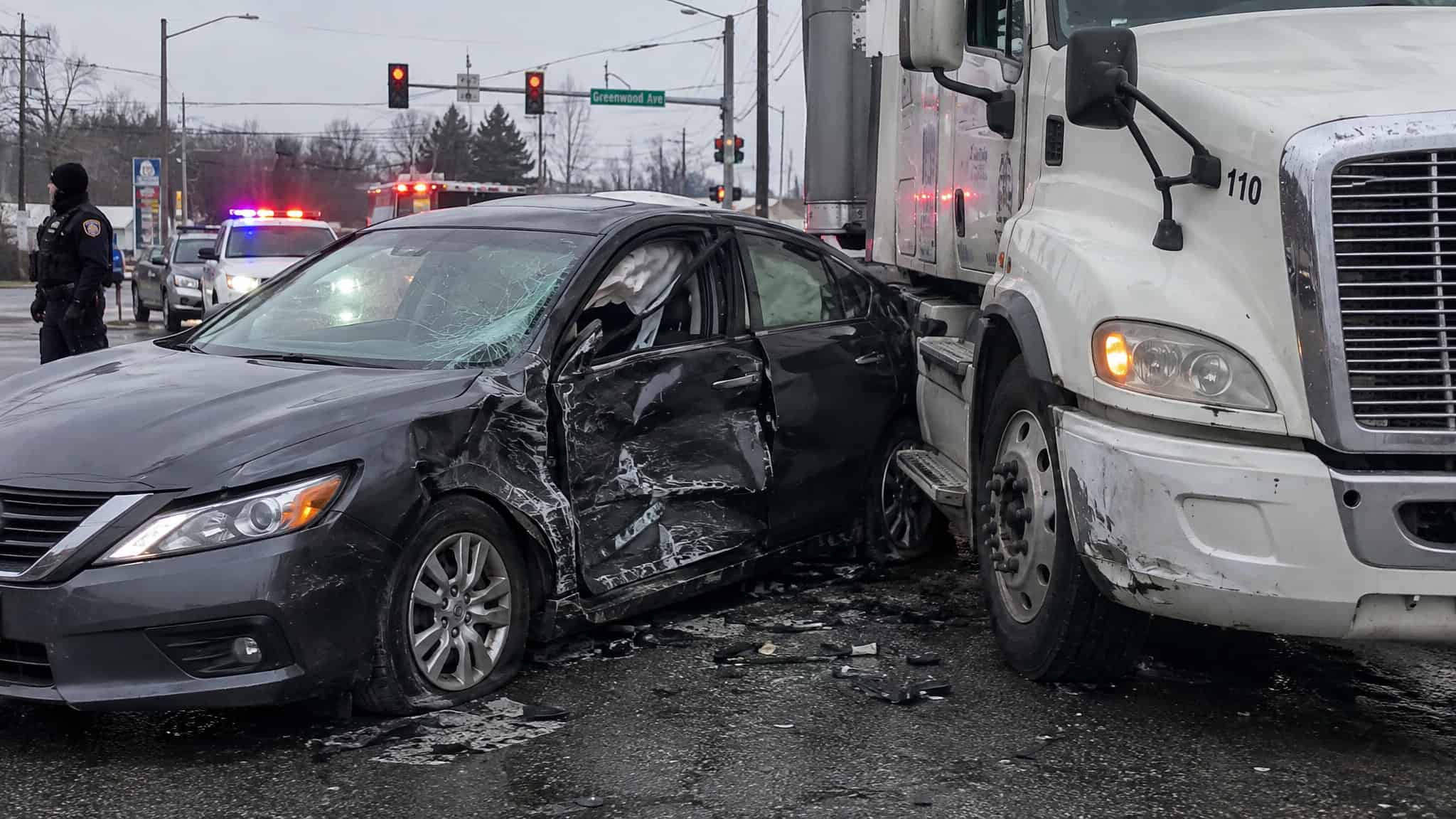
Here’s the thing most guys miss: the same crash is legally a different case depending on what hit you. A Civic, a semi, and an Uber aren’t just different vehicles; they change who’s insured, who’s liable, and how hard the fight gets.
Car accidents
The bread and butter of personal injury. NHTSA counts between 6 and 7 million collisions on U.S. roads annually, and car crashes sit at the top of the claim list, so if this is you, you’re in crowded company. The everyday cause is usually the same: a glance at a phone. Add Indiana’s heavy traffic and you’ve got the setup for a lot of claims. That’s not the whole list of causes, just the ones you’ll actually run into.
Motorcycle accidents
No crumple zones. That’s the whole problem. Riders get why people ride anyway, so no lecture here, but the wreck hits harder and the injuries are worse, and the claim should reflect that. Indiana-specific causes exist too; the short version is that riders fare badly in the crashes that happen.
Truck accidents
Physics wins. A semi versus anything smaller, and the smaller thing loses. When something goes wrong, it’s usually fatigue, bad maintenance, or an overloaded trailer. Injuries run severe: fractures, internal organ damage, traumatic brain injury. The one upside for the injured guy: commercial carriers carry serious insurance, which matters when the medical bills are serious.
Rideshare accidents
The “wait, who pays?” case. Most guys have no idea how insurance works when an Uber or Lyft driver causes a crash, and it’s new enough territory that you shouldn’t guess. The upside: an on-duty rideshare driver is typically well-insured. The other side of the coin: bad drivers and thin background checks are real possibilities you can’t rule out.
Pedestrian and bicycle accidents
Pedestrians lose every argument with a car. That’s the reality to start from. Most of these happen in urban areas, causes are the usual suspects (distraction, speed, failure to yield), and injuries range from bruises to brain bleeds. Wrongful death claims come out of these too. Bikes live in the same bucket as other vehicle cases; you’d handle one the same way you’d handle any crash claim.
Fault in all of this gets decided by police reports, witness statements, accident reconstruction, and traffic law. And insurers will lowball you if you let them. Severity drives the check, not the paperwork.
Medical malpractice: the hardest case to win
Yes, personal injury cases can be hard to win, and medical malpractice is the hardest of the bunch. The harm usually isn’t the problem. The proof is, which is exactly where a personal injury lawyer earns their keep.
Malpractice means a healthcare professional fell below the accepted standard of care. Think misdiagnosis, failure to diagnose, surgical errors, medication and prescription mistakes. Notice none of that is “the surgery went badly.” Medicine has bad outcomes sometimes, and a bad outcome alone gets you nothing.
Here’s the gate: the law requires a fellow medical professional to testify that the care fell below the accepted standard. Without that expert, you don’t have a case, no matter how obvious the harm looks to you. That’s why these claims need thorough investigation before anyone files anything, and why they’re heavier lifts across the board.
The clock is the other trap. Malpractice has the strictest and most state-dependent statutes of limitations of any case type on this list. The practical takeaway isn’t a deadline number; it’s that you can’t wait years to call a lawyer. By the time you’re ready, the window may have closed without anyone warning you.
So if you suspect malpractice, the move is sooner rather than later, and lawyer rather than solo. Not because doctors are villains. Because this is the one case type where the process itself is the obstacle.
Product liability: when something you bought hurts you
Gear-guy territory. Something you bought, trusted, and used normally hurt you, and that’s a claim.
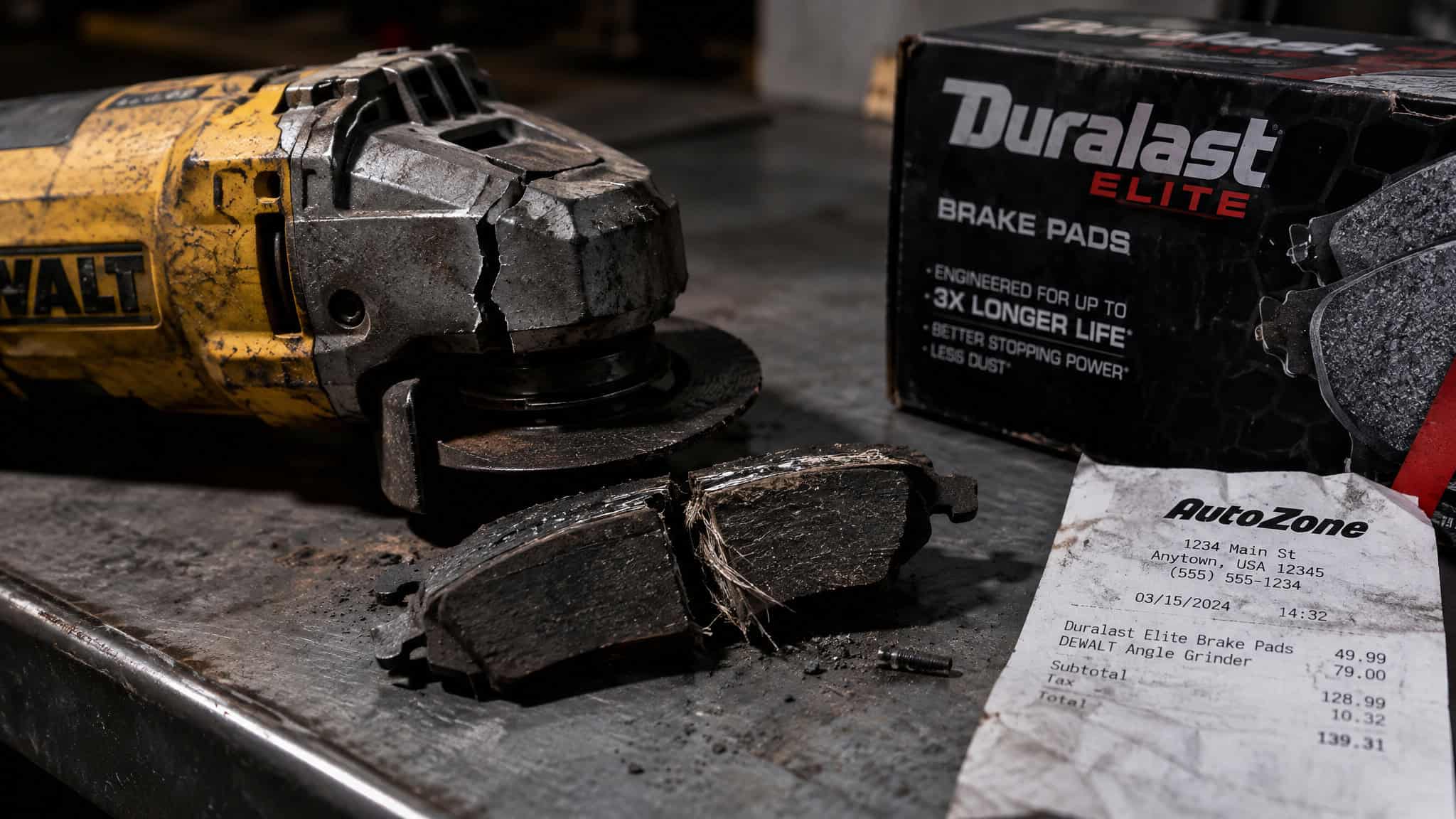
There are three ways a product can be defective, and the brake example runs through two of them:
Design defect
The blueprint was bad. A car’s braking system was designed wrong, so every unit off the line had the same flaw. Bad design, bad product.
Manufacturing defect
The blueprint was fine; the build wasn’t. Brakes made incorrectly despite a flawless design. One bad batch, one injured driver.
Failure to warn
The label didn’t tell you what you needed to know. A medication that omits side effects is the classic. The product worked as designed and you were never given the chance to use it safely.
Two points surprise people. First, the defect has to have existed when the product left the maker’s control, not appeared because you dropped it off a cliff. Second, you didn’t have to be the buyer. Borrow your buddy’s tool, get hurt by the defect, and you can still claim. And liability runs the whole chain: manufacturers, distributors, and retailers can all end up on the hook.
Premises liability and slip and fall accidents
Slip and fall cases get mocked, usually by people who’ve never had one. Straight face: they’re real claims with real money behind them.
The duty is simple. If you invite people onto your property, you fix the hazards or warn about them. Wet floors and uneven sidewalks cause slip-and-fall incidents constantly, and they sit right alongside broken stairs, icy walkways, dark parking lots, and missing security. This covers bars, storefronts, your buddy’s deck, and every business in between. And it goes beyond falls: negligent-security assaults, pool accidents, fires, elevator malfunctions all land under premises liability too.
Here’s the part that decides most of these cases, and it’s worth underlining. Slip-and-fall claims hinge on showing the owner knew or should have known about the hazard. The wet floor, the busted sidewalk. So photograph it.
Before it dries, before the employee with the mop comes through, before it gets repaired. Gathering evidence like this is a core part of what a personal injury lawyer does, day in and day out. The pattern attorneys see over and over: the victim walks out without photos, the condition gets fixed an hour later, and the evidence that would have proven the case is gone. Medical records matter here too, but the photo is the thing you can’t get back.
Quick test: If you’d need the hazard to still exist tomorrow to prove your case, photograph it right now. The photo is the one piece of evidence that can’t be repaired away.
Workplace accidents: workers’ comp versus a third-party lawsuit
The guy hurt on the job has one question above all: can I pay rent while I heal? The answer runs on two tracks, and knowing the difference is worth real money.

Track one is workers’ comp. It pays medical bills, lost wages, and disability without you proving the employer did anything wrong. The tradeoff, by design: it skips pain-and-suffering money entirely. You get the paycheck protected; you don’t get the full claim.
Track two is where most guys leave money on the table. Yes, you can usually still sue a negligent third party even after filing a comp claim. If a defective machine, a careless contractor, or anyone besides your employer contributed to the hazard, a separate lawsuit can recover what comp excludes. Employer safety violations or intentional harm can even ground a direct claim against the employer itself.
The decision point attorneys see constantly: the injured worker accepts comp, assumes that’s the whole remedy, and never asks whether someone else caused the hazard. Don’t be that guy. The two tracks aren’t either/or.
Dog bites: the one-bite rule and other state standards
Most animal-attack claims are dog bites, and most states generally hold owners liable. But Indiana runs a one-bite rule, and it surprises people: an owner whose dog never showed aggression before might escape liability for the first bite. First offense, potentially forgiven.
There’s an exception that matters: someone bitten while performing a legal duty can still recover even if the dog never showed aggression before. The mail carrier bitten by the “friendly” dog still has a case. That’s the beat worth remembering, whether it’s you with the mailbox or a family member doing deliveries.
Other states differ, so if this is your situation, the first question for any lawyer is which rule your state actually applies. (Related reading: if you’re deciding whether to even make the call, see our explainer on what a personal injury lawyer actually is.)
Assault, battery, and nursing home abuse
Assault is the threat, battery is the contact: placing someone in reasonable fear of imminent harm requires no touching, while harmful or offensive contact without consent is battery, punch, kick, or push. The part that’s news to most guys: these work as civil claims running parallel to criminal charges, and the civil side can still win even if the criminal case falls apart, because the burdens of proof differ. On nursing home abuse: neglect and abuse come in several forms, and the harm isn’t only physical. If you’ve got aging parents in a facility, this is worth taking seriously.
Wrongful death
Wrongful death isn’t its own case type. It’s what every case on this list becomes if the victim dies. The car crash, the malpractice, the defective product: same underlying claim, different cast of who can sue.
Claims lie against negligent drivers, manufacturers, or healthcare providers, depending on what caused the death. Who can file: surviving spouses, children, parents, siblings. In Indiana, the probate estate and certain family members can also bring claims, and Indiana rules differ for child versus adult victims, which is the kind of state-specific wrinkle worth asking about early. Damages cover funeral expenses, lost income, and loss of consortium. Stated plainly, because it should be.
What your case is worth
Injury severity, not case type, is what drives what a personal injury case is worth. The National Safety Council’s 2024 data makes it blunt: the average comprehensive cost of a possible injury was $138,000, versus $1.167 million when the injury is disabling. That’s more than eight times higher. Same slip-and-fall, wildly different outcomes depending on whether you walked away or didn’t.
(Those are societal cost averages, to be clear, not settlement predictions. Nobody can tell you your number without knowing your case.)
There are three kinds of money in a settlement, and that’s the standard damages taxonomy:
Economic damages
The receipts pile. Medical bills past, present, and future, lost wages, property damage, out-of-pocket costs. Straightforward, mostly.
Non-economic damages
The stuff nobody can price easily. Pain and suffering, mental anguish, the impact on your relationships and daily life. Emotional distress compensation lives here too: it’s one piece of a larger injury claim rather than a standalone case you can count on by itself.
Punitive damages
Rare. Reserved for conduct showing hatred, ill will, revenge, or conscious disregard. The exception, not the norm, and don’t count on it.
One warning, friend to friend. Under modified comparative negligence, shared blame shaves money off your award proportionally, and the rules vary by state. Adjusters will push your fault percentage up on purpose, because every point they add is money out of your check.
Why insurance companies fight claims
Decline the recorded statement until you’ve talked to a lawyer. That’s the answer, and the pattern behind it is one plaintiff’s attorneys see constantly: an early casual “I’m doing okay” statement becomes the insurer’s core evidence for shrinking the payout. Adjusters aren’t villains, but their job is the lowest defensible number, and accepting a settlement is final, barring any future claim. A lawyer takes the calls so the adjuster can’t fish, and prices the claim with real medical, reconstruction, life-care, and forensic-economics input.
Red flag: Any adjuster pushing for a recorded statement before you’ve spoken to a lawyer is fishing for words that shrink your check.
Settle or sue, and what the free consultation tells you
Yes, hiring a personal injury lawyer is usually worth it, especially when insurers stall, lowball, dispute liability, or your injuries exceed policy limits. Most cases settle because trials are expensive and unpredictable, so those four triggers are exactly when suing becomes the rational move. If the insurer is playing fair on a minor claim, you can probably handle it yourself. If they’re not, don’t.
The fees are the permission slip. Most lawyers work on a contingency fee basis: no win, no fee, meaning they get paid a percentage only when the case succeeds. Rates vary, so ask at the first meeting, and the first consultation should be free. Use that meeting to vet the attorney’s strategy, experience, and whether you actually want this person handling your case, not just for reassurance.
Two honest caveats to close. The lists in this article aren’t the whole universe of cases; burns, brain and spinal injuries, whiplash, food poisoning, and boating accidents all support claims too. Not on the list doesn’t mean out of luck. And if you’re in Indiana, where the traffic, the one-bite rule, and the wrongful death rules all have local quirks, firms serving Northwest Indiana like Stracci Law Group offer free consultations.
That free consult applies no matter the case type, including a dog bite. A short phone call with a lawyer is usually all it takes to find out whether you’ve got one. That part costs nothing, which is a better deal than 2 a.m. speculation.
Frequently Asked Questions
Is it hard to win a personal injury case?
Yes, they can be, and medical malpractice is the hardest of the bunch. The harm usually isn’t the problem — the proof is, because malpractice requires a fellow medical professional to testify that care fell below the accepted standard. A bad outcome alone gets you nothing; you have to show the care itself was substandard.