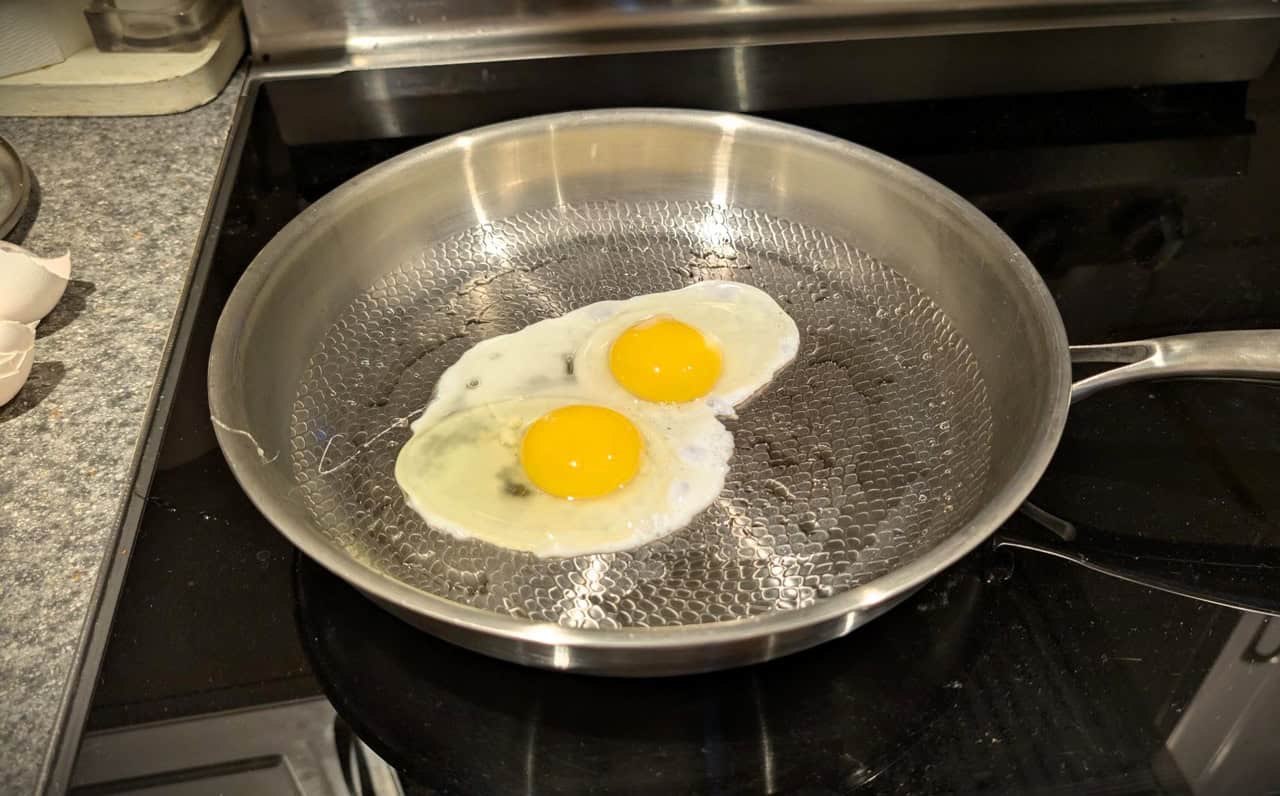
Titanium has a natural pull for any guy tired of babying fragile cookware, and after testing the TiRoam Pure Titanium Cooking Surface Frying Pan in my own kitchen for a few weeks, its performance has been excellent so far. Cooking, frying, and sautéing food on bare metal without a synthetic layer to baby changes your daily stove routine fast. A few weeks of regular use gives real evidence of how a frying pan handles heat and release, though how it holds up over years remains an open question.
Key Takeaways
The TiRoam Pure Titanium Frying Pan costs $99.90 to $159.90 with free shipping and pairs a pure titanium food-contact layer with 304 stainless steel, aluminum, and 430 stainless steel across 22 cm, 26 cm, and 30 cm sizes.
Food cooks on bare metal with no PFAS, PTFE, or PFOA coating. Clean release comes down to preheating gradually on low to medium heat, adding oil before food goes in, and letting proteins sear before you flip them.
Orders lock against cancellation once processing starts, take 8 to 15 business days for total U.S. delivery, and qualify for the 30-day return window only if the pan stays unused in its original packaging.
Table of Contents
TiRoam Pure Titanium Frying Pan review: the verdict after a few weeks
The TiRoam Pure Titanium Frying Pan is a strong, worthwhile everyday skillet for cooks who want an uncoated cooking surface and are willing to manage heat properly. It’s an uncoated metal composite pan that pairs a pure titanium food-contact layer with a 304 stainless steel structural layer, an aluminum heat-conducting core, and a 430 stainless steel exterior so heat spreads evenly without relying on PFAS, PTFE, or PFOA coatings. In my testing at Unfinished Man over the past few weeks, it has performed excellently so far, and TiRoam prices the lineup from $99.90 to $159.90 with free shipping as the most straightforward everyday frying and searing option in its catalog.
If you’re cross-checking video clips or marketplace listings to see how the metal behaves once the marketing is stripped away, the practical story comes down to pan geometry and expectations. Unlike the deeper saucepan and sauté profiles in the brand’s lineup, this uses a conventional frying-pan shape. You get a broad cooking floor and gently sloped sides that make sliding a spatula under food, turning fillets, tossing vegetables, and plating quick meals easy.
- Uncoated titanium interior: Food sits directly on a pure titanium cooking surface with no PFAS, PTFE, or PFOA coating to flake off over time.
- Broad stove compatibility: The layered base works across induction, gas, electric, ceramic, and radiant cooktops for daily staples like eggs, fish, meat, seafood, and vegetables.
- Technique trade-off: Because there’s no slick synthetic film, you have to preheat gradually, use oil, and wait for a proper sear before flipping.
- Purchase and testing caveats: The detachable handle requires your own assembly out of the box, and the 30-day return policy only accepts unused pans.
For a guy who wants to ditch coated pans right now and already knows his way around a burner knob, it earns its spot on the stove. If you refuse to spend $100 or more without multi-year proof of how a pan ages, keep in mind that my few weeks of testing can vouch for daily cooking behavior, not what happens in year two.
What “pure titanium” actually means: the four-layer build
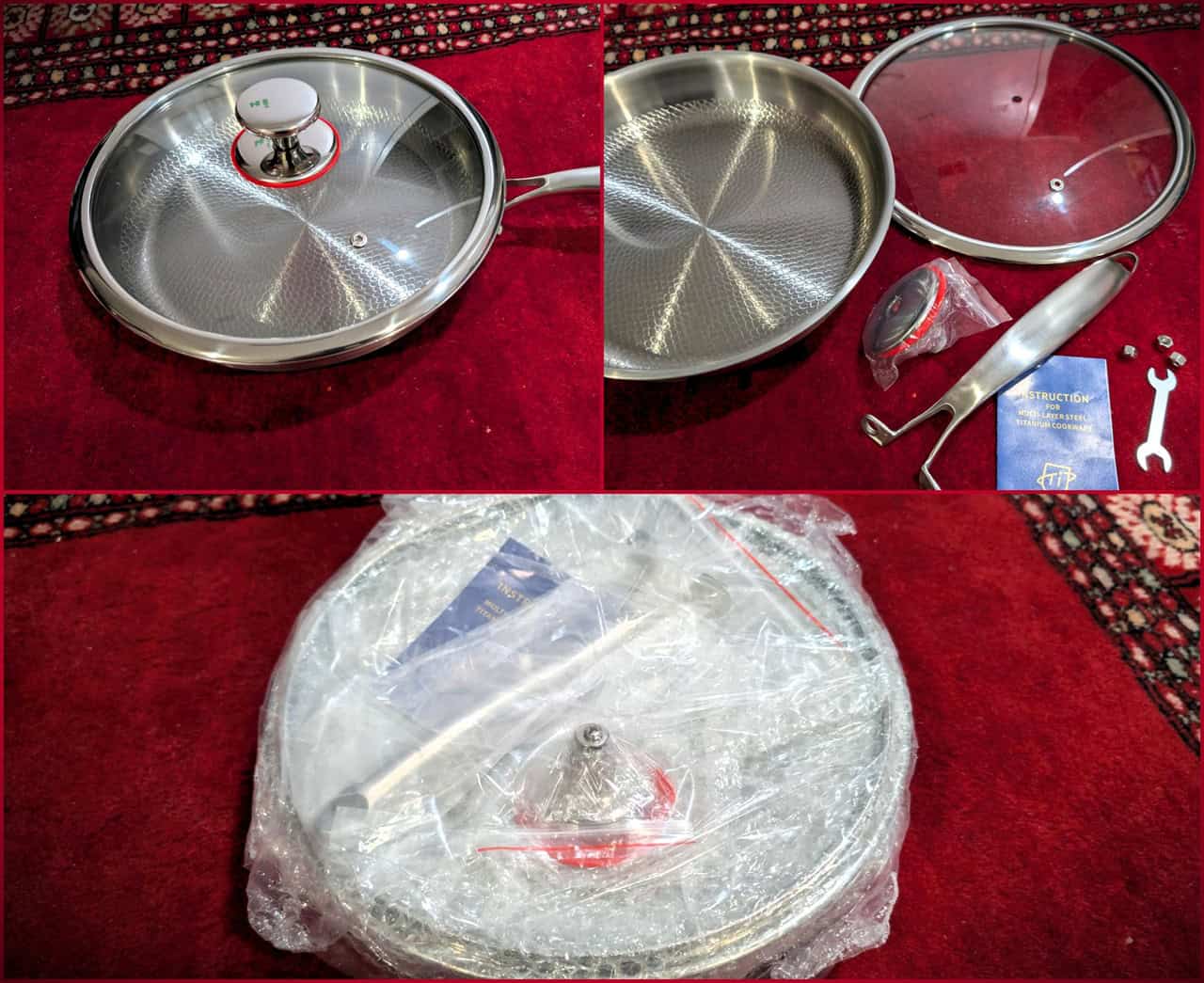
Per TiRoam’s specification table, “pure titanium” refers only to the food-contact layer. The pan body is actually a four-layer composite built from a pure titanium cooking surface, a 304 stainless steel structural layer, an aluminum heat-conducting layer, and a 430 stainless steel exterior, paired with a stainless steel handle. That hammered titanium interior keeps fish, meat, and vegetables against low-reactivity, corrosion-resistant metal that handles tomatoes, citrus, sauces, and salty ingredients. Underneath, the aluminum heat-conducting layer moves warmth across the base while the 430 stainless exterior provides induction compatibility, though slight dimension and weight shifts are possible from manufacturing tolerances.
Is cooking on uncoated titanium safe? Reading the claims critically
Cooking on the TiRoam pan is safe in the practical sense that you’re cooking on bare, corrosion-resistant metal with no applied synthetic coating to degrade, though you should read the brand’s regulatory and promotional claims with a skeptical eye. TiRoam’s core pitch is simple: there’s no PFAS, PTFE, or PFOA coating on the hammered interior, so food touches titanium directly.
The product listing also states that the pan is tested to “selected U.S. FDA-related and EU/LFGB food-contact requirements.” That’s the manufacturer’s own compliance statement, and the word “selected” narrows its scope without naming the exact tests.
You also have to filter out some heavy-handed urgency copy on the Taima and TiRoam sales page. The listing claims Taima sold over a million products in 2025, calls itself the only legitimate company selling “lab certified” medical-grade titanium kitchenware, and warns that ceramic coatings fail in five to eight months while Teflon and cast iron leach chemicals or rust. Treat those competitor attacks as promotional noise; the real safety upside here is cooking on bare titanium.
Cooking on the surface: eggs, sticking, and the learning curve
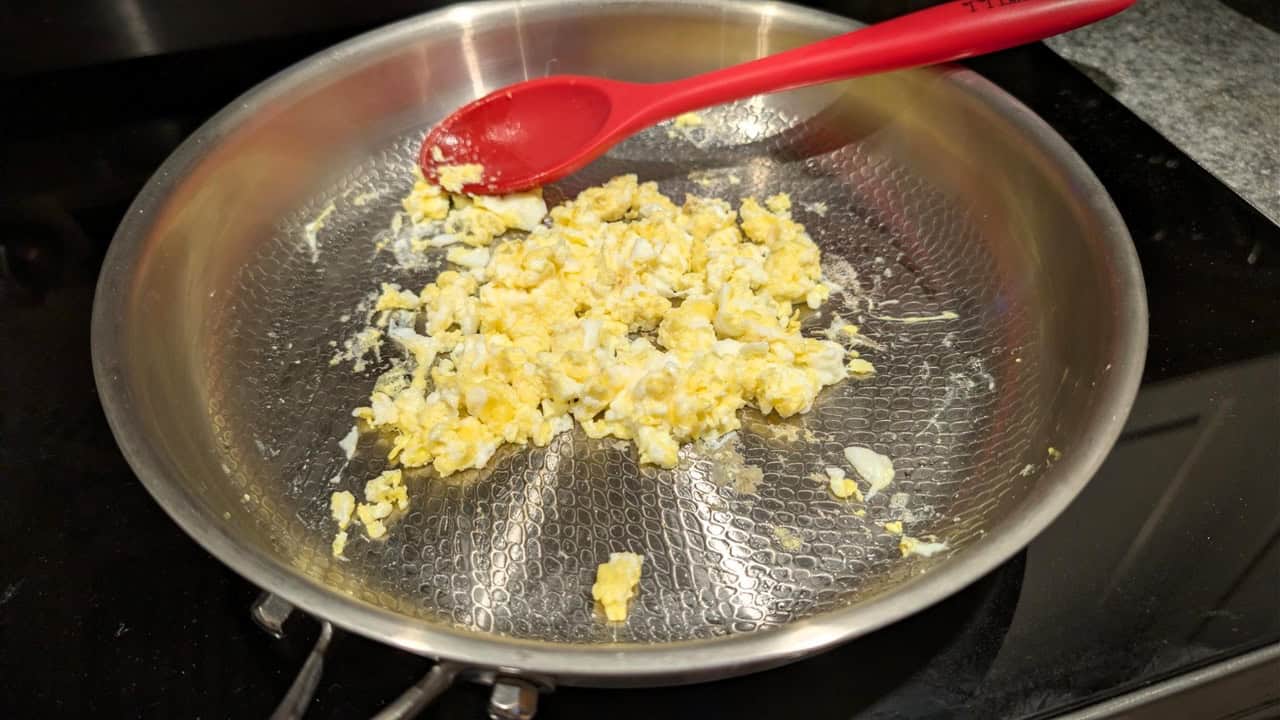
Getting clean food release on bare metal comes down to patience at the burner rather than a magic surface. Once you dial in the timing, the pan handles morning eggs and hard dinner sears cleanly.
Eggs, sticking, and the three-step release technique
The TiRoam Pure Titanium Frying Pan is a reliable egg and protein skillet for cooks who follow a three-step heat routine, while anyone expecting effortless, dry-pan nonstick slide will get stuck food on day one. Because it’s bare titanium with no slick fluoropolymer film, you need heat control and fat to keep food from bonding to the metal. TiRoam’s usage guidance spells out the exact sequence that works on the stove: preheat gradually over low to medium heat, add cooking oil before food goes in, and let eggs, fish, or meat sear before turning so they release naturally.
Cooks switching straight over from coated supermarket skillets usually make the same two mistakes. They crank the burner too high on an empty pan, or they jab a spatula under an egg thirty seconds too early, tear the whites, and blame the titanium. If you avoid overheating the empty pan and give proteins a moment to form a crust, the surface lets go cleanly.
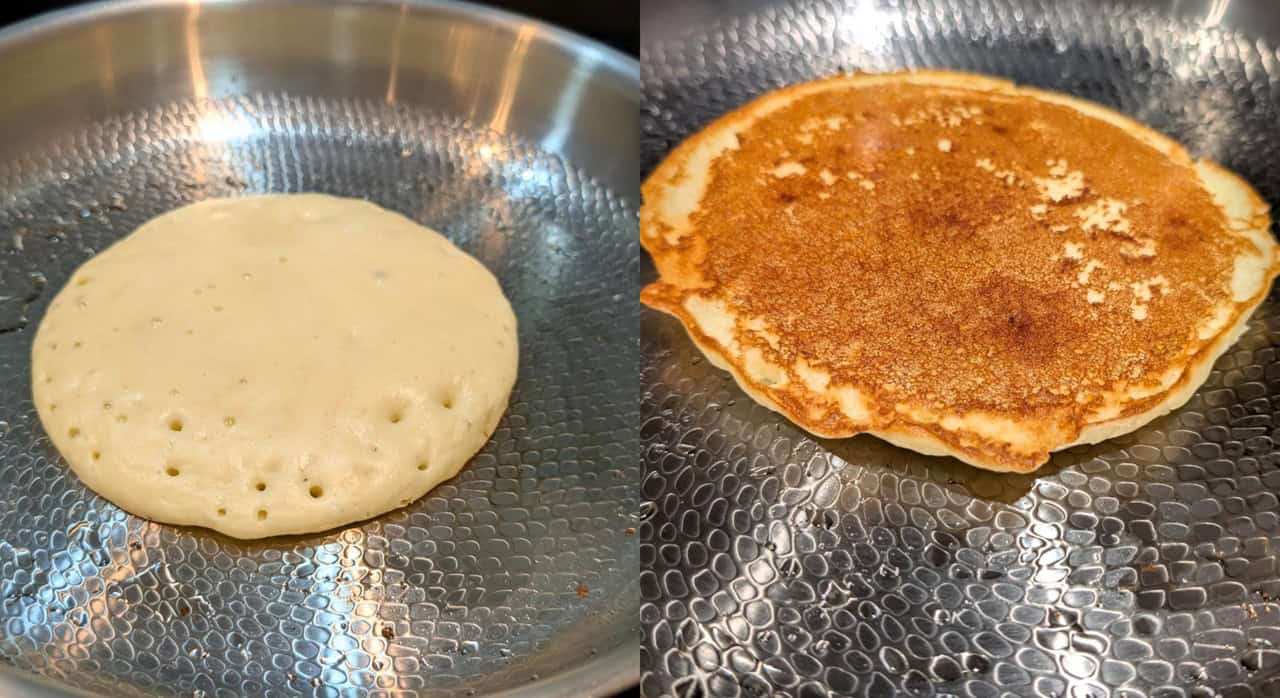
The pan’s open profile helps here too. Because it’s built for foods that benefit from direct surface contact, such as eggs, steaks, fish fillets, vegetables, bacon, tofu, and pancakes, steam escapes quickly instead of stewing the food. The gently sloped sides give your wrist a clean angle to slide a spatula underneath, flip pancakes, toss chopped vegetables, and slide dinner straight onto a plate without the tall, straight walls of a sauté pan getting in the way.
Cooktop compatibility and heat management
Yes, the TiRoam pan works across induction, gas, electric, ceramic, and radiant cooktops, provided you match the burner ring to the pan base and keep the dial at low to medium heat. That five-cooktop flexibility comes directly from the four-layer construction, where the magnetic 430 stainless steel outer layer catches induction fields and the inner aluminum layer spreads the heat across the floor. Because the aluminum core conducts heat efficiently, medium heat does the heavy lifting that used to require high heat on clunkier cookware.
TiRoam titanium vs stainless steel and carbon steel
Pick the TiRoam Pure Titanium Frying Pan over stainless steel or carbon steel if low acid reactivity and a lighter weight in the hand matter most to you; otherwise, all three cook with the same daily technique. All three uncoated metals demand the same basic stovetop discipline: preheating, adding oil, and letting food sear before turning, with zero synthetic coating to fake a nonstick release. Where TiRoam’s four-layer build shifts the math is pairing that corrosion-resistant titanium food-contact surface over 304 stainless, aluminum, and 430 stainless in a body that weighs between 750 g (1.65 lb) and 1,140 g (2.51 lb) depending on diameter.
If you already cook on stainless, the timing will feel familiar right away. The practical advantage of titanium over bare carbon steel or cast iron is that you can simmer tomatoes, squeeze citrus, or reduce salty pan sauces without worrying about metallic off-flavors or stripping away seasoning. Within TiRoam’s own catalog, this conventional skillet is the straightforward daily driver for frying and searing, whereas their deeper saucepan and sauté shapes target liquid-heavy jobs. Ignore the product page’s louder marketing comparisons claiming that titanium shrugs off 1,150°F while stainless always sticks and Teflon dies in a year or two; buy it for the low acid reactivity and easy wrist weight.
Which size to buy: 22, 26, or 30 cm
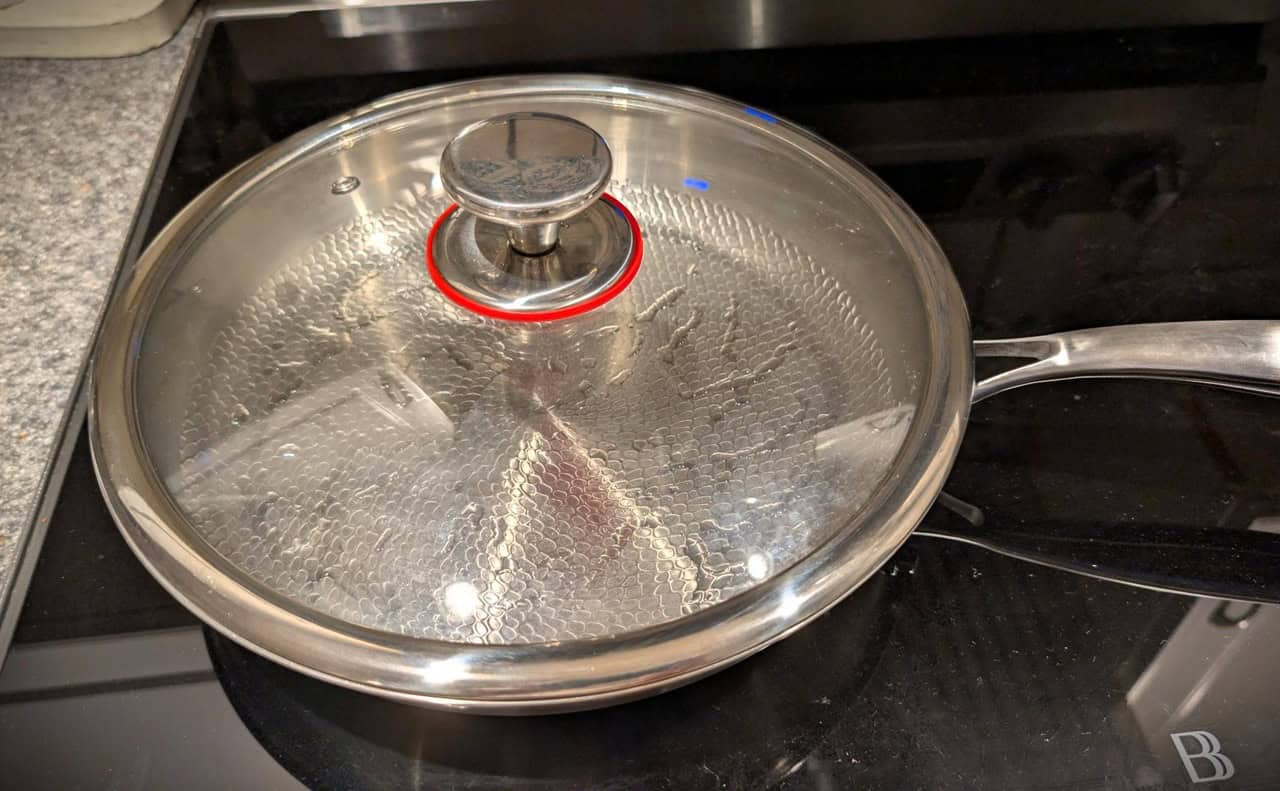
For a two-person household or anyone buying a single pan for daily dinners, the 26 cm pan is the most versatile size and the smartest starting point. Every size ships with a 21.5 cm (8.5 in) stainless steel detachable handle that you have to attach yourself. Putting the handle on out of the box is a quick job, though if you’ve ever fiddled with removable-handle cookware on first unboxing, you know it’s worth taking a second to line the mechanism up squarely before locking it down. Published dimensions, capacities, and weights across the lineup can vary slightly due to manufacturing tolerances.
| Size (Diameter) | Pan Depth | Pan Weight | Lid Weight | Capacity | Best Household Fit |
|---|---|---|---|---|---|
| 22 cm (8.7 in) | 5 cm (2.0 in) | 750 g (1.65 lb) | 300 g (0.66 lb) | 900 ml (0.95 qt) | 1 to 2 people, eggs, breakfast, reheating |
| 26 cm (10.2 in) | 5.5 cm (2.2 in) | 919 g (2.03 lb) | 500 g (1.10 lb) | 1,500 ml (1.59 qt) | Most households, all-around daily cooking |
| 30 cm (11.8 in) | 5.5 cm (2.2 in) | 1,140 g (2.51 lb) | 650 g (1.43 lb) | 2,500 ml (2.64 qt) | Families, batch cooking, large searing jobs |
cm (8.7 in)
At 750 g (1.65 lb) with a 900 ml (0.95 qt) capacity, the 22 cm model is the lightest in the hand. It fits solo cooks or a couple frying morning eggs and reheating small sides.
cm (10.2 in)
TiRoam positions the 26 cm pan as the most versatile size for most kitchens. At 919 g (2.03 lb) and 1,500 ml (1.59 qt), it gives a two-person household room to sear full dinner proteins without crowding the floor.
cm (11.8 in)
The 30 cm pan steps up to 1,140 g (2.51 lb) and 2,500 ml (2.64 qt) while keeping the 5.5 cm depth. Pick this one for family meals, big sautéing jobs, and batch cooking.
Living with it: care, cleaning, and cosmetic aging
The main downsides of an uncoated titanium pan are the mandatory preheat-and-sear technique, installing the detachable handle yourself, and visible cosmetic aging, making it a fit for practical cooks who care about function over a showroom finish. TiRoam notes that light cooking marks, appearance shifts, and heat coloration are normal signs of regular use on bare titanium. New owners often spot rainbow heat tint after a few weeks and worry the metal is failing, but because the brand classifies discoloration as normal wear, cosmetic changes excluded under the 10-year warranty won’t qualify for a defect return.
Keeping food releasing cleanly and washing up after dinner requires a simple routine rather than cast-iron seasoning rituals. On the burner, always preheat gradually on low to medium heat with oil and never overheat an empty pan. At the sink, let the pan cool down first, then wash it with warm water, mild dish soap, and a soft sponge. If seared bits cling to the hammered surface, give it a brief soak instead of attacking it with abrasive scrubbers, then rinse and dry thoroughly before putting it away.
Price, shipping, and the return fine print
Before you click buy, look past the flashing deal banners on the sales page and read the actual checkout terms. The $99.90-$159.90 price range is straightforward, but the delivery clock and return rules are strict.
What it costs and what the warranty covers
Priced from $99.90 to $159.90 depending on diameter, the TiRoam pan is worth the money for cooks who want a durable, uncoated composite skillet and free shipping on every order, though prices may vary. You can safely ignore the product page’s urgency banners promising over $200 off and free gifts while supplies last; judge the pan on its actual $99.90 to $159.90 checkout price and its 10-year warranty badge.
Shipping windows, cancellation lock, and return rules
Plan on an 8-15 business days U.S. delivery window from the day you order, and understand that the 30-day return window only applies to pans in unused condition inside their original packaging. Orders process and ship within 1 to 3 business days, and once processing or shipping starts, you can’t cancel the order. After dispatch, transit takes 7 to 12 business days in the U.S. (all 50 states and Washington, DC, including Alaska and Hawaii), 11 to 18 business days to Canada, 9 to 15 to Australia, and 4 to 8 to Singapore, with no delivery to APO, FPO, or DPO military addresses.
If you change your mind on a clean, unboxed pan, you pay the return shipping cost, TiRoam charges no restocking fee, and refunds go back to your original payment method. For shipping damage or defects, the 72-hour damage reporting rule requires emailing photos or video to support@tiroam.com within three days of delivery.
Who should buy the TiRoam titanium pan, and who should skip it
Buy the TiRoam Pure Titanium Frying Pan if you want an everyday, uncoated skillet for searing and frying and are willing to use proper heat control, and skip it if you want zero-effort synthetic nonstick or risk-free home trial returns. In my kitchen, it has handled daily duty excellently over a few weeks of testing. Its conventional frying-pan shape, gently sloped sides, and non-reactive titanium interior make it an easy reach for eggs, fish, meat, seafood, vegetables, breakfast, and quick lunches without worrying about PFAS, PTFE, or PFOA coatings.
You should pass if you want eggs to slide around a dry, cold pan with zero learning curve, or if normal heat coloration on bare metal is going to bug you. You should also hold off if you dislike a 30-day return policy that locks you in the moment the pan touches a hot burner, or if you demand multi-year wear data before spending $99.90 to $159.90. A few weeks on the stove proves the pan can cook, even if year two is still unwritten.
Frequently Asked Questions
How do you season and clean a pure titanium frying pan so food releases easily?
You do not need cast-iron seasoning rituals for bare titanium; clean release comes from warming the skillet gradually over low to medium heat, adding cooking oil before your food, and never overheating the pan dry. After cooking, let the metal cool down before washing it with warm water, mild dish soap, and a soft sponge. If seared bits stick to the hammered interior, soak the pan briefly rather than using abrasive scrubbers, then rinse and dry it completely.
Is cooking on a pure titanium pan without coating actually safe?
Yes, because your food sits directly on bare, corrosion-resistant titanium with no PFAS, PTFE, or PFOA coating that can flake off or degrade. TiRoam also states the pan is tested to selected U.S. FDA-related and EU/LFGB food-contact requirements, though “selected” is the brand’s own narrowed compliance phrasing rather than a list of specific tests. Ignore the sales page’s aggressive fearmongering about rival cookware and judge the safety by the simple reality of cooking on unlined metal.
Does food stick to an uncoated titanium frying pan when cooking eggs?
Eggs will stick right away if you expect a dry, cold-pan slide like you get from a supermarket nonstick skillet, or if you crank the burner too high and jab a spatula underneath thirty seconds too early. In my weeks of testing, eggs and proteins released cleanly once I followed a basic three-step routine: preheat gradually on low to medium heat, add oil before dropping food in, and let a light crust form before flipping.
How does the TiRoam titanium pan compare to a stainless steel or carbon steel skillet for everyday frying?
All three uncoated metals require the exact same stovetop discipline—gradual preheating, cooking fat, and patience before flipping—because none of them rely on synthetic nonstick films. The TiRoam separates itself by pairing a four-layer body that weighs a manageable 750 g to 1,140 g with a low-reactivity titanium interior. Unlike bare carbon steel, that titanium surface lets you simmer tomatoes, citrus, and salty sauces without metallic off-flavors or stripped seasoning.
How much does the TiRoam pure titanium frying pan cost and is it worth the price?
The pan runs from $99.90 to $159.90 depending on diameter, with free shipping and a 10-year warranty badge included. Based on my few weeks of testing at Unfinished Man, it is well worth the money if you want a durable, uncoated daily skillet and already know how to manage burner heat. Skip it if you want multi-year wear proof upfront or a risk-free home trial, since the 30-day return policy only accepts unused pans in original packaging.
What are the downsides of an uncoated titanium frying pan?
You have to use proper preheat-and-oil technique on every meal, attach the 21.5 cm detachable handle yourself out of the box, and accept visible heat coloration and cooking marks over time. Those rainbow heat tints are normal on bare titanium and are excluded from the 10-year warranty, so you cannot return the pan over cosmetic aging. Buying terms are also strict: orders cannot be canceled once processing begins, U.S. delivery takes 8 to 15 business days, and used pans cannot be returned.
Is the TiRoam frying pan made of 100% solid titanium?
No, “pure titanium” only describes the hammered interior layer that touches your food. The pan body is actually a four-layer composite featuring that titanium cooking surface, a 304 stainless steel structural layer, an aluminum core to spread warmth evenly, and a magnetic 430 stainless steel outer base. That layered construction is what allows the skillet to heat efficiently across induction, gas, electric, ceramic, and radiant stoves.