You’re in the shower, cold water’s barely a trickle, hot water’s fine. You check the kitchen sink — same thing. And the bathroom sink. And the outdoor spigot. Every cold tap in the house is weak, but the hot side works like normal.
A pinhole-sized leak can waste 250 gallons a day — enough to fill a bathtub twice over, every single day, without you noticing anything except a higher water bill. A severe leak can waste thousands of gallons daily. Unlike a dripping faucet or a running toilet, a main line leak doesn’t announce itself with a puddle under the sink. It hides underground, behind walls, or under the foundation, slowly getting worse.
Key Takeaways
A main water line leak typically drops cold water pressure while hot water stays normal — that’s the clue most articles miss
Even a pinhole leak can waste 250+ gallons per day, adding thousands of dollars to your annual water bill
The DIY test: turn off all water, check the meter, wait 2–3 hours with no water use, check again — if the reading moved, you have an underground leak
Table of Contents
Sign #1: Low Water Pressure Throughout the House (Cold Only)
A main water line leak drops cold water pressure while hot water stays normal.
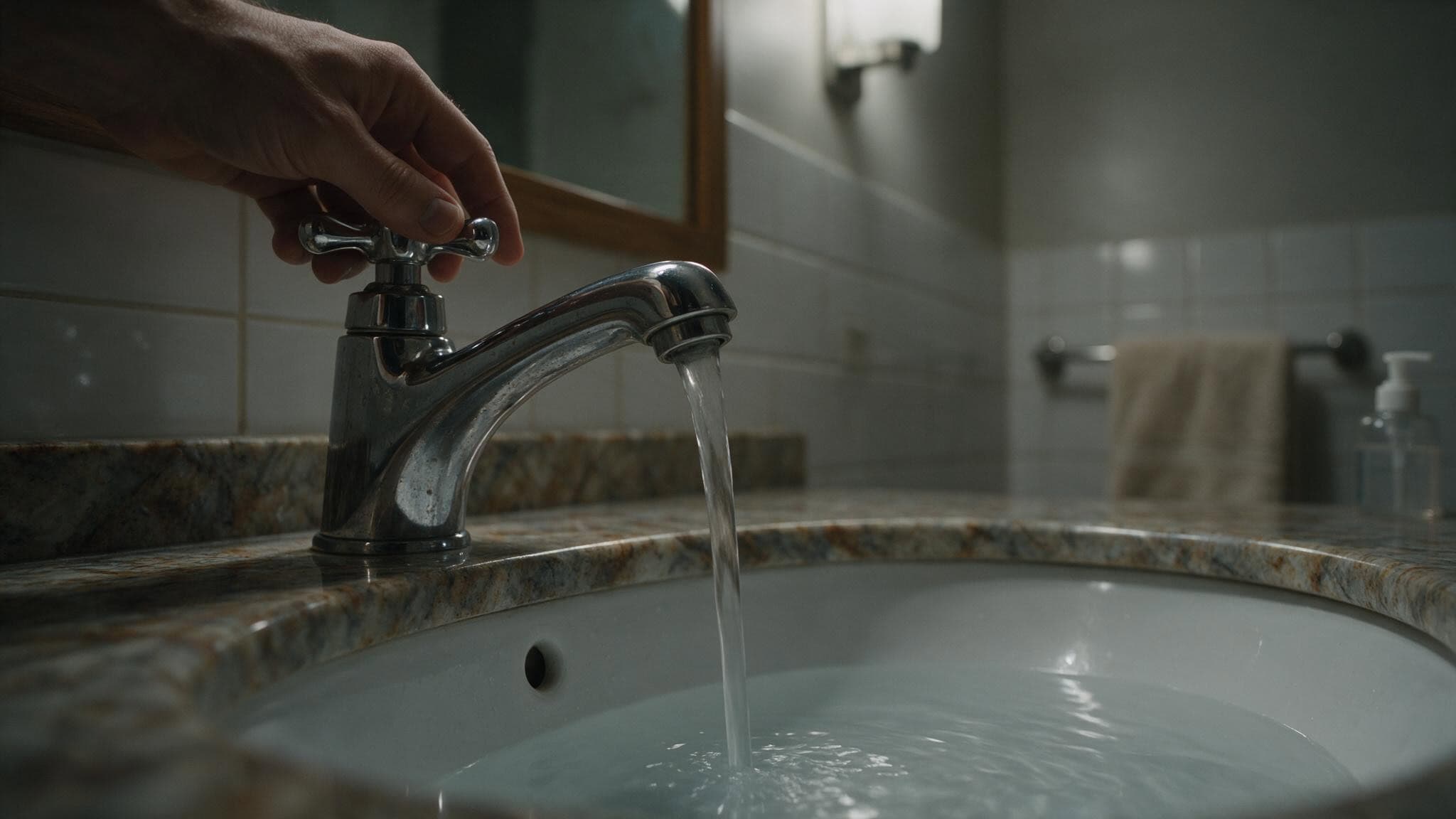
When the pipe cracks or develops a hole, water escapes before it reaches your house. Pressure drops. But if the leak is in the main line (before the water heater), the cold water gets weak while the hot water stays normal. The leak is upstream of the water heater, so the cold supply takes the hit. Hot water comes from your water heater’s stored tank, so it doesn’t feel the pressure loss the same way.
If it’s every cold tap in the house, that’s your main line. If it’s just one faucet, it’s probably that faucet’s aerator, shutoff valve, or a supply line under the sink.
Before you panic, rule out the cheap fixes:
- Clogged aerator — unscrew it, clean it, see if that helps
- Bad shutoff valve — sometimes they don’t open all the way
- Malfunctioning pressure-reducing valve (PRV) — that’s a $200 repair, not a $2,000 excavation
- Sediment buildup in the pipes — more common with old galvanized lines
Still weak at every cold tap after checking those? You’re dealing with the main line.
Quick test: Turn on every cold faucet in the house at once. If they’re all weak but the hot water runs strong everywhere, the leak is upstream of your water heater — that’s the main line.
Sign #2: Discolored, Smelly, or Bad-Tasting Water
Brown, red, or yellow water from every tap means rust or dirt entered through a crack in the main line. The hierarchy of urgency goes like this:
Discoloration first. Brown, red, or yellow water usually means rust or dirt has entered through a crack in the pipe. If it’s the whole house, not just one tap, that’s an indicator the main line is compromised. Cloudy water from every fixture points the same direction — contaminants coming in through a break.
Smell second. If your water smells like rotten eggs, don’t drink it. That sulfur odor comes from bacterial growth inside the pipe, which can happen when a leak allows bacteria into the supply. It’s not always dangerous, but it’s not normal.
Taste third. Earthy, metallic, or just “off” tastes can mean soil or pipe corrosion is making its way into your drinking water.
If you’ve any reason to suspect a main line leak and your water quality seems off, get it tested. A leak can introduce metals, bacteria, viruses, and parasites into your water without changing its appearance, smell, or taste.
Sign #3: Unexplained Spike in Your Water Bill
Your water bill is the leak detector you already own. If it jumps 30, 50, 100 percent and you haven’t started filling a pool or hosting a family of eight, something is wrong.
Let’s put numbers on it:
- A pinhole leak wastes over 250 gallons a day — that’s roughly 7,500 gallons a month you’re paying for but not using
- Severe leaks can push into thousands of gallons daily
- The EPA says the average household wastes more than 9,300 gallons a year from leaks — and that’s the average, which includes homes with no leaks
- 9 percent of homes have leaks that waste 50 or more gallons per day, every day
Some water utilities offer free high-usage alerts. If your consumption spikes, they’ll call, text, or email you before you get a bill. Call your water company and ask if they offer that service. It’s free and it can catch a leak weeks earlier than waiting for the statement.
Cost check: A pinhole leak at 250 gallons per day will cost roughly $50–$100 extra per month depending on your local rates. A severe leak can add $500+ to a single bill.
Sign #4: Faucets Sputter and Appliances Act Up
Low pressure from a main line leak doesn’t just affect your shower. It messes with everything downstream.
You might notice:
- Faucets that sputter even after you clean the aerator. That air in the line is a sign the pipe has a break.
- Your refrigerator’s water filter making burping noises or taking forever to fill a glass.
- The washing machine taking 20 minutes to fill instead of 5.
- The dishwasher running longer cycles and still leaving dishes dirty.
- The water heater making unusual noises or running less efficiently — it’s getting less water than it needs.
If you’ve been blaming your appliances for poor performance, take a step back. The problem might be upstream.
Sign #5: Unusual Sounds and Wet Spots in the Yard
This is the outdoor check. Walk your property with your ears and eyes open.
Listen first. A small leak often makes a trickling or hissing sound — quiet, but noticeable when other fixtures are off. A large rupture can sound like running water even when no sprinklers are on. If you hear water moving outside and you haven’t turned anything on, investigate the possibility of common plumbing problems.
Look second. Damp soil during a dry spell is a giveaway. So are puddles that show up out of nowhere. A puddle near the street might mean a rupture in the service line — and that could be the water company’s problem, not yours.
Don’t ignore sinkholes. A leak can wash away soil under your yard, creating a depression or a visible hole. That’s serious. It means the ground is being eroded from beneath.
The key distinction: yard puddles and wet spots are usually your responsibility. Puddles near the street, especially near the meter or the property line, might be the utility’s side. Call them first before you call a plumber — you don’t want to pay for a repair that’s on their dime.
Sign #6: Foundation Cracks from Saturated Soil
Here’s how it works: a leaking main line saturates the soil around your foundation. Waterlogged soil loses its load-bearing capacity. The foundation settles unevenly. Cracks appear.
New cracks or widening cracks, especially when paired with other signs on this list, mean you need a plumber now—and here is exactly what to do in a plumbing emergency to minimize damage until help arrives.
What to look for:
- Vertical or diagonal cracks on exterior foundation walls
- Cracks that are wider at one end than the other (uneven settling)
- Doors and windows that start sticking or not closing properly (the house is shifting)
- Bulging or leaning foundation walls
Hairline cracks grow quickly when water is involved. And if water is seeping into the concrete itself, it can cause buckling and structural damage that, according to the team at Cheap Plumber, may require a full water line replacement costing tens of thousands to fix.
Sign #7: Water Intrusion in Crawl Spaces and Basements
A main line leak can saturate the soil around your foundation, turning a crawl space or basement into a damp, humid mess without any pipe leaking inside the house.
Here’s the mechanism most homeowners don’t know about: the stack effect. Your house draws air from below. When the soil around the foundation is saturated from a leak, that moisture gets pulled up through the crawl space or basement by negative air pressure and ends up in your living areas. You’ll feel it as dampness, notice it as condensation on windows, or smell it as mustiness.
This is how an outdoor leak can cause indoor air quality problems with no visible water inside. If your basement or crawl space is persistently humid and you can’t find the source, consider whether a main line leak outside is the root cause.
Sign #8: Mold, Mildew, and Musty Odors
Mold starts growing within 24 to 48 hours after a leak occurs. Mark your pool’s water level with tape to test for leaks—if it drops more than 1/4 inch within 24 hours, a leak exists. If you can see mold or smell it, that means the leak’s been active for weeks, not days.
Where to look:
- Mold on walls or ceilings that aren’t in a bathroom or shower
- Musty odors that don’t go away after cleaning
- Mildew on baseboards, in closets, or in corners near exterior walls
If you find mold, the mold is a symptom, not the problem. The problem is the moisture feeding it. Find the leak first, then deal with the mold.
Sign #9: Pest Infestations Attracted to Moisture
Rodents, ants, cockroaches, and termites all love moisture. A main line leak creates a damp environment that attracts them.
Termites are the most dangerous. Moisture softens wood, making it easier for them to burrow into your home’s structure. Signs of termite activity include sawdust-like frass, shed wings near windows, and hollow-sounding wood. Wood rot shows up as buckling floors, swollen baseboards, and spongy structural supports.
If you’re dealing with more pests than usual and you can’t find a food source, moisture might be the draw. A hidden leak could be the reason.
More Indoor Evidence (Check These While You’re At It)
These signs are simpler but worth a walk-through:
- Water stains on ceilings or walls — yellow or brown, start small and spread. Drywall may bubble or feel soft.
- Wet floors along baseboards — water always finds the low point.
- Flaking paint or bubbling wallpaper — water collecting behind the wall surface.
- Exterior paint blistering or peeling — could mean a leak behind an exterior wall.
- Dripping sounds inside walls — especially when no water is running.
- Warm spots on radiant floors — a localized hot area means a hot water pipe is leaking underneath.
- A wobbly toilet — sometimes it’s just loose bolts, but it can also mean a rotted subfloor from a slow leak at the toilet or nearby fixture.
The Definitive DIY Test: Check Your Water Meter
This is the one test that confirms a leak exists without looking for water.
- Turn off every water-using fixture and appliance — all faucets, the washing machine, dishwasher, ice maker, irrigation system, everything.
- Write down the reading on your water meter.
- Do not use any water for 2 to 3 hours. No flushing, no hand-washing, no watering the plants.
- Check the meter again.
If the reading changed at all while no water was being used, water’s escaping somewhere. And since you turned off all interior fixtures, the only place it can be escaping is on the supply side — the main line between the meter and your house.
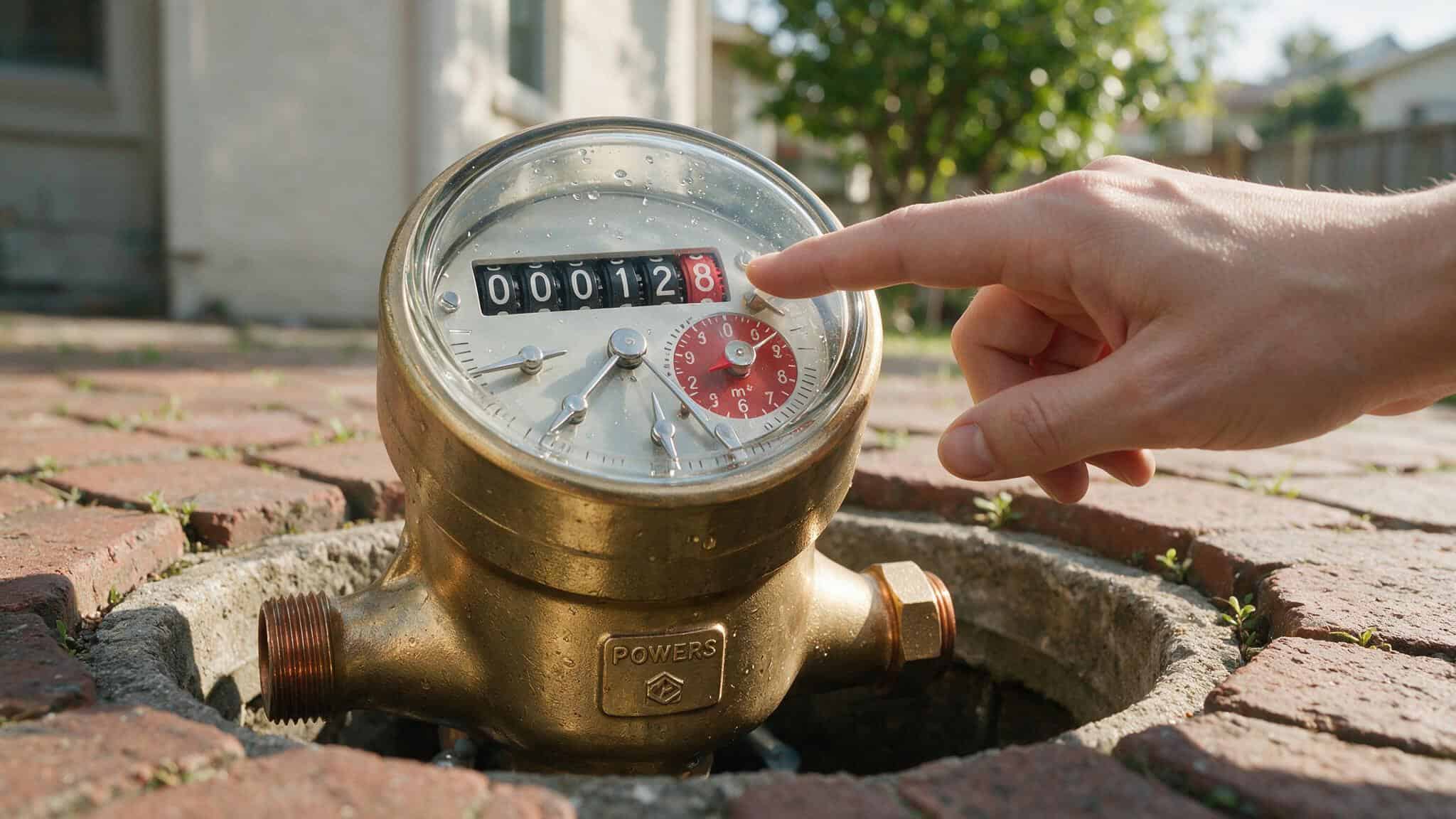
This test is free, takes an afternoon, and can save you a plumber service call. If the meter didn’t move, your pipes are probably fine and your problem is elsewhere.
Bottom line: The meter test is the closest thing to a definitive answer without calling a pro. If it moves, you have a leak. Period.
What Happens When You Call a Plumber
If the meter test confirms a leak, a pro can find it without digging up your yard. Plumbers use:
- Camera inspections — a small camera runs through the pipe to spot cracks, breaks, or blockages
- Thermal imaging — infrared cameras detect temperature changes from water escaping
- Acoustic leak detection — sensitive microphones pick up the sound of water escaping underground
Most leaks can be located within a few feet without breaking ground.
Your Problem or the Water Company’s?
The utility fixes everything up to the meter. You fix everything on your property side. But where the meter sits varies by municipality, and some homeowners are responsible for the service line all the way to the street.
If you see puddles near the street or water bubbling up at the curb, call your water company first. They can tell you whose problem it is. Don’t call a plumber for a utility-side issue.
Repair vs. Replacement: What to Expect
Once the leak is found, you’ve got two options:
- Traditional excavation — dig a trench to the pipe, cut out the damaged section, replace it. Works fine, but it’s disruptive. You lose a strip of yard, possibly a driveway or patio.
- Trenchless methods — two main techniques: CIPP lining (cured-in-place pipe) and pipe bursting. They repair or replace the pipe with minimal digging. CIPP inserts a resin-coated liner that hardens inside the old pipe. Pipe bursting breaks the old pipe apart while pulling a new one through.
Which one makes sense depends on pipe age, material, and what’s above the pipe. If digging would wreck a nice patio or an established garden, trenchless is worth the premium. If the pipe is old and corroded (pre-1980s homes especially), replacement is usually smarter than repairing one section.
Technology That Actually Helps
Most guys buy a cheap water leak detector, stick it next to the water heater, and think they’re covered. Problem is, those detectors only work if water touches the sensor. A main line leak underground won’t trigger them. They also can’t detect slow drips or running toilets, and they can’t shut off the water.
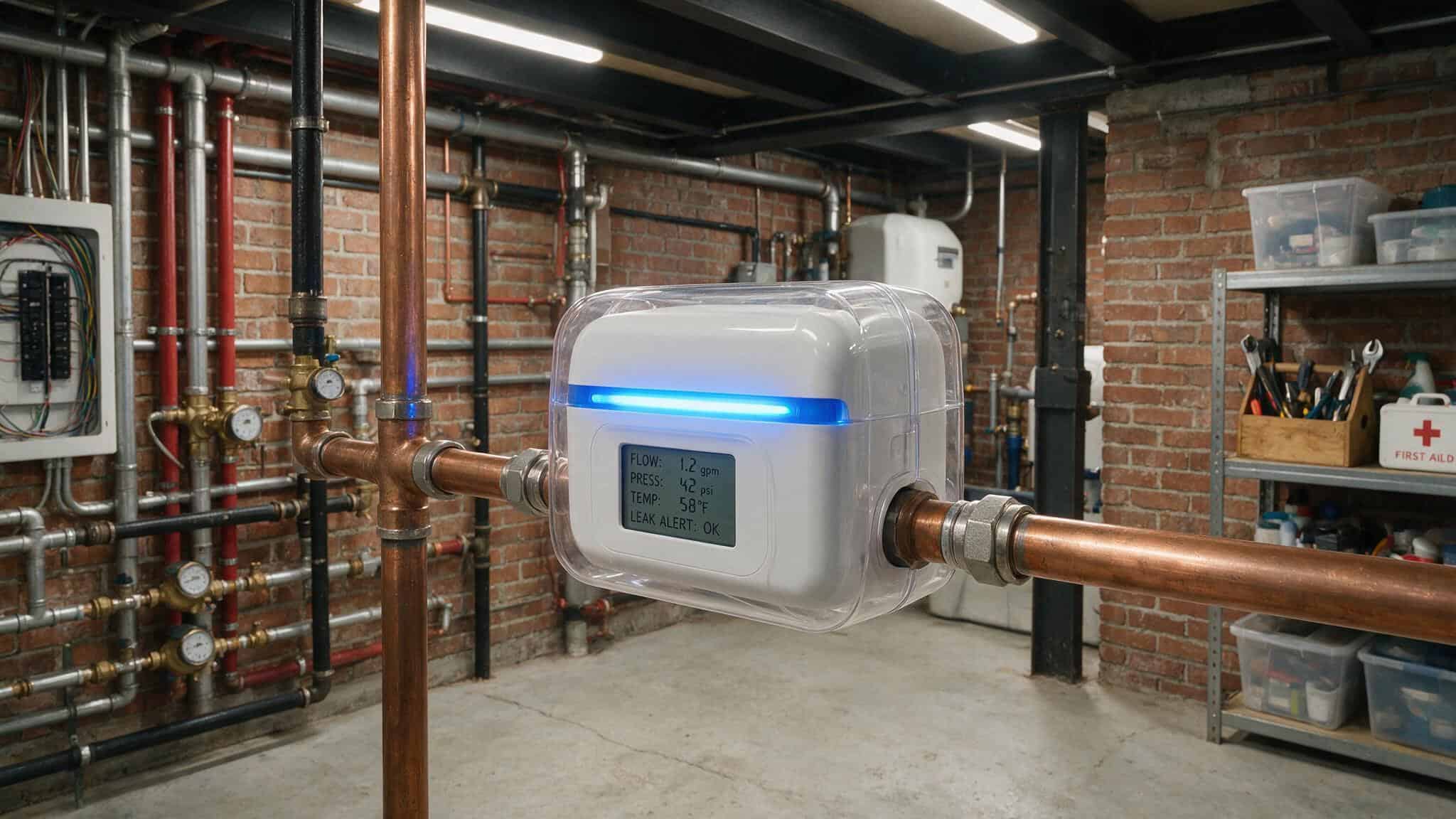
The device that protects against main line leaks is a whole-home flow monitor installed at the main water line. The Flo by Moen is an example:
- Costs around $500 (plus plumber installation)
- Detects leaks as small as a drop per minute
- Learns your normal water usage patterns and alerts you when something’s off
- Can automatically shut off the water if it detects a major leak
- Notifies you via app, phone call, and email so you don’t miss the alert
- Some home insurance companies offer discounts for installing one
If you’ve had a previous leak or your house has older pipes, it’s an investment.
What to Do Right Now
Here’s your action plan:
- Do the meter test. That’s the fastest way to know if you’re dealing with a leak at all.
- Walk through the signs. Check pressure at every cold tap. Look at your water bill. Walk your yard. Check for mold, stains, and wet spots.
- If the meter test says leak and you’ve got supporting signs, call a plumber. Tell them what you found — it saves them time and saves you money.
- If the meter test shows nothing, you’re probably fine. But keep monitoring your bill and your pressure. Small leaks can start slow.
You’ve got the tools to spot it now. Use them.
Frequently Asked Questions
How much does it cost to fix a main water line leak?
Costs vary widely depending on the leak’s location and the repair method. A simple spot repair via traditional excavation might run a few hundred to a couple thousand dollars, while a full water line replacement can cost tens of thousands. Trenchless methods like CIPP lining or pipe bursting are less disruptive but often come at a premium.
What are the first signs of a main water line leak?
The most telling early sign is low cold water pressure throughout the house while hot water pressure stays normal. You might also notice an unexplained spike in your water bill, discolored or bad-tasting water from every tap, or faucets that sputter even after cleaning the aerator.
How can I test for a main water line leak myself?
The definitive DIY test is the water meter test. Turn off all water-using fixtures and appliances, write down the meter reading, wait 2–3 hours without using any water, then check the meter again. If the reading changed, water is escaping somewhere on the supply side between the meter and your house.