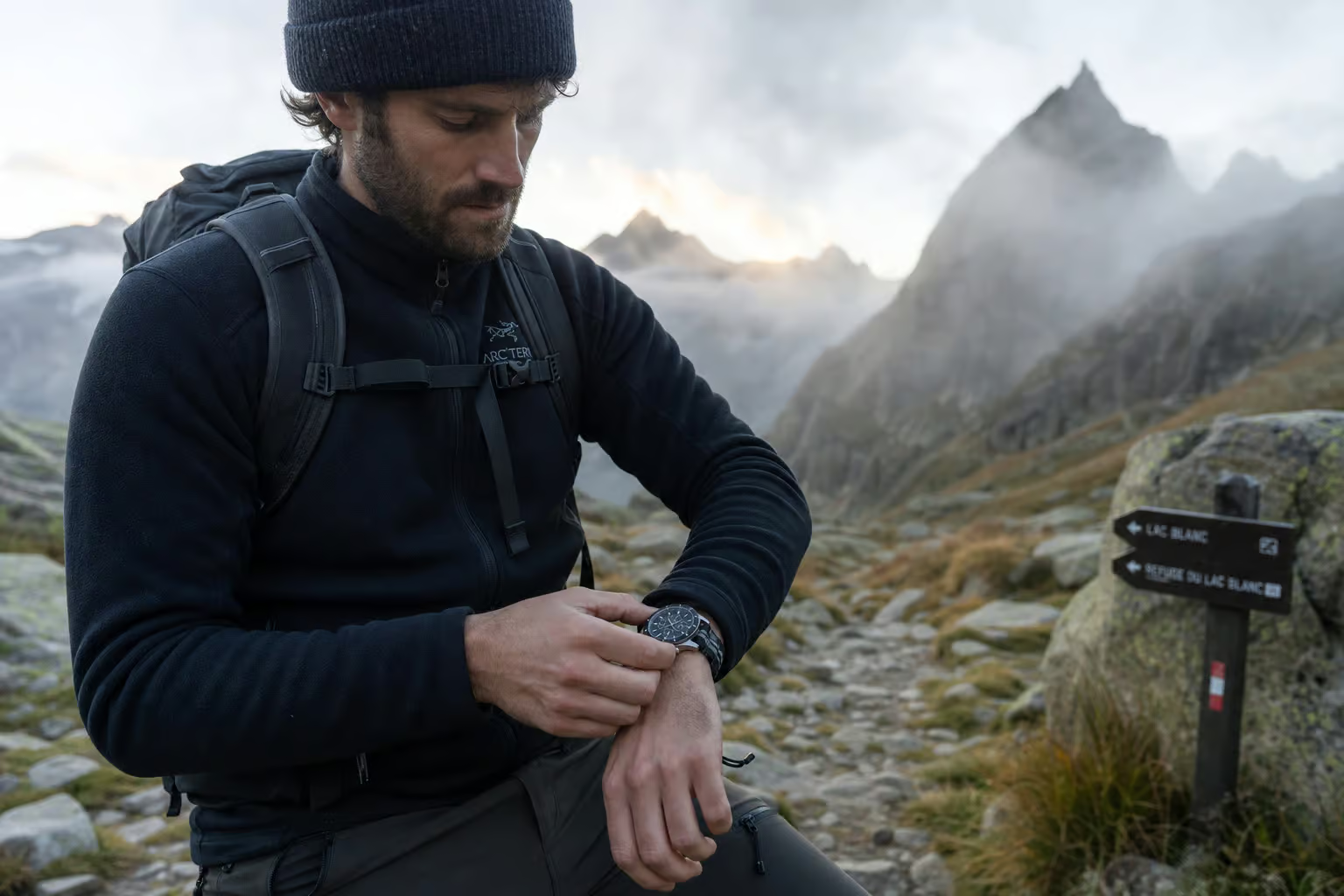
Somewhere in your garage there’s a shelf that tells on you. The kayak with two summers on it. The telescope that came out twice. The trail shoes that still have the tag energy in them.
Most guys don’t have a hobby problem. They have a first-month problem, and the gear is just the receipt. Here’s the idea this whole piece runs on: what kills a new pursuit isn’t the price tag. It’s the first month of being bad at something, when progress is invisible and the couch is ten feet away.
That reframe changes every buying decision below. What follows is my sort of the outdoor adventure hobbies for men worth your time, ordered by self-reliance instead of alphabetically, starting at the day-hike rung and climbing outward from there. The material comes from real hobbyists, Beardbrand staff and Alliance members who answered the same five questions, plus roundups from Local Adventurer (101 hobbies, last updated October 21, 2025), developgoodhabits (25), and video lists (37). Beardbrand’s 2021 list had 21.
I kept each count attached to its own source instead of merging them into one inflated number. Hobbies pull you into the moment, take the edge off stress, and carry over into the rest of your life. That’s setup, not the argument. The argument is the first month.
Key Takeaways
Most new hobbies die in month one, when you’re bad at them, not at checkout. Buy the cheapest tier first: a $30-60 rod and reel, a $10 kids’ bow, a feeder instead of a scope.
Every hobby has a hidden time signature. Surfing costs 4:00 AM wake-ups, rib smoking claims one Sunday a week, paramotoring demanded two consecutive weeks off work. Match the signature to your calendar before you buy anything.
The self-reliance ladder starts with a day hike and tops out at bushcraft and navigation. It’s cheap to climb: shotgun shooting starts at $100-300, and a used small sailboat runs about $2,000.
Table of Contents
Hiking, camping, and bushcraft: the self-reliance ladder
Outdoor adventure hobbies for men are the pursuits you can do outside with a skill attached: hiking, camping, bushcraft, orienteering, fishing, archery, cycling, surfing, rowing, paramotoring, and the rest of the list below. The way I’d sort them is by how much self-reliance each one builds, because that’s the trait this whole family of hobbies actually trains. It’s my lens, not some industry taxonomy. The core cluster works as a ladder: day hike first, then an overnight camp, then bushcraft and navigation skills, and eventually backcountry confidence that transfers everywhere. Each rung is cheap, and each one makes the next rung less intimidating.
Hiking
This is the gateway rung, and the barrier is basically a pair of shoes. Hiking undoes indoor confinement: cardio, balance from uneven ground, and actual sights and sounds instead of a screen. It’s also real exercise, which the numbers back up. Per WebMD, a 5% incline bumps calorie burn by roughly 30%, so the hill you’ve been avoiding is doing more work than the flat loop.
ExoTrails adds the quieter benefit: people use solo treks to disconnect digitally, reflect, and generate ideas. It’s the free version of a thinking retreat, and the trail doesn’t check your calendar.
Camping
Camping extends hiking overnight, and that’s where it changes character. Per an Endeavour College of Natural Health finding, a few nights sleeping under the stars can bring the body’s sleep rhythm back into line, which is the best argument I know for a cheap weekend trip. No two trips come out the same, either. Weather, campsite, company, all of it varies, and that variety is what keeps guys going back. Camping is also a gateway in its own right: stargazing and shooting sports both tend to start around a campfire.
Bushcraft
Bushcraft overlaps with survival skills but isn’t the same thing, and it’s worth drawing that line once. It covers building shelter, staying warm, and finding food and water as skills you practice, not emergencies. The point is competence. You’re building the ability to handle the woods on purpose, not hauling gear to compensate for not having any.
Orienteering
Honest note: this one is barely covered in the material I worked from, so I’m treating it as the ladder’s connective tissue rather than pretending it’s deeply documented. Map and compass work is the skill that unlocks everything above it, and it’s the rung most guys skip. Don’t skip it.
Whittling
Probably the cheapest hobby on this entire list, and it fits in a backpack. Pick up balsa wood plus a proper whittling kit rather than your everyday pocketknife; that gear note saves beginners a cut thumb. Kids can start with a bar of soap and a kitchen knife, which is the zero-cost family angle in one line.
The health material around all of this is real, with sources attached: time in nature increases oxygen intake, which releases serotonin, and can improve blood pressure, digestion, and immunity. If stress relief is what you’re after from an outdoor hobby, this is the answer in concrete form: a solo trek where nobody can reach you, and a campfire evening where the biggest decision is whether the fire needs another log.
Fishing
You can start fishing for $30-60 with a basic freshwater rod and reel, which makes it the cheapest way to get outside alone with a purpose. If you add fly-tying and fly fishing, expect your first fly-caught fish within two or three weekends, which is the clearest time-to-reward number in everything I read for this piece. The benefits stack without any preaching: vitamin D, low-impact self-paced cardio, and fresh fish with omega-3s and B12. Frame it as process over outcome and the day works whether the fish show up.
ExoTrails calls fishing a meditative escape that builds patience, and that’s about right. The underrated feature is portability. The Ballistics Lab host fishes two hours before his family wakes up on vacation, and the same rod works on beach, lake, or river. One honest split: fly fishing demands more investment and more technique than spin gear, and it rewards both.
Buyer rule: Start with spin gear and let a full season decide whether fly fishing earns the bigger investment.
Fly-tying
The winter-months, workshop-guy half of the hobby. The kit is a vise, hooks, thread, and feathers and fur. It’s meticulous, fiddly work, and that’s exactly why people find it therapeutic. Tie through the cold months, fish your own flies in the spring, and count two or three weekends to your first fish on one.
Birdwatching from a backyard feeder
You can start birdwatching this week with a feeder, seed, and a free ID app. No optics required. Kill the tweedy stereotype now: this is a cheap, low-pressure outdoor thing, not a club with a dress code. Shawn learned it from his parents, and he and his dad built Eastern Bluebird nesting boxes in Pennsylvania, where the species lost nesting habitat as open farmland shrank.
That’s a dad project with real ecological weight behind it, and it’s the kind of origin most birdwatchers actually have. The money angle is the best part. A backyard feeding station, cheap field guides, and online ID apps cover the whole entry. Binoculars, scopes, and cameras are upgrades you can add later, not requirements.
The payoff is unwinding after a long work week: feeder watching during morning coffee is the cheapest decompression available, and even in cities there’s more species variety than you’d expect. Shawn’s advice is to keep it simple. Feeder, seed, app, done. If you’re an older guy looking for a low-impact starting point, this one pairs well with the options in our hobbies for older men guide.
Archery
For a beginner who wants a quieter outdoor hobby, archery offers peace, solitude, and quiet repetition where shooting sports offer the report of a firearm, and archery is the cheaper, gentler entry. CJ’s story is why I trust this section. He came to archery after burning out on firearm-season hunting; a friend talked him into it and one quiver was all it took. He started with an MQ-32 Solo-Cam bow, and I’ll be upfront the way I’d warn a friend: this is an expensive hobby and it’s gotten pricier.
He built a range on his own property and shoots out to 60 yards every evening there’s no snow or high wind. Weather decides, not motivation. Every spring he rebuilds shoulder strength and instinct from scratch, which is the honest detail nobody mentions: skill fades and comes back, and that’s normal. He learned to judge distance without a rangefinder through walkabout practice, and you will lose arrows, so budget for it.
Gear keeps improving; IBO bow speeds and vanes get better every year. The counterintuitive warning: go slow or you’ll damage your shoulder. Same discipline as powerlifting, and it inverts the usual more-practice-is-better advice. CJ keeps shooting despite hearing loss and vision loss in his right eye, still shooting right-eyed.
What keeps him at it is the quiet, the solitude, and chasing one perfect shot. Not trophies.
Bow types and starter bows
The lineup: recurve, compound, barebow, longbow, flat bow, horse bow, crossbow. Steer toward the simple end. A basic recurve from Walmart or a $10 Lil’ Indian bow makes it family-friendly and less intimidating than shotguns for kids. The $10 number is the point.
Hunting and shotgun shooting
This is the marksmanship end of the ladder, and it’s where the shooting sports get their cost floor: $100-300 to start with a shotgun, cheaper than a hunting rifle. The two halves split cleanly, hunting as the tradition-heavy pursuit and shotgun shooting as the friendly-priced entry, so take them in whichever order fits your budget.
Hunting
The source material calls hunting the most addictive hobby on its list and an old rite of passage that builds marksmanship and respect for the land. Hunters also make a real case as conservationists, and the host calls his Africa trip the ultimate experience, and hunts with his kids are documented on Backfire. I’m passing those along as claims from people who actually do it, not settled facts. The tradition angle is real without needing a sermon about manhood attached.
Shotgun shooting
This is the friendly-priced entry into shooting sports: $100-300 to start, especially shotguns versus hunting rifles. Disciplines range from long-range to clays, so you’ve got variety before spending much. Notice the cost ladder the article has built by now: $10 kids’ bow, $100-300 shotgun setup, and rifles above that. Marksmanship has a floor for every budget.
Cycling
A first bike costs $500-700 for a hardtail mountain bike, $600-800 for an entry-level road bike, or $1,000-2,000 for a decent road bike, and fit plus an aluminum frame matter more than which tier you buy. That’s the honest answer to what cycling costs, and it’s more useful than the vague “it depends” most articles offer. Keep the three tiers separate, because they’re separate decisions. Mike Lawson’s origin is the setup most readers will recognize: a decade of weightlifting with neglected cardio, strong but gassed on stairs, then pandemic gym closures pushed him onto the bike.
Quality rides run 45-90 minutes, and downhills can hit 40 MPH. The time commitment is real. So is the thrill of a 40 MPH downhill.
The two purchase decisions that matter more than price tier: bike fit is critical, and aluminum is recommended over carbon for beginners. The practical translation is that you should spend the savings on getting the bike sized right. A $600 entry road bike that fits beats a $1,800 bike that doesn’t, every time.
Cost check: Spend the gap between price tiers on a proper bike fit instead of a lighter frame.
This is also where the gear-overbuying pattern lives, and I’m framing it as a pattern because it is one. New hobbyists buy the flagship version before proving they’ll stick with the hobby, then sell it barely used. The garage full of near-new equipment is the cautionary tale, and the three price tiers above are the alternative. Buy the tier, survive the first month, upgrade on evidence.
Mountain biking
The outdoors on two wheels, with fat-tire e-bikes as a legitimate option for guys who want the trails without the lung-buster. Per ExoTrails, downhill MTB builds fear tolerance, resilience, decision-making, conditioning, and camaraderie, and that list makes sense once you’ve been on an actual descent: every switchback is a decision, and the guy behind you is making them too.
Running
For a guy getting back in shape, running is the cheapest option on this list. The barrier is basically shoes, and Couch to 5k is the named starting point. Plenty of guys who hated running came around, which is the reassurance worth hearing before you dismiss it. The proof point: the Income School host trained for a half marathon at about 270 lbs, weighed 255 by race day, and finished without walking. Frame it as a mental sport for regular guys, one built on consistent movement rather than speed.
The humbling anecdote that keeps this section honest: a rotund 60-year-old woman passed him four hours into his full marathon. Running also has a rec-league crossover, with friendly competition and post-game socializing built in. And if you hate running, cross-reference the hiking material: a 5% incline delivers a 30% calorie-burn boost, so a brisk hike is legitimate exercise too. You don’t have to run to get the benefit.
Surfing
Yes, you can learn to surf without living near the ocean, and either way the real commitment is the schedule, not the board. Mike Lawson took lessons in Haleiwa, Oahu in 2010, then bought a board and wetsuit and surfed the Atlantic coast. His actual routine: up at 4:00 AM, in the water by 5:00, at work by 8:00. That’s what the hobby costs. Sleep.
Say it plainly and decide accordingly. Proximity to water dictates the entire practice cadence, and that matters more than board choice for whether the hobby survives. The beginner rules: start on a longboard, and learn surf etiquette before paddling out, because locals notice. For the landlocked reader, Lawson predicted landlocked surf parks as a future trend, which may or may not pan out, but the wave-pool idea at least means the ocean isn’t the only classroom anymore.
Water sports: rowing, rafting, kayaking, scuba, sailing
Here’s what actually decides whether a water hobby survives: how close you are to the water, and what your calendar looks like. Logistics before gear, every time.
Rowing
Eric Bandholz joined USC’s new rowing club after tagging along to his sister’s college regattas, which is a reminder that sometimes you find a hobby by showing up to someone else’s thing. Rowing uses about 85% of the body’s muscles and demands everyone stroke in sync, and that team timing is what separates it from a rowing machine. Local clubs run learn-to-row programs for modest fees, which is the low-commitment test drive before anyone buys anything.
White water rafting
Full-effort paddling plus balance work, with calm stretches for wildlife, scenery, and the people in the boat. The sensible order: raft with a guide first, buy gear for solo runs later.
Kayaking
Gets you to spots hiking can’t. The Local Adventurer authors have a favorite kayaking memory and a SUP they keep meaning to use more, and that gear-accumulation detail is relatable to anyone with a garage.
Scuba diving
The certification hobby: one credential, lifetime access. Per Income School, certification can happen as date nights over several weeks at a local dive shop, even landlocked Boise, it lasts for life, and it lets you rent gear while traveling. One-time effort, permanent unlock, no gear purchase required. Local Adventurer certified in San Diego, where the instructor called them the whiskey divers, a detail worth keeping.
Sailing
Looks rich, isn’t necessarily. Small sailboats go for about $2,000 on Facebook Marketplace and Craigslist. That’s not “someday” money, that’s this-spring money. Certification buys access to group catamaran charters, like a 48-foot boat near Tahiti with per-couple cabins. The cert buys trips, not a boat.
Paramotoring
Paramotoring is safe for beginners only through structured training, and the real entry barrier is two consecutive weeks off work, not the equipment. Michael’s runway is the whole story. He spent a full year watching Tucker Gott videos before committing, which is what a lot of guys do: research a hobby to death, and even then he trained in person. He trained at Aviator PPG in Central Florida, two consecutive weeks off work, running with a 70-pound motor on his back.
The ground-handling demand surprises people who only watched videos first, and the physical cost is real. He now flies about every other week for what he calls an “altitude adjustment,” and he treats structured training as non-negotiable. That’s the framing worth stealing: the training is what keeps the hobby alive. No bravado needed. This hobby asks for real PTO and gives back a skill almost nobody around you has.
Hobbies that require lessons or certification first
Paramotoring, scuba, rock climbing, drones, and horse riding all demand structured professional instruction before solo practice. Self-teaching is the wrong path for this group, full stop.
Rock climbing
Learn it at a gym with certified instruction, not YouTube alone. One host climbed weekly for a year with an instructor checking his anchors and knots, which is the difference between learning and hoping. Indoor bouldering costs a day pass plus shoe rental, and the mix of problem-solving, physical challenge, and community makes it genuinely addictive. Consider yourself warned on the addictive part. It’s a Local Adventurer favorite; Esther and Jacob climb and hit gyms in every new city.
Drone flying
The tech hobby with paperwork: buy the drone, learn the rules, get the FAA Remote Pilot Certificate, register it. Boring but short, and then you’re flying.
Horse riding
Beginners need boots with a one-inch heel, and an air vest is worth having. It works as recreational rides while traveling or competitive, and you get to pick your level.
Flying a plane
The entry is unglamorous: lessons at your local airport. The honest hesitation: flying a small plane is about 16 times more dangerous than driving, which is the reason the video speaker gave for pausing. His number, his call. Readers respect the risk stated plainly.
Mountaineering, peak bagging, and canyon sports
These are the advanced rungs above the hiking ladder in the section above, not separate sports that appeared from nowhere.
Mountaineering
Hiking’s serious older brother: more gear, more planning, bigger payoff. Buy gear at REI for the best return policy, and start with someone experienced. Both points are about not learning expensive lessons alone.
Peak bagging
Hiking with a scoreboard. Summit a defined list, like Colorado’s 14ers, and plenty of executives do it as their outdoor pursuit. The list structure is what makes it sticky.
Canyoneering
Book a guided trip first. One line, one action.
Skiing or snowboarding
The Local Adventurer authors thought they knew what they were doing; lessons helped enormously. That humility is the useful takeaway for any guy about to self-teach on a mountain.
Slacklining
Many climbers slackline for balance, and kits work indoors or over a pool.
Spelunking
Driven primarily by curiosity. That’s the whole motivation.
Easy-entry outdoor hobbies
You can start any of these five on curiosity plus under ~$300, most under $60 of gear, some with none. These entries disprove the cost objection with actual numbers.
- Stargazing, zero experience required, tonight. A 6-inch reflector telescope starts at $200-300, and the amateur astronomy community shares observation data.
- Geocaching, the free hobby that turns any walk into a search: an app, GPS coordinates, find caches, sign the logbook. If you hide your own, use a waterproof container and check it every few weeks. That maintenance detail separates real players from one-timers.
- Rockhounding, one host does it with his kids in Idaho, leaning on the state’s volcanic geology, and geodes can be polished in an inexpensive rock tumbler.
- Outdoor yoga, typically an early-morning practice: cool air, empty park, done before the day starts. It’s stretching outside, not a lifestyle.
- Outdoor photography, the focus it demands pulls you out of work mode and feeds creativity, and there’s nature to shoot everywhere you go. No destination required, which kills the “I need to travel for this” excuse.
Wheels, speed, and metalwork
Off-roading that doubles as camping, RC cars that hit real speeds, welding with real gear costs. Each one pairs a machine with a skill, and the skill is the part worth building first.
Off-roading and overlanding
The vehicle hobby that doubles as camping, and one of the best planned offline hobbies for men because it demands your full attention away from any screen. The appeal is freedom with discipline: proper off-road driving, treading lightly, knowing your vehicle basics. The skill requirement is part of the fun, not a disclaimer. A rooftop tent is the natural second purchase, and it turns the rig into a way to carry your camping gear off the beaten path.
RC cars
The toy that isn’t, and the smarter first RC buy over planes. A Traxxas Slash hits 60 mph, and the rabbit hole goes deep enough that people jump an RC car 42 feet over an F-150.
Welding
Real sparks, real gear costs. Basic gear runs about $300 for a welder, mask, gloves, and leather apron, and the hosts spent around $1,100 going higher-end, a floor and a ceiling worth knowing if metalwork is where you want to build tangible things with your hands. The projects are the fun part: a Cybertruck shape welded onto a side-by-side, or chain-link baton swords made with the kids.
Backyard outdoor living
“Outdoor hobby” doesn’t require wilderness access. The backyard is a legitimate adventure venue, and for a lot of guys with jobs and kids, it’s the most realistic one among the many outdoor hobbies that don’t demand a mountain or a trailhead.
Grilling
The hobby with the fastest payoff: you eat the results. James Wilson worked up from a cheap kettle grill to a Weber Smokey Mountain smoker, that’s the upgrade path. Smoking ribs takes 4-6 hours, which means roughly one practice run a week, usually Sunday. The two real barriers are space and cost; a smoker is a yard-and-budget decision before it’s a cooking decision. Pellet smokers are available under $500.
Gardening
Robert went from childhood summers on a farm to hydroponics in an apartment, which proves the itch to grow things survives the address change. A basic setup takes a weekend to build and about an hour a week after that. His cost split is the useful lens: one-time hardware versus recurring software, meaning nutrients, seeds, and replacements. Know what keeps billing you after the fun purchase.
Outdoor cooking
Portable gadgets diversify beyond burgers and hotdogs, and alfresco cooking works without an outdoor kitchen, with easy cleanup and no lingering smells.
Outdoor movie nights
A neighbor has hosted them every weekend since coronavirus began: chairs, sheets, drinks, popcorn under the stars.
Glamping
The outdoors without roughing it. Two lines, and that’s generous.
Beekeeping
The backyard hobby with an actual ecological reason: development keeps stripping pollinators of forage and nesting sites, which is why it’s growing. Bees will travel as far as five miles from the colony to pollinate, and the yields are honey, beeswax, and better garden pollination.
Club sports, rec leagues, and jiu jitsu
The payoff of this cluster is people, not solitude, which is the explicit contrast with archery, fishing, and birdwatching. Carlos Costa played soccer in Portugal to semi-pro level, switched from volleyball after one stadium visit, and now plays Sunday league; he finds a local kick-about team in every new city. Rec leagues add the post-game bar recap, which is honestly half the value, and Jacob’s pickleball obsession runs deep enough to have its own Instagram account. Jiu jitsu is called the best practical self-defense style, and MMA gyms mixing boxing and jiu jitsu keep getting more popular with adult men.
Indoor and at-home hobbies from the profiles
These come from the same named-hobbyist profile series as the outdoor entries, kept so you can confirm the full sourced list is intact. Skim what’s off-angle; the list stays honest either way.
Creative writing
Mike Lawson began songwriting at 12-13 with music-teacher parents. You write a lot of bad songs before decent ones, and unique and authentic beats an amazing voice.
DJing
Ben Wilson sat on the idea for over 10 years and finally started during lockdown with a roommate’s equipment. About 30 minutes on weekdays, 1-2 hours on weekends, after years of silently judging other DJs’ transitions.
Drawing and painting
Greg Berzinsky has drawn since about age 4; making time is the biggest challenge. His drill is drawing a person in 60 seconds, then five. Expression over perfection.
Fishkeeping
A Manhattan apartment forced a 3-5 gallon tank instead of the desired 125. Weekly water changes, and research the fish first: one that outgrows a 20-gallon tank may need 100.
Gaming
A brother-built PC after college; meditation and virtual travel, especially in 2020. Capped at evenings and weekends, and it shouldn’t be your only hobby.
HAM radio
Communication when all else fails. Chris started as a kid talking to his long-haul trucker father over a CB base station. Gear is pricey and used equipment is hard to find; the Morse code requirement was dropped in 2007, so the license is now a multiple-choice exam.
Knitting
Edwin learned via YouTube after watching his sister crochet, and he knits on the subway listening to heavy metal. Acrylic yarn and coupon-sourced needles to start.
Musical instruments
Sylvester Louis Castillo was placed on a drum set at age three and later played studios and venues between Denver and Nashville. Sheet music was the wall despite playing well by ear.
Vehicle modding
Thomas learned from enthusiast forums and YouTube, works during kids’ nap time with wife-granted weekend windows, all while carrying a mortgage and two kids in daycare. Custom parts are hard to find.
Vinyl
Entry-level record players run $40-50, and Lawson’s Audio-Technica LP60 was about $100. He spent nearly a year hunting an early pressing of Willie Nelson’s Shotgun Willie from 1973. The hunt is half the hobby.
Weightlifting
Ben Weaver got into lifting while training for school basketball. The beginner hurdle is ego, and the truth is nobody at the gym is watching. Morning workouts improved his flexibility, posture, appetite, and general mental state.
Why people quit in the first month
Most people quit new hobbies in the first month, when progress feels invisible and they’re bad at something new. Not because of cost. That’s HobbyStack’s framing, and I’m presenting it as their framing rather than research, because that’s what it is. The companion principle: hobbies with visible output, meaning something that builds a skill, produces an object, improves fitness, or builds a social circle, stick longer because the result is shareable.
Matching a hobby’s time signature to your life
Every hobby has a hidden time signature, and this article has been dropping them the whole way through. Surfing compresses into a 4 AM pre-work window. Rib smoking claims one Sunday per week. Paramotoring demanded two consecutive weeks off.
DJing runs 30 minutes on weekdays. Scheduled time slots beat motivation, and “making time” was the recurring biggest-challenge answer across the Beardbrand profiles. That’s also the concrete answer to how you make time for an outdoor hobby with a full-time job and kids: match the hobby’s signature to your actual calendar, whether that’s a 30-minute weekday slot, one Sunday, or a booked two-week block. Don’t wait for motivation, because it doesn’t show up on its own schedule.
The gear-overbuying pattern belongs here too, because it’s the spending version of the same failure. The garage full of barely-used flagship gear is the cautionary tale, and the sourced cheap tiers are the alternative: the $30-60 rod, the $10 bow, the feeder over the scope. Buy the cheapest tier until you’ve survived month one, and expect month one to feel bad without treating that as failure. Everyone is bad at everything for a while. That’s the entry fee, not a verdict.
Choosing your outdoor hobby
Shortlist one hobby using four contrasts: solitude vs people, minutes vs weeks, output vs process, wilderness vs backyard. Then verify entry cost against the table below. Knowing which reward you’re after heads off the most common mismatch: a team hobby feels like another obligation if what you wanted was quiet, and vice versa. Carry the sourced decision aids too.
The three-hobbies maxim says to split your pursuits three ways: one that pays, one that keeps you fit, and one that lets you create, and Local Adventurer adds a fourth: one to make the world better. ExoTrails frames outdoor hobbies as strategic investments in professional success, with solo treks for idea generation, extreme sports for fear tolerance, and gardening for grounding. Grounded version, not hustle-bro version.
Entry costs at a glance
| Hobby | Sourced entry cost |
|---|---|
| Lil’ Indian kids’ bow | $10 |
| Freshwater rod and reel | $30-60 |
| Leatherworking kit | $50-100 |
| Shotgun setup | $100-300 |
| Homebrew setup | $80-150 |
| 6-inch reflector telescope | $200-300 |
| FDM 3D printer | $200-400 |
| Basic welding gear | ~$300 |
| Blacksmithing setup | $400-600 |
| Small used sailboat | ~$2,000 |
Prices may vary. The ranges come from their respective sources rather than one merged dataset.
The start-small pattern runs through every row: feeders over scopes, kettle grills, longboards, $10 kids’ bows, budget turntables. If you want a shortcut past the four contrasts, HobbyStack’s free quiz matches hobbies by personality, budget, and physical preference in about 3-4 minutes, no account needed. On the skill-or-income question, the strongest source is a pontoon boat niche site that grew to 60,000 monthly visitors and $4,000/month, and it sits outside this article’s outdoor scope. So the skill answer here rests on the visible-output principle and the three-hobbies maxim, not an income case study.
Start with the $10 bow or the $30 rod. Survive the month. Then talk to me about the flagship gear.
Frequently Asked Questions
Can you learn to surf if you don’t live near the ocean?
Yes — one surfer took lessons in Haleiwa, Oahu, then bought a board and wetsuit and surfed the Atlantic coast. The real commitment is the schedule, not the board: his routine was up at 4:00 AM, in the water by 5:00, at work by 8:00. Wave pools are making the ocean less essential, but proximity to water still dictates your entire practice cadence.
Why do most people quit new hobbies in the first month?
Because that’s when you’re bad at something new, progress feels invisible, and the couch is ten feet away — not because of cost. Hobbies with visible output (a skill that builds, an object produced, fitness gained, a social circle formed) stick longer because the result is shareable. Expect month one to feel bad without treating that as failure; that’s the entry fee, not a verdict.
How much does it cost to start fishing?
A basic freshwater rod and reel runs $30-60, making it the cheapest way to get outside alone with a purpose. Start with spin gear and let a full season decide whether fly fishing earns the bigger investment — it demands more money and more technique. If you add fly fishing, expect your first fly-caught fish within two or three weekends.
What’s the cheapest outdoor hobby to start with almost no gear?
Whittling is probably the cheapest on the entire list — balsa wood plus a proper whittling kit fits in a backpack, and kids can start with a bar of soap and a kitchen knife. Geocaching is free beyond an app, and birdwatching starts with a feeder, seed, and a free ID app. No optics required.

