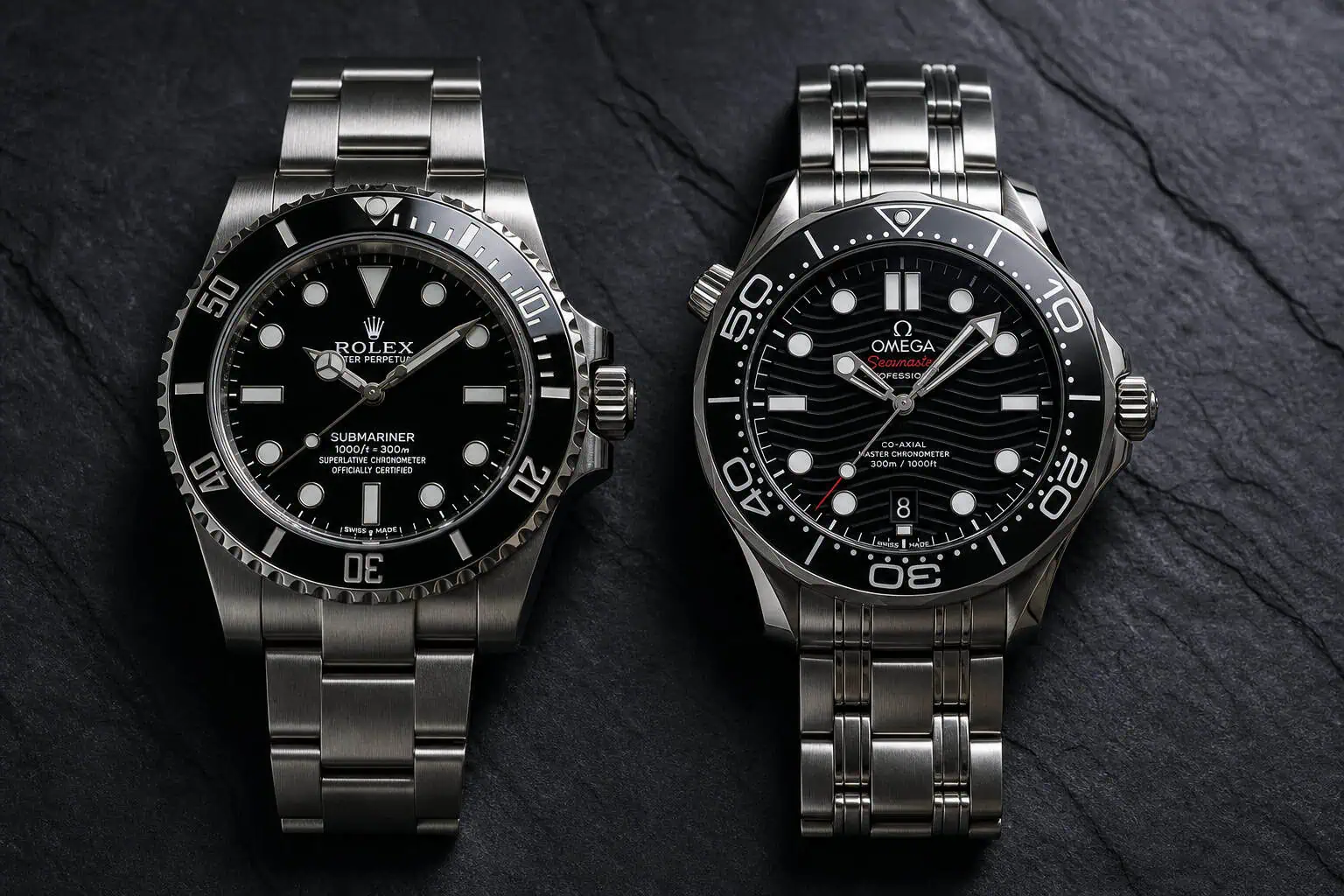
You’re staring at two watches. One costs nearly double and will likely be worth more than you paid in five years. The other offers better specs for thousands less, but you’ll lose 20-40% the moment you walk out of the store.
That’s the Omega vs Rolex decision in a nutshell. Both are Swiss heavyweights with deep histories and rabid fan bases. But value retention? They’re in different leagues.
Let me show you the numbers — model by model, so you can decide which trade-off makes sense for your wrist and your wallet.
Key Takeaways
Rolex sport models (Submariner, Daytona, GMT-Master II) retain 80-120%+ of their original value, with the overall Rolex market index up 7.9% year-over-year per WatchCharts 2025 data
In-production Omega watches trade about 38% below retail on average; the Speedmaster Moonwatch Professional sits at roughly 32% below its $9,000 retail, while the Seamaster Diver 300M holds onto 60-75%
A few Omega models defy the depreciation trend — the Ed White Reissue, Snoopy Limited Editions, and vintage pre-Moon Speedmasters can trade at or above retail
Table of Contents
Brand Power and Market Dynamics
The reason Rolex holds value better isn’t better engineering or materials. It’s about how each company runs its business.
Rolex: The Scarcity Machine
Rolex produces roughly 1.1 million watches per year. That’s a lot of watches. Yet they still can’t — or won’t, meet demand. Walk into an authorized dealer and ask for a stainless steel Submariner or Daytona, and you’ll hear some version of “we have a waitlist” or “you need purchase history.”
The gray market fills the gap, but you’ll pay 20-100% over MSRP for the popular stuff. And dealers? They might make you buy a few less-desirable models first or spend years building a relationship before they sell you the one you actually want.
It’s frustrating. It’s also brilliant for value retention. When supply is perpetually choked, prices on the secondary market stay high.
Omega: Accessible Innovation
Omega takes the opposite approach. Higher production volume, broader availability, fewer games. You can walk into most Omega boutiques and buy a Speedmaster or Seamaster the same day. No bundling, no purchase history requirement, no months-long wait.
What that means for you: Omega watches are usually available at or below retail. Authorized dealers and gray market sellers often offer discounts. That’s great if you’re buying — terrible if you’re hoping your purchase will appreciate.
The brand awareness gap matters here too. Rolex has near-universal recognition — 100% according to Interbrand data. Omega sits at about 70%. That 30-point gap translates directly into the pricing premium people are willing to pay for the crown.
Resale Value and Depreciation — The Numbers
Here’s the data you came for. I’ll lead with Rolex because the story is simpler, then break down Omega model by model.
Rolex Retention: Sport Models That Beat Retail
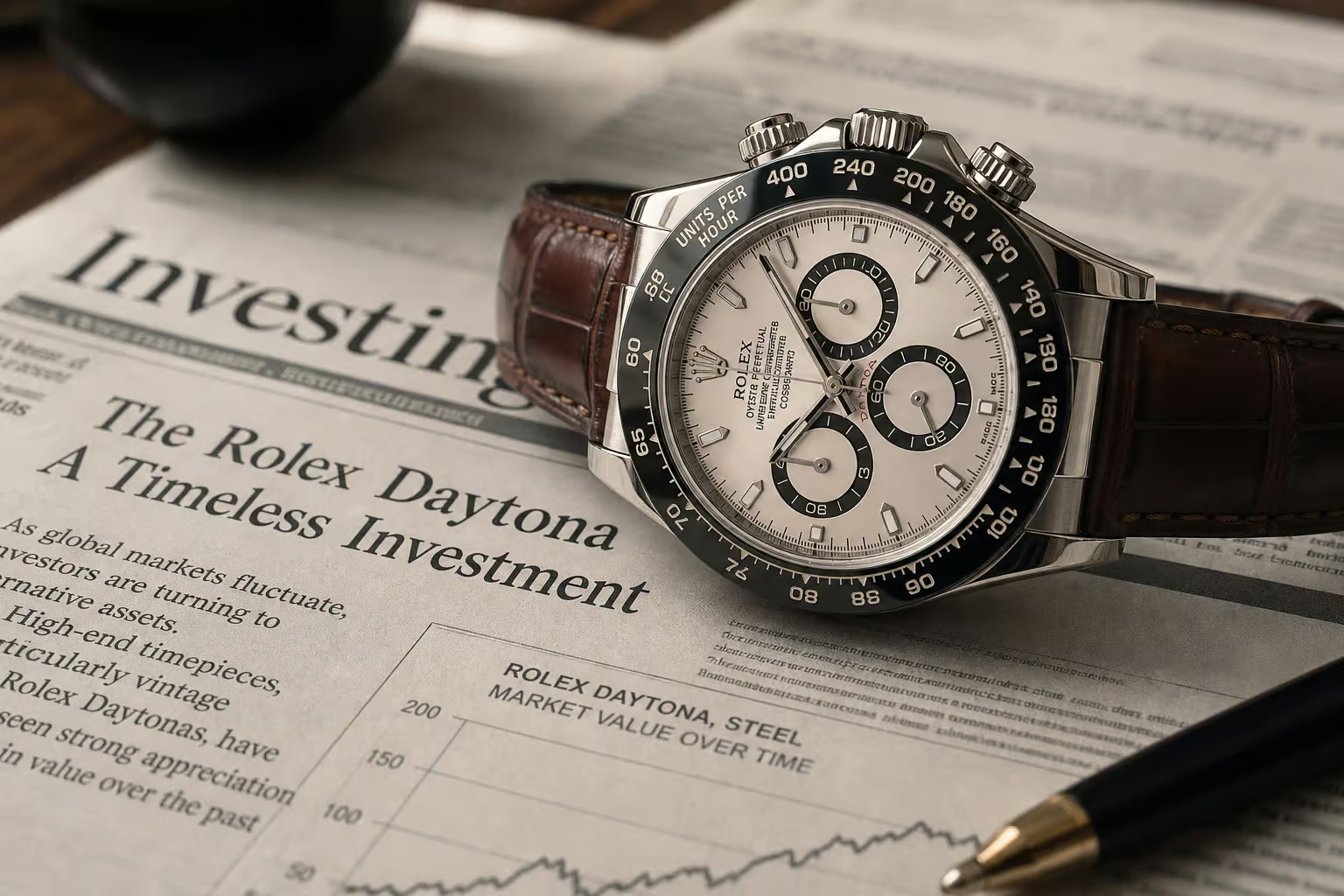
Rolex sport models typically retain 80-120%+ of what you paid. That’s not a typo — some models regularly sell for more on the secondary market than they did new. According to WatchCharts, the overall Rolex market index was up 7.9% year-over-year as of 2025.
The Submariner, Daytona, and GMT-Master II are the stars here. They frequently trade at or above original retail. Steel versions outperform precious metal ones in percentage terms — higher demand for the stainless models drives the premiums.
Here’s the pattern: a buyer who gets a steel Daytona at MSRP can flip it the same day for thousands more. That’s not normal in the watch world. That’s the Rolex effect.
Omega Depreciation: Model-Level Breakdown
Here’s where it gets specific. The “Omega doesn’t hold value” story is real, but it varies a lot by model.
In-production Omegas overall trade about 38% below retail on average (WatchCharts 2025). That’s a tough number for anyone buying new.
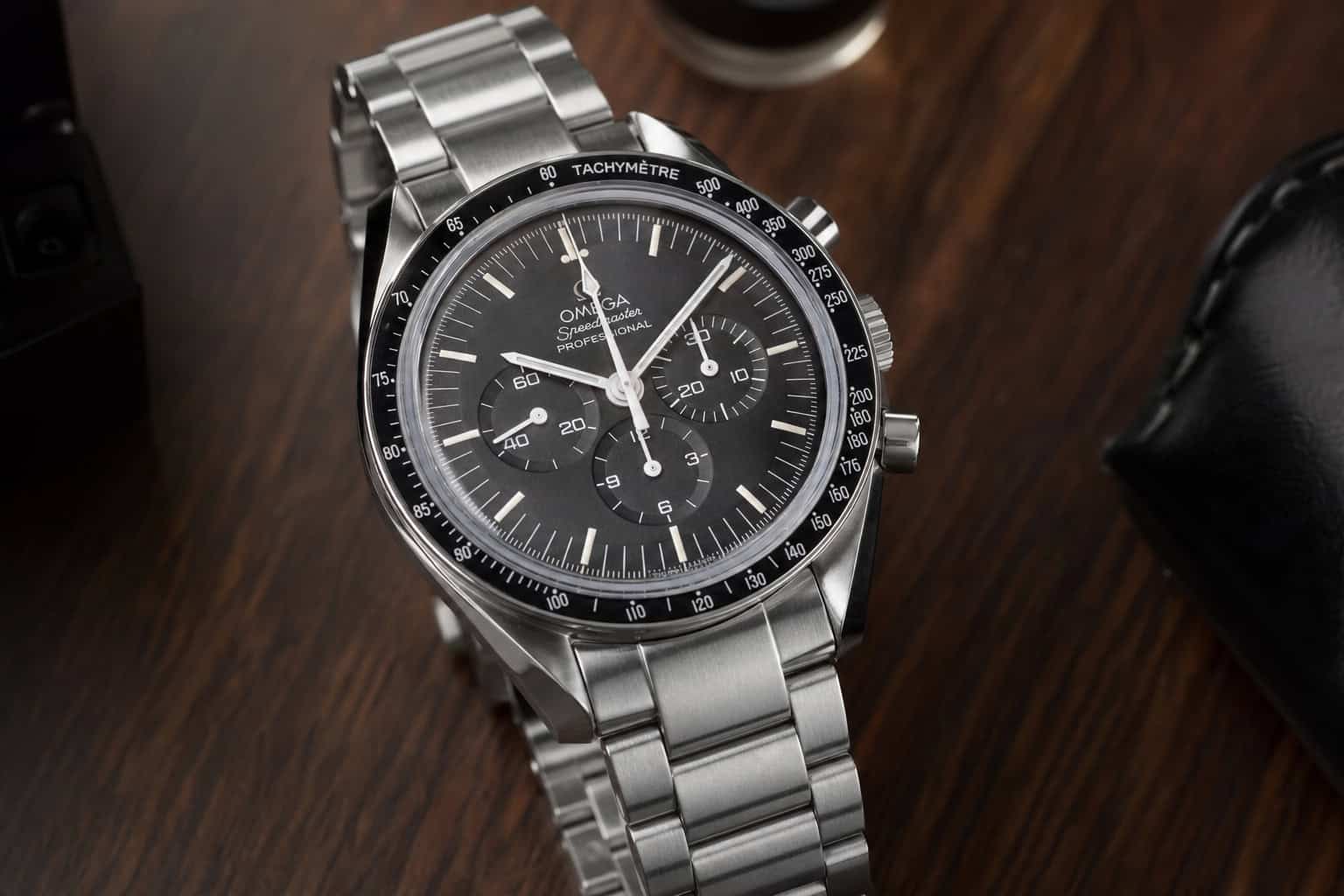
Speedmaster Moonwatch Professional sits roughly 32% below its $9,000 retail price. The Moonwatch is Omega’s icon — the only watch worn on the moon, and it still takes a hit. But it loses less than the brand average, which tells you something about collector demand.
Seamaster Diver 300M retains 60-75% of retail. That’s above average for Omega, helped by the James Bond association and strong dive-watch heritage. It’s the closest Omega gets to Rolex-like retention among current production models.
Aqua Terra depreciates 30-40% from retail. A solid daily watch, but not one you bank on holding value.
De Ville and Constellation both lose 30-40% from retail. Dress watches, less collector interest, standard depreciation pattern.

Here’s the key insight: after that initial 20-40% drop, Omega values tend to stabilize. There’s a depreciation floor. A pre-owned Omega bought at the right price won’t keep falling — you just don’t want to be the guy who bought it new and absorbed that first hit.
Pricing and Availability — What You Actually Pay
Rolex retail starts around $5,700 for entry-level models, while Omega starts at roughly $3,400. For comparable steel sport watches, Omega typically costs 40-60% less than a Rolex counterpart.
The dollar difference between comparable watches is where this gets concrete. Let me line up the direct matchups.
MSRP and Market Price: Four Key Matchups
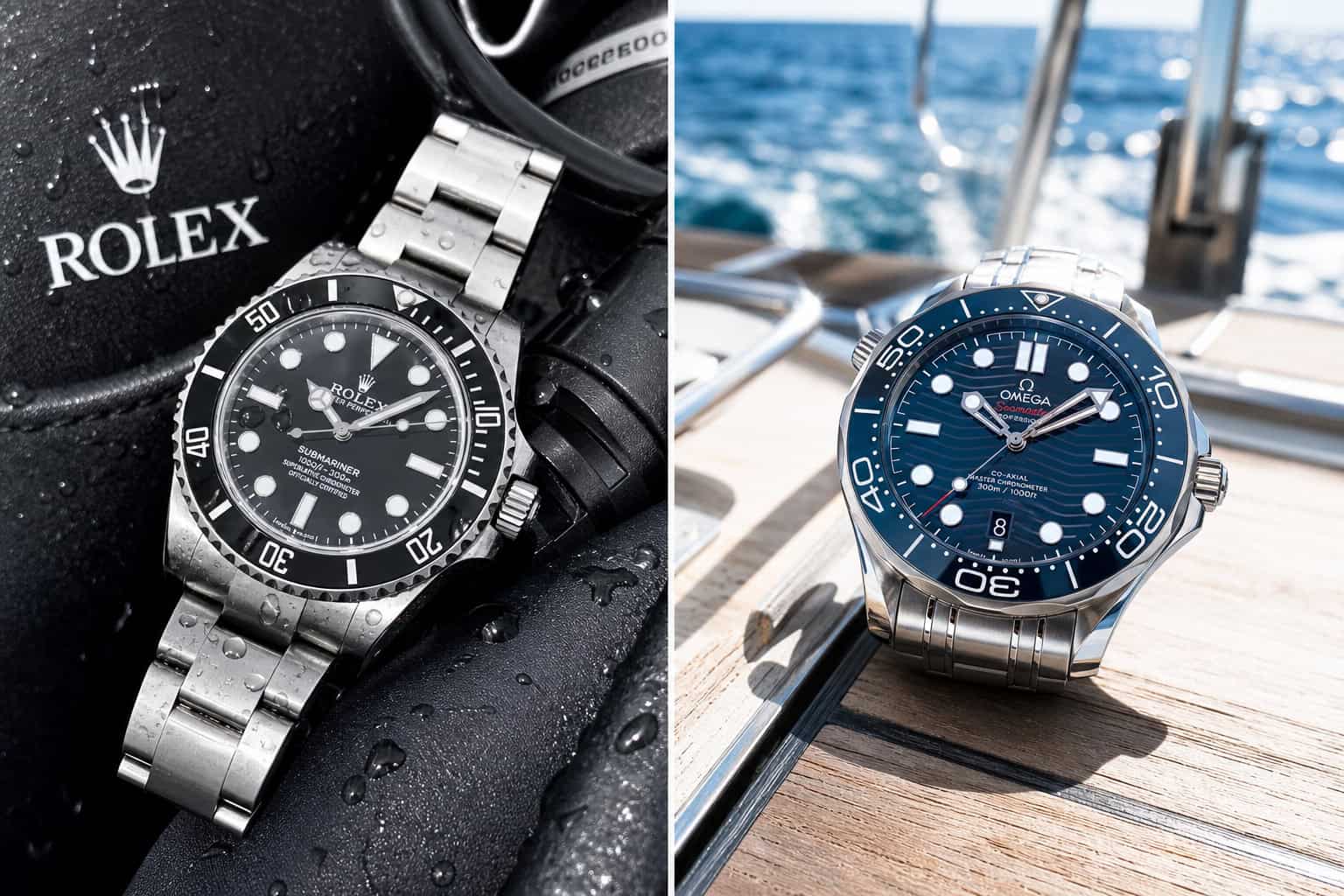
Submariner ($10,050) vs Seamaster 300M ($5,600) — A $4,450 gap. That’s nearly a full Seamaster worth of difference. For that money, you get Rolex’s brand magic and resale power. Or you save the cash and get a dive watch with better magnetic resistance and a display caseback.
Daytona ($15,350) vs Speedmaster Moonwatch ($6,900) — An $8,450 gap. The Daytona’s scarcity is legendary, steel versions carry multi-year waitlists and huge gray market premiums. The Speedmaster? You can buy one today and it’ll cost less than half what the Daytona does at retail. But you’ll lose about a third of its value immediately.
GMT-Master II ($11,800) vs Aqua Terra GMT ($7,200) — A $4,600 gap. The Rolex GMT is investment-grade, especially the “Pepsi” and “Batman” bezel versions. The Omega gives you similar functionality for thousands less.
Datejust 41 ($9,700) vs Aqua Terra 38/41 ($6,100) — A $3,600 gap. The Datejust is Rolex’s best-selling collection, and steel versions hold value well, especially with certain dial and bracelet combos. The Aqua Terra is a strong watch. METAS-certified, versatile, but it depreciates 30-40%.
Note: Rolex prices above are post-January 2026 US MSRP. Omega prices are current. And remember, Rolex’s gray market premiums mean you’ll likely pay even more than MSRP for popular models.
Availability: Walk-In vs Waitlist
The buying experience is night and day.
For Rolex: expect months to years of waiting. Expect bundling (buy a two-tone Datejust you don’t want before they’ll sell you a Submariner). Expect gray market premiums of 20-100% if you want instant gratification.
For Omega: available at or below retail. Walk in, buy it, wear it out. Discounts are common. Pre-owned Omegas can cost half the original retail price — you might spend $4,500 on a Speedmaster that retails for $9,000 and get essentially the same watch.
So, is Omega considered a high-end luxury watch? The brand firmly occupies the accessible upper end of the market.
Movement Technology — Specs vs Resale
Here’s the elephant in the room: Omega’s movements are technically superior in measurable ways. Yet that doesn’t translate to resale value. Why? Because collectors care more about brand and simplicity than raw specs.
COSC vs METAS: Two Accuracy Standards
Rolex movements are COSC-certified, then adjusted to -2/+2 seconds per day once cased — that’s their Superlative Chronometer standard. Proven, reliable, well-understood.
Omega uses METAS certification, which tests the complete watch (not just the movement) for accuracy between 0 and +5 seconds per day, under real-life conditions including magnetic fields up to 15,000 gauss. More rigorous, better real-world performance.
Anti-Magnetism and Durability
This is where Omega’s lead is clearest. Master Chronometer models handle 15,000+ gauss, which is comparable to the Omega Railmaster’s magnetic resistance of up to 15,000 gauss and 150m water resistance. Rolex standard models sit at roughly 1,000 gauss. In practical terms, you could set an Omega next to an MRI machine and it wouldn’t skip a beat. If you’re seeking similar durability at a lower cost, check out the best Rolex Explorer homage alternatives.
A Rolex? It could get magnetized from a laptop speaker.
Omega’s co-axial escapement reduces friction, which theoretically means longer intervals between services. Omega’s co-axial escapement and silicon balance springs reduce friction, and many models feature display casebacks to show the movement. Rolex counters with its proprietary Parachrom hairspring and 904L Oystersteel for corrosion resistance and toughness.
Here’s the thing: collectors don’t care. They want proven, easy-to-service movements. Omega’s advanced tech is actually harder and more expensive to maintain long-term. That single-spring Parachrom hairspring in a Rolex? It’s simpler, cheaper to fix, and that matters on the secondary market.
Service and Warranty
Both brands offer 5-year warranties and recommend service every 7-10 years. Both have roughly 70-hour power reserves (Omega varies 60-72 hours by caliber). On service and warranty, there’s no meaningful difference.
Head-to-Head Model Matchups
I want to give you specific comparisons you can actually use. A common mistake collectors make is trying to navigate Omega’s Speedmaster lineup and finding over 20 current Moonwatch versions — each with slight dial, bracelet, or movement differences. That fragmentation makes it harder to identify which references will hold value, especially when you ask Is Omega as luxury as Rolex? Rolex’s Submariner has had two variants for decades. That design consistency concentrates demand.
Here are the key matchups.
Submariner vs Seamaster Diver 300M
The Submariner set the template for modern dive watches. Clean, timeless, built for decades. Date and no-date versions both hold value. It’s the benchmark.
The Seamaster Diver 300M offers more visual flair — wave dials, skeleton hands, the James Bond connection. It’s a great watch, and it retains 60-75% of retail, which is above average for Omega. But the Submariner dominates in resale and recognition.
Rolex wins on value retention. The Seamaster is the better value-per-dollar for someone who wants a dive watch that’s technically impressive. But you won’t mistake the resale numbers.
Daytona vs Speedmaster Moonwatch
The Daytona is all about motorsport prestige and extreme scarcity. Steel versions carry huge premiums and multi-year waitlists. It’s arguably the most desirable steel chronograph in existence.
The Speedmaster Moonwatch has the better story — it’s the only watch worn on the moon. Rich heritage, recognized by anyone who knows watches. But the Speedmaster Professional trades about 32% below its $9,000 retail. The “Ed White” Reissue with the Lemania 321 movement? That one defies the rule and trades at or above retail.
Daytona is the stronger investment. Speedmaster has the stronger historical claim. If you want Omega with appreciation potential, you need to target specific references like the Ed White.
Datejust vs Aqua Terra
The Datejust 41 is Rolex’s best-selling collection. Steel versions hold value well, especially with certain dial and bracelet combos. Refined luxury with the fluted bezel and Jubilee bracelet.
The Aqua Terra offers similar versatility with contemporary aesthetics and METAS certification. But it depreciates 30-40% from retail.
Datejust has broader collector appeal and design consistency. The Datejust has been around for decades with minimal changes; Omega updates the Aqua Terra frequently, which hurts resale.
GMT-Master II vs Planet Ocean GMT
The GMT-Master II is legendary and investment-grade. The “Pepsi” and “Batman” bezels are highly desirable, and discontinued references can appreciate significantly. Rolex GMT at roughly $11,800.
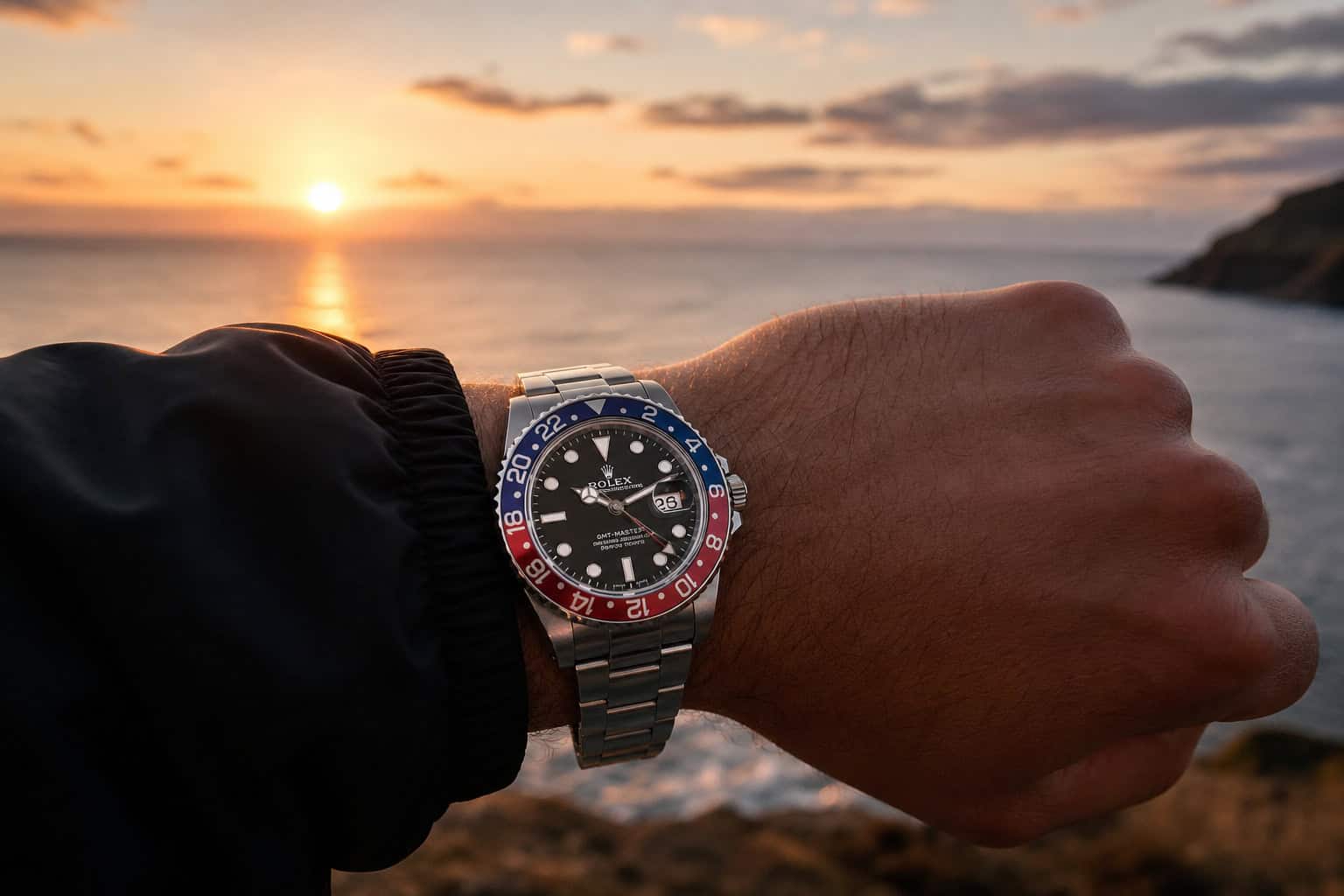
Omega’s counterpart is the Aqua Terra GMT at about $7,200. Solid watch, but not in the same resale league.
Rolex, hands down. If you want a GMT that holds value, buy the Rolex.
Explorer II vs Railmaster
The Explorer II is a versatile tool watch with strong resale. The Railmaster is Omega’s understated anti-magnetic watch — historically a Rolex Explorer alternative.
Rolex wins on scarcity and collector demand. The Railmaster is an excellent watch, but it doesn’t command the same resale.
Day-Date (The President Watch)
This one’s only available in precious metals. Strong brand prestige, strong investment strength. The “President” status is real — world leaders, celebrities, the whole thing. If you’re buying a precious metal Rolex, this is the one.
Omega Exceptions — Models That Defy the Depreciation Rule
The “Omega doesn’t hold value” story isn’t the whole truth. There are specific models where the rules change. If you want Omega with appreciation potential, target these.
Vintage Speedmaster: Pre-Moon and Transitional
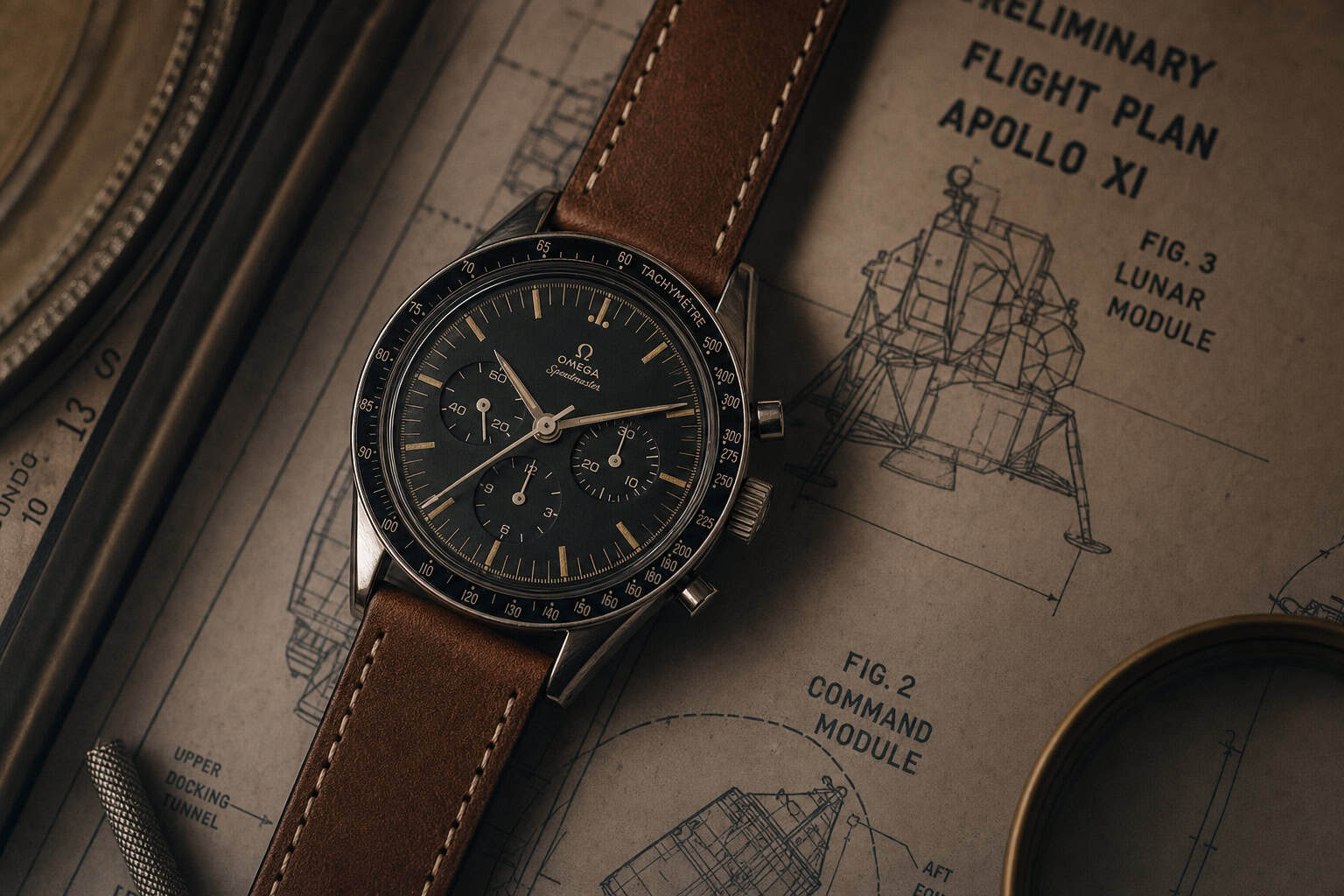
Pre-Moon and early transitional Speedmaster references have seen dramatic value increases. It’s less dramatic than Rolex vintage spikes, but still significant. Collector demand for specific dial variations drives prices up. The ones to look for are the early “pre-professional” models and transitional pieces with rare dial designs.
Speedmaster “Ed White” Reissue
This one’s a modern recreation of the Lemania 321 movement — the caliber that went to the moon. It trades at or above retail, which is unheard of for a current-production Omega. The limited production run and hardcore collector demand make it the standout exception.
Snoopy Limited Editions
Omega’s Snoopy awards editions have scarcity-driven appreciation potential. They’re limited, they’re themed, and they have a cult following. If collector interest holds, they can appreciate significantly. But that’s a big “if” — limited editions are risky. Omega Planet Ocean models with titanium or ceramic also show above-average retention.
James Bond Editions
The James Bond Seamaster 300M editions have strong resale appeal. The spy connection gives them a collector premium beyond the standard Seamaster. Not all iterations are winners, but the right Bond Seamaster can hold value better than the typical Omega.
Buying Strategy — How to Maximize Value
Whether you go Rolex or Omega, how you buy matters as much as what you buy.
The Pre-Owned Advantage
New watches lose the most value the second you buy them. That’s especially true for Omega. A new Speedmaster loses about a third of its retail immediately. But a pre-owned Speedmaster at $4,500 to $5,000? That’s serious value — you’re getting a moon-worn heritage chronograph for less than a Tudor Black Bay.
For Rolex, buying pre-owned means paying a premium over MSRP for popular sport models. But you skip the AD waitlists and the games. The trade-off is real, but sometimes paying the premium is worth getting the watch now.
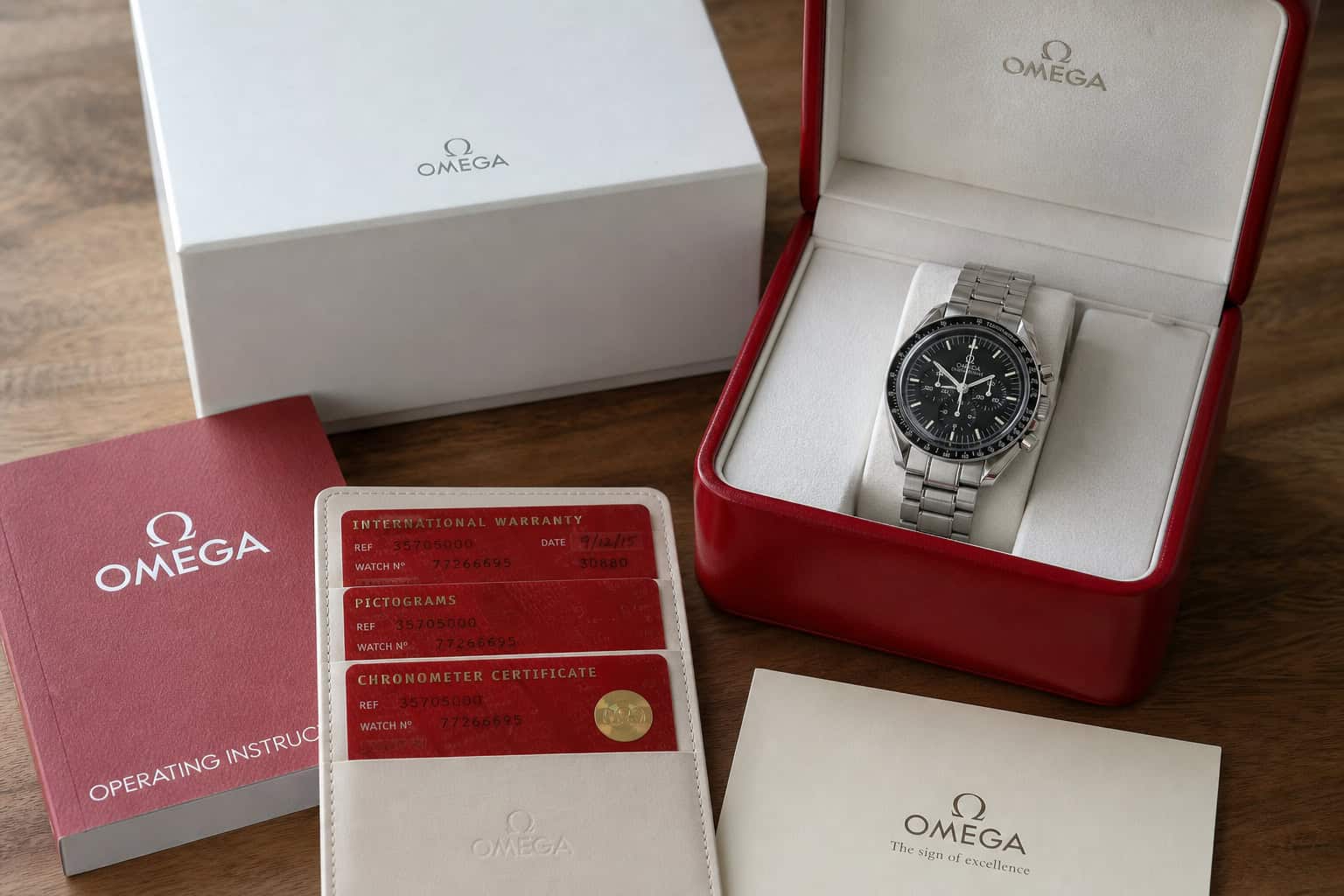
How Box and Papers Add 15-20%
First-time luxury watch buyers often make the mistake of discarding the box and papers after purchase. Keep everything — the warranty card, purchase receipt, service records. A full set can boost resale value by 15-20%. Sellers with complete provenance consistently get higher offers than those selling the watch alone.
This matters more for Omega because their steeper initial depreciation means every value lever matters more. For Rolex, it still helps, but the brand scarcity does some of the heavy lifting.
Authentication and Counterfeit Risk
Rolex is one of the most counterfeited brands. The second-hand market is full of great deals and major risks. Buy from reputable dealers who provide paperwork proving authenticity. A deal that looks too good often is — especially for Submariners and Daytonas priced well below market.
The Verdict — Which Brand Should You Buy?
Here’s the simple version. If your priority is maximum resale and you can afford the premium, buy Rolex. Specifically, go for the sport models: Submariner, Daytona, GMT-Master II, Explorer II, Datejust 41 with select dial and bracelet combos. Those are the ones that hold or increase in value.
If you want cutting-edge movement tech and the best value per dollar, buy Omega pre-owned. A second-hand Speedmaster or Seamaster gives you METAS certification, 15,000 gauss magnetic resistance, and co-axial escapement for half the retail price. The initial owner took the depreciation hit; you get the watch.
If you want Omega with appreciation potential, target the exceptions: the Ed White Reissue, Snoopy Limited Editions, vintage pre-Moon Speedmasters, and James Bond Seamaster editions. Those aren’t easy to find and they cost more upfront, but they break the Omega depreciation pattern.
Neither choice is objectively better. Both brands offer Swiss mastery, iconic designs, and loyal followings. The right decision depends on whether you want a watch that feels like an asset or one that feels like a tool — and how much you’re willing to pay to feel the difference.
Frequently Asked Questions
How much does a Speedmaster Moonwatch depreciate?
The Speedmaster Moonwatch Professional trades roughly 32% below its $9,000 retail price, meaning you lose about a third of the value the moment you buy it new. However, buying pre-owned at $4,500 to $5,000 gets you essentially the same watch without taking that initial hit.