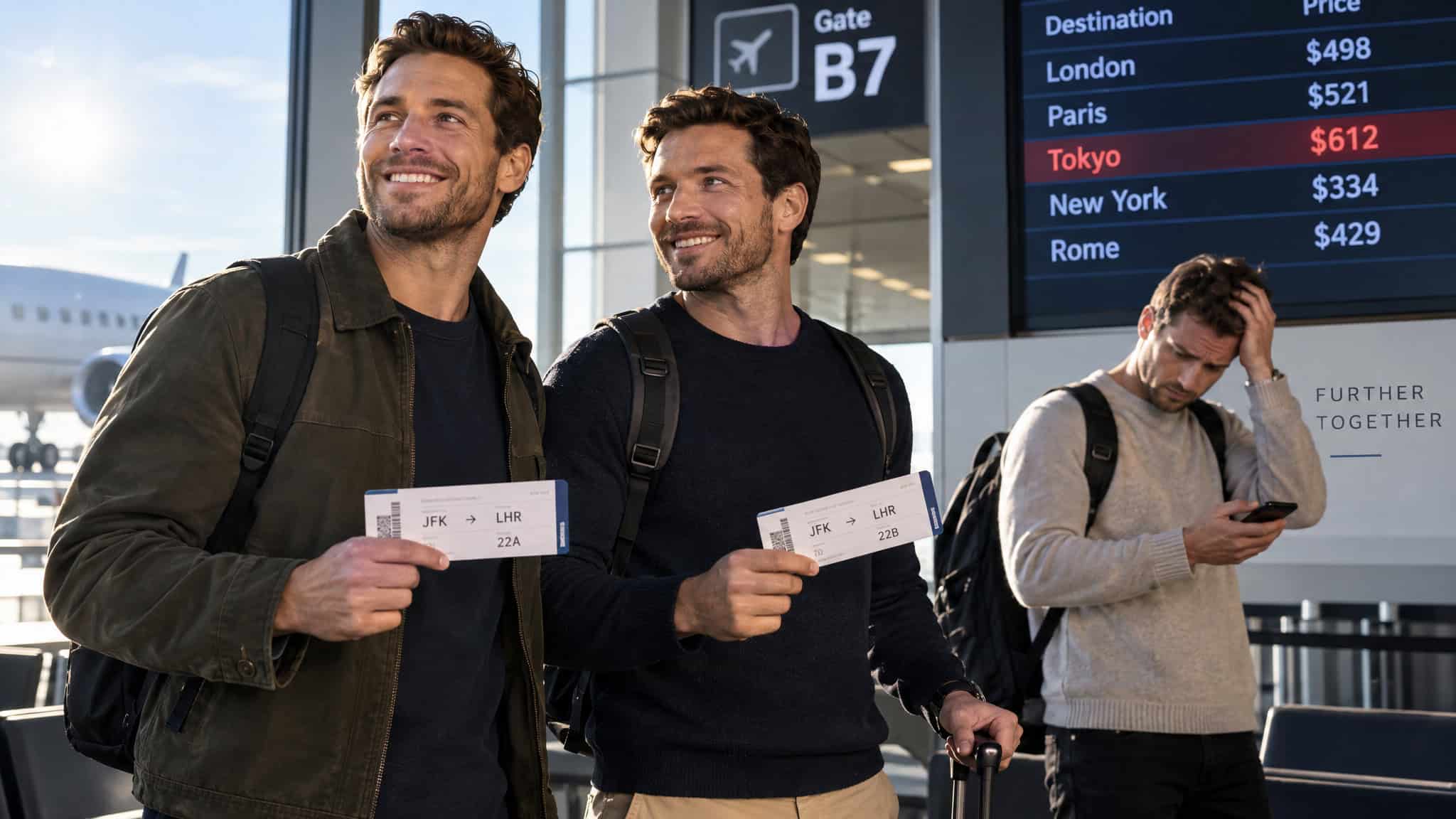
Sometimes. Delta’s group pricing doesn’t kick in until you hit 10 passengers, and below that line the answer flips in a weird way: in 2025 testing, a guy searching solo sometimes paid more than two guys booking the same flight together. One tested route showed $199 for one person where a pair paid $118 each. Which tier you’re in decides everything.
Key Takeaways
Delta defines a group as 10+ passengers on at least one shared flight segment, with negotiated fares and a deposit.
Delta publishes no group discount percentage; “competitive fares” is the only official claim. Thrifty Traveler‘s 2025 fare testing found group rates can beat individual prices, can, not will.
In 2025, Delta, American, and United were found pricing their cheapest fares for two or more passengers, with solo travelers on tested routes paying up to roughly 70% more for the same seat.
Table of Contents
Is it cheaper to book Delta flights together?
Booking together can lower the per-ticket price, but how it happens depends entirely on how many people you’re flying with. There are three tiers, and they work nothing alike:
- 10+ passengers: Delta’s official group program, with negotiated fares, a Group Contract, deposits, and a Group Specialist who builds the itinerary with you.
- 2 to 9 passengers: Published fares in one transaction. No official group rate exists at this size.
- Solo: The strange one. Delta’s own fare structure sometimes prices one person higher than two.
Start with the anchor that separates this from every other “group discounts exist” article: Delta won’t tell you what the discount is. The company pitches group fares as “competitive,” but that’s its own advertising language, not a published percentage, and no source confirms a number. Thrifty Traveler‘s 2025 fare testing found group rates can beat individual prices. Far from a guarantee, though.

The rates flex by group type and size, too. A bachelor party of 12 and a church trip of 40 aren’t getting the same quote. Delta’s Group Specialists, actual humans who customize the itinerary once you clear 10 on the same flight, work each quote individually. That’s the service; it’s also why you can’t look up a group fare online like a normal ticket.
The 2 to 9 tier is simpler and duller. One transaction, standard published prices, no group rate, no group contract. Worth doing anyway for convenience, but don’t expect a discount just for buying together. Except, occasionally, you do get one, and it works backwards from what you’d expect.
The solo twist is the reason this question got interesting. Fare testing in 2025 found that Delta, along with American and United, sometimes reserved its cheapest fare buckets for bookings of two or more passengers. The single guy searching alone got shown a higher price than the pair booking the identical flight. The route examples and dollar figures are in the next section, but the headline is this: in 2025, flying alone could cost you more than flying with a friend.
The 2025 two-passenger fare rule: when two people pay less than one
Yes, on tested routes in 2025, Delta (along with American and United) priced its cheapest fares for two or more passengers, and solo travelers paid up to roughly 70% more for the same seat. Here’s the honest framing: Delta has never confirmed the practice, and nothing in its Contract of Carriage promises it. This is a documented fare-testing pattern, not standing policy you can bank on.
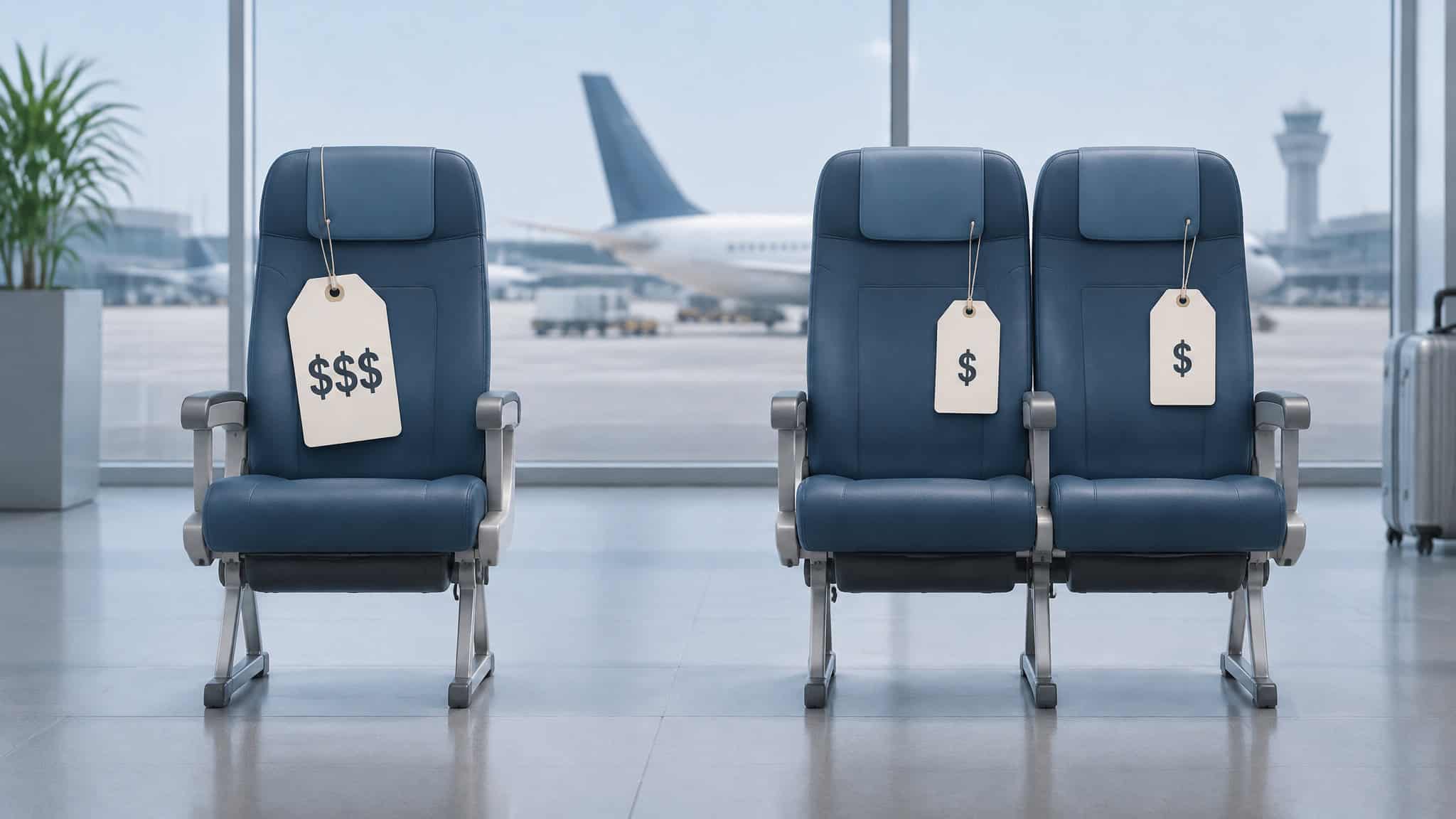
Thrifty Traveler did the legwork in 2025, analyzing domestic one-way fares. View From the Wing confirmed the pattern, and American appears to have started it. The mechanics are simple once you see them: the cheapest fare bucket requires at least one accompanying adult aged 15 or older on every segment, in the same cabin, the second passenger, the P2 (Passenger 2) slot, is what unlocks it. One booking, flying together. It’s not a loophole you can split across two reservations and have your solo friend fly on the pair price.
The dollar figures are what make it real:
- Delta, MSP to MIA (September 2025 one-way): $199 solo vs. $118 each for two. The solo traveler paid 68.6% more for the identical seat.
- United, ORD to PIA: $269 solo vs. $181 each, for groups up to four. Nearly 49% more to fly alone.
- American, CLT to RSW (October 13): $422 solo vs. $266 each. A 58.6% premium for one.
Three examples, three airlines, same pattern. The likely logic isn’t sinister: last-minute solo business travelers don’t price-shop. They expense the fare and move on, so they eat the higher bucket. Annoying, but it makes sense.
Status check: this showed up mostly on short-haul domestic routes and may have been a test. United reportedly walked it back after backlash. American and Delta stayed silent. Conditions may have changed since the testing, so check current fares rather than assuming anything.
If you’re stuck flying solo, here’s what I’d do. Re-run the exact same search with the passenger count changed to two and watch the cheapest fare bucket appear or vanish. That’s the whole verification step, and it takes thirty seconds. If the pair price is lower per person, search for two passengers even though you’re flying alone, stay flexible on dates, and set alerts with Google Flights, Hopper, or Thrifty Traveler to watch it for you.
One phone call to the airline occasionally gets an exception; low odds, zero cost. And calling out unfair pricing publicly has moved airlines before. Last resort, but it’s on the table.
How Delta group fares work for 10 or more passengers
The two risks that bite are the deposit and the 10-person floor. Getting started costs money upfront: a booking fee (which may be nonrefundable, even if the trip falls apart) plus a deposit, both spelled out in the Group Contract. Deposit amounts vary by dates and destination, so the quote is the only real number. Read the contract before you sign it.
Red flag: Drop below 10 passengers at any point and the whole booking can cancel — deposit included. Lock your headcount before signing anything.
The failure mode is common and ugly. Someone bails. The group drops to 9. The whole booking cancels, the deposit is gone, and everyone rebooks individually at whatever fares cost that day, which are usually worse than the group rate you just lost. Deposit gone and higher tickets. That’s the worst outcome, and it only takes one flaky friend.
Two more things to know. Any change to the Group Contract re-cuts the fare and terms, so late additions may pay a different price than the original group. And one person owns the booking: the Group Lead decides during disruptions and holds the fare information, which is confidential between the lead and Delta. Individual members never see the number. Pick the organized friend, not the one who loses his keys.
On the money mechanics: miss ticketing deadlines or under-fill seats, and per-seat cancellation fees come out of the deposit. Fill every seat and the deposit comes back for ticketed passengers. There’s a penalty-free window where you can cancel all seats with no fee; find that date before committing. Cancel everything after the utilization date and the whole deposit is gone. Killing the full booking requires a cancellation reference number, and Delta’s records settle any dispute about when it happened.
Splitting bookings vs. one transaction: the seats-together tradeoff
The cheapest way to book together is also the way Delta guarantees you’ll be scattered across the plane. That’s the tradeoff behind whether booking flights together is actually cheaper. Splitting into separate reservations can lock lower fare buckets before they sell out and protect elite upgrade eligibility, but it forfeits group-contract protections, and there’s no documented Delta procedure for linking split reservations while keeping seats together. What you’re actually choosing between: pay more, pick seats, sit together vs. save money and risk separation.
The fare class decides most of it, and it also explains why it’s more expensive to book flights for 2 people, since the whole search gets priced at the highest available fare bucket (workarounds like booking in two transactions exist, but they complicate seat assignments). Basic Economy doesn’t let you choose seats at all; Delta assigns them at check-in, and groups may get separated. Paid specific-seat reservations only open 7 days before departure, for a fee. Main Cabin gets complimentary seat selection, so for a group that wants to sit together, that’s usually the floor, with paid Comfort Plus upgrades possible. The full ladder, for context: Basic Economy, Main Cabin, Premium Select, Comfort Plus, First Class, Delta One.
Quick test: Price your group in Main Cabin before clicking Basic Economy — that fare difference is the real cost of actually sitting together.
The recurring story is the same every time: people buy the cheapest fare, then discover at check-in that the seats scattered. If sitting together matters, it’s worth pricing the Main Cabin difference before clicking Basic, and knowing is it cheaper to book flights together on American Airlines can save duos and small groups real money.
How to book Delta group travel and change plans later
Booking Delta group travel starts with Delta Group Specialists by phone: 800-532-4777 domestic, 800-337-4777 international. It’s a call, not an app flow. Lines run Monday through Friday, 8 AM to 8 PM ET, closed weekends and US holidays, so make the call on a workday lunch break. Other numbers float around online but aren’t confirmed; stick to the published lines. If your company uses a managed travel agency, this goes through their Sales Account Executive instead.
There is an online option, but only for US/Canada itineraries, and it’s a request form, not a checkout. The form asks for details across five areas, so gather your group info before starting, and note it’s the kind of group trip where travel agents get cheaper flights by bundling extras like hotels or tours into exclusive packages. Delta emails back a quotation to confirm, and nothing is booked until that’s signed. The same form covers Delta, Air France, KLM, and Virgin Atlantic.

How far out you can book depends on region: 240 days for US/Canada/Caribbean/Central America/Asia-Pacific, 331 days for Europe, Africa, and the Middle East. Nearly a year, which is exactly the runway a destination wedding needs.
One third-party timeline, from AllFly and not verified by Delta, so treat it as “expect roughly”: deposits around $50 to $100 per passenger due within 14 days of signing, the utilization deadline usually landing about 90 days before travel, final names and balance due 30 to 45 days out, and name changes allowed until 3 days prior. AllFly also says if you book 3 or more months out, payment comes due 24 days before departure. Your contract is the final word on all of it.
Changes have their own vocabulary. “Deviation” is Delta-speak for one person splitting off on a different date, time, or route. Before the utilization date: unlimited deviations at the group fare, no fee. That’s the cheap window; use it.
After: capped at 30% of the group, with nonrefundable $25 domestic / $50 international per-person fees plus any fare difference, credit card only at booking. Feeders, the guys connecting from another city to join the main group, don’t count against the 30% cap. They can book any time before ticketing. Once travel starts, only return date/time changes are possible, with a reissue fee.
Flexibility is a clock. Make changes early.
If disruption hits: group refund rights under 49 CFR 260.6
Group refund rights are broader and more mechanical than individual ones, but the lever belongs entirely to the Group Lead. When Delta significantly disrupts the booking, the lead can cancel and get back unflown money plus unused prepaid extras, bag fees included. The fine print on eligibility: Delta-marketed flights, including Delta Connection, on DL-006 ticket stock.
What qualifies: an earlier departure, a later arrival, a different airport, added stops, a cabin downgrade, a change to the flight number itself, or a swap between mainline and Connection aircraft. Even a flight-number change alone can trigger a refund, which sounds minor but usually means a real schedule shuffle underneath.
The delay thresholds depend on when you ticketed. Tickets issued before October 28, 2024 used a 120-minute threshold, domestic and international. Tickets issued on or after that date use 180 minutes domestic and 360 international. Old tickets actually had the better deal.
And there’s a clock after a disruption: the lead must rebook or cancel within 7 calendar days of notice, or Delta takes action. Delta’s published terms don’t specify exactly what that action is, so I won’t pretend otherwise. The safe assumption: don’t let it get to day seven.
What the group fare really costs: loyalty, names, and fine print
No SkyMiles upgrades on group tickets, period. If your family chases Medallion upgrades, the group fare can be the expensive choice even when the quote looks lower. Miles still accrue, but under the rules for unpublished and opaque fares, so earning may differ from a standard ticket. Group tickets are also nonrefundable, the money isn’t coming back, though you can put the value toward future travel, paying any fare difference plus a change fee. And name changes are free only before ticketing; after that, you’ll pay a fee for every correction.
Corporate, premium-cabin, and market context
Group travel doesn’t stop at vacation parties. Corporate trips, premium cabins, and the wider fare market all bend the rules laid out above, so this section covers where the standard group program ends and the special cases begin.
Delta Meeting Network and premium cabins
For big work trips, the Delta Meeting Network is the bigger sibling of the group program: 300+ locations, meeting rooms reservable for groups of 15+ traveling between two or more cities, and corporate or event travel bookable up to 331 days out.
On premium cabins: Delta One, First Class, and Comfort Plus are named under group itineraries, but no source confirms group discounts in premium cabins, and capacity restrictions vary by city and season. Request a quote; don’t assume savings. The rest of the fine print is worth a quick pass: no children’s or senior discounts on group fares, taxes and surcharges aren’t locked unless written into the contract, ad-hoc group tickets are nonrefundable but usable for future travel with fare difference and change fee, name changes are free before ticketing and cost money after, and passports and visas are each passenger’s problem, so the lead should check early. The whole deal is governed by US federal law and Georgia law, and nothing a phone rep says verbally overrides the written contract. One line for travel agents only: bulk markups must sit in a separate transaction or Delta issues debit memos.
The post-Spirit fare environment
Spirit ceased operations on May 2, 2026, after 34 years, and that removed the budget floor from the market. Competitors including Delta offered capped rescue fares in short windows: Southwest’s counter-only fares ran through May 6, United’s online offer lasted about two weeks, and American and United added bigger planes on overlapping routes while Southwest status-matched Spirit elites. On the ground, Hertz offered up to 25% off plus one-way vehicles as alternative transportation. If you got caught holding a Spirit booking, card bookings auto-refunded, third-party bookings went through the agent, and the U.S. Department of Transportation (DOT) pointed cardholders to Fair Credit Billing Act chargebacks; the National Consumers League’s advice was the keeper: keep your documentation and act fast, because deadlines are short.
The relevance here is simple. With the cheapest fare buckets scarcer, multi-passenger fare rules and group contracts matter more than they did a year ago.
Which booking should you make? A decision by party size
The cheapest move overall is checking your fare as two passengers before you book anyone. After that, it’s by tier.
Flying solo: check the 2-passenger price first. If the pair price is lower per seat, you’ve found the discount, and you can decide whether the workaround is worth it.
2 to 9 people: search the full party together, then verify the per-person price against separate bookings. Book Main Cabin if sitting together matters; Basic Economy will scatter you at check-in. A group this size isn’t worth formal group booking, because there’s no official rate under 10, and the contract’s costs, deposit risk and no upgrades, only exist at 10+. For more on the general mechanics, the broader guide on whether it’s cheaper to book flights together covers how fare buckets behave across airlines.
10 or more: request a group quote inside the regional window, 240 or 331 days depending on destination, and model the deposit-forfeiture risk before signing. The only question that matters: how solid is your headcount?
On the usual side questions: fares don’t reliably drop closer to the date, because fare buckets sell out and fare rules shift, so don’t plan around it. Domestic vs. international changes the windows and fees, 240 vs. 331 days, $25 vs. $50 deviation fees, 180 vs. 360-minute delay thresholds, but prices themselves may vary by route and market; nothing here guarantees one is cheaper than the other. And Delta’s own site now prices multi-passenger searches in ways that can cut either direction, so run both searches. It costs you nothing and, in 2025, it was sometimes worth 70 bucks a seat.
Frequently Asked Questions
What is the cheapest way to book a Delta flight?
First, run the same search twice — once for one passenger, once for two. In 2025 testing, Delta’s cheapest fare buckets sometimes required at least two passengers on the same reservation, with solo travelers paying up to roughly 70% more for the identical seat. Set fare alerts with Google Flights, Hopper, or Thrifty Traveler, stay flexible on dates, and price Main Cabin before clicking Basic Economy if sitting together matters, since Basic Economy seats are assigned at check-in.
Do Delta flights get cheaper closer to the date?
Not reliably. Fare buckets sell out and fare rules shift as departure approaches, so planning around a last-minute price drop is a losing bet. Book inside the appropriate window instead — 240 days out for US/Canada/Caribbean/Central America/Asia-Pacific group travel, 331 days for Europe, Africa, and the Middle East.
How do I book Delta group travel step by step and what deposit is required?
Call a Group Specialist on a weekday (lines run Monday–Friday, 8 AM to 8 PM ET) or submit the online request form for US/Canada itineraries; nothing is booked until Delta emails a quotation and you sign it. Per one third-party timeline from AllFly (not verified by Delta), expect deposits around $50 to $100 per passenger due within 14 days of signing, with utilization deadlines around 90 days before travel and final names and balance 30 to 45 days out. Your contract is the final word.

