
The anxiety of an unexpected, explicit merchant name appearing on a shared bank ledger is an issue resulting from the digitization of banking ledgers. Tech companies and banks have built a financial ecosystem where privacy is impossible, making it difficult to pay for an OnlyFans subscription or an OnlyFans promotion without leaving a permanent digital footprint.
Achieving digital anonymity requires understanding how payment gateways process your data, abandoning flawed digital masks, and going entirely analog. This guide breaks down why your digital ledger exposes you and details the physical, air-gapped methods required to keep your subscriptions discreet.
Key Takeaways
OnlyFans mandates explicit statement descriptors, meaning transactions universally appear as “OnlyFans” or “OnlyFans.com” on all banking and credit statements.
Free subscriptions still trigger a mandatory 10-cent authorization hold that leaves a visible, identifying charge on connected bank accounts.
Achieving true payment privacy requires funding specific reloadable network cards, like the One VIP Visa, through physical cash loading rather than digital transfers.
Table of Contents
The Anatomy of an OnlyFans Statement Fingerprint
Verifying age and identity on the platform means even zero-dollar subscriptions operate as a free subscription trap, where a mandatory 10-cent authorization hold leaves a permanent digital footprint on your primary bank ledger. You might not spend money, but the banking system records the gateway ping anyway. Because the platform rejects anonymous payment methods like PayPal, cryptocurrency, and standard gift cards, users are forced to provide a traditional credit card, personal debit cards, or direct bank details just to look around.
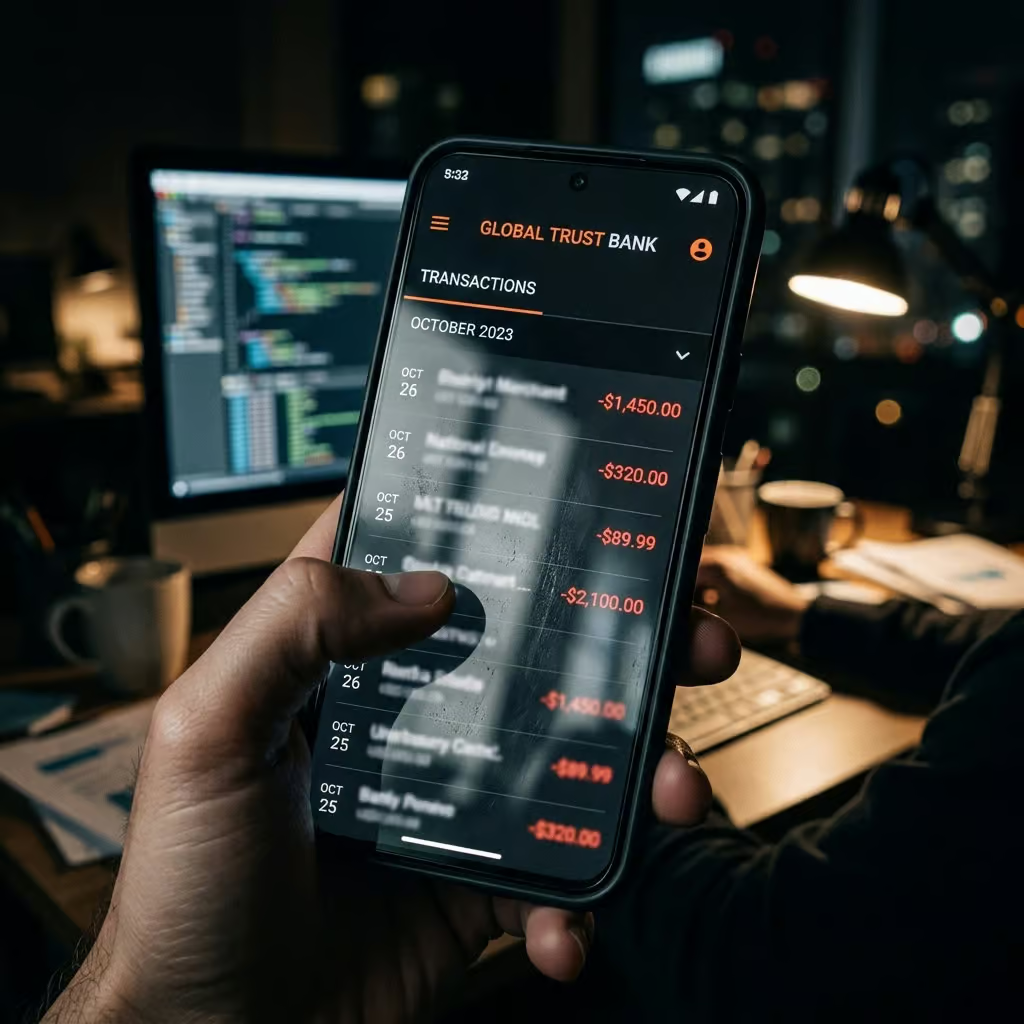
The site enforces transparency with banks, ensuring the OnlyFans.com descriptor locks in as your unalterable statement fingerprint. It is impossible to turn this off.
Why Common Digital Masking Techniques Fail
How Third-party Wallets Sync Ledger Data
Attempting to mask an OnlyFans bank statement charge by paying through a digital wallet fails because a Cash App passthrough triggers underlying ledger syncing that eventually exposes the final merchant data to the linked funding bank. When you link a mobile wallet directly to a legacy checking account, the foundational banking infrastructure remains connected. The payment processors communicate behind the scenes, and your primary bank will routinely capture and display the ultimate destination of the funds.
The Risk of Virtual Card Recurring Charges
Relying on a Privacy.com virtual card creates a shadow charge that actively invites closer manual auditing from a partner. Obscuring the merchant name when subscribing to the best goth OnlyFans models works perfectly on paper, but generating an unexplained $49.99 miscellaneous debit every month raises immediate red flags. To a spouse scanning the family checking account, a steady rhythm of unidentified digital payments looks exactly like financial infidelity.
“To a spouse scanning the family checking account, a steady rhythm of unidentified digital payments looks exactly like financial infidelity.”
The Limitations of Editing Local Banking Descriptions
Editing local transaction descriptions on a portal like Bank of America does not change the unedited, explicit transaction view for joint account holders observing from their own logins. Swapping the merchant name out on your mobile app only alters your localized user interface. If a partner or parent logs into that exact same shared account from their own phone or laptop, the raw data displays the true merchant name.
Bridge the Gap With Cash-loaded Prepaid Cards
Bypassing the platform’s payment gateway restrictions demands replacing easily traced digital payments with specific, physically funded network cards.
Navigating Payment Gateway Restrictions
You achieve consistent gateway restriction bypass by utilizing specific reloadable network cards, like a One VIP Visa card or an Ace Elite card, rather than relying on standard retail gift cards. The platform’s processing engine rejects non-reloadable anonymous prepaid blocks outright. While official guidelines note the site accepts Visa, MasterCard, Discover, Maestro, and select Visa debit cards, ordinary off-the-rack gift cards lack the verification framework the platform requires. The One VIP Visa succeeds because it registers and verifies on the backend just like a traditional bank-issued product.
Severing the Digital Paper Trail
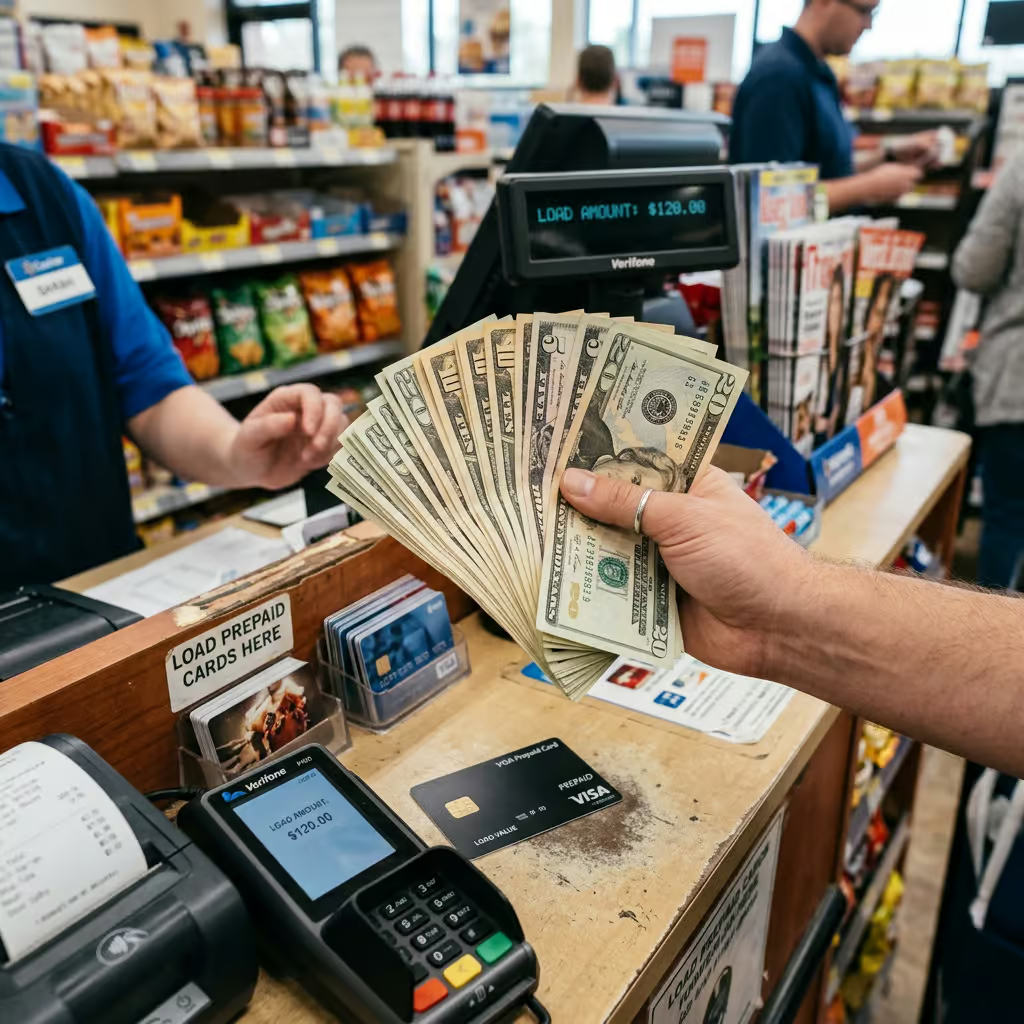
Funding the mechanism via physical cash loading creates paper trail severance, air-gapping your digital subscription from your primary banking ledger. You take paper cash to a retail location, pay an activation fee ranging from $2.00 to $5.95, and load the card directly. Alternatively, if you fund an Ace Elite card via bank transfer, the bank sees ‘ACE Funding,’ but never the end merchant—making them bank-blind to the final subscription.
By registering this card to a PO Box rather than your home address, you sever the physical mail link as well. You end up paying a privacy tax in the form of reload fees, but physically disconnecting your identity from the network is the only structural payment workaround that actually succeeds.

Scrub Your Digital Footprint From Data Brokers
Execute a manual data opt-out procedure on aggregated profiling sites like Spokeo to successfully remove your historical subscription footprint from prospective employer background checks. Securing your current checking account solves today’s problem, but your past transaction history has escaped your private ledger. Consumer purchase histories migrate from initial processors into files managed by third-party data brokerages like BeenVerified. These brokers actively acquire detailed financial histories by mining credit header data and exploiting obscure consumer reporting loopholes to firmly anchor the technical gap.

These databases commoditize your information, indexing where you spend money—whether that means generic e-commerce purchases or subscriptions to specific OnlyFans creators like Blac Chyna, Cardi B, and Bella Thorne. Allowing this Spokeo aggregation to remain unchecked creates professional risks, as any routine employer background check can legally harvest and review this discrete merchant history. You must submit proactive, manual opt-out requests directly through these background check websites to scrub your digital footprint from the public domain.
Establish Financial Autonomy With a Separate Account
Open a disconnected, sole-proprietor bank account away from shared family institutions like Wells Fargo to solve the ledger privacy crisis. To execute this stealthily, carefully route your new bank account mail to a separate address to ensure physical welcome packets never arrive at your home. You must enforce immediate e-documentation to eliminate all paper statements, and successfully bypass the physical verification processes that frequently alert parents by utilizing an entirely online application process.
Furthermore, persistent transaction masking as a tool for financial betrayal is unsustainable. By shifting from shared accounts to an individual personal account, you gain the necessary financial autonomy, as joint account visibility can no longer compromise your private expenditures. The only secure way to maintain privacy is to establish an unlinked banking ledger entirely in your own name.
Frequently Asked Questions
Why does a free OnlyFans account still show up on my bank statement?
OnlyFans triggers a mandatory 10-cent authorization hold even for free accounts to verify your identity. Because the platform mandates an explicit ‘OnlyFans.com’ descriptor, this tiny charge leaves a permanent, identifiable footprint on your bank ledger.
Can I use a virtual card like Privacy.com to hide OnlyFans charges?
Virtual cards are Risky because they create recurring, unexplained charges on your statement. While they mask the merchant name, these consistent, miscellaneous debits often look like financial infidelity to a partner, which can trigger closer inspection of your accounts.
Does renaming a transaction in my banking app actually hide it from others?
No. Editing a description in your bank’s mobile app only changes the label on your specific user interface. If a partner or family member logs into the shared account from their own device, the banking system will display the original, unedited merchant data.
Why won’t my standard retail gift card work for an OnlyFans subscription?
OnlyFans rejects standard, non-reloadable gift cards because they lack the necessary backend verification framework. You must use a reloadable network card, such as a One VIP Visa, which mimics the security and registration requirements of a traditional bank-issued card.
How do I physically air-gap my OnlyFans payments?
To truly sever the digital paper trail, you must purchase a reloadable network card at a retail location and load it with physical cash. By paying the activation fee and registering the card to a PO Box, you keep your subscription activity completely removed from your primary bank ledger.
How much of a risk does my transaction history pose during a background check?
Significant risk exists because third-party data brokers like Spokeo and BeenVerified aggregate your purchase history and index it into files. If you don’t submit manual opt-out requests to these companies, your subscription history can be legally harvested and viewed by prospective employers during routine background checks.