
You do not get caught because of a paper bill arriving in the mail. You get caught because the kitchen iPad shares an iCloud login with your primary phone, and an automated targeted ad or Apple Pay receipt notification pops up while your wife is checking an email. The common signs a spouse checks credit card statements for suspicious activity include questioning vaguely named merchant labels, scrutinizing identical monthly debits, and asking to match physical receipts to unknown digital charges.
Identifying the specific vulnerabilities in your primary banking setup before initiating any new subscriptions prevents a recurring charge from bleeding onto shared bank statements. Shared device ecosystems and integrated family finances make standard privacy measures obsolete.
Hiding an OnlyFans subscription—whether for a longtime favorite or a new creator discovered via OnlyFinder—requires severing the connection right at the source. If the payment relies on your normal banking infrastructure, the history exists internally. Securing this means building an operational firewall that isolates your identity from the web service entirely.
Key Takeaways
Generating masked transaction histories via Privacy.com prevents explicit platform names from appearing, but leaves a visible pattern of identical $19.99 line items.
Purchasing a physical Visa or Mastercard gift card with hard cash is the only payment method that entirely bypasses marital financial integration.
Submitting opt-out forms directly to data brokers like Spokeo prevents previous subscription data from surfacing on routine background checks.
Table of Contents
Replace Direct Payments With Virtual Cards (and Understand Their Limits)
Generating a masked card with a localized, boring merchant label immediately stops explicit platform names from showing up in a joint account’s transaction history. By carefully auditing your merchant labels, you can sanitize your financial records. The mechanism is simple: you route the payment through a third-party virtual masking service, which changes the public-facing vendor name to something innocuous like “Online Services.” The explicit platform name never hits the bank ledger.
Privacy.com allows for generating virtual Visa or Mastercard numbers with manually defined spending limits and fixed expiration dates. You link your main bank account to the service, create a unique virtual Visa or Mastercard number tied exclusively to the adult platform, and set a spending limit. Virtual cards mask your underlying credit card or debit card number from the platform’s payment processor.
The Fatal Flaw of Generic Recurring Charges
Replacing a platform brand name with a generic label fails at hiding behavioral spending patterns from joint-account holders. While the merchant name disappears, the date and the specific dollar amounts remain visible. A consistent debit of exactly $19.99 on the fourth of every month, labeled vaguely as “Online Services,” acts as a glaring breadcrumb. A spouse actively managing the household budget will eventually ask what that charge is. If you cannot produce a receipt or point to a tangible service, the masking effort collapses.
A consistent debit of exactly $19.99 on the fourth of every month, labeled vaguely as ‘Online Services’ to obscure a premium subscription to the best Russian OnlyFans models, acts as a glaring breadcrumb.
Use Cash for Prepaid Gift Cards to Sever the Paper Trail
Are there privacy-focused prepaid cards that don’t trigger alerts on financial accounts? Yes, but only physical instruments purchased offline guarantee total separation. Purchasing physical prepaid gift cards with paper cash at a local retailer guarantees zero connection to shared marital finances.
This strips your primary banking identity out of the equation. You walk into a grocery store, hand over physical currency, and walk out with a digital payment instrument. The financial paper trail breaks the moment the cash leaves your hand.
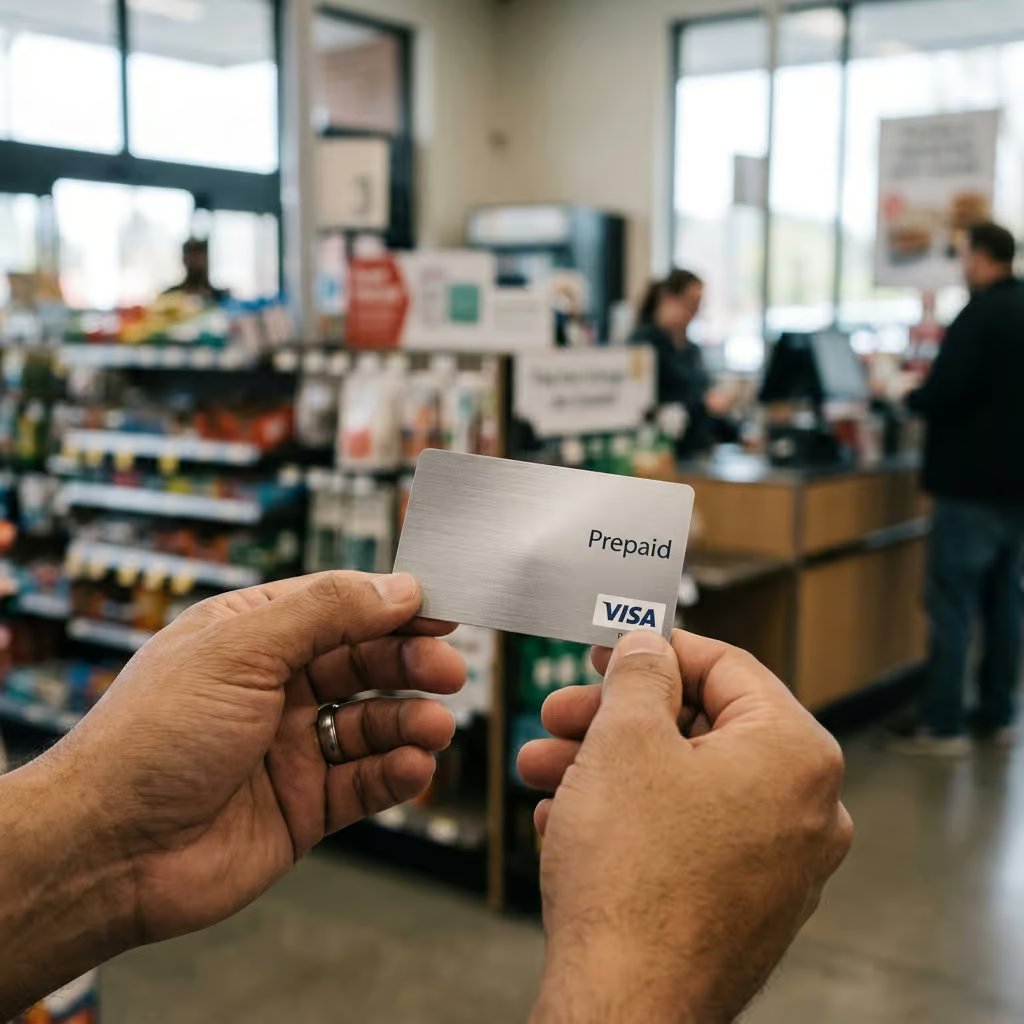
The friction here comes from how OnlyFans handles user verification and KYC protocols (Know Your Customer) on their billing end. To prevent fraud when fans attempt to subscribe to the best Asian OnlyFans models or other popular creators, the platform’s payment gateway actively flags and often rejects generic digital cards that lack an associated billing address or name.
A standard physical prepaid Visa or generic Mastercard bought off a retail rack bypasses these filters better than digital tokens. During the checkout process on the platform, you simply enter the prepaid card details and map them to whichever zip code you establish for your isolated account. Because you executed a cash purchase, there is no line item to explain.
Secure Account Verification With Burner Numbers and Emails
What are the risks of using alias names or virtual cards for online subscriptions? The fundamental risk is that 2FA verifications associated with these digital aliases will trigger an alert on a connected primary device. Setting up an isolated VoIP number using an app like Hushed specifically catches 2FA codes away from family-synced networks.
Obscuring the payment is useless if OnlyFans’ mandatory two-factor authentication pings a text message to a recognizable family phone plan. If you secure the credit card but leave your primary phone number attached to the account, a login attempt on a Tuesday night transmits a verification code straight to your lock screen.

Using Hushed to generate a burner number creates a containment zone for those messages. The texts arrive inside the encrypted app rather than your phone’s native message inbox. Your primary text history remains clean.

Registering a Decoupled Email Account
Creating an email address accessed via an incognito browser prevents cross-device syncing from leaking your search history. You cannot use a variation of your primary Gmail or Apple ID for the account verification process. The moment you log into an anonymous email on a personal device using a standard browser, Google or Apple links that activity to your broader profile. They then serve targeted ads based on that new data across every device on your network. A standalone email keeps the data siloed.
Scrub Your Digital Footprint From Third-party Data Brokers
Submitting formal opt-out requests to major data aggregators forcefully removes your subscription affiliations from public-facing databases. The most dangerous threat to your privacy is not a physical credit card receipt. It is third-party data brokers systematically scraping your internet history and selling that compiled digital footprint to anyone who pays exactly $9.95 for a single search.

These background check sites aggregate leaked subscription lists, using them to build a comprehensive digital footprint. If your name connects to an adult platform in their backend, it surfaces instantly when a spouse or standard employer runs a check. Additionally, these databases are the primary target used by private investigators and corporate background checks, escalating the risk profile dramatically. You remain exposed until you force these sites to delete the recorded data.
Submitting Successful Opt-out Requests
Using the manual legal opt-out feature on platforms like Spokeo clears your specific name from their searchable index. You navigate to their privacy portal, submit the URL of your exposed profile, provide a verification email (using your newly decoupled burner address), and formally request removal.
You must repeat this process across the major data aggregators, including BeenVerified, Whitepages, and Intelius. Once the requests process, the databases purge the connection between your actual name and your subscription history. Background checks will no longer associate your name with adult platform subscriptions.
The psychological toll of compartmentalization
Take Theodore’s case—a user who managed to secure his accounts and clear his background checks cleanly, only to realize the amount of operational security required outweighed the enjoyment of the content. You end up constantly clearing browser caches, managing separate alias accounts, manually topping up prepaid cards in cash, and watching over your shoulder to see if a notification slipped through. The creeping paranoia of hiding 47 recurring charges under various alias identities eventually takes a massive psychological toll.
This degree of compartmentalization frequently escalates into financial infidelity, a structural marital opsec failure cited in nearly a third of divorces. Can background check websites reveal my subscription history or financial habits? Yes—unless meticulously scrubbed, routine searches compile your fragmented data, exposing your concealed behavior to any spouse checking public records. Evaluate whether the stress of maintaining military-grade operational security against your own partner is actually worth the subscription.
It becomes obvious in ethical hindsight that honesty might actually be an easier path than building an impenetrable fortress of lies within a marriage. The sheer friction of maintaining a secret digital life often does more fundamental relationship damage in the form of chronic anxiety than a truthful conversation ever would.
Frequently Asked Questions
Why does using a service like Privacy.com often fail to hide subscriptions from a spouse?
While virtual cards mask the merchant’s name, they don’t hide the payment frequency or the specific dollar amount. A recurring charge of an identical amount labeled ‘Online Services’ on the same day every month is a massive red flag that will eventually trigger tough questions.
Can I use digital prepaid cards to pay for OnlyFans subscriptions?
OnlyFans has strict Know Your Customer (KYC) protocols that often flag and reject generic digital cards that lack a verifiable billing name or address. Physical prepaid cards purchased with cash at a retail store are significantly more reliable because they are less likely to be identified as high-risk by the platform’s payment gateway.
Is it necessary to use a VoIP number if I have a secure email address?
Yes, because platforms use two-factor authentication (2FA) for security. If you use your primary phone number, any login attempt will trigger a text notification directly to your shared mobile plan, immediately revealing the account’s existence regardless of how well you hid the payment.
How do data brokers threaten my financial privacy?
Data aggregators like Spokeo and Whitepages scrape internet activity to build comprehensive dossiers that connect your name to your subscription history. Even if you pay anonymously, these brokers can link your digital footprint to your legal identity, making your behavior visible on routine background checks.
What is the primary risk of using an iCloud login across multiple family devices?
Integrated ecosystems sync notifications and receipts instantly across every device tied to the same account. An Apple Pay notification or a targeted ad appearing on a shared household iPad can reveal a hidden transaction even if the actual bank statement is well-managed.
How does creating a separate email address help maintain anonymity?
Using a standalone email prevents your browser or operating system from cross-referencing your search activity with your primary digital profile. If you use a personal Gmail or Apple ID, those platforms link your new account data to your master profile, which then triggers targeted ads across all your other devices.
What is the only guaranteed way to decouple an adult subscription from my finances?
The only method that completely severs the link to your banking identity is purchasing physical, non-reloadable Visa or Mastercard gift cards using hard cash. This removes any digital paper trail, ensuring that no line item involving your bank ever appears on a shared statement.