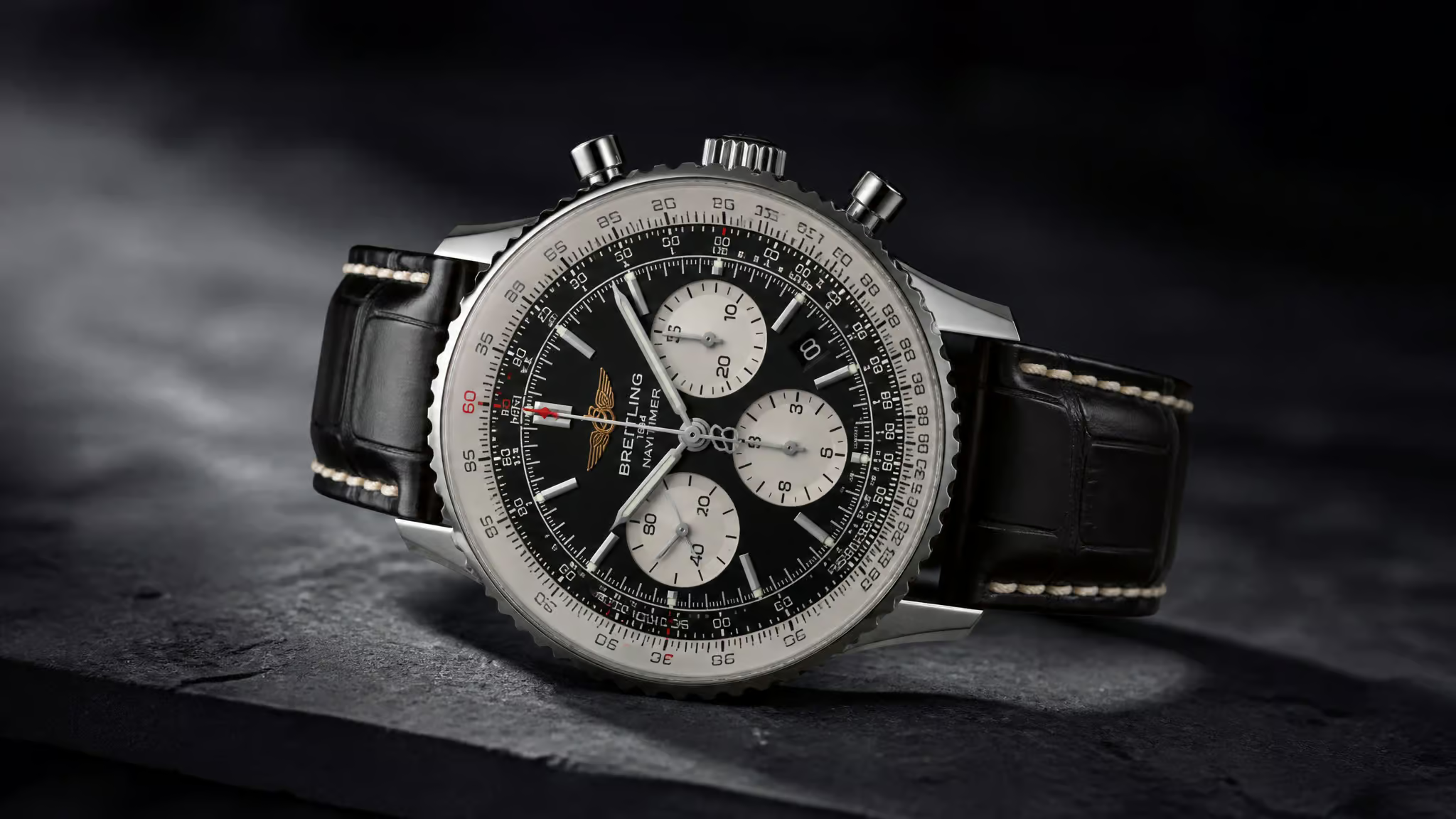
Picking a Breitling looks simple until you open the catalog. Roughly eight to ten collections (even the sources disagree), prices from £2,950 to £39,150, and nowhere an obvious “start here” sign. A friend of mine spent two sessions last year looking at Breitling watches at MVS Watches and still didn’t know where to start. The range is there. The problem is the catalog: too many models, too many brackets, too much aviation jargon.
Here’s the honest reframe: choosing a Breitling is a filtering exercise, not a browsing one. You knock out most of the catalog with four questions, in order: what features will you actually use, then your budget, then what type of watch fits your life, and finally new versus pre-owned. Compare specs only after the list is down to two or three watches. Do it the other way around and you’ll fall in love with a 46mm Avenger your wrist can’t carry, at a price your bank account can’t carry either.
One practical point before anything else: Breitling is an independent Swiss brand out of Grenchen with fourteen US boutiques, so trying one on in person is realistic for most readers.
Key Takeaways
Every current Breitling is COSC-certified, so the Chronometer title is a floor across the catalog, not a differentiator; the real choice is in-house B01 (70-hour reserve, 5-year warranty) versus SuperQuartz (±15 seconds a year).
Set your budget before browsing: an Endurance Pro starts at £2,950, a Chronomat B01 42 runs £7,250, and a gold Giannis limited edition hits £39,150.
Limited editions are the only reliable value holders: the Navitimer B01 Boeing 747 (2023, 747 pieces) sold out at £7,750 and traded at £9,000, £12,000 as of February 2026.
Table of Contents
Step one: match features to how you’ll actually use the watch
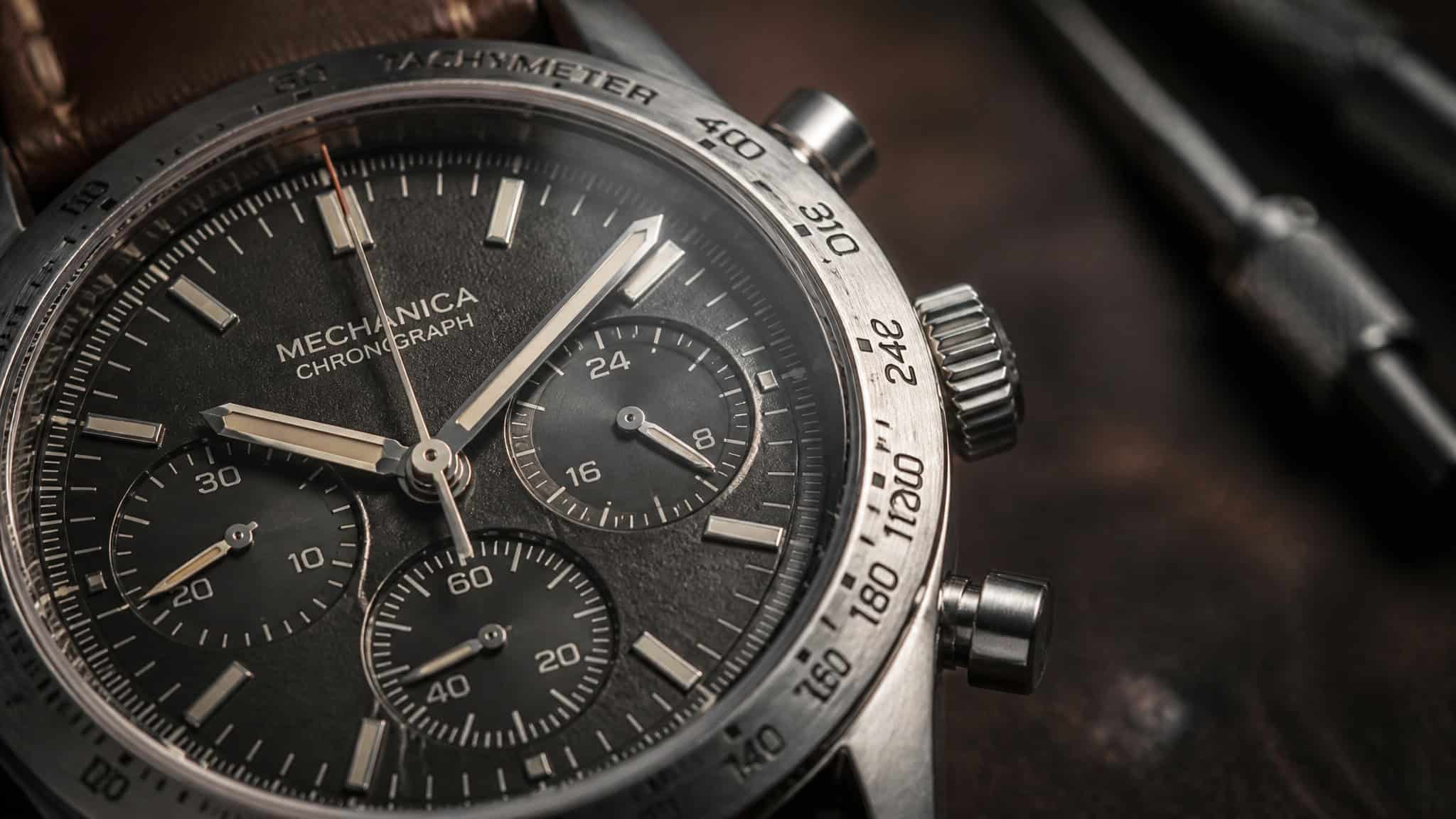
The features worth paying for in a Breitling are the ones you’ll actually use: chronograph, tachymeter, slide-rule bezel, GMT/dual time, water resistance, luminous hands and markers, and sapphire crystal. Complications cost money. Decide which ones earn their spot before you look at a single model.
Now the wrist-level honesty:
- Chronograph. It’s a stopwatch. Most guys never time anything with it. But it’s also the classic Breitling look, and it’s why the Chronomat B01 42 runs £7,250 while the three-hand Top Time B31 sits at £4,650. Buy it for the face, not the function.
- Tachymeter. This one measures speed over a fixed distance, which is a cool detail and flavor, you’re buying the story.
- Slide-rule bezel. This does actual multiplication on the bezel, and it’s obsolete as a tool. You buy it because it looks like a cockpit instrument and has a story, not because you need help with fuel math.
- GMT/dual time. Only matters if you actually cross time zones. If you don’t, it’s a hand you’ll never adjust. Know your calendar before you pay for it.
- Water resistance. Runs from 30m on the Navitimer to 2,000m on the Superocean, so check the rating before assuming any Breitling can hit the pool. More on decoding that later.
- Lume. Nice for dark rooms and early flights; the dive models take it seriously. Small thing, worth noticing when you try one on.
- Sapphire crystal. Scratch-resistant glass. It’s the default on anything worth buying here, so less a feature than a checkbox.
There’s also a fork you’ll hit immediately: automatic versus quartz. Automatic is the craftsmanship pick, longevity, soul, a mechanical thing ticking on your wrist. Quartz is the set-it-and-forget-it pick, more accurate, less maintenance. Both are legitimate. No purist shaming here.
Setting your budget before you browse
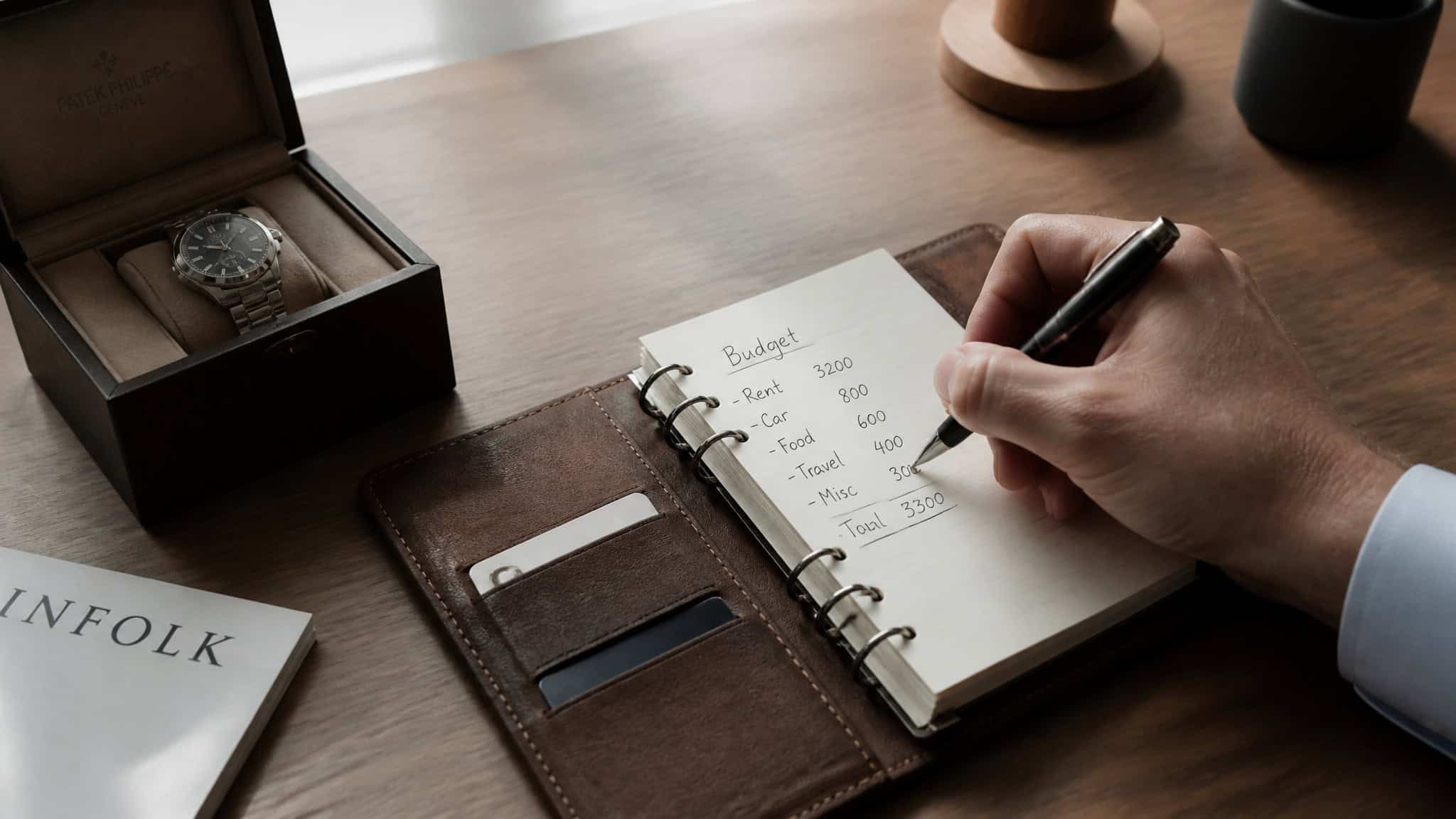
Set the budget first, or you’ll talk yourself up a tier. The sales floor is good at helping you do it. Breitlings start at £2,950 and climb to £39,150; there’s no cheap way in.
What Breitlings actually cost by tier
Same logo, wildly different checks you’re writing. Here’s the February 2026 spread. The Endurance Pro, a SuperQuartz entry piece, sits at £2,950. The Chronomat B01 42, the in-house chronograph tier, runs £7,250. At the ceiling, the Giannis gold Chronomat limited edition hit £39,150 (though the same design on rubber was £21,000, and the GMT 40 version was £4,950 at 1,750 pieces).
What moves the price? Gold versus steel is the big one. Extra complications add more. And movement type matters, a manufacture mechanical costs more than quartz. The Aerospace B70, for reference, sat at £4,000.
Will a Breitling hold its value?
Breitlings tend to hold value, but only limited-production and special-feature models command real premiums. Ordinary models depreciate. Don’t believe anyone promising you profit.
The proof is concrete: the Navitimer B01 Boeing 747 from 2023, limited to 747 pieces, sold out at its £7,750 RRP. By February 2026 it was running £9,000 to £12,000 on the secondary market. That’s the profile that holds: small production run, special story, sold out at retail.
As for what new money buys right now: the Top Time B31, launched in 2025, carries Breitling’s first dedicated in-house three-hand movement with a 78-hour power reserve at £4,650. Not bad for a movement milestone.
Matching your watch type to a Breitling collection
Dive, pilot, dress, or sports: the collection is the decision, and the collection-by-use-case logic is simple, each line is an engineering answer to an environment. The cockpit, the deep sea, the boardroom. These aren’t style categories with marketing names; the watches were built for actual jobs.
So map your life first:
- Dive → Superocean. Water resistance, unidirectional bezel, lume you can read underwater.
- Pilot → Navitimer or Aviator 8. Slide-rule bezels, chronographs, big readable dials. The most “Breitling” Breitlings.
- Dress → Premier. Clean dial, refined case, works with a suit. The one that doesn’t shout.
- Sports/rugged → Chronomat or Avenger. Chunky cases, built to take a hit.
If you’re torn, the profiles most guides skip: Navitimer versus Chronomat comes down to icon-and-slide-rule versus versatile-everyday. Navitimer versus Superocean is air versus water.
And here’s the reframe that saves people from a bad purchase: collection choice IS the sizing decision. A 36mm Navitimer and a 48mm Avenger are different watches on the same wrist. Pick the category before you fall for a specific model, because the category largely dictates what your wrist ends up carrying.
Breitling Navitimer: the pilot’s watch with a built-in flight computer
The Breitling Navitimer is the watch most people picture when they hear the brand name, and for a first purchase the practical answer is size: start with a 35, 38, or 41mm case if your wrist is smaller. The 45 and 46mm are the full-size statement pieces.
Quick history, two lines. It launched in 1952 with the Aircraft Owners and Pilots Association backing it, which is how it found its way onto pilots’ wrists. The bezel idea traces back to the 1940s Chronomat, originally made for scientists and engineers. Nice connective tissue between the two icons.
The bezel itself is the party trick: the E6B circular slide rule works as an analog flight computer for speed, fuel burn, and distance and time airborne. It does real math. Most buyers will never run it. That’s fine; you’re paying for the look and the lineage.
The range is wide, which is what makes it beginner-friendly:
- Sizes from 35mm to 46mm
- Functions from time-only up through chronograph, rattrapante, and GMT
- Materials run from steel through two-tone steel-and-red-gold and 18k red gold, up to platinum
- Dials in silver, black, blue, anthracite, white, copper, and mother-of-pearl
Hardware notes: bidirectional slide-rule bezel, sapphire crystal, and 30m water resistance. That last one deserves honesty, this is not a swim watch. It’ll survive the sink and the rain and nothing more.
It’s the most Breitling Breitling, and it deserves the romance. But self-select fast: if the slide rule doesn’t do it for you, the next two sections are your friends.
Breitling Chronomat: the all-rounder born for scientists
When the Chronomat landed in 1941, it was the first watch to put a circular slide rule on a rotating bezel, and scientists and mathematicians loved it. It was relaunched in 1984 for the brand’s centenary. That tool-watch origin is why “all-rounder” isn’t marketing fluff, it was built to do work on a wrist.
You can spot one across a room by two signature markers: rider tabs on the bezel and the rouleaux bracelet. The case range is one of the best for smaller wrists, running 32mm to 42mm, with 100 to 200m of water resistance depending on the model.
My take, as an opinion rather than a ranking: this is the “one watch” candidate in the lineup. Versatile enough for almost anything, distinctive enough that people know what it is. If you can only own one Breitling watch and your life doesn’t have a strong dive-or-cockpit lean, start here.
Breitling Superocean: dive watches from pool to 2,000 meters
The Superocean launched in 1957 with real diver pedigree, built for professional and recreational divers from the start. Water resistance runs from 200m to 2,000m depending on the model; 1,000m (3,300 feet) is the figure most people cite. That’s far beyond anything a recreational diver will ever need, which is part of the charm.
The hardware exists for reasons: the unidirectional rotating bezel tracks elapsed dive time and can’t rotate the wrong way. Ceramic bezel inserts, strong lume on hands and indices so you can read it underwater. Cases run 36mm to 48mm in steel, two-tone, or titanium on the Caliber 17 automatic, so smaller wrists have a real option at 36. The Superocean Automatic 44 is the reference pick: 44mm, ceramic bezel, a 1,000m rating, and strap options in steel, rubber, or leather.
The fork most buyers hesitate on is the Superocean Heritage, introduced in 2007 for the 50th anniversary: 1950s styling with modern tech, in 42, 44, or 46mm, rated 100m or 200m, on the B01 and Calibers 10/13 plus the in-house B20.
Simple rule: Heritage if you want the vintage look on land, modern Superocean if water or sport is the priority. Done.
Breitling Avenger: oversized tool watches, including the 3,000m Seawolf
The Avenger is the biggest, burliest line in the catalog: 43mm to 48mm cases in steel or DLC-coated titanium. Water resistance is 300m as standard, and the Seawolf goes to 3,000m with a helium escape valve, that valve exists for saturation diving, which is professional equipment you’ll never personally use. The number is absurd in the best way.
It’s favored by military and pilots, which tracks. The Avenger II Seawolf specifically is the “if you know, you know” pick: 45mm, unidirectional bezel with rider tabs, thick crown, B17 movement, in yellow, grey, or black.
Now the honest part: who shouldn’t buy this. Smaller wrists and minimalist tastes need not apply. A 48mm Avenger is a commitment, not an everyday wear for most guys. If “overbuilt” sounds like a feature to you, it’s the best line here. If it sounds like a dinner plate strapped to your arm, it’s the wrong line.
Breitling Premier and Aviator 8: dress and vintage-aviation alternatives
Two lines overlap in audience here, so it’s worth pulling them apart before you decide. Both sit under the tool-watch umbrella, but they dress differently.
Premier: the quiet one
The Premier honors Willy Breitling’s 1943 dress chronograph line, and it’s the understated pick in the family: clean dials, refined cases, 40 or 42mm, in steel or 18k red gold with a fixed bezel. Functions run from time-only through day-date and chronograph, with moon phases available on some models.
The practical bits are better than they need to be for a dress watch: 100m water resistance and sapphire crystal, so you won’t panic at the sink. Movements include the in-house Caliber 01 alongside B13, 17, B23, B37, and B45.
If you want one dressy Breitling, call out the Premier B01 Chronograph Panda Dial: black subdials on white, integrated B01 movement, goes with almost anything, the kind of confident choice that helps you buy a men’s watch without regret. Strong single pick.
Aviator 8: the cockpit homage
The Aviator 8 nods to 1930s and 40s pilot watches, the Huit Aviation cockpit clocks era. Big legible dials, oversized crown, knurled bezels straight off early aircraft instruments. Cases run 41, 43, and 46mm in steel, 18k red gold, or titanium, and the 41mm is the most wearable entry into the pilot look.
Functions span time-only through day-date, chronograph, and world time, so it’s easy to match to budget. Water resistance ranges from 30m to 100m across the models, and the bezel is bidirectional: fine for daily wear, not a dive watch. Since picking the right watch for a man can be hard with so many options and brands, matching functions to budget like this is a sensible way to narrow it down.
Head to head: Premier for formality, Aviator 8 for character. If your wardrobe leans suits, Premier. If you want retro cockpit without Navitimer money or complexity, Aviator 8.
Breitling Professional, Bentley, and the rest of the catalog
The edges of the lineup are where Breitling gets weird and functional, and one of these lines has a trap for new buyers.
Professional: the quartz-tech line
First, the flag: everything in the Professional family is quartz. Three models, ten pieces, all SuperQuartz. Guys assume Breitling means mechanical, so this catches people.
Cases run 43, 44, and a genuine 51mm in Breitlight or titanium, that 51 is not a typo. Functions include chronograph plus professional pilot and personal survival features, because this is the line where the features are the point. When the Emergency arrived in the 1990s, it put an emergency locator beacon on a wristwatch, still one of the great one-liners in watchmaking. Water resistance is a modest 50m or 100m; these aren’t dive tools.
The Endurance Pro uses Breitlight, up to six times lighter than steel, and at £2,950 it’s the entry tier. If you want featherweight and function, this is your line.
Bentley: a discontinued line with a trap
Here’s the mistake to avoid: you can’t buy a new Breitling Bentley, because the partnership ended in 2021. Anything you see is a secondary-market play.
The line came from the Breitling-Bentley partnership, carrying luxury, performance, and precision themes from the cars. The Supersports B55 is the techiest of the bunch: titanium case, digital-analog display, smartphone connectivity. The watches are still collector sought-after, which is why discontinued can mean interesting on the pre-owned market, but go in knowing it’s a used-buy, with used-buy homework.
Movement: in-house manufacture vs SuperQuartz
The decisive fork isn’t mechanical versus quartz accuracy, because COSC can’t decide it for you: every current Breitling is COSC-certified. That’s the contrarian core of this section, so let it land.
The “Chronometer” title on the dial isn’t marketing fluff, but it’s also not an upgrade. COSC, the Contrôle Officiel Suisse des Chronomètres, is an independent outfit running strict standardized tests over 15 days, and Breitling doesn’t grade its own homework. Mechanical movements pass at -4 to +6 seconds per day; quartz at ±0.07 seconds per day. Since every current Breitling goes through it, the certification is a floor across this catalog, not a differentiator between models.
The real choice:
- In-house manufacture (the B01). 70-hour power reserve, 28,800 Vph, 47 jewels, 346 components. You’re buying craftsmanship, a 5-year international warranty, and resale credibility.
- SuperQuartz. Thermocompensated to ±15 seconds a year, which puts it about ten times ahead of normal quartz, and the Calibre B70 claims that same tenfold precision outright. Lower maintenance. If you hate winding and adjusting, this is your lane.
Warranty tiers matter here: 5 years on manufacture mechanical movements, 2 years on the rest, plus a complementary extended warranty option. Factor that into the math. No purist shaming either way, both movements are legitimately good at what they do.
Buyer rule: Pick the B01 if craftsmanship and resale credibility matter to you; pick SuperQuartz if you’d rather set it and forget it. Both are certified to the same COSC floor.
Getting the size right: cases, straps, and water resistance decoded
For smaller wrists, the shortlist is Chronomat (32-42mm), Premier (40-42mm), and Navitimer from 35mm up. Skip the Avenger. This is where Breitling loses some people, so let’s deal with it head-on.
The honest warning: Breitlings run larger than other luxury brands. Bold dials, thick profiles. That’s the look, and it’s also the catch. And photos lie about how a 44mm case sits on your arm, so try one on at a boutique before committing.
With fourteen US locations, there’s probably one near enough. Pay attention to balance, too: bigger cases work with jackets and long sleeves, but against lighter clothing the watch stands out more. Useful for picturing your actual Tuesday.
Strap sizing and interchangeability
Good news: straps are generally swappable, so one watch can wear several ways. Check lug width and the model’s specs before ordering so you don’t get the wrong one.
Quick reference for wrist sizing: Small fits 135-160mm, Standard 160-190mm, Large 190-215mm. Practical detail on fitting: metal bracelets get complimentary sizing with an online or contact-center purchase, but for rubber straps a boutique visit is the smarter play.
Reading the water resistance rating
The meter number is static pressure on a motionless watch. It’s a guideline, not a diving guarantee, because moving water pushes harder than the figure suggests. A “100m” watch is not safe for 100 meters of real swimming. Many, but not all, Breitlings are rated between 30 and 2,000 meters, so check the specific model.
Here’s the bar guide in plain terms. Three bars handles splashing. Five bars covers swimming and showering. Ten bars takes snorkeling and water skiing. Thirty-plus bars means serious diving down to about 1,000 feet. One conversion so the numbers mean something: 1 bar ≈ 10m ≈ 33 feet.
Also know that gaskets need servicing and an annual water-resistance test to keep the rating honest. The real point: choose by what you’ll actually do, or you’ll pay for capability you’ll never use.
Quick test: Match the bar rating to your actual week, not the deepest water you could theoretically touch. Sink, rain, and the occasional pool means five bars is plenty.
New or pre-owned? Risk, authenticity, and where to buy
A real Breitling can be verified, and the frame that organizes this whole decision is risk transfer: buying new hands the authenticity risk to the retailer, while buying pre-owned hands it to you. The real variable is how much verification expertise you can access, or whether a certified pre-owned guarantee covers you.
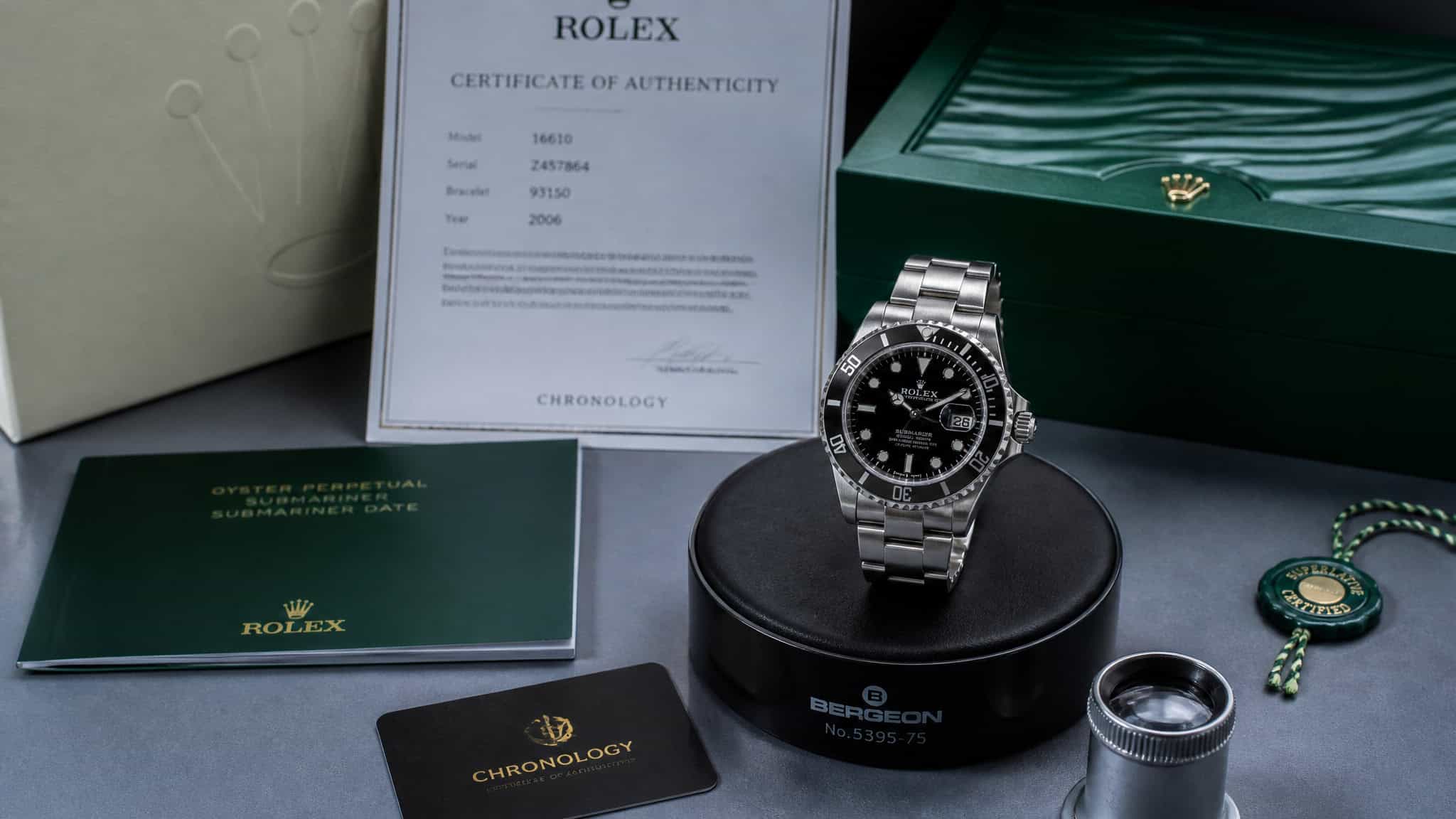
Buying new gets you pristine condition and the full manufacturer warranty, but limited and high-complication models get expensive fast, like the £39,150 Giannis gold Chronomat. Buying pre-owned brings real savings, plus possible servicing costs on top of the purchase price. Older watches may need repairs, and that’s real money, so budget for it or buy newer. There’s no wrong answer between new and used, just know which trade-off you’re making.
How to verify a Breitling serial number
Every watch made after 2000 carries its own serial number, and you’ll find it on the purchase documents or engraved on the caseback. That’s the core check. It takes a minute and can save you a fortune. If you register the watch with Breitling afterward, having those serial documents handy is exactly why you checked.
Frankenwatch, Full Set, and seller trust
Two pieces of used-buying vocabulary worth knowing. A frankenwatch is assembled from mismatched or non-original parts, a replaced dial, aftermarket pushers, and it wrecks both reliability and resale. A Full Set (box, papers, COSC certificate) boosts value, because papers are part of the product.
Channel ranking, plainly: authorized dealers, certified pre-owned programs, and reputable auction houses are safest. Private sales are a gamble unless you can authenticate on the spot. Models under two years old may still carry factory warranty, which is worth checking. Bob’s Watches is a good example of a pre-owned seller with authentication and warranty programs.
A short history, and why it helps you choose
Breitling is a tool-watch brand for guys who like function with their history. It fits a pilot-minded buyer, a diver-minded buyer, or an everyday wearer who wants something with a point of view, and it’s deliberately more niche than Rolex or OMEGA, which is a feature, not a flaw. That aviation identity is the brand’s personality. Some guys will love it; others won’t, and both answers are correct.
The compressed version, fast: Léon Breitling set up shop in Saint-Imier in 1884, making chronographs for industry and science, that tool-watch DNA explains the whole lineup today. In 1914, the company was first to move the chronograph button off the crown; in 1932 it added the reset pusher; in 1934 it patented the first independent chronograph push piece. That’s why modern chronographs have two buttons. In 1969, Breitling worked with Heuer, Buren, and Dubois Depraz on the first self-winding chronograph.
The brutal 1970s quartz crisis nearly killed it, and the Chronomat relaunch in 1984 marked the centenary. The Emergency, with its locator beacon, arrived in the 1990s.
Why any of this matters to your wallet: the Navitimer descends from the Chronomat, so the two icons are related, and Georges Kern arrived from IWC in 2017 and trimmed the collections, steered designs vintage-ward, and loosened up the luxury gatekeeping, which is why today’s lineup is coherent and appealing to normal guys.
Aviation cred, one beat: official RAF supplier for over 90 years, the only luxury maker allowed to use Red Arrows symbols, and Scott Carpenter wore the first Swiss chronograph into orbit in 1962.
Styling, wearability, and the ownership costs after checkout
Maintenance is the part of the sticker you don’t see at checkout: a maintenance service every 2 years covering seals, water resistance, and battery, a complete service every 4-6 years involving a full teardown, cleaning, and lubrication, plus an annual water-resistance test. That’s real money layered on the purchase price, so budget for it before you buy, not after.

Styling a Breitling for work and weekends
One rule: bold dial, quieter outfit. Let the watch be the loudest thing on you. Quick map: Superocean and Avenger for casual and athletic wear; Premier and Chronomat for formal and special occasions. Match the watch to the occasion so it complements the outfit instead of fighting it.
Worth knowing: the men’s and women’s lines both get COSC-certified movements. Women’s models run slightly smaller cases with diamond and gold options. The aviation hardware on men’s pieces, rotating bezels, pushers, high-contrast indices, actually does something; it isn’t decoration.
Servicing intervals and long-term costs
Think about a decade of ownership and the picture fills in: services every couple of years, a bigger one mid-decade, annual water-resistance checks. Those costs belong in the same conversation as the sticker price and resale value, because they’re part of what the watch costs.
If you buy direct from Breitling.com, you get 30-day returns with complimentary courier pickup and refunds within 14 days. Register the watch and keep the serial documents handy, that’s your ownership paper trail.
Bringing it together: your four filters in order
Run the sequence: features you’ll actually use, budget set before browsing, the watch type and collection that fits your life, then new versus pre-owned based on how much risk you want to carry. One paragraph, four questions, and most of the catalog eliminates itself.
Then try the shortlisted sizes on at a boutique. Photos lie about case fit, and this is the one step you can’t do from your couch. That’s the whole method. Pick the Breitling that fits your life, not the one that looks best in a product photo.
Frequently Asked Questions
What kind of person wears a Breitling?
Breitling suits a tool-watch buyer who likes function with history: pilot-minded types, divers, and everyday wearers who want a watch with a point of view. The aviation identity is the brand’s personality — some people love it, others don’t, and both answers are correct. It’s deliberately more niche than Rolex or Omega, which fans consider a feature, not a flaw.
Is Breitling as prestigious as Rolex?
Breitling is a legitimate independent Swiss luxury brand with serious credentials — every current model is COSC-certified, it has been the official RAF supplier for over 90 years, and Scott Carpenter wore the first Swiss chronograph into orbit in 1962. It’s positioned as more niche than Rolex or Omega rather than lesser, trading mainstream status for a stronger aviation and tool-watch identity.
What size Breitling watch suits smaller wrists?
Start with the Chronomat (32–42mm), Premier (40–42mm), or Navitimer from 35mm up, and skip the Avenger, which runs 43–48mm. Breitlings generally run larger than other luxury brands, and photos lie about how a big case sits on your arm, so try one on at a boutique before committing. Strap sizing runs Small (135–160mm), Standard (160–190mm), and Large (190–215mm).
How much should I expect to pay for a Breitling watch?
Expect real money with no cheap way in: the entry-tier Endurance Pro starts at £2,950, the Chronomat B01 42 runs £7,250, the Aerospace B70 sat at £4,000, and gold limited editions like the Giannis Chronomat hit £39,150. Gold versus steel is the biggest price driver, followed by extra complications and movement type. Set your budget before browsing, or the sales floor will talk you up a tier.