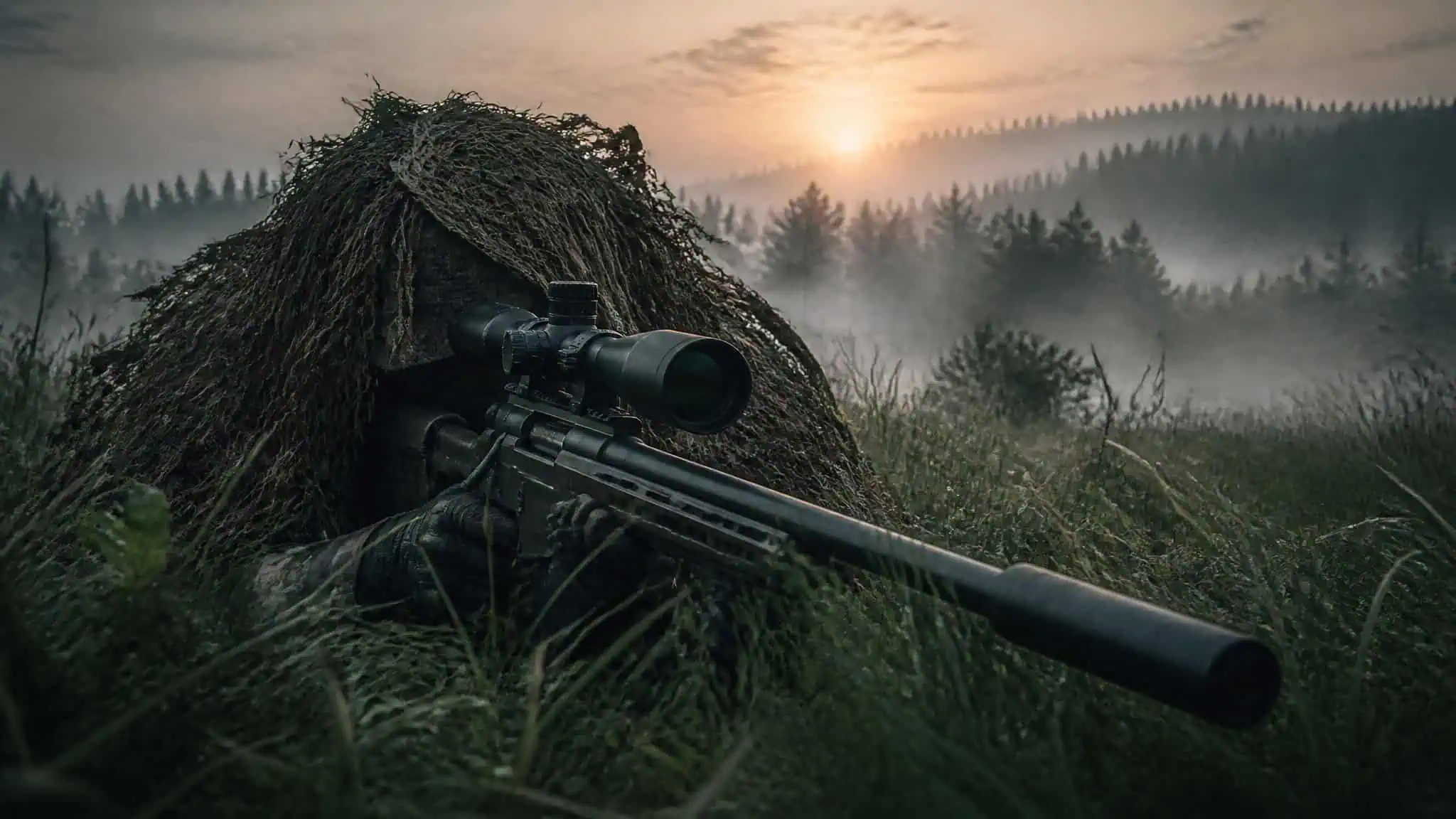
More than 300 soldiers walk onto the course at Fort Benning, Georgia, every year ready to earn the crossed rifles and the tab that goes with them. A portion of those soldiers don’t finish. That’s not a warning so much as a fact, and it’s the first thing to understand if this is a path you’re serious about. This is the straight story on what it takes, from the moment you think about enlisting to the day you’re standing somewhere in the woods at Fort Benning trying to remember how to breathe quietly.
Here’s the part most people get wrong: the filter is rarely the shooting. The Army will assume you can shoot. What the school is filtering for is whether you have the patience and the fieldcraft to sit perfectly still for ten hours in the dirt while your body screams and your brain plays tricks on you. The mental grind is what breaks people, not the ballistics.
There’s also a modern twist that most guides skip. Sniper training is being rewritten from the inside out right now, largely because of drones and the thermal sensors they carry. The Russia-Ukraine war proved how quickly an aircraft the size of a large bird can end a career that took years to build, so the school is changing. We’ll get to that.
What follows is the honest path from civilian to graduate. We’ll cover who qualifies, what the job is, what you’ll carry and how far you’ll crawl, and what the next decade of sniping looks like when the enemy can see you in the dark.
Key Takeaways
Eligibility is locked to three military job codes only: 11B (Infantry), 19D (Cavalry Scout), and 18 (Special Forces), with rank E3 through E6, and there’s no direct-entry path to a sniper billet; you must be selected from within one of those units.
The course carries a real load: about 60 to 80 pounds of gear in summer, 90 to 120 in winter, static positions that run up to 10 hours, and a history of failing half its candidates in the seminal Vietnam-era class, even if the current school doesn’t publish a single failure rate.
The trade is being reshaped by drones and thermal optics; the school is testing signature-management camouflage to hide from both, but the tech is early-stage, not standard issue, and fieldcraft and patience still separate a sniper from a marksman.
Table of Contents
What Does an Army Sniper Actually Do?
Strip away the mystique and the job is two things: deliver precise long-range fire on selected targets, and collect and report battlefield information. That’s the whole mission, and it’s worth knowing it cold before you sign anything.
The shooting part is straightforward. The Army uses its snipers to take out high-value targets, slow an enemy advance, and generally create casualties and lower morale from a position the enemy can’t easily reach. That’s the “one shot, one kill” ethos you’ve heard about. It’s not bravado; it’s a job description.
The intelligence side is as important, even if it’s less glamorous. When you’re not shooting, you’re the eyes in the sky, reporting what you see moving through an area, so the folks back at the command post can build a picture of what’s happening. This is where the training’s emphasis on “adaptive, critical thinkers” comes in. You’re expected to do more than squeeze a trigger; you’re expected to understand the battlefield.
The Army vs. Marine Scout Sniper Difference
Here’s a common point of confusion: the Army and the Marines use the term “scout sniper” differently. The Marine Corps combines the roles into a single “Scout Sniper” billet. The Army, though, treats them as separate jobs. In the Army, the reconnaissance scout position and the sniper position are distinct, even if the individual soldier might do both.
Who Qualifies From Scout Roles
That matters if your background is in a scout capacity. Both 19D Cavalry Scouts and Infantry Scouts can attend the Army’s sniper school and, once there, serve in both scouting and sniping roles. So the Army separates the duties on the organizational chart but expects the modern sniper to blend them in the field.
The Motto and Ethos
The ethos is summed up by the motto “One Shot, One Kill,” and the doctrine that governs it, FM 23-10, frames the sniper as a weapon system: a force multiplier that can shape a battle without firing a shot, as long as the enemy knows you’re out there in the weeds.
A Brief History of Army Sniper Training
The modern sniper school is the product of a long, messy, and often inconsistent history. The Army didn’t always take sniper training seriously, and the proof is in the timeline.
From WWII to Vietnam
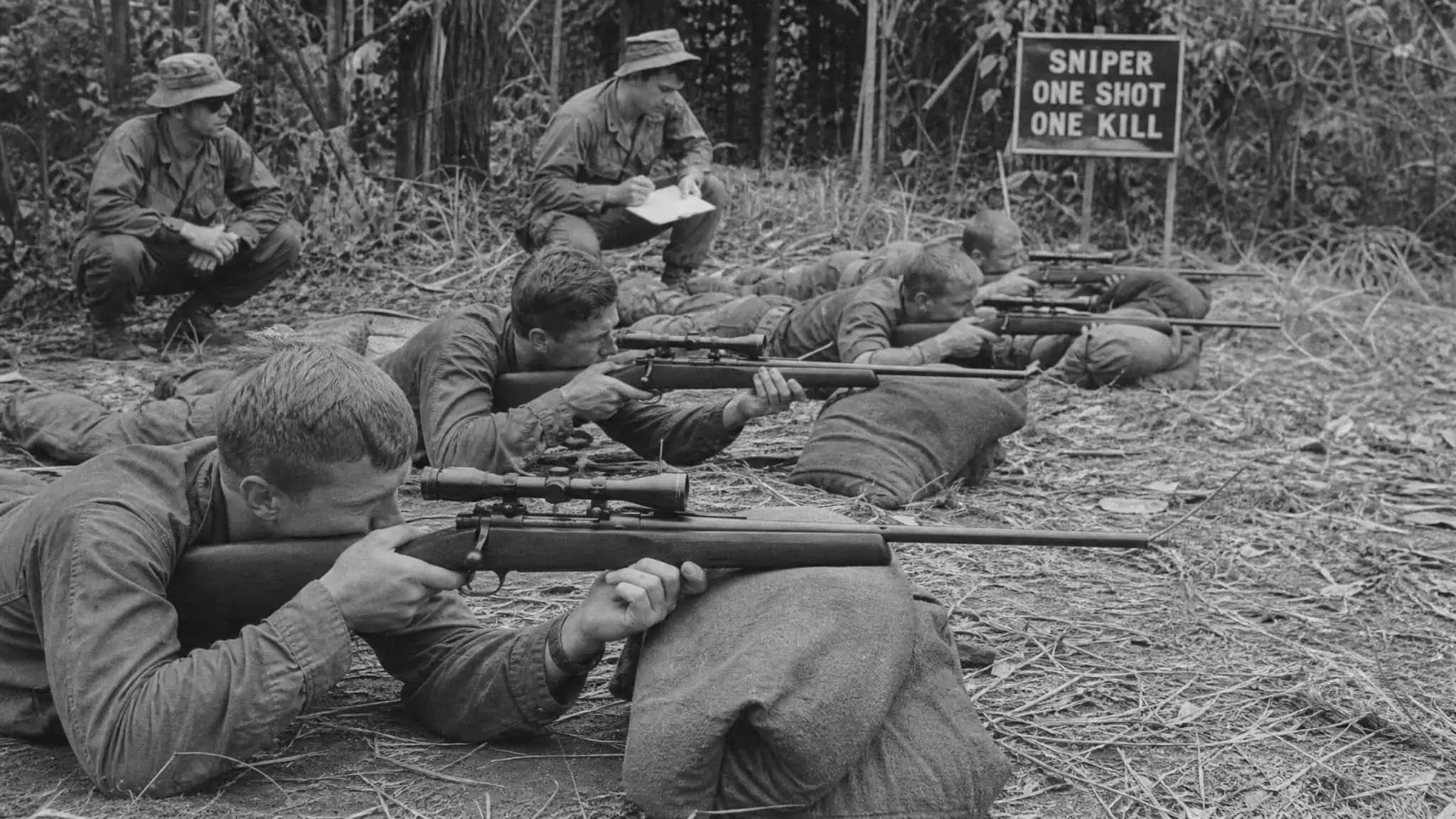
The U.S. Army had no official sniper course during World War II. The unofficial snipers of that era were good shots with scoped rifles. The Korean War started to change that, with snipers in action at the landings at Inchon, the recapture of Seoul, and the frozen hell of the Chosin Reservoir. The tools were ad hoc.
A favorite weapon was the M2 .50-caliber machine gun mounted with a target scope. It worked, but it was brutally heavy to haul around. The individual who did the most to legitimize the trade in that era was a sergeant named Boindot, who recorded 70 confirmed kills. The first official Army Sniper School opened at Camp Perry, Ohio, in 1955 and ran for just a single year before being shuttered, largely because the higher-ups didn’t understand what they had.
Vietnam is where training went central. In July 1968, the 9th Infantry Division established an in-country course under Major Willis Powell. It was an 18-day course with a 50 percent failure rate. By December 1968, the course had produced just 72 graduates.
It was a start, and it proved that centralized, standardized training could produce snipers who made a difference. The lessons from Vietnam carried forward into the deserts of the Middle East, where snipers would later prove their worth in urban and open terrain.
Permanent Home at Fort Benning
The real institutional legitimacy came in 1987, when the Army established a permanent Sniper School at Fort Benning, Georgia. That’s been the school’s home ever since, making it the longest continuous run in Army history. Snipers proved invaluable in the mountains of Afghanistan under Operation Enduring Freedom, and the school has been adapting its program of instruction ever since.
The first woman graduated in 2021, a milestone that opened the door to a broader pool of talent. The history matters because it explains the modern school’s existence: it’s not a relic, but an evolving institution that has learned, often the hard way, that sniper training can’t be left to chance.
What Is the Army Sniper School?
The U.S. Army Sniper School is a formal program under the U.S. Army Infantry School, located at Fort Benning, Georgia, and it sits under the 199th Infantry Brigade. It’s a formal military school, not an ad-hoc training day.
Location, Command, and Course Length
The course is seven weeks long. That’s the number the school itself uses. You’ll occasionally see 29 days cited, and that’s not a myth; it’s a real number that shows up in official documentation. The seven-week figure is the current, standard duration, while the 29-day figure likely comes from an older iteration or a different source.
Either way, it’s a short seven weeks. More than 300 soldiers start the course each year, and a portion don’t finish.
The Official Course Description and Curriculum
The official line is that the course trains soldiers to be adaptive, critical thinkers who can plan and execute precision long-range fire. Dig into the syllabus and you’ll find the full list of skills: fieldcraft, advanced camouflage, concealed movement, target detection, range estimation, terrain utilization, intelligence preparation of the battlefield, reporting procedures, sniper tactics, marksmanship, and staff subjects.
Step 1: Meet the Basic Eligibility Requirements
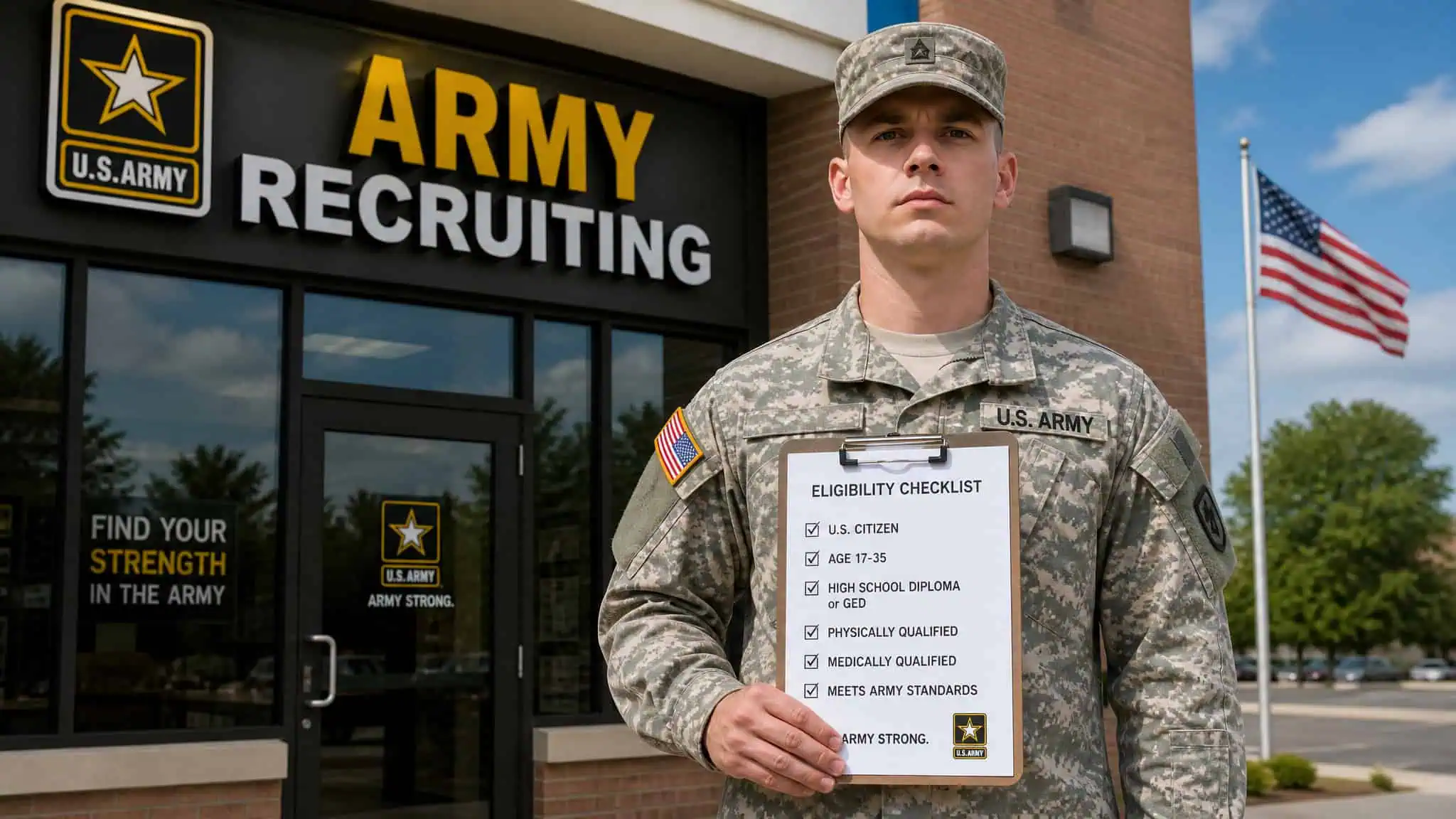
Here’s the entire eligibility checklist. If you’re reading this as a civilian, this is the part that tells you whether the path is even open to you before you start dreaming about ghillie suits.
MOS Requirement
Only military occupational specialties 11B (Infantry), 19D (Cavalry Scout), and 18 (Special Forces) can attend. That’s the official line from Fort Benning, and it supersedes any claim you’ll see floating around that the course is open to all branches. If a source tells you otherwise, it’s wrong. This is a hard filter.
Rank
You need to be at least a Private First Class (E3) and no higher than a Staff Sergeant (E6). It’s the sweet spot where you’re still hungry enough to learn and not so senior that you can’t be taught.
ASVAB GT Score
You’ll need a score on the Armed Services Vocational Aptitude Battery that’s high enough to qualify for the job set in the first place. A General Technical score of 100 is the widely reported benchmark, but it’s not on the official requirement list. It’s the number that shows up in online forums and unofficial guides, and it’s a good one to aim for. The honest answer: higher is better.
Vision
Your eyes have to be 20/20, though glasses are allowed. You also need to pass a red-green colorblindness test. If you’re not sure, get your eyes checked before you get your hopes up.
Physical Fitness
You need to pass an Army Fitness Test within 30 days of your course start date. Don’t just pass it; you’re expected to be ahead of the pack. Show up ready to run and ruck and carry your own weight, because everyone else will be trying to carry theirs.
Clean Record and Psychological Exam
You’ll need a clean, unblemished disciplinary record. Any blemish on your file and you’re likely out of the running before you even start. You’ll also need a full psychological exam administered by an authorized psychologist within one year of your course start date. The Army is serious about mental health screening; it’s treated as important as the physical standards.
Security Clearance
You’ll need a Secret Security Clearance or the eligibility to obtain one. This isn’t a quick process. It’s a lengthy background check, so start early and keep your financial house in order. If you’ve got any disqualifying issues, waivers can be submitted through your chain of command, but nothing is guaranteed. The Army doesn’t hand out waivers like candy.
Does the ASVAB GT Score Really Matter?
The short answer is: yes, but maybe not in the way you think. The widely reported benchmark is a GT score of 100. That’s the number you’ll see on every forum and unofficial guide.
Here’s the catch: it’s not on the official requirement list. So what gives?
The GT score measures verbal and communication ability, which is relevant because a sniper has to be able to report intelligence clearly and effectively. But a higher score helps you in two ways: it makes you a more competitive candidate, and it gives you more flexibility in the job market. The Army has official ASVAB study resources available, so there’s no excuse not to prepare well.
Step 2: Enlist in the Right MOS
Here’s the check on the path: there is no direct-entry path to becoming a sniper. You don’t sign up to be a sniper at a recruiting office. It’s not a job you can apply for. You first enlist in an eligible MOS, 11B (Infantry), 19D (Cavalry Scout), or 18 (Special Forces), then volunteer for sniper training and get selected.
Can You Join Directly as a Sniper?
No. To be clear: you must enlist in an eligible MOS, complete your initial training, get to your unit, and then volunteer for sniper training and be selected. You can’t walk in and ask for a sniper billet.
Building Toward Selection
The path is straightforward: enlist in the Army, complete basic and advanced individual training, and then get to your first unit. From there, you watch, you learn, and you perform, the way a cavalry scout or infantryman does before earning a spot at the Sniper Course. You’re building a reputation for being reliable, tactically sound, and trustworthy with a weapon. When opportunities for sniper training come up, your unit leadership has to trust you enough to send you.
Step 3: Survive Sniper School
Once you’re at the school, the work begins. The curriculum is a seven-week slog through everything from fieldcraft to marksmanship to staff subjects.
What the Seven Weeks Cover
The official list reads like a syllabus for a major in the art of war: fieldcraft, advanced camouflage, concealed movement, target detection, range estimation, terrain utilization, intelligence preparation of the battlefield, reporting procedures, sniper tactics, marksmanship, and staff subjects. Each one is a subject you’ll spend hours practicing.
The 2017 Doctrine Update
The Training Circular 3-22.10, released in December 2017, updated the doctrine to cover planning, employment, ballistic programs, and complex engagements. It was an expansion of the sniper’s role beyond shooting.
The 2018 Paradigm Shift
The 2018 Program of Instruction shifted the focus of the curriculum toward large-scale ground combat. The doctrine now describes the sniper as a “sensor, communicator, and human weapons system.” That’s a change, and it’s the detail most overviews miss. The sniper is no longer just a marksman; they’re a node in a larger intelligence network, expected to operate in contested spaces against near-peer adversaries.
How Hard Is Army Sniper School?
It’s brutal, but not for the reasons civilians assume. The physical load is heavy. The mental load is worse.
The Physical Load
The gear alone is heavy: 60 to 80 pounds in the summer, 90 to 120 pounds in the winter. You’ll be expected to hold static positions for up to 10 hours, and that’s before you factor in the cold. In the Arctic, movement takes twice as long as you’d reasonably expect, and you’ll be carrying extra weight in the form of fuel to heat water.
The Mental Toll
Show up with near-superhuman patience and focus, because that’s what it takes. Most candidates arrive with solid shooting skills; they fail because they break mentally. They underestimate how hard it is to stay still, stay quiet, and stay calm inside a sagging ghillie suit for ten hours. The historical failure rate backs this up: the Vietnam-era course failed half its students, and the pressure hasn’t let up since.
Modern Threats: Drones and the Signature Management Response
If you want to see the future of sniping, look at Ukraine. Drones have turned the sky into a net that never stops searching, and that’s reshaping the entire discipline.
The Drone Problem
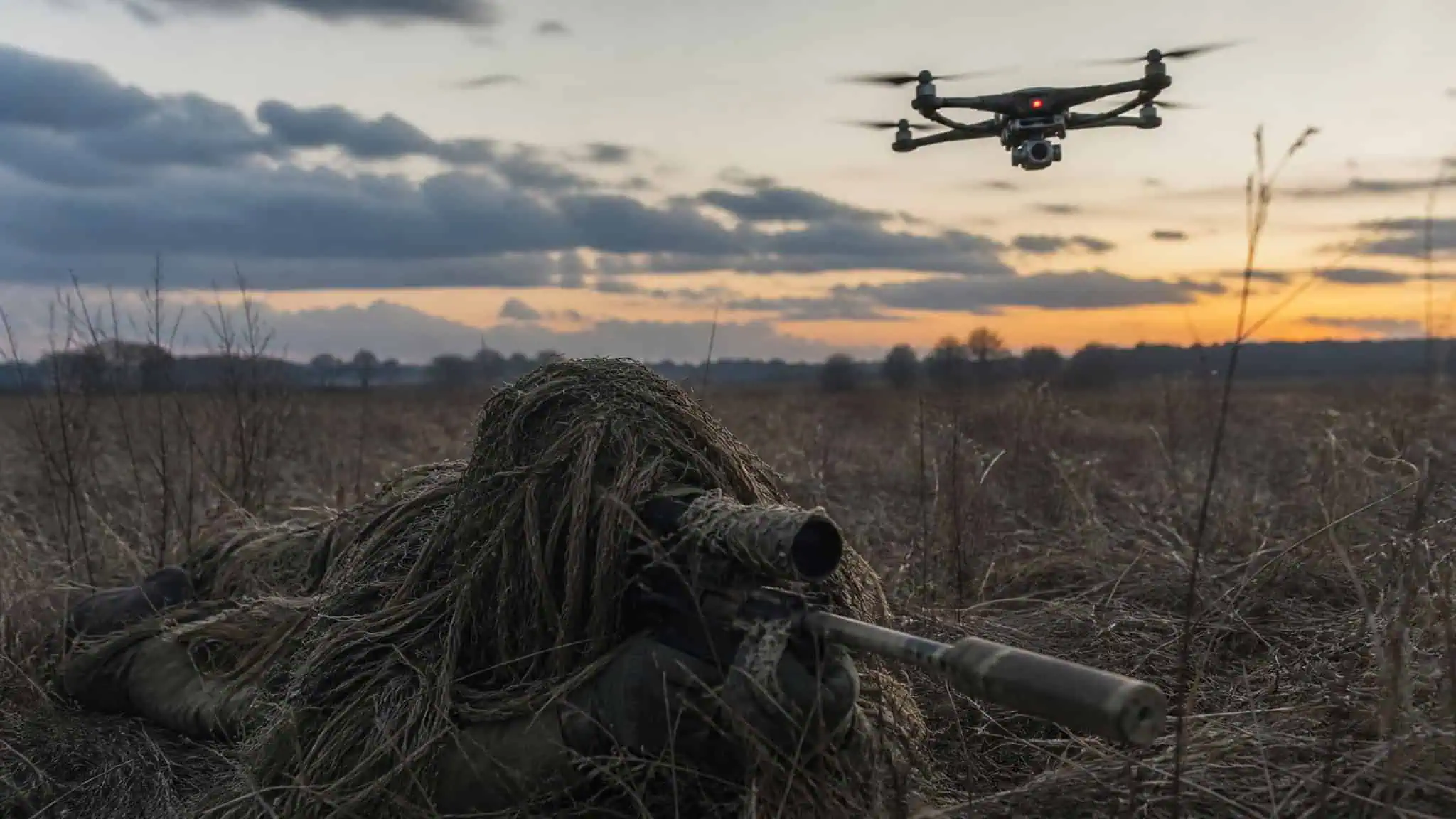
The Russia-Ukraine war showed how vulnerable ground forces are to aerial surveillance. An early 2025 exercise highlighted how exposed a sniper is to a drone that can hover for hours. The school’s response: assume the enemy has eyes in the sky and train accordingly. Snipers now train to remain hidden from all adversaries, whether they’re on the ground or orbiting overhead, while maintaining their freedom to move and their eyes on the objective. This shift reflects that modern battlefields, from the deserts of the Middle East to the forests of Eastern Europe, are under constant aerial observation.
Signature Management Technology
This is where the school is trying to adapt a new technology: signature management. The U.S. Army Sniper Course is evaluating full-spectrum signature management camouflage systems. Army Staff Sergeant Brett Bollinger, the point of contact for the testing, has been open that the objective is to defeat thermal sensors, whether they’re on the ground or in the air. The material is designed to reduce thermal signatures, making the shooter invisible to the very sensors that drones use to find them.
The testing is real, but it’s early stage. A representative of one company demonstrated the gear on a stalk lane at a Fort Bragg sniper class, close enough to get close to an observer’s vehicle undetected. More products are being tested in January. But this isn’t standard-issue gear yet. It’s not even fielded; it’s early evaluation of new products.
Arctic and Extreme-Environment Fieldcraft
Take everything you know about staying hidden and freeze it. The Arctic is a different animal, and the school treats it as such.
Simo Häyhä’s Arctic Tactics in Modern Use
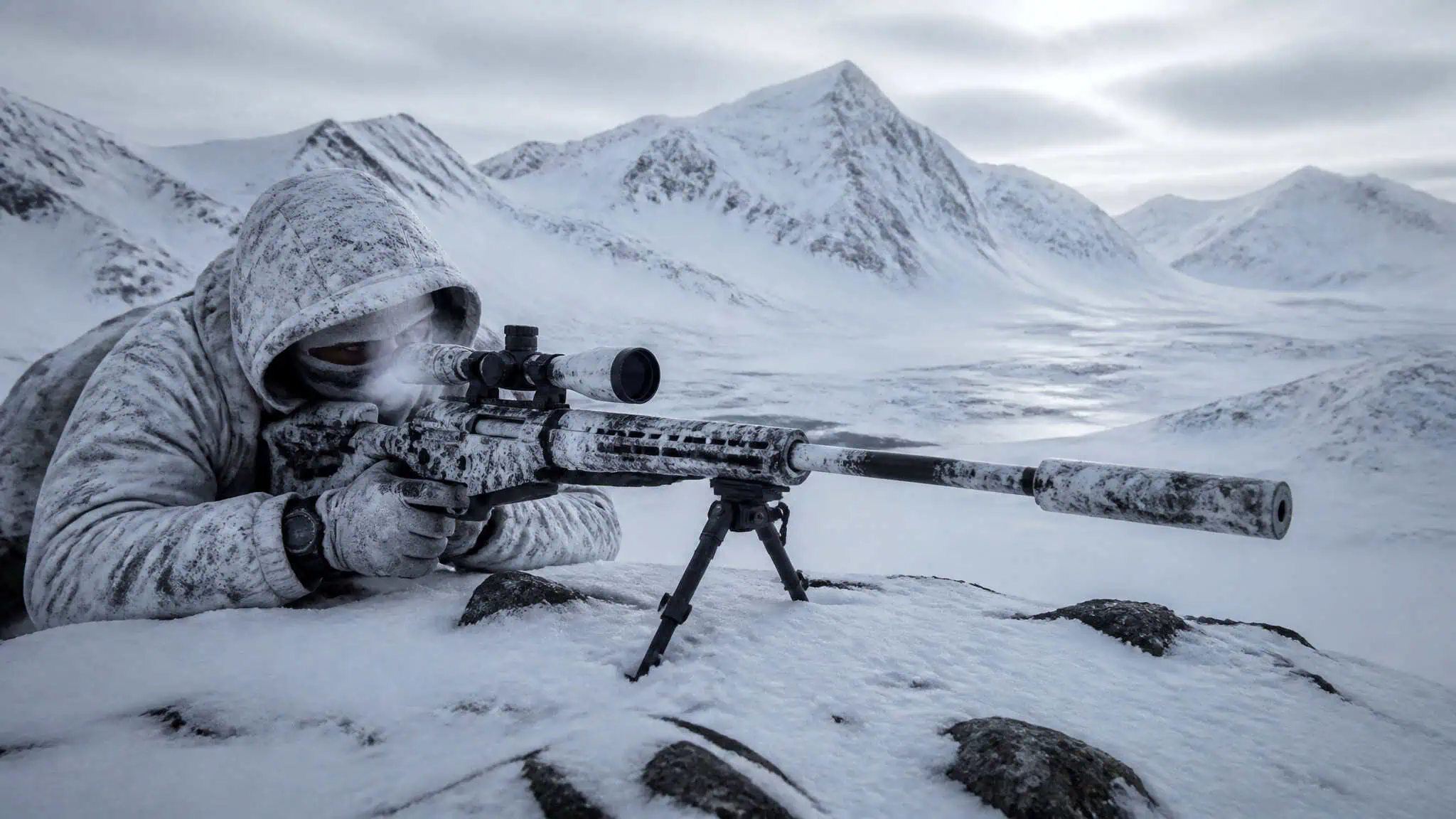
The modern approach borrows heavily from a Finnish legend. Simo Häyhä, who racked up over 500 confirmed kills during the Winter War, pioneered tactics that are still used today. He’d wet down the firing point to keep snow from being disturbed, and he’d stick snow in his mouth to hide his breath on cold days. He understood that in the Arctic, the environment is the enemy just as much as the guy with the rifle.
The Arctic Is an Insatiable Beast
Army Staff Sergeant Phillip Cho, who has become synonymous with Arctic sniping, puts it plainly: the Arctic can chew up some of the strongest soldiers. He would know. His longest static position in the Arctic was 10 hours, and he’s learned that condensation from breathing can freeze your equipment solid. Water is a constant concern, which is why you carry fuel to heat it up, since you can’t eat snow directly and you can’t trust glacier water to be clean. Cho’s journey from junior enlisted to sniper began when he was invited to try out for reconnaissance, a path that led him from the frozen north to the deserts of Iraq.
The practicalities are brutal. Gear is heavy: 90 to 120 pounds in winter. Movement takes twice as long as you’d think. And the principles of concealment remain the same as they ever were.
Blend foreground and background, cut contrast and shine, and avoid odd shapes and out-of-place colors. As Staff Sergeant Cho says, fieldcraft is what distinguishes a sniper from a marksman. For perspective, Cho is a first-generation Korean American who deployed to Iraq in 2019 in support of Operation Inherent Resolve, which is a long way from the frozen tundra of the Arctic.
After Graduation: Advanced Courses and the Sniper Community
Graduating from the basic course is a milestone, not a finish line. There’s a whole world of advanced training and community waiting.
More Training
The Army offers follow-on courses for Urban Snipers and High Angle (Mountain) Snipers, which prepare you for the specific challenges of cities and vertical terrain. The Marine Corps has its own Sniper Team Leader course and other schools.nd if you’re ambitious, you can seek out foreign training at places like the British Royal Marine Snipers School or the Israeli Foreign Forces Snipers School, both of which have stellar reputations.
The Army Sniper Association
The professional home for snipers is the Army Sniper Association. Membership requires graduation from an accredited military sniper school or an accredited law enforcement training program. There’s an associate membership for those who don’t meet the regular requirements. Being enrolled in the sniper team leader course doesn’t count, you have to graduate.
And you’re not alone in asking about the application process, since the website has a few quirks. You’ll need to complete the application in one sitting, so have your documents ready as a PDF or JPG. The one-time $120 lifetime membership includes access to the SSG Eric Caban Sniper Care Program and the SFC Earl S. Ellis Memorial Scholarship. It’s worth the effort. Accepted document formats include PDF or JPG, so make sure your files are in one of those formats before you start.
Legendary Graduates: What the School Has Produced
The numbers tell a story of fear and respect. Staff Sergeant Jim Gilliland set the standard for the modern era with a confirmed kill at 1,250 meters (1,367 yards) using an M24 rifle in Ramadi, Iraq, on September 27, 2005. It’s the longest confirmed kill with a 7.62×51mm NATO rifle, and it put the school on the map for a generation. The M24, a bolt-action rifle chambered in 7.62×51mm, remains a symbol of the sniper’s craft, and Gilliland’s feat is a testament to the training that produces such precision.
The list goes on. Staff Sergeant Timothy L. Kellner racked up 139 confirmed kills during the Iraq War. Adelbert F. Waldron III had 109 in Vietnam. And then there are the legends you know from the movies: Master Sergeant Gary Gordon and Sergeant First Class Randy Shughart, both Delta Force operators who were posthumously awarded the Medal of Honor for their actions during the Battle of Mogadishu, a story dramatized in Black Hawk Down. These aren’t just shooters; they’re the standard bearers for an entire profession.
The path to the Army Sniper School is a grind. It starts with enlisting in one of three eligible job codes, then proving yourself in a line unit. You’ll survive the seven-week course, learn the trade from the best, and if you’ve got the patience and the fieldcraft, you’ll earn the right to call yourself a sniper. The school has been running continuously since 1987, producing the quiet professionals who win wars without ever saying a word.
The question isn’t whether you can shoot; it’s whether you can stay hidden, keep your head, and wait. That’s the real test. One shot, one kill. The rest is just waiting.
Frequently Asked Questions
How hard is it to become an army sniper?
It’s brutal, but not mainly because of shooting. The physical load is staggering — 60 to 80 pounds of gear in summer and 90 to 120 in winter, with static positions lasting up to 10 hours. The real filter is mental: most candidates arrive with solid shooting skills but fail because they break under the pressure of staying still, quiet, and calm for hours on end.
How much do army snipers make a year?
Army snipers are paid according to their rank and years of service, just like any other soldier, since sniper is a skill within an existing military occupational specialty rather than a separate pay grade. There’s no special sniper bonus baked into the base salary, so earnings depend on factors like being an E3 to E6 and any additional special pay or allowances you qualify for.
Do you need 20/20 vision to be a sniper?
Yes, your eyes have to be 20/20, though glasses are allowed. You also need to pass a red-green colorblindness test. If you’re unsure about your vision, get it checked early before you invest time in the enlistment process.
What’s the difference between an Army sniper and a Marine scout sniper?
The Marine Corps combines the reconnaissance and sniper roles into a single ‘Scout Sniper’ billet, while the Army treats them as separate jobs on the organizational chart. In practice, though, the Army expects its modern snipers to blend both roles in the field, and soldiers from scout backgrounds like 19D Cavalry Scouts can attend sniper school and serve in both capacities.
How are drones changing sniper training?
Drones and thermal sensors have made the battlefield far more dangerous for snipers, as the war in Ukraine demonstrated how easily aerial surveillance can expose a hidden position. The school now trains snipers to assume the enemy has eyes in the sky and is evaluating full-spectrum signature management camouflage designed to defeat thermal sensors. That technology is still early-stage and not standard issue, so fieldcraft and patience remain the core skills.