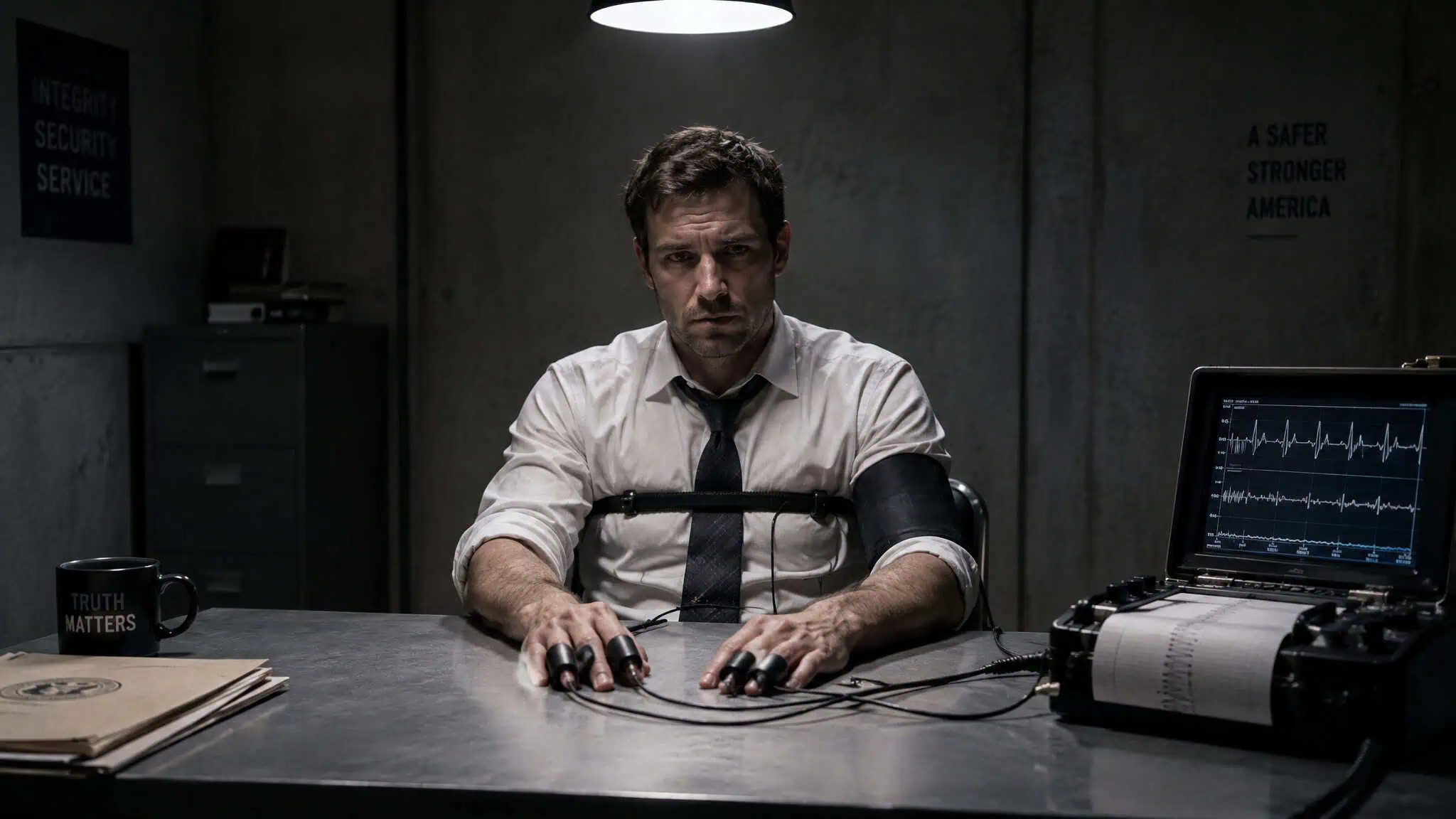
Getting a job with the CIA is extremely difficult, and here’s the part nobody tells you: the difficulty isn’t your resume. It’s the vetting, and specifically the polygraph. One documented applicant, who already held a Top Secret/SCI clearance from defense contract work, failed his first polygraph session over a single question: “Have you ever lied to your boss?” He wasn’t lying. Everyone has.
Here’s the honest problem: no federal agency publishes an acceptance rate for the Central Intelligence Agency, so any percentage you’ve seen quoted is somebody guessing. What you can get are proxy numbers. The big one is that for most CIA positions you’ll face the full-scope, or lifestyle, polygraph, and that exam is where qualified people wash out. The upside is real too: a full-scope poly on your clearance is worth a $30,000 to $60,000 pay premium, precisely because so few people have passed it.
Key Takeaways
Roughly one in three first-time polygraph examinees at NSA/CIA gets a determination other than “no deception indicated”, a working assumption built from the 2003 NRC review and AntiPolygraph.org aggregation, since no agency publishes official failure rates.
A full-scope polygraph clearance adds $30,000, $60,000 on top of the roughly $140,000 average TS/SCI salary in the Washington-Baltimore metro (2024), because very few cleared people have passed the lifestyle exam.
Disclosure beats everything: adjudicators rarely punish honesty but consistently punish what looks like concealment, and there’s a known retest and apply-elsewhere playbook if you fail.
Table of Contents
The honest numbers: how hard CIA hiring actually is
Straight answer as of 2026: no federal agency publishes CIA acceptance rates or polygraph failure statistics. Anyone quoting an exact percentage is making it up.
Two numbers are defensible. First, a labeled working assumption: roughly one in three first-time NSA/CIA polygraph examinees gets a determination other than “no deception indicated.” That estimate comes from the 2003 National Research Council review combined with AntiPolygraph.org’s aggregation of accounts, it’s an estimate, not verified data. Second, the labor market’s own difficulty meter.
Average TS/SCI compensation runs about $140,000 in the Washington-Baltimore metro, per the ClearanceJobs 2024 Compensation Report, and a full-scope poly clearance adds $30,000 to $60,000 on top, the straight-talk math behind CIA agent salary, from GS scale basics to hazard pay and long-term earnings trajectory. Employers pay that because very few cleared professionals have passed the lifestyle exam. The scarcity is the salary.
As Lindy Kyzer puts it, the polygraph trips up plenty of cleared candidates, yet the setback is usually temporary: most people who fail their first poly eventually pass another.
Basic eligibility: the easy filter
Whether something disqualifies you depends far more on how you disclose it than on having a spotless record. The baseline is straightforward: you need US citizenship, degree expectations vary by role, and you apply from inside the United States. The public detail on baseline requirements is thin, so the CIA careers site is the place to check what your specific role wants.
The anxieties you’ve read about, the age limit of 35, getting in without a degree, are position-dependent, not universal rules. Some roles care, some don’t. There’s more on alternative paths in our piece on CIA jobs without a degree.
The actual bar is SEAD 4’s 13 adjudicative guidelines. Drug use gets weighed on recency (recent means within the past 12 months), frequency, and circumstances. And here’s the rule that governs everything: lying about old experimentation is more disqualifying than the experimentation itself. Clearance attorney Sean Bigley’s takeaway is the one to remember, adjudicators rarely punish honesty but consistently punish what looks like concealment.
What the CIA polygraph actually is
The CIA polygraph asks about your whole life, drugs, finances, criminal history, sexual behavior, foreign contacts, because for most positions you’re facing the full-scope (lifestyle) exam, the longer and harder of the two federal polygraph types. Nearly every CIA and NSA hire sits for one. The narrower alternative, the counterintelligence-scope polygraph, sticks to foreign intelligence contacts, sabotage, terrorism, and unauthorized disclosure. It’s standard at DIA and FBI under DoDI 5210.91, which was revised October 12, 2023.
(Occasionally an SSBI add-on poly shows up for specific SCI compartments. Edge case, don’t worry about it.)
| Full-scope (lifestyle) | CI-scope | |
|---|---|---|
| Topics | Espionage, drugs, finances, crimes, sexual behavior, foreign contacts | Foreign intelligence contacts, sabotage, terrorism, unauthorized disclosure |
| Length | 2-8 hours | 2-4 hours |
| Required for nearly all CIA/NSA hires | Yes | No |
| Standard at DIA and FBI | No | Yes |
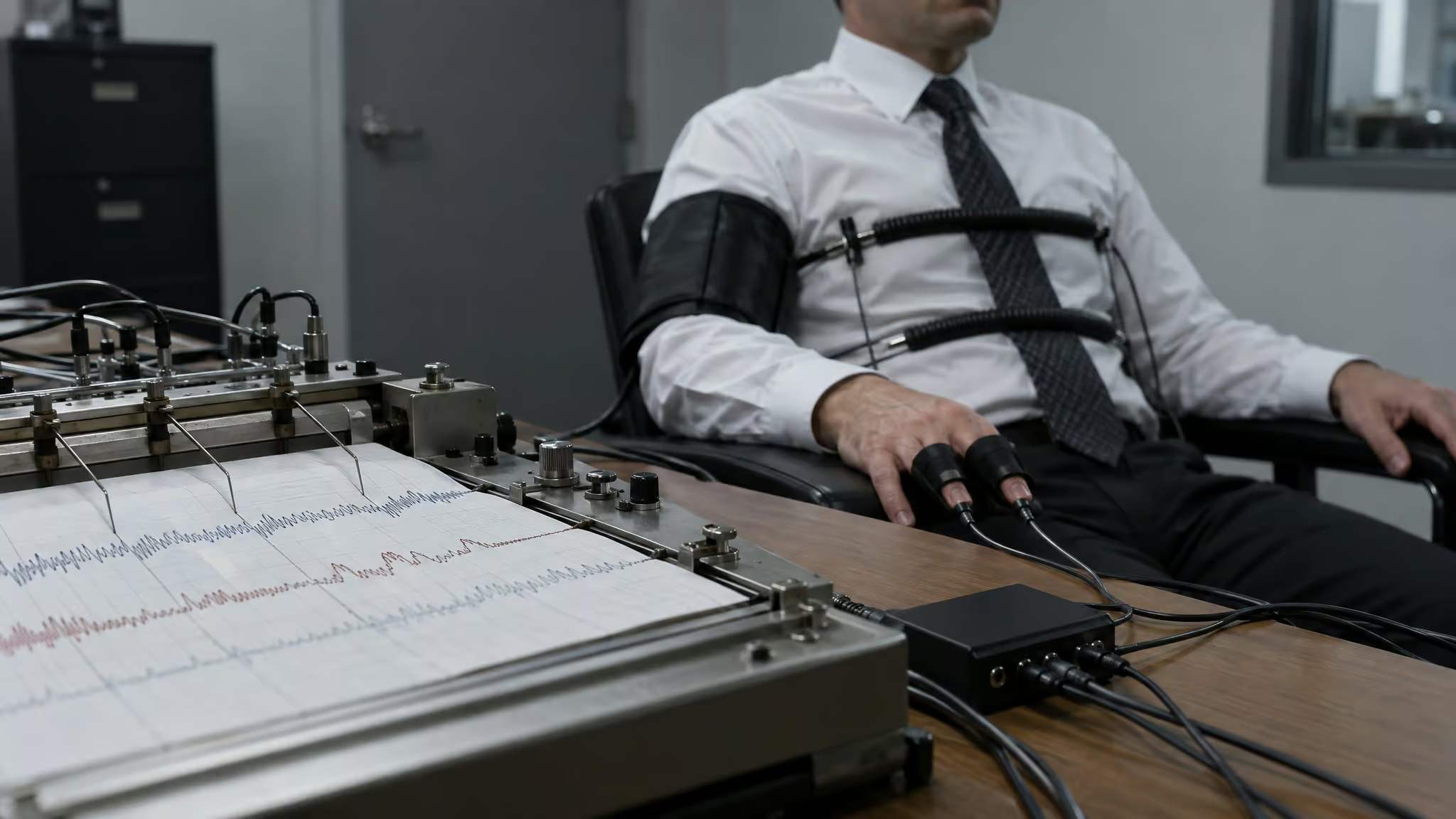
The hardware is concrete. Two breathing sensors, one on your chest and one on your belly. Sweat-skin electrodes on your fingers. A blood-pressure cuff.
Four channels, codified in DoDI 5210.91 §3, all measuring arousal, not lies. Your body doesn’t have a “lying” setting. Examiners train at DCSA’s CDSE and at the National Center for Credibility Assessment in Fort Jackson, so this is a standardized federal process, not a guy with a hunch.
The session runs in three phases. First, a pre-test interview of one to three hours, and know what it’s for: it’s designed to get you talking. Most people who’ve been through it say the talking is the trap, not the wires. Then three to five chart collections of about five minutes each.
Then scoring and a decision. Sessions can spill across multiple days, one applicant’s second-day session ran almost four hours.
There’s no pass/fail. You get one of three calls: no deception indicated, deception indicated, or inconclusive. Agency labels differ but it’s the same three doors. A clean call moves you forward.
A deception call goes to adjudicators. Inconclusive usually means a retest in 60 to 90 days.
Why the lifestyle questions at all? It’s a vulnerability assessment. They’re not judging your past for its own sake, they’re mapping what a foreign service could use against you.
Why the polygraph, not your resume, is the chokepoint
The documented case: a man who later spent 11 years as a CIA analyst walked into his applicant polygraph already holding a TS/SCI clearance from contractor work. Full disclosure, no countermeasures. Failed on day one. The problem question traced back to him answering “Fine” when asked about his boss during a cancer scare, the boss’s health, not his own record. He passed on day two after almost four hours, and the physical toll included a purple hand and involuntary twitching from holding still too hard.
That account, published on AntiPolygraph.org in October 2018, also describes the asymmetry. CIA employees took a polygraph every five years, and one upper manager failed his re-poly roughly seven times, the polygraph unit eventually stopped calling him, and kept his job. Meanwhile, applicant accounts consistently describe losing conditional offers over a single control question and one stressful chart session, not over their actual record. The gate is hardest at entry.
Why truthful people fail the polygraph
Truthful people fail polygraphs for identifiable, fixable reasons: the machine measures stress responses, and stress has a checklist.

The failure catalog starts with SF-86 disclosure gaps, the space between what’s on your form and what you say in the room is the most common substantive failure. Then the physiology: under five hours of sleep measurably alters your body’s responses (the federal training arm, CDSE, recommends seven). More than two cups of coffee within four hours warps the cardiovascular tracing, with nothing within six hours of the appointment. Add medications, acute stress, and overthinking.
Then the questions themselves. “Have you ever used illegal drugs?” when your only history is a friend’s prescription Adderall in college, is that yes or no? The machine doesn’t care about your nuance. And control questions like “Have you ever lied to get out of trouble?” can spike harder than the real questions, flipping your chart.
Everyone says yes to that one. This isn’t a “nerves” problem. It’s mechanical.
Quick test: Before your pre-test interview, compare your SF-86 line by line against what you’d say out loud. Any mismatch is the failure point.
Does the test even work? The science and the Ames paradox
It’s defensible for pinning down a specific event and inadequate for screening applicant pools. An NIJ-funded field study found over 90% accuracy in criminal investigations run by skilled examiners, but the National Research Council’s 2003 review concluded screening accuracy isn’t good enough to bet a clearance on, and the APA’s 2004 position agrees. Agencies ignored both, one FBI examiner in the insider account denied ever hearing of the report. And Aldrich Ames passed two CIA polygraphs, in 1986 and 1991, during nine years of spying. The insider’s own record makes the examiner-skill point bluntly: his only two first-try passes came with experienced examiners, while the typical pattern was a harsh inexperienced examiner failing you, then an experienced examiner passing the re-poly. On a ten-year reinvestigation poly, the accusations got absurd, a foreign-handler claim despite a passport expired nine years, a debt accusation shouted without pulling the $15 credit report, a lifelong non-drug-user accused of being a major user. One failure was resolved by a complaint letter to the Chief of Polygraph, which drew an apology, an examiner reprimand, and an easy pass with an experienced examiner.
How to genuinely improve your odds
You improve your odds by disclosing everything on the SF-86 before the pre-test interview finds the gaps, concealment hurts you more than the conduct ever would. That’s the whole strategy in one sentence. If you want the full picture of what it takes to get hired, here’s the playbook: check out this complete guide to getting a job at the CIA.
Disclose everything. The applicant’s future colleague put it in two words: spill your guts. Drug use gets weighed on recency, frequency, and circumstances, so lying about distant experimentation is the disqualifier, not the experimentation. Fill the form out completely and know it cold, the pre-test interview should never surprise you.
Handle the day properly. At least seven hours of sleep, per CDSE’s own recommendation, because under five measurably changes your responses. No caffeine within six hours of the appointment. More than two cups within four hours distorts the cardiovascular tracing, and your morning ritual is on the checklist whether you like it or not.
Do not get cute with the test. Breath control, muscle tensing, and polygraph coaches all read as manipulation under DoDI 5210.91 and can permanently disqualify you. Coached candidates statistically produce more flagged charts, not fewer. The prep industry can hurt you.
The countermeasure folklore is worth knowing just so you understand what people try, none of which is advice. The insider tried butt-clenching exactly once, during a calibration card test, and never again. Another account describes rehearsing lies until they’re automatic, or taking a laxative to create whole-body jitter that muddies the charts, the two families Bustamante described. Darkly funny, mostly self-destructive.
One honest caveat to close: the system is imperfect in both directions. Ames passed twice while spying. This playbook improves your odds. It doesn’t command the outcome.
What happens if you fail the CIA polygraph
Failing the CIA polygraph means a procedural setback with a known playbook, not a verdict, and the practical recovery path usually runs through a different agency, not a courtroom. Results don’t automatically propagate across agencies, so applying elsewhere is a real option, just know you’ll have to disclose the failed poly on your SF-86. There’s no single federal retest standard, so the rules depend on where you sat in the chair:
| Agency | Wait before retest | Attempts |
|---|---|---|
| CIA | ~6 months | 2 lifetime |
| NSA | 60-90 days | 2 |
| FBI | 90 days | 1 retest |
| DIA | ~90 days | Rolling 12-month cap |
Inconclusive typically means a retest in 60 to 90 days regardless of agency.
Here’s the gap worth knowing: there are no statutory hearing rights after a bad result. Attorney Mark Zaid notes agencies often use a failed poly to withdraw the conditional offer before formal adjudication, which conveniently skips the step that would trigger appeal rights. Attorney Sean Bigley’s practical advice is blunt: apply elsewhere. Results don’t automatically follow you across agencies, though you do have to disclose prior polys on the SF-86. Litigation is rarely the move.
Why the gate exists, why it never goes away, and what it costs
Yes, the polygraph obligation continues after you’re hired, the gate never ends.
The legal design is deliberate. Authority traces to Executive Order 12333 and the National Security Act of 1947, under which the CIA was established September 18, 1947. The telling detail: EPPA, the 1988 law that banned most private-sector polygraph use, explicitly exempted federal national-security employers. The law protecting everyone else doesn’t protect you. That’s policy, not inertia.
Modernization didn’t remove it either. Trusted Workforce 2.0, adopted in 2018, replaced periodic reinvestigations with continuous vetting by 2021, with the transition complete by the end of 2022, but it supplements the polygraph rather than replacing it. Clearance holders still file paperwork every five years, and post-Ames random polygraphs add more.
The human cost is real and documented. The insider describes leaving sessions broken and weeping, and overhearing a colleague say, I thought I was a good person, but after that last poly, I’m not so sure. One truthful analyst failed three straight polys across DIA and FBI, refused a fourth, was terminated, and resigned on his lawyer’s advice. He now steers his own kids away from any career requiring a poly. And a wry footnote on the culture: the agency declassifies its own history, from its 1947 founding onward, in its FOIA reading room, while the exam that decides who gets in stays this opaque.
The resume gets you to the polygraph; the polygraph is where qualified candidates wash out. The credential is worth $30,000 to $60,000 precisely because so few clear it. What you can actually control: full disclosure, sleep and caffeine timing, zero countermeasures, and knowing the retest-and-apply-elsewhere playbook if it goes sideways. And on Kyzer’s reframe: a first failure is rarely permanent, most people who fail their first poly eventually pass another.
Frequently Asked Questions
What are the odds of getting into the CIA?
Nobody can give you a real number, because no federal agency publishes CIA acceptance rates — any exact percentage you’ve seen is somebody guessing. The best proxy is the polygraph: a working estimate built from the 2003 NRC review and AntiPolygraph.org aggregation suggests roughly one in three first-time NSA/CIA examinees gets a determination other than ‘no deception indicated.’ The vetting, not the resume, is where qualified candidates wash out.
Is CIA easy to get into?
No. The baseline eligibility filters (US citizenship, applying from inside the US, degree expectations that vary by role) are the easy part. The chokepoint is the full-scope lifestyle polygraph required for nearly all CIA hires, where even candidates who already hold Top Secret/SCI clearances fail their first session over questions like ‘Have you ever lied to your boss?’
What happens if you fail the CIA polygraph test?
It’s a procedural setback with a known playbook, not a permanent verdict. At the CIA you wait roughly six months and get two lifetime attempts, and inconclusive results typically mean a retest in 60 to 90 days. There are no statutory hearing rights after a bad result — agencies often withdraw the conditional offer before formal adjudication — so the practical recovery path usually runs through applying elsewhere, since results don’t automatically follow you across agencies (though you must disclose prior polys on the SF-86).
What’s the difference between a full-scope and counterintelligence-scope polygraph?
The full-scope (lifestyle) polygraph covers your whole life — drugs, finances, crimes, sexual behavior, foreign contacts — runs 2-8 hours, and is required for nearly all CIA and NSA hires. The counterintelligence-scope polygraph sticks to foreign intelligence contacts, sabotage, terrorism, and unauthorized disclosure, runs 2-4 hours, and is standard at DIA and FBI under DoDI 5210.91.