
You’re sitting there with a resume and no diploma, the CIA’s job board open in another tab, wondering if you’re about to waste an hour on an application that gets deleted by a filter in four seconds. Fair question. Here’s the two-part answer up front: degree requirements for CIA jobs are position-specific, so “CIA jobs no degree” is a real category, not a fantasy. And the stuff that actually kills most applications has nothing to do with your transcript.
It’s citizenship, security clearance, the polygraph, and whether you were straight with them on the forms. Tease that out enough and you’ll see why some guys with a diploma get bounced and some guys without one get hired. One ground rule before we start: job postings govern everything here. I’m not going to invent salaries, titles, or guarantees the Agency never published.
Key Takeaways
Even the most mundane CIA job typically requires Top Secret clearance, and a Full-Scope Polygraph is nearly always part of the package, so the vetting process kills more applications than any diploma check.
The Directorate of Support is where non-degree candidates concentrate: security guards, cooks, cleaners, and unusual specialist roles like cosmetologists doing disguise makeup and prop makers building concealment devices.
Hired intelligence professionals have documented GPAs of about 2.4 and 2.65-2.7, below every stated bar, crediting the psychological battery and tenacity over transcripts.
Candor is the top reason offers get withdrawn: omitting, underreporting, or contradicting yourself at any stage ends applications regardless of qualifications.
Table of Contents
Can you get a CIA job without a degree?
Yes for many support, security, and trade roles. No for analyst, STEM, and core officer roles. A bachelor’s is usually the stated requirement, but not always, because it depends on the specific job and the posting governs.
The honest split looks like this. On the open side: Directorate of Support trades, facilities, security, clerical, logistics, and food service positions. That directorate is the concentration point for guys without a four-year degree. On the gated side, analyst and STEM tracks are effectively degree-gated, and the CIA’s roster is wider than people think: scientists, engineers, attorneys, physicians, linguists. A normal-ish large employer that happens to do classified work.
One flag before you get excited: no source out there lists official no-degree job titles. So think in categories, not guaranteed openings. The posting for the job you want is the only document that settles the degree question.
Basic requirements that have nothing to do with your education
Four gates, none of them academic. You have to be a US citizen or dual national; if you’re mid-citizenship process, you wait until it’s final, because the CIA won’t help you get there. Minimum age is 18, and there’s no stated upper limit, so being 30 or older isn’t the wall guys assume it is (there’s more on that in our age limits piece). You need to be ready to move to the DC metro area, since every position sits there and some involve overseas travel. And Selective Service registration where it applies.
The real barrier: security clearance and the polygraph, not the degree
The security clearance is the actual gate. CIA support and security jobs are gated by clearance, not credentials, and even the most mundane CIA job typically requires Top Secret clearance, with a Full-Scope Polygraph close behind it. The I’ll just take an easy support role and skip the hard part plan dies right here.
What does the vetting actually involve? Investigators interview your neighbors, your friends, your supervisors, your coworkers. That’s the detail that surprises people: the process reaches into your real life. They’re sizing up character, trustworthiness, loyalty, whether you could be pressured, whether you can keep a secret.
There’s an SF-86 questionnaire, the security form whose signing date starts the drug-use clock, and a medical exam. Your health info from that exam is protected under HIPAA, the 1996 privacy law, and the medical looks at physical and mental health as it relates to doing the actual job. Nothing spooky, just thorough.
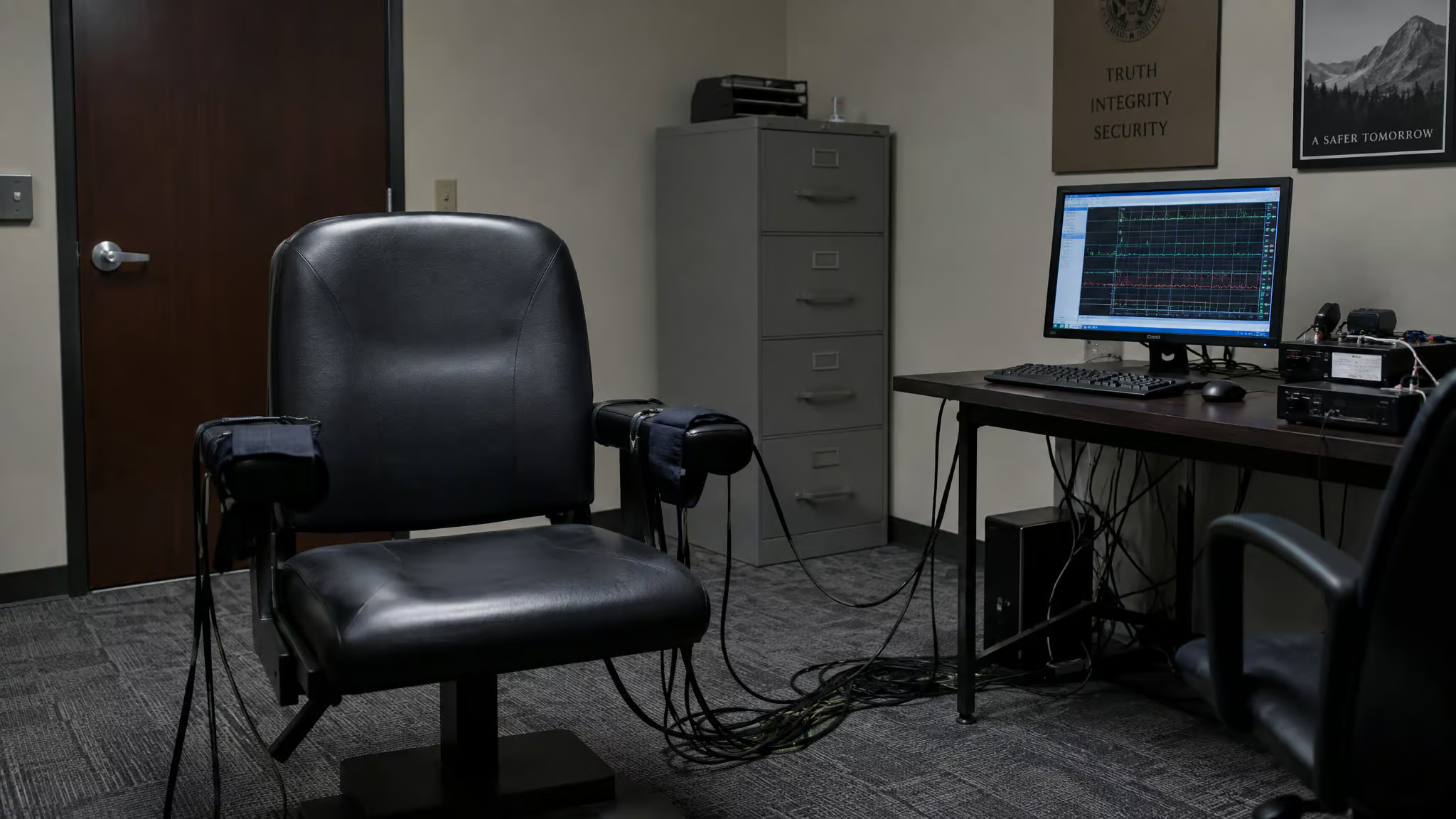
Then the polygraph. It’s mandatory. No exceptions, for anyone, regardless of role. The examiners are trained professionals and what you say in that room stays confidential, which is the reassurance if the idea makes you nervous. But you can’t talk your way around it, and you can’t skip it.
Here’s the leverage point, though, and it’s the single most useful fact in this section: an active TS/SCI clearance already in hand is the strongest card a candidate without a degree can play. A veteran who already holds the clearance starts out in front of an uncleared degree-holder. If you’ve got military time or contractor time and the clearance still active, you’re not starting from zero. You’re starting a few gates ahead.
Support, trade, and specialist roles the CIA hires for
Craft and trade skills are operational assets at the CIA, not rounding errors. The Agency employs cosmetologists doing disguise makeup and prop makers building concealment devices. It also runs the boring end: security guards, cooks, cleaners, graphic designers. This is the part of the article people don’t believe until they read it, and it’s real.

One clean example: one prop maker who builds concealment devices came in with a fine arts degree. Your degree doesn’t predict your CIA job. And the unusual roles aren’t a one-off; former officers’ accounts keep coming back to this theme, which is why the specifics matter more than any argument about transferable skills.
Worth knowing why adaptability matters more than a fixed credential here: assignments rotate every 2-3 years. You’ll never get comfortable. Some guys will love that, some will hate it, and knowing which one you are before you apply is cheaper than finding out after. On the technical side, IT roles are reachable through certifications rather than a degree path, which fits the self-taught crowd.
Clandestine Service paths without a four-year degree
Military experience doesn’t officially substitute for a degree. Nothing published describes an official substitution policy, so don’t count on it. But the National Clandestine Service’s Specialized Skills Officer track is the one built for exactly that background.
Four official entry-level positions exist. Core Collectors and Operations Officers: the job movies are about. Overseas, finding and recruiting the foreigners feeding intel to the CIA, sometimes protecting them. Honest caveat: highly competitive for non-degree holders. Collection Management Officers are the desk-side counterpart, assigning field officers their workloads, judging whether gathered info is actually useful, and passing it up the chain.
Staff Operations Officers are the go-between for headquarters and field agents, including covert travel to meet agents in person and hand over directives and the information they need. And Specialized Skills Officers get deployed wherever their skill set is most useful: language, technical, media relations, or combat expertise. That’s the lane for military, trade, and language backgrounds.
Recruiters also look for language fluency, foreign cultural knowledge, and high-level experience in military, business, or engineering. If you grew up bilingual or spent years working abroad, that counts for something here.
Getting in sideways: the contractor route
Yes, the contractor route is real, and it runs through three doors beyond direct hire. This model comes from a third-party source, silentprofessionals.org, not CIA.gov, so treat it as a map, not a promise.
First: vetted private military and defense contractors holding CIA support contracts. They hire mostly from elite military backgrounds with additional assessment, and strong performers may convert to direct-hire offers after an assignment. This route mostly starts with a military record. Second, the rare one: the CIA sometimes directly approaches people with unique access, after heavy vetting.
Cool fact. Nobody can plan for it. Third is the normal direct-hire portal, which still exists alongside the side routes and shouldn’t be forgotten just because the side doors are more interesting.
The practical leverage repeats here: an active TS/SCI plus Full-Scope Polygraph in hand is what makes the contractor pipeline realistic. No named companies, no guaranteed placements, just a route that trades and military-background guys use without a degree.
What actually gets you hired: aptitude over credentials
How hard it is depends less on the degree than on the psychological battery and background process, and there are documented hires that prove it. First, the GPA conflict, presented straight: one third-party source puts the bar at 3.0. But former officers speaking publicly, via the EverydaySpy YouTube discussion, say the CIA’s own site tells candidates not to bother applying below roughly 3.5 to 3.8. I can’t fully reconcile those numbers, and neither can you, so let the spread sit.
Now the kicker. Speakers with GPAs of about 2.4 and about 2.65 to 2.7 applied anyway and got hired. They credited the psychological battery and plain tenacity, not their transcripts. These are documented first-hand accounts from public interviews, not a loophole and not policy. The takeaway is that the stated bar works as a filter, and the real selection happens in the tests you can’t study for with a syllabus.
The big-picture version: across the intelligence community, CIA, DIA, NSA, NRO, and NGA, hiring weighs how well you learn, how adaptable you are, and how much grit you bring ahead of what your degree was in, unless the role is specialized. The human proof point is the librarian, a working librarian with a library science degree, who became a targeter, the analyst who decides what intelligence gets collected on. Competitiveness varies by role, so keep your expectations scoped to the job you’re actually chasing.
What disqualifies you, even with perfect qualifications
No, education isn’t what disqualifies most CIA applicants. Lack of candor is. Not being straight with the Agency, omitting things, underreporting, or telling inconsistent stories at any stage is the top reason offers get withdrawn. That’s a striking fact.
Let it sit. A guy who discloses an uncomfortable truth on the SF-86 is in better shape than one who hoped nobody would check.
Then the drug rules, specific and plain:
- No marijuana or THC from the day you sign the SF-86 onward, including legal prescription products. Federal law beats state legalization. That’s the whole line.
- No other illegal drugs or prescription misuse in the twelve months before you apply, and none afterward either. The “and after” part is what changes behavior.
- Recent, repeated excessive drinking or alcohol-related incidents raise flags. One bad night years ago isn’t the issue; a pattern is.
- Criminal or dishonest conduct counts whether or not there was a conviction. That nuance surprises people. And once you’re in the hiring process, any ongoing illegal activity is off the table.
Now the modern pitfalls, because this is the freshest material and guys blow it constantly. AI is banned in writing samples, portfolios, assessments, screenings, and interviews. Not just the resume. The online assessments count, the screening questions count, and getting caught using AI where it’s banned can tank your consideration.
If AI touched your resume, say for a grammar review, you have to disclose it and explain. Disclosure is the escape hatch, not abstinence. The rule isn’t “never use it.” It’s “never hide it.”
And the counterintuitive one: no following, friending, liking, or sharing CIA social media content, and no posting about your application or processing. Even a like counts. Instinct says follow the agency and document the journey; the rules say the opposite, and it’s a safety measure, not pettiness.
How to apply through MyLINK without shooting yourself in the foot
You apply through MyLINK, the CIA’s online portal, and you have to submit your application while you’re on US soil, including its territories. That’s the prerequisite that trips up people applying from overseas or planning a trip around the date. Once you’re outside the country, radio silence: no mail, no phone, no email, no internet contact with the CIA by any channel. Short travel abroad is fine during hiring.
Contact isn’t. The rule isn’t bureaucracy for its own sake; it’s a safety measure for you and for them.
The discipline items carry over from the last section: no social media engagement with the Agency and no posting about your processing. Respond promptly and keep your appointments. On timing, apply when past conduct has had time to mitigate and when your personal and professional responsibilities won’t interfere with the process. And remember the AI rule: anything that touched your resume gets disclosed.
Building CIA-relevant skills without a degree
Straight answer on pay first: solid salary data for entry-level CIA support roles doesn’t exist in any reliable source. The posting itself is the only pay authority. Anyone quoting you a “CIA no-degree salary” is guessing.
What the sources do supply is civilian context, from Ramsey Solutions’ list of high-paying jobs without a four-year degree: executive assistant, $63,000 median with a HS diploma; web developer, $77,000 with an associate degree; air traffic controller around $130,000 with an associate degree and honest-to-God stress to match; electrician $57,000; carpenter $49,500, both trades through diploma plus apprenticeship. Those numbers aren’t CIA pay. The point is what the backgrounds build: trade, certification, and support experience create exactly the technical, security, and logistics skill profiles that CIA support roles and the contractor pipeline recruit for.
The CIA-specific pay gap for no-degree roles stays a gap. Postings govern, same as always. If you’re mapping out the whole process from scratch, our full CIA job roadmap covers the broader application path, and our piece on CIA hiring difficulty gets into the odds and failure points.
The binding constraints for a no-degree candidate are citizenship, the clearance, the polygraph, and your conduct history. The transcript is the smallest gate of the four. Support, specialist, and contractor paths are open to you; analyst and STEM tracks are gated. Check the pre-submission checklist in this article one more time before you hit submit on MyLINK. Then find out for yourself.
People Also Ask
How hard is it to get hired at CIA?
Hard, but not because of the degree. The real gates are citizenship, a Top Secret clearance with a Full-Scope Polygraph, and candor throughout the process — omitting or contradicting information is the top reason offers get withdrawn. Documented hires with GPAs around 2.4 and 2.65–2.7 show the psychological battery and tenacity matter more than transcripts.
How much does entry level CIA make?
Reliable salary data for entry-level CIA support roles doesn’t exist in any trustworthy public source, and the job posting itself is the only pay authority. Anyone quoting a specific ‘CIA no-degree salary’ is guessing. For civilian context, comparable no-degree jobs range from around $49,500 for carpenters to roughly $130,000 for air traffic controllers, but those figures aren’t CIA pay.
Can military experience substitute for a college degree in CIA hiring?
Not officially — nothing published describes a formal substitution policy, so don’t count on it. But military backgrounds have real leverage: an active TS/SCI clearance and completed polygraph put a veteran ahead of an uncleared degree-holder, and the National Clandestine Service’s Specialized Skills Officer track is built for military, trade, and language backgrounds.
What disqualifies you from a CIA job even if you meet the education requirements?
Lack of candor is the top reason offers get withdrawn — omitting, underreporting, or telling inconsistent stories at any stage ends applications regardless of qualifications. Other disqualifiers include marijuana or THC use from the day you sign the SF-86 onward, other illegal drug use in the twelve months before applying, a pattern of alcohol-related incidents, and criminal or dishonest conduct even without a conviction.
Which entry level CIA jobs don’t require a four year degree?
Think in categories rather than guaranteed titles, since no official list of no-degree roles exists. The open lanes are Directorate of Support trades, facilities, security, clerical, logistics, and food service positions, plus specialist craft roles like prop makers building concealment devices. IT roles are also reachable through certifications rather than a degree path.
How does the CIA polygraph work and can I skip it?
You can’t skip it — the polygraph is mandatory for every role, no exceptions. Examiners are trained professionals and what you say in the room stays confidential, but you can’t talk your way around it. It’s part of a vetting package that also includes background investigators interviewing people from your real life.