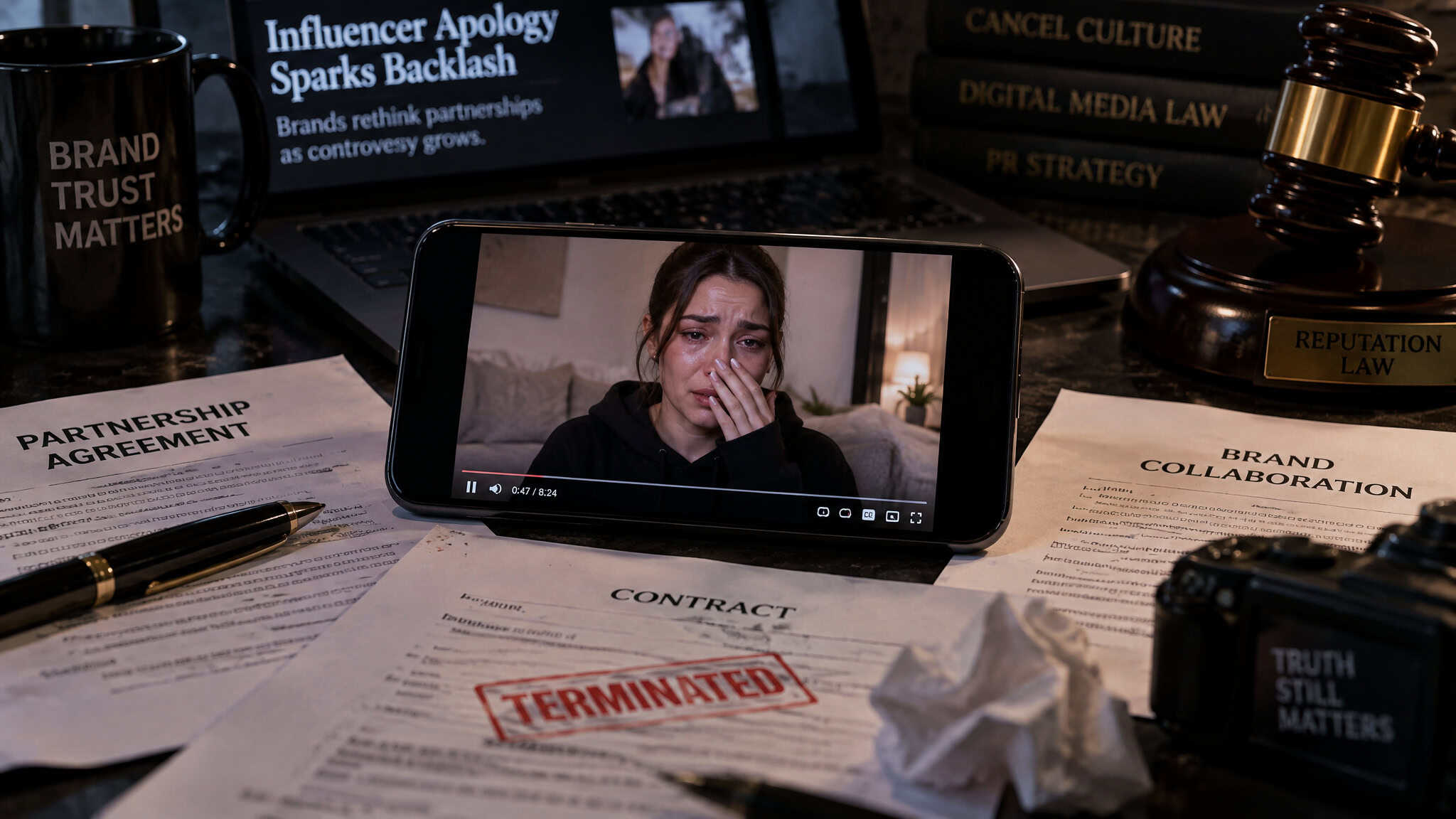
Everyone remembers the video. Almost nobody remembers the sentence. When Kris Wu was arrested, the internet covered it like a championship game: hashtags, hot takes, brands fleeing in real time. When he was sentenced to 13 years in prison, the coverage had already moved on to something shinier.
That’s the gap with famous influencer scandals and what happened after. We get the apology video, the brand statement, the trending hashtag, and then silence. The ending never makes the feed. So this is the boring, useful version.
Each case below gets traced to a dated endpoint: who went to prison, who got demonetized, who apologized and whether it actually worked. Where allegations are contested, they’re labeled contested. Tracking claims to documented outcomes is the standing habit around here, and creator reputations deserve the same treatment as any other product promise. Verified consequences over gossip.
Key Takeaways
Kris Wu was sentenced to 13 years in prison in China (Reuters, November 25, 2022), and a court verdict is the one scandal endpoint that never fades.
Billy McFarland pleaded guilty in March 2018 (Vanity Fair) after Fyre Festival sold luxury villas that turned out to be FEMA tents.
Demonetization and partnership cuts don’t wait for a verdict: James Charles lost monetization in April 2021 over allegations that were never proven.
Table of Contents
The scandals at a glance: verified aftermath ledger
Most famous influencer scandals and what happened after them follow a rough arc: brands bolt within days, the backlash peaks, and then either a career shift or a legal battle plays out over years. But the endings don’t match. Billy McFarland stood in a courtroom and pleaded guilty in March 2018. Kris Wu stood in a Chinese one and got 13 years. Those are not the same ending, and the difference matters more than the scandal itself.
| Scandal | Year | Verified endpoint |
|---|---|---|
| Fyre Festival (Billy McFarland) | 2018 | Guilty plea (Vanity Fair, March 2018) |
| Kris Wu | 2022 | 13 years in prison (Reuters, November 25, 2022) |
| Stokes Twins | 2019 | Guilty pleas; 160 hours community service plus one year probation |
| Shane Dawson | 2021 | Monetization suspended on three accounts; returned to content in 2021 |
| Colleen Ballinger | 2023 | Back on Instagram by fall 2023; no YouTube return |
| Jake Paul | 2020 | FBI raid in August 2020; no charges filed |
| Myka and James Stauffer | 2020 | Investigation closed without charges |
| Ned Fulmer | 2022 | Broke his silence in 2025 |
The roundup structure here follows an industry tracker published January 29, 2026 and updated April 1, 2026. Everything in the right-hand column is a documented outcome, not a vibe.
Two things stand out once the endpoints are dated. The harshest consequences all came from courtrooms, not comment sections. And the platform punishments, Dawson’s suspension especially, outlasted most of the brand exits.
Fyre Festival and Billy McFarland: the hype-outpacing-reality template
This is the anchor story, the one everyone knows: the guy who bought his own hype and landed in a disaster-relief tent eating a cheese sandwich. The promo reel sold the trip better than the island ever could. Glossy models, blue water, luxury villas. What showed up was FEMA tents and no logistics, which is the whole story in one image.
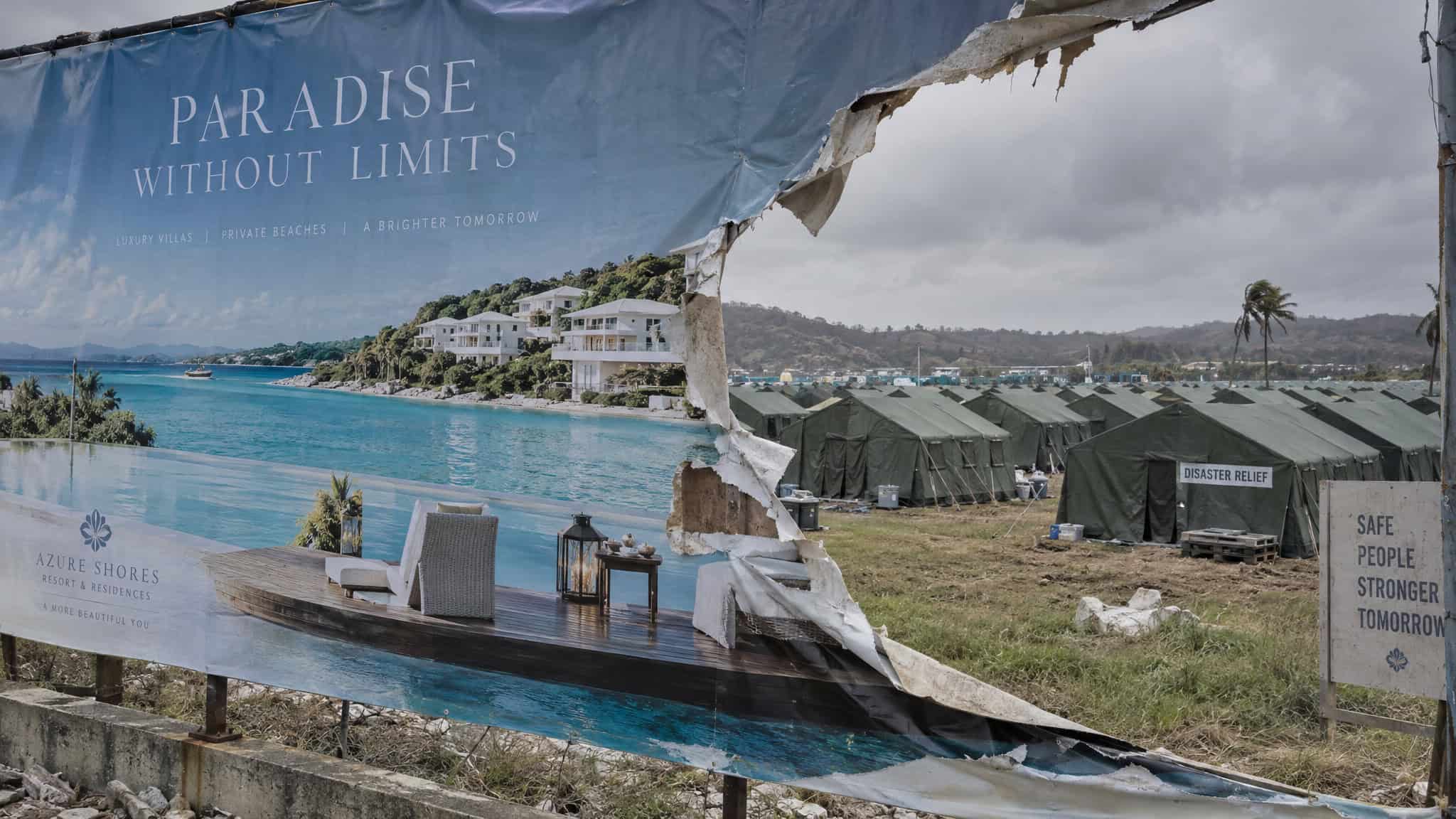
The legal endpoint came plainly enough. McFarland pleaded guilty in 2018, per Vanity Fair, and went to prison. Real consequence, real court.
The durable lesson is the one you’d tell a friend booking a sketchy deal: a pretty post isn’t proof. If you can’t verify the logistics, the hype is just hype. Fyre still gets name-dropped whenever a campaign sells an experience you can’t check out beforehand. It became shorthand for a reason.
Tana Mongeau ran the spiritual successor a couple of years later with Tanacon: big promises, undersized operations, paying fans stuck outside. The template survives because nobody checks the tent count until they’re standing in one.
Buyer rule: If you can’t verify the logistics behind an event or experience, treat the promo reel as marketing, not proof.
David Dobrik and the Vlog Squad: when the audience judges the production culture
Yes, David Dobrik lost brand deals. Multiple sponsors paused or ended their relationships after the rape allegation against Durte Dom, whose real name is Dominykas Zeglaitis, became public. They didn’t wait for an investigation to run its course first, and they didn’t announce their reasoning. The money just left.
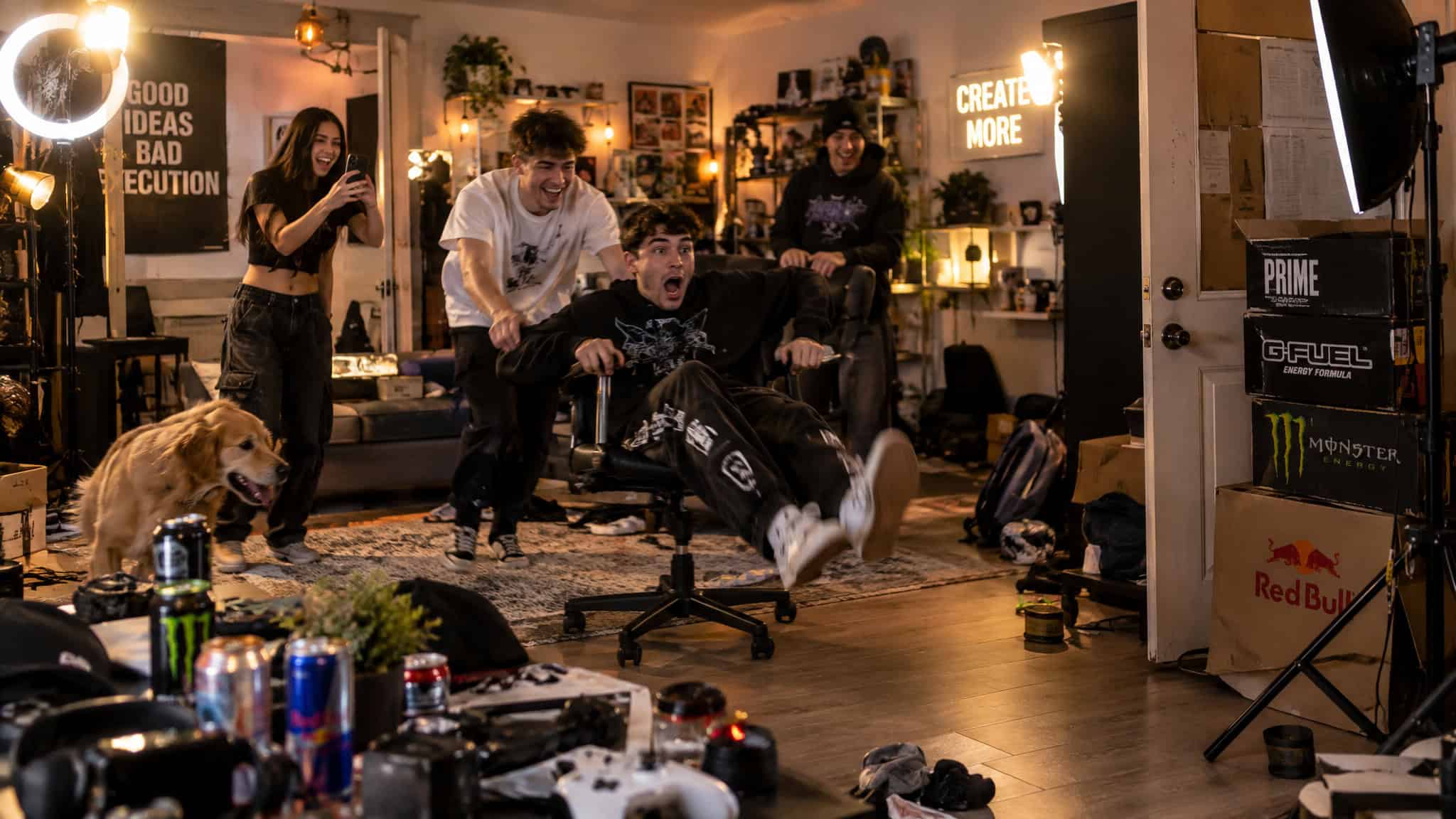
The allegation was the trigger, but the exposure was structural. Dobrik’s channel ran on a rotating cast of friends doing stunts, pranks, and bits that regularly got out of hand. The real risks in that setup were safety, consent, and how the crew treated the people who ended up on camera. That’s not an HR category.
That was the content. Some of the most-viewed moments involved people drinking, being ambushed on film, or agreeing to things mid-shoot, and the entertainment value came precisely from how far the crew would push.
The brands got it before the fans did. The audience doesn’t blame one guy. It judges the whole crew and how the channel operates. In Dobrik’s case the entourage was the product. You weren’t following one funny person, you were following a group’s dynamic, and the group was the brand.
So when the story turned, the fallout hit the entire Vlog Squad economy, not one man’s feed. Sponsors evaluate a single face, but the audience holds the whole production accountable. Guilt by group chat.
Dobrik did post an apology video. It didn’t move the needle much, because a sorry video doesn’t fix a broken set. The apology isn’t the fix. Changing how things run, who gets protected on camera, and what the bits are allowed to be, that’s the fix, and none of it films in ten minutes.
This one still gets cited as the go-to example when brands vet creators in 2026. It stuck because it proved something uncomfortable: if your channel is a group chat with a camera, the group chat is on trial too.
Kris Wu: the criminal endpoint and the morality-clause reset
Kris Wu was sentenced to 13 years in China, per Reuters on November 25, 2022. That’s the fact, and it carries the weight on its own. This is the case where it went far past brand drama into actual prison time.
Brands dropped him fast once the pressure built. Endorsements gone almost overnight, which is the speed point worth remembering. The longer legacy is contractual. After this case, the paperwork got stricter. Companies reworked how morality clauses are written, because the old versions had too much wiggle room.
Because there was a conviction, the fallout never faded. A court verdict makes a scandal permanent, and this case became the reference point for screening people out. No jokes in this one. There’s nothing funny about where it ended.
James Charles: two scandals, two outcomes
- 2019 Tati Westbrook feud: James Charles survived it. The ‘By Sister’ feud was a turning point, and he later bounced back, but the scandal left a lasting stain.
- April 2021: James Charles was demonetized amid allegations of inappropriate messaging with underage minors (per the Guardian); the allegations were never proven. Proof that monetization and partnerships can evaporate overnight.
The 2019 Tati feud
The “By Sister” feud with Tati Westbrook was the first big crack. He came back from it. But it left a mark people still remember, and it was the turning point where the audience started keeping a file on him.
The 2021 allegations and demonetization
The two-phase aftermath, plainly:
- 2019: the Westbrook feud, a reputation wound he recovered from commercially.
- 2021: demonetized (Guardian, April 20, 2021) amid allegations of messaging with minors. The allegations were not proven. Both facts stand on their own.
The blunt lesson is the income one. His earnings evaporated overnight, because demonetization and partnerships don’t wait for a verdict. Nobody paused to see how it resolved.
The Lauren Conrad episode
August 2020, Charles called out Lauren Conrad’s beauty line to 22 million followers. She explained the empty samples were her own error, they talked privately, and he apologized. A callout that turned out wrong, and worth the nuance: even the guy with the megaphone can be holding it backwards.
Severity, not follower count, decided which scandal he survived.
Colleen Ballinger: the ukulele apology and the verification problem
Colleen Ballinger responded to 2023 grooming allegations with a 10-minute ukulele video and has not returned to YouTube. The Miranda Sings creator turned a serious moment into the most mocked apology of the year, and the response became the story.
What could and couldn’t be verified
The record here needs careful handling, because minors are involved and the allegations of grooming and inappropriate relationships with underage fans are unverified. What exists:
- KodeeRants posted since-deleted screenshots of an alleged group text called “Colleeny’s Weenies.” NBC News could not verify them.
- Adam McIntyre, who ran a Miranda Sings fan account at age 10, posted videos claiming Ballinger emotionally grooms fans. She never directly responded to him. The silence is part of the story.
The response and aftermath
On June 28, 2023, Ballinger posted the 10-minute ukulele video about a “toxic gossip train” headed for “manipulation station,” with the internet cast as the mob tying her “to the tracks and harass me for my past.” It was meant to deflect. Instead it became the meme, which is what happens when the delivery is more memorable than the substance.
By fall 2023 she was back on Instagram but hadn’t returned to YouTube. Partial comeback, not a full one, and the difference is the whole verdict. The lesson lands in normal words: when your audience feels like your friends, the fall hits harder.
Shane Dawson: the 20-minute apology and platform punishment
The 20-minute “Taking Accountability” video admitted blackface, racist remarks, jokes about pedophilia, and a video sexualizing then-11-year-old Willow Smith. Stated straight, because there’s no softening version of that list.
The penalty came from the platform, not the brands. YouTube suspended monetization on his three accounts, across 34 million followers. That’s the income cut in one number, and it’s the concrete mechanism of platform enforcement: demonetization is how a platform punishes without deleting anyone.
He returned to making content in 2021. Note the difference between returning and recovering. He’s back, but never back to the top, and at this scale that distinction is the entire story.
When the audience’s wallet is the victim: CryptoZoo and Pandoro Gate
Two cases where the followers weren’t just spectators. They were the ones holding the bag, and that changes what kind of trouble a creator is in.
Logan Paul’s CryptoZoo
The NFT project that took fans’ money and delivered nothing usable. Explained like you’d explain it to a buddy: folks bought in, got burned, lawyers got involved. There were allegations of people losing real money, lawsuits, and regulators, the FTC among them, sniffing around. Paul’s track record also includes the earlier Aokigahara forest video, which is context that his controversies predate CryptoZoo, and that’s all that needs saying about it.
The point: when an influencer sells an investment, the bar should be way higher. Anyone pitching returns deserves extra skepticism, always.
Chiara Ferragni’s “Pandoro Gate”
Italy’s biggest influencer tripped over a charity claim on a Christmas cake. The marketing misled people about where the money went, and authorities came asking, with The Blonde Salad, the company behind the claim, at the center of it. The takeaway is plain and direct: treat charity claims like money claims. If you say part of the price goes to charity, it better actually go, and you better be able to show where.
When followers lose money, the scandal stops being a reputation problem and becomes a legal one.
Why relatable creators fall harder: parasocial bonds and the celebrification arc
Relatable influencers get harsher backlash because their audiences experience the scandal as a personal betrayal. The parasocial bond turns a stranger’s mistake into a friend’s betrayal, and people punish friends differently.
The relatable era, and what replaced it
The early 2010s ran on bedroom tutorials and subtle, rare sponsorships. Actual trust. You believed her because she seemed like you. The era produced real wins: Michelle Phan launched em cosmetics and partnered with Lancôme, and Bethany Mota made it onto Dancing With the Stars. Then the platforms shifted.
TikTok and Instagram algorithms reward polished, aspirational content, so relatable gave way to celebrity. Emma Chamberlain, for one, went from quirky videos to the Met Gala and Louis Vuitton campaigns. Huda Kattan built Huda Beauty into a billion-dollar empire. Every step up that ladder trades away the closeness that made the audience forgiving in the first place.
This has never been new
Influence predates Instagram. It ran through courts, Hollywood, and print. Queen Victoria’s 1840 white wedding gown set the bridal standard for a century. Marie Antoinette shows the other side: opulence alienates people, and it always has.
The celebrification arc has a long lineage, too. Madame de Pompadour held influence at court; Clara Bow and Jean Harlow rode Hollywood fame; Zsa Zsa Gabor became famous for being famous; and Paris Hilton and Kim Kardashian turned personal notoriety into brands. Martha Stewart and Oprah Winfrey show the other end of the arc: Stewart monetized domesticity, and Oprah’s Favorite Things turned endorsements into bestsellers. Trust built into empires is exactly why a fall from that height lands so hard.
One amused observation for the road: a new wave of “anti-influencers” now rejects the polished aesthetic for raw, unfiltered content. Early-internet energy, coming back around.
The pandemic-era cancellations: Charnas, Hollis, Mulroney, and Stauffer
Four creators, one stretch of 2020 and 2021, and four different endings that had little to do with follower counts.
Arielle Charnas
March 2020: announced a positive COVID test. Eight days later, headed to the Hamptons with family and nanny. The timeline is the story. Nordstrom declined to renew the Something Navy contract, and she pivoted to direct-to-consumer. She later said that People wanted them to show more awareness of what was happening in the world, which says a lot on its own.
Rachel Hollis
April 2021, a livestream clip resurfaced by Angie Treasure. Hollis called her house-cleaner situation “super freaking privileged,” then invoked Oprah, Marie Curie, Ruth Bader Ginsburg, and Harriet Tubman as her hardships, calling them “all unrelatable AF.” The quotes do the work. She later apologized on Instagram, acknowledging pain caused to prominent women of color and people without financial security, after the clip had already spread.
Jessica Mulroney
Sasha Exeter’s nearly 12-minute video described Mulroney’s “very problematic” behavior and quoted the written threat: “Liable [sic] suit. Good luck.” That quote is the centerpiece, because it reads worse every time you look at it. CTV dropped I Do, Redo, and Ben Mulroney stepped down from eTalk.
The fallout reached past Jessica to her husband’s job. One odd detail: the Meghan Markle friendship survived.
Myka Stauffer
May 2020: Myka and James Stauffer placed their adopted 4-year-old son Huxley with a new family after struggling with his autism. Fabletics, Suave, and Danimals all cut ties. The Delaware County Sheriff’s Office closed its investigation without charges, so the public fury outran the legal facts, and both things are true. The Stauffer Life had nearly a million subscribers, and that scale is what made a private decision a public scandal.
Paired outcomes from the same era show that scandal type and response, not follower count, decided each result. Relatability creators got judged hardest, because the betrayal felt personal.
Legal endpoints: the Stokes Twins, Jake Paul, and Hall and Hossler
The verified legal record is what separates scandals that ended careers from ones that merely interrupted them. A conviction, an investigation without charges, and an arrest without consequence are three different animals.
The Stokes Twins
October 2019: staged a fake bank robbery with an Uber getaway, and allegedly recreated it at UC Irvine four hours later. Flag that “allegedly” on the second one. They pled guilty to misdemeanor false imprisonment and reporting false emergencies, with 160 hours of community service and a year of probation. Orange County D.A. Todd Spitzer said the crimes “could have resulted in someone getting seriously injured or even killed,” which reframes the “prank” instantly. When a bit turns into actual charges, the gap between content and crime is thinner than it looks, and the legal side of creator content is its own minefield.
Jake Paul
August 2020: the FBI executed a federal search warrant at his Calabasas home, tied to the May 30 incident at Fashion Square Mall in Scottsdale, Arizona during a Black Lives Matter protest. The important caveat: no charges were ever filed. The raid looked enormous. The legal outcome didn’t follow. Both facts belong in the same sentence.
Hall and Hossler
May 2020: announced a cross-country road trip despite stay-at-home guidance, with the stated logic that “it’s not that deep.” Arrested five days later in Lee County, Texas on drug-possession charges. Both posted bail the next day. Five days is the punchline.
TikTok-era scandals: Kaitlyn Teaches and a thinner record
The best-documented TikTok-era case in the record is Kaitlyn Teaches’ September 2025 backlash over a lunch unboxing that included dog food, and TikTok-era aftermaths are genuinely harder to trace than the YouTube ones above. The case itself: she addressed the backlash by clarifying that “D-A-W-G” meant homie. That’s it. That’s the whole controversy, and honestly the absurdity needs no help.
The honest note is that documented aftermath for TikTok creators is sparse compared to the YouTube-era cases. That thinness is itself a finding. Either the consequences are smaller, or they’re happening somewhere nobody’s writing down, and the record doesn’t say which. Most TikTok blowups live closer to the influencers gone wild end of the spectrum, viral moments rather than court dates. What’s clear is where the commercial layer sits now: TikTok Shop is the platform’s newer money surface, and that’s where promotion controversies play out.
More documented cases: Olivia Jade, Jaclyn Hill, Danielle Bernstein, Chrissy Teigen, and Ned Fulmer
Five cases, five different fallout categories, each ending in a named brand or network decision.
Olivia Jade
Tied to the college admissions scheme, and Sephora dropped her. The brand cut was the visible consequence, and the scheme itself has been covered to death elsewhere.
Jaclyn Hill
2019: quality-control problems at her Jaclyn Cosmetics launch, including reports of lipstick contamination. Reader takeaway: don’t buy a product on launch day from someone whose main skill is promotion.
Danielle Bernstein
WeWoreWhat faced copying allegations echoing earlier criticisms. A pattern, not a one-off, which is what made it stick. When the story becomes “big influencer punches down at smaller creators,” damage comes fast.
Chrissy Teigen
Backlash after her own old messages and DMs resurfaced. The internet keeps receipts. Nothing you post or DM is really gone, and assuming otherwise is the mistake.
Ned Fulmer
Left The Try Guys after cheating allegations and didn’t speak publicly until 2025. Three years is a long time to say nothing. The wife-guy brand had exactly one load-bearing wall.
How brand deals actually die: the hidden mechanics behind the headline
When brands drop an influencer, the income stops instantly. Retainers are paused, pending contracts cancelled, and invoices disputed before any public statement exists. PR practitioners, including Lauren Beeching, describe the same pattern across cases.
The week everything cancels
Retainers get paused “for review.” Pending contracts get cancelled as “no longer aligned with brand values.” Invoices get disputed or withheld, and old collaborations get scrubbed overnight. The euphemisms are the story.
Within a week, income, career, identity, network, and mental health can all go at once. That’s worth saying soberly.
The clauses that make it legal
Broad Reputation, Morals, and Force Majeure / Discretionary Pause clauses are the trapdoor. They allow termination without any criminal conviction. The possibility of reputational harm is enough, which surprises people every time. Agency-side, the non-negotiables per HireInfluence translate to plain English: a conduct trigger, disclosure compliance, content approval with a kill switch, usage-rights limits, and substitution or cancellation logic.
The pressure you never see
Brands ask for partial refunds after the work’s done, framed as goodwill, and usually it’s not legally enforceable unless the contract says so. Forwarding angry DMs works as implicit pressure. And the hidden part: internal industry databases attach persistent “risk” notes to talent names, things like “Previously dropped due to controversy,” and people actually read them before booking. There’s a file on you that never shows up in public, and the note outlives the news cycle.
Red flag: Internal risk notes follow a creator long after the news cycle ends, which is why public forgiveness and brand forgiveness run on different clocks.
How brands decide: the five checks, the severity split, and the stand-by exception
Brands evaluate scandal-hit influencers through five checks: behavioral signals, audience reaction and recovery curve, pattern versus one-off, values alignment, and risk forecasting. That’s one PR consultancy’s take, per ReputationDefender (Rockey Simmons, August 13, 2025), not an audited industry standard. In practice that’s how the person acts after, whether the audience comes back, whether it’s a repeat offense, whether the values fit, and a gut call on future risk.

The agency risk flags render as five questions before signing anyone: shaky claims? a young or parasocial audience, prank or stunt formats, a sketchy history, or shaky operations behind the content.
The severity split is common sense said out loud. Crimes like sexual misconduct, fraud, violence, or hate speech, brands walk. Tone-deaf or badly timed content, brands sometimes stay, conditional on some form of public contrition. Read the case studies above backward and this split explains why the outcomes diverged.
The exception: Nike and Tiger Woods
Nike stood by Tiger Woods, cited as modeling ethical support, with a profit figure that, by that account, ran $1.6 million higher than it would have without him. That number is single-source and unverified, so take it as one claim, not a law of economics. Either way, it’s the rare case where a brand didn’t run. The logic behind it is simple: criminal behavior or hate speech gets a brand to walk, but tone-deaf or badly timed content can be survived if the influencer apologizes publicly.
Apology formats: why some work and some backfire
Not every apology in this article landed the same way, and the difference wasn’t luck. Some of the documented responses became the story themselves, while others did their job and let the news cycle move on. The format matters, and so does what the apology actually says.
What separates a real apology
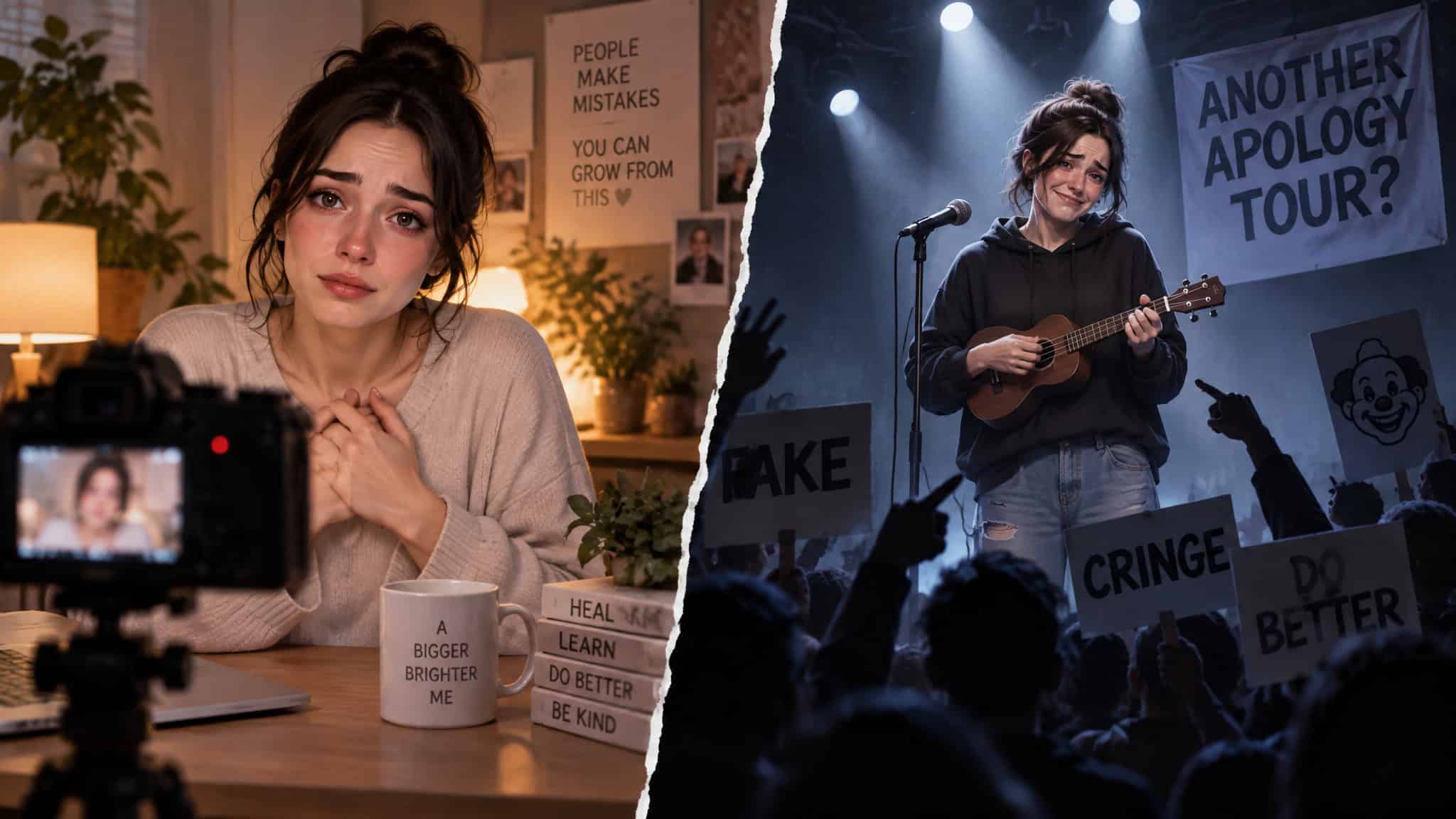
The tell is whether the apology names specifics. Ballinger’s 10-minute ukulele “toxic gossip train” video performed defensiveness. Dawson’s 20-minute “Taking Accountability” video named specific conduct. Hollis’s Instagram apology acknowledged who was hurt.
Across the documented cases, the pattern holds: a real apology says what happened, who got hurt, and what changes. Three parts, and most people skip the third. Vague apologies make it worse, because readers can smell a non-apology. “Sorry if anyone was offended” fixes nothing.
The first 72 hours
The first three days after a controversy matter most, because whatever you do in that window is what people remember. What actually works in week one, in order: admit the specific mistake early, talk to camera face-to-face, pause the sponsored posts, get professional help managing it, and pin the accountability video. The order matters. Own it before monetizing again.
Recovery timelines: months, years, or never
Recovery is measured in months or years, not weeks, and some never come back at all.
Who actually came back
The documented returns: Dawson back to content in 2021 after the monetization suspension. Ballinger on Instagram only by fall 2023, never back on YouTube. Charnas rebuilt through the direct-to-consumer relaunch. Fulmer broke his silence in 2025.
Brands want to know if the recovery is real or just a performance. What reads as genuine: don’t rush back, do things instead of saying things, stay consistent over time, teach something, and engage with critics rather than blocking them.
Why some never do
The comeback routes that exist are concrete exits: a new team, businesses under different names, going abroad, changing industries. The cruel irony is that recovery costs money, and the person who got dropped just lost their income. One PR person’s estimate, self-reported and not audited, holds that 95 percent of influencers lose relevance anyway. Take it for what it is.
The best insight here is that public forgiveness and brand forgiveness run on different systems. A creator can be liked again and still be unbookable, because those private risk notes follow them, and scandal memory persists in search results. That’s why trust recovery is slow.
The human toll: what losing every brand deal actually does
This part comes from PR practitioner casework, Lauren Beeching’s included, and it deserves a straight telling. Clients reported panic, insomnia, paranoia, and suicidal ideation after losing income, career, identity, and network all at once. The detail that carries it: one client went from a magazine cover to hiding out in an Airbnb within a week, after a doxxing threat.
The grim epilogue, one dry line: former influencers working normal jobs get filmed and mocked on TikTok. Cancelled creators aren’t being allowed to recover, only publicly shamed for carrying on.
It also reframes the silence readers love to mock. When a disgraced influencer goes quiet, it’s usually strategy, not laziness. Lawyers and PR are telling them to say nothing. The structural point stands on its own: the industry has no safety net, and recovery costs money the dropped person no longer has. “Dropped by every brand” is not the satisfying ending coverage treats it as.
Contested scandals: the F-Factor dispute
In 2020, Emily Gellis Lande posted anonymous dieters’ allegations against Tanya Zuckerbrot, unverified by E! News, including one dieter who paid upwards of $20,000 and reported rashes, cramps, indications of metal poisoning, and a miscarriage. Zuckerbrot, through lawyer Lanny Davis, denied the claims, citing 50 health complaints across upwards of 176,000 purchases and a released Certificate of Analysis, and filed two pending lawsuits claiming a smear campaign, which Gellis Lande denies. It’s still unresolved.
Denial isn’t exoneration, and allegation isn’t proof. That discipline is the whole point.
What the pattern teaches: severity, response, and the faster clock
Three variables predict how these end: severity of conduct beats follower count (James Charles survived 2019 and was demonetized in 2021, while Charnas rebuilt and Mulroney lost her show), response specificity shapes the narrative, and enforcement now arrives faster than brand statements. Platforms pause monetization quicker as things escalate, and regulators watch money, charity claims, and content aimed at vulnerable audiences. The two lessons the hardest legal endpoints establish: don’t post what you can’t check, and treat charity and financial claims with documentation-grade honesty. McFarland and Wu are why. As for judging whether a comeback is earned, that’s the same receipts-first test this site applies to everything else: dated outcomes, not vibes.
Frequently Asked Questions
What happened to Colleen Ballinger after the Miranda Sings grooming allegations?
She responded to the 2023 allegations with a 10-minute ukulele video about a ‘toxic gossip train,’ which became the most mocked apology of the year and turned the response itself into the story. The allegations of grooming and inappropriate relationships with underage fans remain unverified — screenshots posted by KodeeRants could not be verified by NBC News, and Ballinger never directly responded to Adam McIntyre’s claims. By fall 2023 she was back on Instagram but had not returned to YouTube, a partial comeback that is the whole verdict.
What happened to James Charles after the Tati Westbrook feud and 2021 allegations?
Two scandals, two opposite outcomes. He survived the 2019 ‘By Sister’ feud with Tati Westbrook commercially, though it marked the point where the audience started keeping a file on him. In April 2021 he was demonetized amid allegations of messaging with minors — allegations that were never proven — and his earnings evaporated overnight because demonetization and partnership cuts don’t wait for a verdict. Severity, not follower count, decided which scandal he survived.