
Every gym has one: the guy who finishes his workout, spends fifteen minutes baking in the sauna, and swears he hasn’t had a cold in years — a claim the 1990 University of Vienna trial partly supports. But the question underneath, why regular sauna users seem to get sick less often, is more interesting than it looks, especially as companies like SaunaCloud now build custom home infrared saunas with integrated red light therapy that make the habit easier to test for yourself.
The common cold causes more lost productivity than any other infection, and there’s still no effective preventive drug. No vaccine, no reliable pill. That’s the gap researchers keep trying to fill, which is why a low-tech ritual that’s been around for centuries keeps getting studied.
Sauna bathing is cheap, repeatable, and already popular. The question is whether it does anything — the 1990 trial suggests it cuts cold incidence roughly in half.
This is that investigation: what the trials show — including the 1990 RCT and the Berlin counterpoint, how the heat works on the body, when sauna helps, when it hurts, and how to run it through cold and flu season without doing something stupid.
Key Takeaways
In the strongest direct test, a 1990 randomized controlled trial conducted at the University of Vienna, 25 sauna users caught roughly half as many colds as 25 controls during the final three months of a six-month study — though their colds lasted just as long and hit just as hard.
Sauna mimics a controlled fever: core temperature climbs by up to 1.5°C (about 2°F), triggering heat shock proteins, interleukins, and a surge of white blood cells including lymphocytes, neutrophils, and natural killer cells.
Sauna is a preventive habit, not a treatment. It won’t sweat out a virus, and it’s dangerous with a fever or flu; when healthy, the working protocol is 2-4 sessions per week for 10-20 minutes.
Table of Contents
What the Research Actually Shows About Sauna and Colds
Start with the strongest evidence — the 1990 randomized controlled trial at the University of Vienna, because it’s a real trial, not a survey of Finnish grandpas. Then add the honest complications, of which there are a few.
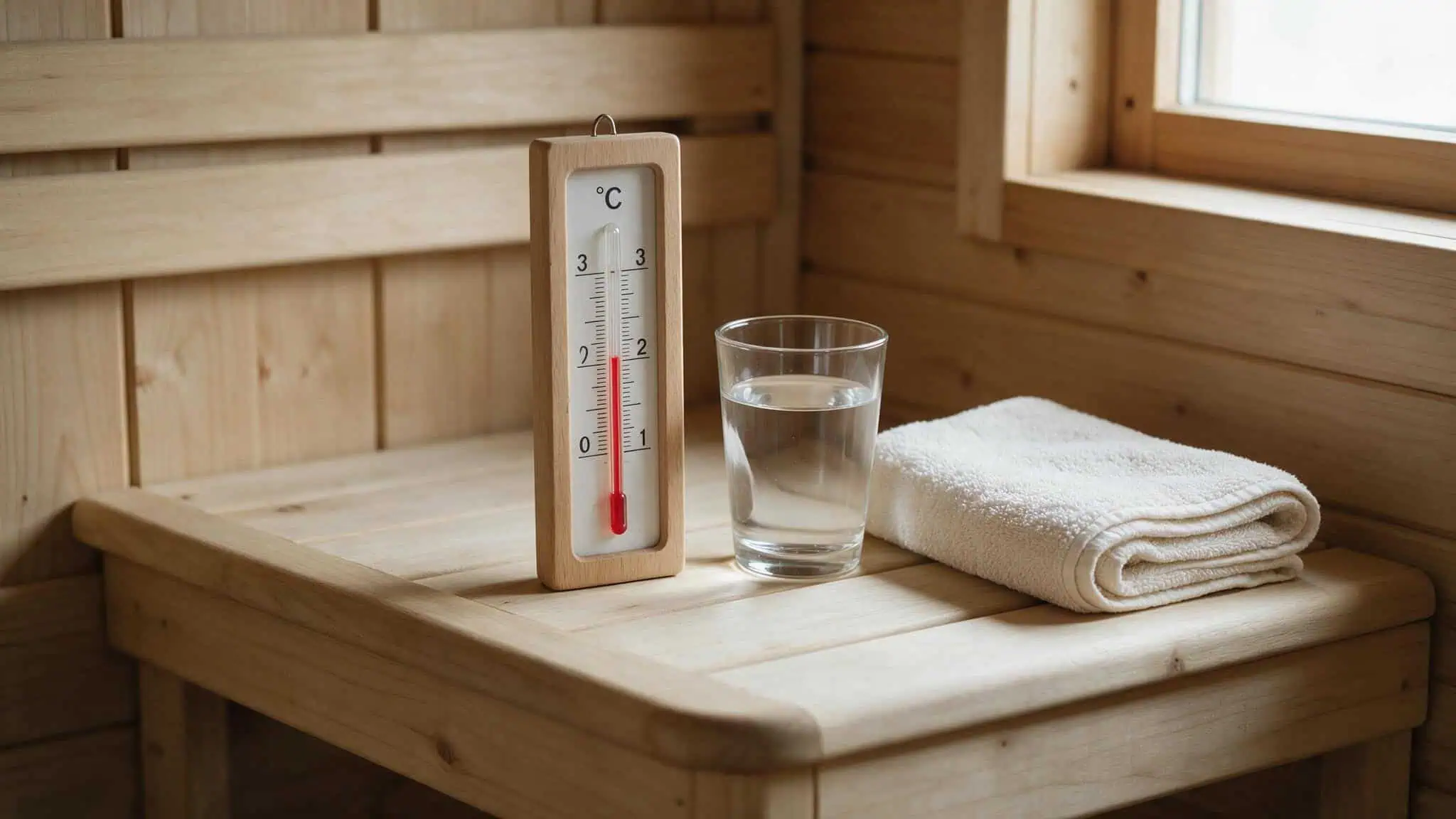
The 1990 randomized controlled trial
In 1990, researchers at the University of Vienna — including E Ernst, E Pecho, P Wirz, and T Saradeth, published a randomized controlled trial in Ann Med (DOI: 10.3109/07853899009148930, PMID: 2248758). Twenty-five volunteers who used the sauna regularly were followed for six months alongside 25 controls who didn’t. The sauna group had fewer cold episodes — and the most striking part is the timing. During the last three months of the study, their incidence was roughly halved compared to the controls.
The benefit built over six months of consistent use, which is exactly what you’d expect from an immune-conditioning effect rather than a quick fix.
The equally important caveat from the 1990 trial: the mean duration and average severity of colds did not differ between groups. Sauna reduced how often the sauna group got sick. It didn’t make the colds milder or shorter once they arrived. That distinction — from the 1990 trial, is going to keep coming back.
The Berlin counterpoint: hot air alone isn’t enough
Now the complication. A Berlin randomized controlled trial tested the heat in isolation: people inhaled hot air at 90°C over three days, essentially the temperature without the sauna experience. The result was no difference in cold symptoms compared with room-temperature air.
Read that correctly and it’s not a contradiction. It’s a clue. Heat alone — 90°C for three days, didn’t do much. The full package, heat, humidity, relaxation, the ritual itself, may be what carries the benefit. The Berlin trial is a useful guard against the idea that you can blast your face with hot air and call it a sauna.
Pneumonia risk and the long-term picture
The observational data — including Finnish research on 2-4 sessions per week, backs up the pattern. Finnish research following large groups of sauna users found that people who used the sauna 2-4 times per week had up to a 40% lower risk of pneumonia compared to infrequent users. That’s a more serious infection than the common cold, and it extends the picture: regular users get fewer colds and look better protected against respiratory infections over time.
Put the evidence together — the 1990 RCT and the Finnish pneumonia data, and the answer is a qualified yes. Regular sauna use appears to cut how often you catch a cold, roughly in half by the end of the 1990 trial, with the honest caveat that this is one smallish study from 1990, and it showed no effect on how bad a cold gets once you have it.
Bottom line: The 1990 trial shows regular sauna users caught about half as many colds — but only after months of consistent use, and their colds were no shorter or milder.
How Sauna Heat Primes Your Immune System
Here’s what’s happening inside the body during those fifteen minutes: a 1.5°C core temperature rise looks enough like a threat to rouse the defenses, without being enough of a threat to hurt you.

A controlled fever: core temperature and circulation
During a sauna session, core body temperature climbs by up to 1.5°C (about 2°F). Within minutes, skin temperature rises, blood vessels dilate, and heart rate can double to 120-150 beats per minute. For a healthy person, that’s a cardiovascular warm-up and an immune alert at the same time. The body responds as if it’s fighting something off, even though there’s nothing to fight.
Heat shock proteins: the molecular guardians
That stress response — a 1.5°C rise and heart rate up to 150 bpm, is what triggers the interesting biology. Heat shock proteins are the repair crew. They protect cells from stress, reduce inflammation, and promote healing. Regular heat exposure increases their production.
Heat also stimulates interleukins, the signaling molecules that regulate inflammation and coordinate immune cell activity. The sauna isn’t just warming you up; it’s switching on maintenance systems.
White blood cells: the 2013 athlete study
A 2013 study put trained athletes through a 15-minute sauna session that raised core temperature by 1.2°C. White blood cell production increased. Regular sessions improved immune markers without the harmful spikes in stress hormones you’d expect from real stress — in both trained athletes and sedentary people.
The heat mobilizes the front-line cells: lymphocytes, neutrophils, and natural killer cells — as seen in the 2013 study with a 1.2°C rise. Those are the units that respond first when a virus shows up.
The sparring partner: Prof. Resch’s immune-training metaphor
Prof. Dr. med. Karl-Ludwig Resch of the German Institute for Health Research in Hof/Saale has the best metaphor I’ve found, describing heat as a sparring partner for the immune system. He describes heat as a turbo on the body’s catalysts, kicking up free radicals and heat shock proteins that serve as a “sparring partner” for the immune system.
Think of each sauna session — 2-4 times per week, as a light workout for your defenses. It doesn’t fight a specific virus. It makes the system sharper, so when a real virus arrives, the response is quicker and more efficient. Sparring, not fighting.
Prevention vs. Cure: Sauna Is Not a Cold Treatment
But it’s exactly why the preventive angle — 2-4 sessions per week when healthy, matters.
The “sweat out a cold” myth
You cannot sweat out a virus — as the 1990 trial showed, sauna didn’t shorten colds. Colds are fought by the immune system, not expelled through pores. The temporary relief you feel in a sauna comes from improved circulation and loosened congestion, not from the virus leaving your body.
Same with the “toxins in sweat” idea. Sweat is mostly water and electrolytes. The liver and kidneys handle detox. The sauna doesn’t detox you — it conditions you.
Conditioning — as seen in the 1990 trial’s halved cold incidence, is the actual benefit.
Why consistent use is the difference-maker
Physical immune markers can rise within weeks of starting regular sauna use — as in the 2013 athlete study. But reductions in how often you get sick take longer, the 1990 trial showed the effect only in the final three months of a six-month study. The practical translation: use the sauna 2-4 times per week when you’re healthy, not as a reaction to symptoms.
The guy who starts going in January because he’s already caught his third cold is going to be disappointed — the 1990 trial showed no effect on cold duration. He’s asking the sauna to do the one thing it doesn’t do: shorten the illness in front of him.
Why Winter Is the Season Sauna Helps Most
Here’s what the season actually does to your defenses, and why the sauna — 2-4 sessions per week, fits.
Cold weather’s real role in cold season
Winter doesn’t cause colds directly, but it stacks the deck — the 1990 trial showed sauna users caught half as many colds during winter months. You’re inside with recirculated air, getting less vitamin D, sleeping worse, running a little higher stress. There’s also a more specific effect: when nasal passages cool down, local immune responses slow, which makes it easier for viruses to get a foothold.
Chronic stress adds to it by keeping cortisol elevated, which blunts immune efficiency. Meanwhile, humans have mostly lost natural cold adaptation. Our first response to cold is reduced skin blood flow — goosebumps, then shivering.
Sauna as thermal training for cold tolerance
This is where the sauna — 2-4 sessions per week, earns its winter keep. Regular use trains both heat and cold regulation, and those same thermoregulatory systems affect immune readiness. It increases heat tolerance, speeds up sweat onset, and regular users, as in the 1990 trial, cope better with cooler temperatures. Resch’s research found that sauna bathing, heat plus the cold stimulus afterward, trains the body’s thermoregulatory systems, which is part of immune fitness, and the question of when to use an infrared sauna for a cold or flu is a practical concern for regular users, especially those using a handcrafted infrared sauna with integrated red light therapy.
Regular sauna users — 2-4 sessions per week, even feel comfortable at lower room temperatures.
One honest note: alternating hot and cold — as in the 1990 trial’s sauna protocol, may improve circulation and stress resilience, and regular cold water immersion speeds up muscle recovery, reduces inflammation, and improves blood flow throughout the body, but the evidence that it further cuts infection risk beyond heat alone is limited. If you have heart or circulation issues, be careful with the cold plunge part. The sauna alone is the part with the evidence.
Sauna Type and Heat Therapy: How to Choose
The heat source changes the experience and the evidence — traditional saunas at 170-195°F have the strongest data. Here’s the breakdown.
Traditional Finnish sauna: the reference standard
Cabin saunas run 170-195°F with high heat and soft humidity. That combo elevates heart rate, promotes circulation, and triggers the fever-mimicking response. It also has stronger research support for infection reduction — the 1990 trial, and the steam does more for congestion. The trade-off: more cardiovascular stress, heart rate up to 150 bpm, and a higher dehydration risk.
Manageable if you’re healthy, but for a detailed look at how these traditional saunas affect the heart, see this infrared sauna cardiovascular health guide. Not the room to test if you’re not.
Infrared sauna: gentler, promising, less proven
Infrared runs cooler, 120-150°F, which makes it easier to tolerate and useful for muscle aches and joint pain. It still boosts white blood cells — as in the 2013 athlete study, in trained athletes and non-athletes alike. But there’s no steam for congestion, and the infection-reduction research, unlike the 1990 trial, isn’t there. Infrared is promising for comfort and circulation, as in the 2013 study, ; in summer, infrared sauna sessions increase blood flow and reduce water retention, but you shouldn’t buy one expecting cold-prevention data — the 1990 trial used traditional saunas, because large-scale immune-outcome studies remain limited.
Hybrid sauna: the practical middle ground
Hybrid units combine traditional and infrared heat. A practical compromise, but there’s no dedicated evidence on cold incidence for hybrids — unlike the 1990 trial for traditional saunas. Choose the style you’ll actually use.
FIR therapy: the allergy evidence
Far-infrared therapy has its own evidence niche: allergies. FIR sessions improved eye itching, nasal itching, nasal stuffiness, rhinorrhea, and sneezing in people with allergic rhinitis — a specific symptom list from the evidence. If you’re choosing a sauna primarily for allergies. FIR therapy, that’s the thread to pull.
Löyly: the congestion-relief move
Adding water to the rocks — löyly to Finns — is the classic congestion technique. Warm, humid air loosens mucus and moistens nasal passages. If you have a cold without a fever, and no fever confirmed, this is the sauna practice most likely to make you feel better, temporarily.
Steam rooms, hot baths, hot springs, hot mud
Steam rooms are humid-heat cousins: good for comfort and congestion, but without the cold-prevention evidence base — the 1990 trial, of a proper sauna. Hot baths are the same idea in a smaller dose, fine for muscle aches and relaxation, not the same immune-conditioning research. Hot springs (balneotherapy) are the oldest heat therapy there is, and pleasant, but mineral content and temperature vary too much for the cold-prevention evidence, the 1990 trial, to live there. Hot mud, or pelotherapy, is heat packs for localized aches and joint pain.
Nice for a sore shoulder. Not relevant to catching fewer colds — unlike the 1990 trial’s halved incidence.
Buyer rule: Traditional Finnish saunas have the strongest cold-prevention evidence; infrared is better for comfort and allergy relief; hybrids are a compromise with no dedicated infection data.
Finnish sauna culture and the ritual effect
The Berlin trial’s negative result — 90°C for three days, is the clue that the package matters. Heat, humidity, relaxation, social context, the whole ritual, not just the temperature. Finland’s long-term studies, including the 40% pneumonia risk reduction, are the backbone of this evidence base, and the tradition itself may be part of the therapy.
Sitting in a hot room — 90°C for three days, is not the same as a sauna session. The contrast, the wind-down, the deliberate recovery, that’s the package.
When Sauna Can Harm: The Danger Zone
The same heat that conditions a healthy immune system — 1.5°C rise, can compound an existing infection. This is the line you don’t cross.

Fever, flu, and cardiovascular strain
The sauna mimics a fever — 1.5°C rise, which is great when you’re healthy and dangerous when you actually have one. Fever is a hard stop. Raising core temperature further, beyond 1.5°C, can overburden your heart, especially with cardiovascular disease or dehydration.
Avoid the sauna if you have the flu — flu often produces a higher, longer-lasting fever and extreme fatigue; the heat compounds both, as case reports of respiratory distress show. The same goes for bronchitis and pneumonia, heat and steam can worsen symptoms. Medical guidance consistently cautions against sauna during acute infections with fever, coughing, chest pain, or malaise, based on case reports of acute respiratory distress. And case reports describe people developing acute respiratory distress after sauna use during or shortly after infections, including one case of hypersensitivity pneumonitis from mold spores. Whatever COVID does to you, if it involves fever or respiratory distress, as with flu, the sauna is not the answer.
Dehydration and electrolyte risk
Fever and sweating both drain fluid — up to 16-20 oz per session. Together, they can wreck your electrolyte balance quickly. Dehydration also hampers the immune response, as the 1990 trial’s healthy subjects showed, at the exact moment you need it working. Overheating and dehydration are the two primary risks of sauna use, the 200 rule helps manage them. Respecting the fever boundary handles most of the danger.
Rare but real: respiratory distress and mold hazards
Modern saunas are generally safe — as in the 1990 trial. Neglected ones are another story. Mold growth or chemical vapor exposure in a poorly maintained unit can turn a health ritual into a respiratory hazard, as in the hypersensitivity pneumonitis case. One documented case: a habitual sauna user developed hypersensitivity pneumonitis, an inflammatory lung condition, from mold spores released through sauna water.
And don’t use a public sauna when you’re sick — wait 24 hours after fever breaks. Not for your sake; for everyone else’s. You’ll be the guy spreading it. If you have unstable cardiovascular conditions, uncontrolled hypertension, or are pregnant, talk to a doctor before regular sauna use, the 1990 trial excluded such individuals. That’s not a disclaimer; it’s a real boundary.
Practical Protocols for Cold and Flu Season
Here’s the plan, with numbers: 2-4 sessions per week, 10-20 minutes each.

Prevention frequency: 2-4 sessions a week
For immune support, the working range is 2-4 sessions per week, 10-20 minutes at a moderate temperature. If you’re building a seasonal rhythm, 2-3 weekly sessions from September through March is a sensible plan — matching the 1990 trial’s six-month study period. Regular use at that rate, 2-4 sessions per week, boosts white blood cell production through the artificial fever response, as in the 2013 athlete study. This is the preventive engine. It runs on consistency, not intensity.
The 200 rule and hydration basics
The 200 rule is a quick safety check, not a medical standard: sauna temperature in Fahrenheit plus session length in minutes should stay at or under 200. So 180°F for 15 minutes gets you 195 — safe. 195°F for 20 minutes gets you 215, too much, per the 200 rule.
Hydration is simpler: 16-20 ounces of water before, more during if you need it, 16-20 ounces after. If you’re sweating hard — as in a 15-minute session, replace sodium and electrolytes through food or an electrolyte drink. Water alone gets you partway.
Mild symptoms, no fever: the modified session
If you have mild symptoms and no fever — confirmed by thermometer, you have one carefully modified option. The entry requirement is no fever, check your temperature first. Then hydrate, eat something small, start 10-20°F lower than your usual temperature, keep the session to 10-15 minutes max, and sit on the lower bench. If you feel dizzy, nauseated, or your symptoms worsen — as per the safe protocol, you’re done.
Worth saying plainly: a scratchy throat without fever is the gray zone where a short, cooler session — 10-15 minutes, 10-20°F lower, might help you breathe easier. A wet cough, chest tightness, or general malaise is the signal to skip it entirely, as case reports of respiratory distress show. The medical guidance draws the line at coughing. So should you.
Red flag: If you have a wet cough, chest tightness, or general malaise, skip the sauna entirely — medical guidance draws the line at coughing.
Post-sauna recovery and home hygiene
When you’re not feeling great, cool down gradually — no cold plunges, no cold showers, as per the safe protocol. Rehydrate with 16-20 oz, rest, don’t jump back into activity. Monitor symptoms. If anything gets worse, you overdid it.
If you’re using a home sauna while sick, sauna alone, wipe surfaces with disinfectant afterward, air the sauna out thoroughly, and wait about 24 hours after a fever breaks before sharing it with others. The sauna doesn’t sanitize your germs — as the mold spore case shows, it collects them.
Returning after a fever or illness
After a real illness, give yourself time. Wait at least 24-48 hours after the fever breaks and symptoms improve before normal use. Start shorter and cooler — 10-15 minutes, 10-20°F lower, then ease back to your usual routine over about a week. Also note: wait 1-3 days after a vaccination before hitting the sauna. Your immune system is already busy; don’t pile on.
Beyond Colds: Allergies, COPD, and Kids
The cold-prevention evidence — the 1990 trial, is the headline, but sauna research reaches a few other places worth knowing, and one clear boundary.
Allergies and the FIR evidence
Allergies are a lower-risk context — no fever, no infection, and there’s specific evidence to like: FIR therapy improved eye itching, nasal itching, nasal stuffiness, rhinorrhea, and sneezing. Far-infrared therapy improved the classic allergic rhinitis symptoms: eye itching, nasal itching, nasal stuffiness, rhinorrhea, and sneezing. If seasonal allergies are your main complaint, FIR is the most supported sauna choice — based on the symptom improvement evidence.
Chronic stable conditions vs. acute bronchitis
For chronic but stable conditions like asthma or COPD, structured sauna use — 2-4 sessions per week, may improve airflow, nasal function, and overall comfort, when overseen by medical professionals. Acute bronchitis and pneumonia are the opposite, avoid sauna entirely; heat and steam can make them worse, as case reports of respiratory failure show. The difference is stable versus actively infected, as the 1990 trial’s healthy subjects versus fever cases show.
Children: age limits and sick-day rules
Healthy kids aged 6 and up can use a sauna with supervision, capped at 15 minutes. When kids are sick, skip it entirely — their temperature regulation is less developed and they dehydrate faster. The risk equation is different for small bodies, as per medical guidance.
The Stress, Sleep, and Lifestyle Connection
There’s a slower, less direct path from sauna to immunity: stress and sleep — as the 1990 trial’s six-month timeline suggests.
Rest-and-digest: how sauna lowers cortisol
Immunity isn’t just about white blood cells — as the 2013 athlete study showed. Stress suppresses it, and chronic stress keeps cortisol elevated, which blunts immune efficiency. A mild sauna session triggers the parasympathetic nervous system, the “rest and digest” state, and lowers cortisol. That’s indirect, but it’s not nothing.
Evening sessions, sleep, and immune regeneration
An evening sauna raises body temperature by up to 1.5°C, then lets it gradually fall — exactly the signal that initiates healthy sleep. During sleep, immune cells regenerate, inflammatory pathways reset, and the body produces cytokines. The sauna doesn’t do that work — as the 1990 trial showed no effect on cold duration, it sets up the conditions for it. And the ritual aspect counts too, as the Berlin trial’s negative result suggests. A consistent sauna habit tends to support consistency in everything else.
What the Evidence Still Doesn’t Answer
Here’s what we don’t know — based on the 1990 trial’s 25-person groups.
Small trials and the need for newer research
The foundation here is a 1990 study with 25 people per group. It’s well-designed for its time, but it’s small, and there hasn’t been a flood of larger confirmatory trials since. The Berlin trial — 90°C for three days, shows hot air alone doesn’t do it, but the roles of humidity, steam, relaxation, and social context haven’t been isolated in controlled studies. We know the full package, as in the 1990 trial, works better than heat alone. We just can’t say which part of the package matters most.
The unstudied variables: humidity, age, and infrared
The gaps list is real. Infrared’s immune-outcome research is limited — the 1990 trial used traditional saunas; the infection-reduction evidence comes mostly from traditional Finnish saunas. The optimal frequency, duration, and temperature for immune benefit aren’t precisely defined, the 1990 trial used 2-4 sessions per week. Individual responses to heat stress vary in ways we don’t fully understand, as the 1990 trial’s 25-person groups show. And the specific role of humidity and steam, as in the Berlin trial, plus long-term sauna effects across age groups, remains under-researched.
Bottom Line: Sauna as Immune Conditioning, Not a Miracle
Regular sauna bathing — two to four sessions a week when healthy, is associated with reduced risk of respiratory infections and pneumonia over time, as the 1990 trial and Finnish data show. Resch’s conclusion after years of research is that after a few months of regular sauna bathing, six months in the 1990 trial, the body can successfully fight off at least half of all infections. That’s a meaningful number.
But it’s conditioning, not medicine — as the 1990 trial showed no effect on cold duration. Sauna doesn’t cure or shorten an active cold, it’s not recommended during active illness, and it’s not a substitute for vaccination, hygiene, or medical care. If you have heart conditions, blood pressure issues, are pregnant, or take medications, talk to a doctor first, as the 1990 trial excluded such individuals.
The operating frame is simple: use it consistently when healthy — 2-4 sessions per week, respect the fever boundary, and treat it as one tool in a broader routine. The sauna won’t make you invincible, the 1990 trial showed no effect on cold severity. It will make your defenses sharper by the time January rolls around. That’s a fair trade.
Frequently Asked Questions
What toxins are released after a sauna?
The idea that saunas flush toxins through sweat is mostly a myth. Sweat is primarily water and electrolytes — your liver and kidneys handle detoxification, not your pores. The real benefit of sauna is immune conditioning, not toxin removal.
What’s the difference between a traditional Finnish sauna and an infrared sauna for cold prevention?
Traditional Finnish saunas (170-195°F with humidity) have the strongest research backing for reducing cold incidence. Infrared saunas run cooler (120-150°F) and are gentler, but large-scale immune-outcome studies for infection prevention are limited. Infrared is better for comfort and allergy relief, not cold prevention.