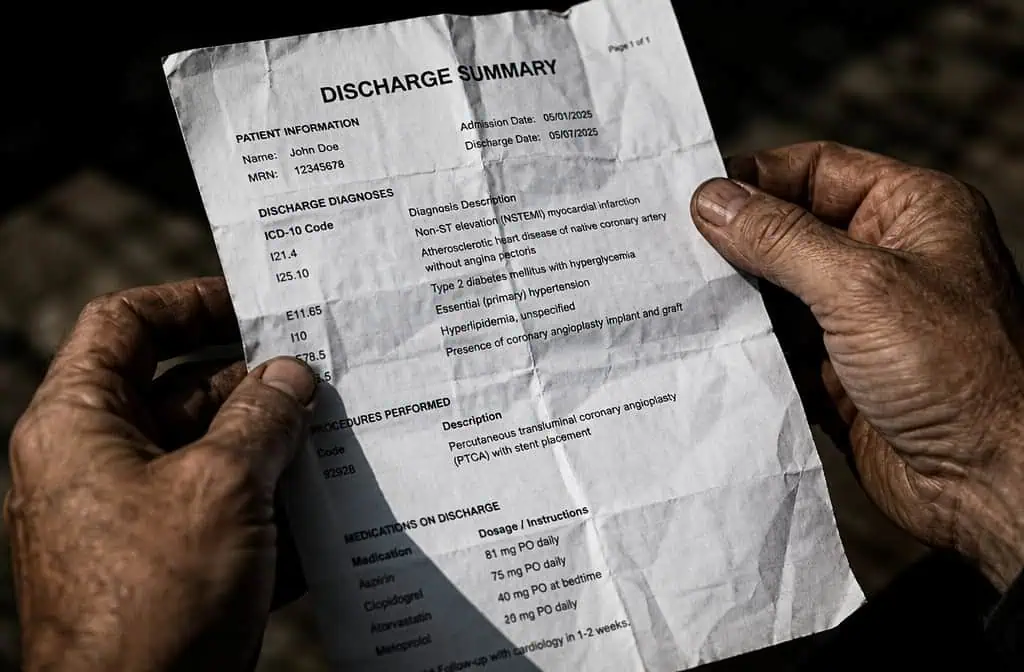
A friend of mine got hurt in Charlotte, NC. Nothing dramatic—no car wreck, no bar fight, no construction accident. A moment of bad luck left him dealing with doctors, insurance forms, and a stack of paperwork he couldn’t understand. He asked me to help him figure out what he was looking at.
I’m not a doctor. I’m not a lawyer. I don’t even play either one on the internet. But I did the research, dug through medical classification systems, talked to people who know this stuff, and put together what I found. This is the guide I wish I’d had when my buddy handed me his discharge papers.
This list covers the common types, what they mean, when you need a doctor, and—because you’ll probably see these on your paperwork—the codes the medical and legal systems use to classify them.
Injury means damage to your body from an external force, physical or chemical. Could be a stubbed toe. Could be major trauma that’s life-threatening. Wound is a specific kind of injury where your skin or body tissue gets broken—cuts, scrapes, punctures.
Minor wounds usually aren’t serious if you clean them properly. Deep wounds, uncontrolled bleeding, or anything that won’t close on its own? That’s a doctor visit. Notably, personal injury claims cover injuries to your body and mind, while bodily injury refers strictly to physical harm.
According to the Centers for Disease Control and Prevention’s FastStats from the National Center for Health Statistics, millions of people injure themselves every year in the U.S. You’re not alone. You’re just trying to figure out what happened and what to do next.
Key Takeaways
The two most common injury types are sprains (ligament damage) and strains (muscle or tendon damage), and most guys mix them up—they’re not the same thing, and knowing which you have changes your recovery plan
Medical records use ICD-10 codes (the S00-T14 range covers injuries), while workers’ comp uses WCIO codes for body part, nature of injury, and cause—those numbers on your paperwork aren’t random
Serious injuries can come from mundane actions: Chicago Cubs pitcher Matthew Boyd tore his meniscus just sitting down on the ground with his kids, proving you don’t need a car crash to need surgery
Table of Contents
Common Acute Traumatic Injuries
These are the ones that happen in a single moment. A fall, a hit, an accident, a burn. You know exactly when it happened because you felt it.
Sprains and Strains
Most guys use these words interchangeably. They shouldn’t.
A sprain is an injury to a ligament—the tissue that connects bone to bone. A strain is an injury to a muscle or tendon—the tissue that connects muscle to bone. They’re the most common injury types, and for mild cases of either, the RICE method usually does the job: Rest, Ice, Compression, Elevation—though if the injury results from an accident caused by someone else’s negligence, you may want to consult a trusted Charlotte personal injury attorney alongside your recovery.
You’ll see sprains and strains coded as WCIO Nature of Injury 021. That’s the workers’ comp code.
Fractures
A broken bone. Suspect a fracture? Immobilize the area—splint it with a rigid object if you have one—and get to a doctor immediately. Don’t mess around trying to set it yourself. Prevention comes down to strong bones through decent diet and exercise.
Dislocations
Bone forced out of its socket. Do not try to relocate it yourself. I mean that. You can cause nerve damage, blood vessel damage, or make the injury worse.
Get to a doctor immediately. Prevent these by warming up, stretching, and not overusing joints.
Concussions
A concussion is a type of traumatic brain injury that occurs due to a blow to the head. “Getting your bell rung” is a concussion, not a badge of honor. Seek medical attention immediately. Rest in a quiet, dark place until a professional clears you. Wear head protection for any activity where your head might hit something.
Cuts and Lacerations
A break in the skin. Clean with soap and water. Apply pressure to stop bleeding. Antibiotic ointment, then a sterile bandage.
Deep wounds, bleeding you can’t stop, or wounds that won’t close? See a doctor.
Burns
Burns are injuries that occur due to exposure to heat, chemicals, or electricity. First aid for minor burns: cool running water for several minutes. No ice. No butter.
No home remedies your grandmother told you about. Cover with a sterile bandage if needed. Electrical injuries are tricky because internal damage can happen without visible signs on your skin.
Bruises (Contusions)
Blunt force damage. Can range from mild to severe. Wear protective gear to prevent them. Most are no big deal, but watch for excessive swelling or pain that doesn’t improve.
Animal Bites
Risk of infection and rabies evaluation. Seek medical attention. Don’t try to tough this one out.
Red flag: An animal bite that breaks the skin always needs medical evaluation—infection risk is real, and rabies treatment is time-sensitive.
Overuse and Repetitive Strain Injuries
This is where most injury lists screw up. They focus on the dramatic stuff—the breaks, the dislocations, the bleeds. But tendinitis, shin splints, and IT band syndrome are as debilitating, and they’re more common in guys who work out, run, or have physical jobs.
The “walk it off” mentality backfires here. These injuries don’t go away if you ignore them. They become chronic.
Tendinitis
Inflammation of a tendon—the tissue connecting muscle to bone. Overuse or trauma. Prevent it by warming up, stretching, and not overdoing it.
Bursitis
Inflammation of a bursa—a fluid-filled sac that cushions joints. Same causes, same prevention.
Plantar Fasciitis
Inflammation of the plantar fascia—the tissue running along the bottom of your foot. Proper footwear, stretching, and not overdoing it.
Tennis Elbow
Tennis elbow is an inflammation of the tendons that attach to the outside of the elbow. Yes, you can get it without ever holding a racket. Warm up, stretch.
Shin Splints
Shin splints are an inflammation of the muscles, tendons, and bone tissue in the lower leg. Overuse from running or impact. Proper footwear, stretching, gradual intensity increases.
IT Band Syndrome
Inflammation of the iliotibial band—tissue along the outside of your thigh. Overuse. Warm up, stretch.
Patellofemoral Pain Syndrome
“Runner’s knee.” Patellofemoral pain syndrome is an inflammation of the tissue that connects the kneecap to the thigh bone. Proper footwear, stretch.
First Aid and When to See a Doctor
This is the practical stuff. The stuff that matters when you’re bleeding or hurting now.
For mild sprains and strains, the RICE method can be effective:
- Rest the area. Don’t use it.
- Ice for 20 minutes at a time, several times a day.
- Compression with an elastic bandage.
- Elevation above heart level.
For cuts:
- For minor cuts and lacerations, clean the wound thoroughly with soap and water.
- Apply pressure with a clean cloth or bandage until bleeding stops.
- Antibiotic ointment, then a sterile bandage.
For minor burns:
- For minor burns, run cool water over the affected area for several minutes.
- Do not use ice, butter or any other home remedies on burns.
- Cover with a sterile bandage if necessary.
When you need to see a doctor
- Deep wound you can’t close yourself
- Bleeding you can’t stop
- Dirt you can’t get out
- Suspected fracture (immobilize it, go in)
- Suspected concussion
- Dislocation (do NOT self-relocate)
- Wound that doesn’t heal
- Animal bite (infection and rabies risk)
These are general guidelines, not a substitute for professional medical advice. I did this research to help a friend, not to replace your doctor.
Understanding Injury Classification Codes
Here’s the part that made my friend’s head spin. You get discharged from the ER or urgent care, and your paperwork has codes like “S86.0” or “Nature of Injury 021.” What are those?
ICD-10 codes are the international system used in medical records. The S00-T14 range covers Injury, poisoning and certain other consequences of external causes. That’s Chapter XIX if you’re looking at the full classification. If you see a code starting with S or T on your paperwork, that’s this system.
WCIO codes are the workers’ compensation industry standard. Three separate codes:
- Part of Body — what body part
- Nature of Injury — what kind of injury (sprain, fracture, etc.)
- Cause of Injury — how it happened
The WCIO list is the official reference. The EDI Committee maintains and updates it. Individual states may not use every code and may apply their own definition variations, so check your state’s rules.
Why does this matter? If you’re dealing with insurance, a lawyer, or workers’ comp, these codes determine how your injury gets classified, how it’s treated in the system, and what you’re entitled to. Knowing what they mean gives you leverage.
Bottom line: The codes on your discharge papers aren’t random—ICD-10 and WCIO classifications directly affect insurance decisions and legal entitlements.
Real-World Injury Examples from Professional Sports
The New England Patriots put Harold Landry (knee) on the PUP list before training camp. He’d been hampered by a nagging knee injury over the second half of his first season with the club. C.J. Dippre went on PUP too. Terrell Jennings hit the NFI (non-football injury/illness) list. All three remained on the active 90-man roster. The PUP and NFI designations give structured recovery time.

Lesson: Even pro athletes with top medical staff need time. “Walking it off” isn’t always an option.
The Chicago Cubs situation was worse. Matthew Boyd suffered a meniscus injury from what you’d call a freak incident: sitting down on the ground with his kids. Hours before first pitch on a game day, he needed an MRI. Boyd became the 10th pitcher on the Cubs’ 40-man roster on the injured list.
Cade Horton was lost for the season after elbow surgery. Justin Steele had a setback rehabbing from elbow surgery and wasn’t expected back until after the All-Star break. Jordan Wicks had a 9.53 ERA in Triple A. Kyle Wright had a setback. Vince Velasquez was designated for assignment. Jaxon Wiggins had right elbow inflammation.
Lessons here: (1) Serious injuries come from mundane actions. You don’t need to get hit by a car to need surgery. (2) Injuries cascade—one guy goes down, the whole team feels it. (3) Even with elite resources, recovery takes time.
Navigating Recovery: Medical and Legal Next Steps
After any significant injury, see a medical professional for a proper diagnosis and treatment plan. Not WebMD. Not “I’ll see how it feels tomorrow.” An actual doctor — especially if you’ve been in a car crash; one of the most critical steps is to get a medical evaluation even if you feel perfectly fine.

If the injury resulted from someone else’s negligence—car accident, workplace incident, slip and fall on someone else’s property—consider speaking with a personal injury lawyer. That’s exactly what my friend in Charlotte was dealing with.
Keep records of everything:
- Medical visits
- Diagnoses
- Diagnosis codes (ICD-10, WCIO)
- Expenses
This documentation is your best tool whether you’re dealing with insurance or a lawyer.
I’m not a doctor. I’m not a lawyer. I did the research to help a friend, and I’m sharing what I found. You need professionals for your specific situation.
How to Prevent Common Injuries
Three habits prevent most injuries:
- Warm up before any physical activity. Five to ten minutes minimum.
- Wear protective gear appropriate to the activity.
- Don’t push through pain. Overuse injuries become chronic when you ignore them.
The “walk it off” mindset is the enemy of injury prevention. Most overuse injuries would never become chronic if guys stopped at the first sign of pain instead of pushing through. Don’t be that guy. Your body is telling you something. Listen to it.
Frequently Asked Questions
What are the 7 types of injuries?
There isn’t a single fixed list of exactly 7 injury types, but common categories include sprains, strains, fractures, dislocations, concussions, cuts/lacerations, and burns. Overuse injuries like tendinitis and bursitis are also major categories that often get overlooked.
What are the 10 types of injuries?
Common injury types include sprains, strains, fractures, dislocations, concussions, cuts/lacerations, burns, bruises/contusions, animal bites, and overuse injuries like tendinitis or shin splints. The exact list depends on whether you’re looking at acute traumatic injuries or chronic repetitive strain injuries.
What are the injury types?
Injuries fall into two broad categories: acute traumatic injuries (sprains, strains, fractures, dislocations, concussions, cuts, burns, bruises, animal bites) and overuse/repetitive strain injuries (tendinitis, bursitis, plantar fasciitis, tennis elbow, shin splints, IT band syndrome, runner’s knee). The two most common are sprains and strains, which people frequently mix up.
What are the five types of injuries?
A common five-category breakdown includes sprains, strains, fractures, dislocations, and concussions. But that list leaves out important ones like cuts, burns, and overuse injuries, which are just as common and can be just as debilitating if ignored.
What’s the difference between a sprain and a strain?
A sprain damages a ligament (tissue connecting bone to bone), while a strain damages a muscle or tendon (tissue connecting muscle to bone). Most guys use them interchangeably, but knowing which you have changes your recovery plan. For mild cases of either, the RICE method usually works.
What do the codes on my medical paperwork mean?
Those codes aren’t random. ICD-10 codes (in the S00-T14 range) are the international medical system for classifying injuries. WCIO codes are the workers’ comp standard with separate codes for body part, nature of injury, and cause. These codes directly affect insurance decisions and what you’re entitled to.