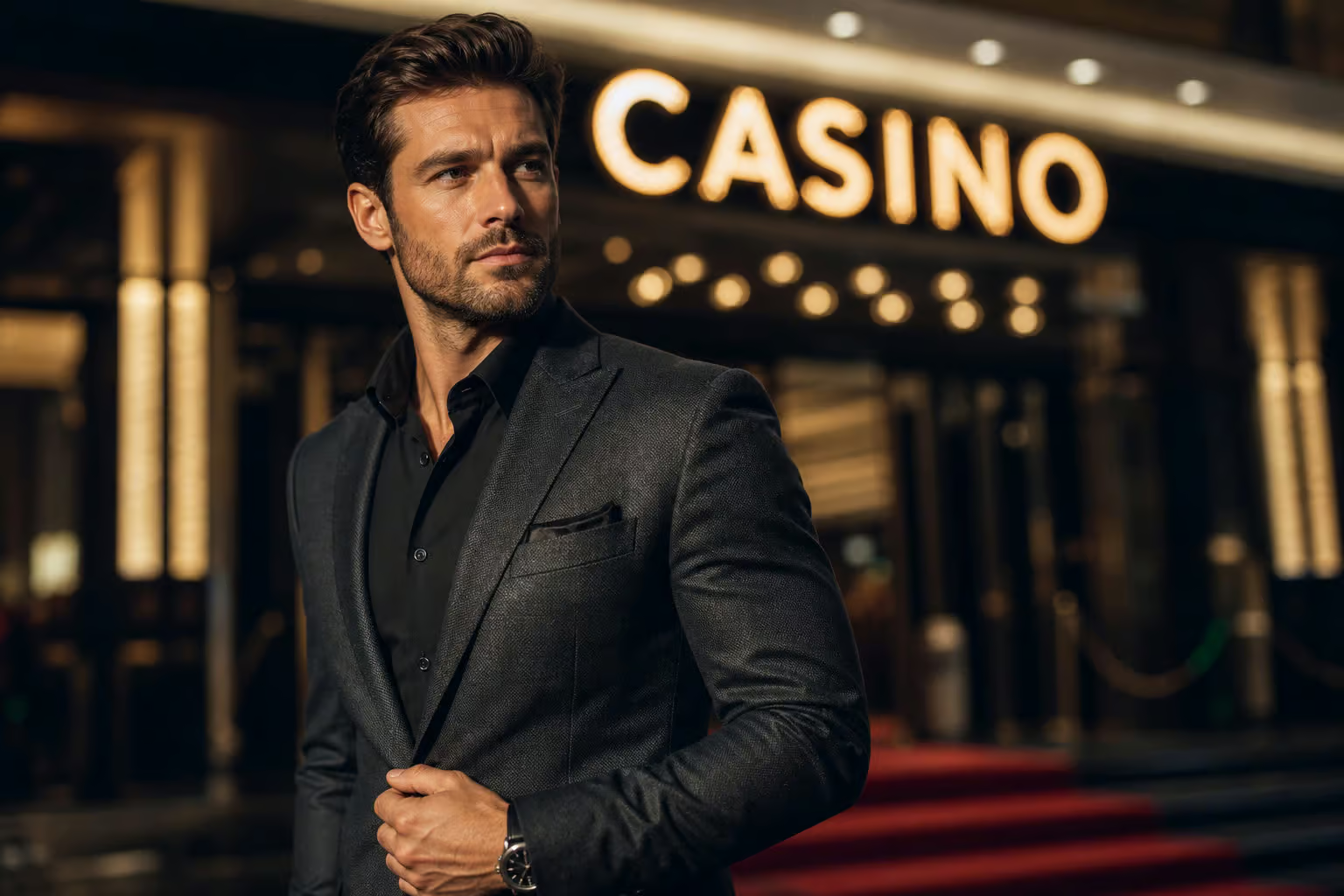
You’re standing outside a multi-million-dollar entertainment complex, looking down at your sneakers and wondering if your jeans are going to get you bounced. It’s a source of anxiety: balancing the fear of being denied entry against the desire to be comfortable during a six-hour marathon at the blackjack table.
Here at Unfinished Man, we spend a lot of time breaking down the realities behind prestige marketing, and casino clothing rules are perhaps the industry’s most persistent illusion. Historically, the Las Vegas standard dictated high-society elegance—tailored suits, shaken martinis, and an air of exclusivity. That era is over. Today, the dress code listed on a venue’s website often functions as a marketing tool for prestige rather than a strict legal threshold for the main casino floor.
Getting through the doors means recognizing the official policy versus the door reality. You have to understand the spectrum of enforcement. Some properties operate on a purely revenue-first model, while others strictly maintain an aesthetic. Once you learn how to read the venue, you can stop stressing about what to wear to a casino and actually enjoy the night.
Key Takeaways
Large urban hubs like Casino de Montréal operate on a heavily relaxed, revenue-first model, with slot zones tolerating casual wear.
A single building enforces “room-level” segregation, moving from standard casual wear on the midday gaming floor to strict formal mandates for upscale dining and velvet-roped suites.
Open-toed footwear—specifically flip-flops and casual sandals—is the universal constraint used by security staff to deny entry, even at venues with lax policies.
Table of Contents
The Door Reality at Revenue-First Urban Casinos
High-volume venues exhibit a discrepancy between written formal policies and the reality of daily floor enforcement. Security staff at these complexes prioritize player flow and revenue. They operate on a vibe check system where basic hygiene is the only hard limit; they recognize that high-volume accessibility is the primary driver of their daily occupancy. In these settings, security personnel are trained to focus primarily on behavioral threats rather than specific garments, as this maximizes the volume of players on the floor. Furthermore, these venues often realize that rigid attire mandates discourage casual walk-ins, which ultimately limits daily intake and overall slot machine activity.
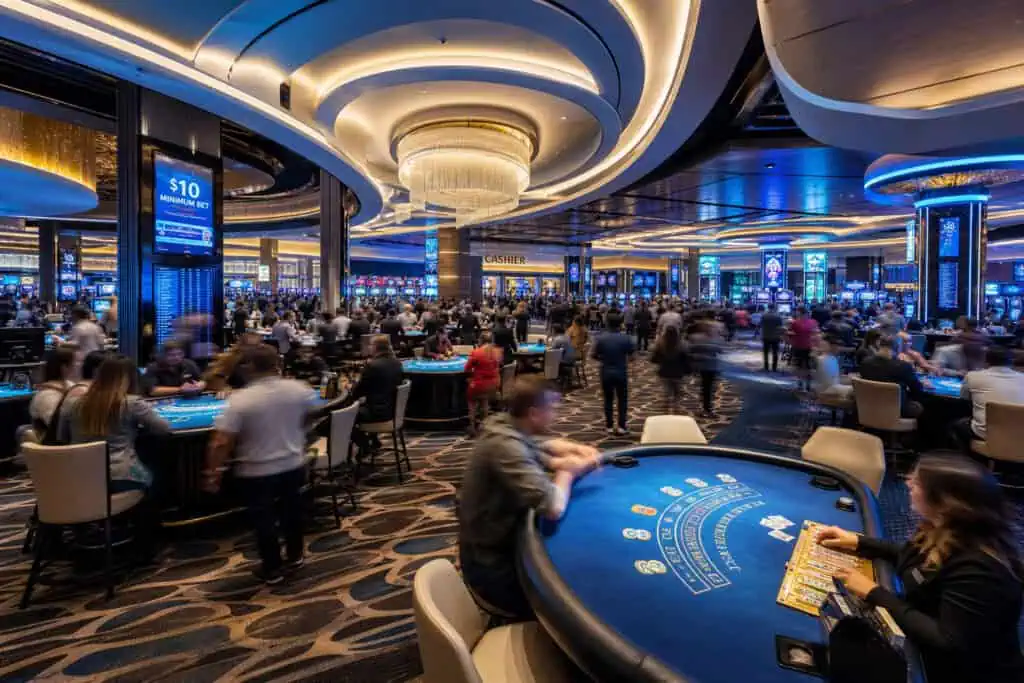
They want your money. If you have the cash, they want you inside.
Treat major urban casino main floors as fundamentally “anything goes” spaces where jeans, sneakers, and highly casual attire will clear the entry threshold without friction. Take Casino de Montréal as an example of this revenue prioritization. If you look at the user consensus on Reddit—specifically within the r/montreal community—you’ll find that the official guidelines are treated as suggestions.
In a thread, one user (u/foxkev) earned 15 upvotes for pointing out that people wearing anything, including adult diapers, are accepted at the slot machines. This anecdotal variance in urban casinos proves the point. The only cited hard limitation that triggers security involvement in these massive hubs? “No fake beards.” Barring bizarre security risks, they do not care about your wardrobe.
Segregated Spaces: Time of Day and the Velvet Rope
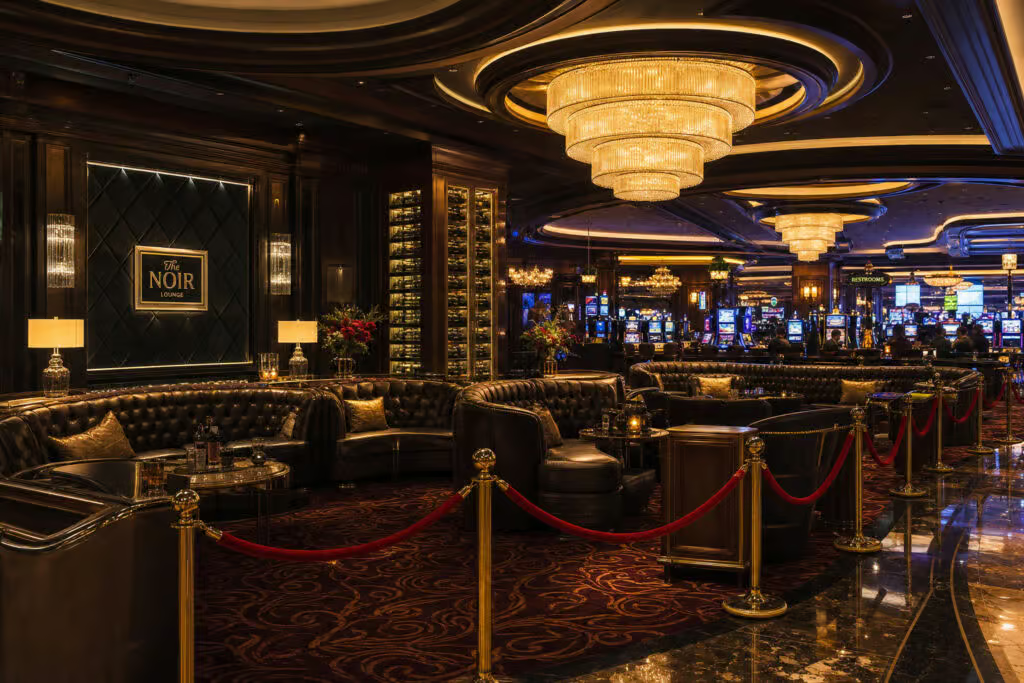
Unlike the vast, empty expanses of abandoned casinos, a single active casino is rarely a monolithic zone. What gets you past the front doors will not necessarily get you into the steakhouse on the third floor. This is room-level segregation, and it is how modern venues manage tiered environments under one roof; specifically, the enforcement intensity often escalates significantly once the clock transitions from afternoon gaming to evening fine dining. Pack a primary daytime outfit and a distinct, more formal secondary outfit if you plan to transition from floor gaming to an upscale restaurant or VIP room.
Chronological Shifts
Expectations shift dynamically based on the clock. During the afternoon, you want daytime comfort. You are dealing with crowded pathways, flashing lights, and fluctuating air conditioning. Breathable fabrics, stylish jeans, and clean, comfortable shoes make sense.
But as the sun goes down, that standard shifts to nighttime formality. The polo and sneakers that worked at noon will suddenly make you feel radically out of place by 8:00 PM.
Intra-Venue Segregation
Las Vegas properties mastered this. They use the velvet rope as a physical border to protect upscale dining and high-limit areas from the general floor’s relaxed standards. While a guy in a t-shirt is perfectly welcome at the penny slots, those velvet-roped areas demand more. Black-tie galas and upscale dinners still require genuine formal wear—suits, tuxedos, and gowns—acting as a secondary filter deep inside the building itself.
“A single casino is rarely a monolithic zone; what gets you past the front doors will not necessarily get you into the steakhouse.”
The Attire Gradient: From Smart Casual to Regional Mandates
Not every casino operates as a high-volume urban free-for-all. Regional brand-experience raceways often maintain tight, sophisticated atmospheres because their business relies on providing a specific, polished night out. To successfully navigate these environments, maintain a clean, put-together appearance to avoid unnecessary scrutiny from door staff. If you bridge the gap between casual daytime floors and business casual dining areas, you’ll never be caught off guard. Choose dark jeans and a collared shirt or blazer as a default uniform.
While land-based venues often have dress expectations, online platforms such as Decode online casino offer a different kind of convenience. Players can enjoy slots, table games, and other casino entertainment from the comfort of their homes without worrying about dress codes or travel arrangements. This accessibility has helped online gaming appeal to a wide range of players who value both flexibility and ease of access.
Casual Polish
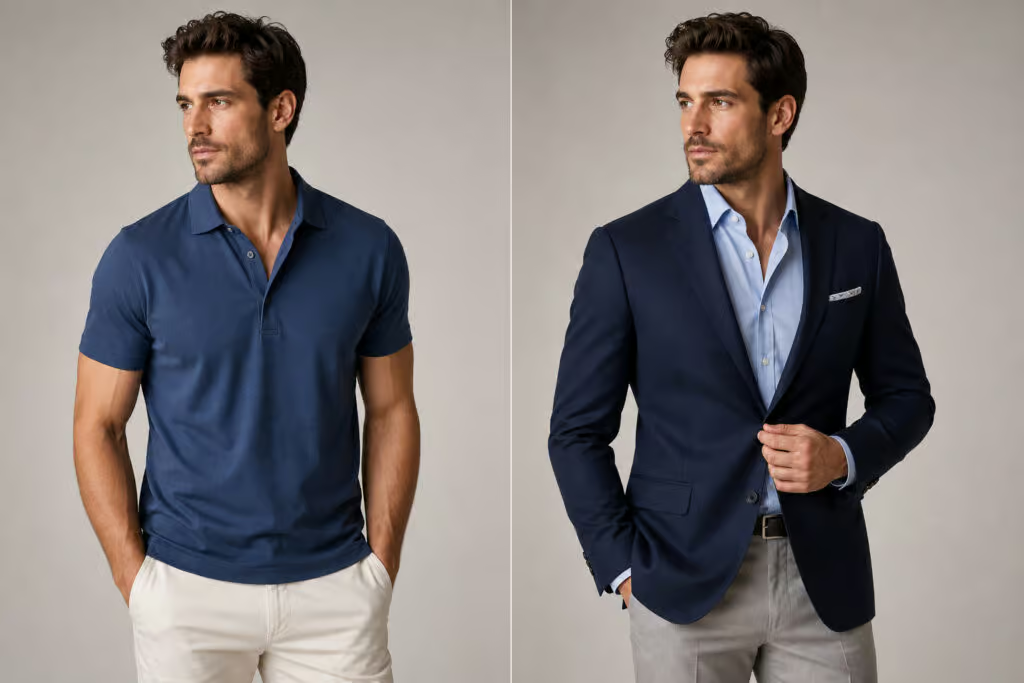
Even when casual wear is explicitly allowed, the unwritten rule is “stylish and well-fitted.” The men’s casino attire benchmark here includes polo shirts, button-downs, chinos, and dark jeans. For women, stylish jeans and sweaters fit the bill perfectly. Prohibited/discouraged wear includes sweatpants, torn jeans, flip-flops, and sandals.
Acceptable Casual Standards
For most standard floor access, casual wear is acceptable provided it is clean and free of excessive distressing. This generally includes collared shirts, dark denim, and non-athletic footwear. Always ensure clothing is free of offensive branding or profane language, which remains a universal violation at most gaming properties regardless of their casual policy.
Semi-Formal and Business Casual
When a venue asks for smart casual, they are aiming for a polished environment. For men, this means dark trousers or high-quality dark jeans, paired with a dress shirt, collared shirt, button-down, or an elevated polo. Adding a blazer or sports coat secures your entry. You finish the look with polished shoes or stylish loafers.
For the casino outfit for ladies, business casual opens up to knee-length dresses, skirts paired with blouses, or tailored jumpsuits. Appropriate footwear includes heels, flats, or ankle boots. The hard rule at this level is no sandals or flip-flops, unless you bypass dress codes entirely by playing at an online no-KYC platform like https://www.gamblinginsider.com/no-kyc-casinos.
Formal Event Standards
If you are hitting an upscale room or a sponsored event, the rules revert to traditional high society. The formal attire standards are non-negotiable for evening hours or upscale dining. Men are expected to wear tailored suits, tuxedos, crisp dress shirts, and impeccably polished shoes. Women’s expectations scale up to cocktail dresses, elegant gowns, or ball gowns. Harrington Raceway & Casino, for instance, explicitly sets these formal and semi-formal mandates for evening and special events to preserve their specific facility aesthetic.
Footwear: The Forgotten Arbiter of the Door
Casinos care about your wallet rather than your wardrobe—until you wear flip-flops. Footwear serves as a common “silent” filter used by security staff to uphold venue dignity without causing a public incident. Always wear closed-toed, polished shoes or stylish ankle boots to a casino.
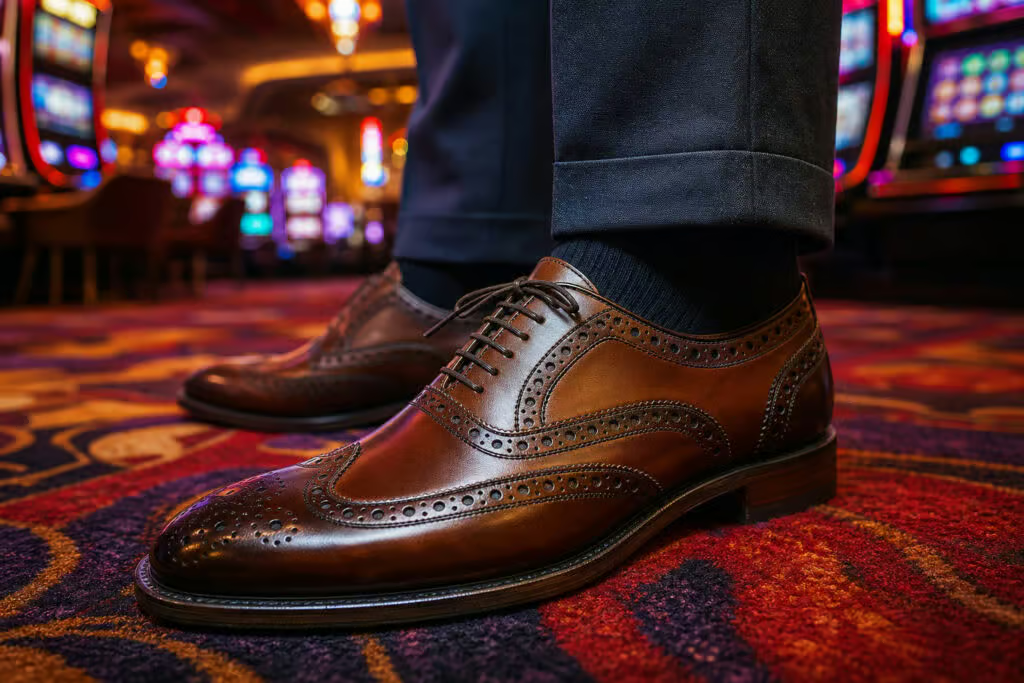
It’s the ultimate security filter. Bouncers hate debating subjective fashion choices. Arguing over whether a t-shirt is “stylish” takes time and causes scenes. But an explicit prohibition of open-toed footwear is binary.
You’re either wearing closed shoes, or you aren’t. A strict mandate against flip-flops and sandals is specifically maintained by places like Harrington Raceway & Casino, but it functions as a general guideline for anything beyond the most aggressively “chill” venues. It acts as a baseline hygiene and safety standard that removes the common cause of entry denial.
Strategic Overdressing: The Confidence and Signalling Gap
Dressing for a casino isn’t about avoiding a ‘no’ at the door. Opt for formal or stylized wear to meet baseline requirements as a tactic to secure faster service, better access, and elevated staff treatment in tiered environments.
Consider the phenomenon of a patron walking the floor in a head-to-toe dollar-pattern suit. It looks like something out of a movie, but it highlights the gap between basic compliance—showing up in standard slacks—and theatrical style signalling. This is what we call overdressing insurance. The gap between scraping by the dress code and commanding status results in tangible benefits.
You get served drinks faster. Pit bosses treat your inquiries with more patience. You bypass the subtle frictions of the floor because the staff assumes you naturally belong in the high-limit suites.
Operational Baseline: The Pre-Visit Verification
Before you pack a bag, you need to set your operational baseline. Look up the specific casino’s official website check on the day of your visit, keeping in mind that some high-end venues reserve the right to modify dress code enforcement based on their current event schedule. Checking ahead keeps your night from ending at the front doors.
Rules drift. What was true two years ago might not apply tonight. Look at the landscape of media coverage: a February 2022 piece from Cult MTL mapping out shifting casino dress codes shows how cultural and seasonal expectations evolve. Policies vary wildly by facility and by the specific areas within the venue.
By checking ahead, you’ll know whether you’re walking into an “anything goes” slots barn or a property enforcing regional standards. Confirm the reality, pack the right shoes, and go enjoy the tables.
Frequently Asked Questions
Are there any clothes I can’t wear to casinos?
While most casino floors are increasingly lenient, you should avoid sweatpants, torn or heavily distressed jeans, and any clothing with offensive branding or profanity. The most universal, non-negotiable restriction is open-toed footwear; flip-flops and casual sandals will almost always result in being denied entry regardless of how relaxed the venue’s overall policy is.
What can you not wear to the casino?
Beyond avoiding offensive language and activewear like gym shorts, you should avoid open-toed shoes, as these are viewed as a hygiene and safety liability. If you are entering a high-limit area, a VIP room, or an upscale restaurant inside a casino, you must also avoid casual staples like sneakers, t-shirts, and blue jeans, as these venues strictly enforce formal dress codes.
Is dressing up worth it at a casino?
Yes, treating your outfit as ‘overdressing insurance’ can lead to tangible benefits. Patrons who dress in smart-casual or formal wear often receive faster service, more attentive treatment from pit bosses, and easier access to restricted areas compared to those wearing strictly casual attire.
How does venue segregation affect what I should wear?
Casinos are rarely monolithic, meaning the dress code for the main floor usually doesn’t apply to the entire building. You may get through the front door in sneakers and jeans, but if you attempt to enter a steakhouse or high-limit table area within that same property, you will likely be stopped for failing to meet the secondary, higher-tier dress code requirements.
Why does the time of day change casino dress codes?
Many venues treat the afternoon as a high-volume, casual-friendly period to maximize player flow on the gaming floor. As the sun goes down, the atmosphere transitions toward nighttime formality, and expectations for attire rise to match the upscale dining and club environments that become the focal point of the property.
What is the difference between revenue-first and prestige-based casino dress codes?
Revenue-first casinos prioritize high-volume foot traffic and tolerate almost any casual attire to keep slot machines active. Prestige-based properties, often found at raceways or smaller resort hubs, enforce tighter, more polished standards to protect a specific atmosphere and cater to a high-end customer base.