The social media version of homesteading is a seductive trap. It’s all curated drone shots, flannel shirts, and guys abruptly moving to the woods to chop firewood with a dog. It looks appealing, but it skips over the messy reality of how to build a homestead when you have zero acres and only a thousand bucks in your bank account.
At Unfinished Man, we are cutting through the hype of lifestyle trends to find what actually works. And the truth about the agrarian off-grid fantasy is that buying land is the worst possible first step. Instead of jumping straight into a mortgage and a barn full of livestock you don’t know how to keep alive, genuine self-reliance starts where you are right now. This is a phased, skill-based roadmap that moves the goalposts from “buying a farm” to a low-cost apprenticeship.
You don’t need a deed to start. Just a kitchen, some patience, and a willingness to do the unsexy work first.
Key Takeaways
When planning your property development, you’ll need to add a 1/3 (33%) buffer to all initial estimates to absorb expected equipment failures and unforeseen structural costs.
For homesteading success, don’t overreach; limit yourself to a maximum of two major infrastructure projects per year to prevent the high beginner burnout rate.
Nearly all chicken loss is structural; 99% of predator incidents are considered preventable by human design, meaning the fault lies in poor coop building, not nature.
Table of Contents
Evaluate your current property and local constraints
Before you buy a single tool, look at where you live. Assess whether you are in a permanent home or a temporary rental. You don’t want to sink heavy capital into permanent structures on a property you don’t own, but an apartment balcony or a rented suburban backyard is a perfect testing ground for urban homesteading. Evaluating your current property and living situation is key to understanding what you can realistically grow in a small space.
Observe the site closely before building anything. Identify and map the exact hours of sun exposure on your current yard or deck, and track where the water drainage pathways go during a heavy storm. You’ll also need to pre-screen local regulations. Review your county zoning laws regarding livestock and bee-keeping.
Depending on where you live—navigating California’s strict building codes, for example—you might find that a simple farm stand or rainwater collection system requires bureaucratic navigation. Just remember that local legal restrictions are constraints you’ll have to design around.
Master the homestead culinary foundation
If you can’t manage a harvest, you shouldn’t grow one. The core of a self-sufficient life isn’t pulling crops out of the dirt; it’s learning to process and yield value from raw ingredients before they rot. Kitchen and food preservation skills are what prevent you from wasting your harvest throughout the year.

You can master the homestead culinary foundation in an apartment kitchen. Focus on the core techniques: fermentation, dehydration, canning, and freezing. By turning raw cabbage into sauerkraut or processing bulk basil into pesto, you are practicing value-added food production. This teaches you how preserving food extends a harvest’s lifespan. You’ll want to cultivate these preservation habits well before you rely on your own harvests, which helps keep your food supply safe.
Grab foundational texts like Storey’s Basic Country Skills to understand the mechanics, and practice adapting your daily recipes based on seasonal harvests rather than relying on endless grocery store availability. Ferment or preserve one locally sourced vegetable batch this weekend to physically practice value-added production with zero land.
“The core of a self-sufficient life isn’t pulling crops out of the dirt; it’s learning to process and yield value.”
Treat the pre-land phase as an apprenticeship
The best place to make an expensive, back-breaking mistake is while practicing on someone else’s dime. Lack of land isn’t a dead end; it’s a mandatory apprenticeship period. Continuous learning and skill acquisition during this phase protects you from catastrophic rookie errors later.
Work-exchange programs
If you want to field-test the reality of agrarian living, try work-to-learn platforms like WWOOF and HelpX. These programs provide room and board in exchange for your labor, functioning as financial risk mitigation. You get to wake up at 5:00 a.m. to pull weeds and manage compost on a working farm without assuming the crippling financial risk of property debt. Sign up to physically practice a manual skill under a mentor’s guidance. Actively seek teachers who focus on efficiency, as observing masters is the fastest way to replace theory with functional capability.
Local bartering and education
Borrow experience locally. Attend free workshops at Farm Supply stores or learn from Master Gardeners. Consume YouTube tutorials on soil biology. If you know aging locals or neighbors with overgrown, unused land, negotiate a barter arrangement to rehabilitate their soil in exchange for garden space.
Make sure to outline the legal and liability considerations before you start digging up their yard. Prioritize the safety of your body by learning proper heavy-lifting techniques and hazardous tool operation through dedicated practice.
Audit and define your homesteading projects
The “do-it-all-now” impulse is the fastest route to failure. Before spending money, produce a comprehensive list of homesteading projects to identify your personal skill gaps. List out your projects to see what you need versus what you can actually pull off.
Organize your ideas into physical categories. Think through establishing veggie and herb gardens, managing compost, planting pollinator beds, food preservation, raising animals, laying fence lines or building structures with a skid steer auger drive attachment, rainwater collection, making natural medicines, and bread or staple crafting. Seeing everything mapped out helps you realize what you’re actually equipped to handle. Write a categorized master list of 10 specific capabilities you want to achieve, and identify which three can be practiced immediately. Compare your project list against your actual time availability to ensure you can logically complete tasks without sacrificing quality.
Calculate your budget using the 1/3 financial buffer
Optimism doesn’t pay for broken well pumps. You need a mathematically grounded view of entry-level capital requirements. For context, a bare-bones foundational property setup on raw land might start around $35,000, but that number is the baseline. Always reserve cash for total replacement costs if primary systems, like your water pump or heating, expire simultaneously.
Professional project managers know things break, weather delays construction, and materials warp. Always enforce a mandatory 1/3 budget buffer to absorb unforeseen costs. If a septic system or barn roof is quoted at $10,000, aggressively budget $13,300. Multiply every property and infrastructure estimate by 1.33 to generate the true, buffered capital requirement for your development phase. Maintain this liquid reserve consistently to ensure you never incur high-interest debt during emergency failures.
Source materials with thrifty DIY constraints
Starting a homestead with no money requires ruthless material sourcing. Aggressively hunt for used goods from Craigslist, local yard sales, Nextdoor, and thrift stores. You can upcycle wood and scrap materials to construct non-load-bearing amenities and basic garden edges. Thrifty DIY and material sourcing help you keep your capital focused on critical infrastructure.
There’s a caveat to thrifty DIY culture, though: you have to distinguish between where cheap materials are fine (like decor or simple storage) and where quality matters. Even when building a secret room, never compromise on structural integrity, roofing, or livestock safety. Target sourcing at least 50% of your initial non-structural garden materials from the secondhand market to preserve capital. Only use salvaged materials if they are chemically safe and structurally sound for the intended load-bearing purpose.
Design the site using permaculture zones
If you place your daily chores at the far edge of your yard, you will eventually stop doing them. Permaculture design principles utilize zoning to map the physical workload around your primary dwelling, reducing your daily energy expenditure. You can manage animals and your site much better by keeping core resources near your daily path, so you’re always keeping an eye on things.
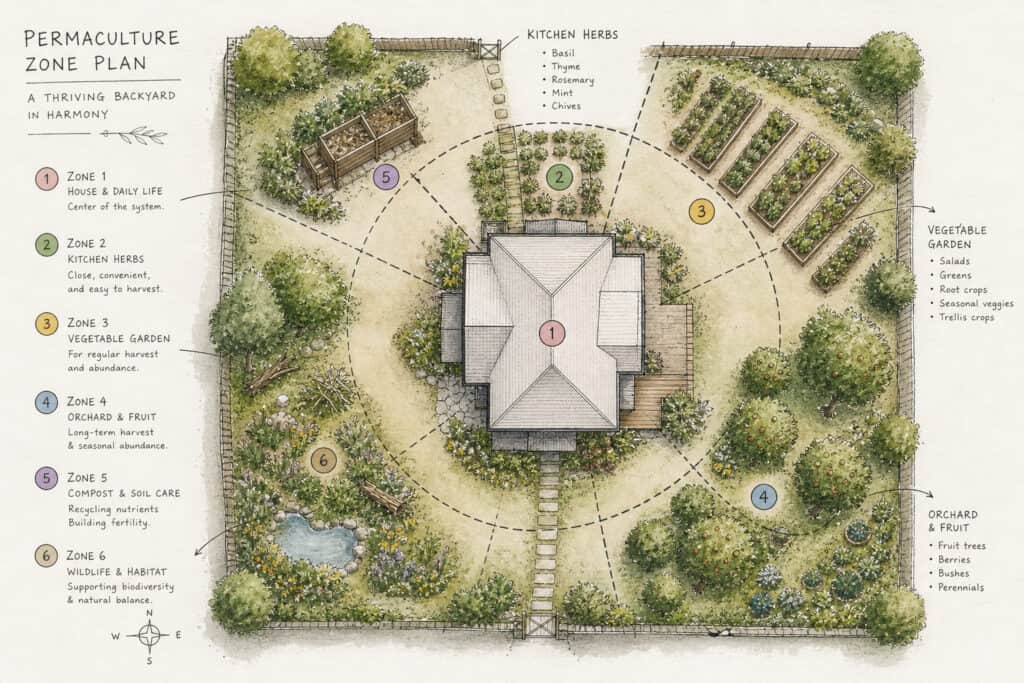
Use Permaculture design to establish Zone 1 mapping. This means keeping high-maintenance items like delicate herb gardens, young plants, or compost bins in the immediate “Zone 1” radius of the home. This operational architecture ties directly into long-term fertility. When composting systems and soil management are easy to access daily, regenerative gardening practices become effortless habits rather than dreaded weekend chores.
Map your property into radial zones, placing daily-attention tasks within a one-minute walk of the kitchen door. Design these zones to automate your workflow through simple proximity rather than force of will.
Manage builds via the speed-quality-cost triad
Rural property development is a construction project, so treat it like one. The classic project management triangle applies directly to permaculture homesteading. You can generally choose two of these three—speed, quality, or cost—at the expense of the other. It’s the most important calculation you’ll make before starting a new build.
If you want a secure barn built quickly, it will not be cheap. If you want high-quality raised beds built for free from pallets, it will take deep patience to source and dismantle them. Acknowledge the friction of long-term property transformation. Declare your two prioritized elements—the speed vs. quality plus cost trade-off—for every major infrastructure build before buying materials. Always prioritize structural quality for animal safety, even if it forces you to sacrifice the speed of your building timeline.
Avoid the mechanized infrastructure bottleneck
A strategic tool list for development eventually includes a heavy-duty chainsaw, an extensive supply of strong tarps, and a subcompact tractor (like a Kubota BX25 with a backhoe/loader). Pallet and bucket forks are highly recommended tractor add-ons for clearing access roads and lifting heavy earthworks.
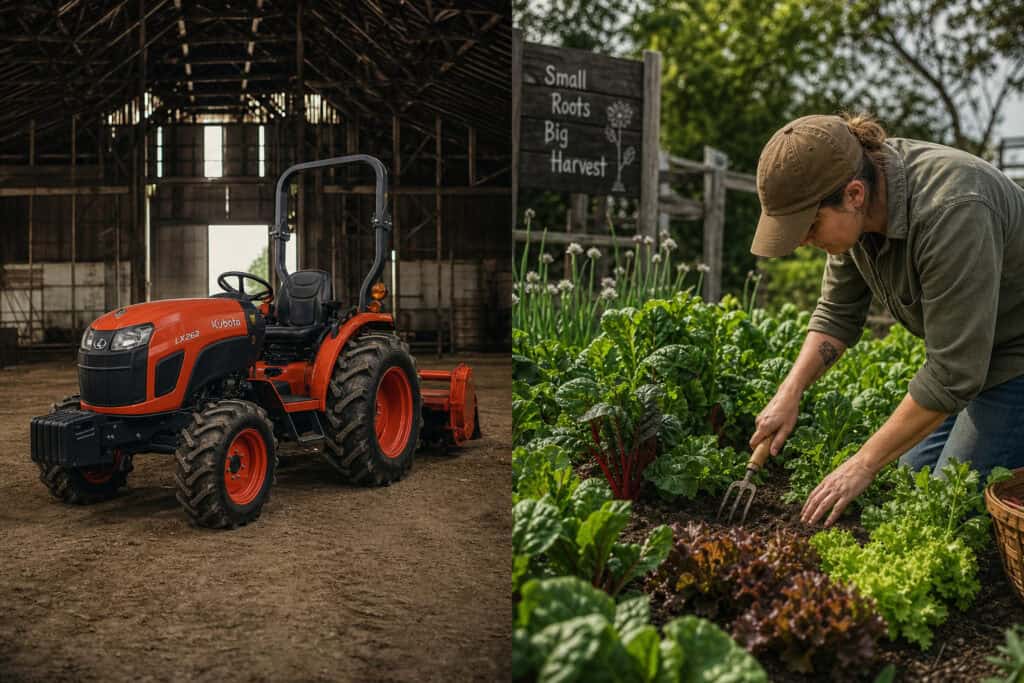
But there is a trap here. In practice, new homesteaders often face a specific bottleneck when transitioning to mechanized infrastructure. A common failure pattern is buying a subcompact tractor like a Kubota BX25 too early. The tell is when a new owner spends more time and money building barn storage for the machine than actually using it for soil improvements. Delay purchasing machinery until the exact phase where the labor cost of hand-clearing vastly outweighs the storage and maintenance costs.
“A common failure pattern is buying a subcompact tractor too early.”
Scale operations slowly from small beginnings
Insulate your project against failure by mastering one specific capability before stacking on another. The idea is to start small and lock in some early physical victories.
Lower your barrier to entry by initially using nursery seedlings for your first garden season instead of attempting large-scale indoor seed sowing. The same applies to animal husbandry: adopt intentionally small numbers of animals at first. Scaling operations slowly allows for gentle learning curves. Purchase local nursery transplants this year to ensure an easy win before tackling the complexity of a greenhouse.
Prioritize predator security over quick shelter builds
A common mistake beginners make is prioritizing a fast coop build over actual security, which often leads to losing livestock. You’ve got to research your animals’ needs—making sure your poop management and medical care plans are ready—before they ever step foot on your property. Only house animals once you have mastered the containment security required to protect them from local wildlife risks.
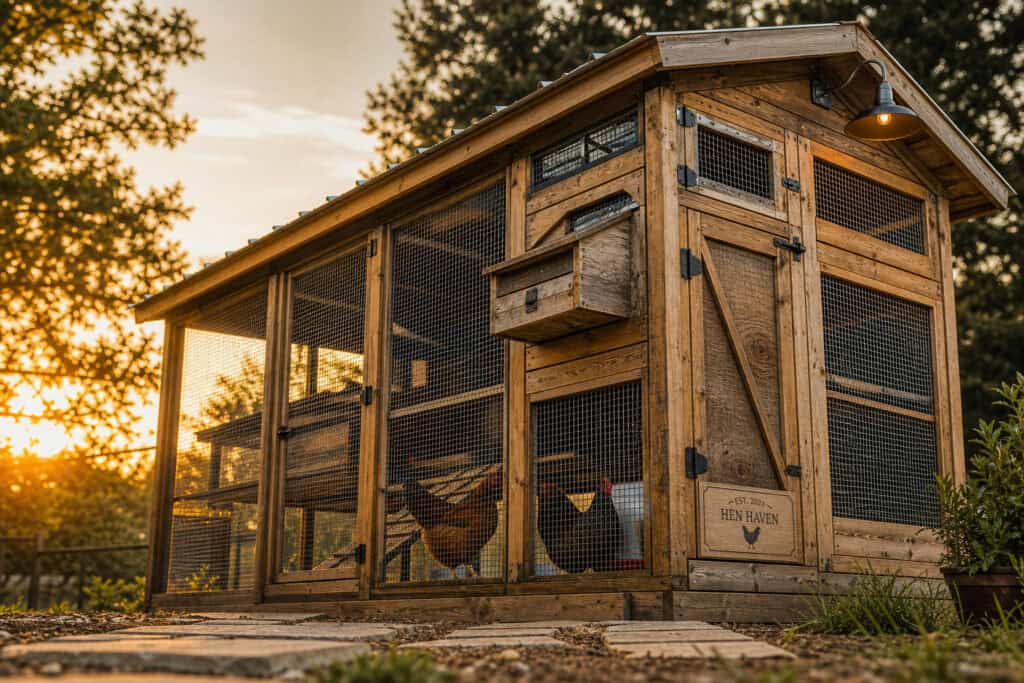
Never treat a coop build as an afterthought. Effective predator-proofing ensures that 99% of these attacks become preventable incidents. If a raccoon kills your flock, the failure is in your human design, not an act of nature. Construct, secure, and aggressively predator-test your livestock housing before executing the purchase of the animals. Rigorous hardening of structures is the only way to ensure your design successfully replaces natural wild instincts.
Limit growth to two major projects per year
Homesteading is a pace-dependent marathon, not a sprint to off-grid independence. To ensure long-term survivability and preserve your mental health, you must restrict your operational capacity. To keep your head in the game and avoid burnout, you’ll need to stick to a sustainable schedule. Schedule regular rest and self-care. Actively design non-productive relaxation zones, like fire pits or benches, where you are not mathematically required to be working.
Enforce a strict two-project annual limit to ensure burnout prevention. Recommended first priorities usually include a small vegetable garden, planting trees, and establishing irrigation or compost systems early for soil health. Write down a maximum of exactly two major infrastructure installations for the upcoming 12 months, intentionally deferring all other ideas to the following year. Your survival depends on your pacing and your internal resolve to leave some tasks un-started until the following season.
Frequently Asked Questions
How do I start a homestead from scratch?
Stop looking for land immediately and start where you are now. Begin your apprenticeship by mastering kitchen-based preservation skills like canning and fermentation, and use your current living space—no matter how small—to practice gardening or soil management. This prevents you from taking on the massive financial and operational risks of property ownership before you actually know how to steward it.
How many acres do you need to have a homestead?
You do not need any acreage to begin the journey toward self-reliance. Small-scale urban or apartment homesteading allows you to develop the fundamental skills of food processing and system design without the burden of a mortgage. Once you have built a proven track record of success in a smaller environment, you can scale up to larger land parcels.
Is it expensive to start a homestead?
It can be, but you can mitigate costs by applying a 1/3 budget buffer to all infrastructure projections to account for inevitable equipment failures and unforeseen expenses. To keep daily costs low, prioritize thrifty material sourcing from local classifieds for non-structural projects, and avoid purchasing expensive machinery like subcompact tractors until your manual labor needs genuinely exceed your physical capacity.
What are some common homesteading mistakes?
The most frequent error is the ‘do-it-all-now’ impulse, which leads to rapid burnout and financial strain. Another critical failure is prioritizing speed over structural integrity in animal housing, which is why most livestock loss to predators is preventable through better human design. Limit your expansion to two major projects per year to ensure you don’t overextend your time or your wallet.
How can I test if I am ready for a real farm?
Utilize work-exchange programs like WWOOF or HelpX, which allow you to gain hands-on experience on working farms without the financial risk of property debt. These apprenticeships provide a reality check on the labor and consistency required for agrarian life. It is better to make expensive, back-breaking mistakes while learning from a mentor on someone else’s land than on your own.
What is the secret to successful permaculture design?
The goal is to map your physical workload based on necessity, specifically using Zone 1 mapping to place daily-use items within a one-minute walk of your kitchen. By keeping your compost, herb gardens, and young plants in your immediate path, you turn maintenance into an effortless habit rather than a dreaded chore. Proper placement reduces physical energy expenditure and helps you stay on top of daily tasks.
How do I use the speed-quality-cost triad on my property?
Treat every build like a formal construction project by choosing only two of the three variables: speed, quality, or cost. If you demand high-quality, secure structures for your livestock, you must be prepared to either pay more for materials or sacrifice time to source and salvage them affordably. Always prioritize quality where animal safety is concerned, even if it forces you to slow down your project timeline.