
Do You Need a License to Be a Caregiver in Ohio?
The short answer is no. You don’t need a license to be a caregiver in Ohio. Ohio does not have a single statewide caregiver certification.
Ohio licenses home health agencies, not individual caregivers. That $250 fee, the fingerprint card, the surety bond? That’s for people starting a business. Not for you.
What you need depends on who you’re caring for and how they’re paying for it. Training requirements depend on the caregiver’s role, tasks, and funding source. A family member helping out for free has different requirements than someone getting paid through Medicaid. And the pay rates vary wildly — from $12 an hour all the way up to $27.
Here’s what you need to know to get started.
Key Takeaways
Ohio doesn’t issue a single caregiver license — training requirements depend on the caregiver’s role, tasks, and funding source (Medicaid vs. private pay).
The easiest paid path is C-HCAS through the Participant Directed Care program: no prior training required, pay up to $27/hour, but setup takes 4-6 months.
You can get paid to care for a relative, but not if you’re the client’s spouse, parent, power of attorney, guardian, or authorized representative.
Table of Contents
Do You Need a License to Be a Caregiver in Ohio? The Short Answer
No. Ohio does not have a single statewide caregiver certification.
If you searched “caregiver license Ohio,” you probably landed on a page about home health agency licensure. That’s for businesses — the companies that employ caregivers. It’s a common trap, and it wastes time.
The Ohio Department of Health handles agency licensing under Chapter 3740 of the Ohio Revised Code. That’s a different process involving a $250 non-refundable application fee, fingerprint cards, and surety bonds. If you’re just trying to get paid to care for your dad or work as a home health aide, that path isn’t for you.
What Ohio does have is a role-based system. Training requirements depend on the caregiver’s role, tasks, and funding source. Two people doing the same work can have different requirements if one is paid by Medicaid and the other isn’t.
This isn’t a failure of the system. It’s flexibility. But it means you need to know your specific situation before you start.
The Agency Licensing Path — What It Means for Owners (and Why It Doesn’t Apply to You)
If you found information about home health agency licensing, here’s why it keeps showing up — and why you can ignore it if you’re just trying to be a caregiver.
Home Health Agency Licensure Requirements
To obtain a home health license in Ohio, applicants must submit a completed application, a non-refundable fee of $250, and comply with fingerprint and surety bond requirements. Get it wrong, and you’re out the money.
Home health agency licensure is for agencies, not individual caregivers.
Why the Fingerprint Card Matters
The primary owner of a non-medical home health agency needs to provide a fingerprint impression card, not a criminal record check.
That’s a specific requirement for agency owners. Individual caregivers going through the PDC program need a different kind of background check. Don’t mix them up.
The Surety Bond: When It’s Needed
Applicants whose business was not in operation on or immediately before September 30, 2021, are required to obtain a surety bond. This is a financial guarantee that you’ll follow the rules.
- Nonmedical home health services: $20,000 surety bond
- Skilled home health services: $50,000 surety bond
Again, this is for agency owners. If you’re a caregiver looking for work, you don’t need a bond.
Participant Directed Care — Your Route to Getting Paid as a Family Caregiver
This is the program that matters for individual caregivers. It’s called Participant Directed Care (PDC) , and it lets the person receiving care hire their own caregivers — often family members.
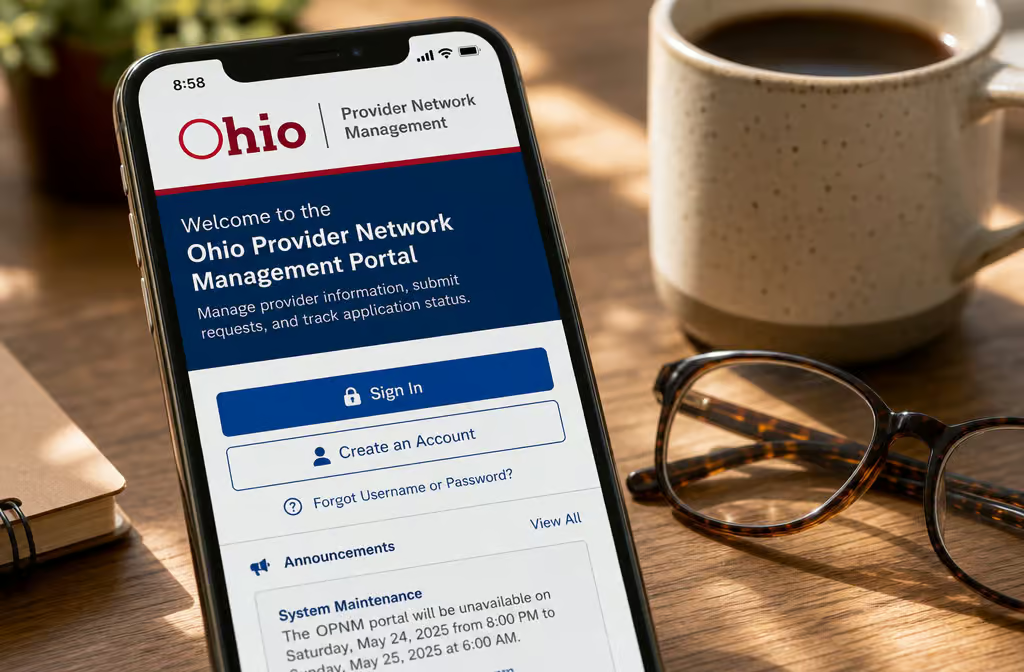
The Council on Aging (COA) runs PDC in southwestern Ohio. COA serves Butler, Clermont, Clinton, Hamilton, and Warren counties. COA serves more than 26,000 individuals.
What Is Participant Directed Care?
PDC allows COA clients enrolled in eligible programs to hire their own home care workers instead of using a home health agency. PDC providers are paid through the program their employer is enrolled in. A Financial Management Service (FMS) provider manages payroll, taxes, and records.
The Five PDC Service Options and Their Pay Rates
There are five different provider types under PDC, and they have different pay rates and requirements.
- C-HCAS (Choices Home Care Attendant Service): Up to $27/hour. No prior training needed. That’s the entry point.
- CD-PCS (Consumer-Directed Personal Care Service): $13.76/hour. Lower pay, lower barriers.
- Home Care Attendant Non-Agency Provider: $27.53/hour. Requires STNA or CNA certification.
- Non-Agency Independent Provider: $22.38/hour. Also requires STNA or CNA.
- Consumer Directed Care with ESP/AddnAide: $12-$15/hour. Lowest pay, minimal requirements.
If you want to start with no training, go C-HCAS. If you already have a nursing assistant certification, the Non-Agency Provider roles pay better.
Family Caregiver Rules: Who You Can Care For
PDC providers can serve relatives with restrictions. PDC providers can serve relatives as long as they are not the client’s spouse, parent, power of attorney, guardian, or authorized representative.
- Spouse
- Parent
- Power of attorney
- Guardian
- Authorized representative
Other relatives are fine. Siblings, adult children (as long as they’re not the parent), cousins — those are typically okay.
Step-by-Step: Becoming a PDC Provider
CHCAS Provider certification and payroll setup takes 4-6 months. Non-agency provider certification and contracting also takes 4-6 months.
Here’s the checklist:
- Be 18 years of age or older
- Complete and pass a criminal background check
- Complete online National Provider Identification (NPI) application and provider application in Provider Network Management (PNM) system
4.
Complete review process with governing body
- Maintain certification by completing continuing education annually and an annual review with governing body
- Complete annual continuing education and an annual review
COA’s Provider Engagement Coach is Hannah Hartig. If you’re in COA’s coverage area, call (513) 721-1025. They’ll walk you through it.
If you’re outside those five counties, contact your local Area Agency on Aging.
Why Training and Certification Depend on Your Role (Not a Single License)
Here’s the part: Ohio doesn’t have one set of requirements because it treats caregivers differently based on what they actually do.
The Role-Based System Explained
Two caregivers doing the same work can have different training requirements depending on who’s paying. If you’re being paid through a family member’s private funds, the rules are looser. If Medicaid is involved, expect more bureaucracy.
Medicaid vs. Non-Medicaid Rules
Medicaid-funded care involves stricter rules for training, continued learning, and paperwork. Medicaid programs require proof of training and continued learning. It’s a trade-off — better pay usually comes with more compliance.
STNA/CNA Certification: When It’s Required
Non-agency providers require STNA or CNA certification. Non-agency providers must be certified as a State Tested Nurse Aide (STNA) or Certified Nursing Assistant (CNA) or equivalent to apply.
CHCAS providers do not require prior training, unless requested by the client.
The HB 795 Fight — How Fraud Prevention Almost Ended Family Caregiver Pay
Here’s the story that almost changed policy.
The Near-Miss That Matters
House Bill 795 originally had a provision that would have banned Medicaid payments to family caregivers entirely. After about two dozen disabled Ohioans and advocates testified, that provision was removed.
Marlana Kendrick drove two and a half hours from Cleveland to Columbus with her 11-year-old son Osiah to speak against the bill. She told the committee, “I drove two and a half hours from Cleveland with my son and nobody is here to help me.”
Rep. Jason Stephens (R-Kitts Hill) said the family caregiver piece was never part of the fraud. “I’m not sure how it got in there or why it got in there, but I’m glad that it is out,” he said after the removal.
HB 795 increases penalties for Medicaid fraud, sets new restrictions on providers, and requires electronic visit verification (EVV).
EVV and Rural Concerns
Rep. Stephens expressed concern about EVV reliability in rural Southern Ohio due to poor cell coverage.
What This Means for You
Family caregiver payments in Ohio are still legal — for now. This was a close call, and it shows the issue is politically live. If you’re relying on Medicaid waivers like PASSPORT or MyCare to get paid, keep an eye on future legislation.
One important note: Medicare generally does not pay family caregivers. If your client has Medicare instead of Medicaid, that’s a different conversation.
Your Legal Duties as a Caregiver in Ohio — Background Checks, Reporting, and Privacy
Here’s what you need to know to stay out of trouble.
Background Check Requirements
If you’re going through PDC, you need to pass a criminal background check. That’s required for this kind of work.
Remember: the fingerprint card is for agency owners only. Individual caregivers go through a different process.
Mandatory Reporting of Abuse and Neglect
Ohio caregiver law requires caregivers to report suspected abuse, neglect, or exploitation. Reports are made to Adult Protective Services (APS) or local authorities.
Privacy Training
Caregivers must protect client information. Privacy training helps prevent complaints and legal problems.
Resources for Compliance
Learn2Care is a training platform that’s popular with Ohio caregivers. It works on your phone, and they offer a 14-day free trial. Enough time to see if it works for you.
How to Get Started as a Caregiver in Ohio — A Practical Action Plan
So here’s your playbook. Decide which path fits your situation, then do the first thing on that list.
Path A: Work for a Licensed Agency
If you don’t want to deal with the bureaucracy of becoming a PDC provider, just apply to a licensed home health agency. They handle compliance, background checks, and training. You just need to meet their hiring requirements. It’s a path, but you’ll have less control over who you care for and how much you’re paid.
Path B: Become a PDC Provider Through COA
This is an option if you want to care for a family member and get paid directly.
First step: call COA at (513) 721-1025 if you’re in Butler, Clermont, Clinton, Hamilton, or Warren counties. Ask for Hannah Hartig or someone in provider engagement. If you’re outside those counties, find your local Area Agency on Aging.
Second step: decide which PDC option fits. If you have no training and want to start quickly, go C-HCAS. If you have STNA/CNA certification, go Non-Agency Provider for the higher pay.
Third step: expect 4-6 months for setup. Start the process now, not when you need the money.
Path C: Pursue STNA/CNA Certification
If you want the higher-paying non-agency roles, get your STNA or CNA certification. Each certification process takes 90 days to six months. That’s a time commitment, but it opens up roles paying $22-$27 per hour.
Start by contacting your local community college or vocational school. Many offer accelerated programs.
Ohio doesn’t have one license for all caregivers. It has a system that adapts to what you’re actually doing. Figure out your situation, pick your path, and start the process. The paperwork doesn’t finish itself, and the 4-6 month setup time means you can’t afford to wait.
People Also Ask
What are the requirements to be a caregiver in Ohio?
Ohio doesn’t have a single caregiver license. Requirements depend on your role and who’s paying. For the easiest paid path through Participant Directed Care (PDC), you need to be at least 18, pass a criminal background check, get a National Provider Identifier (NPI), and apply through the Provider Network Management system. Higher-paying roles require STNA or CNA certification.