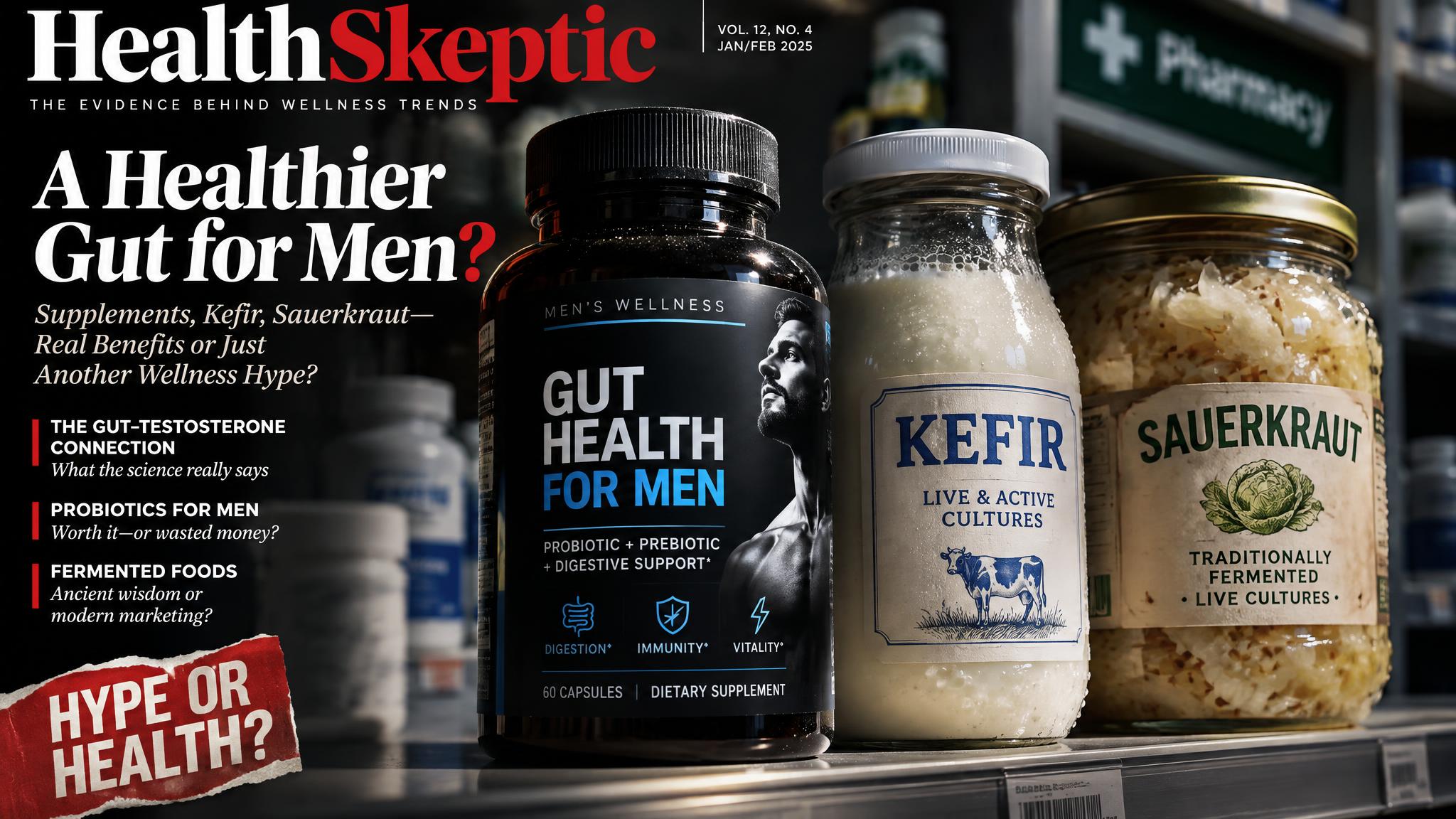
Stand in any pharmacy supplement aisle and the “men’s probiotic” shelf reads like a hormone clinic. The bottles promise higher testosterone, better prostate health, sharper focus, and stronger fertility, all packed into a glossy capsule with a dark label.
My own routine is a lot less dramatic. I drink a bit of kefir before bed each night, and the only thing I’ve noticed is less gas. No surge in energy, no miracle transformation, just a quieter stomach.
Separating the proven digestive benefits from the mouse data and marketing hype comes down to grading each claim by its actual evidence, then figuring out whether food, a capsule, or both are worth your money.
Key Takeaways
All 12 of the health guides and medical studies we checked say probiotics are safe for healthy men to take daily, yet 7 of 9 discussion-thread posters who reported their own experience had severe symptoms like pain or constipation while 2 had no side effects.
The strongest clinical evidence for probiotics backs acute diarrhea, antibiotic-associated diarrhea, and lactose digestion using specific strains like Lactobacillus rhamnosus GG, whereas testosterone claims rest on mouse data and one small human study, and prostate claims have no conclusive proof.
Fermented foods offer broader microbial diversity than capsules, which lack the 50 “good” gut bugs ZOE scientists linked to better health.
Table of contents
Table of Contents
What probiotics are, and why balance, not bacteria count, is the goal
Probiotics are live bacteria and yeasts that confer a health benefit when administered in adequate amounts, according to the FAO/WHO definition cited in a Cleveland Clinic overview updated October 30, 2023. For men, the practical benefits center on gut regularity, immune defense, and inflammation control, though men-specific clinical evidence remains limited. Your body carries more than 100 trillion bacteria across over 1,000 species and roughly 7,000 to 9,000 strains, and probiotics are meant to prevent or treat dysbiosis, an imbalance or deficit of the helpful microbes in that crowd.
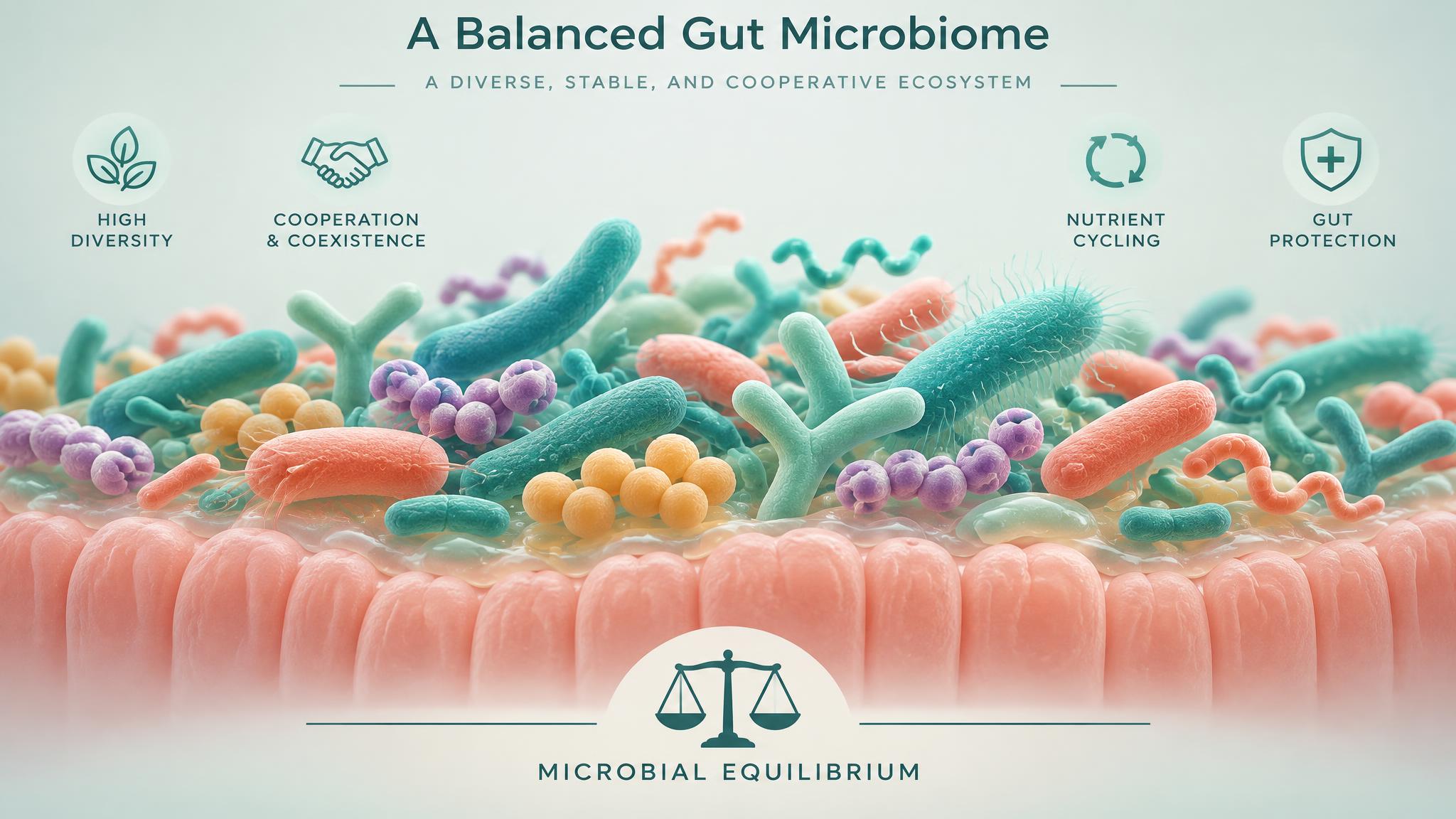
The word itself comes from the Greek for “for life,” evolving from early definitions of live microbial feed supplements. Think of your relationship with these bacteria as mutualism, like the red-billed oxpecker picking ticks off a rhino’s back. The bird gets a meal, the rhino loses parasites, and neither side is trying to wipe the other out.
When harmful microbes outnumber the helpful ones, dysbiosis contributes to digestive trouble and chronic infections such as Clostridium difficile. Doctors often recommend probiotics after a course of antibiotics or an illness that knocked down your microbiome, while some guys take a daily product for general wellness if their gut tends to act up. Certain probiotic products are also formulated for skin conditions including atopic dermatitis (eczema) and acne.
Strain specificity: why “men’s probiotic” is a label, not a science
Probiotic benefits attach to specific named strains and doses, not to the word “men’s” printed on a bottle. Because the strongest-evidenced uses are identical for men and women, “men’s probiotics” is mostly a marketing category.
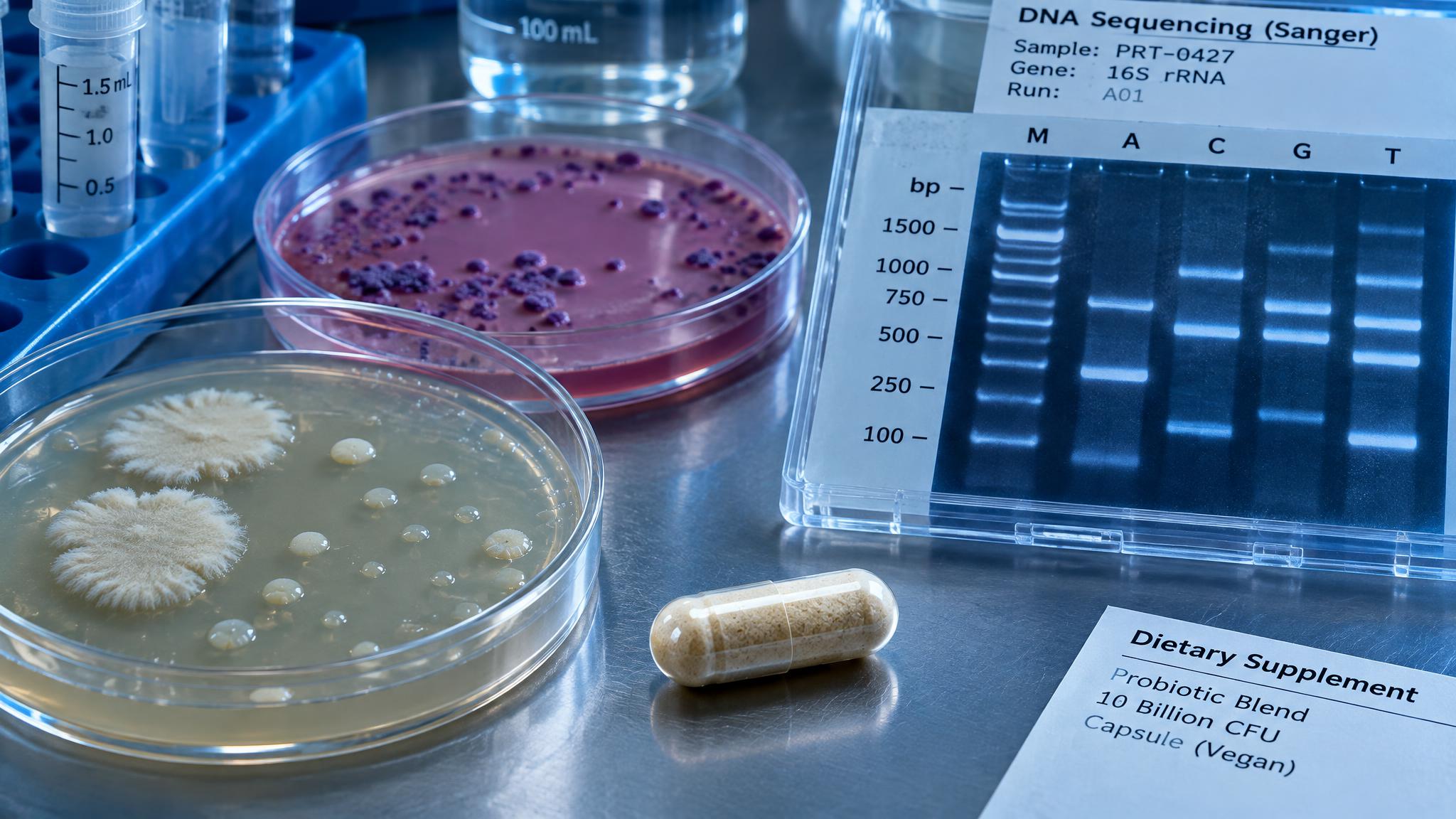
In academic research, identifying a strain properly requires phenotypic testing alongside DNA/DNA hybridisation and 16S rRNA sequencing. To earn the label, a legitimate probiotic has to clear four bars: it must be a proven-benefit variety, safe in its commercial form, viable after manufacturing, and able to survive the trip through your digestive tract.
The most frequently studied genera are Lactobacillus, including L. plantarum, L. acidophilus, L. reuteri, L. rhamnosus, L. gasseri, L. casei, and L. bulgaricus, and Bifidobacterium (B. longum, B. breve, B. bifidum, B. animalis subsp. lactis, and B. infantis). Other well-studied players include Streptococcus thermophilus, Saccharomyces boulardii, Enterococcus faecium, and even a beneficial Escherichia coli strain called Nissle. L. acidophilus is the most familiar of the bunch and lives naturally in the mouth, gut, stomach, lungs, vagina, and urinary tract.
Asking for the “best probiotic for men” misses the point. The real question is which strain, at what dose, for which specific condition, knowing that individual microbiomes still react unpredictably.
Digestive benefits: the evidence men’s articles skip
Probiotics for gut health and bloating work best when you match proven strains like Lactobacillus rhamnosus GG and Bifidobacterium species to the conditions they treat. Graded reviews and meta-analyses, including McFarland (2006), Sazawal (2006), and Hempel (2012) in JAMA, show the strongest clinical evidence supports acute diarrheal disease, preventing antibiotic-associated diarrhea, and improving lactose metabolism. For most other conditions, the evidence is insufficient, which means the marketing pyramid flips the real evidence pyramid upside down.
In his YouTube video Probiotics Benefits + Myths | Improve Gut Health | Doctor Mike, Doctor Mike points to four uses with real evidence behind them: traveler’s diarrhea, antibiotic-associated diarrhea, necrotizing enterocolitis in young children, and ulcerative colitis. The gut problems men’s supplement ads barely mention are the exact ones with the cleanest data.
Antibiotic-associated and travelers’ diarrhea
Taking a probiotic during or after antibiotics to prevent antibiotic-associated diarrhea is one of the few uses backed by solid clinical trials, provided you use a studied strain at an adequate dose. Antibiotics clear out helpful bacteria alongside the infection, and specific strains help hold the line while your normal gut population recovers.
For acute rotavirus diarrhea in children, L. rhamnosus GG, L. reuteri, L. casei Shirota, and B. animalis Bb12 all shorten the illness, with the strongest data behind L. rhamnosus GG and B. animalis Bb12. In a prospective randomized controlled day-care study in France, probiotic yogurt containing L. casei DN-114 001 significantly cut the mean duration of diarrhea in children compared with conventional yogurt. For adults dealing with travelers’ diarrhea, four strains. S. boulardii, B. bifidum, L. acidophilus, and L. rhamnosus GG, have shown meaningful benefits, though findings across studies still contradict one another.
Lactose digestion
Standard yogurt made with S. thermophilus and L. delbrueckii subsp. bulgaricus improves lactose metabolism, partly because those cultures bring higher beta-galactosidase activity to help break down milk sugar. Specific probiotic strains also improve lactose digestion, though the effect depends heavily on the exact strain and concentration.
Early lab and human work backs up that dairy-related benefit. In 1993, Isolauri and colleagues found that L. rhamnosus GG reversed cow-milk-induced intestinal permeability in suckling rats, and Pelto and colleagues showed in 1996 that it modulated milk-induced inflammatory responses in milk-hypersensitive adults.
IBS, bloating, and regularity
A review of more than 70 studies found that Lactobacillus and Bifidobacterium strains may ease bloating and abdominal pain in IBS-like digestive issues. Broadly, Lactobacillus strains leaned toward reducing bloating, while Bifidobacterium strains leaned toward supporting regular bowel movements.
The catch is that those 70-plus studies used wildly different strains, combinations, and doses. That makes it tough to credit one magic bug, and overall gut health likely matters more than chasing a single hero strain.
Beyond the gut: mood, inflammation, and the gut-brain axis
Your gut microbiome talks constantly with your brain and your nervous, immune, and endocrine systems, but probiotics haven’t been proven to lower cortisol or fix stress and mood in men. Preliminary research does link microbiome irregularities with depression, anxiety, diabetes, obesity, and heart disease. The unresolved problem is cause and effect: nobody knows yet whether gut changes trigger those conditions or result from them.
Still, the gut-mind connection is real enough that stress and poor food choices can wear down your microbiome, potentially affecting mood, pain tolerance, mental acuity, fatigue, inflammation, immune response, metabolism, blood sugar, and fat storage. Probiotics appear to work by producing bacteriocins and short-chain fatty acids, lowering gut pH, outcompeting bad bugs for nutrients, shoring up the mucosal barrier, and forming a physical wall against unfriendly bacteria. They may also help break down protein and fat and tune immune signaling through IgA secretion and Th1/Th2 balance, though their exact modes of action aren’t fully mapped out.
Emerging findings suggest certain Lactobacillus and Bifidobacterium strains may reduce carcinogen-producing colonic enzymes and improve bacterial vaginosis outcomes in women. Claims around cancer, heart disease, and blood pressure remain debated until long-term human studies land.
Testosterone, fertility, prostate, and bone: the male claims graded
Probiotics carry the weakest evidence in the entire field for male-specific hormone, prostate, and bone claims, with only early, small-scale signals for sperm quality. Most men searching for a “men’s probiotic” expect a boost in testosterone or prostate protection. What the trials actually show is mostly mouse data, one small human fertility study, and zero conclusive prostate proof.
Fertility and sperm quality
In a 10-week trial involving 52 men experiencing fertility challenges, taking a blend of Lactobacilli, Bifidobacteria, and S. thermophilus boosted both sperm count and motility. A 2017 pilot study using Flortec also improved sperm quality in infertile men.
Separately, human and animal work has linked low gut-bug diversity and low Bifidobacteria levels with erectile dysfunction. It’s an interesting early signal, but it needs much larger trials before anyone can treat a probiotic like a fertility drug.
Testosterone
When aging male mice were given Lactobacillus reuteri in their drinking water for 10 months, their testosterone stayed at youthful levels, and one small human study linked combined probiotic-plus-prebiotic therapy with higher testosterone in infertile men. Beyond that, human evidence is thin.
Of 6 health guides and medical pages we checked that answer yes or no on whether probiotics raise testosterone in men, 4 say yes and 2 say no. That 4-to-2 split looks encouraging until you realize the “yes” tallies lean on mouse data and a single small human trial rather than large clinical studies in healthy men.
Prostate health
No conclusive evidence shows that probiotics benefit prostate health. Research hasn’t established a meaningful connection between probiotics and prostate cancer either, so prostate claims on a supplement bottle are pure marketing.
Bone density
Animal studies suggest probiotics may help male mice and rats hold onto bone mass and build stronger bone density. The strongest human trial, published in Lancet Rheumatology in 2019, showed three Lactobacillus strains slowed lumbar spine bone loss, but it was conducted in postmenopausal women. Male-specific bone research remains limited.
Probiotic foods vs supplements: which is better for men’s gut health?
Fermented foods or supplements comes down to broad microbial diversity versus targeted, high-dose strains, and for most healthy men, food is the smarter daily buy. Probiotics in foods may be more beneficial than those in a pill, but choosing the best probiotic for men isn’t strictly either/or: fermented foods offer broad microbial diversity alongside prebiotic fiber, while supplements provide higher doses of specific, clinically studied strains and usually require daily use.
In discussion threads where people were asked whether probiotic foods or probiotic supplements helped them more, 14 of 25 posters who reported their own experience said fermented foods helped more, 8 said supplements helped more, and 3 said neither helped. As one poster put it after seeing no results from pills, I tried the probiotic supplements but didn’t get any results. For a guy deciding where to put his money, that split tracks with the science: everyday food moves the needle more often than a random capsule, while targeted pills still have a place for specific gut issues or post-antibiotic recovery.
For the average healthy man, daily probiotic supplements aren’t proven to justify their cost and risks. Christina Vetter, writing at zoe.com, notes that ZOE scientists identified 50 “good” gut bugs linked with better health, and none of them are in the supplements currently on store shelves. You support the good bacteria you already have through diet, decent sleep, stress management, and avoiding unnecessary antibiotics.
That’s where prebiotics come in: nondigestible fibers such as fructooligosaccharides that feed beneficial gut bacteria, a term coined by Gibson and Roberfroid in 1995 in the Journal of Nutrition. Products that combine probiotics and prebiotics are called synbiotics, or sometimes conbiotics. Meanwhile, refined carbohydrates, chronic stress, antibiotic overuse, and poor sleep actively hurt your microbiome, since gut bacteria follow circadian rhythms just like you do.
Fermented foods and prebiotics: a realistic daily routine
Small daily portions of live-culture fermented foods paired with wide plant variety do far more for your gut than an occasional giant serving or a pricey capsule. Most guys buy a supplement bottle first before realizing that grocery-aisle fermented foods are cheaper and bring a wider mix of microbes.

Good fermented options include yogurt, kefir, cottage cheese, miso soup, kombucha, sauerkraut, kimchi, pickles and pickle juice, tempeh, soy beverages, buttermilk, fermented milk, and certain cheeses. Only unpasteurized, live-culture versions count, because heat and commercial processing kill natural probiotics. Check labels for “live and active cultures,” and keep in mind that yogurt only counts as probiotic if it contains added strains beyond the two mandatory starters, L. bulgaricus and S. thermophilus. Dannon’s Activia, for example, markets Bifidobacterium animalis DN-173 010 under the trademarked name “Bifidus regularis” with a regularity claim, while properly prepared and stored dried probiotics can also survive intestinal transit.
Prof. Tim Spector recommends small daily servings of fermented foods alongside at least 30 different plants per week, mixing colors across nuts, seeds, whole grains, fruits, vegetables, and legumes so prebiotic fiber feeds your gut bacteria. That aligns with my own modest experience drinking a bit of kefir before bed each night and noticing less gas. Early changes from a food-first routine tend to be gradual and unflashy, like steadier regularity or less bloating, and because every microbiome is unique, a mismatch shows up as nothing changing.
Probiotic side effects, and who should skip them
Probiotics are safe for healthy men with a long track record of use, though mild short-term side effects and rare serious risks for vulnerable groups mean they aren’t universally harmless. In the first week or so, probiotics can trigger gas, bloating, diarrhea, constipation, or stomach pain, which usually clear up within a few days.
All 12 of the health guides and studies we checked that answer yes or no say probiotics are safe for healthy men to take daily. Yet of 9 discussion-thread posters who reported their own experience when asked whether they had side effects after taking a daily probiotic, 7 reported severe symptoms like pain or constipation and 2 reported no side effects. Those two counts point in different directions because general safety for healthy populations doesn’t guarantee your individual microbiome will play nice with a given capsule.
An Israeli study found that probiotics can actually harm the microbiome depending on the strain you take. Dr. Will Bulsiewicz compares adding a probiotic to sending a foreign exchange student into a high school with established cliques: it might shift the social dynamics, or it might change nothing at all.
Here’s how to weigh whether to take one:
- Healthy men with no gut issues can usually take probiotics safely, though food sources are better value than daily pills.
- Men recovering from antibiotics or managing specific conditions like traveler’s diarrhea have the clearest reason to use a targeted supplement.
- Immunocompromised men, including those on immunosuppressants, cancer patients, the critically ill, and premature infants, should skip probiotics unless cleared by a doctor due to a small risk of serious infection from contaminated products.
- Anyone dealing with a diagnosed medical condition should never swap out proven treatments for an unproven supplement.
The regulatory gap: why probiotic labels can’t be trusted like drug labels
Probiotics aren’t regulated by the FDA like medications, which means manufacturers don’t have to prove product quality or even prove that the bottle contains what the label claims. The strains inside a supplement may have nothing to do with the condition you’re trying to treat, and health claims on food labels often rest on preliminary findings.
According to a 2017 Harvard Health report, global probiotic supplement sales were estimated at $3.7 billion in 2016 and projected to reach $17.4 billion by 2027, with yogurts holding the largest share of probiotic product sales and the functional-food market expanding rapidly, especially in Japan where it started.
How to choose a probiotic supplement and read the label
If you do buy a supplement, treat it as a delivery problem first: the bacteria have to be alive at purchase and survive your stomach acid to do any good. Most guys grab a men’s-branded bottle off the shelf because of a huge front-label CFU number while ignoring strain names and storage rules.
Two different dosing rules circulate, and it helps to know where each comes from. Academic guidance sets the minimum concentration at 10^6 CFU per milliliter or gram, aiming for roughly 10^8 to 10^9 microorganisms per day matched to the exact doses used in successful human studies. By contrast, a common consumer rule of thumb cited in Doctor Mike’s video recommends at least 5 billion CFUs alongside an enteric coating.
Use this checklist before paying for a bottle:
- Check the expiration date and follow the storage instructions so the cultures stay alive.
- Look for specific named strains rather than a vague “probiotic blend.”
- Verify the CFU count matches either the studied dose for your condition or the 5-billion-CFU consumer floor.
- Choose enteric-coated capsules built to survive stomach acid.
- Talk to your doctor first and never replace a proven medical treatment with a supplement.
Delivery technology matters because product pH strongly affects whether bacteria survive; soft cheeses, for instance, can actually outperform yogurt as delivery vehicles. That has pushed manufacturers toward microencapsulation, straw delivery systems, spore-forming strains, and nondairy carriers like probiotic Cheddar cheese made with human-derived L. paracasei strains, as shown by Gardiner and colleagues in 1998. Even though viability is part of the definition of a probiotic, some research, including Lahtinen (2012), suggests non-viable cell wall components or probiotic DNA may still confer health effects.
From Metchnikoff to personalized microbiome science
The modern supplement aisle is still a rough first draft of an idea that goes back more than a century. Over 100 years ago, Tissier observed that bifidobacteria dominated the guts of healthy breastfed infants and were missing in formula-fed infants with diarrhea, and in 1907 Elie Metchnikoff linked fermented dairy to longevity in Bulgaria. Fermented milk was reportedly used for digestive trouble in Roman times, and one Old Testament account even credits Abraham’s 175-year lifespan to sour milk.
Early probiotic studies were poorly designed and struggled with strain specificity and bacterial growth. Development for human consumption is still in its infancy, and controlled human trials on optimal strains, doses, populations, safety, and regulation are pointing toward personalized, diet-driven microbiome care rather than a one-size-fits-all men’s pill.
Frequently Asked Questions
Can probiotics reduce cortisol?
No, there is no proof that probiotics lower cortisol or fix stress and mood in men. While your gut microbiome constantly communicates with your brain, nervous system, and endocrine system, and preliminary studies link microbiome imbalances to anxiety and depression, researchers still don’t know whether gut changes cause those issues or simply result from them. Managing stress, sleep, and diet remains far more reliable than expecting a capsule to dial down stress hormones.
What are the benefits of probiotics for men?
For men, the real-world perks center on digestion, immune defense, and keeping inflammation in check—not the hormone-clinic promises on supplement labels. The strongest clinical data backs preventing antibiotic-associated diarrhea, shortening acute diarrheal illnesses, and improving lactose digestion, with some evidence that specific strains ease bloating and support regularity. Because those proven digestive uses are identical for men and women, “men’s probiotic” is mostly a marketing label rather than a distinct medical category.
Can males take probiotics, and is it good for men to take them daily?
Yes, healthy men can generally take probiotics safely every day, though a daily pill isn’t proven to be worth the money if your gut is already fine. Targeted supplements make the most sense when you’re recovering from antibiotics or dealing with something specific like traveler’s diarrhea, whereas everyday fermented foods like kefir or yogurt offer better value for routine maintenance. Immunocompromised men—including cancer patients, the critically ill, and anyone on immunosuppressants—should skip them unless cleared by a doctor because of a small risk of serious infection from contaminated products.
Do probiotics improve sperm quality and testosterone levels in men?
Sperm quality has some early, small-scale support, while testosterone claims are mostly hype built on animal studies. A 10-week trial in 52 men with fertility challenges found that a blend of Lactobacilli, Bifidobacteria, and S. thermophilus improved sperm count and motility, and a 2017 pilot study with Flortec showed similar gains. By contrast, testosterone optimism rests largely on aging male mice given Lactobacillus reuteri and one small study of combined probiotic-prebiotic therapy in infertile men—and even though 4 of 6 health guides and medical pages we checked say yes on testosterone while 2 say no, large trials in healthy men simply aren’t there.
Do probiotics help with prostate health or prostate problems?
No conclusive evidence shows that probiotics do anything for prostate health. Research also hasn’t turned up any meaningful link between taking probiotics and prostate cancer, so prostate claims on a men’s supplement bottle are pure marketing.
Which probiotic strains actually work for gut health and bloating?
Benefits depend on matching specific named strains to specific jobs rather than grabbing a generic blend. Lactobacillus rhamnosus GG and Bifidobacterium animalis Bb12 have the strongest backing for acute diarrhea, while S. boulardii, B. bifidum, L. acidophilus, and L. rhamnosus GG have shown benefits for traveler’s diarrhea. For bloating and IBS-like symptoms, a review of over 70 studies found that Lactobacillus strains leaned toward easing bloating while Bifidobacterium strains leaned toward supporting regularity, though wildly different doses across those trials make it hard to crown a single miracle bug.
Probiotic foods vs supplements: which is better for men’s gut health?
For most healthy guys, fermented foods are the smarter daily buy because they deliver broader microbial diversity alongside prebiotic fiber for a fraction of the price. Store-bought capsules also miss all 50 of the “good” gut bugs that ZOE scientists linked with better health, and in discussion threads, 14 of 25 posters who reported their own experience said fermented foods helped more compared with 8 who favored supplements and 3 who got nothing from either. Supplements still have a clear role when you need a high, targeted dose of a studied strain, such as during or after antibiotics, whereas my own nightly routine is just a bit of kefir before bed for less gas.