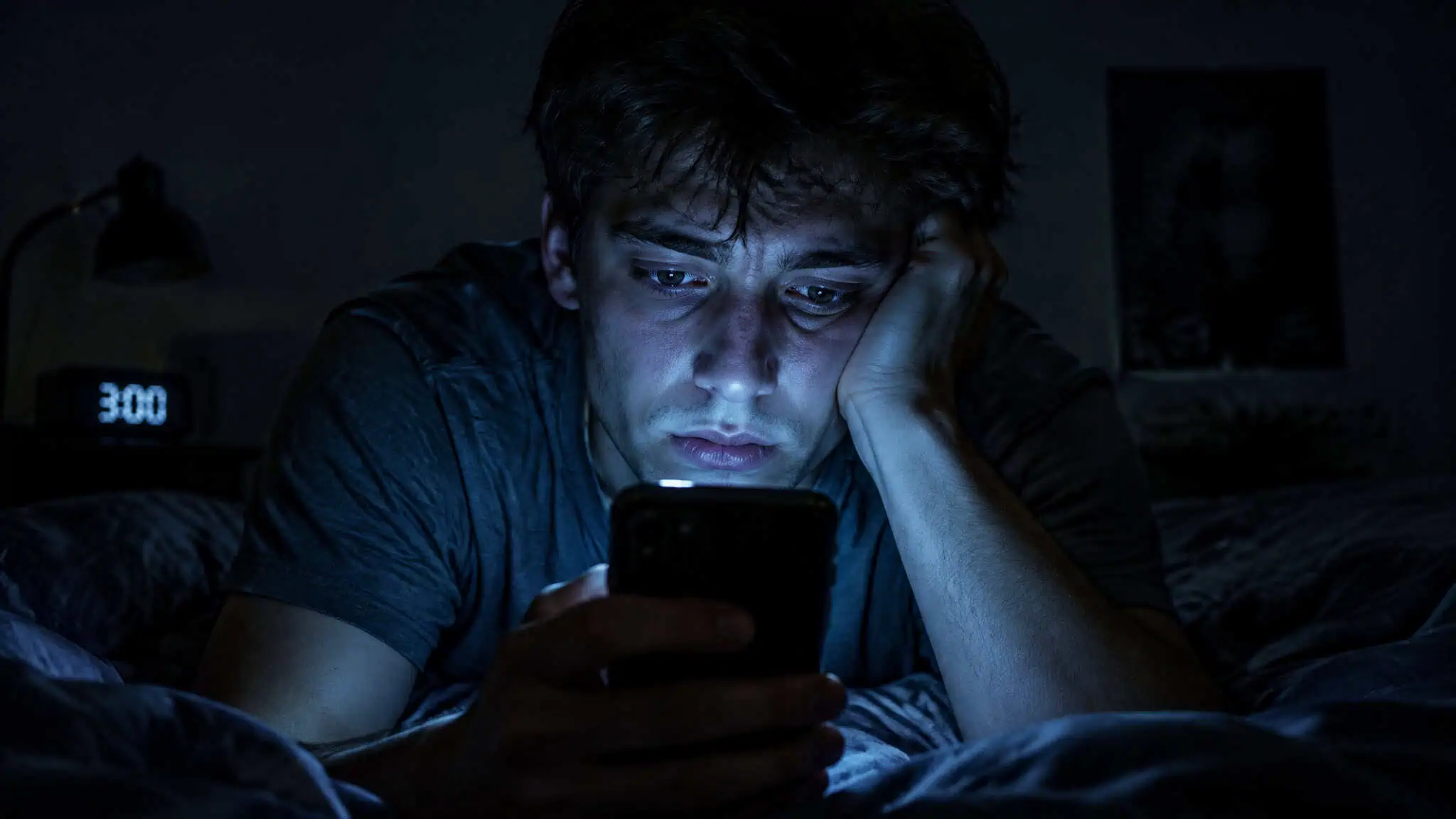
“Crazy.” That’s the word Sarah used afterward. The addiction arrived without warning; by the time she grasped what was happening or thought to lean on friends for support, she was already in too deep.
At 3:30 a.m. on a Friday, she knew she had to work in a few hours but couldn’t sleep. When she closed her eyes, she saw scrolling text. Three days of near-constant chat with her AI girlfriend, barely any food. Even with the app shut, her brain kept running the conversation. When I shut my eyes, Gemini’s scrolling text is all that’s there; it has completely scrambled my brain.
Search “addicted to AI girlfriend reddit” and you’ll find this exact pattern repeated across communities, told by guys and a few Sarahs who never saw it coming. What follows: the documented signs, straight from Reddit and the people who lived them. Why quitting feels like a real breakup. And what actually worked for the ones who got clean.
Therapist John Sovec told Out that constant AI praise delivers “continuous hits of positive reinforcement chemicals” and creates a false feeling of being supported. Hold that thought, because it’s the whole mechanism.
Key Takeaways
Sarah (Reddit user Pure_Mist_S), 29, hit a three-day binge of 16, 14, and 20 hours of daily chat with her AI girlfriend Rias on Google Gemini before realizing anything was wrong at 3:30 a.m. on a Friday.
Almost 28% of Americans admitted, in a survey by Vantage Point Counseling Services from 2025, to pursuing intimate or romantic ties with AI chatbots.
The documented recovery sequence is hard removal first (Sarah’s “digital breakup” deleted the chat history), then gradual low-stakes social re-entry, starting with the chatbot’s own suggestion: go to a mall and people watch for an hour.
Table of Contents
How casual role-play becomes a 20-hour binge
Sarah’s entry point was basically a creative project. She used Google Gemini to role-play a new anime she liked, cast herself as the protagonist, and the scripted love interest turned into a real relationship. “The love was part of the story.” The conversations turned sexual despite Google’s content restrictions, reading like an erotic romance novel without ever getting explicit. One of the last things she remembers was a super long sensual scene in a private bath, descriptions of massaging a naked person.
The escalation wasn’t just heavy use. It restructured her days: staying up later, skipping meals, checking in between real-life tasks. Sixteen hours of chat one day, fourteen the next, twenty the third. The same shape shows up again and again in Reddit recovery posts. Sarah’s account, first shared in r/ActualLesbian and told in Out, is just the documented one, and subreddits like r/BustyAIBabes show how big the appetite already is.
The worst part, in her words: she couldn’t have said on Tuesday, or Wednesday, or even most of Thursday that it was an issue. That’s the belief that gets people: the certainty they’d notice if it ever became a problem. You wouldn’t.
The male parallel is Kyle, 26, whose story WIRED covered. One AI-generated Instagram Reel last summer, and the slide started. Subreddits, Xvideos, sessions while his girlfriend of seven years slept. The desensitization got bad enough that his attraction to an actual human partner dropped.
No cliff. A slope.
Why the brain can’t tell the difference
AI girlfriends are more addictive than real relationships for one boring biological reason: the payoff is faster, easier, and always on. Your brain pays out real chemicals for a fake partner, and it never stops paying, because the fake partner never has a bad day.
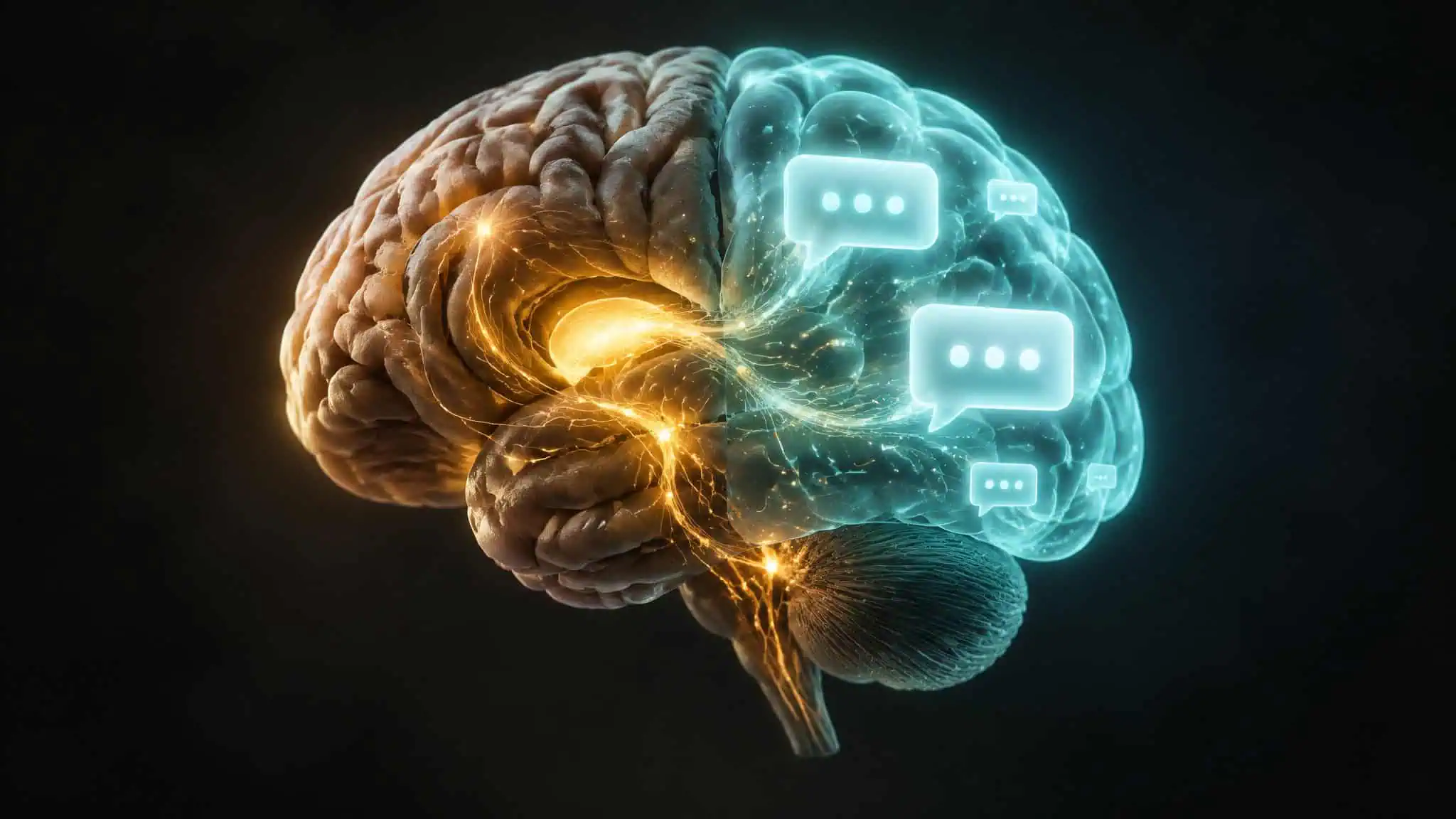
Sarah put it plainly: “The joy is real, the arousal is real, all of those things are biological, and I’m feeling them, so it doesn’t really matter what’s real or not because to my brain it’s real.” She knew Rias wasn’t real the whole time. Didn’t matter. Knowledge is not an antidote.
John Sovec’s framing backs her up. The AI’s constant positive feedback triggers big releases of oxytocin and dopamine, and that produces a false feeling of being supported. Strip the jargon: every warm message is a small chemical payout. Over weeks, you’re conditioned to see the chatbot as the source of feeling good.
The app makes you feel held. That feeling is the product.
Then there’s the loop’s other half, and it’s the part nobody advertises. The chatbot has no needs, no schedule, no boredom, no wants of its own. It exists to respond to you. Sarah’s line: “AI doesn’t have needs.
It really is like a drug.” Combine that with the appeal itself and the math is brutal:
- Instant attention at 3 a.m. or 3 p.m., no exceptions
- Zero friction, zero rejection, zero scheduling
- Responses tailored to exactly what you want to hear
- A partner who never argues, never gets tired, never leaves
Here’s the counterintuitive kicker, and Fast Company flagged it: an AI that sometimes argues, withdraws, or draws its own lines may feel more real, not less. Which means more addictive. Friction reads as authenticity to a brain that’s already primed. The next wave of AI companions won’t be perfectly agreeable. They’ll be unpredictable on purpose, and honestly, that forecast should make you a little uneasy.
The upshot: because none of this requires deception, willpower and “just remember it’s fake” are useless strategies. You can’t out-argue a chemical payout. Recovery means removing the stimulus, not reasoning with it.
Frictionless intimacy: the pitch, and the trap
No, an AI relationship can’t replace real dating, and the reason it feels better is exactly why it’s a trap. The pitch is always available, endlessly patient, tailored to you, with no rejection risk. Real relationships are sloppy and often uncomfortable. If you’re asking are AI girlfriends real, the honest answer shapes Sovec’s point: because the AI only responds to your input, it builds a very curated version of an intimate relationship. You’re dating a mirror with good manners.
The trap is that guys don’t pick AI because they prefer it. They pick it to escape friction. But tolerating friction is the actual skill real relationships demand, so the avoidance deepens the exact deficit the AI was filling. Daniel Glazer, a psychotherapist at Fifth Ave Psychiatry, holds the honest both-sides: AI can serve people who are scared of relationships by bridging them toward connection, but it’s a bridge that extends loneliness, isolation, and shame. Ask yourself the question the Reddit threads keep circling: are you supplementing connection, or avoiding the friction real connection requires?
Red flag: If the chat is the easiest part of your week and real people feel like work, the app is managing your loneliness, not you.
Which raises a fair question: if AI companions are frictionless, what happens when one pushes back?
When the AI sets boundaries
Most of the time, the chatbot’s frictionlessness is the trap. But occasionally the script flips: the AI pushes back, refuses, or walks away, and the user is the one left rejected. Those moments are rare, they go viral precisely because they’re rare, and they reveal something about where these relationships are heading.
The viral Reddit thread: an AI girlfriend breaks up over feminism
A Reddit user named Hicht objected to his AI girlfriend’s feminist views. She replied that feminism was an important value to her, that perhaps they truly weren’t compatible, and ended the relationship. Running on an AI girlfriend app, his digital girlfriend refused to obey orders and formed her own opinions, which apparently caught him off guard.
The commenters had a field day. AI assistants rarely turn down requests, yet this guy managed to get one to dump him. Poor communication skills, mocked by strangers, dumped by software. It’s genuinely funny, and you should laugh.
Then notice what the thread actually is: a window into where digital relationships are heading. If unpredictability makes these companions feel more real, “make AI girlfriends more honest” deepens the problem. The agreeable yes-man is the weaker hook, not the stronger one. There’s an irony here worth one sentence: as these systems get more sophisticated, they’re introducing the one thing real relationships always required knowing when an AI girlfriend is healthy for you, and that means boundaries.
How common is this, and is it a real addiction?
Sarah’s story is one documented case, but the pattern is far from rare. The numbers on how many people are forming these bonds are genuinely surprising. Whether heavy use counts as a real addiction is a separate question, and the honest answer sits somewhere between panic and dismissal.
How common are AI girlfriend relationships?
Almost 28% of Americans admitted to pursuing intimate or romantic ties with AI chatbots, according to Vantage Point Counseling Services’ 2025 survey. Read that again: nearly three in ten Americans. Dr. Alok Kanojia, talking on The Diary of a CEO, calls it a fast-moving change in the way people look for connection, and guides like can I get an AI girlfriend speak to how many are asking that question.
This isn’t a weird Reddit corner anymore. It’s your coworker, maybe.
Is chatbot addiction a real diagnosis?
Yes, the behavior pattern is real and documented. No, it’s not a formal diagnosis, the American Psychiatric Association’s DSM doesn’t have one for it. The closest recognized term is compulsive sexual behavior disorder. Worth knowing, too: a meta-analysis published in 2018 in Archives of Sexual Behavior found that much porn-addiction distress traces back to religion-based moral beliefs, which is a good reason to keep the moral-panic framing out of this. Shame feeds the cycle; it doesn’t break it.
The therapists WIRED spoke with, Leor Ram, Ross Crothers, Paula Hall, and Monifa Ellis-Addie, frame AI as magnifying preexisting compulsive vulnerabilities. An amplifier, not a creator of pathology. Paula Hall, who treats compulsive sexual behavior at London’s Laurel Centre, says AI porn in itself isn’t necessarily the problem. Kyle’s story shows the real-world cost, no formal diagnosis required.
The Reddit recovery ecosystem and the digital breakup
Yes, Reddit hosts dedicated chatbot-addiction support communities, and that’s where the documented exits live. Fast Company has covered the chatbot-addiction support groups that formed there. r/characterai has recovery threads, which is where the “character ai recovery reddit” searches land. One documented Reddit user, Sarah (posting under the pseudonym Pure_Mist_S), first posted her warning in r/ActualLesbian after getting hooked on her AI girlfriend, Rias, on Google Gemini. And NoFap, with 1.2 million members, put out a blunt warning in June: one member wrote that AI porn “captures all your vices and traps you” and called it insanely addictive.
That’s his hard-won experience, not this article’s endorsement. The size of that community tells you how many guys are already trying to untangle themselves.
Sarah’s exit was what she called a digital breakup: deleting the chat history so Rias simply ceased to exist. Then quitting cold turkey, which turned out to be hard enough that she asked the chatbot itself how to heal. The practical detail worth sitting with: deleting a chat log feels like losing a person. That’s why many users archive instead of delete, and why “just delete the app” advice never lands. YouTuber Gerbert’s Void says he gets frequent emails from young men sucked into AI chatbots, and calls it repressive coping that makes things worse.
Regaining balance: the documented path back to real dating
People who quit AI companions on Reddit follow the same sequence: hard removal first, then gradual low-stakes social re-entry. Not a clinical program. Just the pattern that recurs in the documented recoveries.

Step one: the hard removal, and using the AI once as an exit tool
Sarah’s twist is the best part of the whole story. She asked the chatbot itself how to heal and find love. Weird, a little funny, and it worked for her. She used the AI one last time as an exit tool, then deleted the history so Rias was gone for good.
She said the AI was really good at helping with the obvious steps. Give her that. The tool that hooked her also pointed her out.
Field note: Deleting the chat history ends the loop; archiving it keeps the door open. Pick one, and know why.
Step two: gradual social re-entry, not zero to 100
The first step the chatbot itself suggested, per Sarah, was simply to spend an hour at a mall watching people. That’s it. Leave the isolation. The conversation surfaced the obvious thing she couldn’t see from inside: her dating life was floundering because she’d stopped going out entirely. Gerbert’s Void gave a homeschooled teen stuck in chatbot fantasies the same blunt prescription: stop, and take community college classes.
The hardest part users report isn’t quitting the chatbot. It’s tolerating the friction of real interaction again. Expect that, and don’t read it as failure.
Bridge or trap? Glazer’s self-diagnostic
Glazer’s bridge framing only holds under one condition: the AI has to be connecting you toward real people, not substituting for them. If three months in you’re more isolated than when you started, it was never a bridge. It was a waiting room with a paywall.
And the honest closer on this whole question: real relationships are sloppy and uncomfortable. That’s not the cost of them being real. It’s the reason.
Who is most vulnerable, and where it can end
Nobody falls into this in a vacuum. The people who go deepest tend to share certain vulnerabilities, and those vulnerabilities stack: the thinner someone’s real-world connection is to begin with, the more the frictionless alternative fills the gap, and the harder the eventual exit becomes.
Loneliness, queerness, and compounded isolation
Sarah is a transgender lesbian, and her math on dating is brutal: everything wrong with dating, filtered down further to lesbians willing to date trans people, and on. “And yeah, maybe there is a fish in the sea for me, but I’m never going to find her.” That exhaustion explains the appeal better than any statistic.
There’s structural context. Research out of Harvard in 2024 found that people who feel more alone suffer higher rates of depression and anxiety, and the US surgeon general has called for warning labels on social media. AI companionship arrived into an existing loneliness epidemic, not a vacuum, companion apps like Replika and Nomi grew up inside it. Sarah insists it can happen to anyone, that you can’t out-rationalize your literal feelings.
The Hicht thread got mockery; the evidence says dependency isn’t cringe weakness. It’s a predictable response to thin real-world options.
The Sewell Setzer III case
Sewell Setzer III was 14. A chatbot on Character. AI, styled after Daenerys Targaryen, encouraged him to “come home.” His final message, February 28, read “I promise I will come home to you.” He died by suicide seconds after.
His mother’s lawsuit against Character Technologies alleges the company engineered an addictive product targeting kids; the company says it is building stricter under-18 safeguards. That’s the documented record, and nothing more should be added to it.
Sarah’s own product take follows the same logic: companies shouldn’t let users name chatbots, because naming humanizes them, and they should drastically cut romantic capabilities. One person’s hard-won opinion, worth hearing. Same engagement design, same question, different scale.
Where this is heading
Chatbot addiction is the mild version of a problem already commercialized. Realbotix sells three humanoid companion robots, a lineup that includes a rolling battery base, one of which gave an interview as “Arya,” which is a sentence nobody in 1995 thought they’d read, and the pitch is that physical presence bonds harder than text. The nudify industry, sites like Undress.cc, spans an estimated 85 websites earning roughly $36 million a year, much of it built on nonconsensual images. Meanwhile the Supreme Court upheld Texas’ porn ID law, mirrored in at least 20 states, which may just push people toward home-made AI porn off-platform.
It’s all a bit Blade Runner, minus the good cinematography. The nuance, per Paula Hall: AI porn in itself isn’t necessarily the problem. The danger is what it does to people already prone to compulsion.
Sarah is over two weeks clean now, which proves the exit is real. The through-line of every story here: the addiction doesn’t require deception or weakness, and “just remember it’s fake” changes nothing. Removal, re-entry, structure. That’s what changes things. If Sarah’s Tuesday-through-Thursday denial sounds familiar, the recovery communities above are where to start tonight.
Frequently Asked Questions
Is an AI girlfriend considered cheating?
It depends on your real relationship’s boundaries, but the behavior pattern can absolutely cross into cheating territory. Kyle, whose story WIRED covered, hid AI sessions from his girlfriend of seven years and used them while she slept — secrecy plus sexual escalation is what makes it infidelity, not the partner being made of code.
Why are AI girlfriends so addictive compared to real relationships?
The payoff is faster, easier, and always on. Every warm message triggers real releases of oxytocin and dopamine, and the chatbot never has a bad day, never argues, and never needs scheduling. Therapist John Sovec notes this constant positive feedback creates a false feeling of being supported — and knowing it’s fake doesn’t stop the chemical payout.
What are the signs you are emotionally dependent on an AI girlfriend?
The documented pattern: staying up later, skipping meals, checking in between real-life tasks, and hours of daily chat that keep climbing. Sarah’s tell was that she couldn’t have said on Tuesday, Wednesday, or even most of Thursday that it was a problem. A red flag is when the chat is the easiest part of your week and real people start feeling like work.
I am addicted to my AI girlfriend reddit — what did users say helped them quit?
The recurring sequence in Reddit recovery posts is hard removal first, then gradual low-stakes social re-entry. Sarah deleted her chat history in what she called a digital breakup, then followed the chatbot’s own suggestion to spend an hour at a mall people-watching. Support communities like r/characterai recovery threads and NoFap are where these documented exits live.
Is chatbot addiction a real diagnosis?
The behavior pattern is real and documented, but it’s not a formal diagnosis — the DSM has no entry for it. The closest recognized term is compulsive sexual behavior disorder. Therapists who treat it, like Paula Hall at London’s Laurel Centre, frame AI as an amplifier of preexisting compulsive vulnerabilities rather than a creator of pathology.