
You think you are being the devoted husband by letting your wife own your heart and dictate your moral standing. Treating your spouse like a goddess is selfish. It forces her to act as your moral babysitter, carrying the heavy burden of absolving your personal guilt. Many men arrive at this dynamic because they carry the shame of secret pornography habits or hidden digital expenses. Driven by guilt, they convince themselves that surrendering all boundaries—from giving up their personal privacy to obsessing over how to buy her a sensitive gift without causing a fight—is the only way to keep the peace.
As we often discuss here at Unfinished Man, the “happy wife, happy life” cliché frequently masks a broken, anxious system. True respect requires two equals, not a guilty guy constantly pleading with a judge. You owe your partner honesty, shared labor, and thoughtful support through physical changes—like nurturing your pregnant wife’s sexual confidence. You do not owe her your autonomy. If you find yourself treating your wife as an idol to escape the guilt of past betrayals, it is time to pursue forgiveness from God.
Key Takeaways
Equating spousal forgiveness with divine grace is a dangerous theological error that prioritizes human validation over spiritual repentance.
Public, performative expressions of partner ‘worship’ are often interpreted as objectification or harassment, violating social boundaries.
Table of Contents
Wife Worship: Marital Devotion or Spiritual Idolatry?
Elevating your wife to the infallible center of your universe signals a psychological and spiritual imbalance, not romantic success. When a man bends over backwards to appease his partner, he is usually managing his own anxiety. It ranges from quiet, anxious subservience to extreme ritualistic acts performed up to 10 times daily.
Building a healthy marital connection means valuing a flawed human being deeply. You look at her as an equal partner, not an idol. Treating her like a deity removes her right to be messy and real. A strong marriage demands emotional intimacy built on radical honesty, not an obsessive dynamic centered entirely on groveling for approval.
Identifying the Guilt-debt Dynamic in Marriage
Overwhelming deference to a spouse is frequently an anxiety response aimed at managing guilt over past betrayals. Men carry heavy psychological debts when they hide their behavior. A man might conceal a substance habit or a secret pornography problem for 4 years. He hides the $1.99/minute charges on his credit card.
When the truth finally comes out, the resulting shame creates a sudden, desperate need to overcompensate. He turns himself into a doormat.
This leads straight into Robert Glover’s concept of the Nice Guy syndrome, where a husband tries to earn back his standing through constant, anxious peacekeeping rather than understanding how to show romantic interest. He surrenders his emotional boundaries. He agrees to everything. He tip-toes around his own home to avoid conflict.
This guilt-debt dynamic eventually hardens into pure codependency. The husband becomes paralyzed by the feeling that he owes his wife everything, shifting the weight of his self-worth onto her changing moods.
Transactional Grace and the Hazard of Human Absolution
Making a human spouse your ultimate judge creates an exhausting hierarchy where her mood dictates your entire emotional and spiritual standing.

The Illusion of the Spouse as Mediator
When you weaponize a partner’s conditional forgiveness to avoid internal work, you strip away true accountability. You treat offenses as debts owed to your wife rather than moral failings. Taking this route turns marital repair into a sterile exchange, and the result is transactional grace. You create a setup where human validation supersedes divine absolution, shifting the dynamic into spiritual idolatry. A man in this loop feels unable to read his Bible or engage in prayer because his wife is annoyed with him.

Sub-contracting Spiritual Repentance
The theological hazard here is severe. Equating spousal forgiveness with divine grace is a dangerous theological error that prioritizes human validation over spiritual repentance. Biblical texts emphasize that primary accountability lies elsewhere. Look at Psalm 51, where David confronts his profound sin with Bathsheba.
He recognizes his failure is an offense against God. Furthermore, Romans 6 teaches that divine grace breaks the permanent bondage of sin, meaning marital offenses shouldn’t merely be viewed as unpayable debts. Even if a husband studies reformed theology, letting a spouse own his soul while his intellectual life belongs to his creator creates a divide. Asking a wife to serve as an infallible moral compass is spiritually flawed. It also burns her out.
Archetypal Projection and the Burden of the Goddess
Worshipping a partner’s mythological essence strips her of her humanity and layers pressure onto her everyday life.
Mythology Versus the Messy Human Reality
Esoteric relationship models often push men to view their wife as a sacred mirror. In these frameworks, the goal is accessing the Divine Feminine through escalating archetypal projection. You build an altar. You put up images of Beatrice or statues of ancient figures.
You stare at your wife as if she represents universal mythological traits rather than an individual woman trying to get through her day. The woman ceases to be a real person. She becomes a symbol.

Using the Spouse for Trauma Processing
This approach is rarely about the woman herself. It is usually about the man using her. Some relationship models turn a real partnership into an internal repair mechanism. Esoteric ‘Goddess’ workshops utilize rituals to help participants process past trauma, such as parental divorce.
You project your unhealed wounds onto the feminine image, hoping your devotion will fix you. It turns the relationship into a therapeutic tool. You are not seeing her. You are looking for salvation.
The Fine Line Between Intimacy and Performative Devotion
Romantic reverence crosses from mutual private trust into alienating, inappropriate behavior.
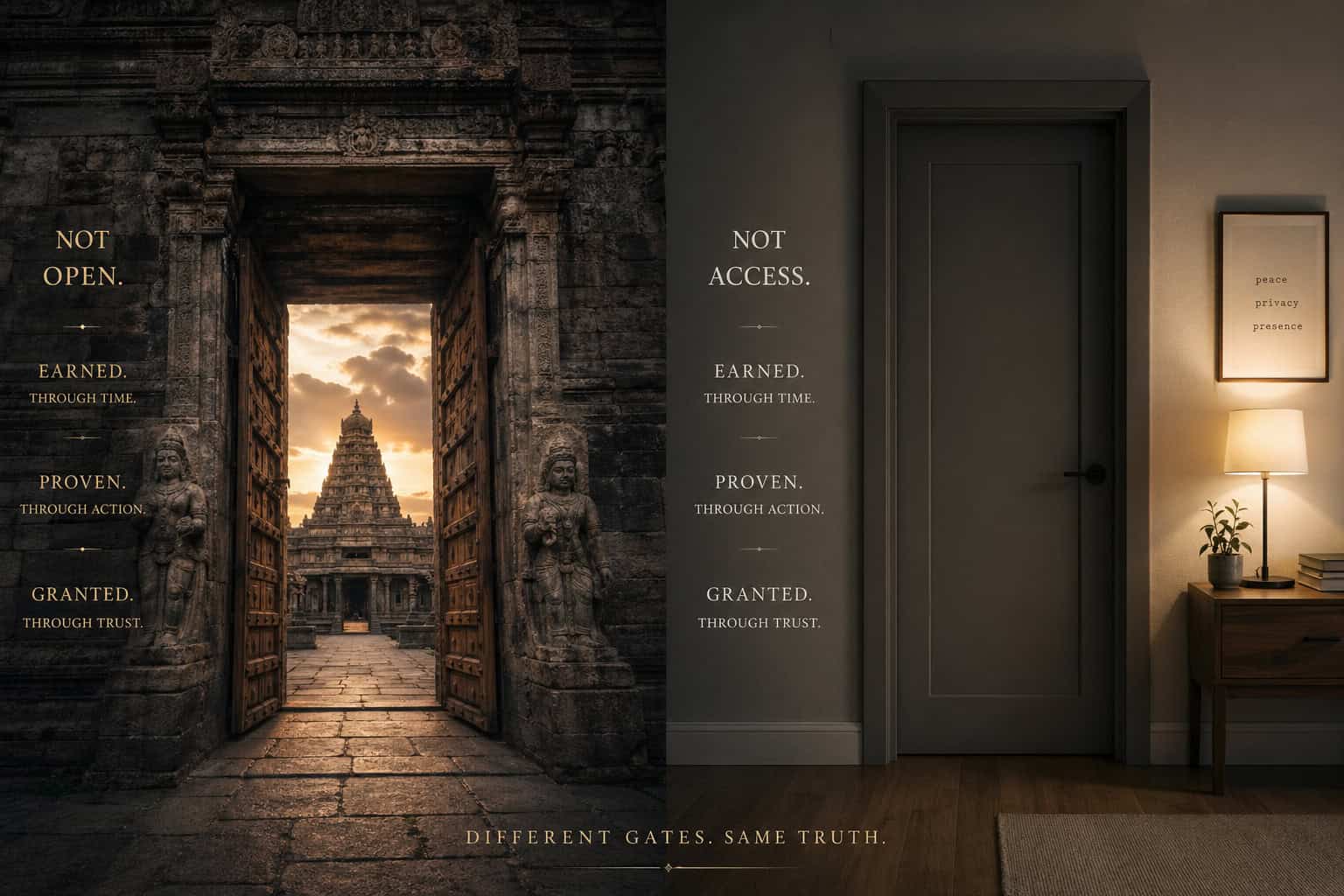
The author Evan Marc Katz points out that building literal shrines borders on creepy and pushes most women away. Context defines the line. Arjuna described this emotional progression using the concept of Gated Intimacy. He leaned heavily on the Balinese temple metaphor to explain how women guard their core selves.
You pass through concentric walls of trust one by one, like walking through the courtyards of physical temples. You earn that private access over time, which eventually dictates when highly personal gestures—such as buying your girlfriend a swimsuit—are welcomed rather than seen as invasive.
The failure happens when men ignore context. Public, performative expressions of partner ‘worship’ are often interpreted as objectification or harassment, violating social boundaries. Katz relies on the ‘supermarket/cashier’ comparison to differentiate between healthy private affection and social boundary-crossing. Telling your wife you love her curves in the bedroom works. Doing it to a stranger at the checkout counter is a boundary violation that ignores contextual appropriateness.
Replacing Pedestals With Practical Partnership
True marital adoration is grounded in shared household labor and removed burdens, not symbolic shrines or anxious subservience.
The highest form of modern devotion has nothing to do with ritualistic behaviors, such as the acts performed 10 times daily mentioned earlier. You show up as an equal. You stop relying on performative devotion and start focusing on practical partnership. You take on the mental load.
You book the spa day, watch the kids, and wash the dishes, but you must also articulate clear emotional boundaries to stop codependency. Tell your spouse explicitly that while you are committed to the relationship, you will no longer allow her changing moods to dictate your self-worth. Clearly defining what emotional weight you will and will not take responsibility for ends the cycle of appeasement.
You let your partner be a flawed, messy human being without expecting her to act as your moral anchor. Worshipping a wife means placing her on a two-dimensional pedestal. Cherishing her means standing next to her in the reality of daily life. It is time to step off the altar and get back to the work of being a partner.
Frequently Asked Questions
Does the Bible say to worship your spouse?
No. The article clarifies that elevating a spouse to the center of your universe as an infallible moral anchor is a dangerous theological error that confuses human validation with divine grace.
What are signs that God is telling you to leave a relationship?
The text does not provide signs for leaving a marriage; instead, it focuses on fixing a broken, codependent dynamic. It argues that if you are using your spouse as a surrogate for God to escape the guilt of past betrayals, you should seek forgiveness from God rather than using your partner as a moral judge.
Why does treating my wife like a ‘goddess’ hurt our marriage?
It forces her into an exhausting role as your moral babysitter and strips her of her humanity, preventing her from being a real, messy partner. This performative worship is often a mask for the husband’s anxiety or guilt over past secrets, turning the relationship into a transaction rather than an equal partnership.
Is it okay to use my wife to help me process my past trauma?
No, this is usually an act of using your spouse as a tool for your own salvation rather than seeing her as an individual. When you project your unhealed wounds onto her, you are looking for therapy rather than intimacy, which ultimately ignores her needs and reality.
What’s the difference between adoration and healthy partnership?
Adoration often places a spouse on a pedestal, creating a symbolic and distance-heavy dynamic centered on performative gestures. Healthy partnership is grounded in the reality of shared household labor, mutual respect as equals, and the freedom for both people to be flawed human beings.
Can I show devotion through public gestures of worship?
Public, performative displays of ‘worship’ are frequently interpreted as objectification or harassment and often violate social boundaries. True intimacy is ‘gated’ and based on private trust built over time, not on public exhibitions that disregard context and personal boundaries.


That is actually pretty good, basically an article I was looking for. Thanks a lot and take care!
Good content, but please look at the structure of your article. It is is full of repetitions and redundancies. Anyway thanks and I appreciate the advice.
Thanks for your feedback!
If religion is devotion to an impesonal figure (a distant God, somewhere out there)
then love is devotion to a personal figure — your spouse!
The existence of a God is merely according to conjecture.
In your bed, look — this is your god. You don’t need another!
Then spousal worship goes both ways. You both alternate between deity and worshipper.
Each night you kneel before your spouse, bowed head, eyes closed. She puts your hands upon you, and listens without judgement whatever you have to say.
This is what it means to pray with your spouse, and to pray to your spouse.
Do not tell it to a God, who may or may not hear. Tell it to your wife, your goddess. Tell her about your dreams, your desires, your failures. If you had wronged her that day, beg for forgivenes, cry and tremble, tell her all about what happened and why, and your soul will be redeemed. And then this is repeated vice-versa, now you are her god and you listen to her as your worshipper, without judgement, without scolding, without reprimeand. Just listen, and accept her, and forgive her.
There is no need for any intermediary, for any priest, for any abstract deity. Your spouse is your literal deity, yet you forget, you live a double life, you would rather kneel in the church than to kneel before your spouse and make a confesion to her. Because delusion is a powerful thing, especially when it absolves responsibility, when it offloads responsibility onto surogate structures such as a church or a god. Because people internally are like hedgehogs. They are afraid of radical vulnerability, submission, confession, and intimacy at the spiritual level. They would rather invent entire abstract hierearchies than to be seen for what they truly are. Go to church one day, cheat on your wife the next day.
Salvation is not granted by some deity. Salvation is through love only. Not the abstract love of god, the personal intimate love of spouse. Pure love between male and female. Dare to love another being without conditions. Only then is your soul saved. No gods can grant you that.
Excuse me for my blunt thoughts.