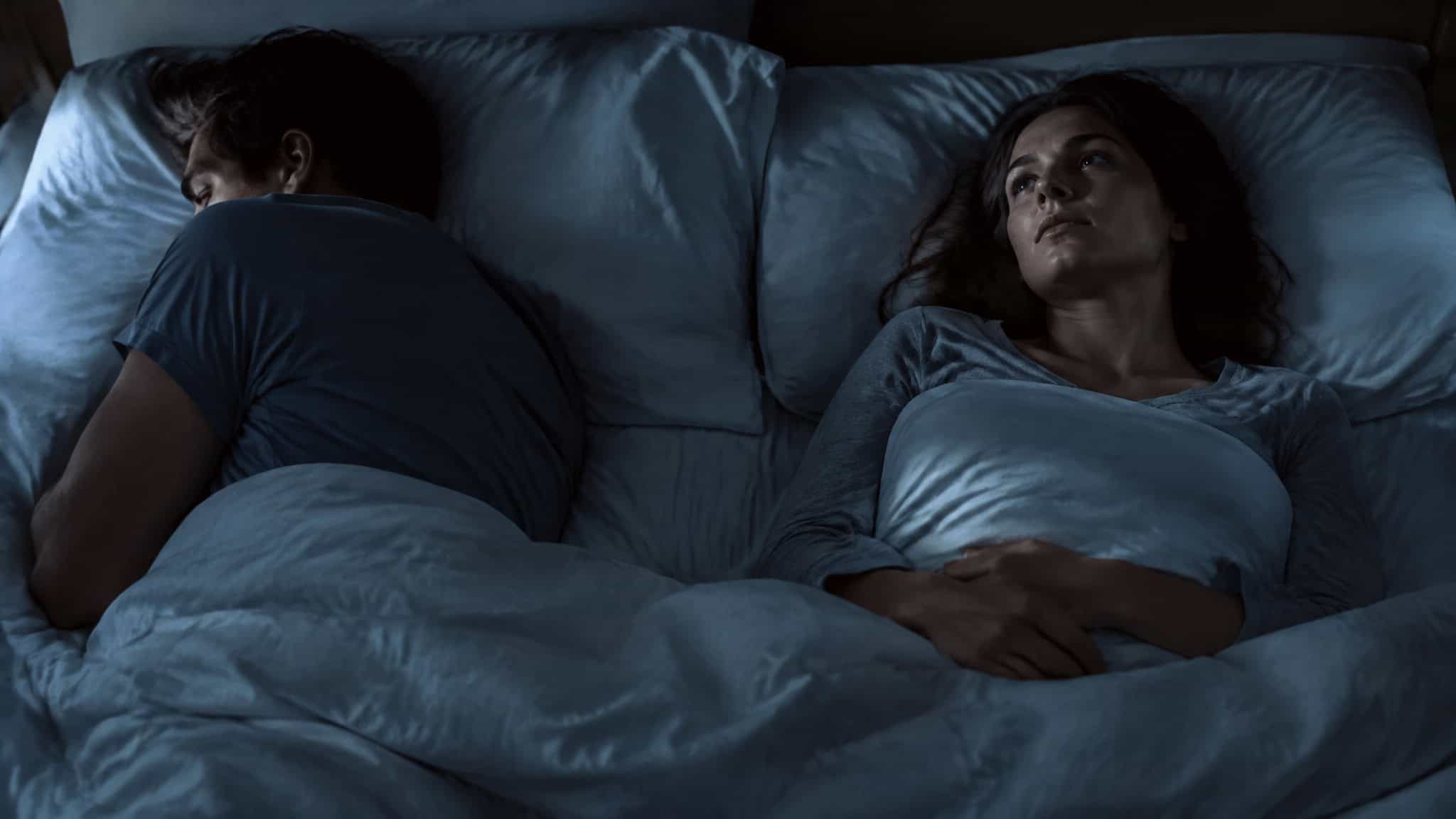
Warm at the bar, warm in the texts, warm walking to the car. Then morning comes and he’s replying in one word, or not at all, and she’s staring at the ceiling running forensics on her own behavior. If you’ve typed why do men not respect women they sleep with into a search bar, that pattern is probably why. It’s common, it’s documented, and the useful question isn’t “what did I do wrong.”
It’s what does an undefined casual arrangement actually produce on both sides. A 2022 study out of James Cook University, run by Billie E. McKeen, Ryan C. Anderson and David A. Mitchell and published in Sexuality & Culture, asked 701 people why they hook up and how they felt afterward, and most coverage of this topic cites it without reading its data. This article reads the data. What follows is mechanisms and evidence, not folklore, and not a waiting rule.
Key Takeaways
Post-hookup feelings split hard depending on how you measure: 82% of men versus 57% of women were glad they hooked up the morning after, yet in the 701-person 2022 study, men scored higher than women on feeling lonely (4.88 vs 4.06) and regretful.
Perceived loss of respect is a measured outcome, not a vibe: 20.8% of students reported it after their most recent hookup, and it accounted for 29% of post-casual-sex regret in a study of 21,549 college students.
No study shows that making him wait builds respect; what actually tracks better outcomes is choosing sex autonomously and stating expectations before anything happens.
Table of Contents
What hookup culture is, and how common it actually is
Before assigning blame to anyone’s character, it helps to know what “hookup culture” actually measures, because the definitions are broader than most people assume and the numbers move with them.
What counts as a hookup
The 2022 study defined a hookup broadly, covering everything from kissing to intercourse with someone outside a committed relationship. That breadth is why the statistics look enormous, so it’s worth calibrating before you draw conclusions from them.
How common hookups are
Across multiple studies, 44 to 75 percent of 18-to-25-year-olds report at least one casual encounter, and 60 to 80 percent of North American college students report some hookup experience. In a 2018 sample of 395 people aged 18 to 34, 78.2% reported casual sex with someone met through a dating site. Common, not universal.
Why hookup culture grew, and why sex is also declining
The 1920s moved courtship out of the living room and into cars and movie theaters. The 1960s added the pill and co-ed parties. Dating apps with location tech sealed it, per a 2013 review. Underneath sits a simple demographic gap: bodies mature earlier, adult commitments arrive later, and the years between are where casual sex lives.
A 2020 study found US sexual inactivity rose from 2000 to 2018 among young adults, and the decline predates COVID-19. So casual sex is normalized and declining at the same time. Whatever she experienced happened against that statistical background, not because she did something rare.
Why men go cold or ignore women after sex
Distance after sex is usually expectation mismatch and an emotional shift, not a measured verdict on her. In a 2008 survey of 507 undergraduates, 82% of men and 57% of women said they were generally glad they’d hooked up the morning after, and both sexes averaged more positive than negative feelings. So the cold turn often isn’t disgust with the person. It’s the encounter doing a different job for each person, with the feelings arriving on different schedules.
The fuller split comes from a 2010 study of 832 students, and it’s nearly a mirror image:
| Reaction after a hookup | Men | Women |
|---|---|---|
| Felt positive | 50% | 26% |
| Felt negative | 26% | 49% |
The rest of both groups landed somewhere mixed, which is its own finding. Most people aren’t devastated and most aren’t euphoric. They’re processing.
The sharpest timing data comes from a 2002 study that asked people how they felt during a typical hookup versus after. During: 65% felt good, aroused, or excited. Afterward: 35% felt regretful or disappointed, 27% felt good or happy, 20% felt satisfied. The fun is front-loaded. Whatever warmth existed before sex, a chunk of the good feeling gets spent by morning, and what’s left depends heavily on what each person thought the encounter was.
That’s the mechanism worth naming. When a hookup starts under mismatched expectations, one person reads the warmth as the start of something and the other reads it as the mood of the night. The morning-after distance isn’t a verdict delivered after careful review. It’s the gap between those two readings showing up in behavior. Same night, two different stories, and the colder story usually belongs to whoever wanted less.
The honest caveat: post-hookup feelings are a mixed bag for everyone. There’s no universal “men feel great, women are devastated” story in this data, and anyone selling you one is selling a shortcut.
Do men or women regret casual sex more?
The answer is measurement-dependent, and that’s the honest headline.
What the large regret studies find
A 2013 study of 24,230 people by Galperin and colleagues found 46% of women versus 23% of men regretted casual sex. Flip the question to inaction and it reverses: 43% of men versus 16% of women regretted the missed chance. A 2018 study by Kennair and colleagues found women regretted their most recent hookup more than men did, 41% versus 26% in Norway, 50% versus 35% in the US. Older texture: in Herold and Mewhinney’s 1993 survey of 169 singles-bar patrons, 32% of men versus 72% of women felt or would feel guilty about sex with someone just met.
The 701-person study that flips the item-level story
The 2022 study’s abstract summarizes prior literature saying women fare worse after casual sex. But its own item-level answers show men agreeing more with feeling lonely (4.88 vs 4.06), rejected (5.59 vs 4.82), regretful, negative about themselves, and worried about being judged. Women agreed more with the satisfaction and confidence items, and the differences showed up on 11 of 13 outcome items. One study, one measure, running against the larger literature. Interesting, not settled. The study is open access, published under a Creative Commons Attribution 4.0 International License, so those item-level answers can be checked directly.
Why the numbers disagree
Lifetime regret is nearly equal: 78% of women versus 72% of men in Dawson and McIntosh’s 2006 study, 72% in Fisher and colleagues’ 2012 study, 74% of women in a third. Ask about a lifetime and the gap closes; ask about last night and it opens. The 2022 study’s scope matters too: male and female respondents only, self-report, questions tied to each person’s most recent hookup, exploratory scales. And a 2008 study of 1,743 one-night-stand experiencers found men regretted “using another person” while women regretted “feeling used.”
Hold that one. It comes back.
Do guys lose respect if you sleep with them?
Yes, respect loss after sex is real and measurable, and it tracks how the encounter went rather than the bare fact of sex. In a 2011 survey, 20.8% of students reported a loss of respect after their most recent hookup, alongside 27.1% who felt embarrassed and 24.7% who reported emotional difficulties. Roughly one in five people walked away feeling less respect after an encounter they’d mostly chosen.

The best decomposition of where that feeling comes from comes from Uecker and Martinez’s 2017 study of 21,549 college students surveyed online between 2005 and 2011. The researchers broke post-casual-sex regret into its components, and the results read like a direct answer to the question in your search bar:
- 34% of the regret effect came from lack of sexual enjoyment
- 29% came from perceived loss of respect
- 12% came from loss of self-respect
Respect, the exact word in the question, sits right there in the data. Two caveats before anyone runs with it. Participants weren’t given a definition of hookup, so each person answered about their own idea of one. And the analysis concerns participants’ regret about their own encounters, not a measured cause of men disrespecting women. It’s the closest the literature gets to the question, not a final ruling on it.
What the numbers do suggest is that respect loss tracks the quality of the encounter, not just its existence. The pleasure data makes this concrete. A 2009 survey by Armstrong, England and Fogarty of 12,295 undergraduates across 17 colleges found that in first-time hookups, 31% of men reported an orgasm versus 10% of women. In relationship sex, it was 85% versus 68%.
The gap narrows sharply with commitment. Oral sex told the same story: 55% of first-time hookup encounters involved only the man receiving, 19% only the woman, 27% both.
That’s an equity pattern, not proof of intent. Nobody measured whether those men deliberately withheld anything. But devaluation is often observable inside the encounter itself, before any morning-after coldness, and the researchers’ own conclusion is hard to argue with: challenging the double standard means defending equal entitlement to sexual activity, pleasure, and respect.
Why he hooked up matters more than who he hooked up with
The variable most takes skip is motive. The 2022 study sorted reasons for hooking up into four buckets, following the line of Meston and Buss’s 2007 research on why people have sex: coping with bad feelings, chasing good feelings, wanting intimacy, and escaping an unsatisfying relationship. A fifth factor, outside pressure, didn’t hold up statistically and got dropped. Then the regressions: hooking up to regulate negative emotions predicted negative emotional outcomes, and so did chasing positive emotions, which mostly landed people in neutral territory.
About 30% of the variance was explained. Nothing predicted positive outcomes except being a man, which the study couldn’t explain beyond that and admits as much.
Men agreed more with the mood-driven motives: feeling miserable (5.09 vs 4.52), lonely, pressured by the other person (5.79 vs 4.97), wanting to feel better about themselves. The pattern, never a diagnosis of any individual guy: sex used as emotional escape fails at its job, and the residue looks a lot like coldness toward the partner. As Cooper and colleagues, whose framing the study borrowed, put it in 2011: motivational pursuits only make sense in context, since the relational setting in which someone’s needs are pursued shapes what they mean.
The rival reading deserves airtime. Some motivational studies find no significant gender differences at all; the why matters more than the who. And the self-esteem causal arrow is unresolved. People with any uncommitted encounter had lower self-esteem, but which came first isn’t clear.
One study found depression symptoms moved in opposite directions for different people after hookups. Another found women’s symptoms rose with partner count while men’s didn’t.
The script behind the entitlement: everyone’s guessing wrong
Some post-sex entitlement rests on a script that mostly doesn’t exist. A 2010 study found 78% of people overestimated how comfortable others were with hookup behaviors, and men especially overestimated women’s comfort. People go along with behavior they don’t personally endorse because they assume everyone else is fine with it.
The classic finding points the same direction with a correction attached. In the famous 1989 field experiment, men were far more likely to accept a casual-sex offer from a stranger. But a 2011 follow-up found that when the proposer is perceived as safe and comfortable, the gender gap shrinks. The gap is about perceived risk as much as biology.
Then there’s alcohol, the script’s enabler. Among students reporting uncommitted sex, 33% called their motivation unintentional, 64% of encounters followed drinking at about three drinks a pop, and some people drink on purpose to have an excuse later. Yes, really. Condom use sat at 46.6% in the most recent hookup involving sex, which is its own problem.
This explains why the same man can be respectful in a defined relationship and dismissive in an undefined one: the script he’s running changes with the setting. To be clear, misperception explains part of the behavior, but it doesn’t excuse it. And no cited study directly measures what triggers men’s disrespect, so this section is evidence-informed inference, stated out loud.
The double standard: about her, or about the partner count?
Two findings are real at once here, and the honest answer holds both.
The case for a persisting double standard
The standard account holds up: male sexual autonomy gets normalized while female sexual agency draws stigma and slut-shaming, even in more egalitarian societies. A 2017 review documented it, and the 2022 study’s own conclusion was that both sexes endorsed hooking up for fun, yet the results still supported a persisting double standard with the stigma fading. An academic point from 1988 translates cleanly: we teach girls about risk, not desire. And the skeptical beat readers enjoy: men report more partners than women, but with a 1:1 sex ratio the averages should roughly match. Someone’s inflating, someone’s undercounting, or both.
The 2025 complication
A July 2025 study in Scientific Reports, by Andrew G. Thomas and colleagues with 5,331 people across 11 countries on five continents, found people with 4, 12, or 36 previous partners judged as less desirable long-term mates, with little evidence of a harsher standard against women. Culture changed the size of the penalty, not the direction. US and Norwegian respondents were more permissive than people in Poland or China, and Chinese men showed more willingness than Chinese women to marry a woman with 12 or 36 partners, likely a supply effect from the one-child policy skewing the sex ratio. The novel bit: a recently declining partner count was judged more favorably than a rising one, an effect smaller than the total but still medium-to-large. People are reading for a trustworthy, faithful partner.
So what she senses may be two stacked things: a gender-symmetric partner-count penalty plus persisting Western slut-shaming scripts. The double standard isn’t dead. It’s sharing the stage.
Nature or structure: two theories of the gender gap
The gender gap in post-hookup feelings has two main explanations on offer, and they disagree about the source. One locates it in evolved mating psychology; the other locates it in social structure and power. Both claim the same evidence, so it’s worth hearing each side before deciding what the gap actually means.
The evolutionary reading
Evolutionary psychologists treat casual sex as short-term mating with built-in gender differences. Their foundation is a 1989 study of 10,047 people across 37 cultures that found consistent gender differences in partner preferences. Big study, real finding. It deserves its due before it gets poked.
The social-structural reading
The strongest counterpoint reanalyzed the same 37-culture dataset. Eagly and Wood found the preference gaps shrink as gender empowerment rises. Same data, different story. Social structure, meaning who holds power and autonomy and who does the domestic work, produces the sexual scripts, and the scripts blur where equality increases.
Where that leaves “men are wired this way”
The critiques, as honest skepticism rather than a takedown: a theory built on reproduction struggles to explain all the sex people have that can’t produce babies. Cheap contraception undercuts the risk logic. And a “risk-taking” gene variant predicted uncommitted sex with no sex differences at all, though that was a small study, 181 people. The useful point comes from researcher Robert Kurzban: organisms behave contingently on their environment and current state.
Context drives behavior more than wiring, and most guys aren’t rock stars or athletes, so the “top men monopolize women” math doesn’t describe normal life. The pop-evo caricature, men spreading genes while women bond, isn’t an accurate account. It’s a cartoon wearing a lab coat.
How his casual choices feed the “crazy” cycle
A lot of the drama men later label “crazy” is manufactured by the setup they chose. An undefined arrangement starts with mismatched hopes baked in. After a hookup, 4.4% of men versus 8.2% of women expected a relationship, and 29% versus 42.9% ideally wanted one. The mismatch was guaranteed before anyone caught feelings.

Then comes the friction: repeated contact, mixed signals, hurt reactions. When the story gets retold later, that friction becomes her instability, when the ambiguity was created by refusing to define the arrangement in the first place. Some guys respond to the whole mess by opting out of relationships entirely, which is its own overcorrection. The cheaper fix is reading the patterns early, which is what our guide to avoiding volatile relationships before they start covers from the other side.
Field note: The mismatch is baked in before feelings show up — 29% of men versus 42.9% of women ideally wanted a relationship afterward.
Mirror regret: why dismissal feels like self-protection
Campbell’s finding explains the defensiveness. He regrets “using another person.” She regrets “being used.” Two sides of one encounter, and dismissal is self-protection, not reflection.
The cycle compounds
The strongest predictor of hooking up is having hooked up before. Students with penetrative-sex hookups were 600% more likely to repeat within a semester; that’s relative likelihood, not a slippery slope. And hookups may leave more emotional strings attached than participants first assume.
Here’s the honest part: the “crazy” label itself has never been studied in this literature. This arc is an interpretation built on the expectation-mismatch and mirror-regret evidence. It’s a recurring dynamic pattern, not any specific woman’s story, and not a universal law.
When disrespect is character, not a communication problem
Hookups carry real risks, including emotional injury, sexual violence, STIs, and unintended pregnancy, and nearly half of students in one survey weren’t concerned about catching an STI from hookup intercourse. The concentration numbers: 77.8% of unwanted sex among students happened during hookups, and about half of women students reported at least one unwanted sex experience, 70% of it in a hookup context.
What the vignette study found
One study moved this from attitudes to danger. 420 college-age men read six hookup and refusal scenarios, and their decisions varied more between men than across scenarios. The dangerous behavior is about the guy, not the situation. Belief in rape myths was the strongest predictor of assaultive behavior even after personality was accounted for, and the predisposing factors include rigid gender roles, callous disregard, low empathy, and hypermasculinity. The one situational factor that mattered: refusal carries less weight as intimacy ramps up.
That’s a sober, factual point, not advice. These were hypothetical vignettes, so real-world arousal can’t be measured, and the findings apply to heterosexual casual hookups.
What this changes about “what could I have done differently”
The uncomfortable detail: a sizeable subgroup respected refusal, but even some of those men held rape myths. A subset will transgress regardless of situation, which is why consent campaigns alone won’t reach them. For that subset, no communication style from her prevents the disrespect. That is not her failure.
Signs he just wants sex, and how to read his intentions
No study validates a signs-he-just-wants-sex checklist, so what follows are heuristics drawn from motives and expectations research, nothing more. The clearest signal, per Dr. Becky Spelman’s communication advice, is a vague answer like I would like a relationship in the future sometime, but I’m not quite sure right now, that’s an indirect no. The protective move is knowing your own position on feelings and asking his before anything happens. Attachment risk runs both directions, and with 78% of people misreading each other’s comfort, stated positions beat vibes.
Should you sleep with him now or wait until you’re exclusive?
Nothing in the cited research shows that timing of sex builds respect. No study tests “making him wait” as a strategy; the folk remedy dominating advice columns has zero evidence behind it. What does track outcomes is whether the choice is autonomous and whether expectations were stated. In a 528-person study, self-selected casual sex predicted greater self-esteem over nine months, while peer-pressure motives predicted poorer self-esteem and more depression and anxiety in men specifically.
The now-versus-wait question is a values tradeoff, not a rule. The ambiguity, not the sex, generates the damage. As for what guys think when you don’t sleep with them: the research doesn’t measure it, and the measured variables are his motives and the stated expectations, not the waiting. What the motivational studies do show is no significant gender differences in emotional outcomes, so there’s no evidence his reaction to waiting is systematically better or worse than yours.
If you already waited and he’s distant
Retrospective blame has no data behind it. His distance is explained by the mechanisms covered above, not by your timeline.
Frequently Asked Questions
Why do men ignore women after sleeping with them?
The distance is usually expectation mismatch, not a verdict on you. Research shows the good feelings are front-loaded — in one study, 65% felt good during a typical hookup, but 35% felt regretful or disappointed afterward. When one person read the warmth as the start of something and the other read it as the mood of the night, the colder story usually belongs to whoever wanted less.
What is it called when a man doesn’t respect a woman?
There’s no single clinical term covering it; the research literature describes it as perceived loss of respect, devaluation, or entitlement rooted in sexual double standards. What matters in the data is that devaluation is often observable inside the encounter itself — like the orgasm gap in first-time hookups (31% of men vs 10% of women) — before any morning-after coldness appears.
What is the highest form of disrespect in a relationship?
The research on casual encounters points to dismissal as a form of self-protection: men regret ‘using another person’ while women regret ‘feeling used,’ and the coldness afterward is often the gap between those two readings. More seriously, the vignette research shows that for a subset of men, disrespect transgresses regardless of the situation — driven by rape myth belief, rigid gender roles, and low empathy — meaning no communication style from her prevents it.
What are the signs he just wants to sleep with you and nothing more?
No study validates a signs checklist, so the honest answer is heuristics, not guarantees. The clearest signal is vague future talk — ‘I’d like a relationship sometime, but I’m not sure right now’ functions as an indirect no. The protective move is stating your own position on feelings and asking his before anything happens, since 78% of people misread each other’s comfort levels.
Why does he want to sleep with me so bad?
Motive research sorts the reasons into four buckets: coping with bad feelings, chasing good feelings, wanting intimacy, and escaping an unsatisfying relationship. Men agreed more with the mood-driven motives — feeling miserable, lonely, or pressured by the other person. The pattern worth knowing: sex used as emotional escape fails at its job, and the residue looks a lot like coldness toward the partner.
Why do some men call women ‘crazy’ after casual sex?
The ‘crazy’ label itself has never been studied directly, but the expectation-mismatch evidence explains the arc. After a hookup, 29% of men versus 42.9% of women ideally wanted a relationship, so the mismatch was baked in before anyone caught feelings. The friction that follows — repeated contact, mixed signals, hurt reactions — gets retold later as her instability, when the ambiguity was created by refusing to define the arrangement in the first place.
Is there a sexual double standard for women with multiple sexual partners?
Two things are true at once. A July 2025 study of 5,331 people across 11 countries found people judged those with more previous partners as less desirable long-term mates with little evidence of a harsher standard against women — but Western slut-shaming scripts persist, and the 2022 study still supported a persisting double standard with stigma fading. The double standard isn’t dead; it’s sharing the stage with a gender-symmetric partner-count penalty.