
Every CDL school ad promises the same thing: trucks everywhere, drivers wanted, sign today. Meanwhile the Bureau of Labor Statistics says something quieter and more useful. So before anyone drops a few grand on truck driving school, it’s worth checking what the numbers actually show about where truck drivers are in demand, and what the job really pays once you’re in the seat.
The short version: demand is national, but it clusters where freight moves. Ports, interstate corridors, warehouses, and big populations. Think New Jersey, Louisiana, Indiana, Ohio, Pennsylvania, Florida, Oregon, and South Carolina. Louisiana alone has 40 ports.
Florida has 16 publicly owned seaports. And the single biggest employer of drivers is the truck transportation segment itself, which also happens to pay the best.
The Bureau of Labor Statistics, which is the source of record for most numbers in this piece, counted about 2.2 million heavy and tractor-trailer truck driver jobs in 2025. It projects 4% growth through 2035, slightly faster than the 3% average across all occupations, plus around 214,500 openings every year.
Here’s the honest reframe before you get excited: only 83,800 of those openings over the whole decade are new jobs. The rest is backfill. Retirements, guys who quit, churn.
One more thing worth saying up front. No source publishes ranked state-by-state vacancy counts, so nobody can honestly tell you “state X needs 5,000 drivers right now.” What follows is the mechanism behind demand, the pay reality, and the tools to check your own zip code. That’s the useful version of the answer.
Key Takeaways
The BLS projects 4% growth for heavy and tractor-trailer drivers through 2035 (2,221,200 jobs growing to 2,305,000), with about 214,500 openings a year, mostly replacing retirees rather than adding new jobs.
Pay numbers conflict for a reason: BLS median is $58,640, PayScale says $53,560, and Indeed listings average around $84,133 because job ads often show best-case earnings with bonuses and endorsements baked in.
Demand clusters where freight concentrates, like Louisiana’s 40 ports and Florida’s 16 public seaports, but route type matters as much as geography: local routes attract more applicants than long-haul gigs that keep guys gone for weeks.
Table of Contents
How much demand is there, really?
The latest BLS projections run 2025 to 2035 and show steady, not explosive, growth. About 2.2 million heavy and tractor-trailer driver jobs in 2025, growing to about 2.3 million by 2035. That’s 4%, versus a 3% average for all occupations. Good, not a gold rush.
The number that gets misused is the 214,500 annual openings. That sounds like hiring frenzy territory, but most of those openings come from replacing workers who retire or leave the occupation. Only 83,800 jobs over ten years are actual growth. The rest is a large occupation with a lot of people cycling through it.
Quick flag if you’re comparing sources: older figures still float around secondary sites, like 2,235,100 jobs or 237,600 annual openings. Those come from the previous projection cycle. The 2025-35 numbers supersede them. If a site is quoting the old ones, it hasn’t updated.
Why does demand exist at all? Boring and permanent: trucks move most US freight, the economy and population keep growing, which means more goods moving, and online shopping isn’t going anywhere. Black Friday is visible proof. Every one of those packages got a ride in a truck at some point.
Where demand is strongest: states, ports, and freight corridors
Demand follows freight infrastructure, full stop. Trucks are needed between ports, warehouses, distribution sites, and everywhere in between, so the states with that infrastructure sucking freight through it are where drivers cluster. That’s the mechanism behind the state names: New Jersey, Louisiana, Indiana, Ohio, Pennsylvania, Florida, Oregon, and South Carolina.
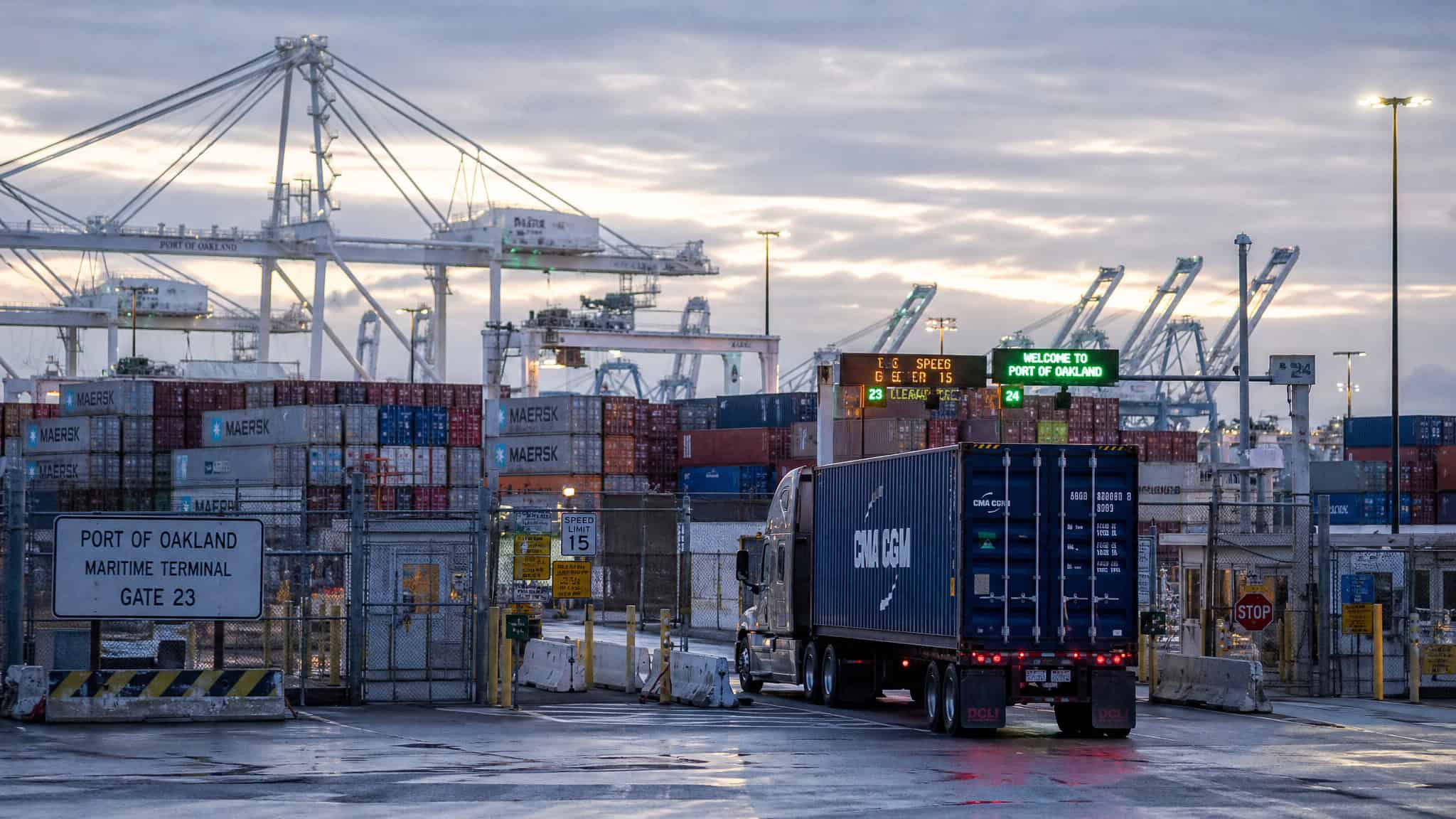
The specifics explain why. Louisiana has 40 ports moving goods up the Mississippi. Florida has 16 publicly owned seaports. Stack interstate corridors, manufacturing density, and warehouse concentration on top and the picture gets clear.
Not a leaderboard. Just geography doing what geography does.
Field note: No ranked vacancy list exists anywhere. Freight infrastructure — ports, interstates, warehouses — is the closest honest proxy for where demand sits.
Check your own state in five minutes
Since nobody publishes ranked vacancy counts, the honest move is to look up your own area. Three free tools do it.
The BLS OEWS profiles cover more than 800 occupations with wages down to the metro level, so you can see what drivers actually make near you. State projections are at projectionscentral.org, check whether your state expects growth or decline. And CareerOneStop has a zip-code salary tool plus state and metro profiles, which is probably the fastest of the three.
Five minutes with those beats any listicle claiming to rank the best states.
Demand by industry segment and route type
The biggest employer of truck drivers is also the best-paying large segment. Where you drive matters almost as much as whether you drive.

| Segment | Share of drivers | Median pay (May 2025) |
|---|---|---|
| Truck transportation | 40% | $60,320 |
| Wholesale trade | 12% | $58,550 |
| Manufacturing | 7% | $56,570 |
| Construction | 6% | $56,080 |
For reference, the median across all occupations is $50,980. Trucking beats it, and the segment employing 4 out of 10 drivers pays the most.
Then there’s the route-type question, and honestly this is where the “where is demand” answer gets interesting. Local routes with predictable schedules pull more applicants, because guys want to sleep at home. Long-haul means days or weeks away, and in practice carriers see applicants asking about home time before pay. Drivers cycle out of long-haul seats into local jobs as a recurring industry pattern. Soft competition for jobs tends to live in the seats nobody wants.
A few distinct paths within the job:
- Team driving. One driver sleeps in the berth behind the cab while the other drives. The truck basically doesn’t stop, which is the point.
- Specialized cargo. Hazmat, liquids, oversized loads, car haulers. Each has its own rules and extra hurdles, which is exactly why the seats pay better and stay harder to fill.
- Owner-operators. Buy or lease your own truck, hunt your own clients, and do the paperwork nobody mentions. About 7% of drivers are self-employed. May take a share of shipping revenue instead of a wage. Real option, real risk.
What truck drivers actually earn, and why the numbers conflict
You’ve probably seen three different trucking salaries in three different search results. They’re all real. They just measure different things.
The BLS puts the median at $58,640 a year, or $28.19 an hour. Median means half earn more, half earn less. The spread is the real story: the lowest 10% make under $40,140, and the top 10% clear $79,380. That’s a range of more than $39,000 for one job title.
PayScale’s median for all drivers is $53,560, a bit under BLS. It’s self-reported, so it skews toward what working drivers say they actually take home. Then there’s Indeed, with a median around $84,133. New Jersey listings alone span $54,000 to $210,000.
Why the mess? Job ads often show the highest possible earnings with all bonuses and endorsements baked in, not what a new driver actually makes. The common pattern: a fresh CDL holder anchors on the top line of a job posting, then finds out on the first dispatch call. Nobody’s lying exactly. The ceiling just isn’t the floor.
Red flag: A job posting showing top-line earnings with bonuses baked in. Ask what a first-year driver actually grosses before you anchor on the ceiling.
Pay structure explains the rest. Most drivers get paid per mile plus bonuses, and the per-mile rate swings hard depending on employer, cargo, and experience. Owner-operators take a cut of shipping revenue instead, which means the upside and the risk are both theirs.
Quick context from adjacent jobs, all 2025 medians: railroad workers $78,820, water transportation workers $71,860, bus drivers $49,390, material recording clerks $47,600, delivery truck drivers $43,950, hand laborers $38,220. Rail pays more if you can get in. Local delivery pays less.
Is the shortage real, or a retention problem?
Both framings have evidence behind them. Honestly, it’s not settled.
The American Trucking Associations estimates the industry is short about 80,000 drivers, and driver pay rose 18% over two years. That’s scarcity doing what scarcity does: bidding wages up.
The counterargument, from industry analysts, is that the core problem is retention, not supply. Plenty of people hold CDLs. They leave because of pay structure, schedules, working conditions, and time away from home. Remember those 214,500 annual openings? Part of what they measure is turnover, not vacancies.
Demographics drive a chunk of it regardless of which framing you buy. More than half of long-haul drivers are 55 or older, which is a lot of guys hitting retirement age in the next decade. The industry also under-recruits women, minorities, and veterans, which shrinks the pipeline further.
My honest read: the demand is real, but some of the shortage is self-inflicted. A job with predictable home time and a pay structure that doesn’t punish you for the hour caps would keep more of the drivers it already trains.
Work environment: the lifestyle cost behind the churn
Long-haul trucking is a lifestyle choice before it’s a career choice, and that’s the dealbreaker for most guys, some can’t picture themselves behind the wheel of anything, let alone some of the weird trucks you see out on the highway. You’re gone for days or weeks. Nights, weekends, holidays are all fair game. Most drivers work full time.
The feds cap your day: 14 hours on duty, 11 of those driving, then 10 hours off. On the weekly side, 60 hours per 7 days or 70 per 8, followed by a 34-hour restart. The rules exist because tired drivers crash, which is hard to argue with, and skirting them carries real Truck hours of service violation penalties, so these limits aren’t optional.
Here’s the link most articles miss: those hour caps limit your weekly earnings under per-mile pay. The lifestyle and the pay structure are the same problem. You physically cannot out-hustle a federal clock. That’s a big part of why local routes win the argument for a lot of guys.
A shift looks like this: check in with dispatch, get your route, secure the cargo, inspect the trailer and log any defects, drive, keep your hours logs current. Rinse and repeat across states, sometimes into Mexico or Canada. These are big rigs, over 26,000 pounds total, so the inspection routine isn’t optional theater.
One thing to walk in knowing: this occupation has among the highest injury and fatality rates of any job, even though actual deaths are uncommon. Nights and heavy equipment and highways add up. Worth knowing, not worth panicking over.
How to enter the field, and stay eligible
Getting in is the easy part on paper: 3 to 6 months of school, a test, a clean record. Staying eligible is the part that trips people up, because the requirements keep running after you’re hired. Here’s both halves of the deal.

Getting the CDL
The bar is low, and that’s the selling point. You need a high school diploma or GED, then 3 to 6 months at a private truck-driving school or community college ending in a certificate. Not a degree. No prior experience needed, which makes this one of the few jobs you can walk into cold that pay above the $50,980 all-occupation median.
The CDL itself takes a knowledge test plus a driving test, with rules varying a bit by state. Keep your record clean; a suspension in one state can follow you.
Want hazmat? That’s an H endorsement: an extra knowledge test plus a background check. It’s a hurdle, which is why it gates some of the niche segments where demand and pay are most acute.
New hires don’t get thrown to the wolves either. Expect several weeks riding with a mentor driver in the passenger seat before you’re on your own. Sponsored training exists too: Driver Resource Center has partnered with Schneider on sponsored CDL training across 13 US locations since 1993. A 30-year track record is the credibility point there.
Staying eligible
The requirements don’t stop once you’re hired. Clean driving record, full stop. A physical exam every two years. Random drug and alcohol testing, which is exactly what it sounds like.
The physical standards are reasonable but real: 20/40 vision with a 70-degree field of view in each eye, and you need to tell traffic-light colors apart. Hearing is tested with a forced whisper at 5 feet, and hearing aids are fine. Odd detail, useful to know.
A DUI or a motor-vehicle felony can cost you the CDL, and some companies are stricter than the feds. Address any record issues before you spend money on school.
And here’s the risk almost no career article covers: verify your school on the FMCSA Training Provider Registry before you enroll. DOT reports removing roughly 10,000 fraudulent training providers, and graduates of unregistered programs can find themselves unhirable. The typical failure pattern is a career-changer picking the cheapest nearby program without checking the federal list. Ten minutes on the registry protects your entire investment.
Will demand last? Automation, regulation, and the pipeline
Four percent growth is one thing; whether it holds is another. The honest answer looks at three forces: what automation can and can’t replace, how licensing regulation shakes out, and whether the driver pipeline keeps supplying seats. None of them is settled, but none of them looks fatal through 2035.
Automation and growth
No, automation isn’t projected to eliminate truck driving jobs through the projection period. The reason is practical, not wishful: inspections, securing cargo, city driving, customer contact, and judgment calls all still need a human. The highway cruising part is the easy part. The job is mostly everything else.
Add the 4% growth outlook versus the 3% average, plus trucks moving most US freight, and the demand picture through 2035 looks durable. The BLS’s own occupation video sums up the whole job, it’s embedded here, with the transcript underneath.
Video transcript: Trucks move most of the country’s freight, so drivers stay busy hauling goods between ports, warehouses, and distribution centers. Most work full time, and the feds cap the day at 14 hours on duty with 11 of those driving. Entry takes a high school diploma or GED plus 3 to 6 months of school ending in a CDL. Median pay sits at $58,640, and the BLS projects 4% growth through 2035 with about 214,500 openings a year, most of them replacement seats for retirees rather than new jobs.
Regulation as a demand variable
Something live is happening on the licensing side, and it could affect hiring pipelines. FMCSA allegedly demanded the full CDLIS database, five years of records on 17 million commercial drivers, with federal funding on the line. CDLIS is the system that tracks commercial licenses, built under the 1986 Commercial Motor Vehicle Safety Act and run by AAMVA since 1988.
Two lawsuits followed, filed August 13 in the Eastern District of Virginia: 21 states plus DC sued DOT, FMCSA, and AAMVA, and 22 states plus DC filed a parallel suit against DHS. The states say they own the data, contracts bar disclosure, and a bulk handoff would expose Social Security numbers, birth dates, and license numbers. Illinois AG Kwame Raoul has argued the database was built 40 years ago for state-to-state sharing and that a federal push to ransack it jeopardizes the system.
DOT frames the demand as safety enforcement, pointing to more than 30,000 improperly issued licenses revoked, about 10,000 fraudulent training providers removed, and 26,000+ operators out of service. The August 12, 2025 crash on Florida’s Turnpike that killed three people, which DOT tied to an improperly issued license, is the human cost behind that argument. Real deaths. Handle it seriously.
Status: the states want an emergency order freezing only the bulk transfer, not blocking federal access entirely. AAMVA won’t hand over records mid-lawsuit. CDLIS keeps running, individual licenses stay valid, and all allegations are unproven. Nothing’s broken for working drivers yet.
The pipeline angle goes global, too. Drivers from four Western Balkan states blockaded freight terminals in January, and in September hundreds threatened EU border blockades over the Schengen 90/180-day rule, which caps them at 90 days in any 180 across the Schengen area. One driver, Adis Casevic, said 90 days in six months is practically half their working time and they cannot support their families that way. The EU takes over 60% of the region’s trade, and roughly 5,000 drivers are affected. Point being: the driver supply is governed by policy as much as by freight economics, on both sides of the Atlantic.
So, where should you look?
Here’s the whole thing compressed. Demand is real: 4% growth through 2035 and 214,500 openings a year, even if most of those are replacement seats. It concentrates where freight moves, near ports, interstates, factories, and warehouses. And it’s partly turnover-driven, which means the seat you take matters as much as the state you take it in.
The practical move: look up your own numbers with CareerOneStop’s zip-code salary tool, then match the segment and endorsements to a lifestyle you can actually sustain. Local route with more applicants and more home time, or long-haul with softer competition and harder weeks? Neither is wrong. They’re different lives.
Trucking beats the $50,980 all-occupation median, doesn’t demand a degree, and you can be working within a year. It costs home time and carries real physical risk. Whether that trade is worth it in 2026 depends on what the rest of your life needs, and honestly, nobody’s data set can answer that part for you.
Frequently Asked Questions
Where are truck drivers needed the most?
Demand clusters where freight moves: ports, interstate corridors, warehouses, and big populations. States that fit that profile include New Jersey, Louisiana, Indiana, Ohio, Pennsylvania, Florida, Oregon, and South Carolina — Louisiana alone has 40 ports and Florida has 16 publicly owned seaports. No ranked state-by-state vacancy list exists, so freight infrastructure is the most honest proxy.
Is trucking still worth it in 2026?
On the numbers, it’s a reasonable bet: the BLS projects 4% growth through 2035 (better than the 3% all-occupation average), median pay of $58,640 beats the $50,980 all-occupation median, and entry requires no degree — just a few months of school and a CDL. The trade is home time and real physical risk, so whether it’s worth it depends on what the rest of your life needs.
Is there still a high demand for truck drivers?
Yes, though it’s steady rather than explosive. The BLS counts about 2.2 million heavy and tractor-trailer driver jobs in 2025, growing 4% through 2035 with roughly 214,500 openings a year. The catch: only 83,800 of those openings over the whole decade are new jobs — most are backfill for retirements and churn.
Why are so many truck drivers quitting?
Industry analysts argue the core problem is retention, not supply: plenty of people hold CDLs but leave because of pay structure, schedules, working conditions, and time away from home. Per-mile pay plus federal hour caps also means drivers can’t out-hustle the clock to boost earnings. That’s why applicants often ask about home time before pay, and why drivers cycle out of long-haul seats into local jobs.
Why do truck driver salary numbers vary so much between websites?
The sources measure different things. BLS reports a $58,640 median, PayScale’s self-reported figure is $53,560, and Indeed job listings average around $84,133 because ads often show best-case earnings with bonuses and endorsements baked in. Ask what a first-year driver actually grosses before anchoring on a posting’s top line.
Is long-haul or local trucking easier to get hired for?
Local routes attract more applicants because drivers want to sleep at home, so the softer competition tends to live in long-haul seats nobody wants. Long-haul means days or weeks away, with nights, weekends, and holidays all fair game. Neither is wrong — they’re different lives with different trade-offs.
How much does it cost and how long does it take to get a CDL?
Entry takes a high school diploma or GED plus 3 to 6 months at a private truck-driving school or community college, ending in a certificate rather than a degree — no prior experience needed. Before enrolling, verify the school on the FMCSA Training Provider Registry; DOT reports removing roughly 10,000 fraudulent training providers, and graduates of unregistered programs can end up unhirable.