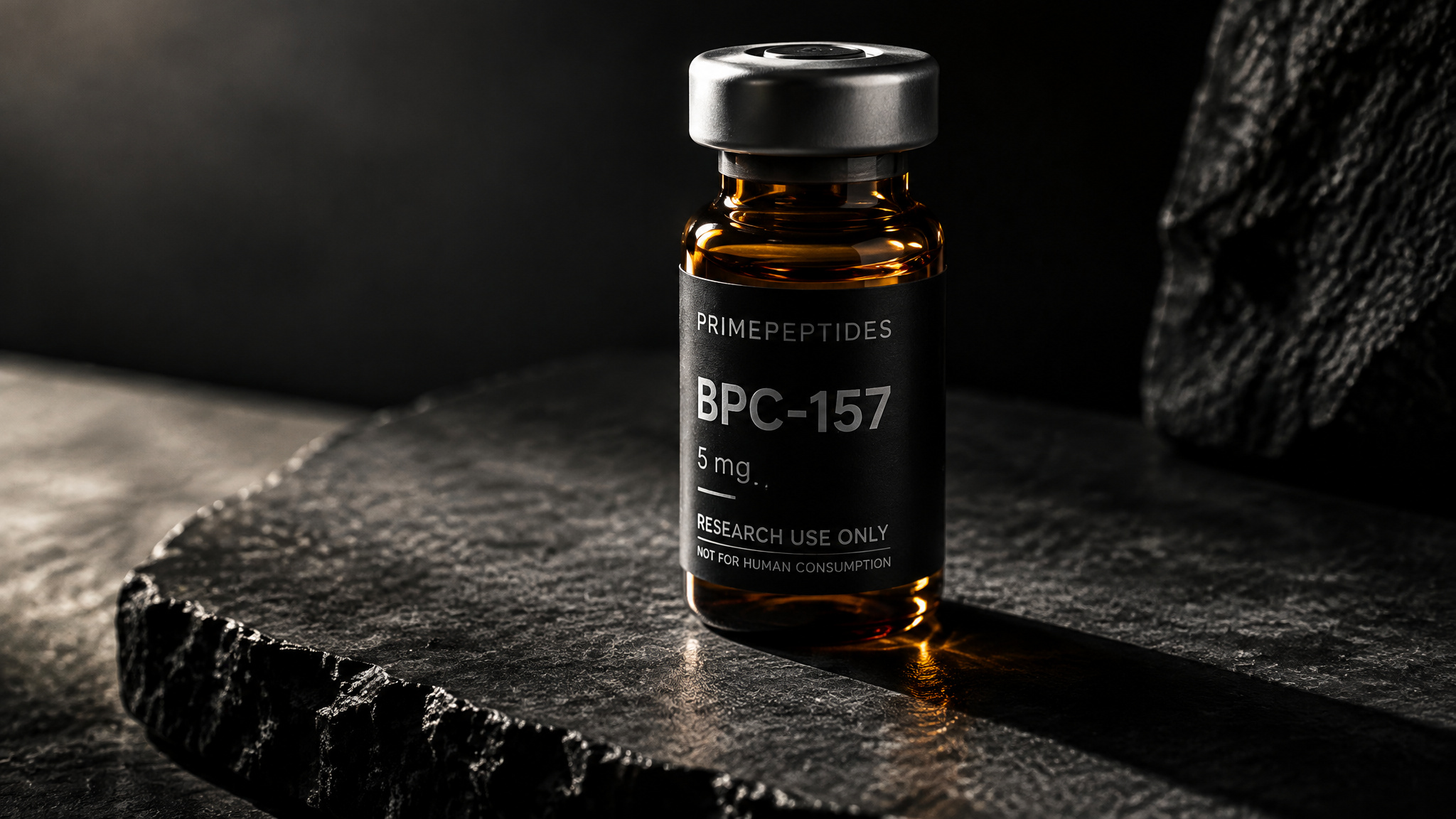
I haven’t touched Melanotan 1 in over a decade, back when you had to dig through obscure bodybuilding forums to figure out what was in the vial. Lately, Unfinished Man readers keep asking me about it. The compound itself, sold as MT1 or Melanotan 1 and known clinically as afamelanotide, hasn’t changed at all since my old run. What changed is the distribution pipeline, with online listings like Vive Peptides Melanotan 1 now readily accessible.
Search results for “MT1” also pull up the Telo MT1 electric pickup truck, which has nothing to do with this peptide. Most guys looking into MT1 today run straight into affiliate discount codes and tanning-vial sales pitches before they ever see a shred of clinical context.
Key Takeaways
MT1 (afamelanotide, or [Nle4, D-Phe7]-alpha-MSH) is a linear 13-amino-acid peptide that selectively binds the MC1R receptor on melanocytes to drive sunless melanin production, and it reduced UVB-induced sunburn cells by 47% in a phase-1 human trial.
The US Food and Drug Administration approved MT1 in October 2019 as Scenesse, a 16mg subcutaneous implant restricted to adults with erythropoietic protoporphyria (EPP) based on three phase-3 trials of 244 adults, while cosmetic tanning powders remain unapproved.
Unlike linear MT1, Melanotan 2 (MT2) is a cyclic 7-amino-acid peptide with a lactam bridge that also activates MC3R and MC4R, driving appetite shifts, spontaneous erections, and priapism alongside a faster tan and more frequent side effects.
Table of Contents
What is MT1? The peptide defined
MT1 (Melanotan I, Melanotan-1, or MT-I) is a synthetic peptide analog of your body’s natural alpha-melanocyte-stimulating hormone (alpha-MSH), engineered as a linear 13-amino-acid tridecapeptide and selective MC1R agonist that stimulates melanocytes to increase melanin synthesis for a gradual, sunless tan. In clinical and chemistry circles, it goes by afamelanotide, code CUV1647, or [Nle4, D-Phe7]-alpha-MSH, and it hits that MC1R skin receptor with higher binding affinity than the hormone you make on your own.
People searching for an MT1 drug or MT1 peptide often assume it’s a typical synthetic small molecule, but copying a native hormone changes how it behaves in the body. Endogenous alpha-MSH signals across five melanocortin receptors (MC1R through MC5R) to regulate melanin production, sexual stimulation, and appetite. Researchers originally built MT1 and MT2 to isolate that tanning (melanogenic) trigger so skin would darken without ultraviolet radiation.
Two amino acid substitutions that change everything
The half-life of Melanotan 1 is defined in pharmacology literature as an enhanced half-life compared to native alpha-MSH, achieved through two specific amino acid swaps reflected in its chemical name [Nle4, D-Phe7]-alpha-MSH, though mainstream sources don’t establish an exact numeric half-life figure. Your body chews through natural alpha-MSH almost immediately, making the raw hormone useless as a practical treatment.

To stop it from breaking down so fast, chemists took the straight 13-amino-acid chain and made two positional trades. At position 4, norleucine replaces methionine. At position 7, D-phenylalanine steps in for L-phenylalanine. Those two tweaks do all the heavy lifting, giving MT1 a longer active window in the bloodstream and a tighter grip on the MC1R tanning receptor. In medical practice, doctors bypass daily dosing swings altogether by using the FDA-approved Scenesse subcutaneous implant, which gives patients much steadier pharmacokinetics than standard liquid injections.
The melanocortin receptor system: MC1R through MC5R
The melanocortin system is a signaling network of exactly five known receptors, MC1R through MC5R, that respond to endogenous alpha-MSH and synthetic melanotan peptides to control distinct jobs across your skin, brain, and organs. The receptors a peptide binds determine if it stays focused on skin pigment or sets off systemic side effects.
The five receptors mapped
- MC1R: Sits in skin melanocytes and drives melanin synthesis and pigmentation.
- MC2R: Sits in the adrenal cortex and produces cortisol.
- MC3R: Found in the brain and placenta, where it helps regulate appetite and energy balance.
- MC4R: Located in the central nervous system and hypothalamus, governing sexual behavior, erectile function, and energy homeostasis.
- MC5R: Plays a poorly defined role, likely tied to exocrine gland function.
How MT1 tans without sun: melanogenesis and the photoprotection evidence
Yes, MT1 increases tanning without sun exposure by binding MC1R on melanocytes with higher affinity than natural alpha-MSH, raising intracellular cyclic AMP, and switching on melanogenesis to produce dark eumelanin pigment in the absence of UV light. Because that extra melanin absorbs UV radiation and limits oxidative damage, it acts like a built-in sunscreen.
Clinical UVB and EPP results
Across three phase-1 human studies, MT1 consistently boosted skin pigmentation, and one of those trials counted 47% fewer sunburn cells at treated skin sites after UVB exposure, giving the UVB photoprotection claim hard numbers. Separate randomized trials in erythropoietic protoporphyria (EPP) patients also recorded more pain-free time in the light and better quality of life.
Polymorphic light eruption and acne trials
Researchers also tested a 16mg MT1 implant over four months in a 2010 phase-3 trial (registry EUCTR2009-010843-15-NL) for polymorphic light eruption (PLE), an abnormal immune reaction to UV that causes an itchy spring or early-summer sun rash, and found it reduced rash severity. Meanwhile, a tiny 2012 trial of just three people hinted that MT1 might calm inflammation in acne vulgaris lesions, though nobody knows the mechanism and three subjects barely counts as a starting point.
Scenesse: what MT1’s FDA approval actually covers
Yes, MT1 is FDA-approved, specifically as Scenesse (afamelanotide), for adults with erythropoietic protoporphyria (EPP) only, to increase sunlight tolerance and reduce UV-triggered pain via a doctor-administered subcutaneous implant. The US Food and Drug Administration cleared Scenesse in October 2019 based on three phase-3 clinical trials totaling 244 adults, and MT-I’s FDA-approved status has held from October 2019 through May 2, 2026.
Why EPP patients qualify and tan-seekers don’t
EPP is a brutal genetic enzyme deficiency where protoporphyrin IX builds up in the blood and skin. When UV light hits it, that compound generates reactive oxygen species that burn and scar the skin almost immediately. By driving melanin up through a 16mg subcutaneous implant, which keeps blood levels steadier than needles, afamelanotide absorbs the light before it wrecks the tissue. A three-year observational study by Barman-Aksözen et al. in 2020 confirmed that EPP patients on afamelanotide tolerated phototoxic burns longer and saw better quality of life.
The gray-market blind spot
Guys reading search snippets often see “FDA-approved” and assume the freeze-dried tanning vial in their shopping cart is legal and vetted. It isn’t. Scenesse‘s approval doesn’t cover cosmetic tanning, PLE, or acne, and its sister compound MT2 isn’t approved for human use of any kind.
MT1 vs MT2: the structural reason they behave differently
MT1 and MT2 differ structurally because MT1 (Melanotan-1) is a linear 13-amino-acid peptide with high selectivity for MC1R and primarily skin-focused effects, whereas MT2 (Melanotan II) is a truncated, cyclic 7-amino-acid peptide whose ring shape grabs MC3R and MC4R alongside MC1R to trigger appetite and sexual arousal effects.

| Feature | MT1 (Melanotan-1) | MT2 (Melanotan II) |
|---|---|---|
| Peptide structure | Linear 13-amino-acid tridecapeptide | Cyclic 7-amino-acid heptapeptide |
| Core sequence retained | Yes (His-D-Phe-Arg-Trp at positions 6 to 9) | Yes (His-D-Phe-Arg-Trp at positions 3 to 6) |
| Lactam bridge ring | No | Yes (links Asp at position 2 to Lys at position 7) |
| Primary MC1R tanning binding | Yes | Yes |
| MC3R and MC4R binding | No (minimal systemic/sexual action) | Yes (drives libido, erections, and appetite shifts) |
| FDA-approved for human use | Partial (approved as Scenesse for EPP only) | No (experimental research settings only) |
The shared core and the lactam bridge
When you compare MT1 or MT2 peptide structure side by side, both synthetic alpha-MSH analogs carry the exact same active four-amino-acid sequence: His-D-Phe-Arg-Trp. In MT1, that sequence sits at positions 6 through 9 along a straight chain. In MT2, chemists chopped the chain down to seven residues, placing His-D-Phe-Arg-Trp at positions 3 through 6, and tied the side-chain carboxyl of aspartic acid at position 2 to the side-chain amino of lysine at position 7.
How the ring changes receptor pull
That chemical knot is a lactam bridge, and closing it into a six-residue ring changes the peptide’s receptor selectivity. Linear MT1 stays in its lane at MC1R, driving pigment production with almost zero sexual or systemic carryover. MT2’s cyclic ring fits right into MC3R and gives it strong MC4R affinity in the brain and hypothalamus. That’s why comparing MT1 and MT2 in practice comes down to a narrow pigmentation specialist versus a blunt multi-receptor hammer that brings erections, libido spikes, appetite suppression, and a noticeably higher rate of side effects.
What the MT2 research shows: libido, erections, and the weight-loss caveat
MT2’s human evidence is thin because it’s unapproved, resting mainly on a 1996 pilot study by Dorr et al. in 3 men (producing pigment in 2, plus nausea, fatigue, yawning, and spontaneous erections in all 3) and a crossover erectile dysfunction study by Wessells et al. published in 2000 (run around 1998) where 8 of 10 men got clinically apparent erections, logging an 85% response rate across psychological and organic ED, 41 minutes of average rigidity, and elevated sexual desire in 68% of subjects, which led the authors to float MT2 as a sildenafil alternative. Female libido data is strictly preclinical, where MT2 boosted proactive sexual behavior in rats only when primed with estradiol benzoate plus progesterone rather than estradiol alone (Rössler et al., 2006; Baldini & Phelan, 2019), while the related analog PT-141 holds the actual approval for premenopausal women with hypoactive sexual desire disorder (HSDD). As for weight loss, volunteers lacking working MC4R crave high-fat foods and eat more calories (van der Klaauw et al., 2015), and while MT2’s MC3R/MC4R activation cuts appetite dose-dependently in preclinical models, it’s never been clinically studied for human weight loss, and simple nausea may do half the work.
Side effects and the melanoma question
MT1’s known side effects are short-term nausea, facial flushing, fatigue, and dizziness, alongside rare injection-site redness, swelling, or bleeding, while dermatology case reports and health authorities also flag mole changes and theoretical melanoma risks across the melanotan class.
Short-term reactions and priapism
In research settings, first-time subjects frequently blame early nausea, flushing, yawning, or spontaneous erections on a contaminated vial or botched mixing, when those are textbook peptide effects. Because MT2 hits MC4R, it adds yawning, stretching, and spontaneous erections that can cross into priapism, a painful, prolonged erection documented in a 2019 case report by Dreyer et al. memorably titled “a hard-earned tan.”
Moles, melanoma reports, and exclusions
Dermatology literature tracks new moles, freckle darkens, and uneven hyperpigmentation, mostly with MT2, including eruptive melanocytic naevi after injection (Cousen et al., 2009). In 2014, a melanoma case report by Hjuler & Lorentzen tied one month of MT2 use plus heavy sunbed co-exposure to skin cancer. Short-term causation of cutaneous malignant melanoma (CMM) isn’t established, since the sunbeds muddy the water, but national health agencies warn against these peptides because melanocytes are the exact cells CMM grows from. Research protocols strictly exclude anyone with a personal or family history of melanoma or skin cancer, a melanotan allergy, or severe liver or kidney disease.
Is MT1 safer than MT2 for tanning?
Yes, MT1 is the safer-evidenced option for tanning, because MT1 selectively targets MC1R, was tested across three phase-3 trials of 244 adults, and holds FDA approval as the Scenesse implant for EPP patients, whereas MT2 is unapproved for any human use and hits MC1R, MC3R, and MC4R with a higher incidence of side effects.

If you spend twenty minutes reading threads on Melanotan 1 vs 2 results, you’ll see why newcomers almost always buy the wrong one for their goals. Anecdotal breakdowns, including an online comparison by Andrewsthetics, describe MT1’s cosmetic tan as slow, subtle, and sometimes patchy, with zero sexual kick. That same comparison scores MT2 as the “winner” for most guys because it delivers a darker, faster tan alongside acute erections and a heavier libido boost, treating the stomach-turning nausea as the price of admission. While clinical explainers like Peptides.org plaster research-use-only warnings across the page and discourage self-administration, casual video reviews boil the decision down to telling viewers to use melanotan if they need to get tan.
Newcomers chase the user photos on MT2, only to find out after pinning that the cyclic ring making MT2 tan faster is the exact same structural feature locking onto MC4R to trigger priapism, heavy nausea, and sudden crops of dark moles. If the goal is strictly skin pigment without playing roulette with your central nervous system, MT1 is the cleaner molecule on paper. Still, gray-market vials of MT1 and MT2 have unestablished product safety, and neither peptide has long-term human safety data for cosmetic tanning.
The gray market: research dosing, reconstitution, and what “research peptide” means
Any discussion of dosing or an MT1 cycle applies strictly to experimental laboratory research settings where self-administration is discouraged, with protocols using an MT1 loading dose of 1 to 2mg daily for up to 10 days followed by a maintenance dosage.
Experimental dosing numbers
In short-duration laboratory studies, MT2 runs on smaller numbers, typically 250mcg to 1mg injected daily. None of the vials sold online as “research peptides” go through strict regulatory quality control, and their safety in humans isn’t established.
Reconstitution basics
Because research peptides ship as a lyophilized peptide (freeze-dried powder), laboratory handling requires reconstituting the powder before use with high-quality bacteriostatic water, alongside sterile syringes, needles, and alcohol swabs from a reliable source so you don’t ruin peptide stability, sterility, or safety.
Vendor purity claims and why “99% pure” is not the same as approved
MT1 is sold online as an unapproved research peptide without FDA oversight, and while buyer guides judge vendors on HPLC-MS purity, Good Manufacturing Practices (GMP) claims, shipping speed, and testimonials, those marketing specs don’t make a gray-market vial equivalent to prescription Scenesse.
Read any popular peptide guide and you’ll notice the vendor reviews read like affiliate funnels, complete with promo links for sellers like Xcel Peptides, Limitless Life, Polaris Peptides, and Triumphant Labs. Xcel Peptides pitches MT1 and MT2 at greater than 99% purity backed by HPLC-MS (high-performance liquid chromatography-mass spectrometry) purity verification, claiming US manufacturing in GMP-compliant facilities, free domestic shipping over $200, and 10% off for your email address. Limitless Life pushes third-party lab testing on MT1, seven-day customer service, two-day FedEx domestic shipping (about five days international), a VIP Club, and bragging rights as the only Better Business Bureau (BBB)-accredited peptide shop. Even if a vial hits 99% purity on an HPLC-MS printout, you’re still looking at loose powder, not FDA-approved Scenesse, whose clearance covers the regulated 16mg implant, its steady release profile, and doctor-supervised EPP care.
Why MT1 is surging again, and why the evidence hasn’t moved
MT1 is blowing up in my inbox again because of slick gray-market distribution and TikTok-era peptide hype, not because researchers discovered anything new since I used it over ten years ago. Pull the footnotes on today’s best-cited explainers, from Dimitar Marinov, Ph. D.’s February 27, 2024 review on ResearchPeptides.org (27 PubMed-linked references) to rival breakdowns citing 16 peer-reviewed papers, FDA SCENESSE Drug Trials Snapshots, and WHO registry files, and the entire evidence base still runs from 1996 to 2023, padded out with mouse-model autism papers (Minakova et al., 2019) and zero new long-term cosmetic safety data.
Frequently Asked Questions
What are the key differences between Melanotan 1 and Melanotan 2?
It comes down to molecular shape and which receptors get hit. Melanotan 1 is a straight 13-amino-acid chain that stays focused on the MC1R skin receptor for pigment, and it holds partial FDA approval as the Scenesse implant for erythropoietic protoporphyria (EPP). Melanotan 2 chops the chain down to seven amino acids tied into a cyclic ring with a lactam bridge, which makes it grab MC3R and MC4R in the brain alongside MC1R—triggering a faster tan, appetite shifts, spontaneous erections, and more frequent side effects while remaining completely unapproved for human use.
Why is Melanotan 1 approved as Scenesse and who can get it?
The FDA approved Scenesse (a 16mg subcutaneous implant of afamelanotide) in October 2019 strictly for adults with erythropoietic protoporphyria (EPP), a genetic enzyme deficiency where UV exposure causes protoporphyrin IX in the skin to trigger severe, immediate phototoxic burns. The doctor-administered implant steadily boosts melanin to absorb light before it damages the tissue, giving EPP patients more pain-free time outdoors. That medical clearance does not cover cosmetic tanning, polymorphic light eruption, acne, or any loose gray-market powders sold online.
What is the half-life of Melanotan 1?
Mainstream pharmacology literature doesn’t pin down a single numeric half-life figure, instead defining MT1 as having an extended active window compared to native alpha-MSH, which your body breaks down almost instantly. Chemists achieved that slower breakdown by swapping in norleucine at position 4 and D-phenylalanine at position 7 ([Nle4, D-Phe7]-alpha-MSH). In clinical care, doctors avoid daily injection swings altogether by using the Scenesse subcutaneous implant for steady blood levels.