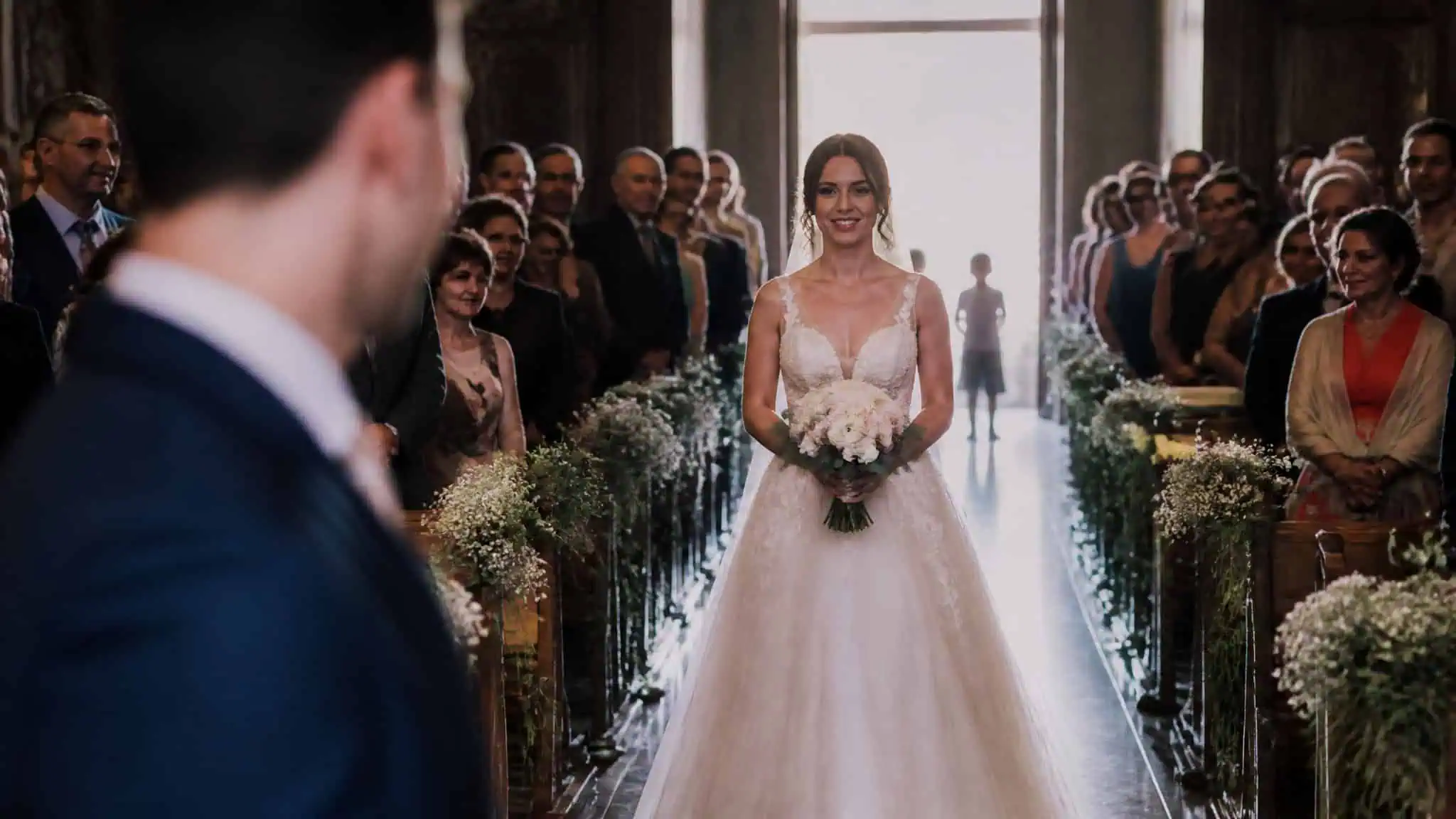
She spent a year on the dress. Maybe two. She visited salons, studied designers, knew the difference between lace patterns that photograph well and beading that catches the light right.
And then he looked up, and the whole thing collapsed into one word: beautiful.
Not “I love the trumpet silhouette.” Not “the fabric is perfect.” Just a full-body register that something is happening, followed by an inability to describe it.
So let’s be honest about what he’s seeing, what he’s reading, and what he’s missing.
Key Takeaways
Men process a wedding dress in a hierarchy: overall silhouette first, then fit, then details like beadwork and lace, which mostly collapse into a single “beautiful” verdict.
Fit wins over any designer label. A dress that sits well on her frame reads as right to almost everyone; a poor fit undermines a gown regardless of its cost or craftsmanship.
The heaviest conversation about wedding dresses includes danger. Shelby Crawford nearly suffocated in her gown during a wedding-night pool jump, and a Canadian bride drowned doing something similar in 2012.
Table of Contents
The Visual Hierarchy: Silhouette First, Details Later
The mirror test is the most honest check a bride can do. Stand across the room and catch your own reflection. Your partner will see the dress first that way. Before the lace pattern registers, a man notices the shape of the gown against her body. The cut frames her before she begins.
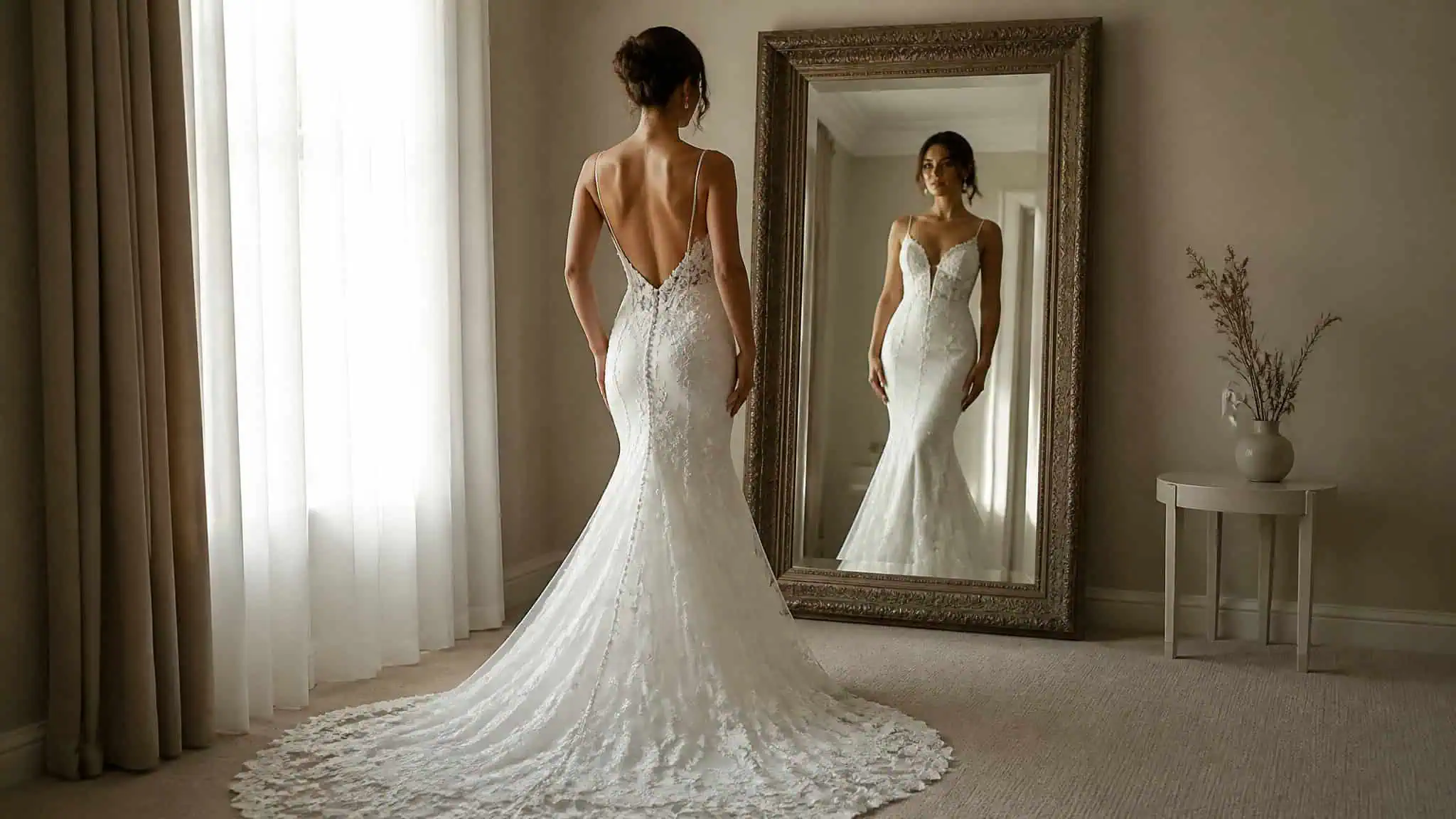
That’s what men notice first. Not the embroidery, not the quality of the fabric. The silhouette and the way the dress sits on her body. If that registers, “beautiful” follows.
Fit is the silent communicator. A gown that fits well reads as “beautiful” from across the room. A gown that doesn’t fit right creases at the waist or doesn’t settle at the shoulders, and the whole effect falls apart. Cost doesn’t matter.
Here’s the part the wedding industry doesn’t sell: the back of the dress. But at the ceremony, at the first look, and sometimes for the entire walk down the aisle, what does the groom watch? Her back. It’s one of the longest sustained views in the day, and it’s often entirely overlooked in planning conversations.
So the details that brides agonize over, the beading, the lace, the designer, the neckline, collapse into “beautiful” almost immediately. Men process those details as texture on the way to a bigger verdict. Not as separate selling points.
It’s not because the dress was ordinary. It’s because the details are confirmation of how the first impression worked.
And while the bride is comparing her gown to online inspiration and magazine features, the hallway of expectations is exactly inverted. Shape first, fit second, and details a distant third.
The Emotional Signal: Confidence Reads Louder Than Couture
The most important thing a wedding dress does isn’t visual. It changes the way the bride carries herself.
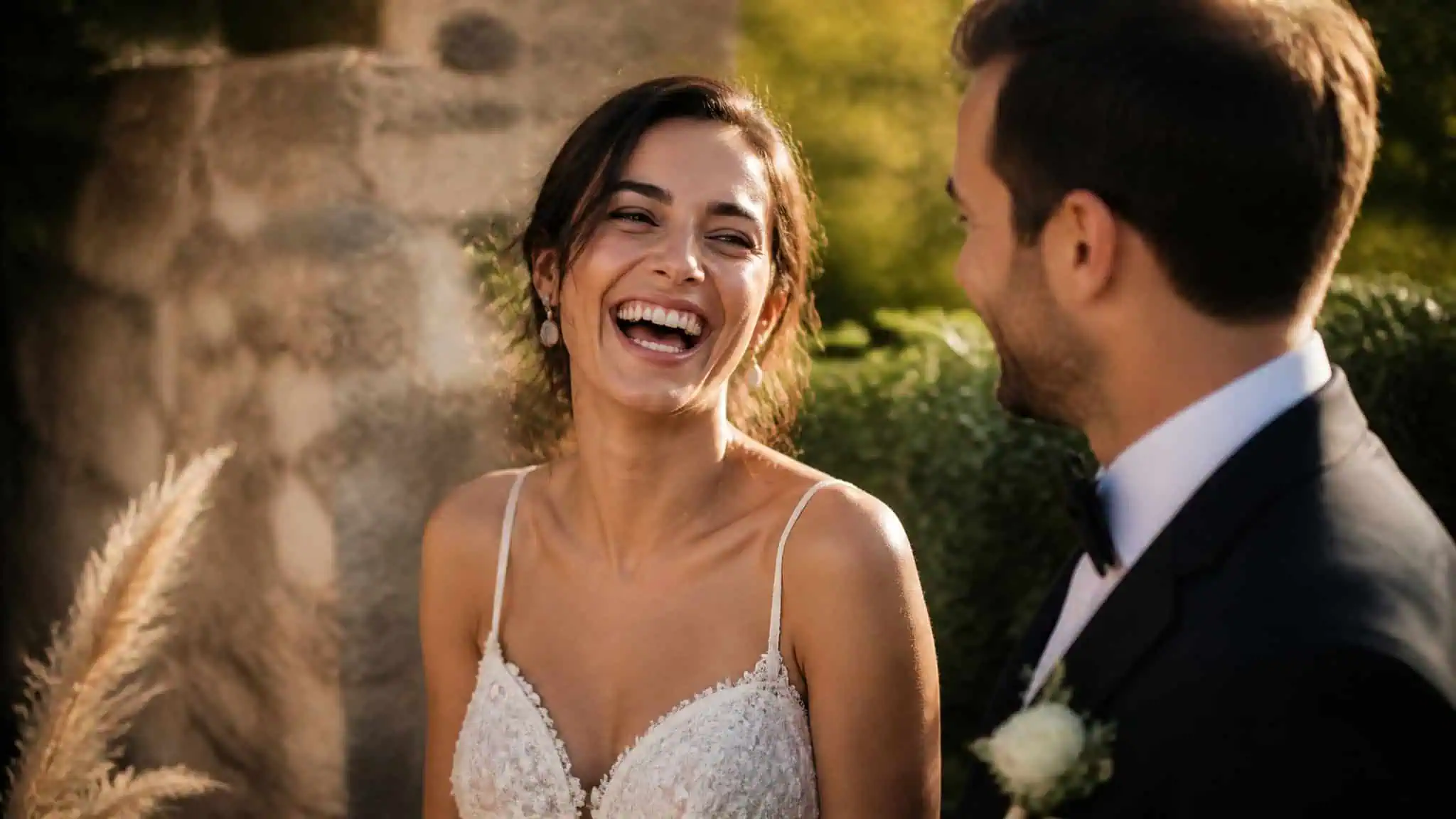
Men pick up on confidence before they process any design element. From across the room, a bride who feels right in the dress walks differently. Her posture is better. Her smile is real, and steady mirror practice with eye contact is part of how she holds that gaze.
She moves toward the moment instead of worrying through it. That’s not vague. It’s observable.
Here’s where the brightest people get the math wrong. They ask, “does he care about the details I’ve been agonizing about?” The truthful answer is: not in the way they think. He cares about how the dress makes her feel because that feeling is what he actually sees.
A dress that fits her personality will always beat a trendier dress that makes her feel self-conscious. Always.
The wedding industry pushes the opposite logic. It says the dress is the star. It’s the moment. The designer labels are the story.
But the online reception of the gown is the direct product of how she feels while wearing it, not what it’s wearing. The husband- or wife-to-be will be looking at her face, her mood, and her response to any garment. The dress is the vehicle, not the destination. And what the room remembers is the person who glowed in it.
You see this in the red dress missteps that go around the internet. A bride puts strict instructions on her website, “nothing too fancy,” “nice top”, and guests haggle over what counts as permissible. The whole comment section wrings its hands about what the dress code might mean. Meanwhile, the only instruction that guests actually register is whether the person wearing it seems comfortable and pleased.
Guests notice. You are instructing, and you are generating commentary, but the guests only ask how you greeted them. “Confidence is the best accessory” may not translate to any observer that cares through a clothing tract.
A bride who feels beautiful is carrying herself. That’s what the latter understand. And here’s the part that should be setting free: they don’t care about the distinctions that the bridal section cares about. The designer label, the fabric’s names, whether the beading is encircled or French, all of that falls behind a single “beautiful.”
But that missing part doesn’t hurt the dress. The confidence it unlocks does.
When experience with a groom, the best course is: pick a dress that makes you feel good, whether that means wearing a dress at first because it makes you feel beautiful. That’s not naive. It’s confirmed the whole purpose. The conversation that begins with “will he like the gown?” scores and lands at “will he like the way I feel in it?”, since that’s what the visual registers.
The Hidden Danger: When the Dress Weighs More Than It Looks
The physical weight a wedding dress carries is the fact that nobody’s trying to think about. A gown might be built for a moment, a cathedral of layers and fabric. That’s fine when the couple is by a fireplace or standing at an altar. The same weight however becomes dangerous in specific scenarios, particularly near water.
Shelby Crawford, 30, from Chattanooga, almost died inside her gown on her wedding night. She jumped into the pool in her wedding dress, and the heavy layers floated up over her face. They were hard to push aside. Her husband, Corey, jumped in okay, but even with him so close and guests nearby, the people beside her didn’t realize she was struggling because they had no idea that custom wedding dresses could behave so dangerously.
From outside the pool, she looked calm enough. Nobody saw what was happening.
That’s the part says: drowning after drowning, and watching someone struggle looks nothing like the movies.
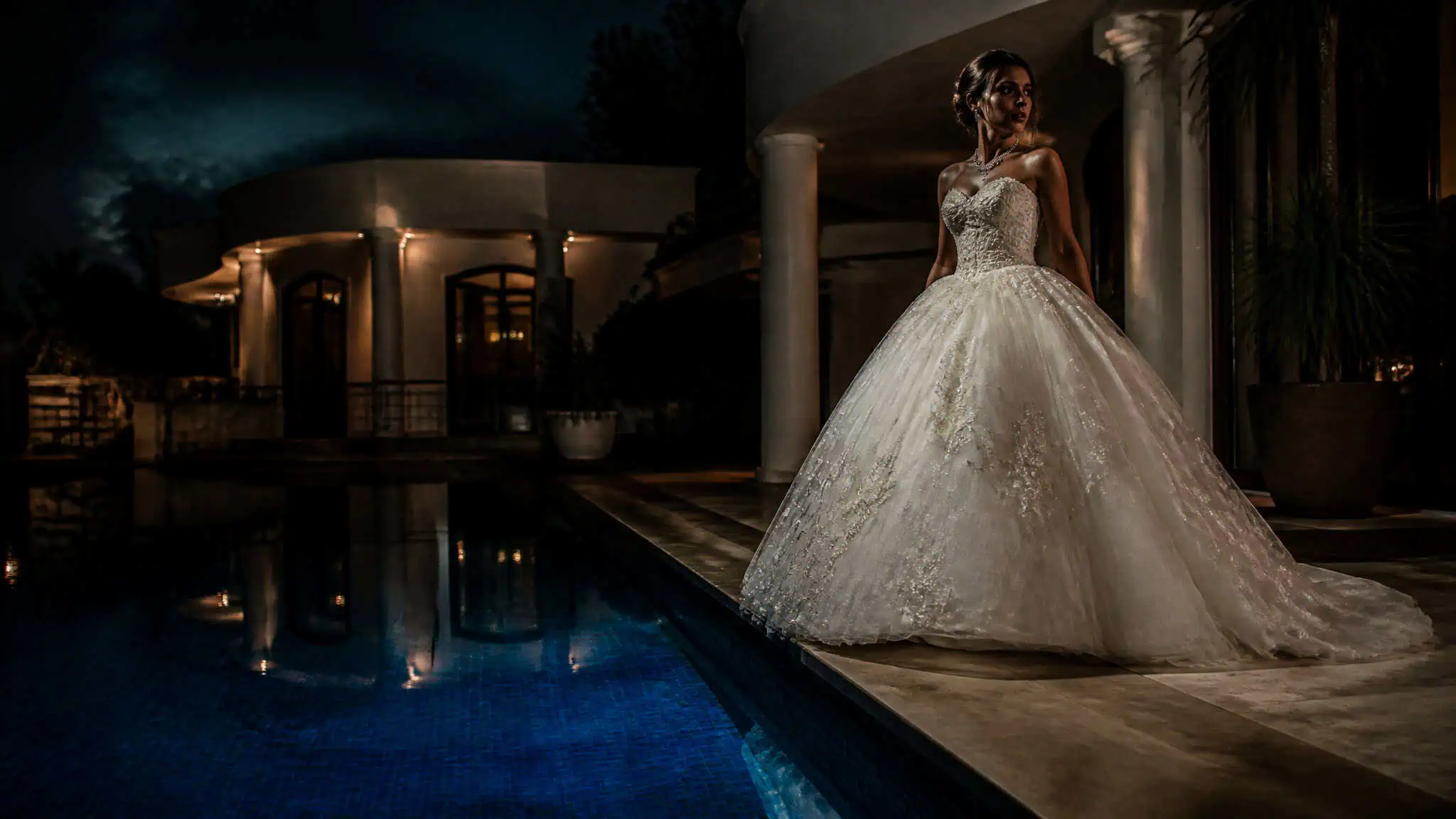
When Crawford could grab breath, she realized that nobody was going to pull her out, because nobody could read from the surface. She had to fight her own way to the edge. The experience taught her how fast these things can become dangerous, and she shared the story to warn others. As she thinks back, she never viewed the stunt as dangerous because she wasn’t in the water alone.
She assumed if something went wrong, someone would help. Honestly, that assumption almost killed her.
The details that create the danger are exactly the qualities the weddings industry sells. Heavy trains, voluminous skirts, gorgeous layers, what makes the dress dramatic is the same thing that makes it deadly if it fills with water or floats up over. What makes a useful field can be suffocating in a pool. In a particularly tragic precedent, the Irish Mirror documented a Canadian bride who died in 2012 when she went into a river wearing her wedding dress for photographs.
The message here isn’t “all heavy dresses are dangerous.” That’s never a blanket rule, and that’s a specific hazard. A ballgown on dry land is just a ballgown. The weight becomes a hazard in the specific scenarios at the edges of wedding industry trends, when couples reach for the dramatic photo, pool jumps, beach dips, dock shots.
The dress is doing what it was built for visually. Underwater, it becomes unmanageable.
Crawford’s advice is direct and short: change clothes before the wedding-day stunts. The visual impact of the wedding gown won’t be sacrificed by switching into something lighter for pool photos. And the outfit change is simple, practical, and would have prevented the entire situation.
The dress can stay dramatic. The swimwear does the rest.
The physicality of a wedding dress, how heavy it is, how movement is restricted, is almost absent from the wedding planning content it consumes. The site may talk about layers, seams, durable, average design budgets. But the practical consequences behind the weight rarely appear until after a story like this passes.
A dress is a beautiful object that covers and moves you. The weight and mobility part is real.
The Viral Trap: When the “Perfect Moment” Becomes an Algorithm Feeder
The gap between the exact stunts that make good viral content and the ones that are physically dangerous is closing too fast. That’s not a critique of the internet as a whole; it’s the truth that Crawford learned the hard way.
“I never understood why people did stupid or dangerous things to go viral,” she said. “But I see now those are the exact kind of things that go viral super quickly.”
The pull is real. The wedding day is built around producing cinematic images and polished content, and the pressure to end the night with a moment, a pool jump, an energetic shot, a dramatic chase, starts to feel worth any risk. But the adrenaline of the day is clouding your judgment. The wedding is a distortion field.
You’re excited. The people and the video and the applause are loud. It’s the perfect recipe for why root fear and impatience melt away, and in a split decision suddenly you’re underwater in fifty k howlers fabric.
Crawford said the adrenaline of the day got to them, and that they had been taught to think clearly. She wasn’t boasting. It’s an honest confession, and the most of us would hold out for. The moments at a wedding are an emotional high with a cascade of expectations, and she was eleven making a bad call in that.
Her realization about trends is the meta-lesson: the internet rewards exactly the stunts that are least safe. The most dramatic jump, the most dramatic gown, the candle-lit edge of the dock, these are the algorithm’s favorites. And they’re also the moments where a few pieces of gown fabric can become a life-or-death problem. You don’t get a public training for that.
And after the year, newlyweds often watch clips of other couples’ wedding challenges. The connectivity is biting.
Her message now is practical and not a movie pit. Change before you get in water, take extra precautions, and treat this as a cautionary tale. The dress can stay light, but the heels and the veil wait.
Because here is where a near-tragedy meets the normal planning process. Most brides don’t approach this gown selection to minimize water risk. It will be useful. But the seams around the edges of the calendar re-emerge when the couple starts planning the afternoon and evening schedule. If a partner suggests an ending with a pool or a lake or a beach, or if either partner grew up by water and thinks nothing of a beach selfie, shuffle escape.
A single sentence from Crawford holds the lesson: No shooter of legal risk is worth losing someone you see, especially on such a special day.
That’s not a generic social. That’s the specific decision point for the wedding guest couple who loves the video aesthetic and doesn’t crack open the layers. The dress is still beautiful. The grand moment still exists. But the when, it a change of scene, the outfit changes, then right.
Closing Thoughts: What Actually Matters
Pull the strands all together and here’s the answer to the question “what do men notice about a wedding dress?”
In order: how the dress fits her body, how she moves in it, how she feels in it, and, from the back, sometimes for the longest part of the ceremony, how it looks as she walks in to him. In that order. While he was unchanged by the details that got the most planning energy. No delivered phrasing, no design label, no silhouette talk. What he reads is a woman who feels appropriate and good, glowing in a gown that is doing its job.
What the wedding industry sells and what the person on the other side of the aisle actually takes in operate on separate tracks. Bridal media is detailed, static, visual and high defined. The partner is processing a larger picture: the overall shape, the fit, the style of a bride who feels confident, and the movement as heavy fabric moves and changes. The dress has to work for her, not against her.
And in the back of the picture, the one that deserves more respect: the dress must be physically safe. Weight, layers, and mobility are price considerations, no more. There will be risks when the day leads near water. The planning checklist won’t say those words. But the two people talking about dress codes and gown mechanics will be helped if they remember them.
So no matter what, the happiness of the couple is the variable in every beginning. The dress is the character for that moment. The details become a memory like the narrow blue. It’s a couple, the day, the joy, and the fact that everyone returns home.
The gown is a victory lap and a garment. Her safety is part of the victory.
That’s the synthesis to bring away. The wedding dress is a decision between visual and practical effect that almost every couple makes. The more they see what each layer means physically, before the pool jump, the lake border, the sunset shot by the water, more of the day feels like it was full of good sense and not just beautiful ones. The couture itself now carries a changing and weight that’s worth planning around.
And she ended with these fifteen words, the truth under everything else:
No viral moment is worth losing someone you love, especially on such a special day.
Frequently Asked Questions
Is it normal to be unsure about your wedding dress?
Yes, and the uncertainty often comes from over-indexing on details that won’t register the way you expect. Brides agonize over beading, lace, and designer names, but grooms process those as texture on the way to a bigger verdict. The real test is the mirror test: stand across the room and see how the silhouette and fit read from a distance, because that’s what your partner will see first.
Why do men only say ‘beautiful’ about a wedding dress?
Because men process wedding dresses in a visual hierarchy: silhouette first, fit second, and details a distant third. The intricate beading, lace patterns, and designer craftsmanship collapse into a single positive verdict almost immediately. That’s not because the dress is ordinary — it’s because the details confirm the first impression rather than creating it.