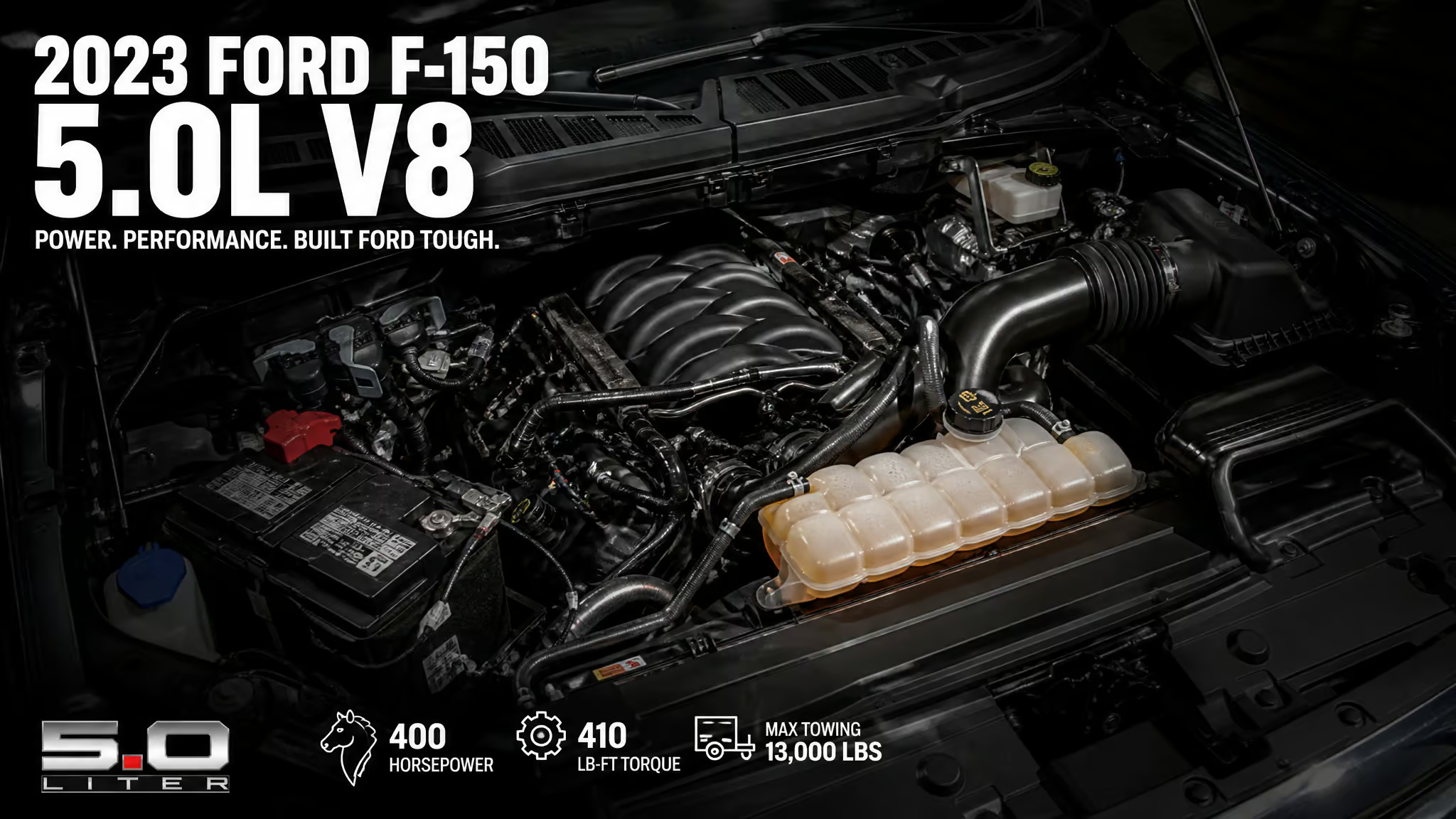
Your 2021-2025 F-150 with the 5.0L V8 is rated at 400 horsepower and 410 lb-ft of torque at the crank. On a chassis dyno, that translates to roughly 330-350 wheel horsepower. That gap isn’t a secret, and it isn’t a flaw. It’s drivetrain loss, and it’s the single most important number to understand before you spend a dollar on modifications.
The aftermarket is built on the gap between marketing and reality. The internet will sell you a cold air intake that claims 30 horsepower. The actual number is closer to 5-15 at the wheels on a stock engine. That doesn’t mean intakes are a waste. It means you need to know what you’re buying and why.
The 5.0L Coyote in your truck is the same engine family that’s been pushed deep into the 8-second quarter-mile range in the right builds. The potential is real. The path to getting there requires a plan, a budget, and a clear-eyed view of what each part actually does. Motor Trend put it about as well as anyone could: the best modifications work with the truck’s engineering rather than fighting against it.
The F-150 is a capable daily driver too, with a towing capacity of up to 11,000 lbs., a 0-60 mph time of 5.9 seconds, and solid Consumer Reports ratings that make it a practical foundation for any build.
Key Takeaways
A cold air intake adds 5-15 whp on a stock 5.0L and is worth it for throttle response and sound, not the dyno numbers you’ll see in ads.
Long-tube headers with a custom tune are the single biggest naturally aspirated gain at 20-40 whp, but they require a tune and the right choice between catted and off-road pipes.
A supercharged 5.0L can hit 650-750+ wheel horsepower, but only with a mandatory fuel system upgrade; skipping it can destroy the engine under boost.
Table of Contents
Intake and Exhaust: The Gateway Mods and the Tuner Math Reality
Let’s start with the cold air intake, because it’s the first thing most guys buy and the place where the marketing gets loudest. Ignore the advertising claims of 25-50 horsepower. Real-world gains on a stock engine are 5-15 wheel horsepower. The actual benefit is better throttle response and that V8 induction sound you can feel in your chest. The factory airbox is built to keep things quiet. Swapping it out frees up airflow and makes the engine sound like it should. If you’re planning a supercharger later, the intake isn’t optional, it’s part of the package.
The cat-back exhaust is the other classic entry point, and it’s the easiest way to change how the truck sounds without touching the engine. On a stock 5.0, power gains are minimal, just a few horsepower at the wheels. But that’s not the point. Most cat-back systems add 5-10 horsepower and a better soundtrack.
The sound change is the main benefit. If you’re not into that, skip it. If you are, it’s the cheapest way to make the truck feel different every time you start it.
The decision criteria here are simple: cost, install difficulty, realistic gain, and whether the mod is a prerequisite for future power. An intake sets the table. A cat-back builds the atmosphere. Neither will dominate the drag strip, but both disappear if you decide to chase serious power.
Long-Tube Headers: The Biggest Single Power Gain on a Naturally Aspirated 5.0L
If you want dyno-proven power from a naturally aspirated 5.0L, long-tube headers are where it’s at. We’re talking 20-40 wheel horsepower with a tune. That’s not a “butt dyno” number, that’s a repeatable gain that changes how the truck pulls.
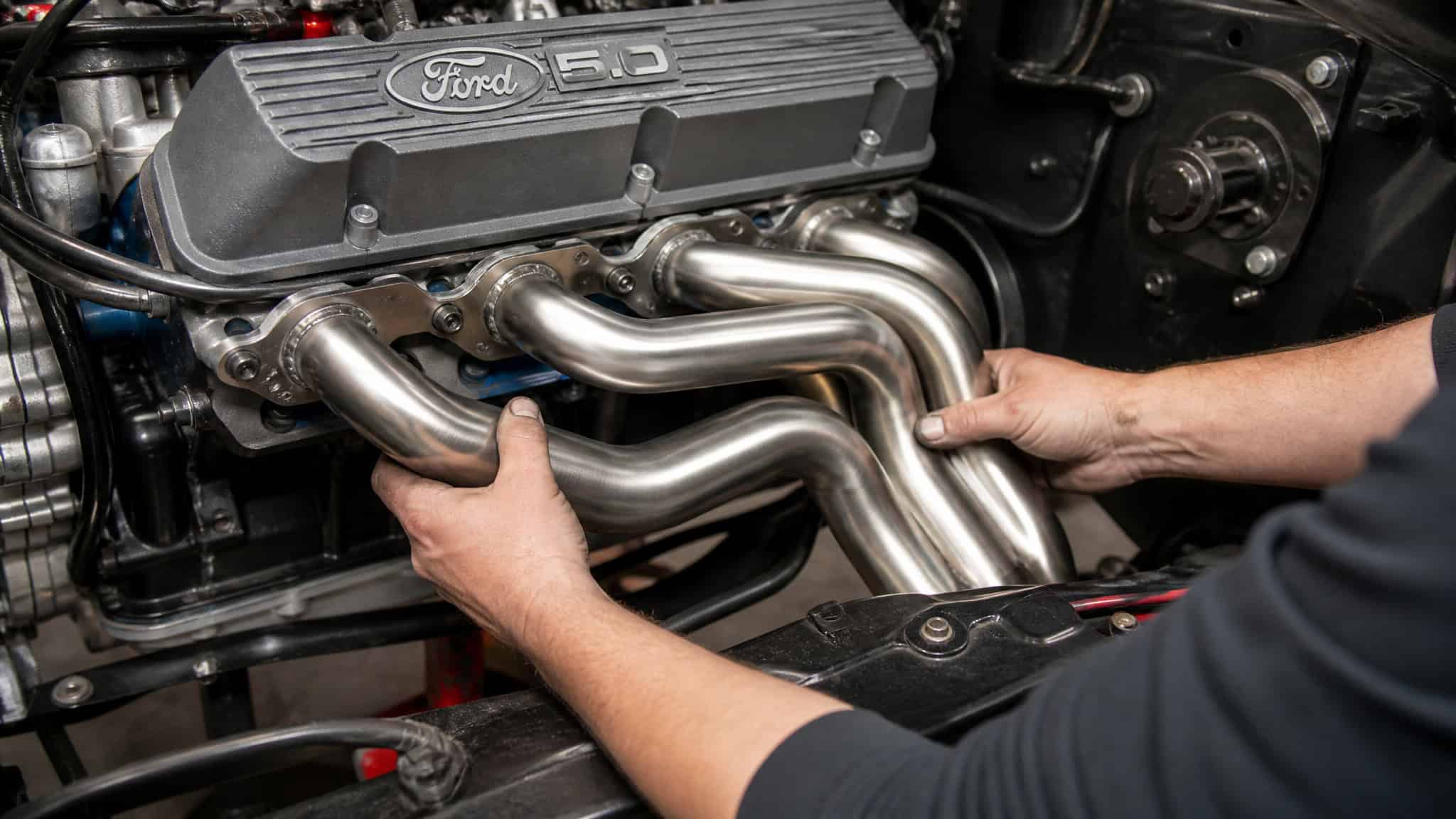
Here’s the setup: you’re swapping the factory cast manifolds for 1-7/8-inch long-tube headers and a high-flow Y-pipe. That’s the standard. Brands like Kooks and Stainless Works are the go-to options here, and both make quality catted systems that fit well.
The catch is the tune. A tune isn’t a nice-to-have here; it’s mandatory. You need it to clear codes and to actually capture the power these headers unlock. Without it, you’re leaving serious power on the table and you might even trip a check engine light.
For a street truck, go with catted pipes. Period. The off-road pipes are for closed-course use only. They’ll throw a code, they’ll smell like a race car at a stoplight, and they’re not appropriate for a daily driver.
Catted long-tubes are the secret to making a naturally aspirated 5.0L feel like a whole new engine, and they’re the foundation for the next step up the power ladder, much like how SEALIGHT has become the go-to for drivers who want their lighting to perform as reliably as their exhaust.
Bottom line: On a street-driven 5.0L, catted long-tube headers are the only sensible choice. Off-road pipes add noise and codes, not usable daily-driver power.
Custom Tuning: The Single Best Value Upgrade on the Platform
A custom tune doesn’t add 50 wheel horsepower to a stock 5.0L, but it feels like it does, and here’s why: it recalibrates fuel, spark, throttle, and the 10R80 shift logic, making the truck feel sharper and more responsive immediately. That improvement in drivability, not a peak-power number, is the win on a naturally aspirated engine. Performance tunes work by adjusting timing, fuel delivery, and boost pressure to optimize the engine’s output.
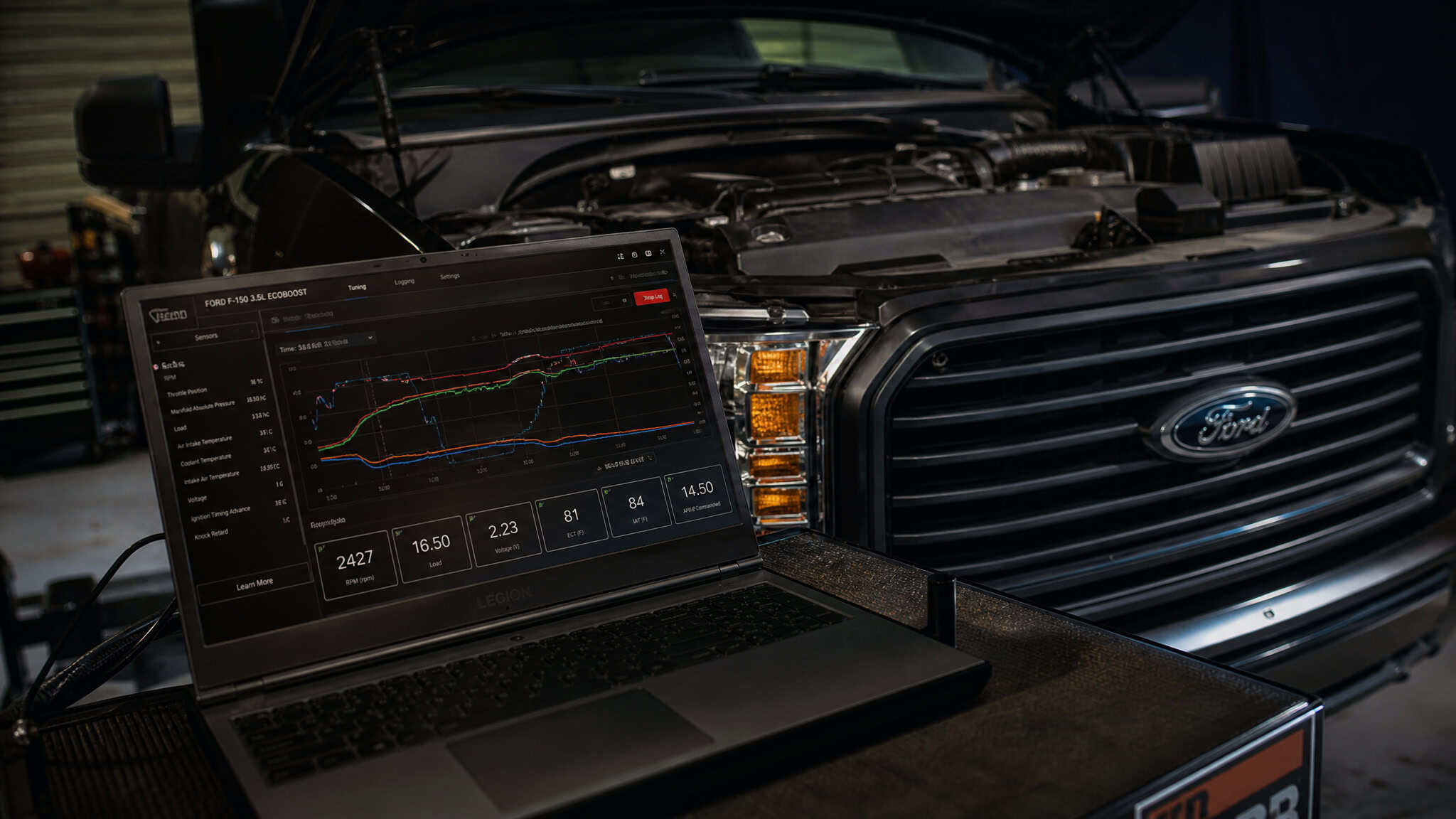
You’ll see EcoBoost engines gain 50+ horsepower from a tune alone, but the 5.0L is a different animal. The gains are more modest on paper, but that’s because the engine is already breathing well from the factory. The tune is what wakes up the bolt-ons you’ve already installed, and if you’re upgrading the truck’s look to match its newfound performance, Ford F-150 LED bulbs are a worthwhile add-on.
Companies like Lund Racing, Palm Beach Dyno, and Shoemaker Performance have made names for themselves by dialing in the details. Hardware like the SCT Performance Programmer BDX handles the interface.
Superchargers: The Mod That Changes the Truck Entirely
A supercharger transforms the personality of the vehicle. You’re jumping from roughly 330 wheel horsepower at the stock level to 650-750 or more, depending on the kit, fuel, and tune. But before you bolt one on, you need to sort out the fuel system and a custom tune, the factory returnless fuel system can’t supply enough fuel under boost, and skipping that upgrade can cause the engine to run lean and fail. A dual-pump fuel hat covers most blower builds on pump gas; a full return-style system is for E85 or 700+ horsepower targets.
Your choice breaks down into two camps. Positive-displacement blowers from Whipple and Roush deliver instant, low-RPM torque. That’s your towing and daily-driving pick. Centrifugal blowers like ProCharger and Vortech build power with RPM and run cooler charge temps. That’s your top-end pull.
You have to upgrade the fuel system. The factory returnless fuel system can’t supply enough fuel volume under boost. It’s a hard limit. Boost demands way more fuel than the factory single-pump setup can deliver, and running out of fuel under boost is a fast, catastrophic way to kill your engine. A dual-pump fuel hat, like the one from JD Performance, covers most blower builds on pump gas.
If you’re pushing E85 or chasing 700+ horsepower, you’ll need a full return-style system, which is a bigger, more expensive job.
Red flag: If a supercharger quote doesn’t include a fuel system upgrade, walk away. That’s how 5.0L engines die under boost.
Suspension and Lifts: The 3/5 Drop, the 2-3 Inch Lift, and Why You Stop There
Lowering your F-150 a few inches sharpens the handling and turns the truck into a proper street performer. The 3/5 drop (3 inches in the front, 5 in the rear) is the street-truck standard for a reason. It closes up the wheel gap, improves weight transfer for better launches, and makes the truck feel planted in corners. Kits range from simple lowering springs to full coilover and drop-spindle systems, so you can match the setup to your budget and goals.
That’s where a 2-3 inch lift is the sweet spot. It clears larger tires and provides improvement without breaking the bank or ruining the ride. A 6-inch lift might look cool, but without supporting mods like new shocks, it’ll deliver a rough ride and break your truck.
The stock ground clearance is around 9.4 inches, though a body lift is cheaper but won’t improve suspension travel like a proper suspension lift will. Or go with a setup like this Ford Bronco Heritage review, where you get 35-inch tires and 11.6 inches of ground clearance for a capability advantage that usually costs thousands extra in mods. If you’re heading off-road, skid plates are a smart addition, they protect the oil pan, transmission, and fuel tank from rocks and debris.
Practical Upgrades: Bed Protection, Tonneau Covers, and Making an XLT Feel Like a Lariat
A bed liner is the first thing you should buy. Spray-in liners cost more but offer permanent protection and look better. Drop-in liners are cheaper and removable, but they can trap moisture against the metal.
A tonneau cover is up next. It keeps the elements off your gear, and the bed, and delivers a bonus: better highway fuel economy, up to 5-10% at highway speeds. That’s a number worth having. Just decide if you want a soft cover for less money or a hard one for security.
Ford makes some of the best upgrades available, and they don’t cost Lariat money. The real trick is scoring OEM Lariat leather seat covers. They change the interior feel, making the truck feel like a Lariat minus LED headlights and 4A. You can find a take-off steering wheel on eBay for around a hundred bucks.
The OEM tailgate damper replaces the plastic cap for a few dollars and is a must-do. Throw in some rear wheel well liners and paint-to-match mirror caps, and your XLT is starting to look and feel like a more expensive truck.
And don’t forget ForScan. For a laptop and an OBD-II cable, you can enable hidden features and tweak settings, making it the cheapest modification on the truck. For the exterior, ceramic window tint is a worthwhile upgrade, added for heat reduction and privacy. An oil separator is another smart add, it prevents oil from mixing with air and collecting in cylinders, reducing carbon buildup and engine damage risk.
The Power by Stage Roadmap: From Bolts to Boost
Here’s a sensible order for building power.
Stage 1: Intake + Cat-Back + Custom Tune Expect to add 20-40 wheel horsepower with this combination. The throttle response will be sharper, and the truck will feel alive.
Stage 2: Add Long-Tube Headers This is another 20-40 wheel horsepower.
Stage 3: Supercharger + Fuel System + Tune With a supercharger, a mandatory fuel system upgrade, and a proper tune, you’re looking at 650-750+ wheel horsepower.
Fuel, weather, and the tune all affect the final numbers.
Warranty Considerations: What’s Actually at Risk
Mods can void specific coverage, not the entire warranty. A claim tied to a modified part is likely to be denied, and yes, the dealer can detect ECU calibration changes without a problem.
It means the modifications that make the biggest difference, like headers or a supercharger, require a tune, and a tune is the one thing that will void factory coverage for the affected parts. If keeping your warranty fully intact is non-negotiable, the smartest move you can make is to talk to your dealer before you start wrenching. Be upfront about your plans.
Some manufacturers, like Roush, even offer their own supercharger systems with a warranty to back them up. That’s a legitimate path if you want the power without the factory powertrain coverage anxiety. It just means you’ll deal with the dealer for those parts.
The Smart Build Philosophy
A build is a game of inches and dollars, and the smart move is understanding that a $100 modification you can install yourself is the same money as a $100 modification you can’t.
Cheap modifications lead to fits, premature failure, or warranty drama. Spending 20% more on proven brands yields 50% greater long-term satisfaction.
Frequently Asked Questions
What are the coolest mods for an F-150?
The coolest mods depend on your goal. For street performance, long-tube headers with a tune deliver the biggest naturally aspirated gain (20-40 whp), while a supercharger transforms the truck entirely, pushing it to 650-750+ wheel horsepower. For looks and daily usability, a 3/5 drop, OEM Lariat leather seats, and a tailgate damper make an XLT feel like a much more expensive truck.
What should I add to my F-150?
Start with practical upgrades: a bed liner to protect the bed, a tonneau cover for security and up to 5-10% better highway fuel economy, and rear wheel well liners. For performance, a cold air intake and cat-back exhaust improve sound and throttle response, but a custom tune is the single best value upgrade for drivability.
What are the best performance upgrades for a 5.0 F-150?
The best performance upgrades for a 5.0L F-150 are long-tube headers with a custom tune (20-40 whp gain) and, if you want serious power, a supercharger kit with a mandatory fuel system upgrade (650-750+ whp). A cold air intake and cat-back exhaust are good entry points but only add 5-15 whp and a few horsepower, respectively.
Will a cold air intake void my F-150 warranty?
A cold air intake alone typically won’t void your entire warranty, but it can void coverage for parts directly affected by the modification. The bigger risk is a tune, which dealers can detect via ECU calibration changes and will void powertrain coverage for affected components. If warranty is a priority, talk to your dealer before installing any performance mods.
What’s the difference between a 3/5 drop and a 2-3 inch lift for an F-150?
A 3/5 drop (3 inches front, 5 inches rear) is for street performance, sharpening handling, improving weight transfer for launches, and giving a planted feel. A 2-3 inch lift is for off-road capability, clearing larger tires and improving ground clearance without ruining the ride. A 6-inch lift looks cool but requires supporting mods like new shocks to avoid a rough ride.