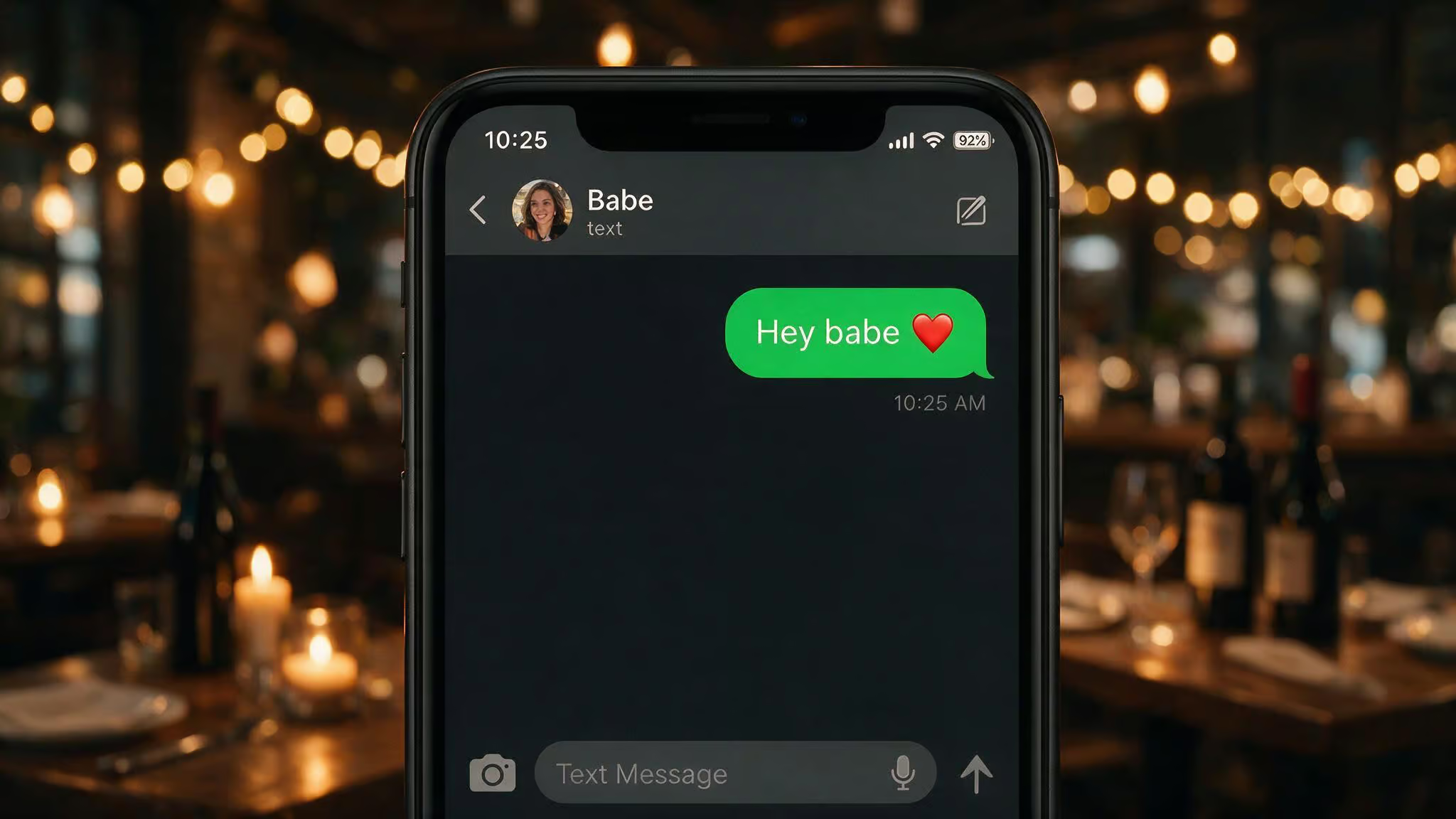
You’re sitting there staring at a message that says “Hey babe” or “Thanks, babe” and you have absolutely no idea what to do with it. Is she into you? Just being friendly? Or does she call everyone that? It’s a weird limbo — the kind of text that makes you feel like you’re in a spy movie but you’re just trying to figure out if she likes you.
That confusion isn’t rare. The article you’re reading right now has been viewed 187,829 times. That’s nearly two hundred thousand guys who had the same question.
The word “babe” itself is neutral — like a piece of unlabeled cardboard. The meaning isn’t in the word; it’s in the pattern around it: who she uses it with, when she texts, what emojis she drops, and how well you know each other. That’s what tells you whether you’re in romantic territory, friend zone, or just another name in her contacts.
Key Takeaways
The word “babe” has no fixed meaning in chat — it depends entirely on context: exclusivity of use, accompanying cues (emojis, timing, punctuation), and your relationship stage.
Even native speakers disagree on what “babe” vs “baby” means, as shown by a real debate between two speakers: one argued “babe” is for people already in a relationship, while the other insisted it only applies to infants — the broader, modern definition wins out.
The safest move when uncertain is to observe the pattern over a few conversations (does she use it with everyone? only at night? with heart emojis?) and, if still unsure, ask directly — that’s emotional intelligence, not weakness.
Table of Contents
What “Babe” Actually Means and How It’s Different from “Baby”
“Babe” comes from Old English “baban” — meaning baby, literally an infant. That’s where the softness comes from. Over time, it evolved into a general term of affection, intimacy, and admiration. Today, it’s a go-to for showing love or closeness, whether with a partner, a friend, or a family member.
Two native speakers — Helga and Денис, had a real disagreement about what “babe” and “baby” actually mean. Helga argued that “babe” is the modern, relationship-specific version. You use it with someone you’re already involved with. She believed “baby” can be used by strangers to get attention, like at a club, and is more common among older people or in the Southern US. Денис pushed back, claiming “babe” can’t be used for an actual infant (only “baby” works) and that “babe” is strictly for tender addressing.
The resolution? Helga’s view matches common usage better. “Babe” implies familiarity. You wouldn’t call a literal baby “babe” — but you also wouldn’t call a stranger “babe” unless you’re trying to be creepy.
The key difference: “babe” is for people you know. “Baby” can be thrown around by strangers for attention, especially in certain regions. A pickup line from a stranger at a club is not affection. But a text from a woman you’ve been dating suggesting a vacation together is romantic. Different vibe entirely.
The Three Meanings of “Babe” in Chat: Romantic, Friendly, and Casual
There are three main ways a girl might use “babe” in chat. They blend into each other sometimes, but the cues are usually there if you know what to look for.
Romantic Interest
When “babe” carries romantic weight, it usually comes with exclusivity — she doesn’t call everyone babe. It’s her word for you. Julianne Cantarella, a dating coach and licensed social worker with over a decade of experience, points out that terms of endearment build intimacy in relationships. Using “babe” privately creates a sense of “us,” a little inside thing between two people.

What to look for: heart emojis (❤️, 😍), late-night texts that feel personal, and the absence of the same term used with her guy friends. If she texts “Hey babe 😊” and then asks how your day was, that’s a positive romantic signal. Romantic “babe” feels warm and deliberate.
Example from the source: “Hey, babe, do you want to do vacation in Italy this year?” — that’s a partner talking. Not casual, not filler. In a similar vein, a 2026 Parents article by Melissa Willets referred to “Pampers Swaddlers… for growing babes,” showing the term can also apply to infants in a product context.
Platonic Affection
Friends use “babe” too — like “dude” but softer, a way to show camaraderie without romantic intent. For a foundational guide to the word’s origins as a term of endearment and its role in modern dating language, see our definition of babe meaning. This is where a lot of guys get tripped up. A female friend calls you “babe” and you start wondering if she’s interested. The tell is the absence of romantic cues.

Platonic “babe” usually appears in daytime texts, group chats, or as a response to a favor. The emojis are friendly, not flirty — 😂, 🙌, 👏. The tone is casual. She might say “Thanks, babe” after you pick up her dry cleaning, but if she ever calls you that out of the blue, you might wonder about You’re such a babe meaning. A Vulture article by Maggie Fremont captures this friendly tone: “This Society is only for the married women of Independence, sorry, babe.”
No heart emojis, no late-night solitude. It’s a sign of closeness, not romance.
Casual / Habitual Filler
Some women use “babe” as a default term of address — no special weight. This is common in certain social circles or Southern US culture, where “baby” and “babe” get thrown around generically, but if you’re curious about the loaded version of the term, then what does hot babe mean is a separate question entirely.
You’ll recognize this by the lack of personalization. She calls her coworkers, her Uber driver, and her barista “babe.” It’s just how she talks. A Condé Nast Traveler article uses the term in a friendly, low-stakes way that is not intimate. Another example comes from Variety, where Arushi Jacob wrote, “Follow the babe with the power into Jim Henson’s gloriously weird fantasy wonderland…”, using the term descriptively for a character.
If she uses “babe” with everyone, it’s not about you. Don’t assume interest. The real signal is exclusivity.
Digital Decoding: How to Read “Babe” in Text Without Tone or Body Language
Texting strips away vocal tone, body language, and eye contact — so emojis, punctuation, and timing become your only clues. This is where guys make the biggest mistakes.
Compare these two messages:
- “Hey babe 😊” — that smiley does work. It suggests flirtation, warmth, possibly romantic interest.
- “Thanks, babe.” — the period kills the warmth. It’s a casual acknowledgment. No emojis, no playfulness.
The pattern gets clearer over multiple texts. If she only uses “babe” in quick replies or late at night, take note. Late-night “babe” with a heart emoji is different from a midday “babe” in a group chat about movie plans.
A common failure pattern: a guy gets a “thanks babe” from a female friend and reads it as romantic. He responds with a heart emoji and a date invitation — and gets confused when she pulls back. The real tell was the absence of heart emojis, exclusive use, or late-night intimacy.
So run a quick check: does she use it only with you? Does she pair it with romantic emojis? Does she text you late at night? If yes to all three, you’ve got a strong signal. If only one or two, keep observing before acting.
How to Respond When a Girl Calls You “Babe” (Yes, Even If You’re Unsure)
Your reply depends on what you want. Here are three common scenarios, with response options that don’t require a decoding manual.
You’re interested. Reciprocate with similar warmth. If she texts “Hey babe 😊,” you can reply with “Hey there 😍” or “Hey, babe — what’s up?” Keep it playful.
Julianne Cantarella’s coaching approach suggests using terms of endearment as an opening to build intimacy, not as a test. Cantarella has contributed to Your Tango Online Magazine, 24Seven Wellness Magazine, and Talk of The Town Magazine. Escalate gently, throw in a compliment or ask a personal question.
You’re unsure. Mirror her level of formality. If she says “Thanks, babe,” you say “No problem” — not “You’re welcome, my love.” Don’t over-invest and don’t pull away.
Just match the tone and see how the conversation evolves. Observe over a few more exchanges.
You’re uncomfortable. This happens. Maybe you don’t like the word, or it feels too familiar too early. You can say something simple: “Hey, I appreciate the warmth, but I’d prefer you call me [name].”
Most people will respect that. It’s not a big deal if you say it politely.
The most confident move of all? Ask directly: “I noticed you call me babe — what does that mean to you?” That’s not weakness. It’s emotional intelligence. You’re giving her the chance to clarify instead of guessing.
Cultural and Regional Layers: Where “Babe” Means Something Else
In the Southern US, “baby” is common and generic. A waitress might call you “baby” without any romantic intent. Older generations use “baby” more freely than younger ones. In the North, “babe” tends to be more relationship-specific.
Cross-culturally, every language has its own version. Spanish has “Querido/a” (dear), French has “Chéri/e” (darling), Italian uses “Tesoro” (treasure), Japanese has “Aishiteru” (a profound “I love you”).
Common Traps: The Love-Bombing Red Flag, the Stranger’s “Babe”, and the Definition Trap
Too soon. If she calls you “babe” on the first date or in early dating app messages, pause. It could be genuine warmth, but it could also be love-bombing — overwhelming you with affection to fast-track intimacy. Real affection is backed by respectful, consistent actions. If the word comes with pressure or intense speed, that’s a red flag.
Stranger’s “babe.” If you barely know her and she calls you “babe,” it’s too familiar too soon. It is probably just a generic way to get attention, similar to a pickup line at a club. Don’t assume interest. In fact, using “babe” with someone you just met can come off as presumptuous or even creepy. Stick to names until you actually know each other.
The definition trap. Even native speakers disagree on what “babe” and “baby” mean, as Helga and Денис showed. You can’t assume she means the same thing you would. Avoid projecting your own definition onto her. Observe, then ask.
The Real Signal Is the Pattern, Not the Word
Run a three-factor check:
- Exclusivity — Does she use “babe” only with you, or with everyone?
- Cue cluster — Does it come with heart emojis, late-night timing, personal conversation? Or is it casual, daytime, group-chat?
- Context — What stage are you at? Friends? Dating? Just met? Where is she from?
The best move when you’re still uncertain? Ask directly. “I noticed you call me babe — what does that mean to you?” That one question will tell you more than any article ever could.
Now you’ve got a framework to figure it out.
People Also Ask
What does babe mean in texting?
In texting, “babe” is a flexible term of endearment that can signal romantic interest, platonic affection, or casual filler depending on context. The real meaning comes from the pattern around it — who she uses it with, what emojis she pairs it with, and the timing of her messages. Without those cues, the word itself is neutral.
What does it mean if a girl calls you babe?
It depends on exclusivity, accompanying cues, and your relationship stage. If she only calls you “babe” and pairs it with heart emojis or late-night texts, that’s a strong romantic signal. If she uses it casually with everyone or in group chats, it’s likely just friendly or habitual filler.
Is babe a romantic word?
Not inherently — it’s a neutral term that becomes romantic based on context. When used exclusively with you, paired with flirty emojis, and sent during personal conversations, it carries romantic weight. But many people use it platonically with friends or as a generic address, so the word alone doesn’t guarantee romance.
How should I respond when a girl calls me babe?
Match her tone and intent. If you’re interested and she’s using it romantically, reciprocate with similar warmth and a playful emoji. If you’re unsure, mirror her level of formality without over-investing. If you’re uncomfortable, politely ask her to use your name instead. The most confident move is to ask directly what it means to her.
Can calling someone babe be a red flag?
Yes, if it happens too early — like on a first date or in early dating app messages — it could be love-bombing, where someone uses intense affection to fast-track intimacy. Real affection is backed by consistent, respectful actions, not just a word. If it comes with pressure or speed, that’s worth pausing over.