
And that premium travel card you’re swiping for lounge access and trip points? The one with the $795 annual fee? It’ll give you a limited $2,500 toward a medical emergency with a $50 deductible.
Forbes Advisor broke down 83 policies from 20 companies.
Key Takeaways
Your domestic health plan (including Medicare and Medicaid) and credit card perks — even the Chase Sapphire Reserve, provide limited medical coverage when you’re outside the U.S.
A standalone travel medical insurance policy averages $92 for a 20-day trip and covers the big stuff: emergency care, hospital stays, and evacuation up to $2 million.
Forbes Advisor’s 2026 analysis shows the “best” provider depends on your situation — Travel Insured International for families (free kids under 18 on Deluxe and Platinum plans), Battleface for budget (41% below average cost), and HTH Worldwide for pre-existing conditions (a generous 60-day look-back).
Table of Contents
Why Your U.S. Health Insurance Won’t Work Abroad
Let me be blunt: Medicare, Medicaid, and every employer-sponsored health plan were built for the U.S. healthcare system. Walk outside that system, and the coverage vanishes. I’m not talking about a high deductible — I’m talking about zero coverage for a hospital stay in Panama or a clinic visit in France.
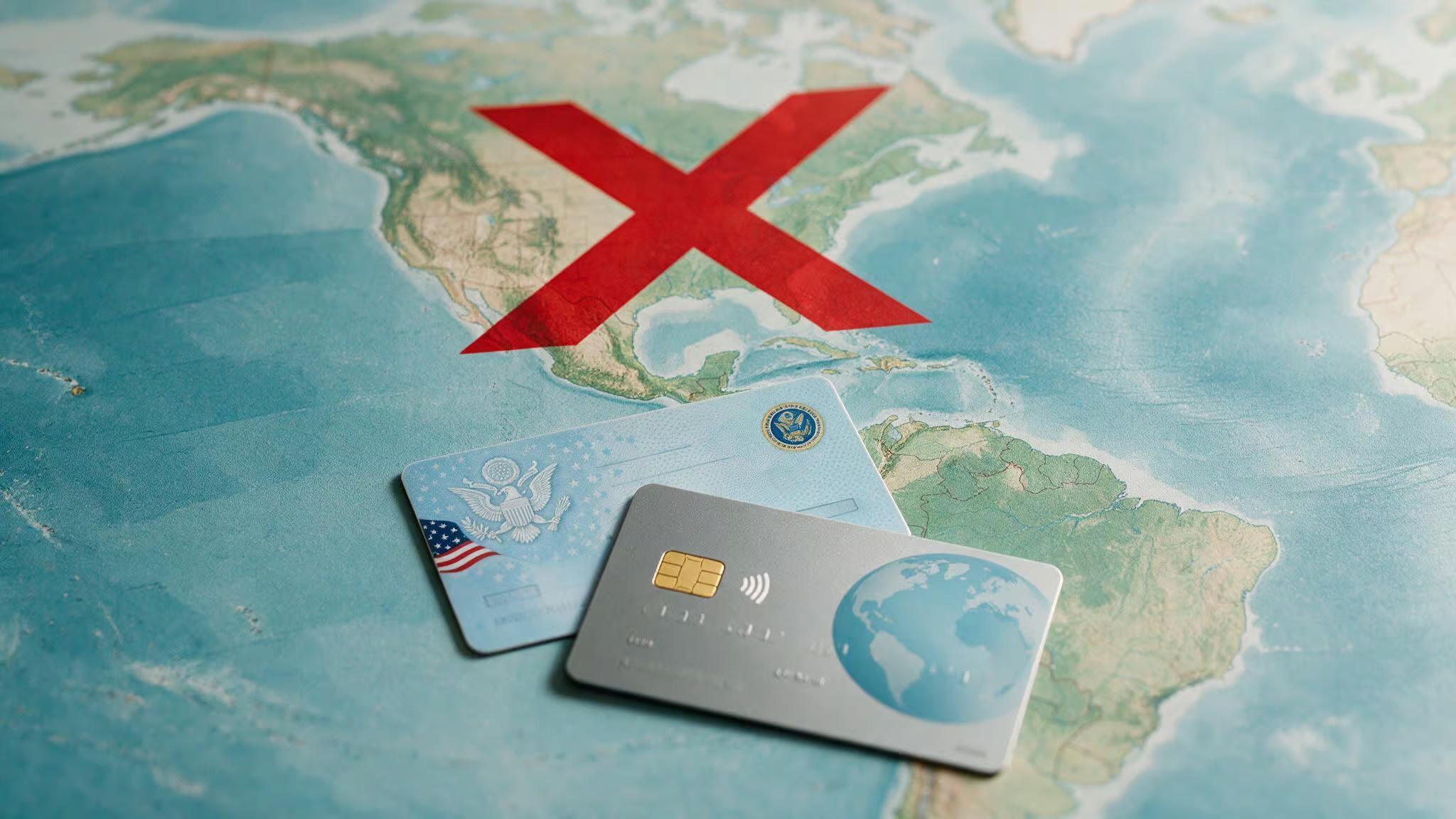
And don’t assume your credit card fills the gap. The Chase Sapphire Reserve is one of the best travel cards out there, and it caps emergency medical coverage at $2,500 with a $50 deductible. That’s it. Compare that to a $500,000 or $1 million medical evacuation, and the card is a backup for a $300 doctor visit, not protection.
What Travel Medical Insurance Covers (and What It Doesn’t)
Travel medical insurance is a specific product for a specific problem. It covers unexpected medical emergencies abroad — not your missed flight or lost suitcase. The easiest way to understand it? Breaking a leg is covered. Getting a physical or your teeth cleaned is not.
What’s Covered — Emergency Care, Evacuation, and Prescriptions
A solid policy covers hospital stays (inpatient and outpatient), lab work, emergency dental (like chipping a tooth), and prescriptions. But the heavy hitters are medical evacuation and repatriation. Medical expense limits run from $25,000 to $2 million. Evacuation coverage goes from $150,000 to unlimited. If you’re going somewhere remote, look for a plan with $1 million or more in evacuation coverage.
What’s Not Covered — Routine Care, Trip Cancellation, and Baggage
A medical-only policy won’t reimburse you for a canceled flight or a lost suitcase. It won’t cover an annual physical or a routine dental cleaning. If you want protection for your flight, hotel, and itinerary, you need a comprehensive travel insurance policy, which typically runs $400 or more. The medical-only policy keeps costs low by skipping those logistics.
Key Exclusions — Pandemics, Level 4 Advisories, and Adventure Activities
This is the fine print that bites people. Most policies exclude pandemics, so COVID-19 coverage varies and must be checked explicitly. If the State Department issues a Level 4 “Do Not Travel” advisory for your destination, your policy is likely void. And if you’re planning to go scuba diving, skydiving, or mountaineering, check the exclusions — those are regularly left out unless you add a specific rider. Pre-existing conditions are excluded unless you get a waiver.
How Much Does Travel Medical Insurance Cost?
The numbers are straightforward. According to Squaremouth, the average medical-only policy costs $92 for a 20-day trip. Comprehensive policies average $400 or more. A general rule from NerdWallet is that travel medical insurance runs about 7% of your total trip cost.
Forbes Advisor uses a cost-per-thousand metric to measure value. Battleface scores a 2.41 — that’s 41% below the overall average. WorldTrips comes in at 5, or 20% below average. Seven Corners runs about 10% above average, you’re paying more, but as you’ll see, you’re getting primary coverage with up to $500,000 in emergency benefits.
Primary vs. Secondary and Single-Trip vs. Multi-Trip
Two structural choices determine whether your claim gets paid easily or turns into a bureaucratic nightmare.
Primary vs. Secondary Coverage
Primary coverage means you file a claim directly with your travel medical insurer. Simple, clean. Secondary means you have to submit the claim to your primary U.S. health insurance first — even if you know they won’t pay. Only after they deny it does your travel insurance kick in.
It’s an extra layer of paperwork that slows everything down. Whenever possible, pay a bit more for primary coverage.
Single-Trip vs. Multi-Trip Plans
If you take one or two trips a year, a single-trip plan is the obvious choice. Multi-trip plans cover unlimited trips within a year, usually with a 30- to 90-day maximum per trip. Sounds convenient, but there’s a catch most travelers miss: multi-trip plans require you to maintain primary health insurance in the U.S. If you’re looking for the best short-term medical insurance for international travel, single-trip primary plans don’t have this requirement and are worth a close look.
Expert-Rated Travel Medical Insurance Providers for 2026
Forbes Advisor’s evaluation carries weight. They looked at 83 policies from 20 companies, evaluating cost and coverage at 40% each, then reputation (10%), customer satisfaction (5%), and integrity (5%). They used NAIC complaint ratios, NAAG settlement records, surveyed 1,400 travelers, analyzed 39,000 customer journeys, and offered a straight-talking assessment of whether is travel insurance necessary for international travel, including real-world scenarios and cost comparisons to help you decide if it’s worth it. Here are the top picks by traveler type.
Travel Insured International — Best for Families
Scored a perfect 5-star rating with a Price-Value Index of 5. The big differentiator: kids under 18 are covered at no cost on the Deluxe and Platinum plans. If you’re traveling with family, that’s serious savings.
Battleface — Cheapest for Budget Travelers
4.5-star rating. The cost-per-thousand of 2.41 is 41% below the overall average. Also offers customizable modular plans, which is useful if you’re into adventure travel and want to pay for only the specific risks you’re taking.
HTH Worldwide — Best for Pre-Existing Conditions
4.6-star rating with a Price-Value Index of 5. The TripProtector Classic has a 60-day look-back period for pre-existing conditions — the most generous among companies. If you have a chronic condition, start here.
PrimeCover — Best for High Evacuation Coverage
4.6-star rating. The Luxe plan offers $1 million for medical evacuation and $250,000 for medical expenses. It also includes a “hospital of choice” feature, meaning you get some say in where you’re treated rather than taking whatever ambulance bay is closest.
WorldTrips — Best for Seniors
4.5-star rating. Most insurers punish older travelers with higher rates. WorldTrips bucks that trend with an average cost-per-thousand of 5 — 20% below average. The Elevate plan provides $250,000 in medical coverage, $1 million for evacuation, and even includes security evacuation benefits.

Tin Leg — High-Rated with Strong Travel Delay Coverage
4.8-star rating and a Price-Value Index of 5. The Silver plan includes $2,000 in travel delay coverage after a six-hour waiting period. If getting stuck at an airport would mess up your budget, this is a pick.
IMG — Versatile Plans for Travelers, Students, and Visitors
4.7-star rating with a Price-Value Index of 5. The iTravelInsured Choice plan has a six-hour waiting period for baggage delay coverage. IMG’s strength is variety: it offers the Patriot Travel Series for non-U.S. visitors, student health plans for international students, and robust visitor insurance.
Seven Corners — Strong Coverage with Primary Benefits
4.6-star rating with a Price-Value Index of 4. The Trip Protection Choice plan offers up to $500,000 in primary emergency coverage, $750 for emergency dental, and up to $1 million for medical evacuation. You’ll pay about 10% above average cost, but you’re getting primary coverage with strong limits.
Blue Cross Blue Shield and Other International Options
BCBS Global Solutions covers you in over 190 countries with 24/7 telemedicine, multilingual support, and direct billing to providers — meaning you don’t have to pay out-of-pocket and wait for reimbursement. Bupa Global also partners with BCBS for international plans. These are options for long-term travelers, and the CDC strongly recommends travel insurance for international travel, especially for older adults.
Special Considerations for Seniors, Families, and Travelers with Pre-Existing Conditions
Different travelers face different risks and costs abroad. Here is how the top providers address the specific needs of seniors, families, and those with health concerns.
Senior Travelers
WorldTrips offers the lowest rates for seniors. For long-term coverage or expat living, BCBS and Bupa offer annual plans with limits from $1 million to $8 million.
Families Traveling Together
Travel Insured International is the choice — free coverage for kids under 18 on its Deluxe and Platinum plans. Family coverage typically extends to a broad definition of family, including spouse, children, siblings, and parents.
Travelers with Pre-Existing Conditions
HTH Worldwide’s 60-day look-back period is your bet. Timing matters, though. Most insurers require you to purchase the policy within 15 days of your first trip deposit to qualify for a pre-existing condition waiver. Wait, and you lose that protection.
Students and Expats
IMG offers targeted student health plans for international study. BCBS Global Solutions provides study-abroad coverage with mental wellness resources and telemedicine. For expats spending a year or more abroad, BCBS and Bupa combine routine and emergency care with high annual limits.
How to File a Claim and What to Do in an Emergency
For evacuation or any large medical bill, contact your insurer BEFORE arranging care. If you evacuate yourself and ask for reimbursement later, they can deny the claim. It has to be pre-arranged to be covered.
For normal medical expenses, the process is straightforward: you pay the bill, save all receipts and documentation, and file a claim for reimbursement. Some insurers, like BCBS Global, offer direct billing to providers, meaning you don’t have to front the cash. Major providers offer 24/7 multilingual assistance to walk you through it.
Common Pitfalls and Exclusions — What Most Travelers Miss
Pandemics and COVID-19 are often excluded unless explicitly covered. Don’t assume.
Adventure sports are routinely excluded without a rider. If you’re planning a single scuba dive or a hike at elevation, verify coverage.
Pre-existing condition waivers have strict deadlines — usually 14 to 21 days from your first trip payment. Miss it, and that prescription you need is on you.
Level 4 travel advisories void coverage entirely. And even without a Level 4, some high-risk countries are permanently excluded.
How to Choose the Right Travel Medical Insurance for Your International Trip
Here’s a simple decision framework.
1. Buy immediately after your first trip deposit. This locks in pre-existing condition waivers and early purchase benefits. Don’t wait until the week before you leave.
2. Match your profile to a provider. Travel Insured International for families, Battleface for budget, HTH for pre-existing conditions, WorldTrips for seniors, PrimeCover for max evacuation limits.
3. Decide between medical-only and comprehensive. If your travel credit card covers trip cancellation and lost bags, a medical-only policy saves you money. If not, consult a definitive guide on when to buy travel medical insurance and consider paying for comprehensive.
4. Use comparison sites. Squaremouth, InsureMyTrip, and Travel Guard let you compare policies. Just remember that options vary by your state of residence.
Your existing coverage is a trap. A $92 investment for a 20-day trip is insurance against a financial disaster. Pick a plan that matches your specific risk, read the fine print, and don’t wait until the last minute.
Frequently Asked Questions
Can you buy just medical insurance for international travel?
Yes, and it’s a separate product from comprehensive travel insurance. A standalone travel medical policy covers emergency care, hospital stays, and evacuation — but not trip cancellation, lost baggage, or routine checkups. It’s cheaper than comprehensive coverage, averaging $92 for a 20-day trip.
How much is medical insurance for international travel?
The average medical-only policy costs about $92 for a 20-day trip. Comprehensive policies that also cover trip cancellation and baggage run $400 or more. A general rule is that travel medical insurance runs roughly 7% of your total trip cost.
What is the difference between travel insurance and travel medical insurance?
Travel medical insurance covers unexpected medical emergencies abroad — hospital stays, evacuation, and prescriptions. Comprehensive travel insurance adds trip cancellation, lost baggage, and flight delays. Medical-only policies keep costs low by skipping those logistics, so if your credit card already covers trip cancellation, a medical-only plan saves you money.
What’s the difference between primary and secondary travel medical coverage?
Primary coverage lets you file a claim directly with your travel insurer — simple and fast. Secondary coverage requires you to submit the claim to your U.S. health insurance first, even if you know they’ll deny it, and only after that denial does your travel insurance kick in. That extra paperwork slows everything down, so primary coverage is worth the extra cost.