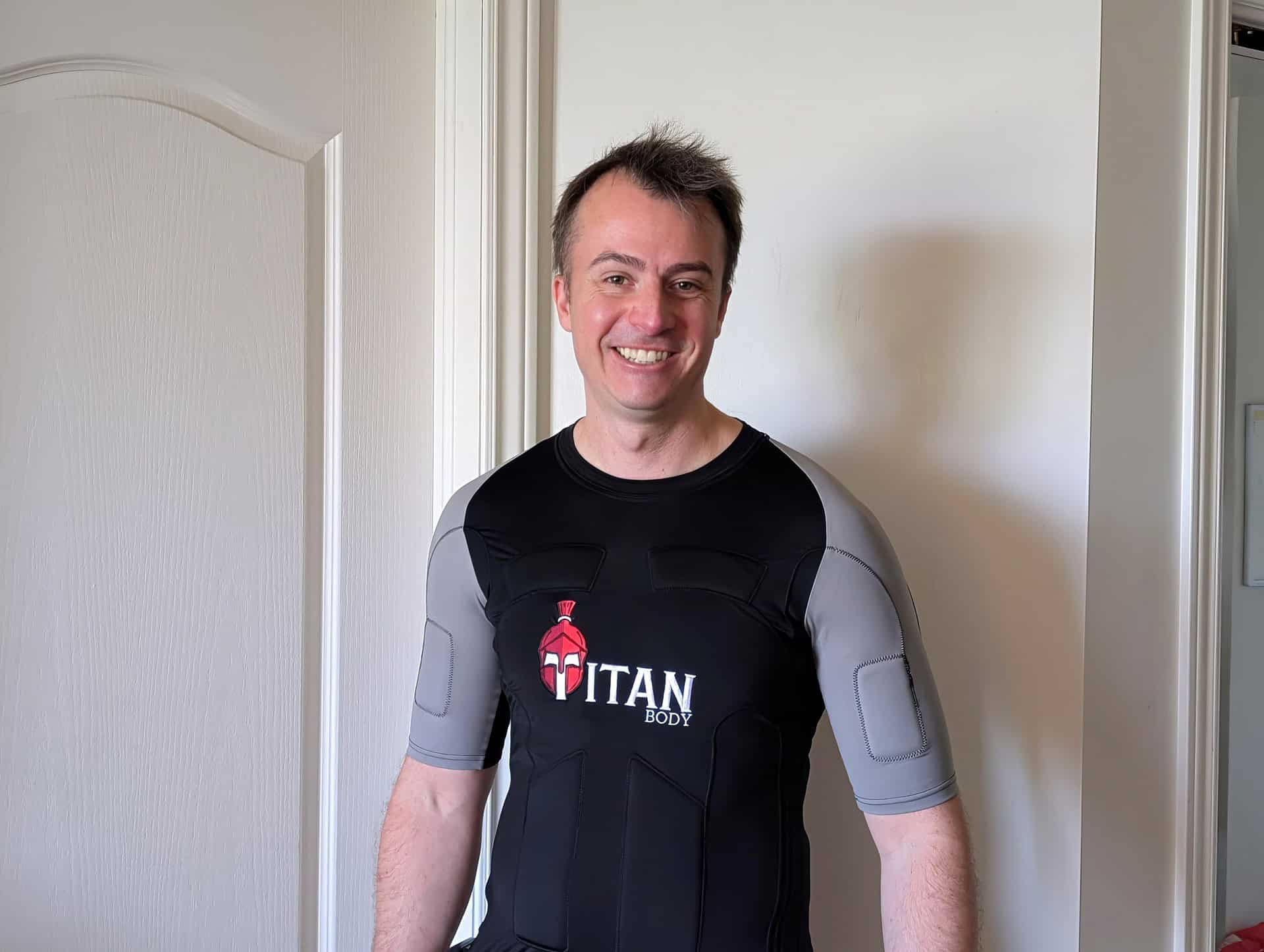
I’ll be honest with you: I was ready to hate this thing.
EMS suits have always smelled like influencer-bait to me. A $2,000 piece of spandex that promises the workout of your life while you stand there twitching? It felt like the fitness equivalent of a magnetic bracelet.
I was deeply skeptical of red light therapy, tried it anyway, and it fixed a nagging shoulder issue that months of stretching couldn’t touch. That memory rattled around my head as I pulled the TitanBody suit out of its box.
So I spent three weeks wearing this battery-powered electric jacket, tracked my numbers, read every review I could find, and dug through the company’s FDA paperwork. The question I started with was the one you probably have: is the $1,895 TitanBody EMS Suit real, or is it another expensive toy for guys with more garage space than sense?
Here’s what I found.
Key Takeaways
The TitanBody suit produces strong muscle contractions, but the 19-review Trustpilot sample is too small to treat as decisive proof of long-term reliability.
At one-time price of $1,895 with no subscription, it undercuts Katalyst by over $1,000 and costs about the same as a Visionbody, but lacks Visionbody’s longer track record.
My own resting heart rate dropped roughly 7 BPM during testing, which I tentatively credit to the suit’s Relaxation mode, but that’s an anecdote, not science.
Table of Contents
What the TitanBody EMS Suit Actually Is
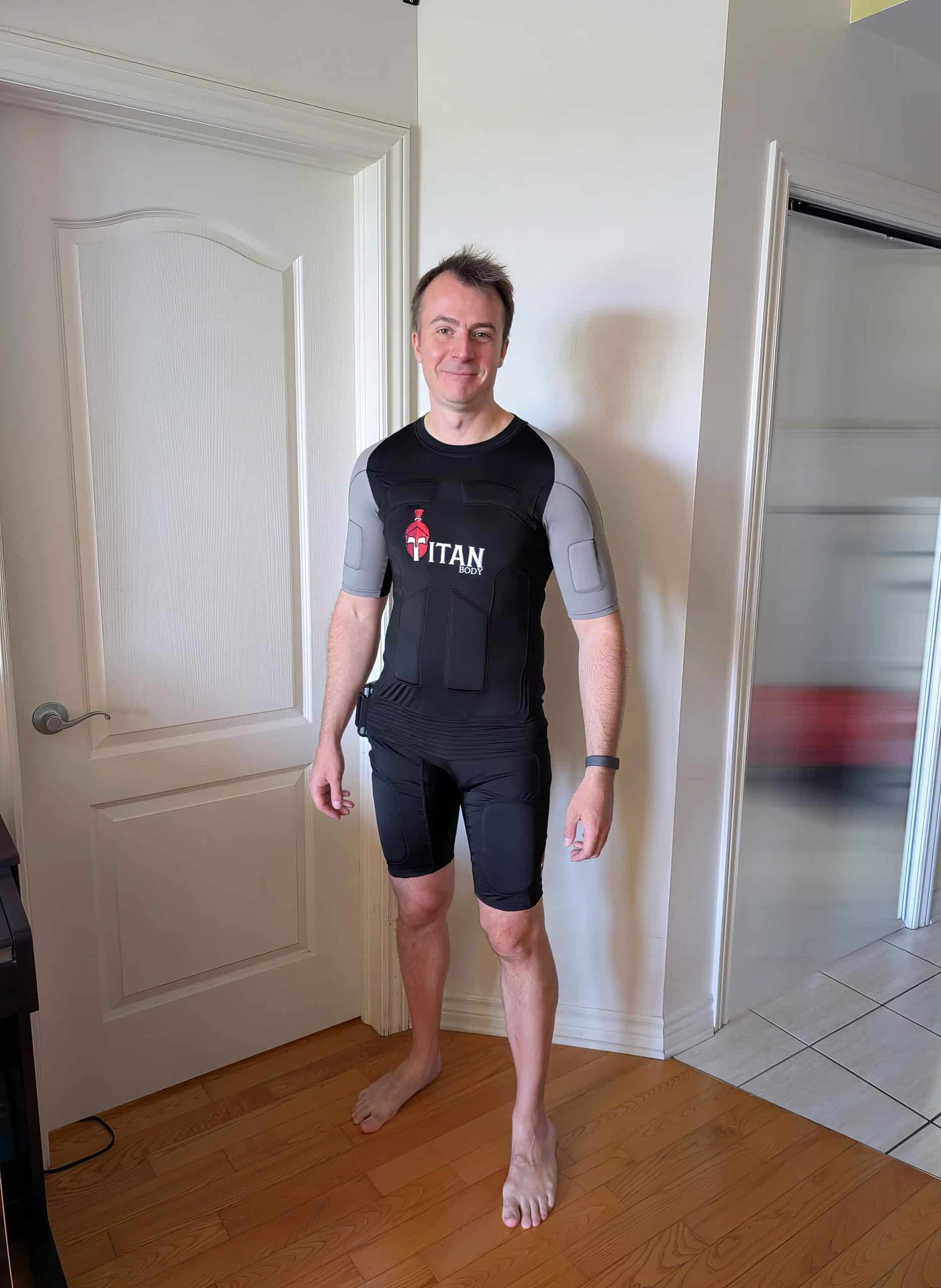
The TitanBody is a wireless, dry-electrode EMS suit. No gel, no wetting, no base layer. You pull it on like a high-tech onesie, clip a small control unit to your waist, and open the app on your phone. The control unit connects via Bluetooth and sends electrical pulses through 20 electrodes spread across 10 channels. Those pulses cover your major muscle groups, upper and lower body.
If you’re new to EMS, here’s the one-sentence explanation: low-level electrical impulses force your muscles to contract harder than they would on their own. It’s a tool that makes your muscles work without needing heavy weights or even much joint movement.
The FDA clearance matters here. The device holds 510(k) clearance, number K222386, granted to VB Technologies in February 2023 as a Class II powered muscle stimulator. This clearance is specifically for muscle conditioning. That’s it.
It’s not cleared to treat back pain, speed injury recovery, or fix any medical condition. It’s a fitness device.
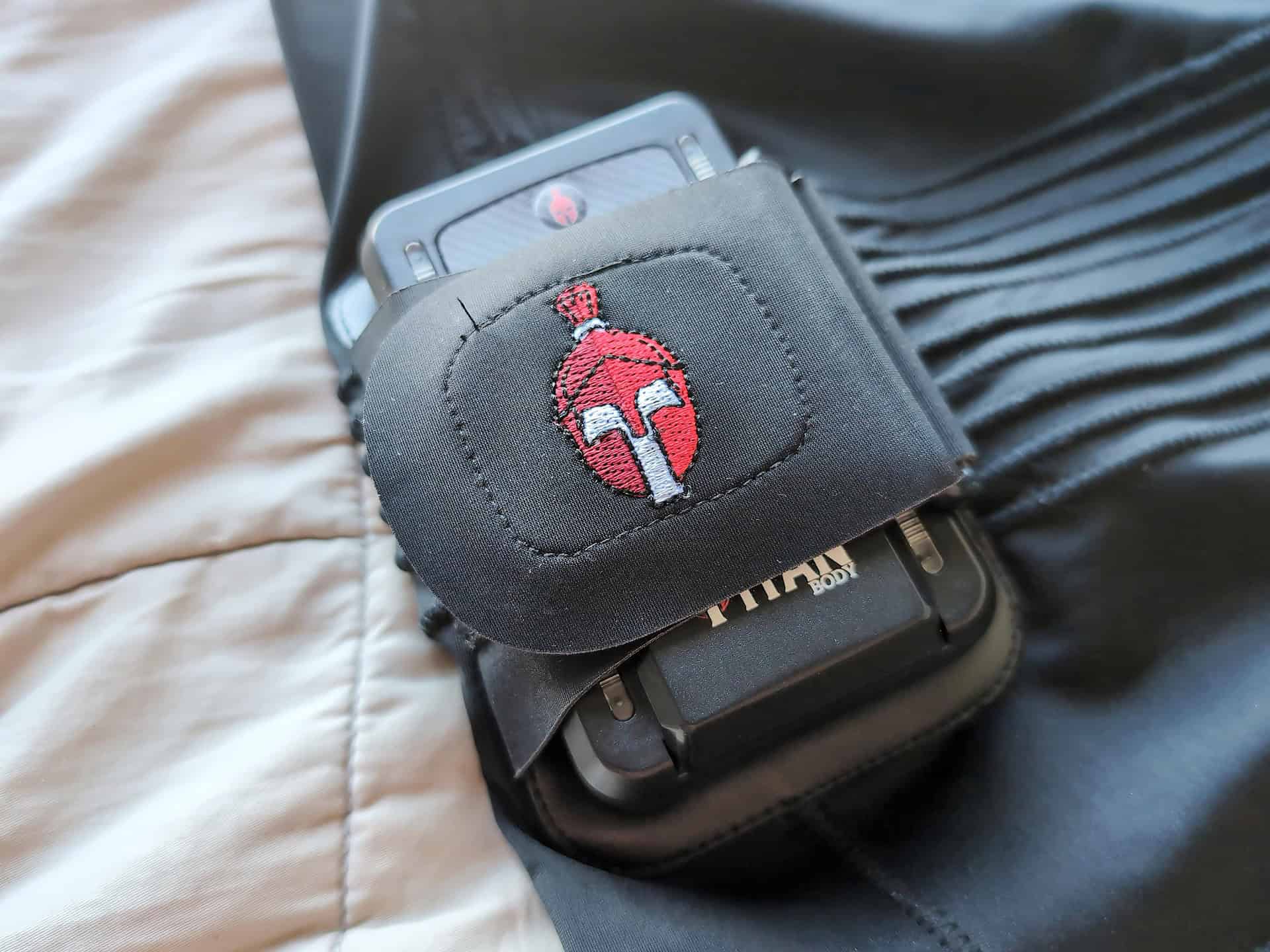
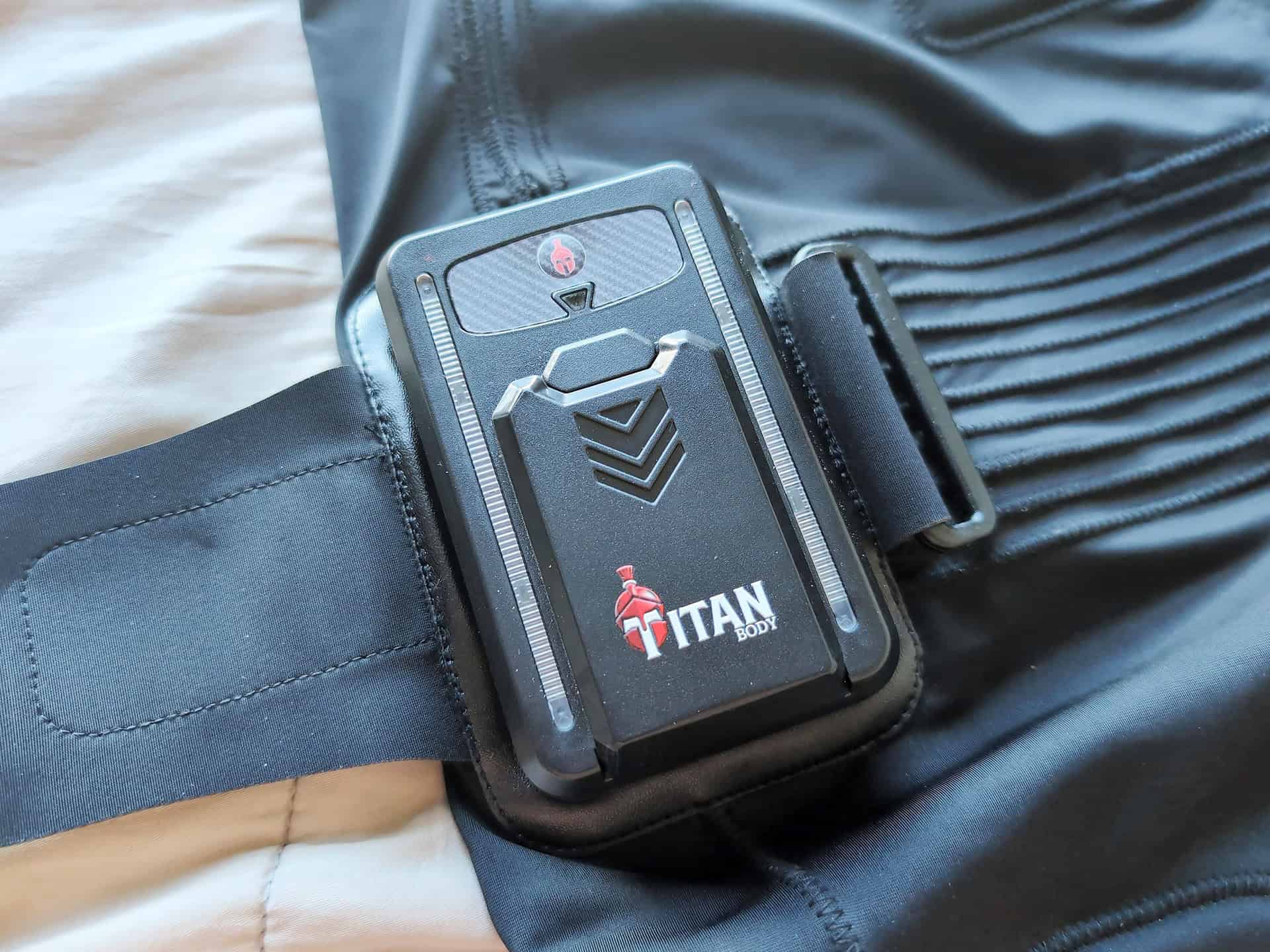
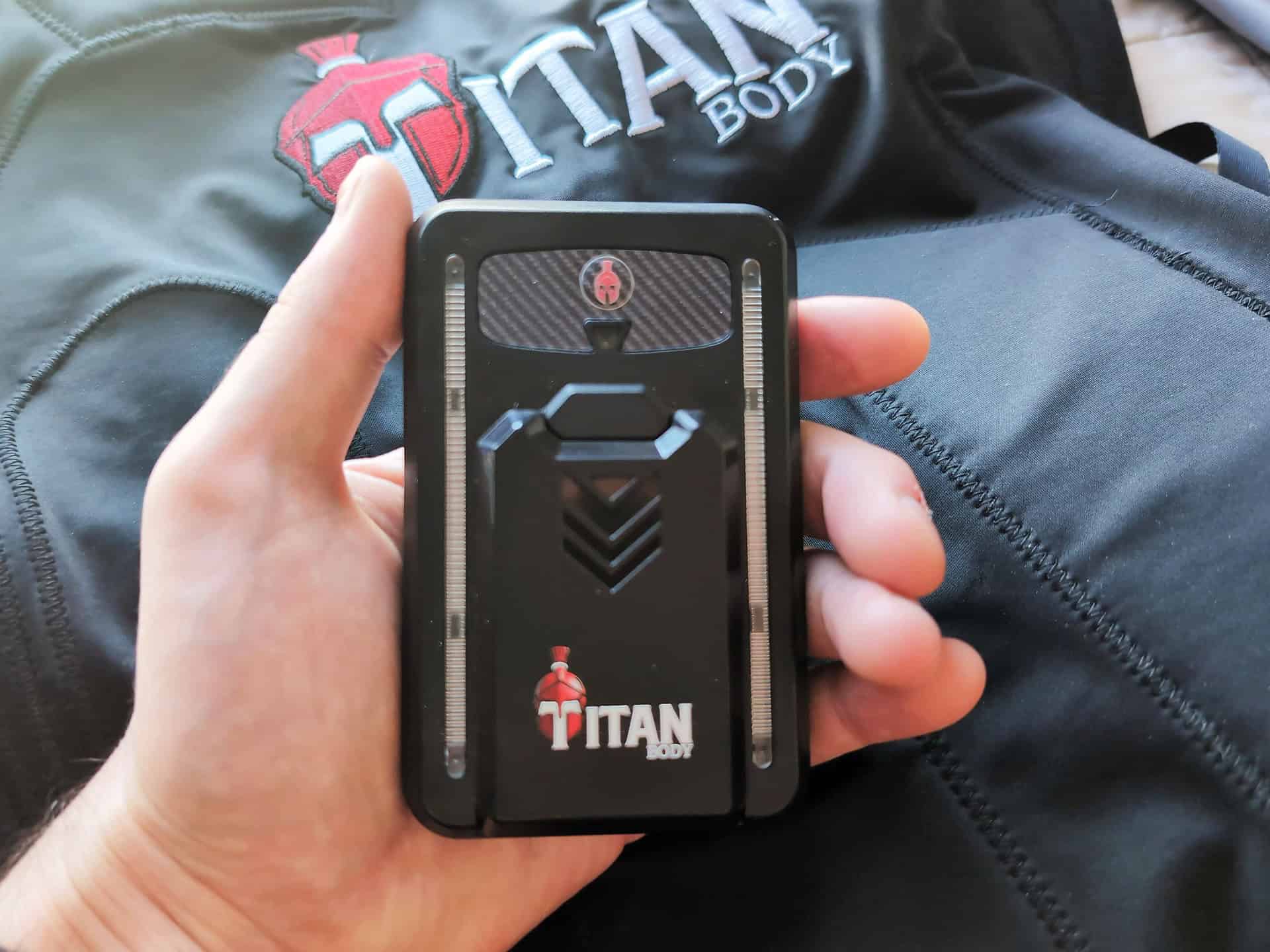
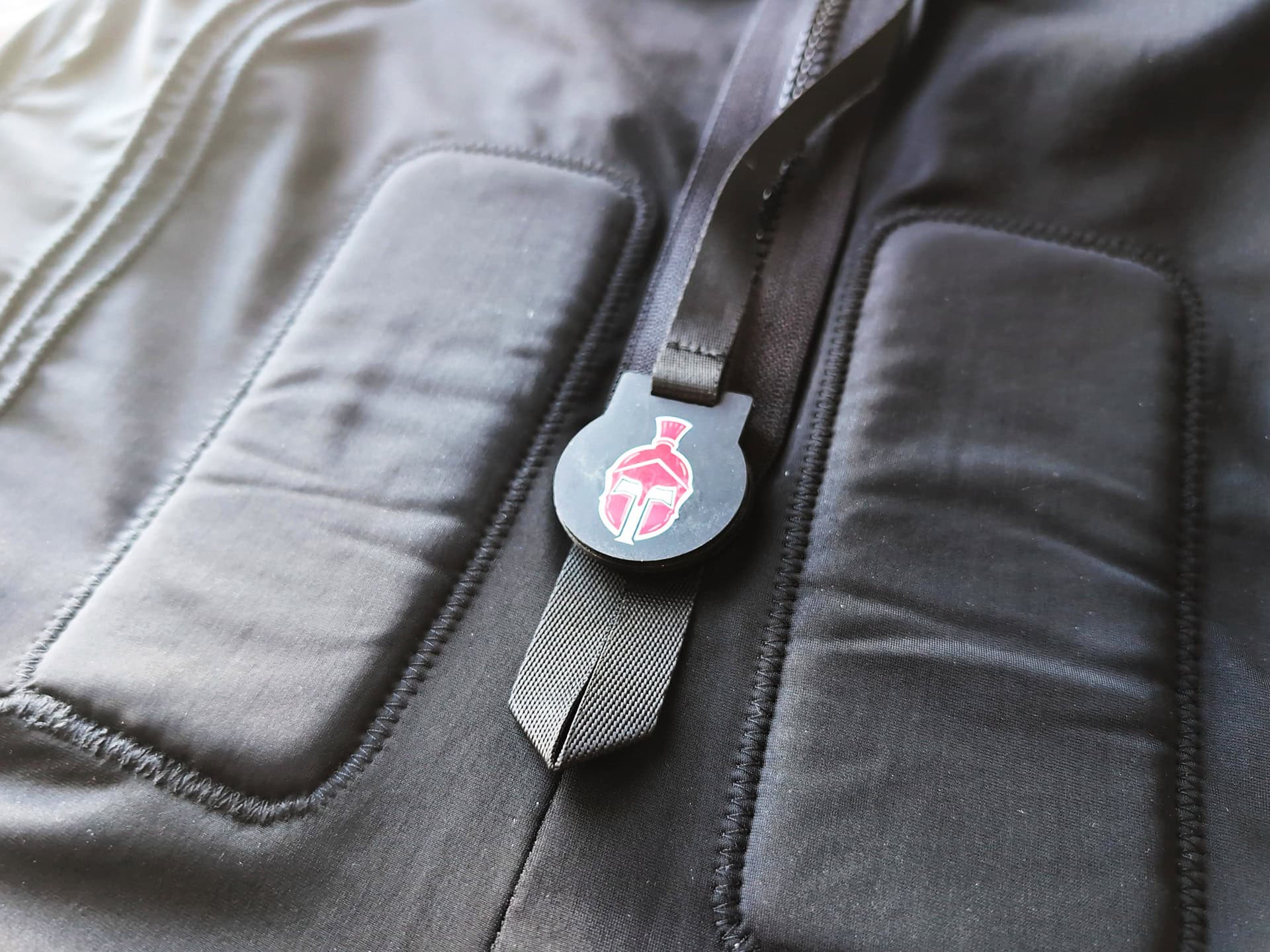
What you get in the box is straightforward: the suit, the control unit, a USB-C charging cable, a wash net, and a manual. The suit itself is lightweight, breathable, antimicrobial, and machine-washable. The battery lasts multiple sessions, and the whole thing packs down small enough for a carry-on. List price is $1,895, and there’s no subscription attached.
One thing you should note before we go further: TitanBody launched late in 2025. That means there is almost no long-term feedback on this thing. Nobody knows what these suits look like after two years of heavy use because the company hasn’t been around long enough to have two-year customers.
My Three Weeks With the Suit
My first session was awkward. You have to wet the electrodes slightly to get a good connection, then suit up and open the app. The app walks you through a setup, and then you’re standing in your living room with 20 electrodes firing into your chest, back, arms, legs, and glutes.
The sensation is not what I expected. It’s not a jolt. It’s more like a deep, persistent muscle squeeze that builds and releases. By the end of the first 20-minute session, my shoulders and legs felt like I’d done a real workout. Not a pump, but actual fatigue.
I used the suit consistently for about three weeks. I mostly used the Load mode for strength work and dabbled with the Relaxation mode on recovery days. I did pushups, squats, and some core work while wearing it, nothing exotic.
My pushup volume went up. I was doing more reps by week three than I was before I started. But I was also training regularly on my own, eating the same, sleeping the same.
I can’t isolate whether the suit caused the improvement or I was just getting better at pushups.
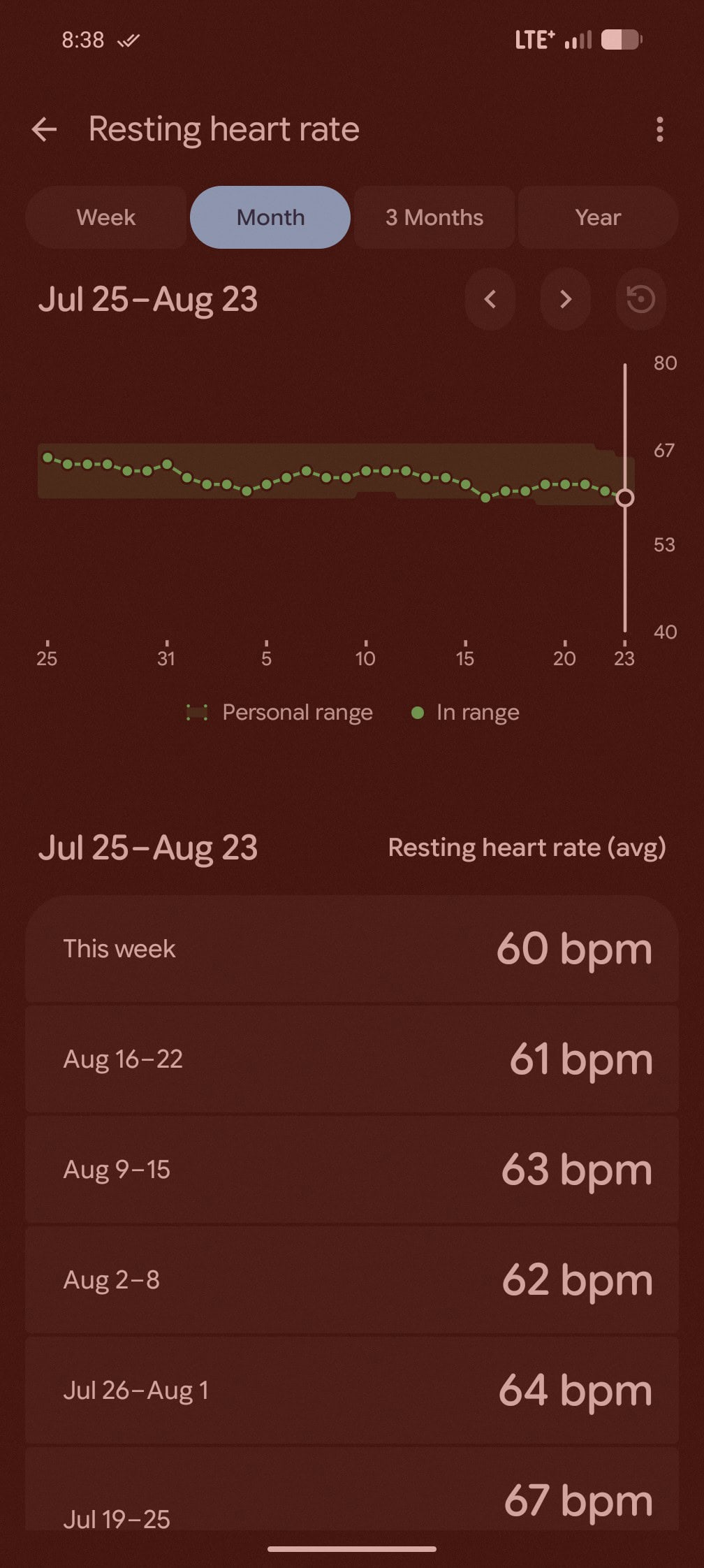
The more interesting number was my resting heart rate. My Fitbit showed a drop of roughly 7 BPM from my baseline by the end of the three weeks. I thought it was a fluke, so I checked my historical data. The drop correlated with the period I was using the suit, specifically on nights after I used Relaxation mode.
That mode is exactly what it sounds like: a low-intensity, pulse-based program that feels like a muscle massage. I believe it contributed to the drop, but I can’t prove it. I wasn’t in a controlled study. I was a guy in his living room wearing a robot suit. Your mileage may vary, and please don’t buy one of these expecting to fix your resting heart rate.
What I can say without qualification is that the suit does something. The contractions are real, the muscle engagement is deep, and the workouts feel effective.
What Real Users Report
The Trustpilot page for TitanBody shows a 4.6 out of 5 rating based on 19 reviews. That is a small sample size, and I want to be upfront about that. It’s worth reading, but it’s not statistically significant. Also, Trustpilot categorizes TitanBody as a Fitness Equipment Wholesaler, which is a little odd since they sell directly to consumers.
That said, the reviews that do exist are specific and useful.
Herb’s story is the most detailed. He went from 241 to 220 pounds over six months, with body fat dropping from 25% to 20%. Crucially, he reported less than 2% muscle loss during that weight cut. He also had a suit malfunction that was resolved in 10 minutes by customer support, which then sent him a replacement with a return label. That’s the kind of support story you want to hear.
Peter Graves offers a different perspective. He lost just over a stone, about 14 pounds, in four months, and reported reduced stomach size and better tone in his biceps and triceps. But he hit a real problem after the weight loss: the suit became too large. The pads on his back lost contact with his skin, and the stimulation in that area dropped off noticeably. That’s the tradeoff nobody mentions until it happens to them.
The Auspex reported better sleep while using the suit and had a support issue resolved within 24 hours at no cost. Dana Boyes, who’s 65, uses the suit for joint-friendly training because it provides less impact than traditional weights. Liam M said the fit is good and the quality feels solid. Creed Snow reported getting stronger in unexpected ways and lost an inch off his waist. Estelle used the suit to address left-side muscle weakness. Seth Clark said his family noticed his arm definition improved without him mentioning it.
Kyra Fesler, whose review reads like someone who actually used the thing, said the app is easy to use, that you should start low and increase gradually, and that the pounds came off quickly. Dave, who plays on the Sr Pro Pickleball tour, switched from a Manduu studio membership to the TitanBody and developed a detailed personal routine: a 10-minute warm-up, 30 sets of 15 minutes at 25 seconds on and 5 seconds off, 15 exercises, and a 5-minute drainage cooldown. He wishes there were an exercise library or a user group, because the current videos show jogging, stretching, and golf movements rather than muscle-building focused routines.
There are also influencer endorsements from fitness trainers like @Da_Rulk, @Carolynefit_, and @AustinAfter40. Those are worth noting, but they’re marketing.
TitanBody vs. The Competition
If you’re shopping for an EMS suit, you’re comparing three main options: TitanBody, Katalyst, and Visionbody. You might also be comparing against studio sessions at places like Manduu, BODY20, or OHM Fitness.
The pricing picture is dramatic. TitanBody costs $1,895 as a one-time payment with no subscription. Katalyst lists at $2,999 and requires a mandatory subscription of $35 to $49 per month. Visionbody lists at $2,490 but frequently sells for $1,890, with no subscription. Studios charge $35 to $60 per session, and going twice a week runs you about $4,160 per year.
Do the three-year math and it gets ugly for Katalyst and studios. TitanBody stays at $1,895. Katalyst, including the subscription, adds up to roughly $4,259 to $4,763 over three years. Studio sessions cost somewhere around $12,480.
William Hanlon provided the most valuable comparison I found. He completed over 290 Katalyst workouts before switching to the TitanBody and logging six sessions. His take: TitanBody has significant practical advantages.
No wetting, no base layer, no strap tightening, easier to travel with, and better battery life.
But he also highlighted real downsides. The TitanBody UI is manual. You adjust each muscle group individually, and you can only change intensity two levels at a time. There’s no total-body ramp-up and no built-in workout library like Katalyst has. It’s more work to set up your session, and you have to know what you want to do.
On hardware, TitanBody and Katalyst both offer 20 electrodes across 10 channels. Visionbody goes higher with 24 electrodes across 12 channels, which is 20% more coverage. Visionbody also has a much longer track record: 374 Trustpilot reviews at a 4.7 rating, compared to TitanBody’s 19 reviews. If you’re risk-averse and want to see that other people have been using a product for years without it falling apart, Visionbody is the safer choice. TitanBody is the bet on a newer brand.
One thing to check if you’re in Europe: Visionbody ships from Miami, so you’ll eat the VAT and import duties. That changes the cost equation. TitanBody ships worldwide from a single store in Deerfield Beach, Florida, and a quick note: an old German domain redirects to the current site, but the company operates out of Florida.
Living With the App and Daily Use
The app itself is functional and generally easy to use. Kyra Fesler’s review highlighted that, and it matches what I found. The app offers programs for fat loss, endurance, and strength, with 60-plus variations. You can adjust intensity per muscle group, which is useful if you want to focus on a weak area or take it easy on an injured one.
The friction point is the manual intensity control. There is no “crank everything up” button. You set each muscle group individually, and you adjust it two levels at a time. If you want a quick session, this adds annoying minutes of button-pushing before you actually start moving.
William Hanlon called this out specifically. It’s tedious.
The other gap is the built-in workout library. The app currently includes instructional videos, but they’re exercise demonstrations rather than guided sessions. TitanBody says a workout library is coming very soon, which should make the suit easier to use for people who want more structure. For now, you’ll need to be fairly self-directed.
The battery situation is good. It charges via USB-C, so you don’t need a special dock or proprietary charger. That’s a thoughtful touch for travel. And since the app works on iOS and Android, compatibly isn’t a concern.
The Honest Pros and Cons
Let’s get specific about the tradeoffs.
The great things: no subscription, no wetting or gel, wireless design that lets you move freely, quick 20-minute sessions, strong contractions, a 12-month suit-size guarantee, and solid customer support based on multiple user reports. If you gain or lose weight during that 12-month period, TitanBody will resize the suit for free. The $1,895 price is competitive with Visionbody on sale and thousands less than Katalyst over time. If you’re comparing against studio memberships, the math is a landslide.
The annoying things: the manual UI, the workout library that has not launched yet, the small review sample, and the unknown long-term durability. The sizing concern is considerably less serious because TitanBody offers a 12-month fit guarantee with free resizing if your body changes. The suit is also covered by a flat 12-month warranty. Regardless of the issue, the company says it stands behind the suit during that period.
The tradeoff that matters most is this: the TitanBody gives you more control but also more responsibility. You have to know what you’re doing, set your own workout structure, and push yourself. If you’re self-directed, it’s a bargain. If you need the app to coach you through a session, the manual process will frustrate you.
The German design roots add a bit of credibility, and the company’s stated mission is to make professional-grade fitness solutions accessible. But mission statements don’t get you through a hard workout. The user reviews do suggest the company handles issues well, with multiple stories of quick resolutions and replacements.
Fit, Sizing, and The Reality of Body Changes
Peter Graves’ experience is the cautionary tale here. He lost over a stone in four months, which is an impressive result. But the weight loss made the suit too large, and the back pads lost contact with his skin. The stimulation in that area dropped, which meant the suit became less effective for him as he got fitter.
Fit matters because electrode contact matters. A loose suit is a less effective suit. TitanBody offers a 12-month suit-size guarantee: if you gain or lose weight during that period, the company will resize the suit for free. That removes one of the biggest concerns for anyone planning significant body changes while using an EMS suit.
Care is straightforward. You wash the suit every 2 to 3 sessions using a cold, gentle cycle in the mesh bag, then air dry. The built-in electrodes need no gel, but they can lose conductivity after heavy use. Replacement garments are available at a fraction of the full system cost, which is good. The batteries are LP-E10 rechargeables, which are inexpensive to replace if they wear out.
Safety, Contraindications, and The One Real Risk
The FDA clearance here is for muscle conditioning. This is a fitness device, not a medical treatment.
Standard contraindications apply: don’t use this if you have a pacemaker, severe heart conditions, seizure disorders, active cancer treatment, metal implants, or if you’re pregnant. Electrical stimulation can interfere with those conditions, sometimes badly.
The one genuinely serious risk is rhabdomyolysis. If you’re not familiar with it, it’s a condition where muscle breakdown products flood your bloodstream and can damage your kidneys. It happens with EMS when people crank the intensity way too high, way too fast. The software does have safety features: time limits, intensity caps, and auto-shutoff. But those don’t protect you from your own decision to run it at maximum power on day one.
The rule is simple: start at low intensity, keep sessions short, and wait 48 hours between sessions. That last part is non-negotiable. Your muscles need recovery time, just like any workout.
Final Verdict
My testing produced real contractions, real muscle fatigue, and what I view as a positive but unproven effect on my resting heart rate. The user reviews show specific, credible results: Herb’s weight loss, Peter Graves’ stone gone in four months, Creed Snow’s inch off his waist. There’s enough evidence to say this thing does something real.
Is it worth $1,895? That depends entirely on who you are. If you’re self-directed, train consistently, and want an alternative to paying for studio sessions or eating a subscription cost, yes. The math over three years is decisive. If you need guidance or expect the suit to do the thinking for you, no.
TitanBody is a solid mid-priced option in a young market. It has a shorter track record than Visionbody but a stronger value proposition than Katalyst. The app has friction points but nothing that blocks core functionality. The company’s customer support appears responsive, and the hardware feels substantial.
Who should buy this: self-directed trainers, busy professionals, and anyone currently paying for studio EMS sessions. Who should pass: people who want guided workouts, people who need proven long-term reliability, and anyone with the contraindications listed above.
I’m going to keep using mine. I can’t quit my day job to do a controlled clinical trial, but I’ve seen enough to know the suit is doing something. Use the code UNFINISHEDMAN at checkout for $100 off, if you decide to pull the trigger.
Frequently Asked Questions
Do EMS suits actually work?
Yes, EMS suits like the TitanBody produce real muscle contractions and can contribute to strength gains and fat loss, especially when combined with regular training. User reviews show specific results like weight loss and improved tone, but they are not a magic bullet and require consistent use and a proper diet.
What is the best EMS suit for home use?
The best EMS suit depends on your budget and preferences. The TitanBody is a strong mid-priced option with no subscription, while the Visionbody offers more electrodes and a longer track record but may have import fees. Katalyst is more expensive with a mandatory subscription but has a more guided app experience.
How much does the Visionbody EMS suit cost?
The Visionbody EMS suit lists for $2,490 but frequently sells for around $1,890, with no subscription required. This makes it comparable in price to the TitanBody, but you may also need to factor in import duties if you’re outside the US, as it ships from Miami.
What is the difference between TitanBody and Katalyst?
The main differences are price and app experience. TitanBody costs $1,895 with no subscription, while Katalyst costs $2,999 plus a mandatory $35–$49 monthly fee. TitanBody offers more manual control, and its workout library is not available yet, although the company says one is coming very soon. Katalyst currently has the advantage for guided workouts and total-body ramp-up features.
What are the side effects of using an EMS suit?
For healthy adults, EMS suits are generally safe when used as directed. The main risk is rhabdomyolysis if you crank the intensity too high too soon. You should also avoid using the suit if you have a pacemaker, are pregnant, or have certain medical conditions like epilepsy or metal implants.