
Owning a tattoo shop sounds like the ultimate lifestyle flex. Here’s the daily grind of rigorous health compliance, volatile talent rotation, and razor-thin margins. The tattoo franchise business model isn’t an idealistic creative commune, but rather a calculated real estate and marketing play that requires structured, in-house development support.
With the global tattoo market hitting an estimated $2 billion annually, demand is expanding at an 8% YoY growth rate. But the culture has actively shifted.
Today’s clients want standardized, safety-first retail business models instead of the grassroots, hyper-local underground shops of the 90s. To capture current demand securely, you must evaluate the financial structure of these studios beyond their aesthetic appeal.
Key Takeaways
The tattoo franchise business model requires the kind of structured, in-house development support found at https://www.franchisefastlane.com/carpool.
The global tattoo market generates an estimated $2 billion annually, driven by an 8% YoY growth trajectory and shifting cultural acceptance.
Efficient studio owners typically see a 7-11% net profit margin, while professional independent artists command a 30-50% commission split.
Table of Contents
Due Diligence: Franchise Security Vs. Independent Studio Acquisitions
The romanticized idea of discovering a beloved hometown studio—maybe you’re deliberately searching for a “tattoo shop for sale near me”—and turning it around is exactly how beginners get slaughtered financially. Take a look on r/tattoo and you’ll find horror stories of guys acquiring a legacy shop from a checked-out absentee owner, only to realize the place is bleeding cash and trailing unpaid taxes.

If you insist on going the indie acquisition route instead of launching a clean-slate franchise, your first call isn’t to an interior designer—it’s to a lawyer. You must execute an Asset Purchase Agreement to shield your new entity from the old owner’s hidden liabilities. Without this legal mechanism, you’re volunteering to inherit past-due bills and broken contracts. This is why a franchise model avoids the 7-11% studio margin volatility associated with debt-burdened indie acquisitions.
It bypasses timeline legacy debt entirely, handing over readymade operational compliance and an unburdened brand from day one. You skip the forensic accounting and get straight to operating.
“The franchise model skips the forensic accounting of indie acquisitions, handing over readymade operational compliance and an unburdened brand from day one.”
Financial Reality: Studio Margins Versus Artist Commissions
The Brutal Margin Hierarchy
To calculate your baseline profitability, you have to navigate the stark reality of the 7-11% studio profit margin against the industry-standard 30-50% artist commission split. Because artists supply their own equipment and the aesthetic expertise required to execute anything from intricate full sleeves to small tattoos for men, they command a 30-50% commission split, leaving the studio owner to cover all overhead from the remaining revenue. Your cut as the owner is squeezed into what’s left over.
Factoring Fixed Overhead
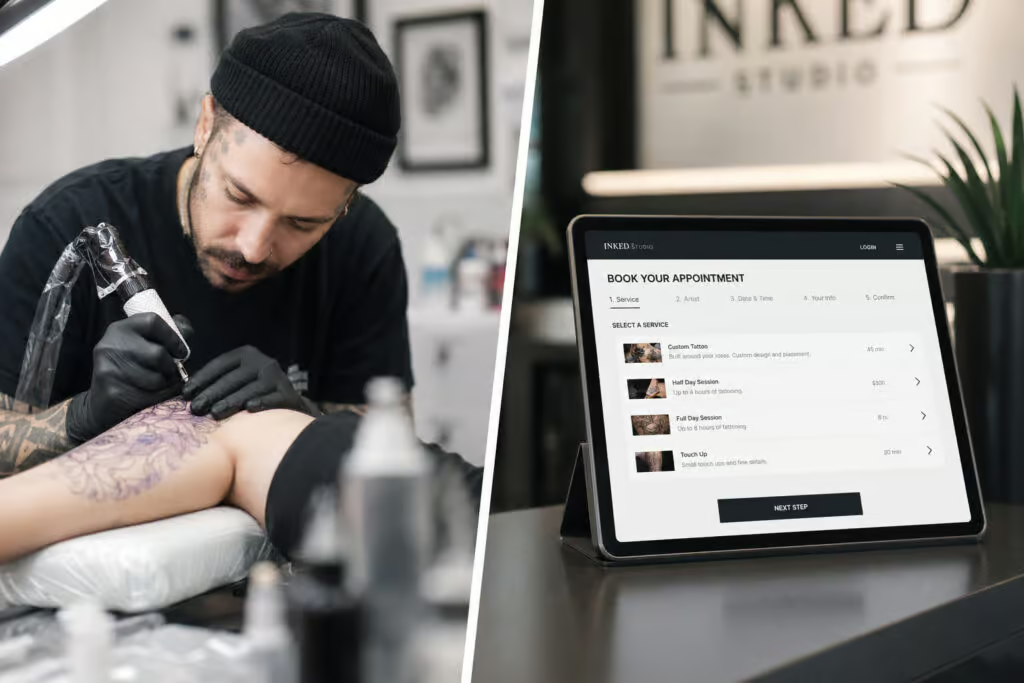
Once the artist takes their 50 percent, your studio retains the remaining half. From that remaining pool, you have to pay the commercial lease, utilities, front-desk staff, specialized insurance, and, if you’re franchised, your ongoing royalties to the franchisor, which typically range from 6-9%. Achieving an 11 percent net margin requires maximum chair utilization, as fixed overhead costs absorb nearly all revenue until the shop reaches high-volume capacity.
The Operator Dilemma: Managing Creative Independence
The threat to a non-artist franchise owner isn’t a lack of walk-ins, it’s a mutiny by the creative talent. Reddit contributors who work in the industry constantly emphasize that artists will abandon a “super shop” the second a non-tattooing owner tries to dictate how they work. High-functioning franchises survive by strictly separating roles: you provide the business oversight while leaving the floor open for total creative autonomy. Never act like their art director.

You’re managing 1099 independent contractors inside a system that demands standardized safety protocols. The franchisor mandates how the shop runs, but the artists themselves are self-employed. You can mandate the clean needles, the booking tech, and the shop rules, but the artists are their own bosses doing the actual needle-to-skin work. Treat them like hourly employees and they’ll exercise their 1099 contractor right to walk out.
Artist churn is an inherent operational reality. Because professional tattooers are nomadic independent contractors, they naturally rotate every 2-5 years. Efficient owners replace the fear of losing talent with a strong studio reputation; when artists leave, the shop’s brand must be established enough that clients trust whoever takes over the chair next.
Scaling Core Operations: Compliance, Training, and Booking Tech
Commoditizing the Safety Layer
The invisible barrier to market entry isn’t finding guys who know how to draw. It’s the mountain of strict local health regulations and the unyielding liability surrounding bloodborne pathogens that necessitates rigid compliance regulations. Standard indie shops struggle to scale because duplicating health department approvals requires repeating local regulatory compliance for each new business location.
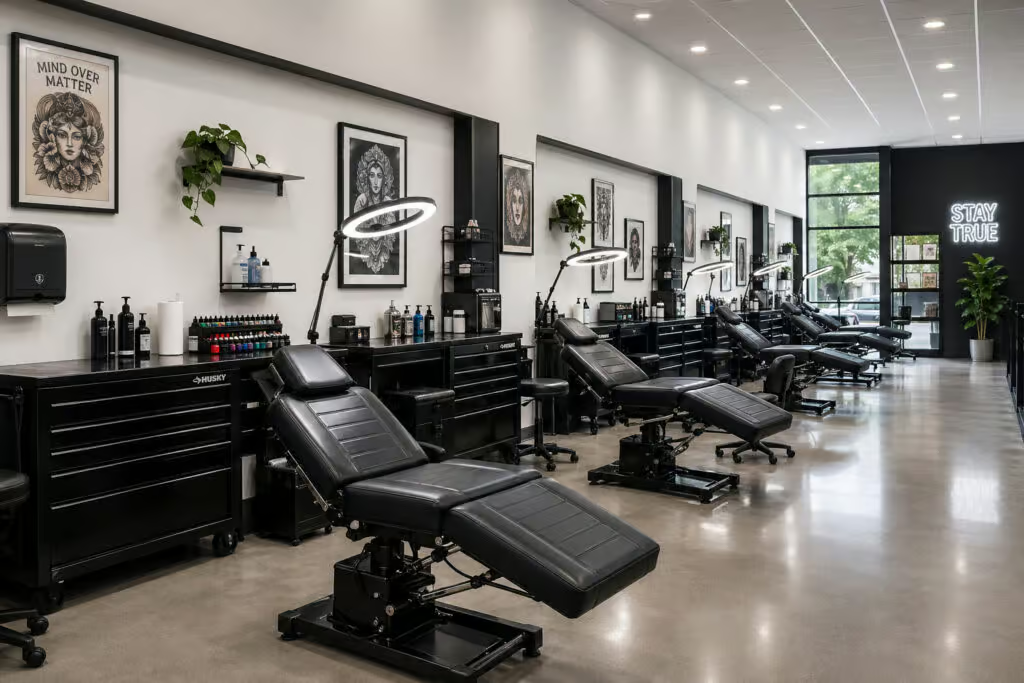
This is where the franchise model proves its worth. A brand like Black Hat Tattoo doesn’t scale by dictating the art itself; they strictly commoditize the customer security layer, the hygiene standards, and the broader retail customer experience. Franchise Marketing Systems and American Veteran Franchises echo this approach. You standardize the safety, leaving the art as the primary variable.
Centralizing the Tech Stack
They hand you an operational franchise playbook that centralizes your digital booking roster, manages HIPAA-equivalent health privacy data forms, and integrates your retail merchandise. Leverage these franchisor operating procedures. A centralized tech stack handles the logistical drag that normally burns out independent shop managers, letting you focus safely on marketing and real estate.
Evaluating Franchise Alignment and Operational Risks
The test for any tattoo franchise lies in determining if the security provided outweighs the cost of ongoing royalties. Assess potential alignment based on their ability to generate independent lead flow and guarantee rigorous health compliance, rather than relying solely on a flashy logo. If a franchisor oversteps and tries to act as a talent agency dictating artistic generation, you risk alienating the skilled creatives required to make the business function.
The smartest investments here prioritize prime real estate viability, impenetrable operational hygiene, and bulletproof local marketing over transient aesthetic trends. Success depends on prioritizing prime real estate, operational hygiene, and the 7-11% baseline studio margins over the aesthetic subculture.
Frequently Asked Questions
Is owning a tattoo shop profitable?
Owning a tattoo shop is far from a high-margin cash cow, with efficient studio owners typically netting only a 7-11% profit margin. Because artists operate as independent contractors taking a 30-50% commission split, the owner is responsible for covering all overhead—like commercial leases and insurance—from the remaining revenue.
Are there any tattoo franchises?
Yes, the industry is shifting from grassroots underground shops to structured, standardized retail franchise models. These franchises succeed by centralizing the tech stack for bookings and health compliance, while allowing franchise owners to focus on real estate and marketing rather than the creative work.
How much does an owner make after artist commissions?
After paying out the 30-50% commission to artists, the studio owner must cover all fixed costs, including rent, utilities, and royalties. Once those overhead expenses are paid, the owner is left with a thin net profit margin of 7% to 11%.
Why does a tattoo franchise model bypass indie acquisition risks?
Acquiring an existing independent shop often traps new owners in a mountain of hidden liabilities, unpaid taxes, and bad contracts. A franchise model avoids this ‘forensic accounting’ by providing a clean-slate operation with established compliance and branding from day one.
Can I manage tattoo artists like regular employees?
No, because tattoo artists are typically 1099 independent contractors, they maintain total creative autonomy and can leave if they feel micromanaged. If you try to act as their art director or enforce rigid control over their work style, you risk a talent mutiny where your most skilled artists simply walk out.
What is the difference between an independent shop and a franchise for health compliance?
Independent shops often struggle to scale because they must navigate and repeat complex local health department regulations for every new location. Franchises simplify this by commoditizing the safety layer, providing a standardized, repeatable system for hygiene and regulatory compliance across all locations.