You already did the brave part once. You showed up somewhere: a networking night, a one-off meetup, maybe a new gym. You shook hands, exchanged names, made a joke that landed okay, and drove home with a phone full of contacts you’ll never text. Six months later you can’t remember most of them, and it feels like a personal failure.
It isn’t. The event was structurally incapable of producing a friend, because it gave you one exposure to a room of strangers and then dissolved.
That’s the whole problem, and it’s fixable. Social hobbies for men to meet people work when they create recurring, low-pressure, side-by-side contact with the same group, week after week. Not mixers. Not “events.” A Tuesday night thing where the same faces show up and you’re doing something with your hands while conversation happens around you.
The culture caught up to this recently. In late May 2025, a pitch-black comedy called Friendship hit theaters, with Tim Robinson playing Craig, a guy disrespected at work and unimpressive to his own family, until a charismatic neighbor named Austin Carmichael shows up and Craig’s hunger for one real friend becomes the entire movie. Coverage. The Free Press among it, spent the rest of 2025 returning to adult friendship as a recurring seasonal topic, because the film dramatized something a lot of guys carry quietly: the want is real, and nobody hands you a manual.
Consider this a partial manual. The core is a three-question test: thirty seconds, and you know whether a hobby produces friends or another evening of acquaintances. Then it runs the options through that filter: sports leagues, running clubs, volunteering, dog parks, trivia, book clubs, car meets, and the app layer that finds all of it. Each one gets an honest note on whether it works when you walk in alone, because that’s the situation most guys are actually in.
One dry line of reassurance before the options: plenty of adults are figuring this out right now, and you’re really not the only one. Now, the options.
Key Takeaways
A hobby only produces friends when the same group recurs weekly, the activity is side-by-side rather than face-to-face, and there’s a built-in post-activity ritual like the post-run breakfast or post-game beers.
One-off events fail because they give you a single exposure, no shared-task script, and conversation on demand; a BuzzFeed respondent who hated running still built a three-year friendship through post-run breakfasts at a running club.
Attendance alone doesn’t convert: the acquaintance-to-friend gap closes when you attach to the existing ritual, suggest the drink yourself, and accept the after-event invite.
Table of Contents
The three-question test for social hobbies for men to meet people
Repeated, low-pressure contact with the same people is the entire mechanism. Everything else is detail. That one sentence lets you evaluate any local option in thirty seconds, and it’s worth unpacking before you pick a Tuesday night.
Run any candidate hobby through three questions:
- Does the same group recur weekly? A rotating crowd resets your progress every time. A fixed weekly group compounds it.
- Is the activity side-by-side rather than face-to-face? Sitting across from a stranger with nothing to do except talk? That’s the hardest social format there is. Standing next to someone, both of you doing a task, is the easiest. The activity gives you something to comment on and lets silence be silence.
- Is there a built-in post-activity ritual? The breakfast after the run, the beers after the game, the coffee after the walk. The ritual is where acquaintances become friends, because it’s unstructured time with people you’ve already warmed up.
Now you can see why one-off events fail on all three counts: no repeated exposure, no shared-task script, and conversation on demand with a stranger. You weren’t bad at the networking night. The networking night was bad.
This test isn’t theory. It’s stitched together from first-hand accounts of people who actually made adult friends this way. It’s not a research statistic, and nobody can tell you an exact number of weeks it takes. What the pattern shows is consistent: the formats that pass all three questions are the ones where friendships form without anyone performing.
The rest of this article runs hobbies through the filter, one by one, each with a note on whether it works when you walk in cold.
Social sports leagues: the post-game ritual is the point
Yes, leagues work, and the decisive condition isn’t the sport. It’s the post-game ritual. The game is the pretext; the food and drinks after the whistle are where people actually become friends. That’s also why leagues work even if you hate the sport: everyone in the room signed up with the same agenda, meeting people.
One BuzzFeed respondent hated running and still built a three-year friendship out of it, entirely through post-run breakfasts (the full story is in the running section below). The shared goal does the heavy lifting.
Field note: Judge a league by what happens after the whistle, not during the game. The post-game ritual is where friends get made.
Discovery is simple. A local sports club directory lets you scroll until something looks fun, then show up. The category models are outfits like Urban Rec, which runs competitive and just-for-fun leagues, and Volo, which covers basketball, volleyball, kickball, even flip cup, with memberships, pickup games, tournaments and happy hours. A PureWow editor, Joel Calfee, made many of his friends through a kickball club, which tells you the sport barely matters. At the deep-bonding end of athletic groups sits a sea-swimming mermaid group: people who swim in cold water together describe sharing successes and tragedies, and that’s how genuinely tight groups form.
Non-playing roles
Not athletic? Coach, referee, or manage a team. The league still counts you in, and you get the same weekly contact and the same post-game ritual without touching a ball. That’s the direct answer to “I’m not athletic,” and almost nobody mentions it.
How to read a league in the first two weeks
The common pattern, stitched together from first-hand accounts: guys sign up solo, get placed on a random team, and the first few weeks feel like a chore. The tell is what happens after the game. If the team heads somewhere together, you’re in the right league. If everyone walks straight to their cars, keep looking, or start the ritual yourself.
In your twenties and building the whole roster from scratch? Our guide to hobbies for men in their 20s covers the league-and-group angle in more depth.
Running clubs and walking groups: zero-skill entry
The decisive difference between the two is barrier to entry versus conversation time. Walking groups have the lowest barrier of almost anything in this article; running clubs buy you more minutes moving beside the same person. Both are free or close to it, and both are zero-skill. Either way, the pace does something conversation can’t: it puts you next to the same person for thirty-plus minutes without requiring you to talk, so talking happens when it’s ready.
Running clubs and Parkrun
Parkrun is the free weekly entry point, and nobody there cares about your time. Formats like Running for Resilience pair the run with a drink and conversation; the run is the excuse, the talking is the point. Run clubs also double as accountability, because someone notices when you don’t show. The best anecdote on record: a 26-year-old who hated running bonded with people over the shared dislike, and the post-run breakfasts turned into a three-year friendship. The hate was the icebreaker.
Free walking groups
Free community walking groups run across suburbs in most places; the Heart Foundation’s walking groups are the named model. Admission costs nothing, which makes trying one a no-brainer.
Bushwalking and hiking clubs
Hiking with a crew is safer and more social than going alone. Some hiking meetups don’t even need an RSVP; you show up and hike at your own pace. The Canberra Bushwalking Club and San Diego’s Adventure Hub are examples of the format.
Men’s walking groups: Blokes Walk and Talk
Walking plus talking, aimed at men, no ceremony about it. Connection and support come bundled with a decent stroll. That’s the whole pitch, and it’s a good one.
With-Me charity walks
Some charities run regular walks built explicitly to combat loneliness; one called With-Me walks around Lake Burley Griffin on the regular. Generalize it: anti-loneliness walk communities exist, and showing up is the only requirement.
City Girls Who Walk: proof the format scales
This one’s women-focused, so it’s not the recommendation, but it’s proof the format scales. Founder Brianna Joye’s club went viral on TikTok and pulls 100 to 700 people per walk. The San Diego variant is free and adds icebreakers, brunches and book swaps. The demand for easy social contact is clearly there; men’s versions of it just get less promotion, which we’ll come back to.
Volunteering with a recurring shift
Yes, volunteering works, and the decisive condition is a recurring shift with the same crew. It supplies two things at once: connection and a reason to be there. And the shared cause guarantees at least one common value with every person in the room. It’s the sleeper pick of this list. You show up for a task, and conversation happens on its own.
Task types that suit any temperament
The range is wide. Sorting donations at charity shops and warehouses (Roundabout Canberra and St Vincent de Paul are real examples of the format) is the low-pressure entry: hands busy, no small-talk performance required. Emergency service volunteering, like the ACT State Emergency Service, is the pick for guys who want something with stakes; the camaraderie comes from shared work, not icebreakers. Community pantry shifts (Communities at Work is the model) are practical and low-key, an hour or two standing next to people.
Park care with a conservation crew, ParkCare being the model, gets you outside with a reason. Night-safety outreach like CBR NightCrew keeps patrons safe downtown, and if you’re out at night anyway, you might as well be useful. One BuzzFeed respondent even met her future husband on a political campaign. The age range in volunteer crews is wide, so you’ll click with someone.
Animal shelter volunteering
For guys who’d rather walk a dog than make conversation on command, shelters are the pick; the RSPCA is the named example of the format. Caring for rescue animals means the shared work does the social heavy lifting. The documented progression: humane-society dog-walkers started by talking about the dogs, moved to monthly coffees, and ended up pet-sitting for each other. Friendships start stupidly small.
Finding a shift
VolunteeringACT lists opportunities, runs workshops and gives advice in one spot. Intergenerational playgroups through community playgroup organizations serve older adults; niche, but real, and worth flagging so the right readers self-select.
One expectation-setter, drawn from the common first-shift pattern: the first shift is usually quiet and task-focused. Men who expect instant conversation quit. The same faces keep showing up at the same slot, and the side-by-side work turns into conversation without anyone forcing it.
Dog parks and guided dog walks
Dog ownership is pre-loaded repeated exposure: same owners, same park, same hour, every day. And the dog does the icebreaking for you.
Fenced dog parks
A fenced dog park makes conversation easy to start because there’s a dog right there doing something worth commenting on. Even if you don’t talk, the dog makes its own mates while you make yours. Katie, 30, in Austin made all her friends at her local dog park through nothing but routine and familiar faces. Repetition is the mechanism.
Guided social dog walks
The non-obvious extension: guided social dog walks, like the weekly ones Canberra Dog Walks runs, are open to all humans, with or without a dog. You don’t need to own a pet to show up, which makes this a legitimate option for men who like dogs but don’t have one. Add a dog-friendly café for the after-walk chat and the structure is complete: walk first, coffee after, same people each week.
Neighborhood dog walking
Just walking your dog around the block counts. Same faces, same route, small talk compounds into multi-generational friendships with neighbors you’d never otherwise meet.
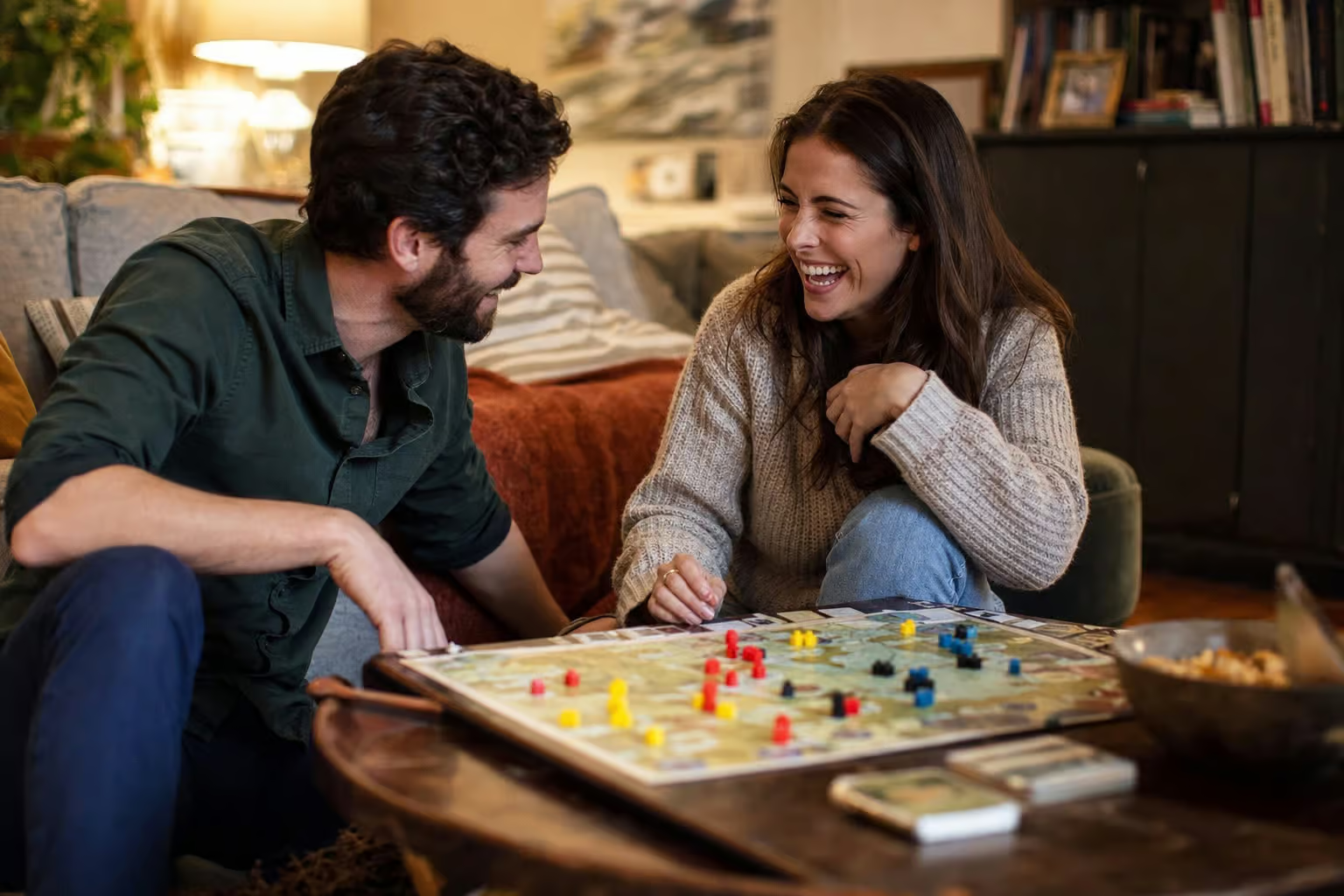
Trivia nights and board game groups
This is the recommendation for introverted men. Structured-turn activities solve the small-talk problem directly: you never have to manufacture conversation, because the game generates it. And walking in alone is the standard entry mode, not a liability.
Free trivia
Plenty of pubs run free trivia, and it’s the easiest yes on this entire list: a pub, a team, a shared goal, zero skill required. Build a team from colleagues or neighbors, or just turn up and get placed on a team that night. Both routes work. Nothing bonds a table like collectively failing a geography question. That’s the format’s native icebreaker.
Gaming and puzzle communities
Board game scenes exist in most cities; Canberra’s is described as a haven for gaming, science, tech and fantasy, with groups like the Canberra Games Society and Good Games running regular nights. Monthly board-game-and-drink nights where you bring your own game are common, and organizations like the Let’s Play a Game Foundation also take volunteers, so there are two ways in. Speed-puzzle competitions run four times a month in some cities, Pacific Puzzlers being the model: register solo and they assign you a team. Events sell out, which tells you the demand is real.
Local LEGO user groups
There are LEGO user groups for adults. Yes, adults. Yes, it’s social. Say it with a straight face and a bit of a grin, then go build something next to people.
Book clubs and film clubs
Yes, they work, and the decisive condition is the fixed discussion structure. A book is a sanctioned reason to talk about something other than work, which open-ended mingling never gives men.
Book clubs
Tough Guy Book Club is the named male-oriented example: a book club for guys, described without making it a statement. The Book Cow runs a club focused on Australian authors as a general model. You can find clubs via social media, or go through your public library, ACT Libraries being the model, which helps you join or start one, and the library route is free. There’s also the brewery variant, Pure Brewing Miramar’s Book Club being the named example: members vote on a monthly book and discuss it at the taproom, and attendance comes with brew discounts, the kind of guys’ night idea that works when group chats of men with careers and families stall out.
Beer money back for showing up. Honest trade.
Film clubs
Watch something, then argue about it. Arguing about movies is a legitimate friendship foundation. Groups like ANU Film Club and Reel McCoy tend to be inclusive and welcoming, so the intimidation factor for a first-timer is low. Film archives and independent cinemas screen indie films, cult classics and documentaries with regular film-lover events; the National Film and Sound Archive is the model. Like trivia, the material does the talking for you, and these groups will fold a solo arrival straight into the discussion the way a trivia night folds you into a team.
Community theater, craft guilds, and performance hobbies
Performance and maker hobbies produce the highest-frequency contact in this article, with one catch: they demand participation, not just attendance.
Community theater
Rehearsal multiple days a week for months, tech-week late nights, shared dressing rooms, the post-show high. The grind is the bonding agent. And if you’re not a performer, stage management, costumes, props, set construction, painting, sound and lighting, and run crew are all legitimate ways in. No spotlight required.
Craft guilds
Old-school name, simple idea: people who make things, making them together. Volunteer at their events or attend workshops; either way you’re in the room with people, because hobbies can be bridges to friendship. The honest caveat, from a respondent with social anxiety: you can’t just join. You have to participate, chat, and accept the after-event invite.
Showing up is half of it; staying is the other half. For guys who’d rather build things at their own pace first, our guide to hands-on DIY and maker hobbies covers the workshop side.
Ballroom dance classes
Awkward for the first two weeks. Then you’ve got an entire circle of new friends. Respondents report it was fun and produced exactly that outcome. That trade is the pitch.
Open mic nights
Even watching counts, because the crowd chats between acts. Realistic best case: the night ends with a drink with someone new. Set expectations there, not at best-friend status. What you do with that drink is the week-three problem, covered later.
Classes and courses: the friendship sprint
The honest tradeoff: classes are the friendship sprint, clubs are the marathon. A course builds in a weekly reason to talk and a ticking clock, because the group can dissolve when the course ends. That makes the whole game converting one classmate into a plan before the final session.
Cooking classes
You’re standing next to someone chopping the same onion. Conversation is structural; the class format does the work for you. Cook-W-Me is an example of the format.
Conversation circles
Structured talking for people who want the social part without the improvisation. The structure removes the awkward “so, uh” phase, which is the actual benefit. Awâre is the model, and language-practice groups on Meetup sit right next to it.
Social enterprise cafés
Community-venue event spaces, like the social enterprise Café Stepping Stone with its two locations, run events where the coffee comes with a reason to be there. Check what’s on at whichever one is near you.
Adult education classes
Free or cheap classes at community education venues and libraries; Brooklyn Brainery and the New York Public Library run free ones, and free removes the excuse. Improv, theater, ceramics, knitting, writing: all formats with built-in chat, and improv especially, since talking to strangers is literally the exercise. A community-college study group sometimes turns into your actual friend group. Shared suffering is efficient bonding.
Workout classes
Same room, same time, every week. Repetition plus sweat equals familiarity. Timing matters: chat before class by asking for tips, or after by recapping and suggesting the next session. Mid-set is not the moment.
Niche clubs: cars, birds, breweries, sober socializing
Several of these run free, donation-based, or with no dues at all, free trivia, donation-based brewery yoga, no-dues meetup groups. Sports leagues generally cost more. The formats and fees above are what the reporting covers rather than a full price check, and prices vary by city anyway. If money is the main filter, our guide to cheap hobbies for men sorts options by startup cost.
Car club meetups
Weekend meets are basically a car show without the entry fee, and gearheads socialize over decent coffee; Fourtillfour is the named example. The cars do the talking first, which drops the cost of conversation to zero. Free, recurring, low pressure.
Birding clubs
Slower pace, usually an older crowd, genuinely good company if you like being outside and quiet. Chicks Birding Club runs monthly guided walks plus “Sit Spots,” which are literally lawn chairs and binoculars. The low intensity is the appeal, not a flaw.
Brewery fitness and social events
Breweries have quietly become social venues, with the beer as the anchor and the events as the point. Hoppy Yoga runs all-levels, donation-based yoga in a brewery followed by a social hour; bring your own mat, and know that the post-class hour is the actual friend-maker. Girls Pint Out runs monthly brewery meetups with no dues and no beer knowledge required, including game nights, tours and brew days. It’s women-built, so treat it as a category model: the format works, and the men’s equivalents are thinner on the ground.
Sober social clubs
For non-drinkers whom bar-centric formats quietly exclude, sober social clubs are the practical answer. All Peers No Pressure runs substance-free bonfires, hikes and picnics, mostly for ages 21 to 40. The activities are normal; the absence of alcohol is the only difference.
Parenting groups for dads
For fathers, kids’ activities are pre-built recurring contact: the same parents, same morning, every week. The kid gives you an automatic shared situation with everyone else standing there. The longevity proof is a working-moms group that started on MSN groups decades ago and is still close, with their kids now in their 20s. These friendships outlast the reason you joined.
Entry points: daily paint-and-play mornings that are drop-in friendly, community child-and-family centers that function as local activity hubs, fitness-with-friendship parent groups like MEGA, and school involvement through P&C groups, volunteering, or the school board. Unglamorous, all of it. But it’s the same adults every week, and that’s how friendships actually form. Dads get skipped in a lot of parenting-group coverage; the rooms exist anyway.
University and student clubs
If you’re a student, including a mature student, the campus club ecosystem is the densest option in this article. One university runs over 150 student-run clubs and societies (ANU is the example), another over 50 (UC), and other institutions like ACU and CIT run clubs and events too, with CIT students getting CITSA events on top. Most publish event calendars, so you can lurk the schedule for a month before committing to anything. And if the specific club you want doesn’t exist, start it.
Someone else was waiting for it too. That’s the highest-agency move available anywhere in this piece, and the numbers make the case on their own.
Networking groups and professional mixers
If you just moved for a job and know nobody, professional mixers are a recurring-contact option that fits the workweek, with one honest caveat: they skew transactional. Treat them as a supplement to hobby-based contact, not a replacement. They cater to different ages and interests, so shop around instead of settling for the first LinkedIn-flavored one; local innovation hubs, graduate networks and age-banded mixer groups (CBRIN, the Canberra Ionian Club and The Social Network of Graduates are examples of the types) exist in most metros. One named cadence: Creative Mornings meets the last Friday of every month at the Central Library, coffee and a talk around a monthly theme. Morning people, that’s your slot.
Meetup and event discovery apps
Discovery tools are how you find the recurring groups, and Meetup’s defining beginner feature is that in many cases everyone there is a newcomer too. Showing up alone is the norm, not the exception.
Meetup
The obvious first stop, not a revelation. Events listed daily across boardgames, yoga, language practice, dancing; there’s something for whatever you’re actually into, and the listings refresh constantly. A BuzzFeed respondent vouches that it offers an abundance of groups where adults can connect. Scroll it like a guy scrolling, not like an analyst.
Event apps
The Nudge texts you things to do and hosts user-only events, which means everyone there came off the same nudge. Built-in common ground. Eventbrite and Facebook groups are the free, unglamorous search tools for interest-based clubs, and they work. Geneva is the community-app model.
General meetup hangouts
Some groups exist purely to hang out, no theme required. No More Lonely Friends runs frequent Central Park hangouts, and the name says the honest part out loud, which is exactly why it works. IRL San Diego stacks comedy nights, cooking demos and monthly coffee walks. Event aggregators list everything from bonfires to pickleball to puppy yoga. You can also host your own events, the underrated feature.
Loyalty-points event apps attach points to game nights and mixers; take it or leave it, but it exists. Women-built examples like Gather, which runs events for women in their mid-20s built around real conversations, are category models, not your options.
Friend-focused speed dating
Sounds odd, works fast. Structured rotations mean you meet everyone in the room. SpeedNY Dating, We Met In Real Life and Ambyr are the named models. It’s a quick route to friends, with potential partners as a side effect, not the goal. Keep that framing straight and nobody gets weird.
Friendship apps: discovery layer, not the engine
Here’s the contrarian version: friendship apps start things, hobbies sustain them. Download the app for the calendar, not the chat. The failure pattern shows up again and again in the reporting: men download a friendship app expecting it to work like a hobby group, exchange a few messages, and let the thread die. It’s why users keep making the “this is not Tinder” correction; the concept isn’t landing for a chunk of people.
The positive reports share a shape. Time Left seats you at dinner with five strangers around your age, a structured in-person event, which is exactly why it works. Bumble BFF filters by location and interests, and Emma Lao found a friend and puppy-playdate partner on it after moving to NYC. Lex serves the queer community and gets genuine love for it. The named negatives matter too: Slowly got described as scam- and dating-app-prone with excessive phone permissions, and the reviewer deleted it; Bottled users have been migrating away.
Those failures are what make the positive recommendations worth trusting. The one-question classifier: does the app point to a recurring in-person event? If yes, it’s a tool. If no, it’s a chat thread with an expiration date.
Colleagues, friends of friends, and strangers
The social graph is the underused second engine. Hobby attendance builds proximity; a single casual invitation converts familiarity into friendship. One guy mentioned $4 Thursday margaritas to coworkers, and one of them went weekly for a year. That was the whole move.
The same logic covers accepting the potluck invite, respectfully befriending your friends’ partners, and the grocery-store purse compliment that produced an hour of horror talk and ongoing “horror besties.” Mention the plan out loud. Invite-adjacent is still inviting.
Formats built for men: side-by-side beats face-to-face
Men’s formats favor side-by-side activity, walking, game watching, car meets, over face-to-face meetups, and men-specific groups like Tough Guy Book Club and Blokes Walk and Talk exist but get less promotion than the women-built clubs (City Girls Who Walk, Girls Pint Out, Gather) that dominate the coverage. The grounding example: a sports bar on game day. Strangers bond over shared team loyalty and leave with new drinking buddies even when the team loses, as one Knicks playoff regular can attest. Zero commitment, recurring by fixture schedule. Community-specific lanes exist too: LGBTIQA+ tennis, roller derby, multicultural men’s services, Defence family networks. Live music is the weakest-structure, strongest-spontaneity option of the lot.
Church and symphony: friendship starting at 63
No, it’s not too late, and the strongest evidence on file is Barbara, 75, who relocated from New York to Wisconsin at 63 after 40 years in one small town. She built her friendship network through church plus symphony season, and it spread into lunches, hikes and book clubs. Read the mechanism, not the miracle: both formats are weekly-recurring, shared-activity communities. They pass the three-question test, which is why they worked at 63.
Faith communities count as an option if you’re already inclined, not a recommendation, and arts-subscription audiences, orchestra seasons, choirs, are recurring-contact structures open to any age. Pair them with the older-adult options already covered here and the age objection collapses.
After week three: the acquaintance-to-friend gap
Attendance alone doesn’t convert. The gap between knowing everyone’s name and having anyone’s number gets closed by post-activity rituals and small initiations, not by showing up. The documented moves: attach to the existing post-activity ritual, the running-club breakfast pattern built three years of friendship entirely after the runs; be the one who suggests the drink or the breakfast; accept the after-event invite, per the craft-guild rule that you can’t just join, you have to participate. None of this is scripted tactics.
It’s the pattern that shows up across reported experiences. And the mindset caveat that qualifies every hobby above: be open to feeling awkward, because they almost certainly don’t think you’re weird. Don’t go in expecting a friend; go in ready for fun. Friendships that stick happen organically. Don’t force it.
Where to start this week
Yes, loneliness can seriously affect mental and physical health. Stated, done. If it feels heavier than boredom, support exists: Lifeline is 13 11 14 by phone, text or webchat, and Beyond Blue is 1300 224 636 or webchat for Australian readers; look up local equivalents elsewhere.
The starting sequence comes straight from this article’s own evidence. Pick one zero-barrier weekly option: a free walking group, a Parkrun, or a trivia night where you join a team on the night. Then pick one discovery tool used for its calendar, which is Meetup. Two entries, both recurring, both evaluated with the three-question test before you commit to a second week.
The first session has exactly one job: complete the evaluation and learn one name. If you want more screen-free ways to fill the rest of the week, our offline hobbies for men guide maps the broader territory.
Frequently Asked Questions
How to make friends as an adult man
Pick a hobby where the same group recurs weekly, the activity is side-by-side, and there’s a built-in post-activity ritual like post-game beers or a post-run breakfast. One-off events and mixers structurally can’t produce friends because they give you a single exposure to strangers and then dissolve. Show up weekly, then close the acquaintance-to-friend gap by suggesting the drink or breakfast yourself.
What hobbies are good for meeting people as an adult?
The formats that pass the three-question test — same group weekly, side-by-side activity, built-in post-activity ritual — include sports leagues, running clubs and Parkrun, volunteering with a recurring shift, trivia nights, dog parks, book clubs, and community theater. Trivia and board game groups are the pick for introverted men because the game generates the conversation. Volunteering is the sleeper pick: the shared task does the social heavy lifting.
Walking group vs running club for meeting people — which is better?
The trade-off is barrier to entry versus conversation time. Walking groups have the lowest barrier of almost anything — free, zero-skill, and formats like the Heart Foundation’s groups cost nothing. Running clubs buy you more minutes moving beside the same person, and formats like Parkrun pair the run with a coffee or breakfast afterward. Either way, the pace puts you next to someone for thirty-plus minutes without requiring you to talk.

