
The smart casual dress code explained: it is the strategic balancing of formal tailored staples with comfortable, everyday items to look intentionally polished without feeling stiff. If you are staring at a vague invitation and feeling that familiar spike of anxiety right now, you are not alone. Men hate feeling underdressed, and this notorious HR buzzword provides zero actual guidance on what to actually pull out of your closet.
At Unfinished Man, we believe in treating this like an engineering problem, not a fashion quiz. Instead of guessing, you need a strict mathematical system that clearly separates acceptable building blocks from off-limits items. By using a simple one-to-one sliding scale, you can strip away the guesswork, build an embarrassment-free outfit, and get on with your life without looking out of place.
Key Takeaways
Smart casual relies on a strict high/low sliding scale where every casual item must be balanced by a formal, structured piece to maintain aesthetic equilibrium.
Applying neutral color palettes tricks the eye into perceiving casual fabrics as professional, giving you a significantly wider margin for error when styling everyday garments.
An event’s geographical and industrial context dictates the formality floor; a tech-hub startup mixer allows pristine t-shirts, whereas a traditional corporate retreat demands collars.
Table of Contents
Smart Casual Dress Code Explained: the Definitive Formula
You can evaluate an event’s formality by applying the smart casual dress code’s strict one-to-one formal-to-casual ratio rule based on the venue. If the venue implies authority, slide the math toward structured pieces; if it implies relaxation, pull back. Many guys panic and overthink the details, but identifying the baseline formality is actually completely logical. When the invitation offers zero context, use the venue’s core business hours and location as your anchor point.
A dimly lit corporate steakhouse automatically demands a heavier, darker presence, meaning worsted wool or a crisp collar. A sunlit brewery, however, practically begs for a dressed-down approach. Look at who is hosting. If executive management is in the room, default upward. By establishing the venue’s absolute baseline first, you give yourself a mathematical starting point to begin layering your garments.
What is the High/low Math?
The secret to conquering this dress code lies in understanding high/low dressing, where you intentionally rely on the juxtaposition of a formal tailored anchor with a relaxed everyday garment. It is a strict mathematical scale. For every highly casual item you introduce, you must subtract a casual element elsewhere and replace it with a formally structured item to maintain equilibrium. The readers over on the Reddit r/malefashionadvice community constantly point out how frustrating this ambiguity is. Observing style icons like Katie Holmes flawlessly balance a relaxed staple with a formal blazer proves this juxtaposition method works masterfully.
It works. Instead of memorizing a massive list of acceptable outfits, you just balance the equation. If you throw on a casual denim jacket, your foundation needs to be a crisp collared shirt and tailored dress pants. You cannot stack casual on casual. That changes the math entirely and pushes you out of the professional zone.
“For every highly casual item you introduce, you must subtract a casual element elsewhere and replace it with a formally structured item to maintain equilibrium.”
How to Evaluate an Invitation
You need a system to read the room before you ever arrive to avoid sticking out. Follow this simple process to stay perfectly safe: 1. Look heavily into the baseline context clues given by the venue and the event’s host. 2. Default instantly to the most conservative interpretation of the rules if you lack hard information. 3. Remove a formal layer to match the room’s energy natively after you arrive, if necessary.
A Saturday afternoon gathering demands you lean heavily on the casual side of the scale. A networking dinner at a high-end restaurant requires the exact opposite. Give yourself the buffer. Overdressing slightly is a totally forgivable offense because it demonstrates respect. Underdressing instantly marks you as the guy who simply does not understand the room.
Wardrobe Essentials: Finding the Right Tops
You can wear a t-shirt to a smart casual event only if it is pristine, fitted, and anchored underneath a structured piece of outerwear. A plain, unsupported tee will instantly make you look underdressed and sloppy in almost any professional setting. The issue lies in the visual weight of the fabric. Cotton jersey lacks the rigid lines needed to project authority, immediately signaling a weekend aesthetic.
When you throw an unstructured layer over that tee, you physically frame the soft cotton with hard lapels. This masks the informality and upgrades the silhouette. If you take that jacket off halfway through the night, you are suddenly just a guy wearing a t-shirt at a work event. Always consider the temperature of the room before committing to this route.
You must also carefully evaluate how your physical frame fundamentally dictates visual perception across these garments. While loose, oversized clothing often reads as a deliberate, high-fashion editorial choice on tall or broad silhouettes, that exact same slouchy fit immediately reads as highly casual and sloppy on slight frames. Your specific body type interacts directly with the fabric’s drape, making precise tailoring an absolute necessity for maintaining an elevated smart casual baseline.
Is the Button-down Shirt Mandatory?
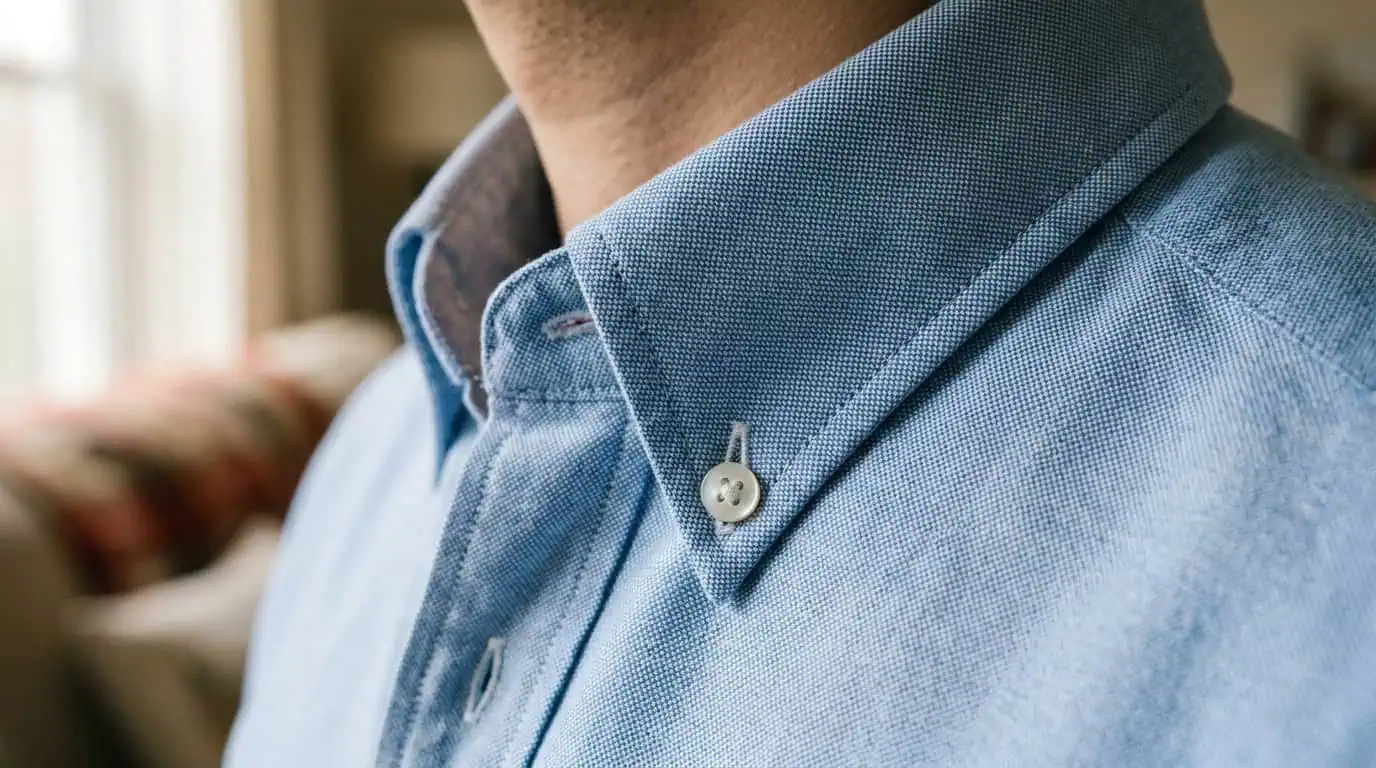
The button-down shirt serves as the universally accepted, risk-free baseline for any smart casual setup. You do not need the stiff, starched collars of corporate banking to look put together. Focus entirely on the fit and the actual fabric of the piece. A heavily textured Oxford shirt or a lightweight chambray adds enough visual interest to break up the monotonous feel of corporate wear.
If the fabric looks too sleek, it belongs exclusively with a high-end suit or a formal dinner jacket. If it looks too rugged, it belongs by a weekend campfire. Hit the middle ground. It never fails.
A properly fitting shirt should hug your shoulders without restricting your movement, pulling the entire outfit into a polished sphere without making you sweat. Always keep one clean and ready on a hanger.
Can You Swap Out a Suit Jacket?
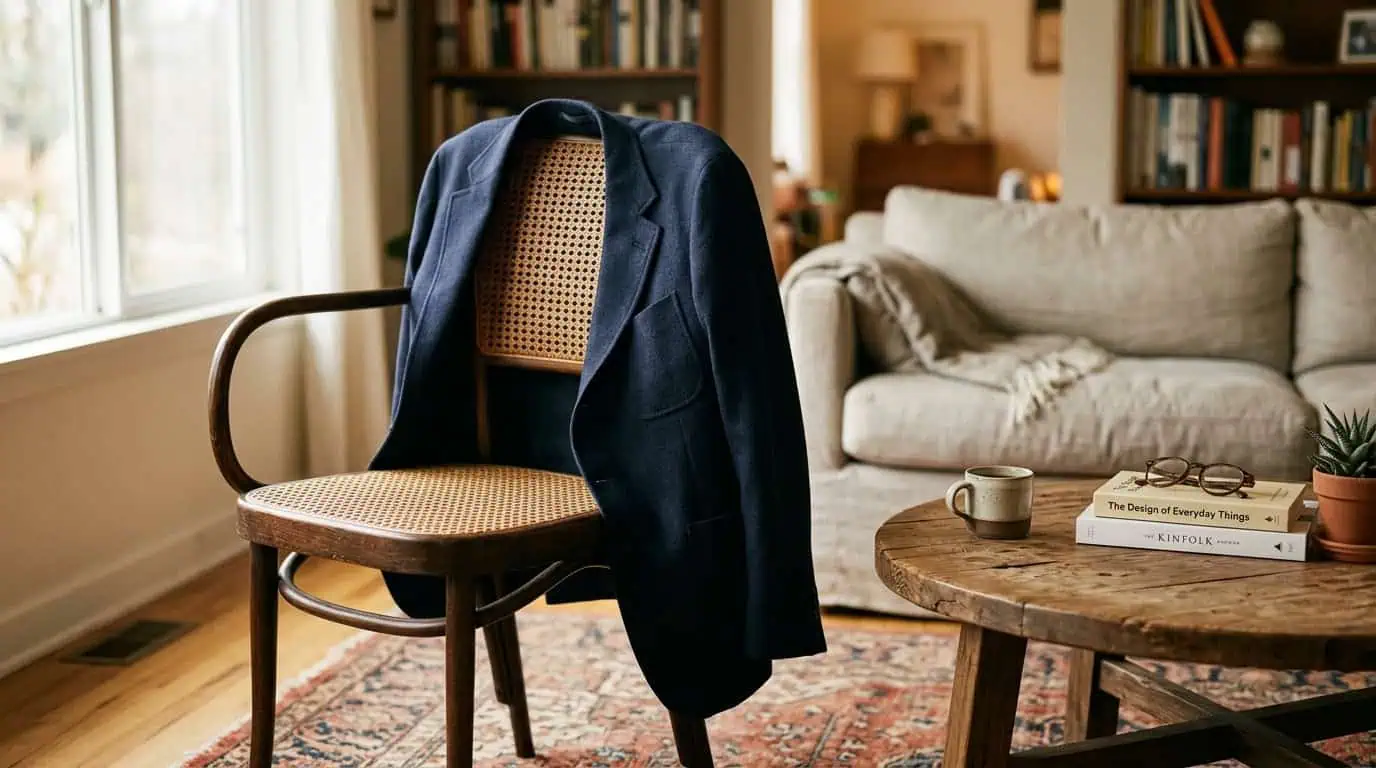
The easiest way to ruin your cohesive everyday aesthetic is by wearing a stiff suit jacket as a separate, disconnected piece. Suit jackets have strong, heavily padded shoulders that clash with modern menswear trends and look ridiculous when paired with casual legwear. Instead, grab a blazer. The defining top-layer alternative is an unstructured blazer that gently softens your silhouette while maintaining clear, authoritative lines.
The exact same logic applies directly to knitwear. When a heavy sport coat feels like overkill for an outdoor summer evening, a textured sweater or high-quality cardigan provides the exact same visual weight. It elevates a smart casual ensemble immediately without making you look like you just walked out of a courtroom. It is a structural bridging piece that communicates you put serious effort into your appearance.
When Plain Tees Actually Cross the Line
The internet loves debate, and the ubiquitous t-shirt sits right in the crosshairs. Menswear enthusiasts actively despise the sloppy execution of the basic tee in professional-leaning settings. If you are going to wear one, it must be completely flawless. That means a heavyweight cotton fabric, a collar that hugs your neck tightly, zero visible logos, and absolutely no wrinkles.
It must also be tucked in or hit precisely at the belt line. A plain tee only works when it acts as a neutral base layer underneath a significantly stronger piece of outerwear. Do not wear it alone. Doing so completely abandons the formal anchor required to keep the high/low math appropriately balanced. Treat the tee as a secondary accessory, not the main event of the outfit.
Wardrobe Essentials: Navigating Jeans and Chinos
Dark wash jeans are appropriate for smart casual events strictly when they feature a structured cut with absolutely no fading, distress, or bagginess. If the denim looks like your weekend yard-work gear, it fails the elevated standard immediately. The golden rule here is visual uniformity. Denim was originally designed as blue-collar workwear, and any fading or whiskering aggressively highlights those rugged roots.
By selecting a deep, saturated indigo or flat black pair, you successfully camouflage the twill texture. This tricks the observer into perceiving the jeans as tailored trousers. This is the exact boundary separating a sharp aesthetic from a sloppy one. When executing this move, it is vastly safer to err on the side of a dressier top half to compensate for the denim foundation.
Why Chinos Are the Safety Net
If you want to bypass the guesswork entirely, just wear chinos. They are the universally accepted baseline for men trying to navigate an ambiguous event without risking a fashion misstep. A standard dress pants cut often feels too corporate and stuffy for an evening out, but chinos hit the perfect sweet spot between rugged and polished. Buy them in a clean, aggressively tapered fit.
Avoid the baggy, shapeless cuts that dominated office wear twenty years ago. The central goal is to replicate the structured silhouette of a tailored trouser while leaning heavily on a more relaxed cotton twill fabric. They easily anchor a blazer or a casual sweater, keeping you safely in the middle of the absolute formality sliding scale. For foolproof execution, pair sharply tapered olive chinos from staple outfitters like J.Crew with a crisp white oxford and cordovan loafers to securely anchor your look.
How Strict is the Boundary for Denim?
Sooner or later, you will want to wear blue jeans to one of these events. The boundary line for acceptable denim is incredibly rigid, and violating it ruins the entire aesthetic. A dark wash is absolutely mandatory. Light blue denim is visually loud and inherently casual.
Furthermore, you must aggressively avoid slouchy jeans or anything boasting a distressed, vintage finish. A relaxed, baggy fit completely throws off the formal-to-casual ratio we successfully established earlier. You need a straight or slim-straight cut that effectively mimics the clean, vertical lines of a dress trouser. If your denim stacks heavily over your boots or sags around your waist, switch immediately back to chinos.
The margin for error with casual slacks is dangerously thin. Choose a dense, raw Japanese selvedge denim from heritage makers like Momotaro to guarantee you maintain that rigid sartorial authority.
Wardrobe Essentials: Acceptable Footwear Limits
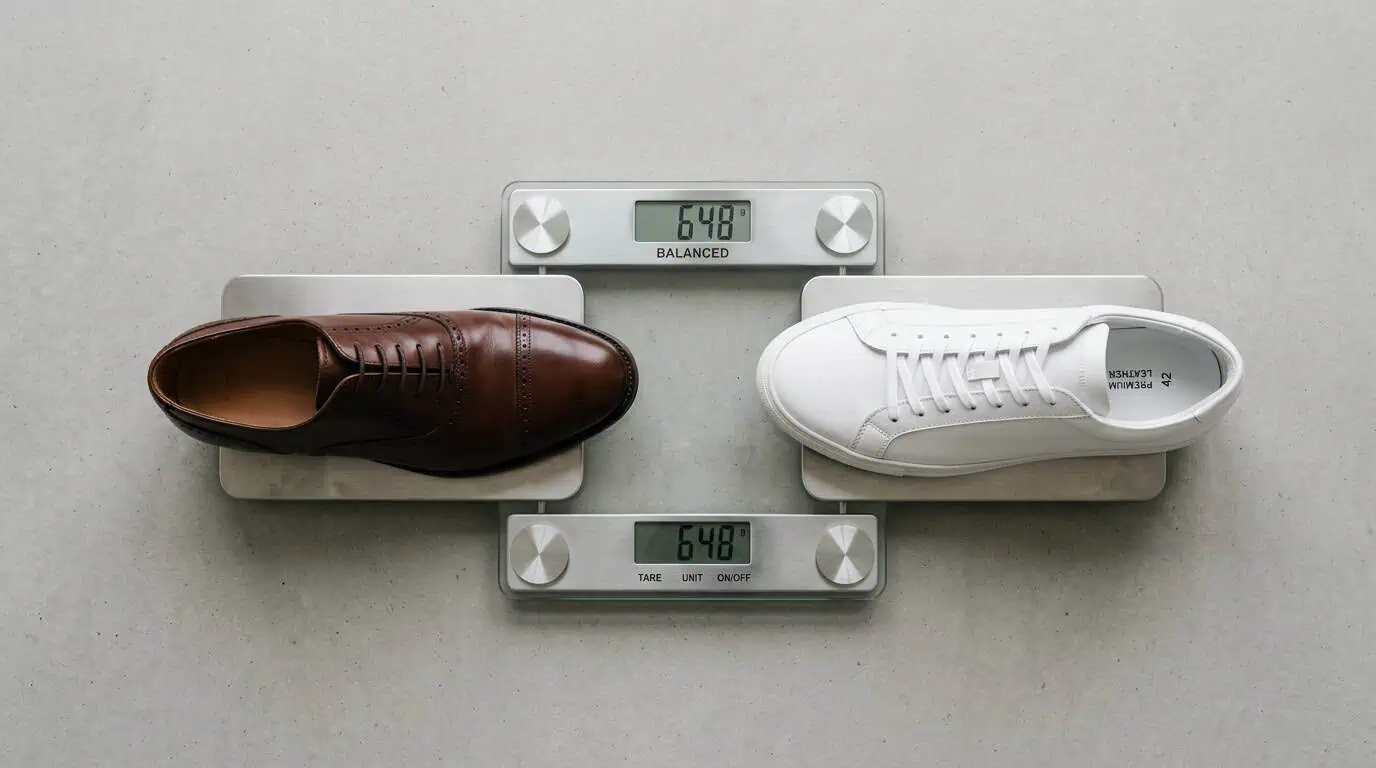
You should swap out stiff boardroom oxfords for contextual middle-ground options like suede loafers, clean boots, or pristine, minimalist white sneakers. The goal is to choose a profile that successfully bridges the gap between traditional formal attire and athletic gear. Footwear often ruins perfectly good outfits because men gravitate toward extremes. They either strap on a shiny dress shoe that belongs at a funeral, or they default to the running shoes they wore to the gym.
The secret is finding shoes built on a formal last but finished in a casual material. Textured leathers, matte finishes, and lightweight crepe soles are your best friends here. When you actively choose intermediate footwear, it seamlessly links the formal elements of your top half with your relaxed trousers without causing visual friction.
Retiring the Boardroom Oxfords
Traditional lace-up formal shoes carry way too much boardroom baggage. When you pair a stiff, hyper-polished black dress shoe with a relaxed cotton chino, the harsh contrast immediately jars the eye. You need footwear that naturally softens the landing. When choosing between classic brogues and suede loafers, understand that both options successfully navigate the tricky semantic gap between shiny oxfords and athletic running shoes.
Suede naturally absorbs light, making any shoe look softer and far less aggressive to the eye. A chunky loafer immediately signals that you are off the clock while demonstrating you have not completely given up on your appearance. It provides the exact structural anchor required without looking like you are preparing to pitch a spreadsheet.
When Are Clean Sneakers Acceptable?
White sneakers are the most fiercely debated item in modern menswear. Yes, they are allowed, but the execution conditions are severely strict. We are talking about pristine, minimalist leather sneakers with zero athletic detailing. No mesh panels, no neon logos, no thick chunky running soles.
The sneaker rule dictates that the shoe must look intentional, not like a last-minute choice on your way out the door. If the venue has dirt floors or you are attending an evening mixer in a highly formal industry, leave the sneakers at home. When chosen carefully and styled properly with tailored trousers and heavy knitwear, they successfully lower the formality of an entire outfit while retaining a crisp, modern aesthetic on your feet.
The Smart Casual Dress Code Cheat Sheet
To dress smart casual without looking too formal, build your outfit entirely from neutral monochrome palettes to trick the eye into seeing casual fabrics as dressy. This strategy masks the informality of comfortable clothes while keeping you polished. When you completely strip away loud patterns and bright contrasting colors, the viewer automatically focuses on the sharp silhouette of the garments instead of their inherent casualness. It projects intense intentionality.
This approach completely removes the anxiety of pairing the wrong items together when you are rushing out the door. It is the ultimate fail-safe for men who hate spending hours staring confusedly at their closet. Just layer black over black, or charcoal heavily over navy. The math practically solves itself.
Why Does a Monochrome Palette Work?
You do not need to buy a completely new wardrobe to nail this code. You just need to deploy your existing elevated basics in entirely neutral tones. When you wear a black sweater with dark charcoal trousers and black boots, the unified color palette naturally tricks the eye. It forces casual fabrics to read as inherently dressier.
Sticking rigidly to black, brown, navy, white, and gray completely removes the element of risk from the equation. It allows your brain to focus on the tailored fit of the garments rather than panicking about clashing wild patterns. This is the oldest styling trick in the book. A-list celebrities like Gigi Hadid and Margot Robbie routinely employ this exact monochrome method to instantly elevate their everyday basics for public appearances. It effectively masks the informality of a cotton sweater and gives the illusion of a highly deliberate, cohesive uniform.
The Structural Outerwear Hack
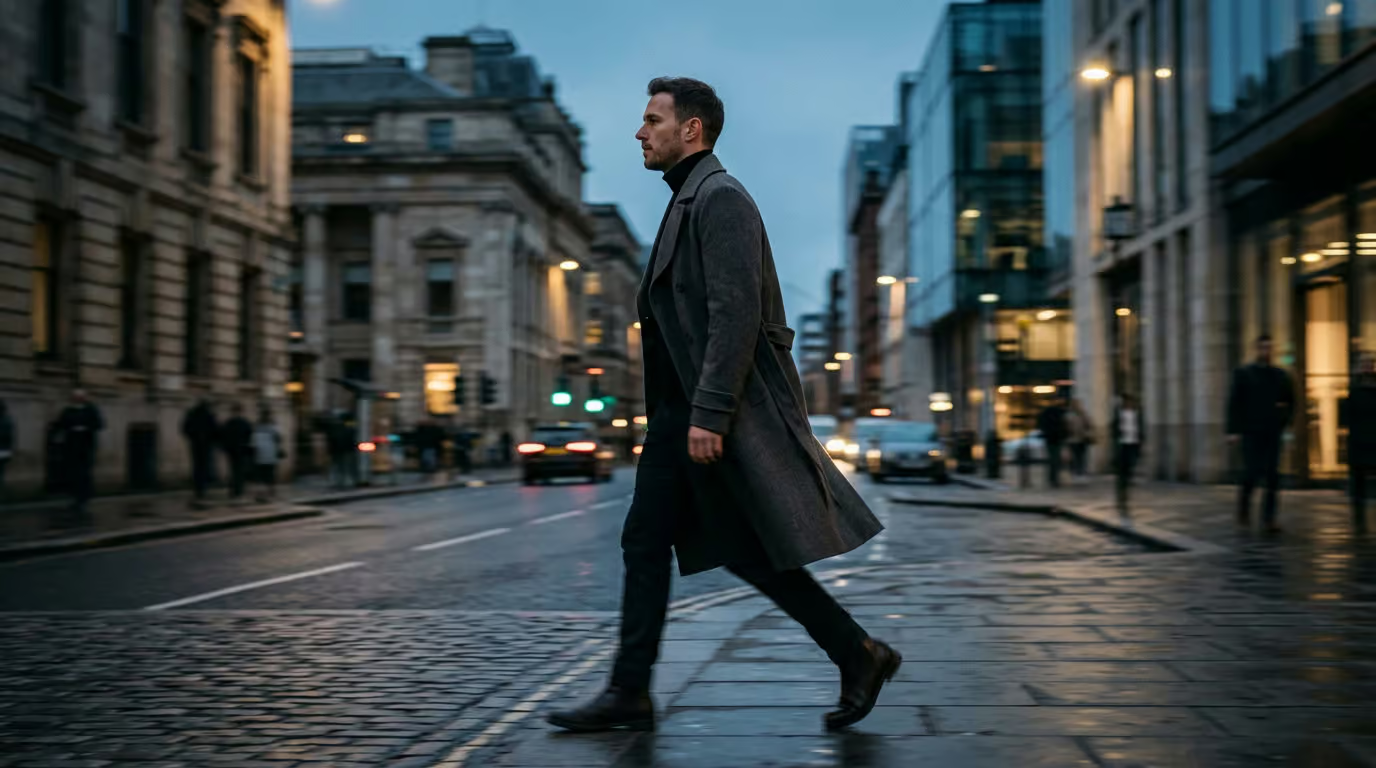
Sometimes you are running late and do not have time to stress over complex layers. That is exactly when you deploy the outerwear hack. An iconic power coat can entirely mask and instantly elevate the everyday staples you threw on underneath. Throw a heavy, structured trench coat over a basic white tee and dark denim, and that single coat does ninety percent of the heavy lifting.
The strong lapels, heavy drape, and belted waist immediately broadcast authority and competence. It is an editorial styling hack that practically feels like cheating. The moment you button that coat, the casual elements beneath it become completely irrelevant, proving that you only really need one high-quality piece of outerwear to master the dress code gracefully.
Real World Proof of Concept
We do not have to guess if this mathematical formula actually works. Look straight at the editorial styling favored by Vogue and prominent European designers. Celebrity influencers utilize this exact formula constantly to look completely effortless while dodging paparazzi cameras. You will routinely see an A-list actor stepping off a plane wearing relaxed trousers anchored by a highly structured overcoat.
They rely heavily on the severe juxtaposition between the relaxed core and the sharp exterior shell. They also heavily utilize sleek accessories—like a heavy leather tote, premium sunglasses, or a high-end mechanical watch—to seamlessly dial the formality slider up just a few notches. It is an incredibly replicable formula you can assemble directly from your own closet today.
Context Matters: Adjusting for Region and Industry
The difference is that Business casual enforces a creatively restricted, sterile uniform, while smart casual demands you elevate comfortable weekend garments through superior fit and styling. You must adjust your formality slider based on explicit industry and geographical cues to ensure cultural appropriateness. Business casual focuses almost entirely on what you are forbidden to wear. It bans denim, bans soft collars, and mandates tight belts.

Smart casual, on the other hand, cares deeply about how you execute the pieces you purposefully choose. It forces you to demonstrate personal taste. Because it relies heavily on cultural norms, understanding your specific environment is critical to avoiding looking out of place. The definition of “smart” changes significantly the further you get from the East Coast.
Ditching the Corporate Uniform
To fully grasp what is acceptable, you must aggressively compare Business casual and sartorial creativity. Business casual is essentially the boring, HR-mandated cousin of this aesthetic. It forces you to wear a stifling collar, aggressively bans denim, and results in a sterile uniform lacking any genuine personal expression. Smart casual, conversely, demands creativity by forcing you to stylistically elevate garments that would otherwise belong strictly on your weekend roster.
The strict 1980s and 1990s IBM rules banning jeans entirely have actively evaporated from the mainstream. Today, your ultimate goal is not to look like a mid-level manager forcibly attending a tax seminar. Your goal is to look like you actually understand how fabric, fit, and silhouette work together. Embrace rich textures by substituting sterile corporate broadcloth with fine Italian merino wool to instantly communicate a higher level of sartorial mastery.
The Finance Tech-bro Uniform
We have to honestly acknowledge the prevailing micro-codes dominating specific white-collar industries today. If you walk into a Manhattan finance firm or a Silicon Valley hub, the entire baseline revolves almost identically around the omnipresent quarter-zip sweater layered heavily over technical fabrics. This highly specific quarter-zip and tech pants pairing has violently become the default uniform for dudes staring motionlessly at spreadsheets. It is safe, functional, and deeply, aggressively uninspiring.
While it technically passes the acceptable formality test, it heavily restricts the creative flexibility that makes intentional dressing interesting in the first place. You can do far better than adopting the tech-bro fleece uniform unconditionally. Step outside the corporate safety blanket and anchor your look with some actual textured knitwear instead. Swap the generic polyester fleece for a premium cashmere mock-neck paired with tailored charcoal trousers to effortlessly outshine the repetitive Midtown Manhattan finance standard.
Knowing Your Geographic Floor
The unspoken rules change drastically the second you cross state lines. Geography dictates the strict absolute floor of acceptable attire. If you are attending a conservative corporate retreat in the Southern United States, a tucked-in collared shirt and a leather belt form the rigid, unbendable baseline. Coastal cities, however, readily embrace pristine tees layered neatly under soft unstructured jackets.
What looks like a brilliant high-fashion statement in a New York lobby will make you look severely underdressed in a Dallas boardroom. You have to actively read the room and adjust. Modulate your personal sliding scale based squarely on the city you are standing in. Do not wear a completely relaxed streetwear fit to a traditional banking dinner. In culturally traditional corporate centers like Charlotte, conservative navy sport coats and freshly polished Allen Edmonds oxfords remain non-negotiable foundational anchors for effectively commanding professional respect.
Mastering the Dress Code for Your Next Event
When the dust settles, mastering the dress code for your next event is about intentional visual balance at all times. You must abandon the anxiety of perfection and lean directly into the sliding scale. Your goal is the strategic positioning of formal tailored staples heavily juxtaposed with everyday relaxed garments. The Oxford cloth button-down remains the absolute heavyweight champion of this code, but introducing a soft collar via premium layers completely shifts the narrative to a cooler aesthetic.
The formula works universally. Even high fashion circles rely on this exact trick, commonly anchoring their outfits with a classic silk button-up. At Unfinished Man, we constantly remind guys that looking incredible does not mean looking stiff and uncomfortable in a rigid suit. By upgrading the physical fit of your most reliable casual pieces and keeping your color palettes muted, you unlock a truly embarrassment-free wardrobe.
Take a hard look at your closet tonight. Purge the highly distressed denim immediately. Invest in versatile structured outerwear. Apply the high/low math rigorously, and you will never dread an ambiguous invitation again.
Frequently Asked Questions
What is the ‘high/low’ math for dressing smart casual?
It is a strict one-to-one sliding scale where you must balance every casual item with a formal, structured piece. For instance, if you wear a casual item like a denim jacket, you must anchor it with tailored dress pants or a crisp, structured collar to maintain visual equilibrium.
Can I wear a t-shirt to a smart casual event?
Yes, but only if it is pristine, fitted, and layered beneath a highly structured piece of outerwear like a blazer or overcoat. A plain, unsupported t-shirt lacks the rigid visual weight necessary for the professional setting and will likely make you appear sloppy.
What is the difference between business casual and smart casual?
Business casual is a restrictive, HR-mandated uniform that often forbids items like denim and emphasizes sterile, corporate staples. Smart casual, however, focuses on creative expression, allowing you to elevate relaxed weekend garments through better fit, texture, and strategic styling.
Is it ever appropriate to wear jeans in a smart casual setting?
Only if they are dark-wash, structured, and free of any fading, distressing, or bagginess. They must mimic the clean, vertical lines of tailored trousers; if they look like weekend workwear or sag at the waist, they are inappropriate for the dress code.
How do I choose the right shoes for smart casual?
Avoid stiff, hyper-polished boardroom oxfords and athletic gym sneakers, which sit at the extreme ends of the formality scale. Instead, choose intermediate options like suede loafers, clean leather boots, or minimalist white leather sneakers to bridge the gap.
Why does a monochrome color palette make outfits look dressier?
Neutral, monochromatic color schemes trick the eye into focusing on the silhouette and fit of your clothes rather than their inherent casualness. By stripping away loud patterns and colors, you maintain a polished, intentional appearance that masks the informality of comfortable fabrics.