
The 3 PM crash hits, the gym numbers drift down, and your wife made a joke last week that you laughed off a little too hard. So you do what any guy does at 45: you type “low testosterone” into a search bar at midnight and get served a hundred clinic ads promising to restore your edge. Should a 45 year old man take testosterone? The ads won’t answer that for you. Here’s the honest shape of the answer: testosterone therapy only makes sense when real symptoms show up alongside confirmed low labs, both of them, together.
Prescriptions to men over 40 roughly tripled between 2001 and 2011, so you’re not some fringe case asking. And the big safety trial, Traverse, enrolled men aged 45 to 80, which means you sit right inside the modern evidence population. Not on the fringe, not the sweet spot. Somewhere in the middle, which is exactly where the thinking has to happen.
Key Takeaways
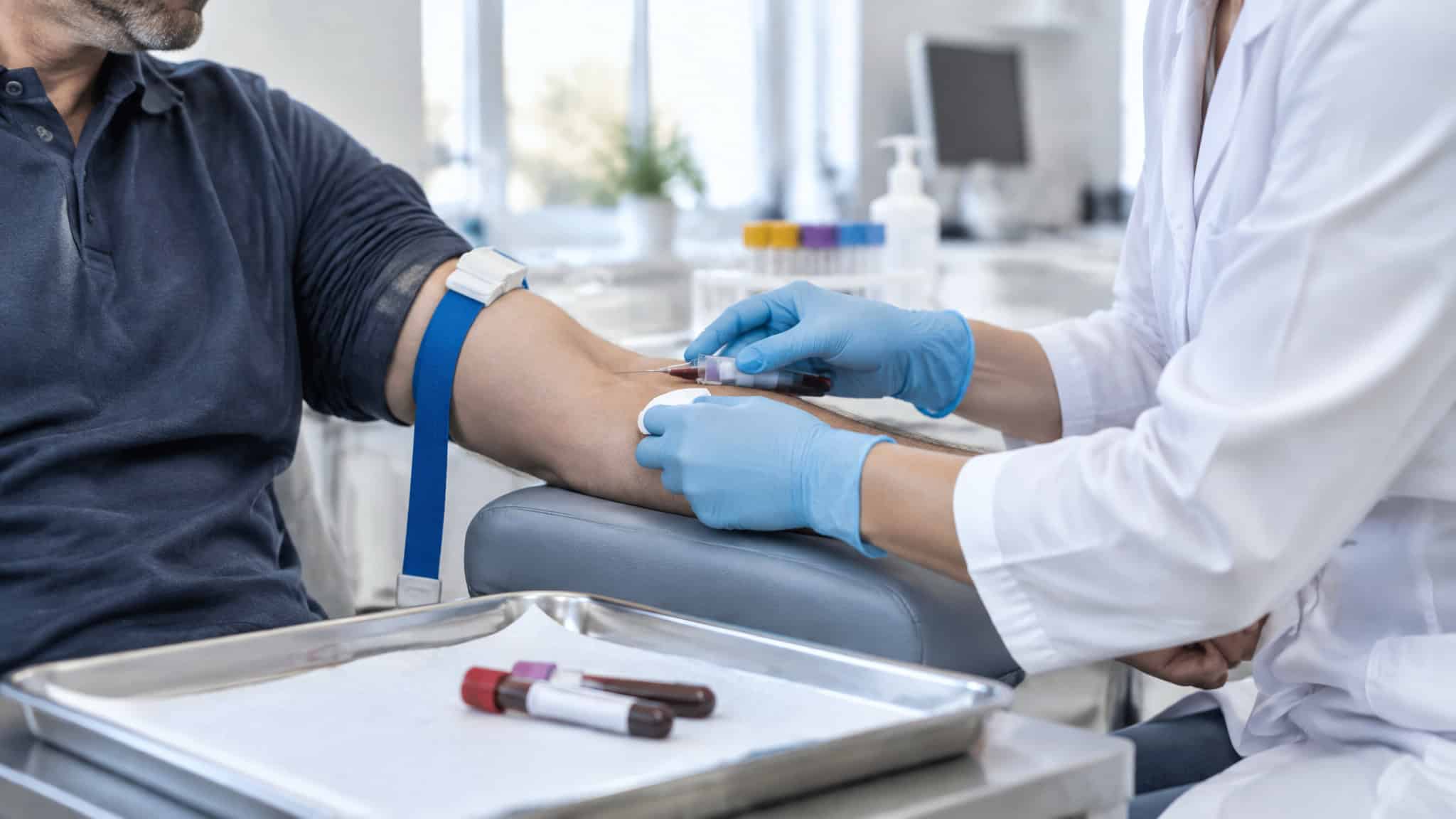
Diagnosis requires symptoms plus confirmed low testosterone on two separate morning blood draws, roughly 7 to 10 AM, because one bad number doesn’t define you.
Untreated sleep apnea can suppress testosterone into the low hundreds, and treating it has restored levels to 500-600, so fix reversible causes before booking a script.
The honest benefit picture is modest: libido and body composition improve reliably, strength gains are inconsistent, and the best evidence comes from men in their 60s with T of 200-300 ng/dL.
Table of Contents
Normal aging or hypogonadism: the line at 45
Testosterone declines about 1 to 2 percent per year after 30, roughly 110 ng/dL per decade according to the Baltimore Longitudinal Study of Aging, which followed the same men for decades. Hypogonadism is different: it requires symptoms plus confirmed low labs, not just a low number on a random panel. Low testosterone found incidentally, without symptoms, usually isn’t a disease. It’s a data point.
The problem is that the symptoms lie. Fatigue, low mood, shrinking muscle, a stalled libido, those could come from your hormones, or from your job, your sleep, your drinking, or an antidepressant. The symptoms alone can’t tell you which.
Feeling off is not a diagnosis.
One honest wrinkle: men today average about 25 percent lower testosterone than men did 20 years ago, and nobody knows why. Obesity and sleep apnea are the obvious candidates; lifestyle and environment probably play a part too. Don’t let anyone sell you a villain.
The decline is a slope, not a cliff. The average 75-year-old sits about 30 percent below his 25-year-old self. That happened over fifty years, not one bad winter. If your labs come back low, the next step is a second draw, which brings us to the actual protocol.
How to tell if a man needs testosterone at 45
Decreased libido is the symptom that actually points at testosterone. Fatigue, mood changes, and muscle loss are all real complaints, but they’re nonspecific; half the 45-year-olds in your office have them for reasons that have nothing to do with hormones. If you’re ranking what you tell the doctor, lead with the libido change, because that’s the one with actual diagnostic weight.
Now the correction most guys need before they walk into a clinic: erectile dysfunction is usually not caused by low T. Erections hold up until testosterone is severely depleted, so a low-normal number isn’t why things stopped working. ED has vascular, hormonal, neurologic, and psychological causes, and more than half of men between 40 and 70 will deal with it regardless of their testosterone. Blaming the hormone is the comfortable story. The plumbing story is more often true.
Here’s the redirect that matters at your age: ED that shows up at 45 with a vascular character, meaning it came on gradually and consistently, should trigger a cardiovascular risk assessment, not a testosterone prescription. The erection problem can be an early warning about your heart. That’s a bigger deal than any T number.
So the sequence looks like this:
- Track actual symptoms, with libido changes at the top of the specificity list
- Get labs, because symptoms alone can’t decide anything
- Don’t assume ED equals low T; assume it might equal vascular trouble
Symptoms plus confirmed low labs. Neither one alone gets you to treatment.
If a clinic offers you a script off symptoms and one afternoon blood draw, that’s a business model, not medicine.
What testosterone level requires treatment: the numbers and the protocol
Treatment requires symptoms plus confirmed low levels on two separate morning blood draws, and the threshold depends on which guideline you ask. Endocrinology says 264 ng/dL or below. Urology says 300. Older clinical literature used 325. Even the doctors don’t fully agree on the line, which tells you the number alone means less than guys think when treatment is justified hinges as much on the symptoms part of the equation, and that part is doing real work.
The draw window is roughly 7 to 10 AM, though one guideline says 6 to 10. Book the early appointment. Two samples minimum, because one bad morning doesn’t define you, and testosterone bounces around day to day. (Small nuance: the daily rhythm flattens out in older men, so the morning window matters less the older you get.)
Ask about free or bioavailable testosterone too. SHBG, a binding protein, rises with age, which means more of what’s left gets locked up and unusable. Bioavailable T reflects your actual status better than the total number. But here’s the catch almost nobody mentions: the common cheap free-T assay, the analog method most hospital labs run, reads low and unreliably.
Ask which assay your lab uses. You’re paying for the test; know what you’re getting.
Then the escalation path. If total T comes back below 150 ng/dL, a thorough doctor checks prolactin and considers imaging the pituitary. FSH and LH distinguish primary low T, where the testicles are the problem and those hormones run high, the pituitary yelling through a megaphone at testicles that won’t answer, from secondary low T, where the brain signal is weak and they sit low or mid-range. Different causes, different workups.
Why the workup precedes treatment: there’s a real case of a man in his 50s with vision problems, breast enlargement, profound ED, and undetectable testosterone. Turned out to be a pituitary microadenoma. They treated the tumor and he never needed TRT. Rare? Yes. But that’s the difference between a doctor who investigates, someone who understands testosterone replacement therapy as a last resort, not a first move, and a clinic that prescribes.
Before blaming hormones: reversible causes of low T
Fix the cause first, because a surprising share of “low T” at 45 is downstream of something treatable. The star example: untreated sleep apnea can suppress testosterone into the low hundreds, and treating it has restored levels to roughly 500-600, a pattern clinicians run into repeatedly. That’s not a hormone problem. That’s a breathing problem wearing a hormone costume.

Obesity, diabetes, certain medications, chronic stress, and depression all cause reversible secondary low T as well. Weight loss, exercise, and better sleep can raise testosterone on their own, though honestly, lifestyle fixes usually move the number less than actual medication does. Some causes are temporary; low T today isn’t necessarily low T forever. Work through this with a doctor, not a checklist. If you snore like a freight train and wake up unrefreshed, the sleep study comes before the syringe.
What TRT actually delivers: benefits, timelines, and their limits
TRT reliably moves libido and body composition, modestly, strength gains are inconsistent, and the best evidence comes from men in their 60s with T of 200-300 ng/dL, so should men take TRT at all? For a 45-year-old, the honest headline is that expected benefit is even less certain.
The NEJM T trial found improved sexual activity, desire, physical activity, and mood in men 65 and older. Real benefits. Not transformative ones. Unexplained anemia also resolves with TRT, a finding backed by the large testosterone trials including the T trials. On timing, symptoms shift in 4 to 6 weeks and body composition takes 3 to 6 months, with a retest around the 3-month mark.
Muscle is where expectations need the most resetting. Most trials show modest lean-mass gains without strength gains. One trial got a full year of treatment with no strength change, likely because the dosing wasn’t titrated and the men started low-normal. Other trials found grip strength gains of 11 and 13 pounds.
The picture is genuinely mixed. Metabolically, one study found 20 percent better glucose disposal in abdominally obese men over 8 months. Bone density improves after 12 months, but no study has shown fewer fractures. Mood: most trials show nothing, with one exception, improvement only in men whose depression started after 45.
On bloodwork, TRT in hypogonadal men lowers total lipids and LDL cholesterol, though some studies show an offsetting fall in HDL, and triglycerides don’t change significantly. Inflammatory markers improve too: TNF-alpha and interleukin-1 decrease with treatment.
If you go in expecting transformation, you’ll be disappointed. This is preservation, not reinvention.
Why testosterone preserves muscle rather than builds it
Here’s the mechanism angle worth knowing: testosterone works partly by suppressing muscle-breakdown signaling rather than building muscle up. Aging raises a muscle protein called NIK, and one week of standard-dose testosterone, a 100 mg injection or 10 g of AndroGel daily, lowered NIK in six older men within seven days. NIK is an upstream NF-kappaB activating kinase normally kept at low basal levels: TRAF3 recruits it to a TRAF2/cIAP1/2 complex for ubiquitination and proteasomal degradation, and when noncanonical stimuli degrade TRAF3, NIK is released and stabilized, activating the RelB/p52 catabolic cascade. Rat data back the anti-catabolic story: testosterone represses atrogin-1 and MuRF1 and protects against dexamethasone-induced atrophy. On the building side, testosterone increases local IGF-1, regulates FOXO1, PGC-1α, and p38 MAPK, and drives hypertrophy in L6 myoblasts through androgen-receptor signaling dependent on Erk and mTOR, with receptors found in myonuclei and satellite cells, which would explain why trials keep showing lean-mass maintenance without strength transformation.

Now the honesty, which is the point. Six men is six men. The correlation didn’t reach statistical significance, which is what happens when six guys try to carry a statistic. Nobody knows yet whether chronic NIK upregulation actually drives sarcopenia.
And the pattern shows up in women too, so other hormones, DHEA, DHT, estrogen, may regulate it equally or more. Elevated NIK has also been reported in diabetic kidneys, multiple myeloma, inflammatory arthritis, metabolic syndrome muscle, and obese insulin-resistant subjects. The rat and lab-dish findings are rat and lab-dish findings. Interesting, new-ish science worth knowing, not proof of anything. For transparency: the NIK study disclosed no conflicts, though its lead investigator, Dr. Mulligan, has been an investigator for Solvay Pharmaceuticals and Ascend Therapeutics, with funding from the VA, NIH/NCI, a CTSA, and the Moody Endowment.
The real risks: blood, heart, prostate, fertility
The risk most likely to actually affect you isn’t prostate or heart. It’s hematocrit: your blood thickening, worst with injections, caught only by routine monitoring. Some men’s plasma volume contracts rather than red cells increasing, which thickens the blood anyway. Get it checked before starting and every six months.
Above 55 percent, TRT stops. That’s the line.
Heart: an earlier NEJM trial in very ill older men raised alarm, which is why the FDA mandated Traverse. Over 5,200 men aged 45-80 on gel versus placebo found no increase in cardiovascular events, and fewer major events in year two, 2 versus 9. Reassuring, but population-limited, and no study has run long enough to show any effect on mortality. Nobody has settled this.
Prostate: biologically plausible but unproven. A 40-year dataset from the Baltimore study correlated free T with prostate cancer; a smaller two-year study found no increase in cancer, and treated patients actually did better on urinary symptoms, which surprised everyone. PSA rises in about a quarter of men; a doubling or a crossing of 4 ng/dL means stopping. The verdict is surveillance, not certainty either direction.
Fertility is the one that changes decisions at 45: TRT suppresses sperm production, effectively male birth control. If kids are anywhere on the horizon, talk fertility options through first. And the hard contraindications, plainly: active or suspected prostate cancer, untreated sleep apnea, high hematocrit, severe BPH, breast cancer.
Who qualifies at 45, and why doctors hesitate
The rubric: unequivocal lab deficiency plus real symptoms, conservative measures tried and failed, no contraindications, and willingness to accept monitoring. Not a borderline number with a bad week attached.
Calibrate honestly: the best benefit evidence sits with men in their 60s running T of 200-300 ng/dL. You’re inside the evidenced population but outside the sweet spot. That doesn’t disqualify you. It just means your expected benefit is a guess with decent odds, not a known quantity.
The friction you’ll feel from doctors isn’t all gatekeeping theater. There’s the historical cardiovascular alarm from that NEJM trial, testosterone’s status as a DEA Class III scheduled drug, and the monitoring burden a responsible prescriber takes on. The American Urological Association issued a revised hormone-deficiency guideline in 2024, so the guidance doctors use is current. Prescriptions tripled in a decade, meaning willing prescribers are easy to find.
The scarce commodity is one who applies the full standard.
If two morning draws, a symptom review, and a lifestyle conversation never happen, keep looking.
Formulations, titration, and what responsible treatment looks like
Route tradeoffs, in lived-use terms. Injections run $10-25 a week, which sounds cheap until you account for the peaks and valleys and the fact that injections cause most of the hematocrit problems. Gels give you control, but about a quarter of men absorb them poorly, plus skin rash and transfer risk to other people; wash your hands, let it dry, especially around kids. Patches deliver 5 mg a day. Buccal tablets go in twice daily. There’s no simple pill, because oral testosterone fails in the liver and the old alkylated orals can damage it.
And no formulation mimics the body’s natural rhythm.
Every option is a compromise.
The protocol that separates supervised care from a clinic mill: gel starts at 5 g a day with a recheck around 14 days, escalating if levels sit under 300. Measure T early and adjust toward mid-normal, not supraphysiologic. Evaluate benefits at 30 days. If nothing after about 90 days, stop; that’s your exit ramp.
Monitoring every 3 to 6 months: PSA, rectal exam, hematocrit, hemoglobin, sleep apnea and gynecomastia checks. The drug price is quoted; the lab panels and exams add unpriced ongoing costs. And flag this honestly: what happens after stopping, whether natural testosterone and sperm production recover, is barely covered by available research. You’re signing up for an ongoing relationship with unclear exits. Our honest counterweight piece on TRT downsides goes deeper on exactly that.
Supplements, prescriptions, and protecting yourself as a consumer
Every legitimate testosterone product is prescription-only, and testosterone is a DEA Class III scheduled drug because of abuse potential. OTC “testosterone boosters” do not directly raise testosterone, full stop. The vetting heuristic: a real prescriber follows the two-morning-draw, symptoms-plus-labs, lifestyle-first standard. A clinic mill writes the script after one afternoon draw.
The decision, distilled. Unequivocal labs on two morning draws, plus real symptoms with libido the most specific, plus reversible causes addressed first, plus no contraindications, plus willingness to accept monitoring and the fertility tradeoff. Check all five and you’re a candidate. Anything less means investigating alternatives first. Normal decline needs no treatment, and the honest benefit picture is modest preservation, not transformation.
Frequently Asked Questions
What are the first signs of testosterone working?
Symptoms shift in about 4 to 6 weeks, with libido and mood typically responding first, while body composition changes take 3 to 6 months. The retest checkpoint sits around the 3-month mark, and if nothing has improved after about 90 days, stopping is the honest exit ramp. Expect preservation, not transformation — the benefits are modest by design.
Can lifestyle changes raise testosterone naturally before starting TRT?
Yes, though honestly they usually move the number less than medication does. Weight loss, exercise, and better sleep can raise testosterone on their own, and the star example is sleep apnea: untreated apnea can suppress testosterone into the low hundreds, and treating it has restored levels to roughly 500-600. Obesity, diabetes, certain medications, chronic stress, and depression all cause reversible secondary low T — fix the cause first, because low T today isn’t necessarily low T forever.
What are the proven benefits of testosterone replacement therapy for men in their 40s
The honest headline is that expected benefit at 45 is less certain than the evidence for older men — the best data comes from men in their 60s with T of 200-300 ng/dL. What’s proven: libido and body composition improve reliably, unexplained anemia resolves, and one study found 20 percent better glucose disposal in abdominally obese men over 8 months. Strength gains are inconsistent, and mood improved in trials only for men whose depression started after 45.
Testosterone injections vs gels vs patches which is better for a middle aged man
Each route is a compromise, and none mimics the body’s natural rhythm. Injections run $10-25 a week but cause peaks and valleys and most of the hematocrit problems. Gels give you control, but about a quarter of men absorb them poorly, plus there’s skin rash and transfer risk to others. Patches deliver 5 mg a day, buccal tablets go in twice daily, and there’s no simple pill because oral testosterone fails in the liver.