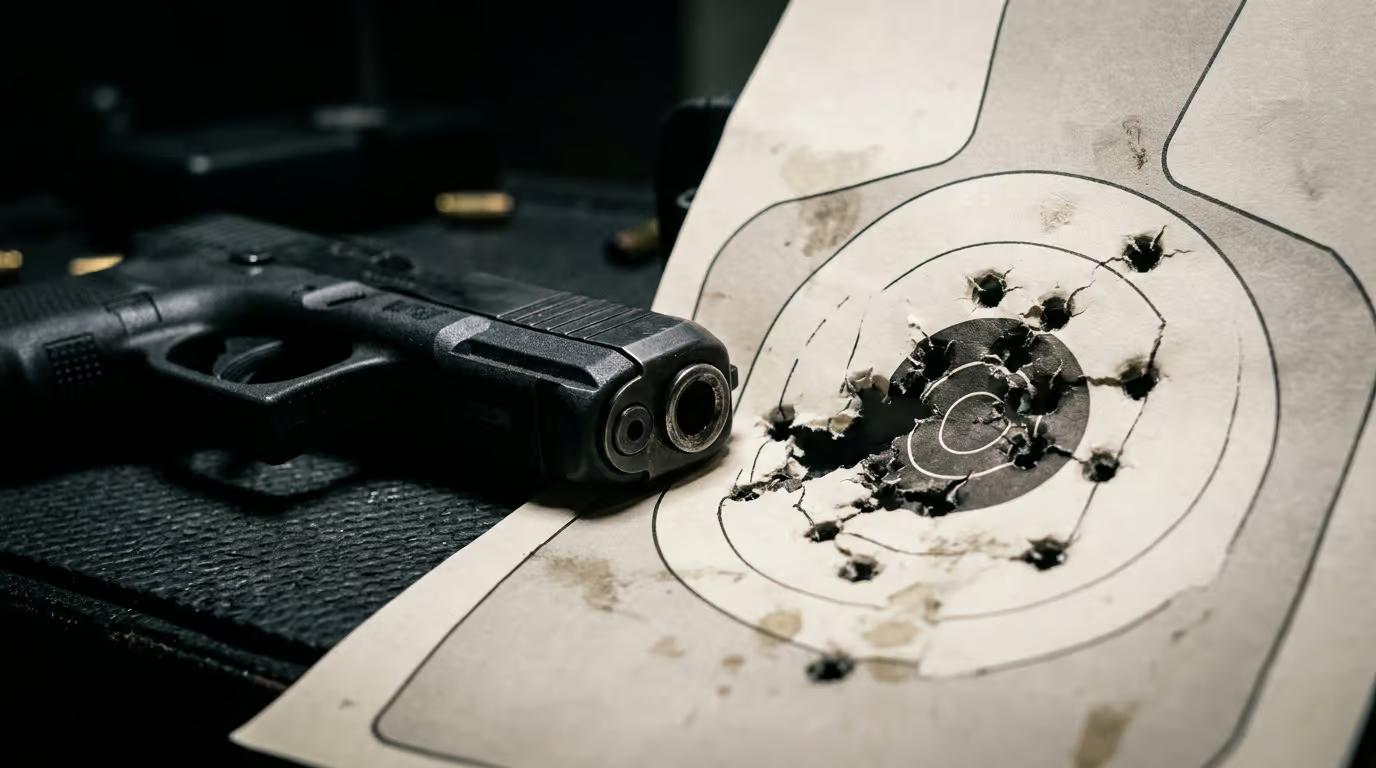
Firearms are one of those tools you hope you never actually need to use. Yet, they remain undeniably valuable for a wide range of emergency survival situations, securing food when you’re off the grid, or simply protecting your home. But standing in a lane and converting money into smoke does not magically make you capable. Here at Unfinished Man, we constantly see guys buy capable hardware, hit the range on a Saturday, blast through a box of ammo, and walk away with the exact same skill level they arrived with.
If your primary objective is finding specific, actionable shooting routines to drastically improve your firearm accuracy, speed, and handling, passive plinking will not get you there. You need structured, data-driven diagnostic methods.
Key Takeaways
Utilizing a pistol correction target during foundational exercises instantly maps spatial misses directly to mechanical grip or trigger errors.
Introducing dummy rounds into live magazines actively exposes the subconscious flinch and recoil anticipation that ruins accuracy.
Transitioning to defensive exercises like the 3-shot Failure Drill shifts the mindset from center-mass anchoring to deliberate anatomical zone adaptations.
Table of Contents
Stop Plinking: a Survival-focused Guide to Shooting Range Drills
Establish a baseline of performance by committing to structured, measurable drills rather than aimless target practice, creating a diagnostic framework for every range trip. Plinking is an incredibly easy trap to fall into. It feels good to just casually shoot, but dumping rounds at a static paper silhouette without tracking your mechanical degradation ensures you build terrible muscle memory.
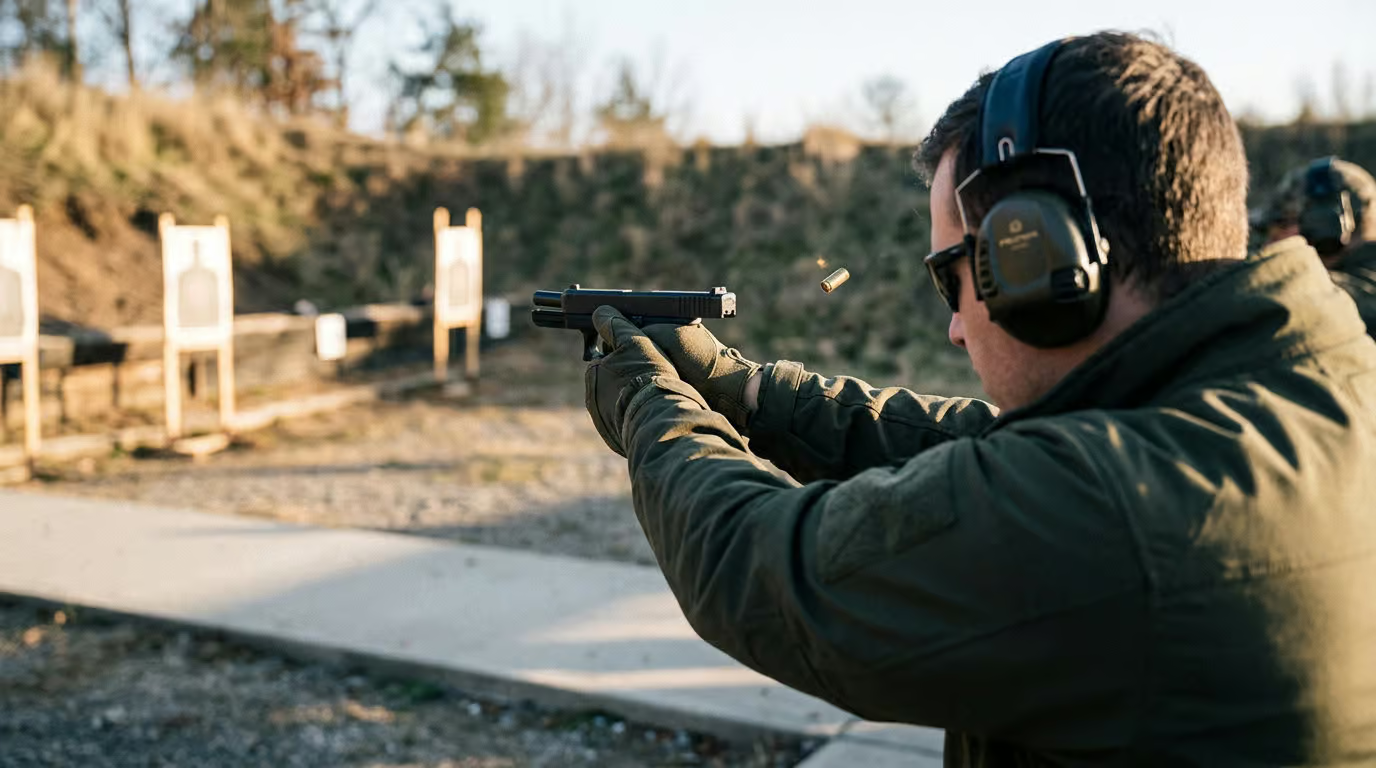
Every missed shot is a data point. When you shift your mindset from casual recreation to rigid diagnostic training, your progress skyrockets. Transitioning to dedicated routines builds subconscious competence that holds up when adrenaline spikes. This is your roadmap to genuine defensive readiness.
By borrowing strict foundational techniques from competitive shooting, you can effectively lock in your baseline grip and stance. Once that physical foundation is flawless, you can introduce artificial constraints, cognitive fatigue, and simulated stress. It is a progressive ladder. Before you can move fast under pressure and clear a functional malfunction in the dark, you have to build a perfectly boring, flawless mechanical foundation.
“Before you can move fast under pressure and clear a functional malfunction in the dark, you have to build a perfectly boring, flawless mechanical foundation.”
Foundational Shooting Range Drills: the Basic Bullseye Drill
To build basic marksmanship, shoot at a strict 7-yard distance using a specific target matrix to instantly diagnose grip and trigger alignment flaws based on physical strike locations. The Basic Bullseye Drill is a fundamental accuracy exercise designed to isolate your exact biomechanical execution of a single shot.
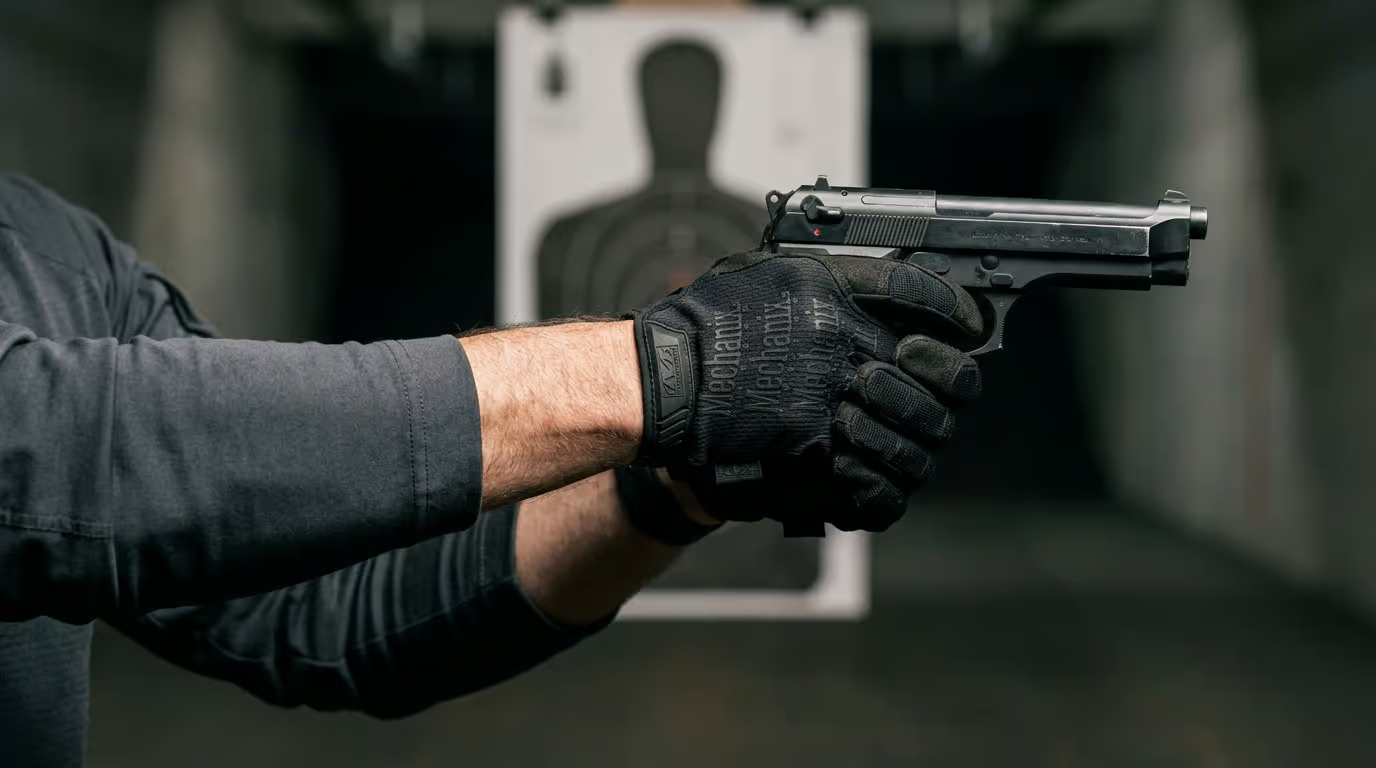
Setup and Distance
Hang a diagnostic target at a manageable distance, starting strictly at 7 yards. You do not need to push the target out to the back wall to prove a point. Grab a heavy, full-sized pistol to help mitigate the initial shock of the blast. A model like the Savage 1911 works perfectly here. Its metal frame naturally absorbs the force, making it an incredibly comfortable platform for dialing in foundational mechanics.
That matters. Taking the pain out of the process helps you focus purely on the hardware interface.
How to Shoot
Focus exclusively on the smooth, deliberate mechanics of the trigger pull, completely ignoring any instinct to go fast. Speed is irrelevant right now.
- Adopt a steady stance with your feet shoulder-width apart.
- Lock your elbows out to create a rigid physical structure.
- Align your front and rear sights perfectly with the center of the bullseye.
- Press the trigger straight to the rear until the shot breaks by surprise.
Mastering learning to shoot a gun is an exercise in eliminating physical variables. Do not rush.
Evaluating Performance
A perfect score on paper targets is rarely helpful; your misses provide the information you actually need. By using a pistol correction target, you can directly interpret your physical shot clustering to identify exact biomechanical breakdowns. If your rounds group consistently low and to the left, it usually means poor trigger pull mechanics are combining heavily with subconscious recoil anticipation. The paper tells you exactly what your hands did wrong. Once you know where the gun is drifting, you need a method designed to expose exactly why your brain is forcing it there.
Curing Pre-ignition Push With the Ball and Dummy Drill
Have a training partner secretly mix dummy rounds into your live magazine to instantly expose physiological pre-ignition flinching when the trigger breaks on a dead chamber. The Ball and Dummy Drill is a specialized diagnostic exercise that tricks your brain into bracing for an explosion that never happens.
Setup and Distance
You cannot run this effectively by yourself. According to standardized training rules, you need a partner to load your magazine with a random mix of live ammunition and snap caps. You must step up to the firing line completely unaware of when the dead round will cycle into the chamber. This eliminates your ability to consciously prepare for a dry fire.
That element of surprise is non-negotiable. It works.
How to Shoot
Present the firearm and fire at a standard distance in a slow, controlled, and deliberate sequence. Assume every single chambered round is live.
- Maintain your steady, locked-out stance.
- Press the trigger firmly and cleanly.
- When the gun clicks on a dead round, physically rack the slide to clear it and continue the sequence seamlessly.
The goal is to force your body to execute the exact same mechanical pull regardless of what type of cartridge is waiting inside the chamber.
Evaluating Performance
Watch the muzzle carefully. When the gun inevitably clicks on the dead round instead of firing, any physical dipping or pushing of the barrel is exposed violently. Seeing your hands shove the gun downward proves your snap caps trick works, confirming that your trigger flinch and recoil anticipation are undeniably linked. It is a frustrating realization, but it is the fastest way to recognize your physiological errors. When you finally conquer that flinch and your dead presses stay perfectly flat, it is time to apply those clean triggers to smaller targets while fighting cognitive fatigue.
Testing Visual Patience via the Dot Torture Drill
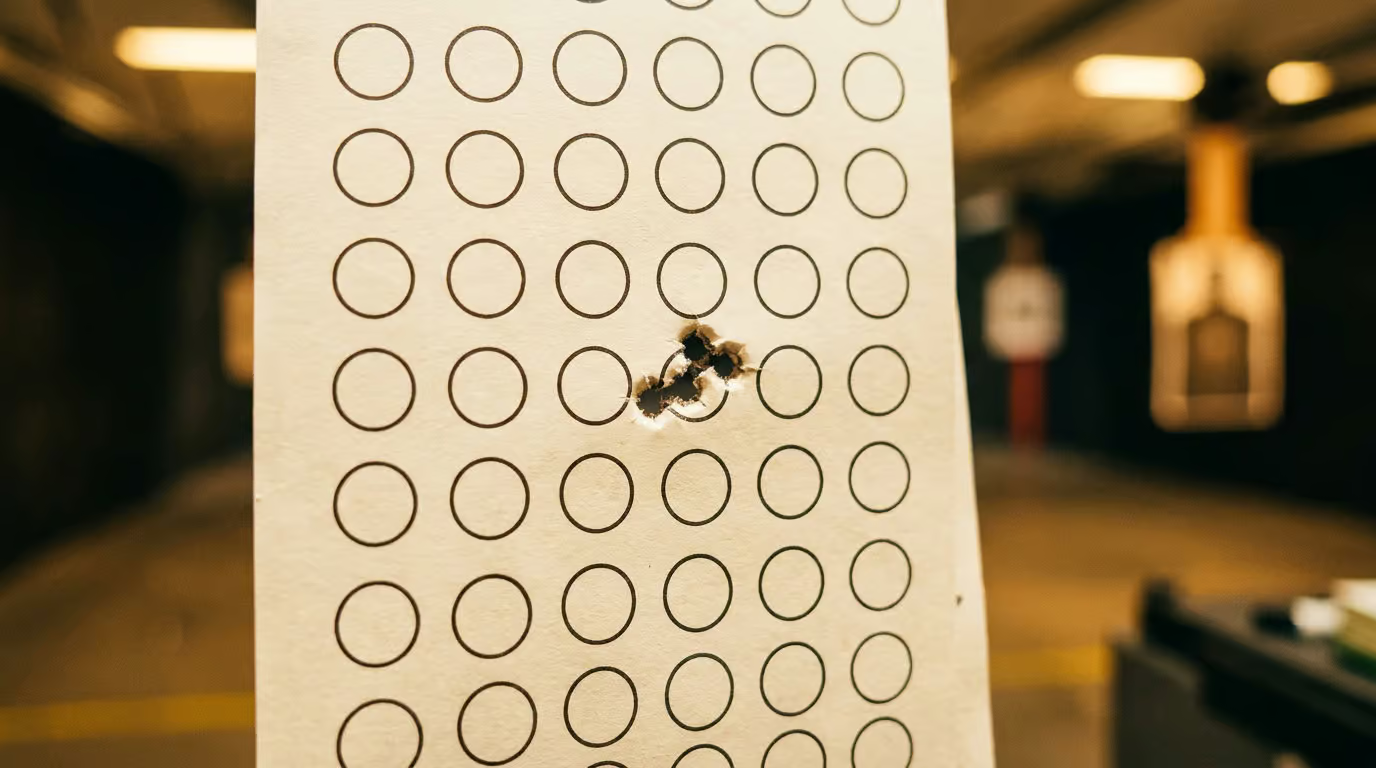
Print out the standard dot template, post it at 7 yards, and follow the exact sequenced shot commands to test spatial accuracy under cognitive load. The Dot Torture Drill is an industry-standard 50-round assessment shot entirely on a grid of two-inch circles.
Setup and Distance
Hang the specialized grid paper featuring exactly 10 dots positioned at a rigid 7-yard distance. Do not alter the distance. Make sure your pockets are filled with reliable, loaded SIG P365 magazines before you start. The string requires constant manual reloads, one-handed shooting, and strong-to-weak hand transitions. Because it is a heavy round-count exercise, organizing your gear beforehand stops you from breaking your mental focus midway through the test.
How to Shoot
Fire sequentially at the required dots based entirely on the strict, printed command sequence.
- Draw from the holster or low-ready position.
- Fire the exact number of rounds dictated by the specific dot’s instructions.
- Pause, re-holster, and prepare for the next string.
Apply the mantra “slow is smooth, smooth is fast.” Rushing through the complex pattern artificially speeds up your mechanics, causing absolute disaster.
Evaluating Performance
This test does not utilize a shot timer, yet the cognitive fatigue it induces is brutal. Even a single dropped shot out of the fifty required indicates you mentally rushed your sight picture during a complex target transition. A passing score requires absolute visual patience. You have to physically force your eyes to confirm perfect alignment before your finger finishes the press.
Pinpointing tiny dots heavily reinforces pure mechanics. But real-world threats require a completely different anatomical targeting strategy.
Transitioning to Self-defense Contexts With the Failure Drill
Execute a 3-shot sequence from the draw with your daily carry handgun, firing two to the torso and one to the head to simulate a threat that will not go down. The Failure Drill is a rapid, defensive engagement sequence designed to shift targeting zones mid-fight.
Setup and Distance
Place a large anatomical silhouette target at an engagement distance of 7 to 10 yards. Utilize your standard concealed carry firearm to mirror real-world dynamics and constraints. A dedicated, subcompact carry rig like the Savage Stance XR is ideal for this scenario. Training with the exact weight and grip profile you carry on the street ensures your physical repetitions translate to actual defensive readiness.
How to Shoot
Depending on your range restrictions, initiate the drill from a holstered posture or an elevated low-ready position based on your facility’s safety rules.
- Punch the gun out aggressively on the buzzer.
- Break two rapid rounds into the upper chest using coarse, flash sight alignment.
- Pause for a fraction of a second to visually process the target.
- Throttle your presentation cadence down for one precise, surgical round to the cranial vault.
It happens incredibly fast.
Evaluating Performance
The true difficulty of this drill lies in the aggressive mental gear shift. You must break two fast shots, immediately recognize your center mass hits resulted in a failure to stop, and instantly decelerate your trigger finger for a much tighter headshot. It directly contrasts the habit of heavy anchoring with deliberate adaptability. Engaging a single static threat forces you to manage internal speed controls. Adding multiple moving threats will eventually test both your spatial awareness and your mechanical manipulation limits.
Managing Complex Arrays With the El Presidente Drill
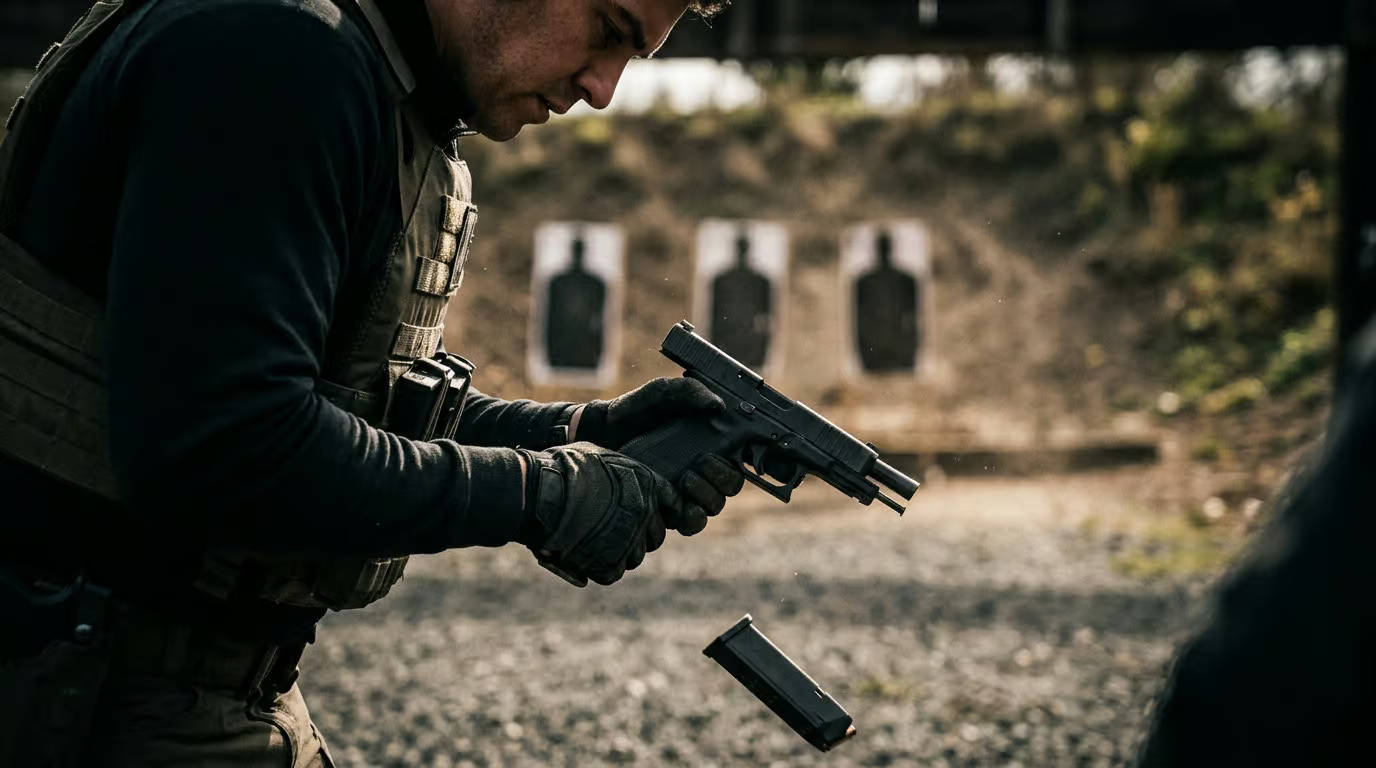
Anchor your visual focus on the magazine well during the mandatory reload phase to build efficient mechanics during timed, multi-threat sequences. The El Presidente Drill is a classic, high-stress benchmark test combining sudden movement, multiple targets, and mandatory weapon manipulations.
Setup and Distance
Arrange exactly 3 targets side-by-side at a 10-yard distance. The standard starting position deliberately places the shooter at a severe disadvantage. You must begin by facing entirely away from the targets, with your hands raised in the air, and your gun safely secured in its holster.
How to Shoot
On the buzzer, the explosion of movement begins.
- Pivot 180 degrees aggressively.
- Draw the handgun while acquiring the first visual point.
- Fire precisely 2 shots into each target, sweeping from left to right.
- Execute a mandatory slide-lock reload.
- Re-engage the array, firing 2 shots across the targets again in the opposite direction.
Stay low during the turn.
Evaluating Performance
Time and accuracy are graded simultaneously to measure your combat effectiveness. However, forcing an arbitrary par time without a solid foundation is actually destructive to genuine stress inoculation. Speed must be a byproduct of efficiency. Focus heavily on watching the magazine physically enter the frame to cement the autonomic muscle memory necessary for a flawless magazine exchange.
Additionally, scanning rapidly across staggered targets forces a dramatic focal shift between your front sight and the deeper background. Mastering this drill proves you can process complex spatial loads. But dynamic movement creates a massive logistical problem for guys who are stuck shooting indoors.
Modifying Dynamic Defense Exercises for Indoor Commercial Ranges
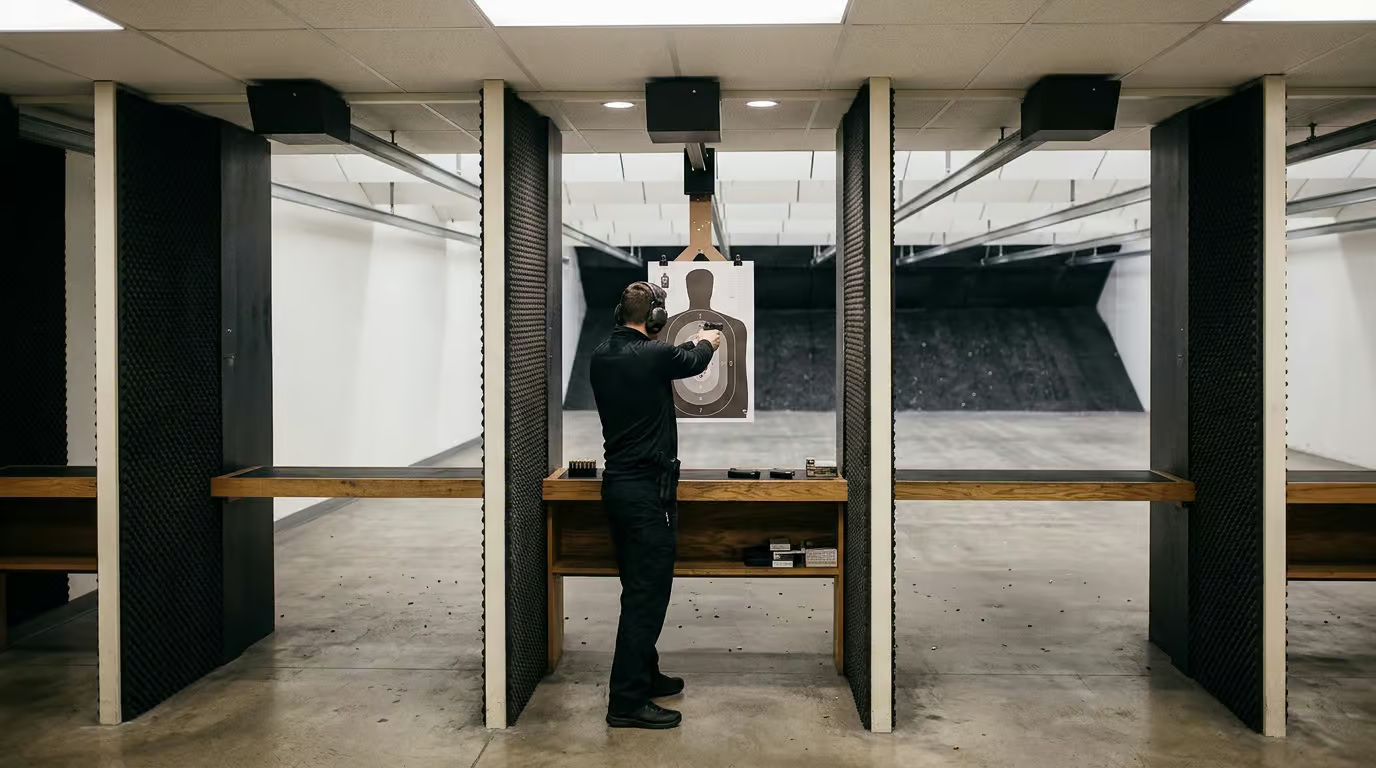
Substitute prohibited physical running with intense static cardio exercises behind the firing line to deliberately spike your heart rate, artificially inducing physical stress for defensive drills. Most public ranges heavily restrict what you can actually do in a booth.
Replicating Stress Safely
Public indoor locations enforce strict, non-negotiable safety rules. Drawing from a holster, running, and rapid-fire strings will usually get you packed up and told to leave. Yet, achieving stress inoculation remains critical. The professionals at Savage Arms recommend elevating your heart rate drastically before you even pick up the gun.
Do jumping jacks or pushups directly in your booth. This simulates the physiological adrenaline dump of a violent encounter without breaking a single lane rule.
Lane-compliant Alternatives
You can modify complex tactical scenarios to fit neatly into a single three-foot lane constraint. Instead of utilizing wide lateral offline movement—which is strictly prohibited—practice rapid, aggressive foot pivoting within your tight square as a modified threat response. Substitute three wide target stands with a single printed sheet containing multiple smaller anatomical zones. Mastering these modular, constrained adaptations ensures you get a highly efficient, objective-focused training session every time you step into a sterile commercial environment.
Measure, Adapt, and Refine Your Range Routine
Pre-plan your range session with a strict round count allocated specifically to two chosen drills, ensuring every single trigger pull has an objective metric attached. Walking into the building without a plan guarantees stagnation.
While figuring out what do you need to buy a hunting rifle involves heavy gear choices and ballistic math, mastering a handgun relies purely on tracking biomechanical repetitions. Bring exactly enough ammunition to run two specific exercises, plus a magazine reserved for a simulated malfunction clearance string.
If your scorecard is perfect and you never drop a single shot, you are not pushing your cognitive boundaries hard enough to actually adapt. Induced errors are prerequisites for genuine progress. The goal is moving from freezing up to solve a puzzle when the gun clicks, to executing sub-second autonomic fixes that keep you engaged in the fight. Record your par times.
Keep your target clusters. That granular, boring data is what finally transforms occasional range trips into a deeply ingrained, undeniable capability.
What’s the difference between plinking and structured range shooting?
Plinking is casual, undirected target practice that feels good but actively ruins your mechanics by reinforcing bad habits. Structured range shooting uses measurable, data-driven drills to expose biomechanical flaws. Every missed shot becomes a precise diagnostic tool rather than just converted money into smoke.
Why do my handgun shots always hit low and to the left?
Consistently grouping low and left is the classic sign of poor trigger mechanics combined with subconscious recoil anticipation. Your brain is bracing for a violent explosion, causing your hands to physically shove the gun downward right before it fires. A diagnostic paper target will call out this pre-ignition push immediately so you can fix it.
How does the Ball and Dummy drill actually fix a flinch?
This drill requires a partner to secretly mix dummy snap caps into your live magazine, eliminating your ability to mentally prepare for a dead chamber. When you pull the trigger and the gun simply clicks, any physical flinch or downward muzzle shove is violently and embarrassingly exposed. It is a frustrating but highly effective way to retrain your brain to press flat.
Is it worth using a heavy, full-sized pistol for basic accuracy training?
Absolutely. Heavy metal-framed handguns naturally absorb the initial concussive shock and force of firing. Taking the physical sting and snap out of the equation allows you to focus purely on dialing in perfectly boring, flawless grip and trigger mechanics before graduating to your snappy carry gun.
What is the 3-shot Failure Drill designed to simulate?
It simulates a defensive scenario where a threat refuses to go down from standard center-mass hits. You fire two rapid, aggressive rounds to the torso, immediately recognize the failure to stop, and instantly decelerate your mechanics for a single, surgical headshot. It teaches you to break the bad habit of static anchoring and adapt your anatomical targeting mid-fight.
Can I practice dynamic defense drills at a strict indoor commercial range?
Yes, but you have to safely hack the physical stress rules. Since public lanes prohibit running, wide lateral movement, and drawing from a holster, you can simulate an adrenaline dump by doing intense static cardio directly in your booth. Spiking your heart rate with jumping jacks before picking up the gun tests your foundational mechanics under stress without getting you kicked out of the building.