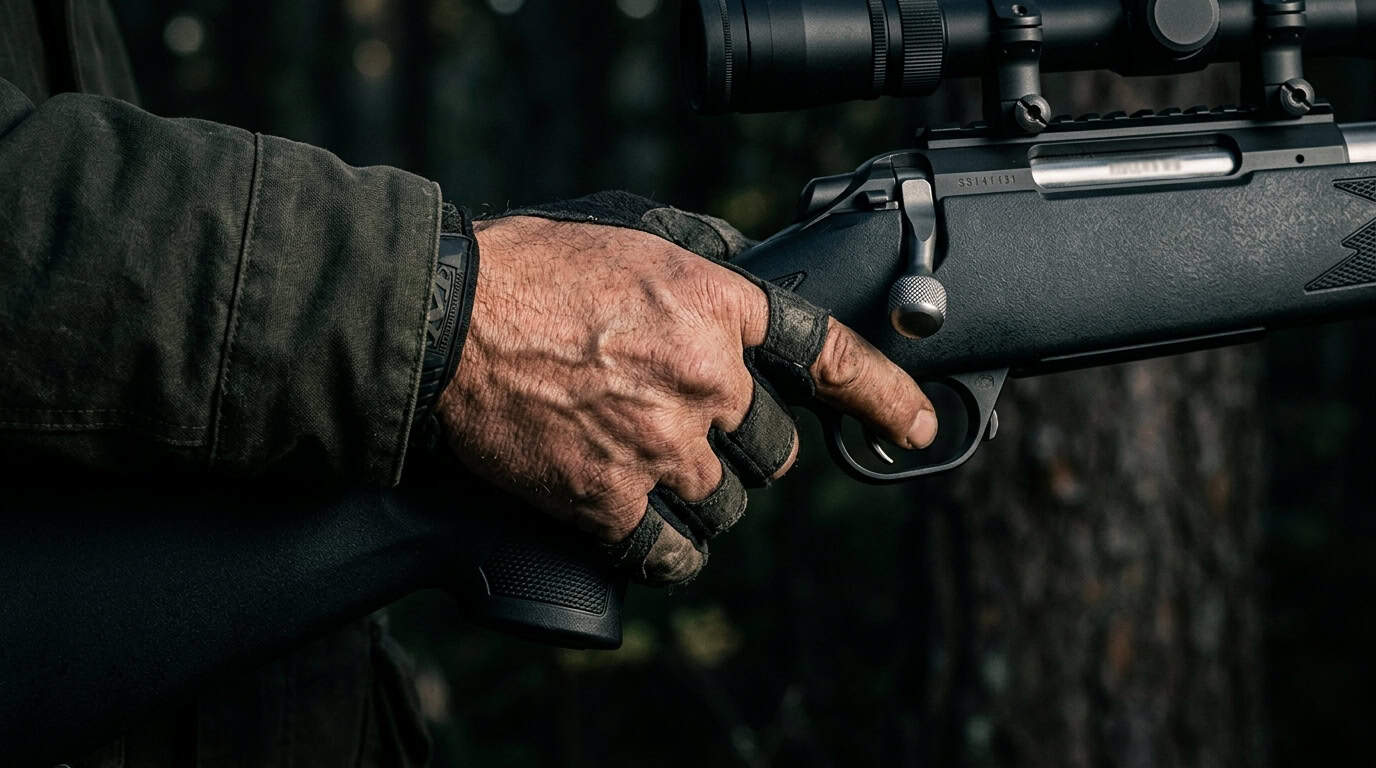
Learning to shoot a gun starts with untangling the silent intimidation surrounding firearms and realizing that accuracy is just applied physics. A lot of guys feel an unspoken societal pressure to magically know what to do with a firearm the moment someone hands it to them. That is Hollywood bullshit. An unearned ego is dangerous on the firing line.
Building quiet competence begins when you realize it is just a mechanical tool, regardless of its specific caliber. Mastering a Firearm isn’t an innate masculine talent; it is a reproducible sequence of spatial alignment, safe handling protocols, and structural anatomy. You don’t need tactical operator gear or starlight night vision scopes to feel like you know what you are doing. The baseline simply requires reprogramming how your body structurally behaves around a weapon.
Educational platforms like Hunter-ed.com teach that foundational accuracy prevents bad habits like flinching from day one. You establish control by applying strict boundaries.
Key Takeaways
The core of modern firearm handling relies on four non-negotiable physical rules while recognizing ten broader behavioral guidelines for environmental awareness.
A functional firing sequence relies on the five fundamentals of rifle marksmanship—where the final step of following through prevents anticipation-induced barrel jerk.
Mastering accuracy demands relying on skeletal bone structure to shoulder the weapon’s weight, completely abandoning the need for fast-twitch muscle tension that causes tremors.
Table of Contents
Learning to Shoot a Gun Safely: the Fundamental Behavioral Frameworks
The fundamental rules of gun safety every beginner must know are to always treat the gun as if it is loaded, always keep the muzzle pointed in a safe direction, always keep your finger off the trigger until you are ready to disengage the mechanical safety and shoot, and always verify your target and what lies beyond it. Memorize and physically demonstrate these rules before you ever touch a live cartridge. Safety is not a lecture. It is a completely verifiable set of behavioral muscle memories.
Immediate Handling Boundaries
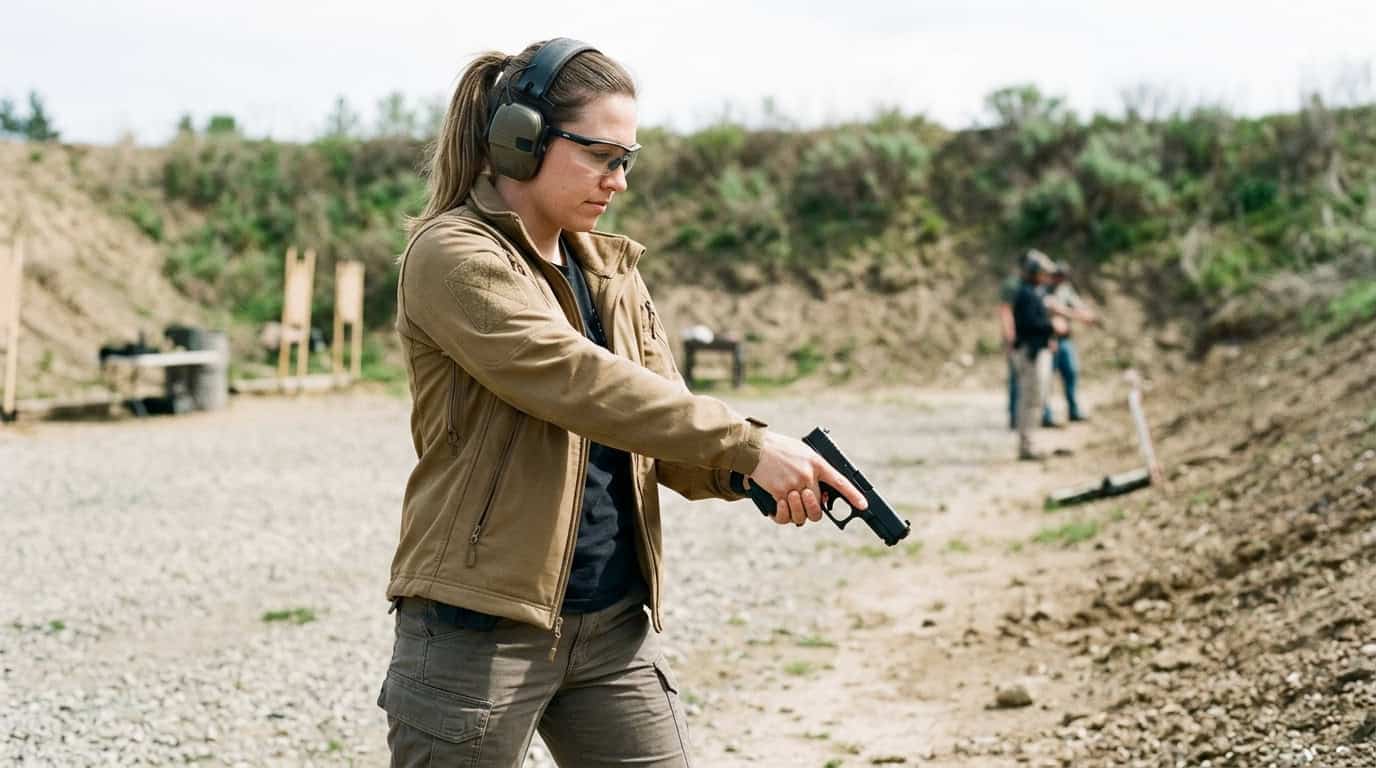
If you are treating this as a serious shooting hobby, you have to translate abstract safety concepts into non-negotiable physical habits. Beginners need to understand that the Four Rules of Firearm Safety govern immediate, localized handling imperatives—where your hands are placed and where the muzzle is pointing right now. Conversely, recognizing the broader history of The Ten Commandments of Firearm Safety prepares you for situational variables like dropping the magazine and unloading the chamber before crossing a fence or safely storing ammunition away from the weapon. Both models work together. One locks down immediate tactical handling, while the other provides necessary comprehensive environmental context.
Broader Environmental Awareness
Safety goes beyond the firing line. A firearm demands respect whenever it moves from unloaded carrying to live-fire readiness. It doesn’t matter if you are at an indoor stall or walking the backwoods. You have to maintain constant hyper-vigilance over the muzzle’s direction.
If someone trips, the muzzle must cleanly clear any bystander. If a target is backed by hard rock or water, the risk of ricochet fundamentally violates the rule of knowing your backstop. Strict adherence completely neutralizes operational fear.
Firearm Mechanics: Understanding Platforms and Propellants
A beginner should start learning with a Rifle because the longer Barrel, wider sight radius, and larger frame make it structurally easier to safely control the muzzle than a compact handgun. Handguns are incredibly easy to inadvertently point at something you don’t intend to shoot. Rifles force a deliberate, two-handed anchoring stance, making the learning curve much safer and significantly less frustrating. Inside that barrel, internal spiral grooves known as Rifling impart a gyroscopic spin on the bullet, creating stable, highly predictable flight paths.

How Ignition Systems Evolved
If you look at the progression of the Muzzleloading Firearm, it perfectly illustrates how a gun physically creates pressure to launch a projectile. Historic platforms like the Flintlock and the Percussion Lock relied on external sparks or caps to ignite primitive powder. Eventually, design transitioned to the modern in-line system, completely revolutionizing weather resistance and lock-time speed—the microscopic fraction of a second it takes after the trigger is pulled for the internal Lock to drop the hammer. Regardless of the action, understanding what happens inside that metal tube is essential. You are controlling a contained explosion.
Chemistry and Catastrophic Failure
You have to respect the metallurgical and chemical limits of your specific firearm. Using modern propellants in vintage hardware is a fatal mistake. For instance, loading highly pressurized Smokeless Powders into an antique Damascus barrel—a barrel structurally designed exclusively to handle the lower pressures of traditional black powder—will cause catastrophic failure and blow the gun apart. Read the barrel stamping. Knowing the chemistry of your propellant allows you to respect the mechanical limits of the metal.
Master Eye Identification and Baseline Visual Alignment
True accuracy is physically impossible without first determining your dominant eye and confirming proper sight picture before raising the firearm to your cheek. Ocular dominance dictates your stance. That changes the math. Relying on your dominant hand instead of your dominant eye is the absolute most common beginner mistake. Cross-dominance—where you are right-handed but left-eye dominant—will subconsciously ruin your accuracy if it goes undiagnosed.

Before you ever try looking down an Open Sight or modern optic, you must deliberately isolate your Master Eye. You can easily do this by forming a triangle with your hands, looking at a distant object through the hole, and closing one eye at a time—the eye that keeps the object centered is dominant. Perfect sight alignment depends entirely on conforming the firearm to this dominant ocular perception. If you force a cross-dominant alignment, your brain fights your body.
Establishing Physiological Stability and Natural Stance
The proper way to grip, stance, and aim a firearm is to let its weight rest directly on your skeletal frame rather than trying to muscle it into submission. Rest your driving elbows and the natural firearm weight directly onto skeletal bone support rather than relying on muscular exertion, dramatically shrinking your sights’ natural wobble area. Fast-twitch muscles fatigue rapidly, causing heart rate spikes and immediate tremors.
The Myth of Remaining Perfectly Still
You have to stop trying to hold the gun perfectly still. It isn’t going to happen. Your heart beats, your lungs expand, and your blood flows. Fighting human physiology to act like a motionless bronze statue violently spikes your heart rate and muscle fatigue.
Good Shooting embraces the natural movement cycle. You concentrate instead on minimizing the area of movement rather than trying to eliminate it entirely. As long as the gentle sway of the sights breaks within the boundaries of the target, the bullet connects.
“Fighting human physiology to act like a motionless bronze statue violently spikes your heart rate and muscle fatigue.”
Adapting Your Physiological Postures
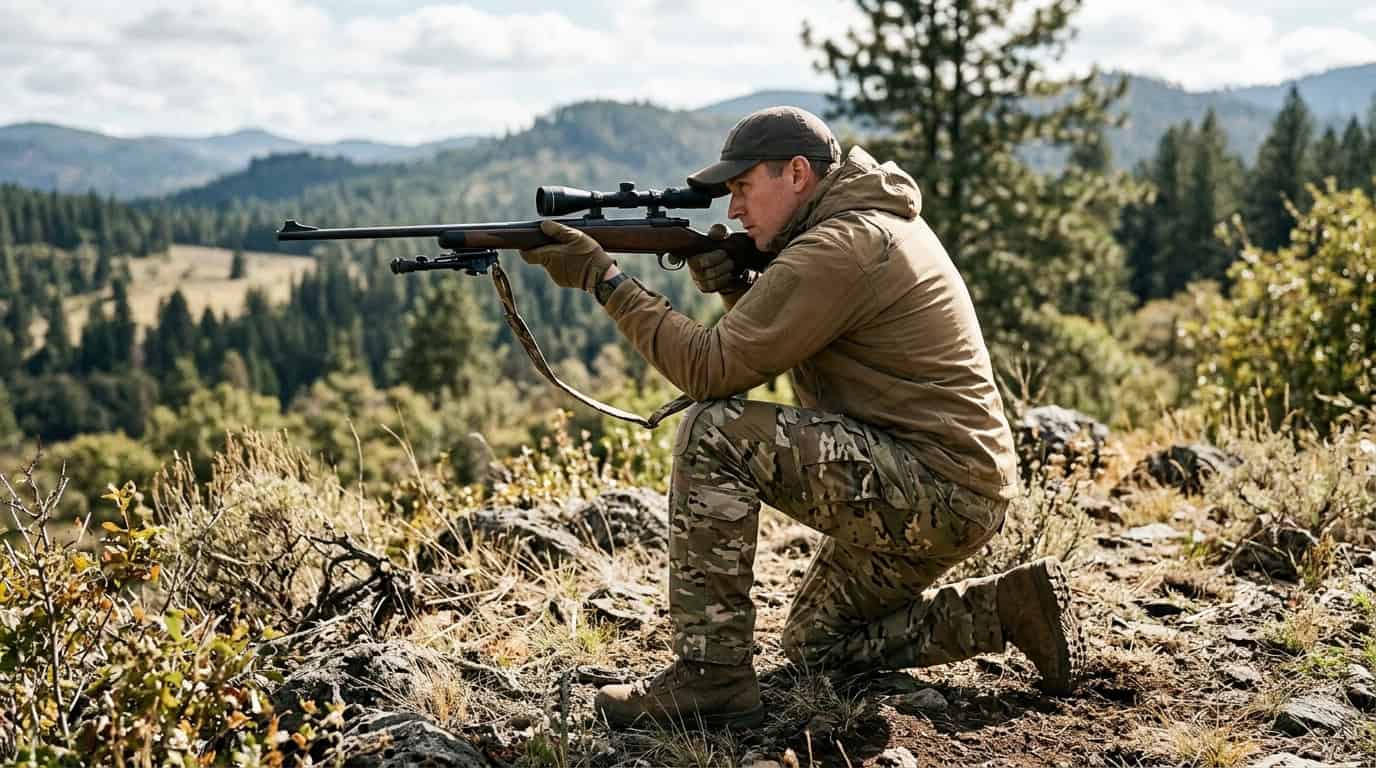
Whether you are Rifle Shooting or learning pistol mechanics, the goal is locking your joints. Postures like standing are inherently unstable because there is zero ground contact for your upper body. Dropping into kneeling or sitting platforms immediately anchors your elbows to your knees. Going entirely prone offers the maximum mechanical advantage, basically turning your spine and shoulders into a bipod. The more points of contact you can anchor to the ground, the better the shot.
The Physical Firing Sequence and Executing Trigger Control
The exact five fundamentals of rifle marksmanship are aiming, breath control, movement control, trigger control, and follow-through. All five elements function sequentially as one continuous physical process. Execute the hidden final step properly to definitively maintain trigger pressure through the recoil curve, ensuring the muzzle never jerks offline.
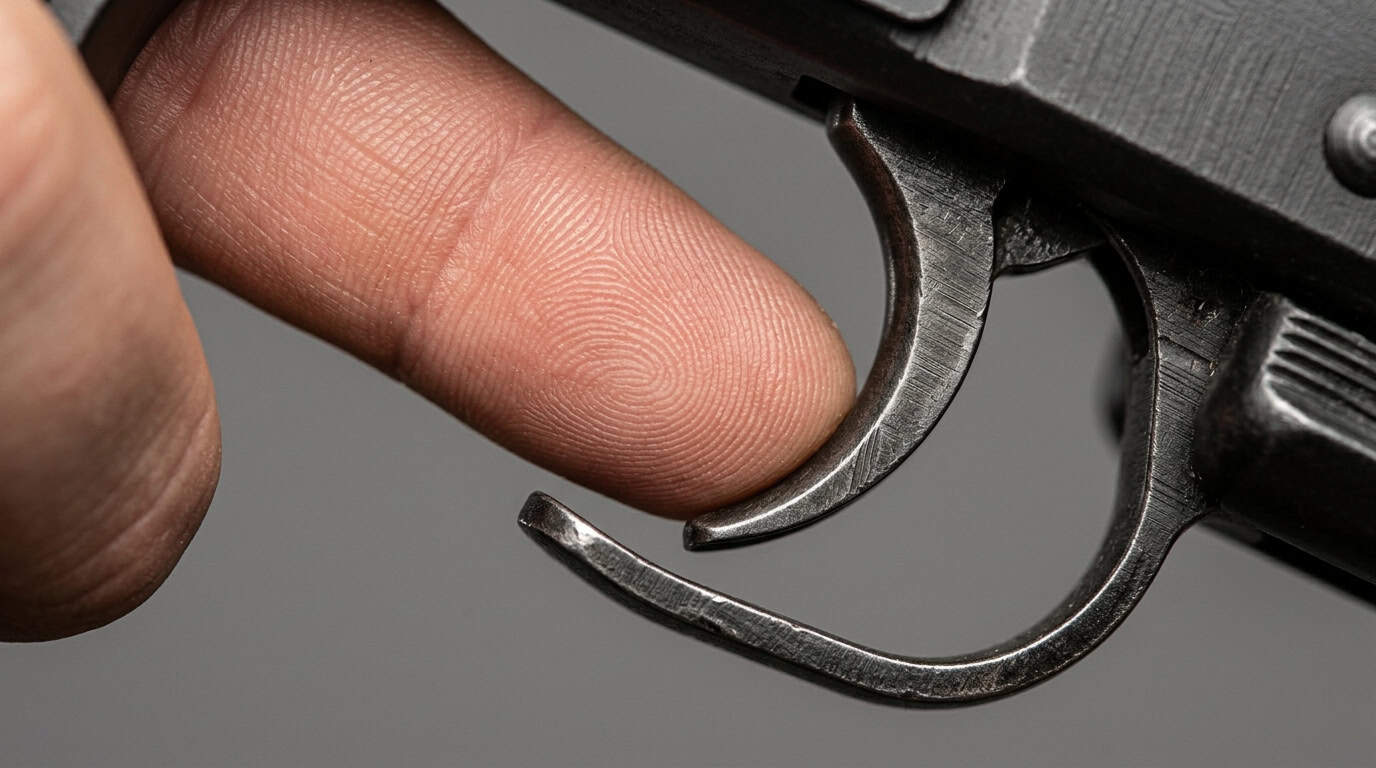
Erasing Flinch Reflexes Through Dry-fire
Before stepping onto a live range, you have to pre-condition your nervous system to accept the click of the hammer without bracing for recoil. Dry-firing—practicing the squeeze with a verified, cleared, empty gun—builds raw mechanical isolation. You quickly realize you are diving the muzzle downward right before the break. Dry practice structuralizes your grip so you stop anticipating the blast.
The Cognitive Sequence to Shoot
A highly effective cognitive heuristic to cognitively execute the five fundamentals consecutively is using the B.R.A.S.S. methodology. You breathe, relax, aim, squeeze, and then importantly, squeeze more. Holding your breath for twenty seconds just starves your eyes of oxygen. Instead, draw a deep breath, confidently exhale half of it, pause naturally, and smoothly drag the trigger rearward. Keeping the timing brief ensures you don’t over-aim.
The Micro-mechanics of the Press
The physical breaking of the shot relies on continuous rearward pressure, not a sudden snap. You have to ensure proper trigger control finishes with a deliberate, sustained follow-through. When the sear breaks and the gun fires, you must keep the trigger blade fully pinned to the rear while the recoil lifts the barrel. Instantly releasing the trigger yanks the muzzle. Eventually, you will graduate to specific shooting range drills to build speed, but for now, slow and methodical completely wins out.
Bench-rest Testing and Verifying Ballistics
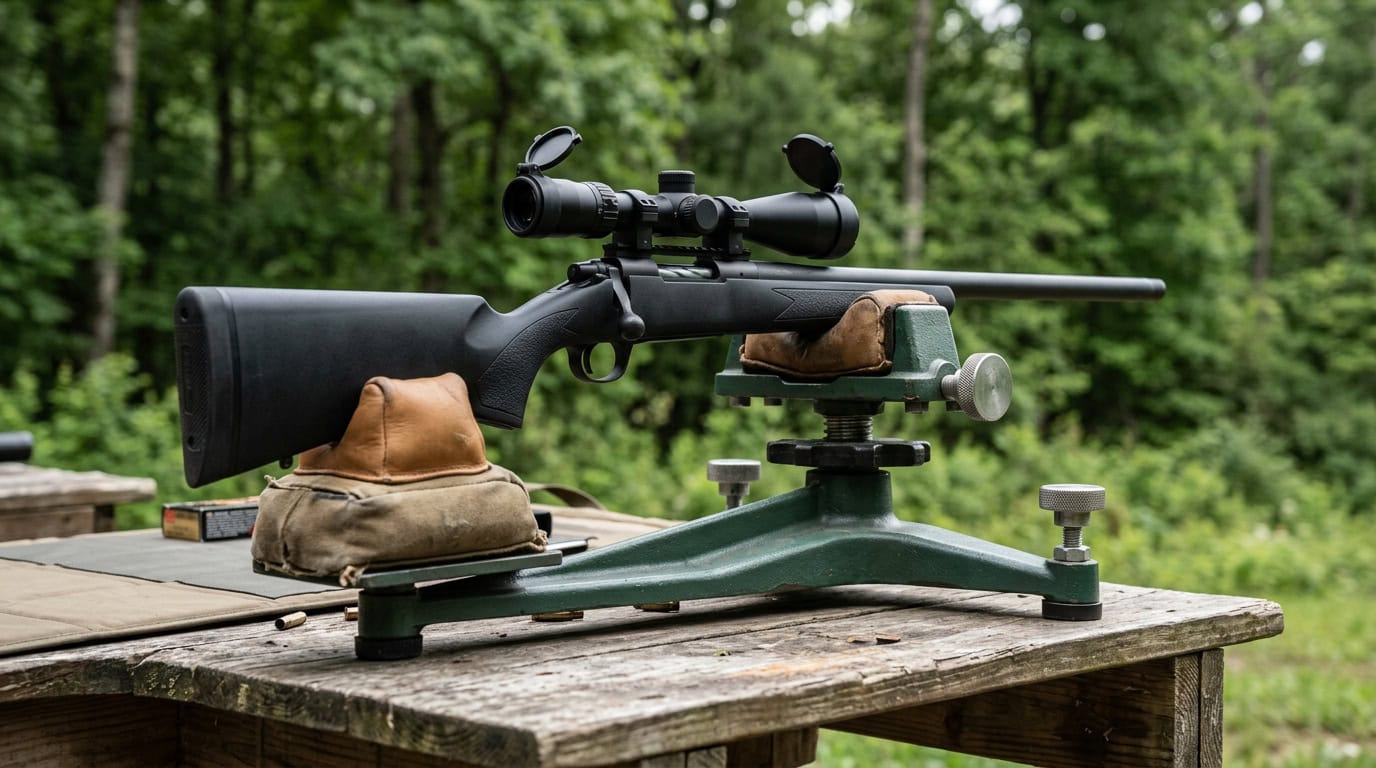
Bench-Rest testing isolates the firearm’s mechanical baseline by locking it into sandbags or a sled, verifying true straight-line range limits while completely removing shooter error from the equation. Even perfect trigger manipulation only guarantees you hit exactly where the barrel points. Proving the internal hardware actually points true is the critical next step.
Eliminating the Human Variable
When you buy a new firearm or change ammunition, you have to prove the tool works before blaming yourself for missing the target. Performing strict sled testing removes human sway, bad stance, and terrible finger flinching from the equation entirely. By locking the Stock into a sled and smoothly pressing the trigger, you get a clean baseline of what the barrel, cartridge, and optics can actually achieve on paper.
Calculating Hardware Limits
Controlled sled testing mathematically separates hardware trajectories from human mistakes. Testing allows you to definitively verify your precise Point-Blank Range—the furthest distance a projectile can travel before gravity pulls it below the intended target area without holding over. Verifying point of impact during a Sighting In session guarantees you know precisely when and where a specific powder and bullet combination drops out of the sky.
Moving Targets: Calculating Shotgun Intercept Leads
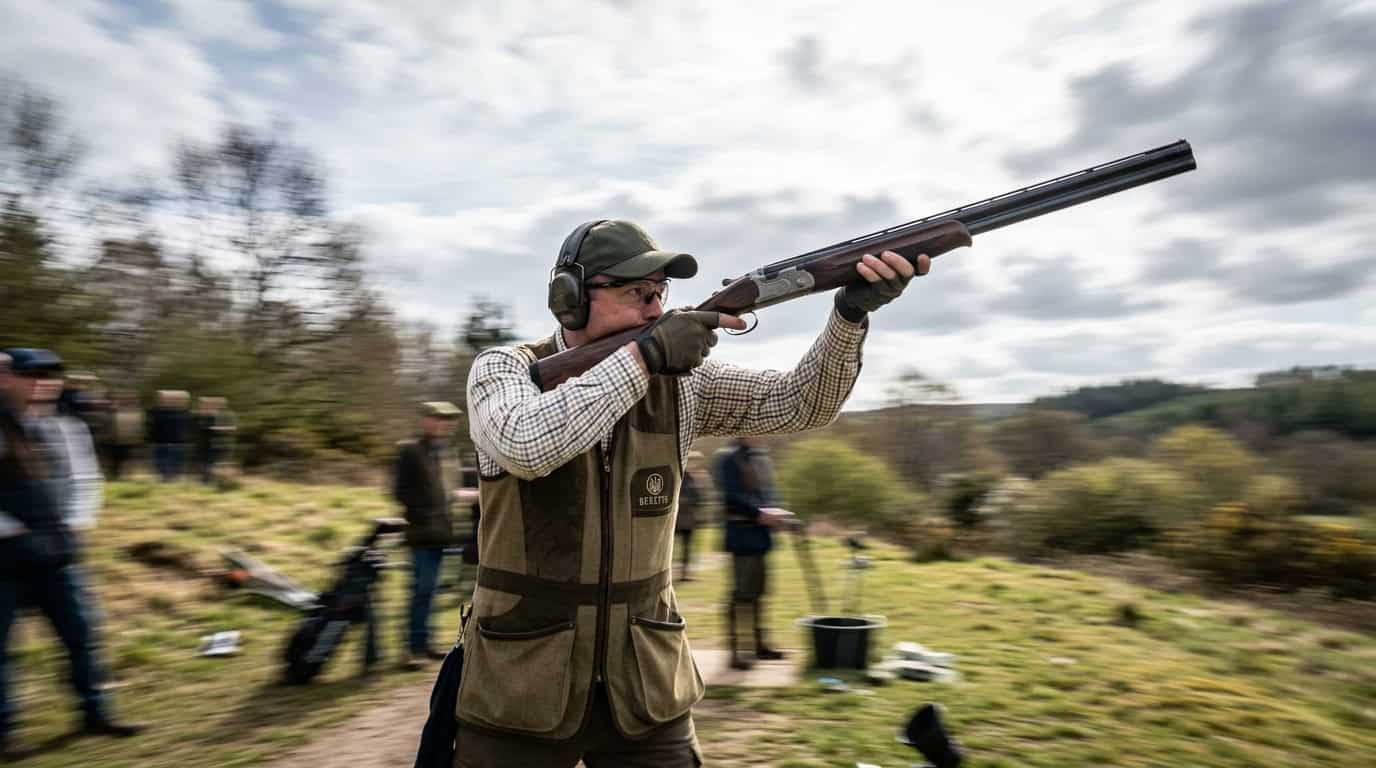
Successfully intercepting a moving target with a shotgun requires fluidly swinging the barrel ahead of the object, ensuring your physical momentum never stops when the trigger breaks. Aiming a rifle is a static, lockout process. Pointing a shotgun is a dynamic, spatial calculation. You are essentially throwing a payload of expanding pellets packed inside a shell into empty space, trusting the target will fly directly into it.
Fluid Motion Versus Static Aiming
Whether you are swinging a heavy 12-gauge or opting for a lighter, more forgiving 20-gauge to manage recoil, a shotgun requires you to mount the stock to your cheek smoothly without stopping the barrel’s momentum. The second you consciously stop to measure the distance ahead of the target, the clay or the bird completely outruns your Shotgun Choke pattern. Operating any gauge demands an uninterrupted, continuous motion cycle. If the barrel stops moving right at the click, you will shoot behind the target every single time.
Two Paths to Successful Interception
There are two primary paradigms for intercepting a target in motion. Using a fast Swing-Through lead means bringing the barrel from behind the target, pushing through it, and hitting the trigger just as the barrel clears the front edge. Alternatively, a sustained lead involves matching the target’s speed while hovering a designated, measurable distance ahead of it the entire time. Both require aggressive follow-through.
Applying the Hunter’s Ethical Code and Range Prep
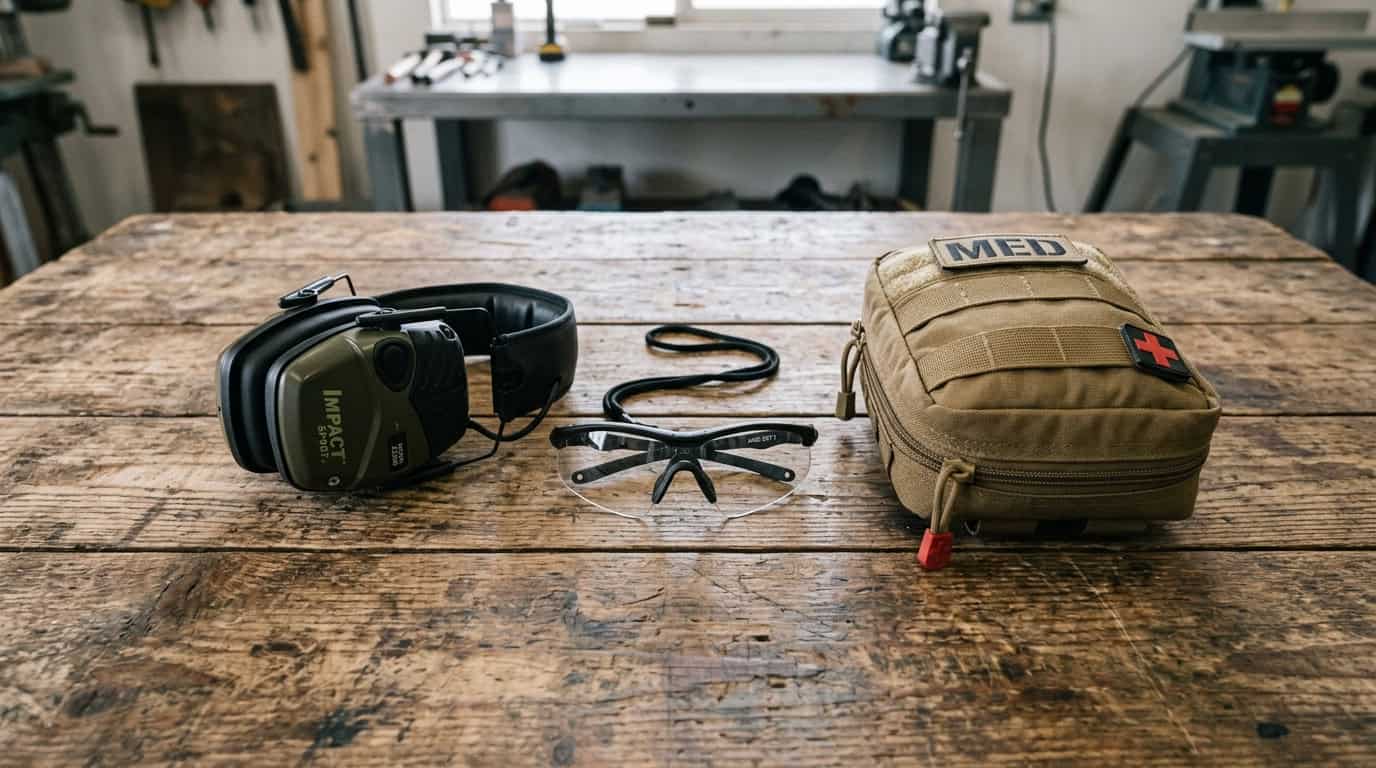
For your first trip to the range, clearly pack heavy-duty ANSI-rated eye protection, high-decibel electronic ear protection, a trauma-rated medical kit, and heavy lead-removing soap. Ensuring your personal gear is dialed in allows you to focus purely on range commands and situational mindset. You are accountable for every projectile leaving your barrel.
Taking Marksmanship Off the Paper
Technical accuracy is a strict moral imperative whenever you step off a paper line and into the woods. If you transition to harvesting deer, elk, or other Larger Game, adhering to the Hunter’s Ethical Code requires absolute discipline in shot selection. It is about understanding animal anatomy completely. Delivering cleanly executed, vital shots is what fundamentally defines and honors the philosophy of Fair Chase. You aggressively refuse low-percentage or highly angled shots precisely because your accuracy demands respect for the animal.
Funding the Conservation Ecosystem
Technical capability rarely exists in a vacuum. Individual shooters and Hunters actively fund nationwide habitat restoration simply by participating. Through excise taxes embedded in the Pittman-Robertson Act, a direct percentage of sales on ammunition, firearms, and range fees explicitly funnels straight back into continental wildlife management and public ranges. When you pack your bag, grease your action, and buy a box of targets, you are directly paying into the preservation of the landscape.
Start with the basics, trust the mechanical science, and lock down your behavioral habits. It works.
Frequently Asked Questions
Why does the article recommend learning to shoot with a rifle instead of a handgun?
Rifles force a deliberate, two-handed anchoring stance that makes muzzle control significantly easier for beginners. Handguns are physically shorter and incredibly easy to inadvertently point in the wrong direction. Starting with a longer barrel and wider sight radius makes the learning curve much safer and significantly less frustrating.
Can I shoot modern ammunition out of an antique gun with a Damascus barrel?
Absolutely not. Doing so is a fatal mistake. Damascus barrels were structurally designed exclusively to handle the lower pressures of traditional black powder. Loading highly pressurized modern smokeless powders into this vintage hardware will cause catastrophic failure and blow the gun apart.
How does relying on muscle tension actually ruin your accuracy?
Trying to muscle a firearm into submission relies on fast-twitch muscles, which fatigue rapidly and cause heart rate spikes and immediate tremors. Instead, you need to let the weapon’s weight rest directly on your skeletal frame and joint locks. Accepting a natural, gentle wobble within your target boundaries is far more accurate than fighting human physiology to stand perfectly motionless.
What is cross-dominance and why does it matter for new shooters?
Cross-dominance happens when your dominant eye does not match your dominant hand, such as being right-handed but left-eye dominant. If you force a shooting stance based on your hand rather than your dominant eye, your brain will subconsciously fight your body’s physical alignment. Identifying your Master Eye first is completely mandatory because true accuracy relies entirely on conforming the firearm to your ocular perception.
How do I stop anticipating the recoil and flinching before the shot breaks?
The most effective method to erase the flinch reflex is through dry-firing with a verified, empty gun. Pre-conditioning your nervous system with dead clicks helps you realize you are subconsciously diving the muzzle downward right before the break. Consistent dry practice structuralizes your grip so you maintain continuous rearward trigger pressure rather than bracing for the blast.
What’s the difference between aiming a rifle and shooting a moving target with a shotgun?
Aiming a rifle is a static, lockout process where the barrel stays perfectly aligned on a stationary point. Pointing a shotgun is a dynamic, spatial calculation where you must fluidly swing the barrel ahead of the target to intercept it in flight. If you consciously stop the shotgun’s momentum right at the trigger click to measure distance, you will shoot behind the target every single time.
How much impact do recreational shooters actually have on wildlife conservation?
Shooters and hunters are the primary funders of nationwide habitat restoration through the Pittman-Robertson Act. This legislation embeds explicit excise taxes into the direct sales of ammunition, firearms, and range fees. Every time you buy a box of ammo or pay for structured range time, a percentage funnels straight back into continental wildlife management and public landscape preservation.