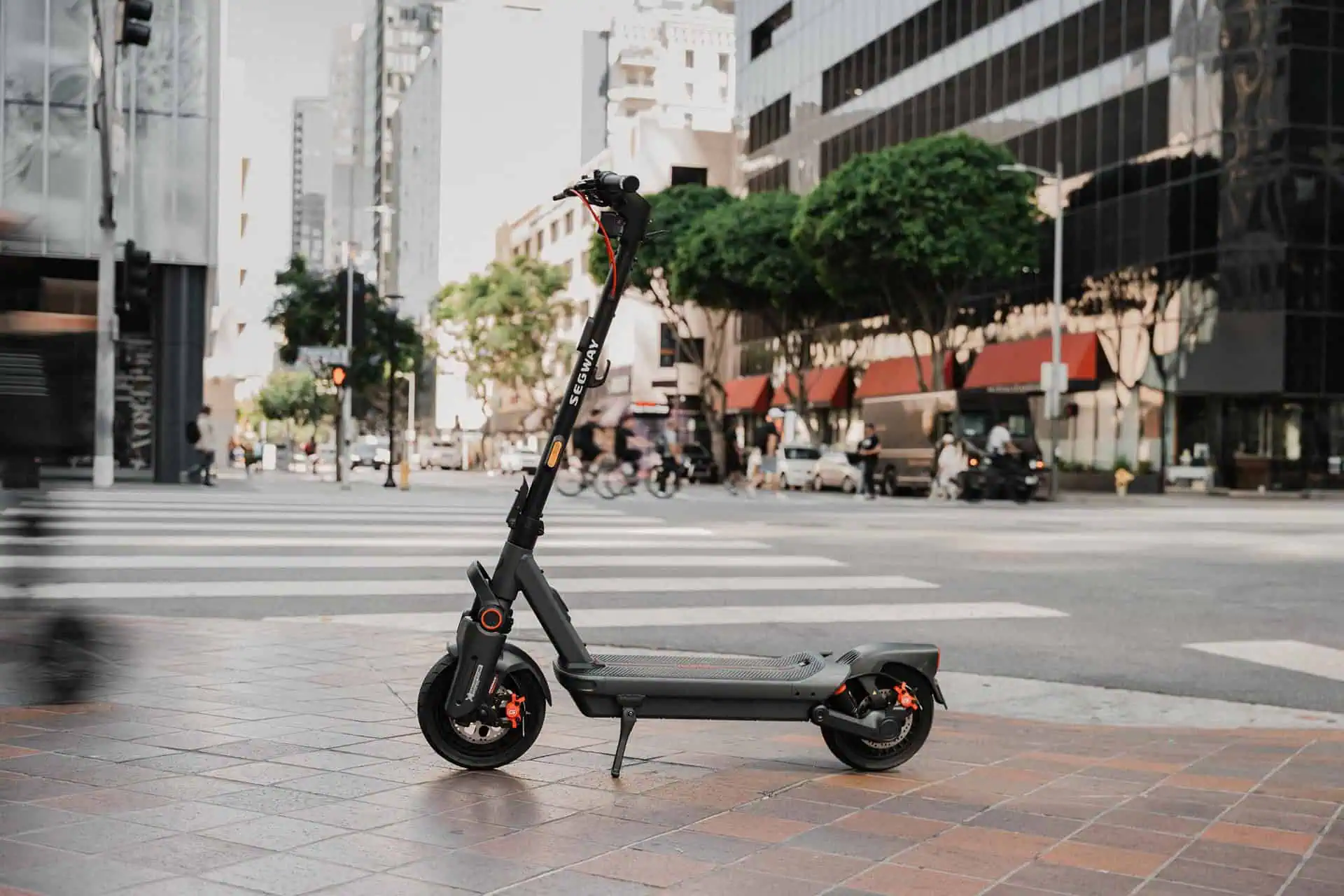
Segway opened pre-orders on August 4, 2026 for the MAX G3 Plus. This isn’t a from-scratch redesign. It’s the same MAX G3 platform they’ve been selling, but with a list of improvements that address the complaints and wish-list items riders have been talking about. Tom Hebert, Segway’s VP of Sales, put it plainly in the press materials — they listened to customer feedback and made continuous refinements to elevate the best commuter in their lineup even further.
The MAX series has been a flagship for Segway, and the Plus model continues that legacy with a $350 discount off the MSRP during pre-order.
The pre-order price is $1,149.99, down from the $1,499.99 MSRP. That’s $350 off, about 23 percent, and it’s only during the pre-order window. Shipping starts August 25, so you’ve got about three weeks to decide.
Key Takeaways
The MAX G3 Plus adds a 717 Wh battery that’s 20 percent larger than the MAX G3’s, and Segway’s new range testing standard — measuring at each mode’s top speed until speed drops to 60 percent of that max, makes the 56-mile published range more honest than most competitors’ claims.
Compared to the original G3, the Plus gets about 12 more miles of real-world range (if tested the same way), plus dedicated rear turn signals, larger 140mm rotors, an intelligent combined braking system, and a gyro-based riding assist that adjusts power on hills and rough terrain.
At 55.6 pounds, this scooter is heavy — you’ll want ground-level storage or be okay carrying it up one flight of stairs max. The pre-order discount is significant, but at full MSRP the value proposition narrows.
Table of Contents
Pricing, Pre-Order Details, and Where to Buy
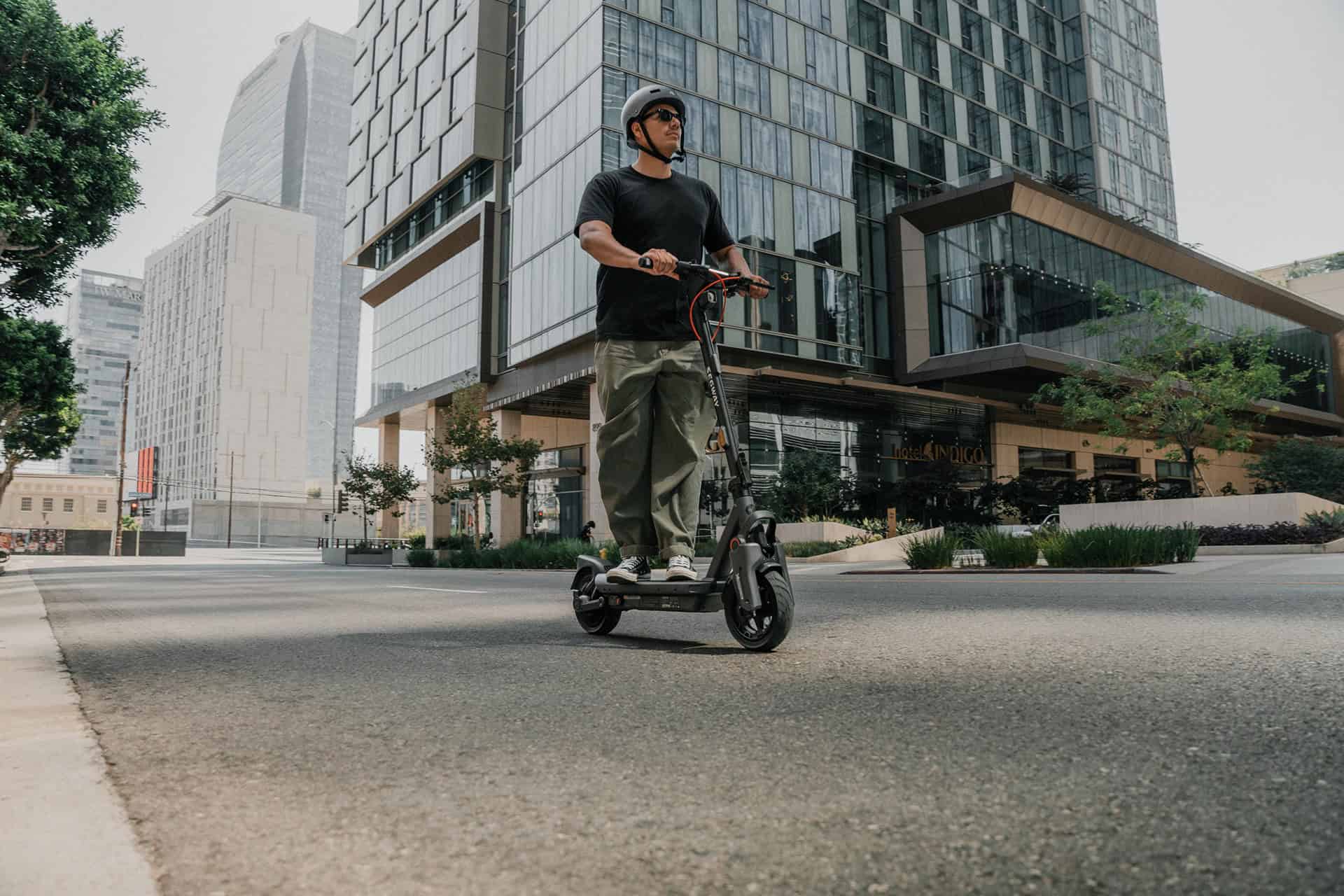
You’ve got three retailers: Segway.com, Best Buy, and Amazon. It’s a U.S. launch only for now. The price you’ll pay during pre-order is $1,149.99 — that’s $350 off the $1,499.99 MSRP that’ll kick in after the discount ends. That $350 is worth about four or five nice dinners or a solid helmet and gloves.
The timeline is tight: pre-orders opened August 4, and units start shipping August 25. So you’ve got roughly three weeks to order at the discounted price. That’s it. If you’re on the fence, you’d better decide before the window closes, because the scooter isn’t going to get cheaper after launch.
Buyer rule: If you want the $350 discount, don’t wait for reviews. Order before August 25 or pay full MSRP after launch.
Battery and Range: The Headline Upgrade with a New Testing Standard
The battery is 717 watt-hours, which is 20 percent more capacity than the original MAX G3. That’s the physical reason for the range bump, and it’s managed by Segway’s BMS 2.0 and SegRange™ range optimization for efficient power delivery. Segway’s BMS 2.0 manages battery health, but long-term degradation data is not yet available. But the number Segway claims — 56 miles — comes with an asterisk that actually makes it more believable than most scooter range numbers.

Here’s the thing about e-scooter range claims: most manufacturers run the battery until the scooter completely stops, including the final minutes where it’s crawling at 3 mph. That inflates the number. Segway changed that for the Plus. They now test at each mode’s maximum speed and stop measuring when the speed drops to 60 percent of that mode’s max.
No crawl distance added. That makes the 56-mile figure more honest than the usual industry puffery.
The practical result: compared to the original MAX G3, the published range is only 6 miles more. But if the G3 were tested under the same new standard, the Segway Max G3 Plus electric scooter would show roughly 12 more miles. That’s the improvement — about a third more usable range, not a measly 6 miles.
Of course, your actual range depends on rider weight, terrain, temperature, and how much you mash the throttle. But the baseline number is more trustworthy than most.
Safety and Control: New Turn Signals, Bigger Brakes, and ICBS
The most visible safety upgrade is the dedicated rear turn signals — first time on this platform. That’s a small change with a payoff: you can signal your turn electronically and keep both hands on the handlebars, ready to brake. No more one-handed flailing while you gesture. Reflectors are also placed better to help you stay visible at night.
Under the hood, Segway redesigned the brake levers for better one-finger control, and the rotors are now 140mm — bigger than standard. More stopping power, especially useful in wet conditions.
The Intelligent Combined Braking System (ICBS) is the smartest addition. It blends regenerative braking with the disc brakes automatically. You get the energy recovery of regen without giving up the feel of mechanical brakes. Less wear on pads and rotors means lower maintenance costs over time.
Performance Specs: Speed, Power, Acceleration, and Hill Climbing
Top speed is 28 mph. That’s fast for a scooter — check your local laws before you buy because some cities cap at 15 or 20 mph. Acceleration is 0-15 mph in 2.4 seconds in Boost Mode, which is quick enough to feel fun off the line.
Max power is 2,200 watts, and the scooter handles a 30 percent slope — steep enough for most city hills. Weight is 55.6 pounds, which is the main trade-off. That big battery and dual suspension add heft. If you’re carrying it up stairs or onto a bus, that’s a real caveat.
Payload capacity is 286 pounds, covering most riders plus a backpack or groceries — and if you’re carrying a bag for your gadgets, the Able Carry Max Backpack keeps laptops and smartphones safe. IPX6 water resistance means it handles rain and puddles fine — don’t submerge it or leave it in a hurricane.
Intelligent Riding Assist and Smart Features
The Intelligent Riding Assist uses a gyroscopic sensor to detect slope and surface unevenness. Three specific things it does: gives you extra power when climbing, helps control speed going downhill, and smooths out the throttle on rough terrain.
The display is a 2.4-inch full-color TFT screen with turn-by-turn navigation and ride stats. AirLock lets you unlock the scooter via Bluetooth when you walk up — requires the app, which is a minor inconvenience if you don’t want another phone app, but it works. Apple Find My compatibility means you can track it if it gets lost, much like the 2026 Mazda CX-5 vs 2026 Kia Sportage comparison highlights a 15.6-inch touchscreen and Google Built-In on the Premium Plus trim. FlashCharge gets you a full charge in 4 hours with the standard charger, or 3 hours with dual cables.
Carryover features from the MAX G3 include SegRide Stability Enhancement and Dynamic Traction Control. They’re software-based systems that keep the scooter stable at speed and prevent wheel spin on loose or wet surfaces.
Ride Quality and Platform: What the MAX G3 Plus Inherits
The Plus shares the core platform with the MAX G3, and that’s a good thing because the G3 rides exceptionally well. Dual hydraulic suspension with four shock absorbers — the rear pair is adjustable so you can dial in the feel for your weight and road conditions. 11-inch self-sealing tires that handle small punctures on their own. Dual cable disc brakes with 140mm rotors (the same size as the new ones, but now with ICBS integration). Dynamic Traction Control and SegRide Stability are also shared.
What this means: the Plus handles hills and rough terrain exactly as well as the G3 does, which is to say very well. The Plus isn’t reinventing the ride — it’s making the existing excellent ride last longer and feel safer.
How the MAX G3 Plus Compares: MAX G3, GOTRAX, and the Upgrade Decision
vs. MAX G3: The Plus adds 12 more miles of range under the same testing conditions, dedicated rear turn signals, ICBS, larger rotors, and Intelligent Riding Assist. Everything else — suspension, tires, stability systems, is shared. If you already own a MAX G3 and you’re not hurting for range or wishing you had turn signals, the upgrade isn’t pressing. The G3 is still a great scooter. But if you regularly ride 20+ miles a day or deal with heavy traffic where signals matter, the Plus is a meaningful step up.
GOTRAX confusion: A quick note for anyone searching — you’ll see “GOTRAX G3 Plus” and “GOTRAX G3 Max” in related results. Those are from a completely different brand. The MAX G3 Plus is a Segway product, not GOTRAX. I haven’t tested the GOTRAX models and Ion’t compare specs without verified numbers, but don’t cross-shop them as if they’re the same product line.
Field note: If you already own a MAX G3, the Plus is a refinement, not a revolution. Only upgrade if range or turn signals are deal-breakers for you.
Verdict: Who Should Buy the MAX G3 Plus and Is It Worth $1,149?
Buy it if: You commute 20-plus miles daily, want the extra range as a buffer so you’re not stressing about charging, value safety features like turn signals and a combined braking system, and you can handle the 55.6-pound weight (ground-level storage or a single flight of stairs is fine; three flights is a pain). At the pre-order price of $1,149.99, the upgrades are compelling — you’re getting a bigger battery, more honest range, and safety hardware for about the price of a good mid-range scooter.
Skip it if: You prioritize portability and need to carry the scooter up stairs regularly. Or if you already own a MAX G3 and don’t need the extra range or safety features. The Plus is a refinement, not a revolution. And at the full $1,499.99 MSRP, the value proposition narrows — you’re paying a premium for the battery and safety package, and it’s harder to justify over the original G3 (which will likely see its own price drop).
Bottom line: if you’re in the market for a serious commuter scooter and the weight is manageable, this is a strong option at the discounted price.
Frequently Asked Questions
Is the MAX G3 electric scooter any good?
Yes, the MAX G3 platform is widely considered one of the best commuter scooters on the market, and the Plus version refines it further. It rides exceptionally well thanks to dual hydraulic suspension, 11-inch self-sealing tires, and stability control systems. The main trade-off is the 55.6-pound weight, which makes it less portable than lighter models.
How fast is the G3 Max scooter?
The MAX G3 Plus has a top speed of 28 mph, which is fast for an electric scooter. It accelerates from 0 to 15 mph in 2.4 seconds in Boost Mode, so it feels quick off the line. Just check your local laws, since many cities cap scooter speeds at 15 or 20 mph.
Is the MAX G3 Plus worth the pre-order price?
At $1,149.99, the Plus offers meaningful upgrades — a bigger battery, more honest range, turn signals, and better brakes — for about the price of a good mid-range scooter. It’s a strong option if you commute 20-plus miles daily and can handle the 55.6-pound weight. At the full $1,499.99 MSRP, the value is harder to justify unless you specifically need the extra range and safety features.