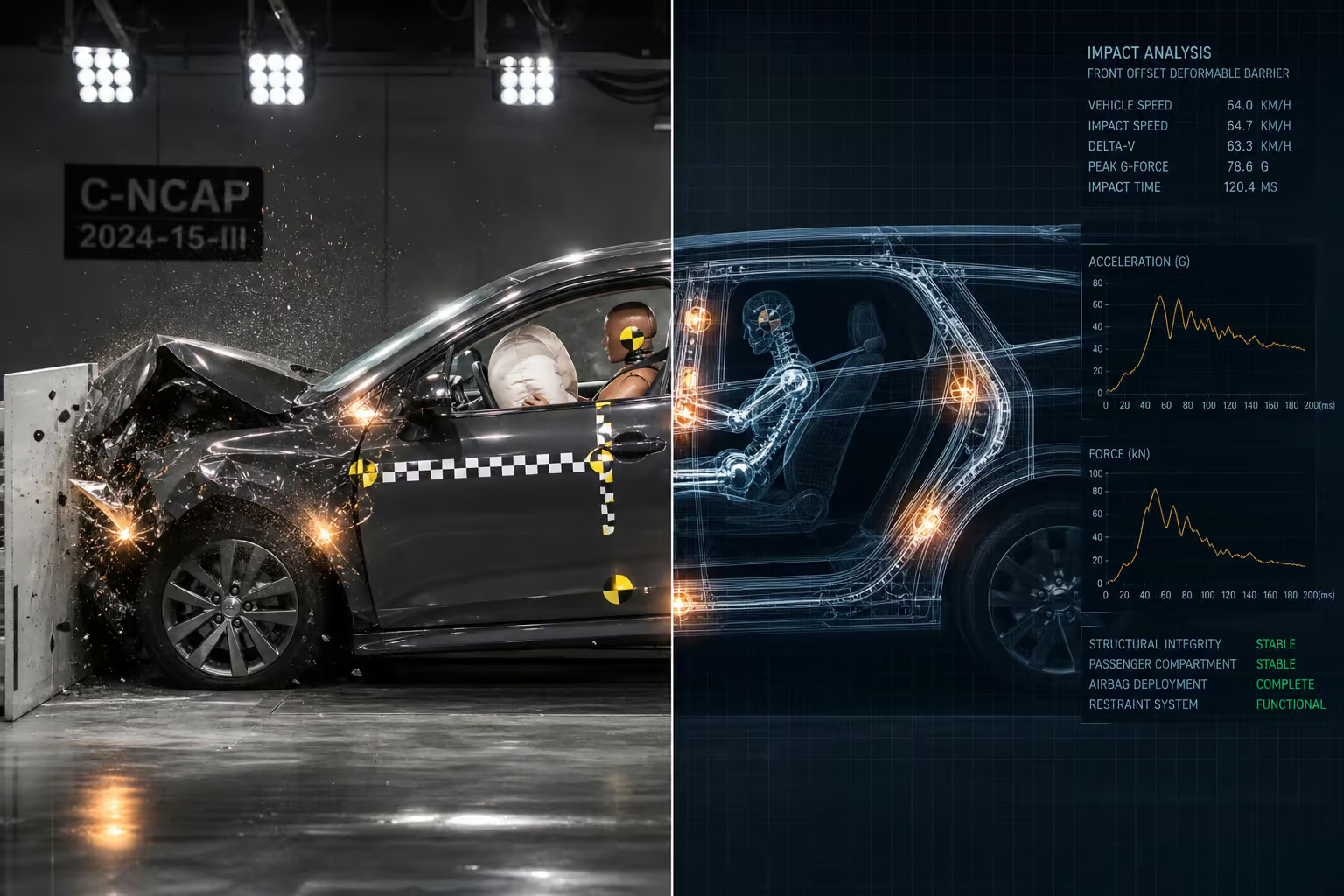
Modern automotive safety isn’t about surrounding yourself with heavy, rigid iron anymore. Built upon more than a century of engineering innovation, safety is now a highly engineered combination of kinetic structural physics, safety data metrics, and active, automated survival systems. Each vehicle undergoes thousands of simulations and tests to ensure systems—like the millisecond timeframe for airbag deployment—are ready to protect you when everything goes wrong.
Key Takeaways
Modern car safety relies on deliberate self-destruction, engineered so crumple zones absorb kinetic crash force while a reinforced passenger cabin preserves your survival space.
Airbags are strictly supplemental restraints that deploy in milliseconds to beat human reflexes; they do not replace standard seat belts and can cause severe injury if you aren’t buckled in.
Global automotive safety standards like ISO 26262 ensure that advanced electronic drive-by-wire systems have functional software redundancies to prevent physical steering or braking failures.
Table of Contents
Why Early Cars Prioritized Speed Over Safety
During the early twentieth century, vehicle occupants faced significant risks and elevated casualty rates as speeds increased. Manufacturers focused on drivetrain reliability and top speeds, largely ignoring the foundational shifts that would define more than a century of engineering innovation.
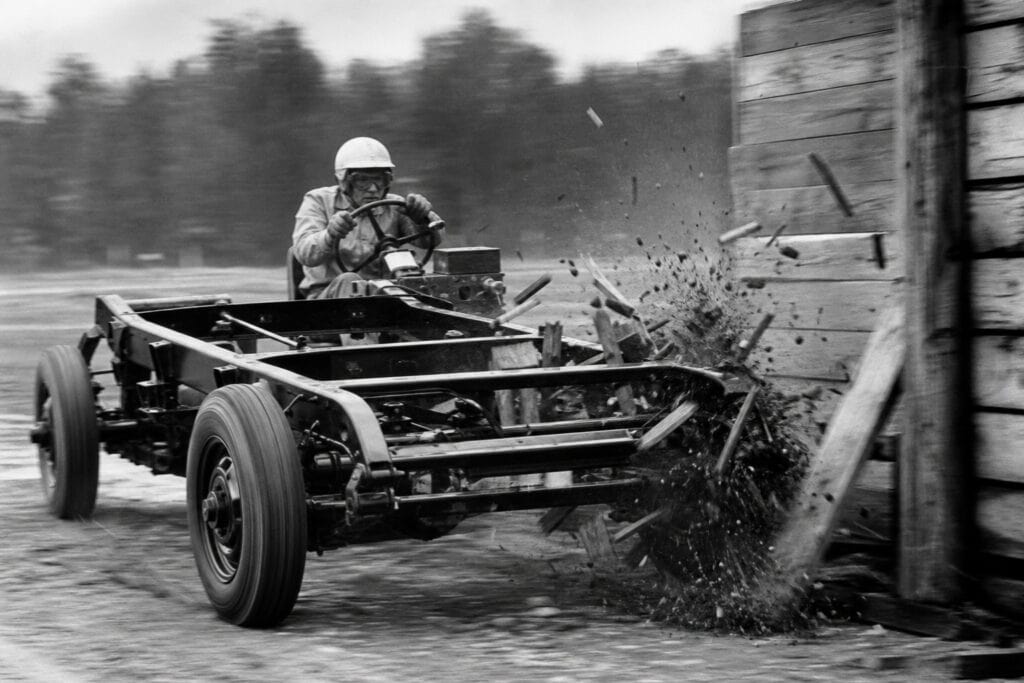
Without industry standards, early designers assumed that build stiffness was the key to surviving a wreck. They built cars out of heavy, unyielding steel, believing a solid frame would protect the people inside.
But physics has a brutal way of correcting bad assumptions. When a rigid steel frame traveling at 40 mph hits a solid tree, it stops instantly. Because the metal doesn’t bend, that wave of kinetic energy doesn’t disappear—it transfers straight through the steering column and dash into the occupants’ bodies.
The Restraint Hierarchy: Belts, Airbags, and the Laws of Motion
The vehicle’s protective system balances mechanical restraint with active sensing to manage kinetic force.
The Three-Point Seat Belt: Simple, No-Nonsense Physics
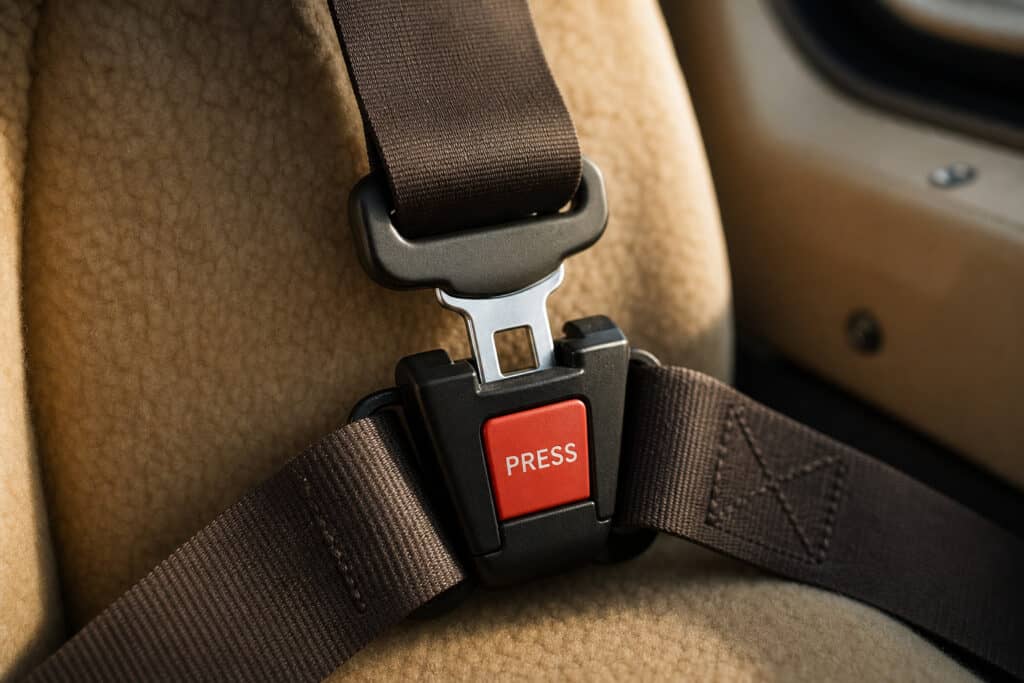
The three-point seat belt is the gold standard of vehicle safety. It’s a low-tech mechanical masterpiece that doesn’t rely on complex software or sensors to do its job.
When you crash, the belt keeps your body moving with the car rather than flying into the windshield. It spreads the deceleration force across the sturdiest bones in your body—your chest and pelvis—to hold you firmly in your seat.
Airbags as a Supplemental Restraint System
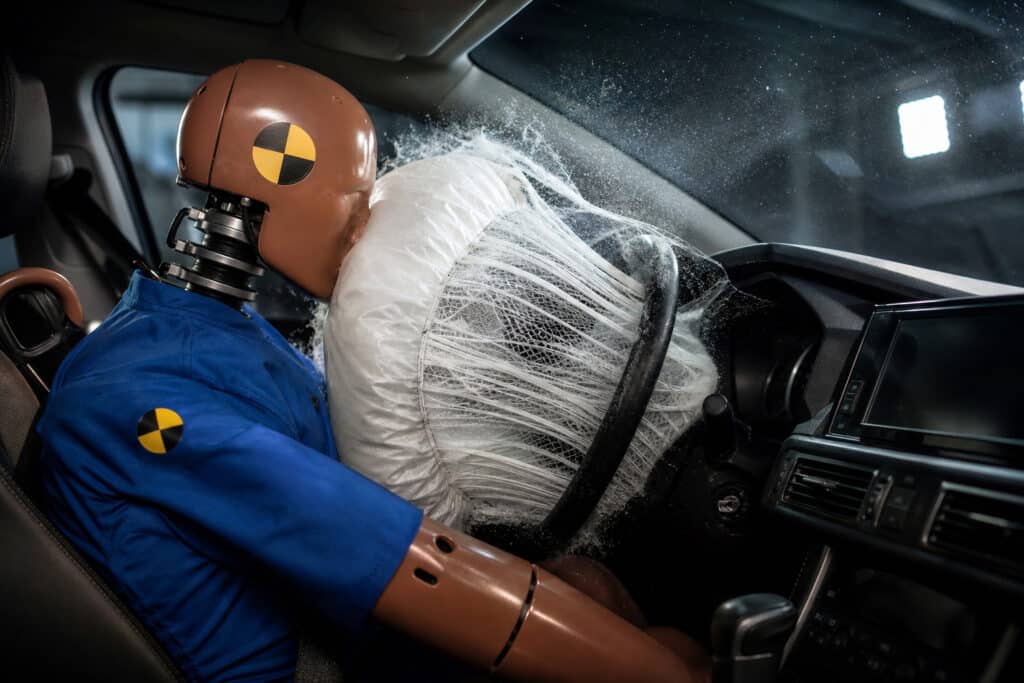
Airbags are great, but they are strictly a supplemental restraint. Airbags were never intended to replace seat belts, but form part of a broader safety strategy; they are designed to act as a backup to your seat belt.
These cushions deploy using explosive charges in mere milliseconds. This timeframe for airbag deployment allows them to act faster than human reflexes, though they can cause injury if not used as part of a broader strategy alongside seat belts.
If you aren’t held in place by a seat belt, slamming forward into a deploying airbag can cause severe bodily damage or death. Use them as the final layer of insurance they were meant to be.
The Physics of Sacrifice: Why Cars Melt Under Impact
We’ve all seen pictures of a modern fender bender where a sedan looks totaled, while the older truck it hit barely has a scratch.
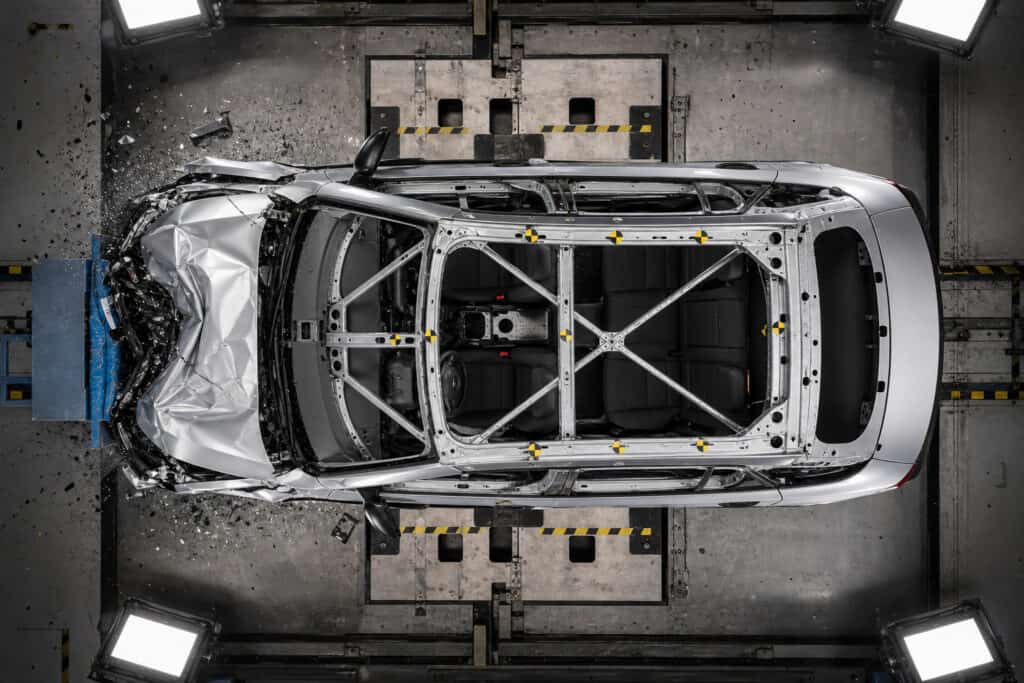
But that visible destruction is an engineering win; it reflects a vehicle performing exactly as intended. Modern vehicles incorporate crumple zones and incorporate deliberate structural mechanics to manage and dissipate kinetic energy upon impact to absorb and dissipate energy. This design process is now driven by rigorous evidence, such as simulations and physical tests, rather than assumptions.
While the front and rear ends of your car are built for controlled deformation, the center section is different. Reinforced passenger compartments, designed to maintain integrity during a crash, provide a protective survival space that lowers car crash fatality risks for all occupants.
This engineering gets even tougher when you look at modern electric vehicles. Engineers have to design rigid protective cages to insulate heavy, volatile lithium battery packs from crushing or catching fire during severe lateral side-impact collisions.
The Auditing of Metal and Software: Beyond the Star Ratings
Before a new car ever reaches a dealership, both its physical structure and its software control systems must pass rigorous testing, supported by thousands of simulations and physical tests.
From Digital Smashes to the Test Track
Vehicle development relies on thousands of high-fidelity virtual simulations before physical prototypes ever hit a test track. Engineers analyze digital models to predict exactly how different steel grades will redirect crash energy.
When you research car safety ratings by brand—an essential step before you even look into the rules for custom license plates for a new ride—you are looking at the direct output of these destructive physical audits. NHTSA safety ratings are derived from these destructive physical smashes to validate digital design performance.

This meticulous dynamic is what separates modern cars from the legendary but fragile listings you might find on an old-school top 10 safest cars of all time list.
Auditing Code: Automotive Safety ISO 26262
Because modern cars rely on complex computer networks, global automotive safety standards now mandate software audits.
The industry uses a framework called automotive safety iso 26262 to ensure the functional safety of electronic systems. This protocol ensures that critical digital systems—like steer-by-wire or electronic brakes—have built-in redundancies so a software glitch can’t override physical controls.
If you look through public safety in automobile industry pdf files, you’ll see that modern manufacturers spend just as much time testing code logic as they do slamming cars into concrete barriers.

Active Systems: Overriding Human Reflexes to Prevent the Hit
Today’s automotive safety systems use a dense network of cameras, radar, and environmental sensors to watch the road around you.
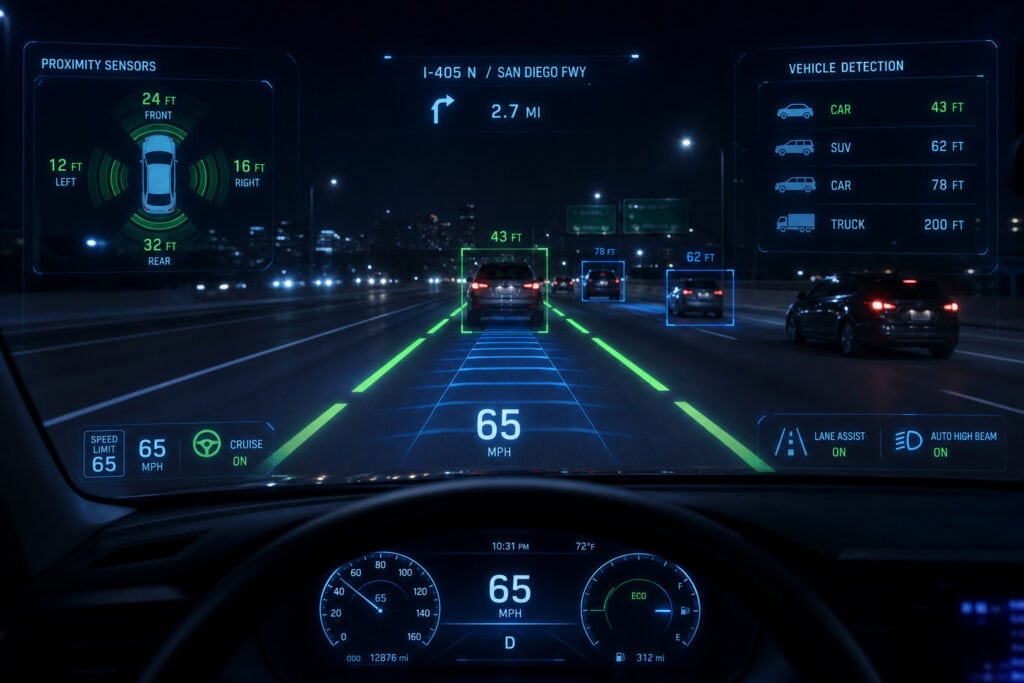
Automatic emergency braking, part of Advanced Driver Assistance Systems (ADAS), uses cameras, sensors, and radar to identify hazards and react faster than human cognitive processing.
Other daily driver aids run quietly in the background to handle minor human errors:
- Lane-keeping assistance: Gently nudges your steering wheel if you start to drift over the line because you’re distracted.
- Blind-spot monitoring: Actively tracks the hard-to-see lanes next to you, giving you a clear warning when someone sneaks up beside you.
- Adaptive cruise control: Tracks the car ahead to eliminate the irritating brake-and-throttle dance in heavy traffic.
- Driver attention monitoring: Keeps track of your focus by watching steering inputs and eye patterns to warn you when you’re zoning out on long drives.
The Unseen Administrative Safety Engine
Car safety also extends to structural traceability and regulatory compliance. Even the administrative legal frameworks are in place to keep dangerous or compromised salvage vehicles off the highway.
Vehicle identification tracking and state registries make sure that cars on the road meet minimum safety standards and receive critical safety recalls.
Plates Express operates within regulated vehicle identification and registration frameworks, supporting accountability and organized transport systems as part of the wider safety infrastructure. Keeping your registration clean keeps you compliant and ensures you stay on the road of accountability.
Looking Ahead: Predictive, Interconnected Roads
Future safety relies on connected infrastructure, where vehicles share live telemetry data with each other and the surrounding road network.
Vehicle-to-vehicle communication, connected to predictive analytics and future safety management, alongside artificial intelligence, promises to reduce risks by anticipating hazards before human awareness.
By using predictive analytics, your car will be able to talk to the vehicle around a blind corner, warning you of an obstacle before it’s even in your line of sight.
Frequently Asked Questions
What are 90% of car accidents caused by?
While exact percentages fluctuate, the vast majority of vehicle accidents are tied to human error, such as distraction, delayed reaction times, or poor judgment. Modern safety systems like automatic emergency braking and lane-keeping assistance are designed specifically to mitigate these human failures by processing environmental data faster than a driver’s cognitive response.
Why do modern cars crumple during a crash?
A car that crumbles upon impact is performing exactly as designed by absorbing and dissipating kinetic energy. Older, rigid cars would transfer that energy directly into the cabin, whereas modern crumple zones act as a sacrificial buffer to protect the occupants inside the reinforced safety cell.
Are airbags really necessary if I wear a seat belt?
Airbags are strictly supplemental restraints, meaning they are designed to work only in tandem with your seat belt. They deploy in milliseconds with explosive force, so if you are not buckled in to keep your body positioned correctly, a deploying airbag can cause severe or fatal injuries rather than protecting you.
Can software glitches cause a car to lose steering or braking control?
Modern vehicles are built under strict functional safety standards like ISO 26262 to prevent this exact scenario. These protocols mandate redundant software systems and fail-safes for electronic drive-by-wire setups, ensuring that a single software glitch cannot override the vehicle’s essential physical control systems.
Is a heavier car always safer in an accident?
Not necessarily, as modern safety is defined by engineering and kinetic physics rather than raw mass or steel thickness. While a heavy vehicle protects against certain impacts, modern compact vehicles often achieve higher safety ratings by utilizing advanced structural design, crumple zones, and reinforced passenger cages to manage crash forces more effectively.
What is the difference between active and passive safety features?
Passive safety features, like seat belts and crumple zones, work during a collision to minimize injury after the event has already started. Active safety systems, such as blind-spot monitoring and automatic emergency braking, use sensors to identify hazards and intervene beforehand to help you avoid the crash entirely.