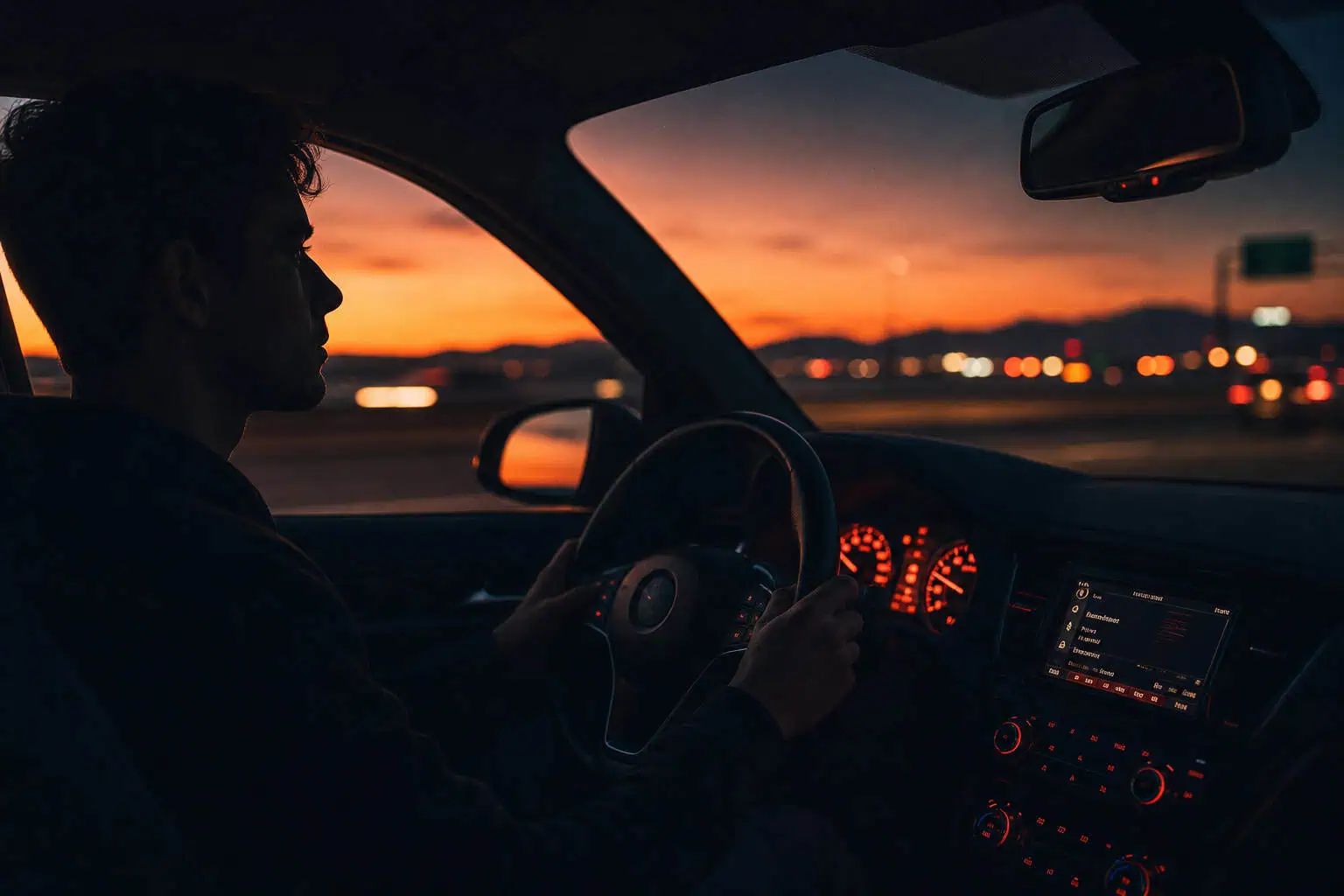
We live in a hyper-accelerated, “72/7” world, as reviewer Abigail Fagan notes. You’ve probably felt that sudden, white-hot flash of anger when a driver cuts you off without signaling, a moment that transforms the otherwise subtle personalisations of their vehicle—such as custom touches from companies like Number 1 Plates that serve as an extension of the owner’s identity—into an immediate target for your frustration.
Key Takeaways
The Bokito Effect explains how the human brain interprets a forced lane merge not as a minor delay, but as a primal invasion of personal territory.
Reckless driving crosses into habitual dysfunction at the clinical 3-violation threshold, moving beyond situational stress into pathological entitlement.
Applying the WWDLD (What Would the Dalai Lama Do?) mental framework quickly de-escalates cortisol spikes by substituting ego defense with intentional compassion.
Table of Contents
The Territorial Brain and the Avatar Fallacy
The Bokito Effect in Traffic
Traffic psychologists refer to this as the Bokito effect, a phenomenon where the brain treats a forced merge as a violent invasion. As you guard your proxemic space, even a minor cut-off triggers a spike of narcissistic pride, causing you to view the road through a lens of dominance rather than utility. Your brain maps the car as an extension of the self, reacting to boundary encroachment as if your very personhood were under physical attack.
Driving With an Identity Avatar
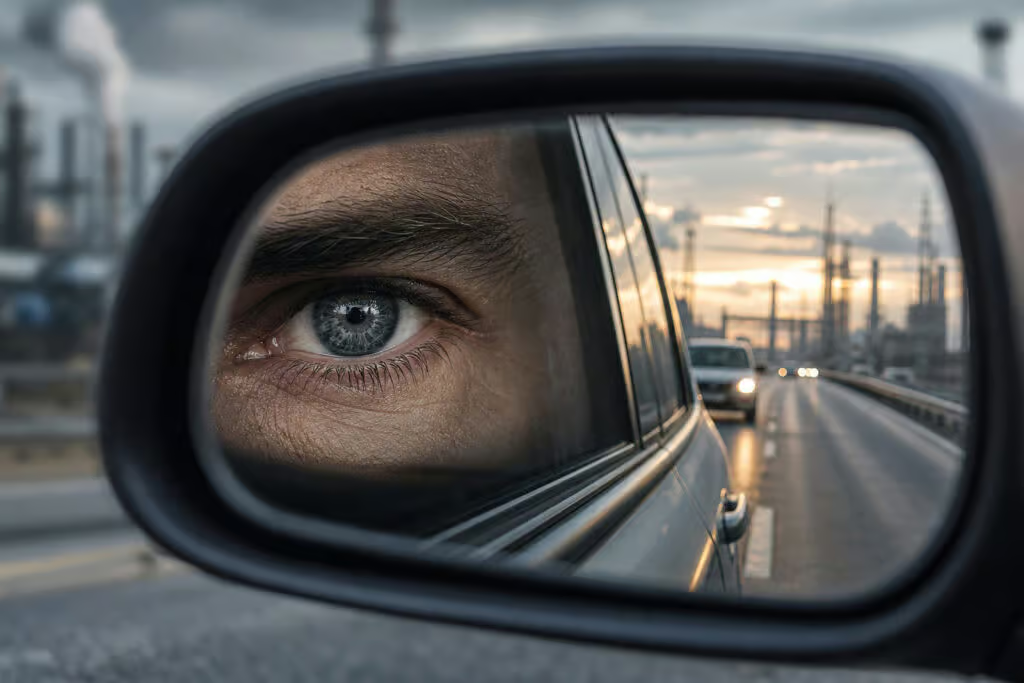
Inside the physical cocoon of a car, you’re insulated from the face-to-face consequences of your actions. The vehicle functions as an identity avatar, stripping away the normal layers of social control that keep human interactions civil. Out in the real world, habitual ragers often wield socio-economic privilege, but behind the wheel, they weaponize this anonymity to act out without consequence. Reddit User Contributors like Esc_ape_artist have pointed out this recurring pattern, noting that anonymous hostile driving closely mimics the toxic behavior seen on internet forums or gaming chats.
Your brain intuitively supports getting better at driving by mapping the physical dimensions of your car as an extension of your own body.
The Safe Space Paradox: Vulnerability Vs. Lethal Machinery
Defending the Emotional and Financial Sanctuary
The psychology behind road rage is heavily influenced by what the vehicle represents. For some, particularly those escaping difficult or unstable home lives, the car functions as their only true sanctuary. Added to this emotional weight is the sheer cost of vehicle ownership. Cars represent a significant economic liability, where the financial impact of a car accident or a traffic ticket can instantly destabilize a driver’s livelihood.
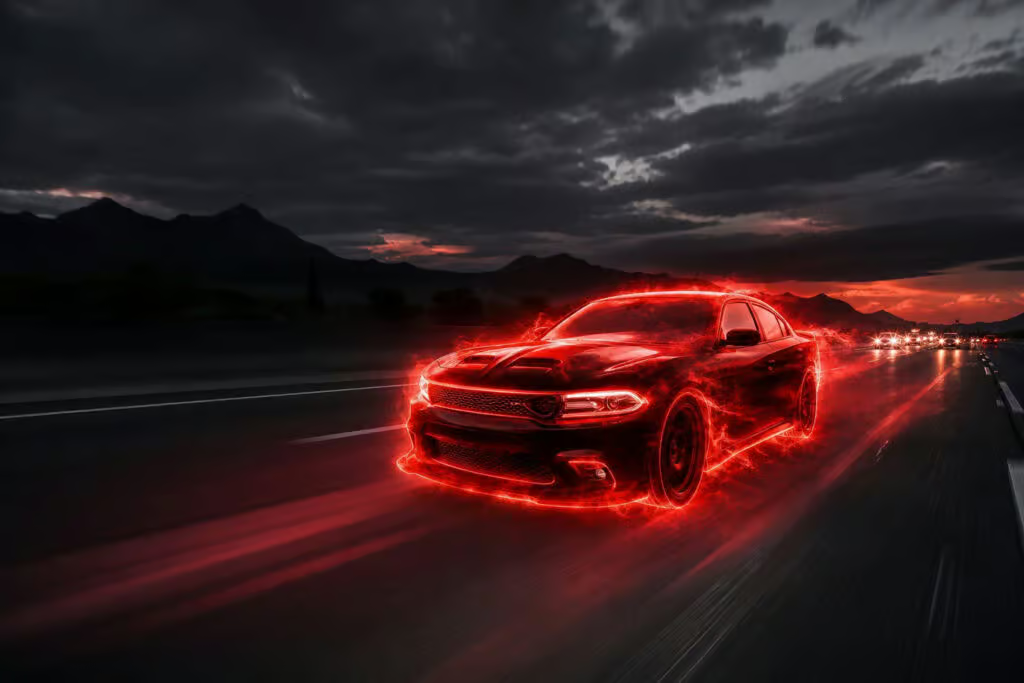
When someone drives recklessly near you, it highlights your own financial vulnerability, directly threatening the safe place sanctuary you rely on to get to work, escape danger, and survive. The threat isn’t just to the bumper; it’s to your entire sense of stability.
The Rationality of the Survival Response
When you feel that red-hot anger, recognize that the fear isn’t inherently irrational. Cars are heavy, highly lethal pieces of machinery. Basic Newtonian physics dictates that a standard 4,000-pound vehicle traveling at highway speeds carries massive kinetic energy, turning minor negligence into a deadly threat. If someone mindlessly swerves into your lane at 70 miles per hour, your brain perceives it as a threat to your life. The anger you feel toward that lethal negligence is a logical, trauma-informed survival response.

Someone cutting you off without a signal is psychologically equivalent to them throwing knives in your general direction. Your nervous system isn’t reacting; it’s keeping you alive.
The Entitlement Threshold: When Road Rage Becomes Pathology
The 3-violation Threshold of Habitual Aggression
Dr. Steve Albrecht outlines specific categorizations for extreme reckless driving that establish when frustration crosses the line. Hitting a clinical 3-violation threshold in rapid succession flags a transition from situational stress into habitual aggression. Additionally, the outdated idea that automotive anger is a male phenomenon isn’t true. Today, covert aggression crosses gender lines, with women engaging in aggression, tailgating, and rude maneuvering at rates comparable to men.
Differentiate this extreme pathology—cautionarily linked in the DSM-5 to Intermittent Explosive Disorder—from the shared frustrations of systemic macroeconomic gridlock. While soul-crushing commutes and underfunded infrastructure test everyone’s patience, pathological road rage operates on a completely disconnected psychological level.
“Hitting a clinical 3-violation threshold in rapid succession flags a transition from situational stress into habitual aggression.”
External Clues Vs. Internal Entitlement
Don’t assume you can predict malevolent drivers by looking at their cars. Internal entitlement matters far more than external clues. For instance, internet urban legends have incorrectly claimed that scientific journals like Nature published studies showing a direct correlation between the number of bumper stickers on a car and clinical road rage. This is a debunked, anecdotal myth. A car blanketed in bumper stickers or equipped with loud modifications isn’t a reliable predictor of an aggressive road rage personality.
Cognitive Reframing: How to Short-circuit Traffic Cortisol
When a driver aggressively cuts you off, their reckless action triggers a dump of cortisol and a racing heart, a biochemical cascade that instantly floods the brain with anger and primes the body for aggression. To hijack this physiological reaction, you can use the WWDLD method—a specific type of cognitive reframing that asks, “What Would the Dalai Lama Do?” Instead of leaving you to react like a typical stressed out man, this mental framework intentionally bypasses your ego’s demand for dominance, replacing it with a mandate for compassion.
If summoning the Dalai Lama feels like a stretch during rush hour, try inventing a highly specific, mundane, and somewhat humorous narrative for the offending driver. Tell yourself they aren’t attacking you; they just urgently need to find a bathroom. This situational trick deflates the personal sting of the offense. Combine this mental pivot with deliberate stress breathing—inhaling for four counts, holding for four, and exhaling for four. This physical action guarantees pulse rate normalization, pulling your nervous system out of a primal fight-or-flight state so you can arrive at your destination safely, with your mind and vehicle completely intact.
Frequently Asked Questions
What is the root cause of road rage?
At its core, road rage is an evolutionary survival response known as the Bokito Effect, where the brain perceives a minor traffic inconvenience as a violent territorial invasion. Because we map our cars as physical extensions of our own bodies, threats to our lane or vehicle are processed by the nervous system as direct threats to our personhood.
Is road rage a form of mental illness?
Road rage is generally considered a behavioral pattern rather than a specific clinical diagnosis, but it can cross into pathological territory. Experts use the 3-violation threshold to distinguish between situational stress and habitual aggression, marking when reckless driving becomes a predictable, dangerous cycle of behavior.
What does road rage say about someone?
While it is tempting to judge a driver’s personality based on their car’s modifications or bumper stickers, these external cues are not reliable indicators of aggression. Road rage often speaks more to the driver’s perception of their vehicle as an emotional sanctuary or a high-stakes financial asset that must be defended at all costs.
Is road rage a narcissistic trait?
A spike of narcissistic pride is common during road rage incidents, as the driver shifts their focus from road utility to a need for dominance. This sense of entitlement can transform a standard commute into a battle for status, where the driver views other cars not as fellow commuters, but as obstacles to their own path.
How does the ‘Bokito Effect’ change how we drive?
The Bokito Effect causes the brain to abandon rational traffic navigation in favor of guarding personal proxemic space. By treating every driver around you as a predator threatening your territory, you become more likely to engage in impulsive aggression rather than safe, logical driving.
Does the WWDLD method actually help when someone cuts you off?
The WWDLD (What Would the Dalai Lama Do?) framework acts as a cognitive reframe to stop an adrenaline-fueled cortisol dump in its tracks. By consciously choosing compassion over ego-defensiveness, you prevent your brain from slipping into an uncontrolled fight-or-flight response, allowing you to stay focused on safety.
Can I use ‘humorous narratives’ to stop road rage?
Yes, creating a silly or mundane story about an aggressive driver—such as imagining they are in an urgent rush to find a bathroom—can effectively deflate the perceived personal attack. This mental pivot helps strip away the feeling of targetted hostility, forcing your brain to reset and normalizing your pulse rate.